
P0750 Repair Cost: What You’ll Pay to Fix It in 2026

Quick Answer
A P0750 repair can range from a relatively inexpensive wiring or transmission-fluid-related fix to $2,500 or more if valve-body or internal transmission work is needed. A shift solenoid or solenoid-pack repair commonly lands in the several-hundred-dollar range, but the exact price depends on your vehicle, transmission design, labor rate, and confirmed failure. Before approving major work, use the AAA repair cost estimator or get a vehicle-specific written estimate.
Typical P0750 Cost Possibilities
- Diagnostic testing: Often about $100-$200, depending on shop rates and testing time.
- Fluid service: Roughly $150-$400 when fluid condition or level is genuinely part of the problem.
- Wiring repair: Often around $150-$600 depending on connector damage and access.
- Shift solenoid repair: Commonly several hundred dollars and potentially $1,000 or more on difficult designs or complete solenoid packs.
- Valve-body work: Can reach roughly $800-$2,500 when hydraulic components require repair or replacement.
- Internal transmission repair: Several thousand dollars is possible when diagnosis confirms substantial internal damage.
Best Money-Saving Step
- Don’t buy Shift Solenoid A simply because your OBD2 scanner displays P0750. Confirm the circuit, fluid condition, solenoid operation, and transmission-specific procedure first.
Seeing P0750 on an OBD2 scanner often creates one immediate question: how much is this going to cost?
I approach codes like P0750 as diagnostic clues, not automatic parts orders. This guide explains realistic 2026 repair costs, likely causes, testing, repair choices, and when transmission symptoms need professional attention.
In This Guide
How Much Does P0750 Cost to Fix in 2026?
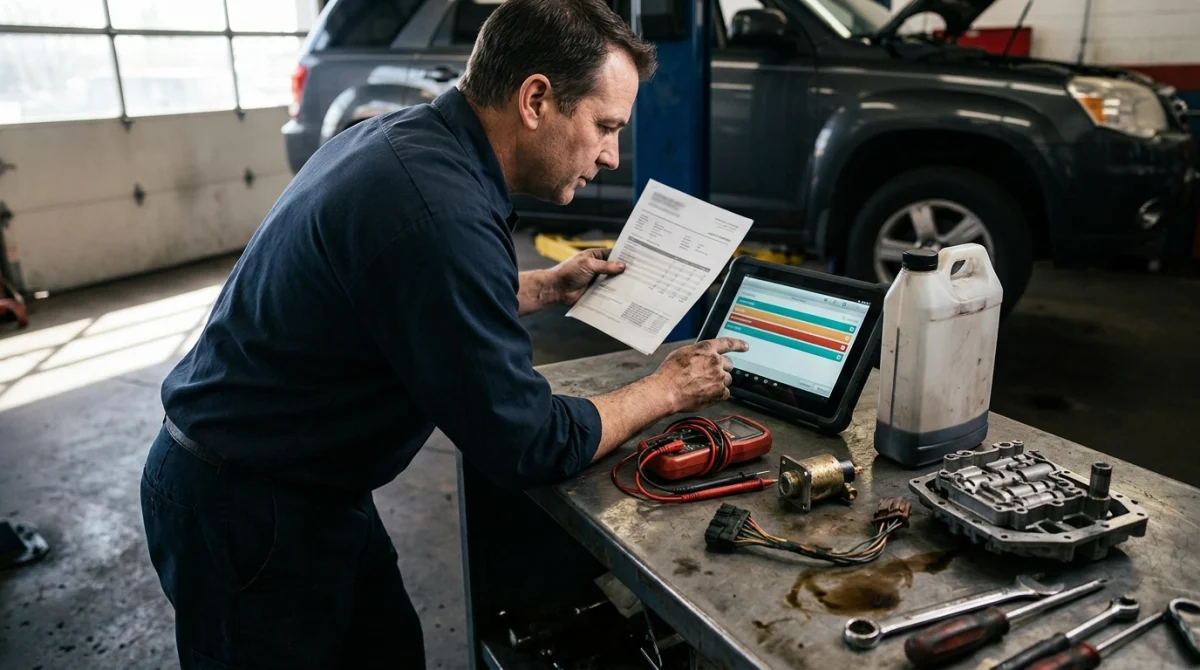
A P0750 repair can cost a few hundred dollars for a straightforward electrical or solenoid problem. The bill can climb into four figures when access is difficult or hydraulic and internal transmission faults are involved.
There isn’t one responsible price for P0750 because the code identifies a shift-control malfunction, not one guaranteed failed part.
| Possible Repair | 2026 Planning Range | Why Cost Varies |
|---|---|---|
| Transmission diagnosis | About $100-$200 | Shop rate, scan time, electrical testing, and road testing |
| Fluid and filter service | About $150-$400 | Fluid type, capacity, filter access, and manufacturer procedure |
| Connector or wiring repair | About $150-$600 | Location of damage and diagnostic labor |
| Shift solenoid or solenoid pack | About $300-$1,100+ | Individual solenoid versus complete assembly and required disassembly |
| Valve-body repair or replacement | About $800-$2,500 | Transmission design, calibration, parts, and labor |
| Major internal repair or replacement | Often $2,500-$7,000+ | Extent of damage, vehicle, transmission type, and replacement option |
These figures are planning ranges, not quotes. Labor rates, taxes, fluid requirements, parts availability, and transmission design can change the final amount considerably.
Technician’s note: ask the shop to separate diagnostic charges, parts, labor, fluid, and programming on the written estimate.
Why can Shift Solenoid A replacement cost so much?
Some transmissions make an individual solenoid accessible after removing the transmission pan. Other designs integrate several solenoids into a pack or valve-body assembly.
That difference can turn a relatively simple part replacement into a much larger job.
- Individual solenoid: Usually the least complicated outcome when the component is serviceable separately.
- Solenoid pack: Several solenoids may be replaced as one assembly, increasing parts cost.
- Internal harness: Wiring inside the transmission can add diagnostic and disassembly time.
- Valve-body access: Some designs require considerable removal work before the solenoid is reachable.
- Programming or relearn: Certain vehicles may require manufacturer-specific procedures after electronic transmission work.
AAA’s repair estimator also bases vehicle-specific pricing on factors such as repair time, regional labor rates, and parts costs.
Section Takeaway: P0750 repair cost depends on the confirmed failure, not the trouble code alone. A solenoid repair may stay in the hundreds, while valve-body or internal transmission work can cost thousands.
What Does the P0750 Code Mean?
P0750 is a generic OBD2 powertrain trouble code commonly described as Shift Solenoid A Malfunction. It means the transmission-control system detected a problem with the operation or control of the solenoid identified as “A.”
A shift solenoid is an electrically controlled valve. It helps direct transmission fluid through hydraulic passages so the automatic transmission can select the required gear.
The important word is “malfunction.” P0750 does not automatically mean the solenoid itself has failed.
- A damaged electrical circuit can trigger it.
- A poor connector can trigger it.
- Hydraulic problems can affect solenoid operation.
- Contaminated or incorrect fluid can contribute to shifting problems.
- Valve-body or internal transmission faults may produce similar symptoms.
RepairPal likewise describes P0750 as a Shift Solenoid A malfunction and stresses that proper diagnosis matters before replacing components.
Pro tip: the letter “A” doesn’t identify one universal physical position across every transmission. Always use service information for the exact year, make, model, engine, and transmission.
What does an OBD2 scanner actually tell you?
Your OBD2 scanner tells you where the vehicle’s computer detected an abnormal condition. It normally doesn’t prove which component caused that condition.
That’s a distinction I remind people about often when they’re deciding whether to order a part immediately.
A more capable scan tool may also show commanded gear, input speed, output speed, freeze-frame information, or transmission-module codes. Those details can make P0750 far more useful diagnostically.
Section Takeaway: P0750 points toward Shift Solenoid A operation or its control system. It is a starting point for diagnosis rather than confirmation that a replacement solenoid is required.
What Causes P0750 and What Symptoms Should You Expect?
P0750 can come from electrical, hydraulic, fluid-related, or mechanical transmission problems. The symptoms also vary depending on how the vehicle reacts to the fault.
Common causes of P0750
- Failed shift solenoid: The solenoid may develop an electrical fault or stop operating correctly.
- Damaged wiring: Broken, rubbed-through, shorted, or corroded wiring can interrupt the control circuit.
- Poor connector contact: Moisture, corrosion, loose terminals, or damaged pins can create intermittent faults.
- Transmission fluid problem: Incorrect level, wrong fluid, or severe contamination can interfere with hydraulic operation.
- Valve-body problem: Sticking valves, wear, or restricted hydraulic passages may prevent commanded shifts.
- Internal harness fault: Wiring located inside the transmission can develop problems that aren’t visible externally.
- Control-module issue: A transmission or powertrain control fault is possible but should be considered only after basic circuits are tested.
- Internal transmission damage: Mechanical wear can sometimes create symptoms that overlap with solenoid-control faults.
The cheapest-looking explanation isn’t always the correct one. That’s why replacing Solenoid A without testing can become an expensive guessing game.
Common P0750 symptoms
- Check Engine Light
- Harsh or delayed shifting
- Failure to shift normally between certain gears
- Transmission stuck in one gear or a failsafe mode
- Poor acceleration
- Higher engine rpm than expected
- Reduced fuel economy
- Other transmission trouble codes stored with P0750
Some vehicles may show only a warning light at first. Others can develop obvious shifting problems quickly.
Safety note: if the vehicle suddenly loses normal shifting, overheats, slips badly, or can’t keep up with traffic safely, stop normal driving and arrange professional diagnosis.
How Is P0750 Diagnosed Correctly?
A proper P0750 diagnosis starts by confirming the code and gathering context before parts are removed. The goal is to separate an electrical solenoid problem from a fluid, hydraulic, or mechanical transmission fault.
- Scan every relevant module. Record P0750 and any companion transmission, speed-sensor, communication, or power-supply codes.
- Review freeze-frame data. Check the conditions present when the code set.
- Verify fluid condition correctly. Follow the manufacturer’s procedure because many newer transmissions don’t use a traditional dipstick.
- Inspect external wiring. Look for damaged insulation, corrosion, loose connectors, fluid intrusion, or harness contact with hot or moving parts.
- Check the electrical circuit. A technician may test power, ground, resistance, continuity, or voltage drop according to manufacturer specifications.
- Review live transmission data. Compare commanded gear and relevant speed data when supported by the scan tool.
- Test solenoid operation. A professional bidirectional scanner may allow controlled solenoid activation on compatible vehicles.
- Investigate hydraulic or mechanical faults. If the electrical circuit passes, valve-body or internal transmission testing may be necessary.
I would not use a generic resistance specification from the internet. Solenoid design and acceptable measurements differ between transmissions.
Technician’s note: always use vehicle-specific service information before applying voltage, measuring resistance, or opening a transmission connector.
Should you check for recalls or manufacturer information?
Yes. Before approving a major transmission repair, it’s worth checking your VIN using the NHTSA recall lookup.
NHTSA also provides manufacturer communications and safety-issue information that can help owners research vehicle-specific concerns.
If you believe the problem represents a broader safety defect, NHTSA also provides a vehicle safety complaint process.
Section Takeaway: good P0750 diagnosis proves what failed before parts are purchased. Electrical testing, fluid inspection, scan data, and vehicle-specific service information should come before expensive transmission work.
What Repairs Can Fix P0750?
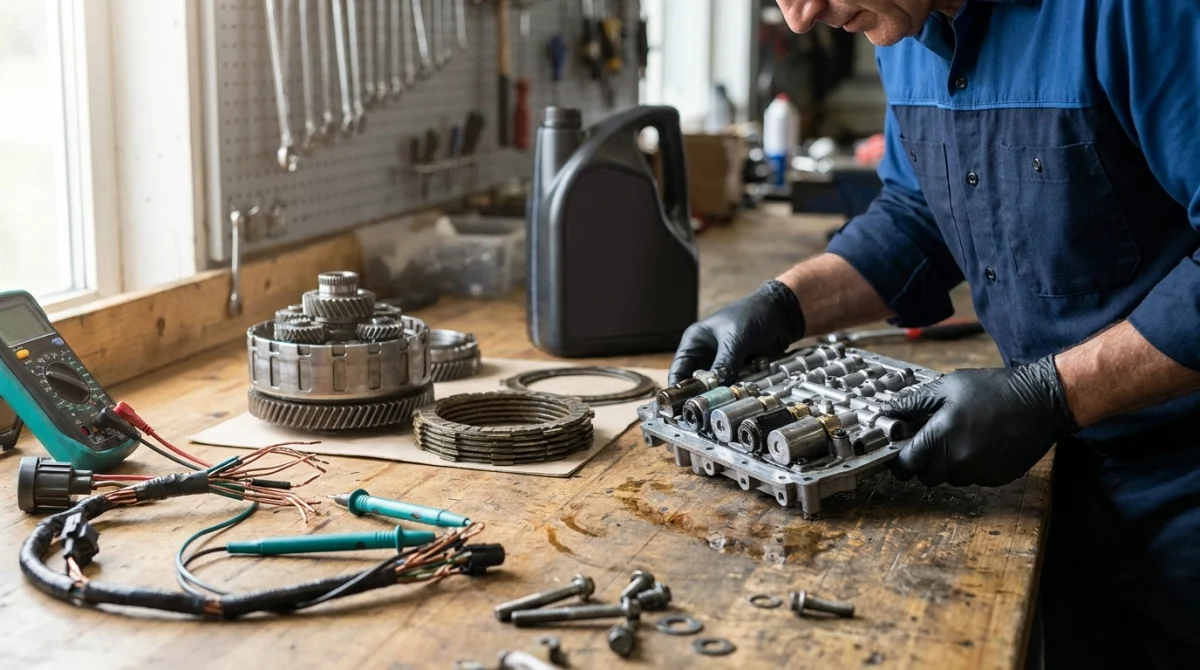
The correct P0750 repair is the one that fixes the confirmed cause. There is no universal Solenoid A replacement procedure that applies to every automatic transmission.
1. Repair damaged wiring or connectors
Wiring repairs can be one of the less expensive outcomes when the problem is accessible. Corroded terminals, broken conductors, or damaged insulation should be repaired properly rather than bypassed casually.
2. Correct a transmission-fluid problem
Fluid level and condition matter because shift solenoids operate within the transmission’s hydraulic system. However, changing fluid isn’t a guaranteed cure for P0750.
Use only the fluid specification and checking procedure required by the manufacturer.
3. Replace Shift Solenoid A
A solenoid replacement makes sense when testing confirms that the solenoid has failed. Depending on the transmission, the shop may replace one solenoid or a larger solenoid assembly.
Repair note: verify the transmission application using the VIN or manufacturer parts catalog before ordering components.
4. Replace or repair a solenoid pack
Some transmissions combine several control solenoids into one assembly. You may therefore pay for a complete pack even when one circuit originally set the code.
This is one reason online “solenoid price” comparisons can be misleading.
5. Repair the valve body
The valve body routes hydraulic pressure throughout the transmission. Wear, sticking valves, contamination, or damaged passages can prevent the commanded shift even when the electrical solenoid tests correctly.
6. Repair internal transmission damage
Internal repair becomes relevant only when testing supports a mechanical failure. A P0750 code by itself does not justify a transmission rebuild or replacement.
For a vehicle-specific estimate, AAA offers an Approved Auto Repair locator and cost-estimating resources.
Section Takeaway: start with the confirmed fault and work outward. Wiring, fluid, and solenoid repairs cost far less than unnecessary valve-body or full-transmission work.
Can You Drive With a P0750 Code?
I wouldn’t treat P0750 as a code to ignore. Transmission behavior can change, and a vehicle that shifts normally today may not behave the same way after the fault worsens.
How urgent it is depends on the symptoms.
- Only a warning light: Arrange diagnosis soon and avoid unnecessary long trips until you know the cause.
- Harsh shifting: Reduce driving and get the transmission checked promptly.
- Stuck in one gear: Avoid normal driving, especially on high-speed roads.
- Severe slipping: Stop driving and have the vehicle inspected.
- Overheating or burning smell: Stop safely and arrange towing or professional assistance.
Don’t assume clearing the code makes the vehicle repaired. If the underlying problem remains, P0750 can return when the control module detects the fault again.
How do you avoid overpaying for P0750?
The best defense is a written diagnosis that explains why the recommended part failed testing. You should be able to connect the test result to the repair being sold.
- Ask which tests confirmed the failed component.
- Ask whether the price includes diagnosis.
- Ask whether the solenoid is sold individually or as a pack.
- Ask whether fluid and a filter are included.
- Ask whether programming or relearn procedures are required.
- Ask whether valve-body or internal damage was proven rather than assumed.
- Compare a second estimate before authorizing major transmission work.
AAA’s repair guidance recommends professional diagnostic inspection before approving services that haven’t been validated. That principle is especially useful with transmission trouble codes.
Section Takeaway: P0750 deserves timely diagnosis because shifting can become unpredictable. The safest financial approach is also the simplest: prove the failure before paying for parts.
P0750 Repair Cost FAQ
How much does it cost to fix code P0750?
P0750 repair cost can range from a few hundred dollars for wiring, fluid, or a straightforward solenoid repair to several thousand dollars for major valve-body or internal transmission work. Your vehicle, transmission design, region, labor rate, and actual failure determine the final bill.
Does P0750 mean the shift solenoid is bad?
No. P0750 points to a malfunction involving Shift Solenoid A operation or control, but wiring, connectors, fluid condition, the valve body, an internal harness, or mechanical transmission problems can also contribute.
Can changing transmission fluid fix P0750?
It can help only when a fluid-related problem is genuinely contributing to the malfunction. A fluid service will not repair broken wiring, an electrically failed solenoid, a damaged connector, or a mechanical valve-body problem.
Can I replace Shift Solenoid A myself?
It depends on the transmission and your experience. Some solenoids are accessible after removing the pan, while others are part of a complex valve-body or solenoid-pack assembly that requires precise procedures.
Can I clear P0750 with an OBD2 scanner?
Many OBD2 scanners can clear stored powertrain codes. Clearing P0750 doesn’t fix the cause, so the code may return after the vehicle detects the same malfunction again.
Is P0750 expensive to repair?
Not always. An accessible wiring or connector problem may be comparatively inexpensive, while solenoid packs, valve-body work, and internal transmission repairs cost considerably more.
Should I replace the transmission because of P0750?
Not based on the code alone. A complete transmission replacement should only follow diagnosis showing substantial internal damage or another failure that makes replacement more practical than repair.
Final Takeaway: P0750 repair cost can vary from a modest electrical fix to a major transmission bill, but the code itself doesn’t tell you which repair you need.
Start with a complete scan, inspect the fluid and wiring, and confirm Shift Solenoid A operation using vehicle-specific information. If the estimate involves valve-body work or transmission replacement, get the diagnosis in writing and consider a second opinion before authorizing the repair.
