
Key Fob Not Recognized by Car? How to Diagnose the Problem and Fix It Fast

If your key fob not recognized by car warning showed up out of nowhere, the good news is that the problem is often simple. The bad news is that the same symptom can come from a few different places: the fob battery, the car battery, signal interference, or a vehicle-side fault in the receiver or smart key system.
The trick is not to guess. Work through the checks in the right order, and you can usually narrow it down quickly without replacing parts you don’t need.
What It Means When Your Key Fob Isn’t Recognized
A “key not detected,” “fob not found,” or similar message usually means the vehicle cannot verify the fob’s signal. That is different from a remote that only fails to lock or unlock doors.
Here’s the practical difference:
- Remote functions fail, but the car starts: the fob may still be communicating enough for the immobilizer to recognize it.
- The car won’t unlock or start: the vehicle may not be receiving a usable signal at all.
- It works sometimes and fails other times: that often points to a weak battery, interference, or a connection problem that is still developing.
On push-button start vehicles, the car must detect the fob before it will allow the engine to start. If that handshake fails, the dash warning is the car’s way of saying it cannot confirm the key is present.
For a deeper walkthrough of backup-start behavior, see how to start a car when the key fob is not detected.
Fastest Checks First: Fob Battery, Spare Fob, and Distance
Before you assume the fob is dead, test the easiest things first.
1) Try the spare fob
If the spare works normally, the problem is likely isolated to the original fob. That could mean a weak battery, a damaged case, or a worn internal circuit board.
If both fobs fail, the problem is more likely on the vehicle side.
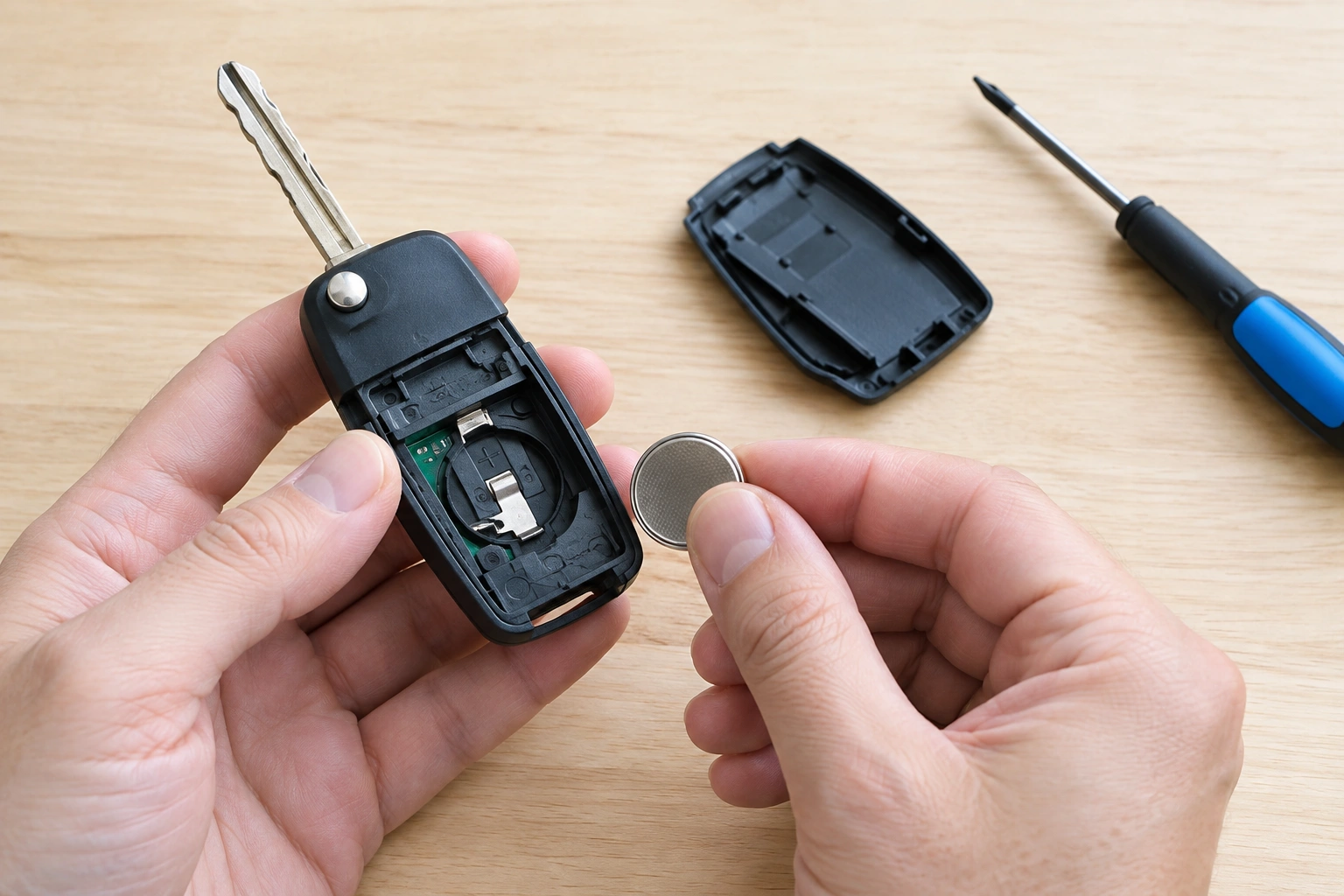
2) Replace the fob battery if it’s old or the range has dropped
A shrinking operating range is a classic early warning sign. If you used to unlock the car from across the driveway and now have to stand next to the door, the battery is worth checking first.
A weak or dead key fob battery is a common cause of a car not detecting the fob, and a weak vehicle battery can also prevent the receiver from recognizing it. Those two checks solve a lot of “it worked yesterday” complaints.
3) Move the fob closer to the vehicle
A weak signal can look like a dead fob. Try standing right next to the driver’s door or holding the fob near the start button. If the car suddenly recognizes it at close range, the fob battery may be weak rather than completely dead.
4) Check the car battery
If the vehicle has been slow to start, sat unused, or shown dim interior lights, test the car battery. A weak battery can confuse the smart key system even if the fob is fine.
5) Remove possible interference
Try the fob in a different spot:
- away from a phone charger
- away from a laptop or tablet
- outside the garage
- away from other keys or electronic devices
If the car recognizes the fob in one place but not another, you’ve likely found an interference issue rather than a failed key.
6) Look for a vehicle-side fault
If the spare fob, fob battery, car battery, and interference checks all come up clean, the issue may be in the vehicle itself: a faulty receiver antenna, wiring problem, or malfunctioning push-button start system can stop the car from recognizing the fob.
Most Likely Causes, Ranked by What to Check First
Not every no-detection problem has the same odds. Here’s the order I’d work through in the bay.
1) Weak or dead key fob battery
This is the easiest place to start because it is cheap, simple, and often overlooked. The fob may still light up or unlock the car intermittently, but the signal can be too weak for reliable recognition.
2) Weak car battery or low vehicle voltage
A weak vehicle battery can cause all kinds of strange electrical behavior. If the dash is dim, the starter cranks slowly, or multiple warnings appear at once, the car battery deserves attention before you blame the fob.
3) RF interference
Phones, chargers, laptops, RFID blockers, and some nearby electronics can interfere with the signal. If the fob works after you move away from a certain area, interference is a strong clue.
4) Damaged fob hardware
If the fob was dropped, got wet, or has a cracked case, the internal board or transponder can be damaged. In that case, a new battery may not change anything.
5) Vehicle receiver, antenna, or start-system fault
If the fob and car battery check out, the issue may be in the vehicle itself: a faulty receiver antenna, wiring problem, or malfunctioning push-button start system can stop the car from recognizing the fob.
A warning like “Key Not Detected” usually means the vehicle cannot verify or communicate with the key fob, not necessarily that the fob is completely ruined. That distinction matters because it keeps you from replacing the wrong part.
How to Tell Whether the Problem Is the Fob or the Car
Use the symptoms to separate a fob-side issue from a vehicle-side issue.
| Symptom | More likely cause | What it usually means |
|---|---|---|
| One fob fails, spare works | Fob battery or damaged fob | The vehicle is probably fine |
| Both fobs fail | Car battery, receiver, or vehicle system | The problem is less likely to be the fobs |
| Fob works only very close to the car | Weak fob battery or interference | Signal is present but weak |
| Lights are dim, cranking is slow, warnings multiply | Weak car battery | Low voltage may be affecting recognition |
| Fob works near one location but not another | RF interference | Nearby electronics may be blocking signal |
| Battery replacement changes nothing | Damaged fob or vehicle fault | Look beyond the battery |
One useful rule: if the spare key behaves the same way as the original, stop focusing on the fob and start looking at the car.
For more on the warning itself, this guide on why your car says the key fob is not detected is a good companion read.
Step-by-Step Fixes You Can Try at Home
Replace the fob battery
If the battery is old, weak, or unknown, replace it first. Use the correct battery type for your fob and make sure it sits firmly in place. A loose battery can create the same symptoms as a dead one.
After replacement, test the lock/unlock buttons and then try starting the car.
Check the car battery
If the vehicle has been slow to start, sat unused, or shown dim interior lights, test the car battery. A weak battery can confuse the smart key system even if the fob is fine.
If you have a charger or maintainer and the battery is only mildly discharged, charging may restore normal operation. If the battery is old or repeatedly weak, testing it is more useful than guessing.
Remove possible interference
Try the fob in a different spot:
- away from a phone charger
- away from a laptop or tablet
- outside the garage
- away from other keys or electronic devices
If the car recognizes the fob in one place but not another, you’ve likely found an interference issue rather than a failed key.
Try a simple reset or re-sync only after the basics
Some vehicles respond to a reset or re-sync procedure, but the exact steps vary by make and model. A basic owner-friendly re-sync may be possible on some vehicles after a battery replacement or brief voltage drop, but it is not universal.
If the battery is good and interference is not the issue, a re-sync may help when the fob seems out of step with the car. If the vehicle requires brand-specific security access or programming, that is usually a dealer or locksmith task rather than a DIY fix.
I would not jump straight to programming steps if the fob battery is weak or the car battery is low. That wastes time and can lead to the wrong diagnosis.
Emergency Start Methods When the Car Says “Key Not Detected”
Many push-button start vehicles have a backup way to start the engine when the fob battery is weak.
The common idea is simple: place the fob in the vehicle’s designated backup sensing area. On some cars that means holding the fob against the start button, steering column area, or another marked location in the owner’s manual. In some vehicles, the car may be able to read the transponder only at very close range or from a specific backup spot, so the exact procedure can vary by make and model.
This is a temporary workaround, not a repair. If the engine starts only through the backup method, the fob battery may be failing, or the vehicle may be relying on a backup reader because the normal signal path is not working.
If you are stuck and need the car running now, check the manual for the exact procedure for your model. Manufacturers often describe the backup sensing spot in the owner’s guide.
When Re-Syncing or Reprogramming Is Needed
A re-sync can help when the fob battery is good but the vehicle and fob have lost normal communication. That can happen after a battery replacement, a voltage drop, or an electronic glitch.
For most owners, the realistic DIY step is a basic re-sync or reset procedure if the manufacturer provides one. That may be enough for a fob that stopped communicating after a low-voltage event.
Reprogramming is different. If the fob is lost, stolen, or replaced, the new fob usually has to be programmed to the vehicle. In many cases, that involves dealer programming and proof of ownership. Some locksmiths can also handle programming, depending on the vehicle.
Use this simple rule:
- Try re-syncing if the fob was working recently and the battery is known good.
- Think programming or replacement if the fob is new, missing, stolen, or physically damaged.
- Stop trying resets if multiple fobs fail and the car still will not detect any of them.
That last case usually points away from the fob itself.
When the Problem Is Probably in the Vehicle System
If the fobs are fine, the issue may sit in the car’s hardware.
Common vehicle-side trouble spots include:
- receiver antenna
- wiring issues
- push-button start switch
- immobilizer or smart key module
- low vehicle voltage
This is where DIY troubleshooting has limits. A faulty antenna or wiring problem can interrupt the signal even when the fob battery is brand new. Likewise, a malfunctioning start button can make it look like the key is the problem when the car is actually failing to read the signal correctly.
If the car starts intermittently, especially after a battery issue or electrical repair, that is worth taking seriously. Intermittent recognition problems rarely stay intermittent forever.
When to Consult a Locksmith
Call a locksmith, dealer, or mechanic when:
- both the main fob and spare fob fail
- the fob battery and car battery both test good
- the vehicle only starts through a backup sensing method
- the fob was lost, stolen, or physically damaged
- you see repeated “key not detected” warnings after basic checks
- the car has signs of electrical damage or water intrusion
A locksmith can often help with key testing, replacement, and some programming needs. A dealer is more likely to be necessary when the vehicle requires brand-specific programming or security access.
If the car is refusing to recognize any key at all, that is usually not the point to keep swapping batteries and hoping for the best.
How to Prevent the Problem From Coming Back
A few habits reduce repeat failures:
- Replace the fob battery when range starts shrinking.
- Keep an eye on the car battery, especially before winter or after long storage.
- Avoid storing the fob right next to devices that may cause interference.
- Don’t ignore intermittent detection; it often gets worse before it fails completely.
- If the fob is dropped or exposed to moisture, test it sooner rather than later.
Small warning signs are useful. A fob that works only sometimes is already telling you something.
FAQ
Why is my key fob not being recognized by my car?
The most common possibilities are a weak fob battery, a weak car battery, signal interference, a damaged fob, or a vehicle-side receiver or immobilizer issue.
Can I still start the car if the fob is not detected?
Sometimes, yes. Many push-button start vehicles have a backup start procedure that lets the car read the fob at very close range or from a designated sensing area.
Will replacing the key fob battery fix this problem?
It may, especially if the fob range has dropped or the battery is old. If replacing the battery does nothing, look at the car battery, interference, or the vehicle system.
Could a weak car battery cause the fob not to be recognized?
Yes. Low vehicle voltage can prevent the receiver from recognizing the fob, even if the fob battery is fine.
How do I know if the fob is damaged instead of just out of battery?
If a fresh battery doesn’t help, the spare fob works differently, or the fob was dropped or wet, physical damage becomes more likely.
Do I need a dealer if the fob is lost or stolen?
Often, yes. Replacement usually requires programming, and you may need proof of ownership.
What if both fobs stop working at the same time?
That usually points to the car battery, receiver, antenna, or smart key system rather than both fobs failing together.
Is RF interference really enough to cause this?
Yes. If the fob works again after you move away from a charger, phone, or other electronics, interference may be the reason.
