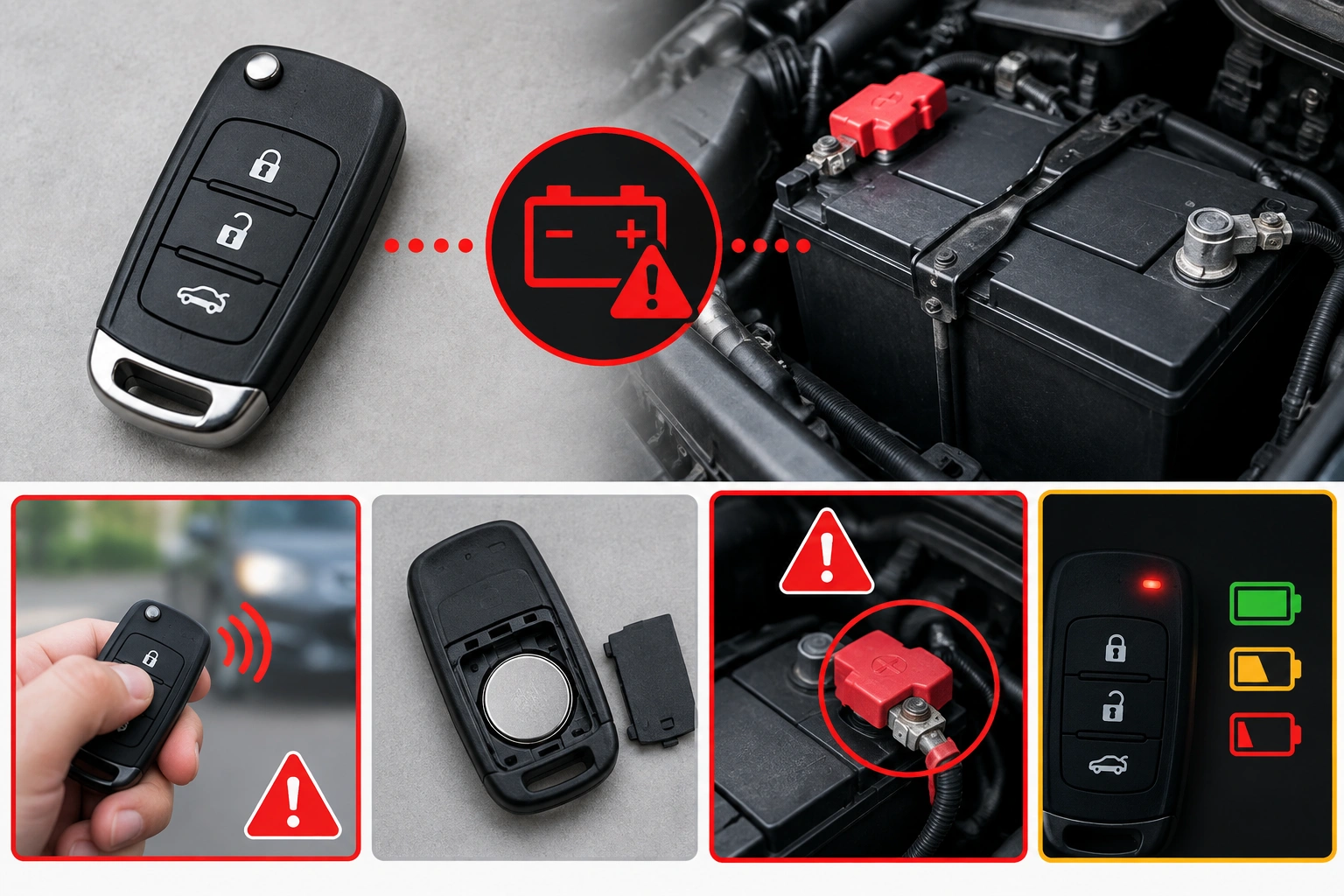
Can a Bad Car Battery Cause Key Fob Problems? Here’s How to Tell

If your key fob suddenly stops unlocking the doors, acts flaky, or won’t start a push-button car, a bad car battery can absolutely be part of the story. It is not always the only cause, but low vehicle voltage can create strange electrical behavior that looks like a key fob failure.
Here’s the practical version: if the car battery is weak enough, the vehicle may not power the receiver, body control module, or start system consistently. That can make the fob seem dead even when the fob battery is fine. On the other hand, a dying coin-cell battery inside the fob is still the most common reason for weak range or inconsistent button response.
A quick clue: if the fob works only when you stand very close to the car, that often points to the fob battery. Range often drops noticeably before the fob fails completely. Keyless Entry Remote Fob notes that reduced range is a common sign of a dying battery.
Quick Answer: Can a Bad Car Battery Cause Key Fob Problems?
Yes, a weak or failing car battery can cause key fob-related problems, especially in vehicles with keyless entry or push-button start.
What usually happens is this:
- The fob still transmits a signal, but the car’s electrical system does not receive it or act on it reliably.
- The vehicle may unlock intermittently, ignore the fob, or fail to detect the key for starting.
- After a jump start, the fob-related symptoms may improve if low vehicle voltage was the real issue.
That does not mean every fob issue comes from the car battery. A dead key fob battery, dirty battery contacts, internal fob damage, or a vehicle-side module problem can create similar symptoms. The trick is sorting out which side of the system is actually failing.
If your car also cranks slowly, shows dim lights, or needs repeated jump starts, put the vehicle battery high on the suspect list. If the car battery seems normal but the fob range is shrinking, the fob battery is the better place to check first.
How to Tell Whether the Car Battery or Key Fob Battery Is the Real Problem
The easiest way to diagnose this is to look at what still works.
A simple troubleshooting order
- Check the symptoms — Is the problem only with the remote, or is the car also slow to crank, dim, or hard to start?
- Test a spare fob — If you have one, see whether it behaves differently.
- Replace or test the fob battery — This is the easiest low-cost fix.
- Test the car battery — Especially if the vehicle shows other electrical symptoms.
- Consider reprogramming or professional diagnosis — If both batteries test good and the problem remains.
That order keeps you from jumping straight to reprogramming when the real problem is just low voltage.
Signs the car battery is more likely the issue
A weak car battery usually affects more than the fob. Watch for:
- Slow engine cranking
- Dim headlights or interior lights
- Warning lights that appear with other electrical oddities
- The car starting after a jump but acting strange again later
- Push-button start failing even when the fob battery was recently replaced
These symptoms point to a vehicle-side power problem, not just a fob issue.
Signs the key fob battery is more likely the issue
A weak fob battery tends to show up as remote-control trouble first:
- You have to stand much closer to the car than usual
- The buttons work sometimes but not every time
- Lock/unlock range shrinks before the fob fails completely
- The car starts and runs normally once you get inside
If the car behaves normally once started, but the remote range is poor, the fob battery is the stronger suspect.
A simple decision rule
If multiple vehicle systems seem weak, think car battery.
If only the remote buttons are acting up, think key fob battery.
That rule saves a lot of unnecessary guessing.
Most Likely Causes, in Order of Probability
When a key fob stops working, I’d generally look at the causes in this order:
-
Weak car battery voltage
Especially if the vehicle has other electrical symptoms or push-button start trouble. -
Dead or weak key fob battery
Very common when range drops or the buttons become inconsistent. -
Weak battery connection or corrosion in the fob
A loose coin cell or dirty contacts can cause intermittent operation. -
Charging-system problem
If the battery keeps draining, the alternator or another charging-related issue may be involved. -
Immobilizer or reprogramming issue
More likely after battery replacement, electrical work, or if the car no longer recognizes the fob at all.
That order matters because it keeps you from jumping straight to reprogramming when the real problem is just low voltage.
Step-by-Step Troubleshooting for a Nonworking Key Fob
Use this sequence before you replace random parts.
1) Check whether the problem is remote-only or vehicle-wide
Try the fob from a few feet away, then from the usual distance. If the range has dropped sharply, the fob battery is suspect.
Now look at the car itself. Are the headlights dim? Does the engine crank slowly? Does the dash act weak or delayed? If yes, the car battery may be involved.
2) Try the spare fob, if you have one
A spare fob is one of the fastest ways to separate a fob problem from a car-side problem.
- If the spare works normally, the original fob is likely the issue.
- If both fobs act the same, the car battery or vehicle electronics are more likely.
One caution: if both fobs share the same vehicle-side issue, a spare fob test is not always definitive. It can still point you toward the car, but it does not rule out a receiver or immobilizer problem.
3) Check the fob battery and contacts
Open the fob and inspect the coin cell. Most use common batteries such as CR2032 or CR2025. Make sure the battery is seated firmly and the contacts are clean and not bent.
If the battery looks old or the contact pressure seems weak, replace the coin cell before doing anything more complicated.
4) Test the car battery
If the car is also slow to crank or the lights are weak, test the car battery or have it tested. A low battery can cause inconsistent behavior in the modules that handle locking, keyless entry, and start authorization.
For general battery safety and warning signs, the NHTSA has useful consumer guidance on vehicle safety and electrical issues.
5) Try the backup start method on push-button cars
Many push-to-start vehicles have a backup procedure for a weak fob battery or low vehicle voltage. In some cars, you hold the fob near the start button or place it in a designated spot. Check your owner’s manual for the exact method.
If the backup method works, that tells you the system is at least partly functional and helps narrow the fault.
6) Jump-start the car if the battery seems weak
If the vehicle battery is suspect, a jump start can be a useful test. If the car wakes up and the fob-related problems disappear, low battery voltage was likely affecting the system.
A jump start helping once is not proof the car battery is healthy. If the issue returns soon after, the battery may not be holding charge, or the charging system may be failing.
For a broader look at battery and starting-system behavior, Edmunds has helpful repair and ownership resources that explain how these symptoms often overlap.
What to Check on the Car Battery and Vehicle Electrical System
A failing car battery rarely causes only one symptom. It usually leaves a trail.
Common vehicle-side warning signs
- Slow or hesitant cranking
- Clicking instead of normal starting
- Dimming lights when you turn accessories on
- Electronics resetting or acting erratically
- Battery warning light or charging-system warning light
- Needing repeated jump starts
These signs matter because the vehicle’s electronics need stable voltage to work normally. When voltage drops, the car may become picky about key detection, locking, or starting.
What this section does not mean
A weak battery does not automatically mean the fob is bad. In many cases, the fob is still transmitting normally and the vehicle is simply not responding well because the electrical system is unstable.
What to Check on the Key Fob Battery and Fob Hardware
A dying fob battery usually gives warning signs before total failure.
Common fob-side warning signs
- Reduced range
- Buttons need multiple presses
- Lock works but unlock does not, or vice versa
- Intermittent operation that comes and goes
- The fob works again after you press the battery or twist the case slightly
That last symptom can point to a weak internal connection rather than a dead battery alone.
What to inspect inside the fob
Look for:
- Corrosion on the battery contacts
- A battery installed backward
- A loose battery that shifts in the case
- Cracked plastic or water damage
- Worn buttons or a damaged circuit board
If the battery is new but the fob still acts up, the issue may be internal. In that case, battery replacement alone won’t solve it.
Push-Button Start Problems: What a Weak Car Battery Can Do
Push-button start systems are especially sensitive to voltage problems.
A weak car battery can cause the vehicle to:
- Fail to detect the key fob reliably
- Show a “key not detected” message
- Crank slowly or not at all
- Start once, then struggle again later
That can happen even if the fob battery is fine. The car has to power its own electronics, read the key signal, and authorize the start. When voltage is low, the system may not complete that process.
Some vehicles will still start if you place the fob in a backup location or hold it near the start button. If that works, it suggests the system is marginal rather than completely dead.
What to Do After a Jump Start or Battery Replacement
What happens after the jump start tells you a lot.
If everything returns to normal
If the car starts, locks, and detects the fob normally after a jump, the weak battery was likely the main issue. That does not guarantee the battery is healthy, though. It may still need replacement if it can’t hold charge.
If the jump start only helped temporarily
If the car works right after the jump but the problem comes back soon after, don’t assume the fob is bad. That usually points to a failing car battery or a charging/parasitic drain problem.
If the battery was replaced but the problem remains
If the car battery is new but the fob still fails, the issue is more likely on the fob side, the receiver side, or a reprogramming problem. If the car no longer recognizes the key after battery work, re-syncing or professional diagnosis may be needed.
When Reprogramming, a Locksmith, or a Dealer May Be Needed
Once both batteries test good, the next suspects are communication and programming issues.
You may need professional help if:
- Both fobs fail the same way
- The car battery is healthy but the vehicle still won’t detect the key
- The fob battery is new and the range is still poor
- The car lost key recognition after a battery disconnect or electrical event
- You see immobilizer-related messages or repeated no-start behavior
A locksmith or dealer can check whether the fob needs reprogramming, whether the vehicle receiver is working, and whether the immobilizer system is blocking start authorization.
If you already fixed the battery side and the issue persists, don’t keep guessing. At that point, the diagnosis needs tools.
When to Consult a Locksmith
Call a locksmith, mechanic, or dealer sooner rather than later if:
- The car needs repeated jump starts
- The battery dies again quickly after replacement
- The key fob works inconsistently across both lock and start functions
- You’re stranded and can’t get the vehicle into a normal operating state
- The car shows broader electrical problems, not just a weak remote
That’s especially true with push-button start vehicles, because a weak battery can leave you stuck away from home.
Frequently Asked Questions
Can a dead car battery prevent the key fob from unlocking the doors?
Yes, it can. If the vehicle battery is too weak to power the receiver or body control module, the fob may not unlock the doors even though the fob itself is fine.
Can a completely dead car battery stop the fob from working at all?
The fob can still transmit, but the car may have no power to receive the signal or unlock the doors. In other words, the fob may not be the problem; the vehicle may simply have no power to respond.
Can jump-starting fix key fob problems?
Sometimes. If low car battery voltage is the real cause, a jump start may restore normal locking and start behavior. If the problem returns, the battery or charging system still needs attention.
How do I know whether to replace the car battery or the fob battery first?
Replace or test the car battery first if you also have slow cranking, dim lights, or repeated no-starts. Replace the fob battery first if the car battery seems normal and only the remote range or button response is weak.
Can both batteries be bad at the same time?
Yes. That happens more often than people expect, especially if the car has been sitting or the vehicle battery has been weak for a while. A weak car battery can make the fob issue look worse than it really is.
How can I tell if the problem is the vehicle receiver or immobilizer instead of the battery?
If both batteries test good, the spare fob behaves the same, and the car still won’t detect the key, the issue may be vehicle-side. That can include the receiver, body control module, or immobilizer system, which usually needs diagnosis.
Will a weak car battery affect push-button start?
It can. Push-button systems rely on stable voltage and reliable key detection, so a weak battery may prevent the car from recognizing the fob or completing the start sequence.
Do I need reprogramming after a battery replacement?
Not always. Many vehicles recover normally after a battery change. If the car still won’t recognize the fob after both batteries are confirmed good, then reprogramming or professional diagnosis becomes more likely.
The short answer is yes: a bad car battery can cause key fob problems, but usually by disrupting the vehicle’s electrical system rather than damaging the fob itself. If the fob symptoms come with slow cranking, dim lights, or repeated jump starts, test the car battery first. If only the remote range or button response is weak, replace or test the key fob battery first. And if both batteries test good but the car still won’t recognize the key, stop guessing and move on to receiver, immobilizer, or reprogramming diagnosis.