
Key Fob Relearn Procedure Symptoms: How to Tell When Your Fob Needs a Sync Reset

If your key fob suddenly acts inconsistent, the problem may not be a dead battery or a broken remote. In a lot of cases, the car and fob have simply lost sync. That can happen after a vehicle battery replacement, a jump-start, a fob battery swap, or an electrical glitch.
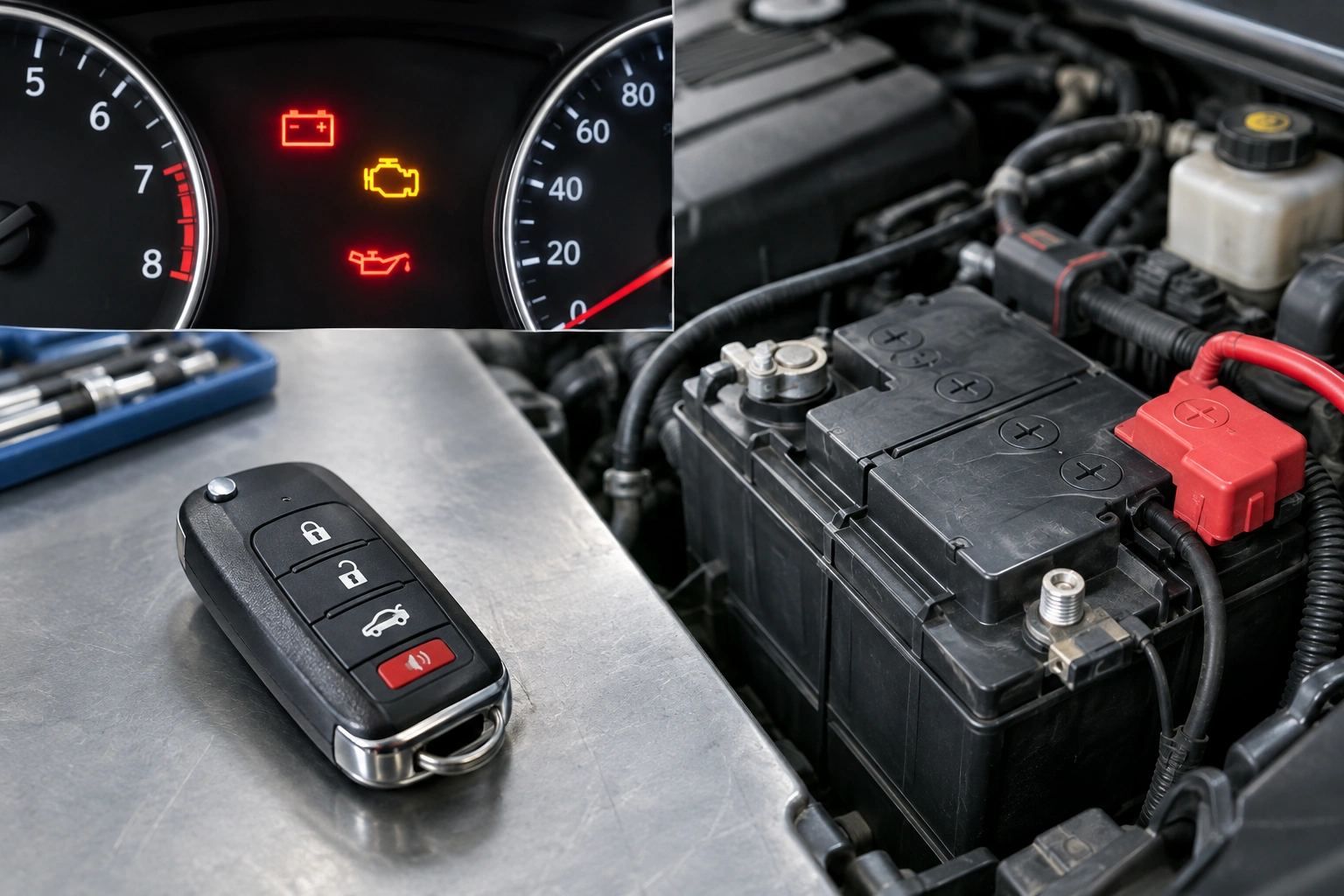
The tricky part is that relearn issues can look a lot like other problems. A weak fob battery can cause weak signals. A damaged fob can work only sometimes. A receiver or immobilizer issue can create the same frustration. So before you replace parts or pay for programming, it helps to read the symptoms the right way.
Key Fob Relearn Symptoms: What They Look Like
The most common clue is inconsistency. If the fob works one minute and then stops the next, that often points to a communication problem rather than a totally dead fob.
Here are the symptom patterns I watch for:
- The lock and unlock buttons work only sometimes.
- The trunk release works, but the doors do not.
- The panic button fails even though the fob has a fresh battery.
- The car responds only when the fob is very close to the vehicle or start button.
- One fob works normally, but another fob on the same car does not.
- The car starts, but the remote buttons do nothing.
That last one matters. It usually means the vehicle can still recognize the transponder or immobilizer portion of the fob for starting, while the convenience functions like lock, unlock, and trunk release have stopped working. In other words, the remote-button system may be affected even if the start authorization system is still fine.
The reverse can happen too. A fob may unlock the doors but fail to let the car start. That points more toward an immobilizer or transponder problem than a simple remote sync issue.
Is It a Battery Problem, a Sync Problem, or a Bad Fob?
This is where people waste the most money. They replace the fob, then the battery, then pay for programming, only to find the real issue was something simpler.
Use this quick comparison:
| Symptom pattern | Most likely cause | Best next step |
|---|---|---|
| Buttons are weak, short-range, or intermittent | Weak key fob battery | Replace the fob battery first |
| Fob battery is fresh, but buttons still fail inconsistently | Sync/relearn issue or receiver issue | Try a relearn, then test another fob |
| Car starts, but remote buttons fail | Remote communication problem | Check for relearn or receiver issue |
| Fob never works, even after battery replacement | Damaged fob, wrong fob, or programming issue | Verify compatibility and test a spare |
| Both starting and remote functions fail | Immobilizer, programming, or vehicle-side fault | Professional diagnosis may be needed |
A weak battery can mimic a relearn problem because the fob may still send enough signal to work occasionally. If the battery is old or you’re not sure when it was last changed, replace that before doing anything else. It’s the cheapest possible test.
If the battery is already good, and the symptoms are still inconsistent, a relearn issue moves higher on the list.
A dead or weak vehicle battery can also cause a temporary no-recognition problem even when the key fob itself is fine. Low vehicle voltage may make modules behave unpredictably after a jump-start, battery replacement, or other electrical event. If the car battery is weak, address that before assuming the fob has failed.
For a deeper look at related failure patterns, see our guides on key fob receiver problem symptoms and key fob immobilizer problem symptoms.
What Usually Triggers a Key Fob Relearn Issue
Most relearn problems show up after an electrical event. That doesn’t mean the fob is bad. It means the car and fob may have lost their stored relationship.
Common triggers include:
- Replacing or disconnecting the vehicle battery
- Jump-starting the car
- A weak or failing vehicle battery
- Replacing the key fob battery
- Swapping in a replacement fob
- A power interruption during programming
- A reset or module memory issue after electrical work
A practical example: a driver replaces the car battery, and afterward the lock button works only every third press. That doesn’t automatically mean the new battery caused damage. More often, it means the system needs to re-establish communication.
Another example: the fob battery was just changed, but the car still won’t respond to lock and unlock commands. That points away from a simple battery issue and toward sync, compatibility, or receiver trouble.
A quick note here: some vehicles need a specific relearn or resync procedure after a key fob battery replacement, while others do not. Don’t assume every car behaves the same. If the problem started right after a battery swap, check the owner’s manual or model-specific instructions before deciding the fob is bad.
Step-by-Step Troubleshooting Before You Relearn
Do these checks in order. It saves time and prevents unnecessary programming.
1. Replace the fob battery if it’s old or uncertain
This is the fastest elimination step. A weak battery can make the fob seem “half dead,” especially if the buttons work only at close range.
2. Test a spare fob, if you have one
A working spare tells you a lot. If the spare works normally, the problem is probably in the original fob, not the car. If both fobs act the same way, the car or receiver side becomes more suspicious.
3. Check whether the vehicle battery is healthy
A weak car battery can create weird electronics behavior, especially after a recent jump-start or battery replacement. If the dash is dim, accessories are acting up, or the battery is old, address that before chasing fob programming.
4. Separate “starting” from “remote buttons”
Ask two questions:
– Does the car start with the fob present?
– Do the lock, unlock, trunk, and panic buttons work?
If starting works but the buttons do not, that often points to a remote sync issue rather than a full immobilizer failure.
5. Try the fob in the correct location
Some vehicles will recognize a weak fob only when it is held very close to the start button or placed in a designated backup spot. If that works, it suggests the fob may still be transmitting, but not strongly enough for normal use.
How to Tell If a DIY Relearn Is Worth Trying
Use this rule of thumb: try a DIY relearn only when the problem is limited to the remote functions, the fob battery is fresh, and the issue started after a battery event or other electrical interruption. If the car still starts normally or another fob behaves differently, that’s another sign a relearn may be worth attempting.
DIY relearn is a reasonable bet when:
- The vehicle manual mentions a self-programming or relearn procedure
- Only the remote functions are affected
- You have a fresh fob battery
- A spare fob behaves differently from the problem fob
- The issue started right after a battery disconnect, jump-start, or replacement
Stop and move to professional help when:
- The car does not support manual programming
- Neither the remote buttons nor the start function works
- The fob is physically damaged
- You’ve already tried the correct procedure several times with no change
- The vehicle seems to have an immobilizer or receiver fault
If your owner’s manual gives a procedure, follow that first. If it doesn’t, don’t guess. A wrong sequence can waste time and sometimes exit programming mode before anything is saved.
When the Problem Needs Dealer or Locksmith Programming
Some vehicles require an OBD-II scan tool, immobilizer access, or manufacturer-level programming. That’s especially true when the fob is tied into the car’s security system and manual relearn is not supported.
You usually need professional help when:
- The vehicle won’t enter relearn mode
- The car requires scan-tool programming
- The fob was replaced and the system must learn it from scratch
- The immobilizer light stays on or flashes abnormally
- All fobs fail at the same time
- Relearn attempts keep failing for no clear reason
Repeated programming failure can mean the fob itself or the vehicle receiver is faulty. That’s a useful fork in the road: if the same steps fail over and over, the issue may not be “bad technique.” It may be a bad part.
A locksmith is often the better first call if you want someone who can diagnose both the fob and the vehicle without dealership pricing. If the car uses advanced security features, though, a dealer may be the only source with the right programming access.
Symptoms That Point to a Faulty Fob or Vehicle-Side Issue
Not every bad fob symptom is a relearn symptom. Some patterns point elsewhere.
Signs the fob itself may be failing
- Buttons feel mushy, damaged, or inconsistent
- The case is cracked or water-damaged
- The fob only works after being pressed hard
- The battery terminals look corroded
- The problem follows one specific fob, while a spare works fine
If you want to dig into that side of the diagnosis, our article on key fob circuit board damage symptoms can help separate internal fob failure from a simple sync issue.
Signs the vehicle may be the problem
- Every fob has the same failure pattern
- The car’s receiver seems to miss signals from normal range
- Other electronic issues appeared after a battery or electrical repair
- The immobilizer light behaves oddly
- The car only recognizes the fob intermittently, even after battery checks
That’s when the problem may be in the receiver, the immobilizer system, or another vehicle-side module rather than the fob itself.
Key Fob Relearn vs Reprogramming vs Battery Replacement
These terms get mixed up all the time, but they are not the same fix.
Battery replacement
This is the first thing to try when the fob is weak, short-range, or intermittent. It’s low cost and quick, but it won’t fix a lost sync if the car and fob no longer recognize each other.
Relearn or resync
This is the middle ground. The fob still has life, but the vehicle and remote need to re-establish communication. It may be possible at home on some vehicles, but not all.
Reprogramming
This is a deeper reset or registration process. It can be needed after fob replacement, module changes, or certain security-related issues. It usually takes more equipment or vehicle-specific steps.
If you’re unsure which one you need, use the symptom pattern. Weak range suggests battery. Inconsistent communication after an electrical event suggests relearn. Total failure across all fobs suggests programming or a vehicle-side problem.
When to Consult a Locksmith
Call a locksmith or dealer sooner rather than later if:
- You have no spare fob to compare against
- The car won’t start reliably
- You’ve already tried the correct relearn procedure and it failed
- The vehicle does not support manual relearn
- The immobilizer warning light stays on
- You suspect the receiver or security module is involved
That’s especially important if the car is your daily driver and you can’t afford to get stranded. A no-start issue is more than an inconvenience when the vehicle may not recognize the fob at all.
Frequently Asked Questions
Can a key fob lose sync after a battery change?
Yes. A vehicle battery disconnect, jump-start, or even a fob battery replacement can sometimes lead to a sync issue, depending on the make and model.
Will my car still start if the remote buttons stop working?
Sometimes yes. The start authorization and the remote lock/unlock functions can fail separately, so a car may still start even when the buttons don’t work.
How do I know if it’s the battery or relearn issue?
If the fob is weak, short-range, or only works close to the car, replace the fob battery first. If the battery is new and the symptoms are still inconsistent, a relearn issue becomes more likely.
Can I relearn the fob myself?
Some vehicles allow manual relearn procedures. Others require dealer or locksmith programming. Check the owner’s manual for your exact model.
What if the relearn process keeps failing?
Repeated failure can point to a bad fob, a faulty receiver, incorrect compatibility, or a vehicle-side issue. At that point, professional diagnosis is usually the fastest path.
Bottom Line
If your key fob works sometimes, fails after a battery event, or behaves differently from a spare, the symptoms may point to a relearn or sync issue rather than a dead fob. The key distinction is whether the problem affects remote buttons, starting, or both. Check the battery first, compare the spare if you have one, and then decide whether your vehicle supports a manual relearn. If the problem affects starting, every fob, or keeps coming back after attempts, it’s time to bring in a locksmith or dealer with the right programming tools.
