
Can You Deactivate a Lost Car Key? What Drivers Should Do Next

Losing a car key is stressful because the risk is not just inconvenience — it is access. The short answer is: sometimes, yes, a lost car key can be deactivated, but the method depends on the key type and the vehicle’s security system. On many newer vehicles, the missing key’s electronic ID can be removed from the car’s memory so it no longer starts the engine. On older vehicles, or if the key is a simple mechanical blade, electronic deactivation may not solve the whole problem because the physical key may still open the door or ignition.
What to do first
– Confirm the key type: mechanical, transponder, or smart key
– Secure the vehicle and move it to a safer location if needed
– Gather the VIN and proof of ownership
– Contact a locksmith or dealer and ask whether they can delete the lost key
That is why the first question is not “Can I deactivate it?” but “What kind of key did I lose?” A transponder key, remote fob, and smart key all behave differently. In practice, deactivation often means reprogramming the car to stop recognizing the missing key, not “turning off” the key itself. If the key may have been stolen, the safest move is to act quickly and treat it like a security issue, not just a lost item.
Key Type Determines What Can Be Disabled
A car key is not always just a key. The security system behind it changes what “deactivation” actually means.
Mechanical key
A mechanical key is the simplest type. It has no chip, no battery, and no electronic signal. If you lose one, there is usually nothing to “deactivate” electronically. The real risk is physical access: if someone finds the key and it still fits the door or ignition, they may be able to use it.
For that reason, a mechanical-key problem is often solved by rekeying the locks or replacing the affected cylinders, especially if the key was stolen or had identifying information attached to it.
Transponder key
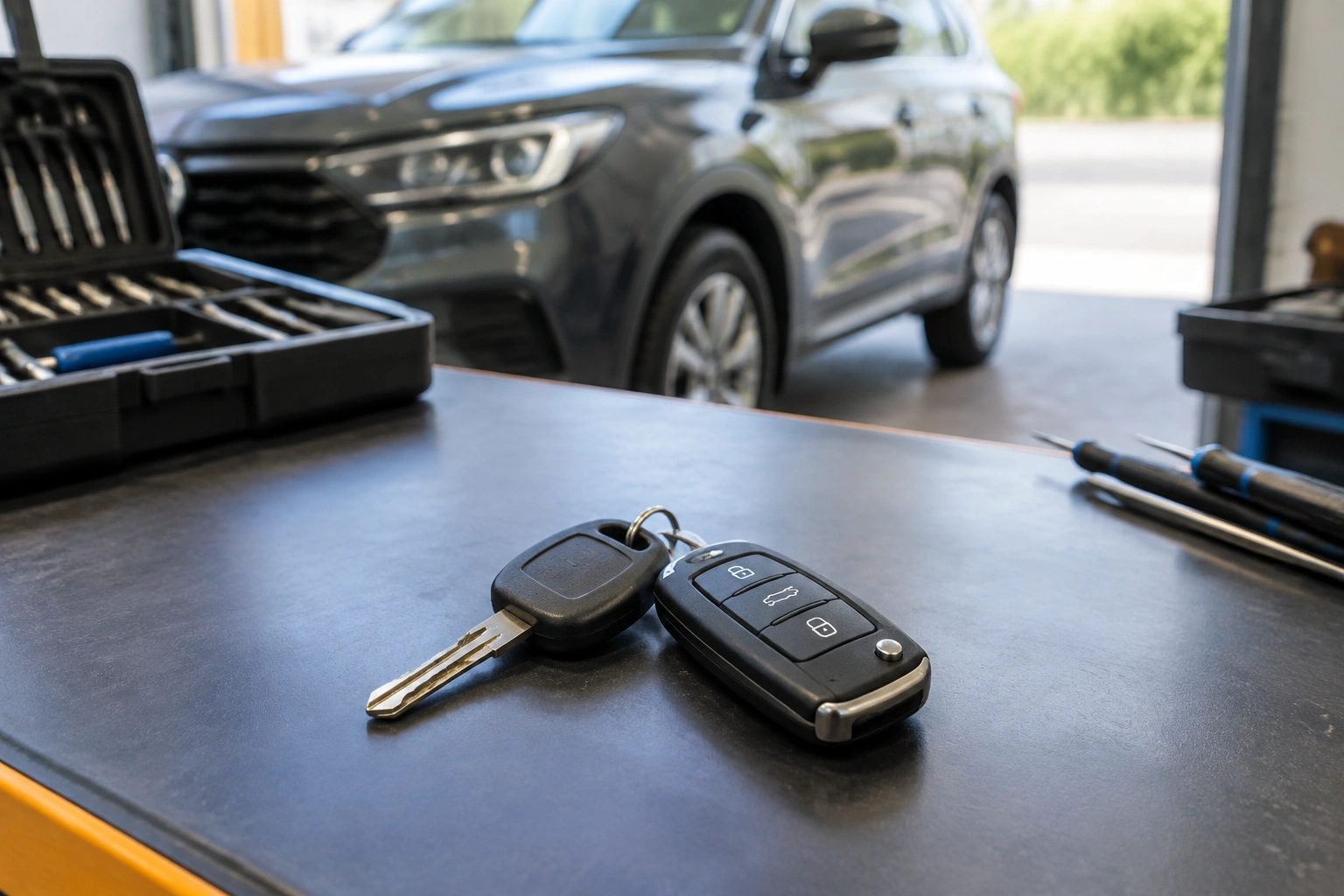
A transponder key has a chip that communicates with the vehicle’s immobilizer. The car checks whether the chip ID is authorized before it allows the engine to start. If the lost transponder key is removed from the car’s memory, it should no longer be able to start the vehicle.
That said, some transponder keys still have a mechanical blade. So even if the chip is deactivated, the blade may still unlock doors if the lock has not been changed.
Smart key or key fob
A smart key or push-to-start fob is the most security-sensitive type in this discussion. These systems often rely on proximity and encrypted authorization. If the vehicle supports it, the missing fob can sometimes be deleted from the list of accepted devices.
But there is an important trade-off: deactivating the fob may stop the start function, yet it may not address every physical access risk. If the fob includes a hidden blade, or if the car’s door locks were never changed, the missing key can still matter.
Quick Comparison: What Deactivation Usually Means
| Key type | Can it usually be deactivated electronically? | Does physical access still matter? | Who commonly handles it? | Typical outcome |
|---|---|---|---|---|
| Mechanical key | No | Yes | Locksmith, dealer | Rekey or replace locks/keys |
| Transponder key | Often yes | Sometimes | Locksmith or dealer | Delete lost key ID, keep other keys |
| Smart key / key fob | Often yes, depends on vehicle | Sometimes | Dealer or advanced locksmith | Reprogram vehicle to reject missing fob |
This is the practical rule: electronic deactivation protects the start system; lock changes protect the physical entry points. You may need one, the other, or both.
What You Need Before You Start
Before you call anyone, gather the details that determine what can be done and how fast it can happen.
- Vehicle year, make, and model
- VIN
- Proof of ownership such as registration and ID
- Any remaining working keys
- Whether the lost key was mechanical, transponder, or smart
- Whether you suspect it was stolen
- Contact information for a dealership or automotive locksmith
The VIN matters because it helps identify the exact immobilizer and key system. Proof of ownership is required because legitimate key programming involves access control, not just cutting metal. If you still have one working key, that can make reprogramming easier on many vehicles. If you have no spare, the job may take longer and cost more.
If you are also trying to figure out whether your missing key is part of a broader fob issue, our guide on lost car key locksmith help explains how locksmiths usually handle replacement and programming.
How to Deactivate a Lost Car Key
There is no universal button you press to disable a missing key. The process usually follows a security and programming sequence.
1) Decide whether this is a loss problem or a theft problem
If the key was simply misplaced inside your home or office, the urgency is lower. If it disappeared from a gym, restaurant, parking lot, or vehicle, treat it as potentially stolen. That changes the timeline. A stolen key can be used quickly, especially if it is easy to connect the key to the owner or vehicle.
2) Identify the key type
Look at your spare or the owner’s manual. If the key has a chip or buttons, you are probably dealing with a transponder key or smart key. That usually means the vehicle can be reprogrammed to reject the missing key.
If it is a plain metal key, the issue is more likely mechanical access. In that case, deactivation alone may not protect the car.
3) Check whether the vehicle supports key deletion
This is where make, model, and year matter. Some vehicles allow a locksmith or dealer to remove one key ID and keep the rest. Others require a full reprogramming session. A few older systems do not offer a clean “delete one key” option at all, and some may require all existing keys to be reprogrammed together or, in limited cases, immobilizer or lock replacement work.
This is why you should avoid assuming every car works the same way. A 10-year-old sedan and a newer push-to-start SUV can require completely different procedures.
4) Choose the service path: dealer or automotive locksmith
A dealer may have the broadest OEM access for certain models, especially when the key system is newer or tied closely to manufacturer software. An automotive locksmith can often be faster and may be able to come to you, which matters if you are stranded.
The better choice depends on your vehicle and your situation:
- Choose a locksmith when speed, mobile service, and cost matter most.
- Choose the dealer when the vehicle is newer, the system is complex, or the locksmith confirms dealer-only programming.
For many drivers, the best approach is to call both and ask one question: Can you remove a lost key from my vehicle’s system, and do you need all remaining keys present?
5) Reprogram or replace access credentials
If the vehicle supports it, the technician may remove the lost key from the immobilizer or keyless-entry list and then add new credentials if needed. If the lost key was the only key, the technician may need to create a new one first, then program the system around it. In some cases, the vehicle must be present for this work, and some makes/models/years simply do not support single-key deletion.
This step is the heart of deactivation. The lost key is not physically destroyed; it is simply no longer accepted by the car.
6) Test every remaining key
After programming, confirm that your working keys still start the car and that the missing one no longer does. If you have multiple keys, testing them now avoids surprises later.
When Reprogramming Is Enough vs When You Need New Locks
This is the decision point most drivers miss.
Reprogramming is usually enough when:
- The lost key is a transponder key or smart key
- The vehicle’s system can delete the missing key ID
- You still have at least one working key
- You are mainly worried about the engine start function
New locks or rekeying may be needed when:
- The lost key is a plain mechanical key
- The key has a blade that still fits the door or ignition
- The car was stolen, not just misplaced
- The key was attached to identifying information
- The vehicle’s physical locks are compromised or too easy to access
Here is the simple rule: if the missing key can still physically open the car, electronic deactivation alone may not be enough. That does not mean you always need new locks, but it does mean you should ask whether the door and ignition cylinders are still vulnerable. If the key was stolen and still has a mechanical blade, deactivating the chip or fob may stop the car from starting, but it may not stop someone from getting inside.
Dealer vs Automotive Locksmith: Which Should You Call?
Both can help, but they solve the problem differently.
Dealer
A dealer is often the safer bet for newer vehicles, brand-specific procedures, or cases where the manufacturer controls the programming path. That is especially relevant when the key system is tied closely to OEM software.
The downside is usually convenience. You may need to tow the car, wait for an appointment, or spend more time on the job.
Automotive locksmith
An automotive locksmith can be the faster option, especially if you need mobile service or you are locked out and do not want to tow the car. A locksmith with the right equipment may be able to delete the lost key, program a replacement, and verify that the old one no longer works.
The trade-off is capability. Not every locksmith handles every make and model, and some newer systems still require dealer tools. Some locksmiths can perform full key deletion, while others only cut and program replacement keys, so capability varies by vehicle and equipment.
If you want a practical first call, ask:
1. Can you deactivate the missing key?
2. Can you program a replacement?
3. Do you need the vehicle present?
4. Do you need all working keys to do it?
Those four answers usually tell you which path is realistic.
What Happens to Your Other Working Keys
In many cases, your remaining keys can still work after the lost one is removed. That is the ideal outcome: the missing key is deleted, and your spares stay valid.
But there are two important exceptions:
- Some vehicles require all keys to be present during programming. If one is missing, the system may need to be reset or programmed in a way that affects the whole set.
- Some reprogramming procedures replace the entire key list. In that case, every key that should still work must be added again.
This is why you should not assume you can lose one key and keep using the others without any change. Ask the technician whether the job will remove only the missing key or rebuild the whole set.
Lost Key vs Stolen Key: Security Differences
A lost key is a convenience problem until you know otherwise. A stolen key is a security problem immediately.
If the key is likely stolen:
– Move quickly
– Ask about removing the key from the immobilizer or fob list
– Consider rekeying mechanical locks if the blade could still open the car
– Avoid leaving the vehicle in unsecured places until the issue is handled
If the key is merely lost:
– You may still want to deactivate it, especially if it had a chip
– The urgency is lower, but the risk is not zero
– If the key turns up later, it may no longer work after reprogramming
That last point is actually a benefit. A found key that no longer starts the car can be a sign the security step worked, though it does not necessarily mean every physical access risk has been eliminated.
Cost and Time Expectations
There is no single price that fits every vehicle. Costs depend on the key type, the vehicle’s programming system, whether a replacement key is needed, and whether you choose a dealer or locksmith.
Practical cost tiers:
– Mechanical rekeying or lock replacement: usually the lowest-cost tier
– Transponder key programming and replacement: mid-range, because the chip and programming both matter
– Smart-key deletion and replacement: usually the highest-cost tier, especially if the vehicle needs advanced programming or all keys to be re-added
In general:
– Mechanical keys are usually the least expensive to replace
– Transponder and smart keys typically cost more because of programming
– Dealer service may cost more but can be the right choice for OEM-only systems
– Mobile locksmith service may save you towing time and hassle
Time can also vary widely. A simple programming job may be quick if the technician has the right equipment and the vehicle cooperates. A no-spare situation, older immobilizer, or dealer-only system can take longer. If the vehicle must be present, that can add towing or scheduling time as well.
The useful question is not “What does it cost?” but “What will it take to make the missing key useless and restore reliable access for me?” That may include programming, replacement, rekeying, or all three.
Practical Examples
Example 1: Lost transponder key in a parking lot
A driver loses a chipped key after shopping. The car still has one spare. In this case, a locksmith or dealer may be able to remove the missing key from the immobilizer and leave the spare working. If the blade was also part of the key, the owner should ask whether the door lock is still vulnerable.
Example 2: Push-to-start SUV with a missing smart key
A family member cannot find a smart key after a weekend trip. Because the car uses proximity access, they should treat it as a security issue and ask for key deletion right away. If the vehicle supports it, the missing fob can be removed from the accepted list. If there is a hidden blade, that may need separate attention.
Example 3: Older sedan with a mechanical key
The owner loses the only metal key. There is no chip to delete, so deactivation is not the right first answer. The real fix is usually replacement and rekeying, because the old key could still fit the locks if someone finds it.
Common Mistakes to Avoid
The biggest mistake is waiting too long. If the key was stolen, every hour matters more than most drivers realize.
Other common errors:
– Assuming every car can delete one lost key the same way
– Forgetting that the mechanical blade may still work even after chip removal
– Calling only one provider and not asking whether all keys must be present
– Choosing replacement without confirming whether the old key still opens the car
– Ignoring the risk when the lost key was attached to identifying information
When to Call an Automotive Locksmith
Call a professional right away if:
– The key may have been stolen
– You have no spare key
– Your vehicle is push-to-start and you want the missing fob disabled quickly
– You are not sure whether the vehicle can be reprogrammed
– You need mobile help instead of towing
– You suspect the missing key still opens the doors
If you are unsure whether the problem is the key, the battery, or the vehicle itself, our article on car battery and key fob problems can help you rule out a dead vehicle battery before you spend money on the wrong fix.
FAQs
Can you deactivate a lost car key remotely?
Usually not by yourself. In most cases, deactivation requires vehicle programming through a dealer or automotive locksmith. Some connected vehicles may have manufacturer features, but that depends on the system.
Can a lost car key be deactivated without the key present?
Often yes, but not always. Many vehicles can remove a missing key from memory without the physical key being present. Some systems, however, require the vehicle to be present, all remaining keys to be available, or a full reprogramming process.
Will deactivating the lost key affect my other keys?
Often no, but not always. Some vehicles let you remove one key and keep the rest. Others require all keys to be reprogrammed.
Can a locksmith deactivate a missing key?
Yes, many automotive locksmiths can handle this if the vehicle and key system are supported. Newer or brand-specific systems may still require a dealer.
If the key was stolen, is deactivation enough?
Not always. If the key can still physically open the car, you may also need rekeying or lock replacement.
What if I lost the only key?
That usually makes the job more involved. The technician may need to create a replacement first, then program the vehicle around it. Some cars require dealer-only service in that situation, and some older vehicles cannot delete a single lost key without reprogramming all keys or replacing the immobilizer or locks.
Do I need the VIN?
Usually yes. The VIN helps identify the exact vehicle and key system, and it is often needed to create or program a replacement key.
The Bottom Line
Yes, a lost car key can often be deactivated, but the real answer depends on the key type and the vehicle’s security system. For transponder keys and smart keys, deactivation usually means deleting the missing key from the car’s memory. For mechanical keys, the fix is often physical rekeying rather than electronic programming. If the key may have been stolen, act quickly and ask whether the missing key can still open the doors, not just start the engine.
