
Lost Car Key Locksmith Help: What to Do, What It Costs, and When a Mobile Pro Can Replace It

Losing a car key is stressful because it creates two problems at once: you may be locked out, and you may also be unable to drive the vehicle at all. The fastest fix is usually not to guess—it’s to identify the key type, confirm whether the missing key is simply lost or possibly stolen, and then choose between a mobile locksmith and the dealer based on what your vehicle actually uses.
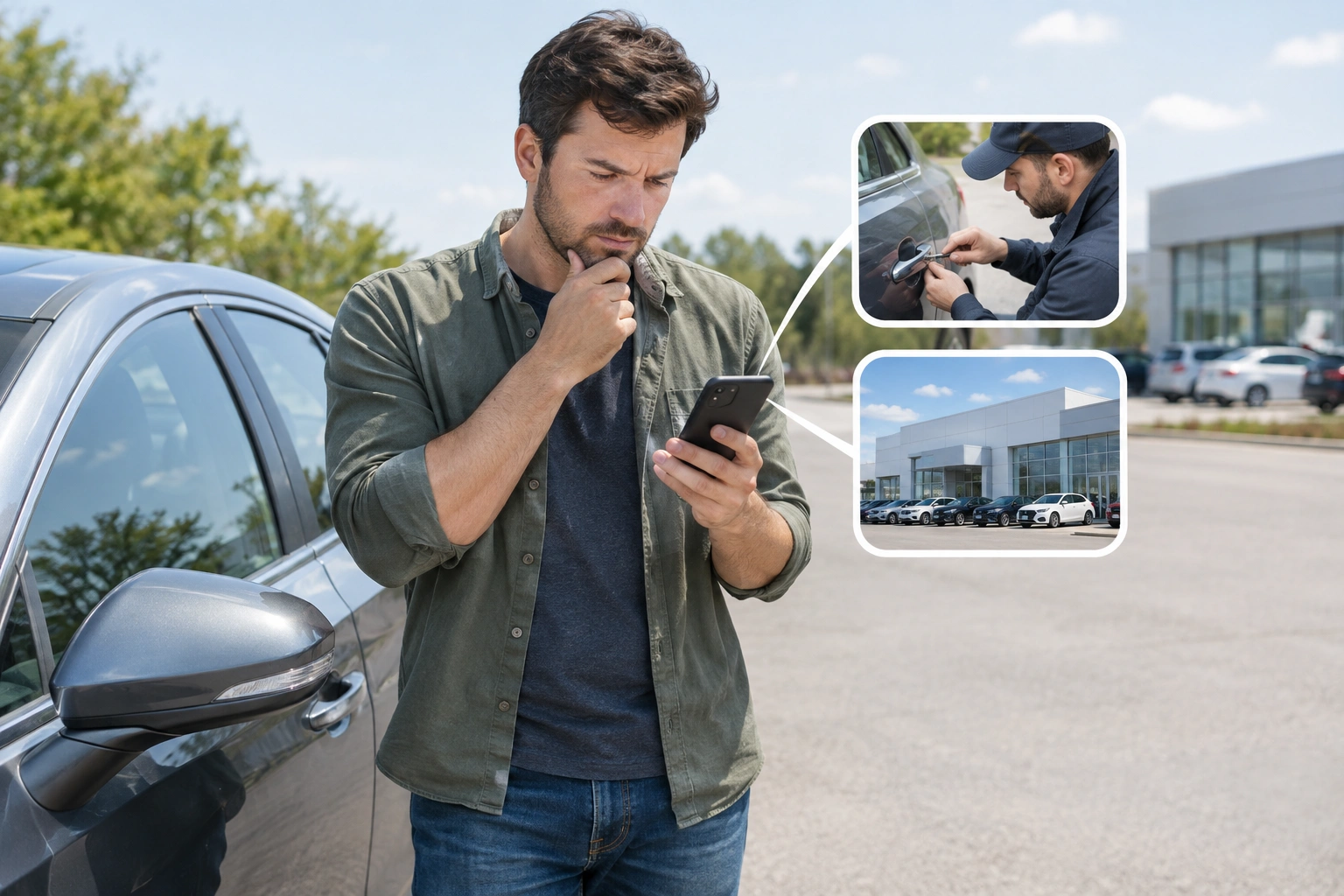
If you’re dealing with a dead, damaged, or unresponsive key fob reader, the same decision process still applies. The difference is that the failure may be in the key, the car’s receiver, the immobilizer system, or the battery—not just the plastic shell in your hand.
What to Do First When You’ve Lost Your Car Key
Before you call anyone, pause and answer one question: is this a lost-key problem, or is it a security problem?
If the key is likely just misplaced, your goal is simple recovery and replacement. If it may have been stolen, or if it disappeared with identifying documents, treat it as a security issue. That changes the next step because the missing key may need to be disabled so it can’t be used later.
A practical first pass looks like this:
- Check the obvious places one more time: pockets, bags, coat linings, the last place you paid, and the area where you last started the car.
- Confirm whether you have a spare key or a remote that still works.
- Identify the vehicle’s key type: metal key, transponder key, remote fob, smart key, or push-to-start fob.
- Decide whether the car is safe where it’s parked.
- Call a locksmith or dealer only after you know what kind of replacement you need.
If the car is stuck in a parking lot, driveway, or roadside location, a mobile locksmith is often the most practical first call because they can come to the vehicle instead of making you arrange a tow.
Can a Locksmith Replace a Lost Car Key Without the Original?
Yes, in many cases. A locksmith does not always need the original key to make a replacement. What matters more is the vehicle’s year, the key system, and whether the car needs programming.
For a traditional mechanical key, replacement is usually straightforward because the locksmith can often cut a new key from the vehicle’s lock code or VIN information. That is often the simplest and least expensive type of replacement.
Once you move into electronic keys, the process becomes more specific. Many automotive locksmiths can handle transponder keys and some key fobs, but the exact answer depends on the vehicle. Transponder keys, remote fobs, and smart keys often have to be paired to the vehicle’s immobilizer system. That pairing is what allows the car to recognize the new key and ignore the old one when needed. A small subset of vehicles with proprietary systems, dealer-only programming, or brand-specific security restrictions may still require the dealer.
That leads to the most useful rule of thumb:
- Simple metal key: locksmith can often replace it quickly.
- Transponder key: many locksmiths can cut and program it, depending on the vehicle.
- Key fob or smart key: many locksmiths can help, but compatibility matters more.
- High-security or proprietary system: dealer service may be required.
If you’re unsure, don’t ask only, “Can you make a car key?” Ask, “Can you replace my exact key type for my year, make, and model without the original?”
Which Key Types a Lost Car Key Locksmith Can Handle
This is the part that saves the most time. Not every locksmith handles every key system, and not every vehicle can be serviced the same way.
Standard mechanical keys
These are the easiest cases. If your car uses a plain metal key with no chip, a locksmith can often cut a replacement on site. No programming is usually involved.
Transponder keys
A transponder key contains a chip that communicates with the car’s immobilizer. The car may physically turn with the key, but it still won’t start unless the chip is recognized. That means the replacement is a two-step job: cut the blade and program the chip.
Remote key fobs
A remote fob may lock and unlock the car, and in some vehicles it also starts the engine. Some fobs are easier to replace than others. The key question is whether the fob is only a remote, or whether it also contains a transponder or smart-key function.
Smart keys and push-to-start systems
These are the most sensitive to compatibility. The vehicle must recognize the fob wirelessly, which usually means the new key has to be programmed to the car. This is where some locksmiths can help and others cannot.
A quick decision table
| Key type | Can a locksmith often help? | On-site replacement likely? | Programming needed? |
|---|---|---|---|
| Standard metal key | Yes | Often yes | Usually no |
| Transponder key | Often yes | Often yes | Yes |
| Remote fob | Sometimes | Sometimes | Often yes |
| Smart key | Sometimes | Sometimes | Yes |
| Push-to-start fob | Sometimes | Sometimes | Yes |
The table is a shortcut, not a promise. Vehicle year, trim, and immobilizer design can change the answer.
What Information and Proof You’ll Need Before the Locksmith Arrives
A good locksmith will ask for proof of ownership before making a replacement. That protects you from unauthorized duplication and helps the locksmith verify the correct key code.
Have these ready:
- Vehicle year, make, model, and trim
- VIN
- Driver’s license or other government-issued photo ID
- Vehicle registration or title
- A digital photo or scan of the registration or title if you don’t have the paper copy with you
- Location of the vehicle
- Whether the car is locked, unlocked, or already open
- Whether the missing key may be stolen
- Whether you have any spare key that still works
The VIN matters because it helps identify the vehicle exactly and can sometimes help with key coding. Proof of ownership matters because a locksmith should not make a key for a vehicle unless the requester can show they’re authorized to do so.
If the car is parked at home, you’ll usually have time to gather this paperwork. If you’re stranded somewhere, put the documents in a photo folder on your phone so you can send them quickly when requested.
How the Replacement Process Works Step by Step
Once the locksmith confirms compatibility, the process usually follows a predictable order.
1) Verification
The locksmith checks your ID, registration, VIN, and vehicle location. This is the point where many delays happen if the paperwork is missing.
2) Key identification
The locksmith identifies the correct blank or fob style for your vehicle. This matters because two keys that look similar may use different chips or programming methods.
3) Cutting the key, if needed
For mechanical and transponder keys with a blade, the locksmith cuts the new key to match the vehicle.
4) Programming
If the key contains a chip or wireless function, the locksmith programs it to the vehicle. In many modern systems, this is the step that makes the car accept the new key and reject the old one.
5) Testing
The locksmith tests lock, unlock, start, and remote functions before leaving. That final test matters because a key can sometimes lock and unlock but still fail to start the engine.
A simple replacement can be completed on site if the vehicle and key system are compatible. More complex systems may require special equipment or dealer-level access.
How Much a Lost Car Key Locksmith Usually Costs
There isn’t a universal price, and you should be careful with any quote that sounds too neat. Cost depends on the key type, programming requirements, travel time, and whether the service is emergency or after-hours.
A realistic way to think about cost is by what drives it:
- Basic mechanical key: usually the least expensive
- Transponder key: more expensive because of cutting and programming
- Remote fob or smart key: higher still because the electronics add cost
- Emergency or after-hours service: often adds a premium
- Security reprogramming: may add labor if the missing key needs to be disabled
- Towing: may be unnecessary with mobile service, but it can add cost if the vehicle must go to a shop or dealer
Estimated common ranges in USD, just to help you judge whether a quote is in the right ballpark:
- Basic mechanical key: about $50–$150
- Transponder key replacement: about $100–$250
- Remote fob or basic fob replacement: about $150–$350
- Smart key or push-to-start key: about $200–$500+
- After-hours or emergency mobile service: may add $50–$150+ depending on location and timing
These are estimates, not guarantees. Some vehicles are much cheaper, and some are significantly more expensive because of programming complexity, key availability, or dealer-only access. If you’re comparing quotes, ask for the total price including the key, cutting, programming, travel, and any emergency fee. That’s the only way to compare apples to apples.
A quote that looks cheaper can become more expensive if it excludes programming. That’s the most common pricing trap.
Locksmith vs Dealership: Which Is Faster, Cheaper, and Better for Your Situation?
This is the decision most drivers need to make quickly.
| Factor | Locksmith | Dealership |
|---|---|---|
| Speed | Often faster for urgent help | May take longer, especially with appointments |
| Convenience | Mobile service may come to you | Usually requires you to bring or tow the vehicle |
| Key types handled | Many common keys, some smart keys | Often strongest on brand-specific systems |
| Cost structure | Often more flexible | Can be higher, especially with towing |
| Best for | Lost key emergencies, roadside situations, common key types | Highly specialized or dealer-only systems |
A qualified local locksmith is often the better first call when the car is stranded and you need a working key quickly. The dealership becomes the better option when the vehicle uses a system the locksmith can’t access or when the manufacturer requires proprietary programming.
The practical trade-off is simple: locksmiths often win on convenience and speed, while dealers may win on brand-specific capability. If your car is a newer push-to-start model, call and confirm compatibility before assuming the locksmith can handle it.
Do You Need Towing, or Can a Mobile Locksmith Come to You?
Many lost-key situations do not require towing. That’s one of the biggest advantages of a mobile locksmith. If the car is parked where the locksmith can safely access it, they may be able to cut and program the new key on site.
Towing becomes more likely when:
- the vehicle must go to a dealer for proprietary programming,
- the car is in a location that can’t be serviced safely,
- the locksmith cannot verify the key system in advance,
- or the vehicle has another issue that prevents programming on site.
If you’re deciding between towing and mobile service, compare the tow cost plus dealer time against the locksmith’s on-site quote. In many cases, the mobile option is easier simply because it avoids moving the vehicle at all.
If the Key Might Be Stolen: Security Steps You Should Take Immediately
This is where lost-key replacement becomes more than a convenience issue.
If the key was stolen, or if you lost it with identifying information, ask whether the missing key can be disabled from the vehicle’s memory. On many systems, that matters because the old key may still work unless the car is reprogrammed to reject it.
That decision is worth making sooner rather than later. A replacement key restores access, but it does not automatically make the missing key harmless.
Use this rule:
- Lost and likely harmless: replace the key and keep moving.
- Lost and possibly stolen: replace the key and ask about reprogramming or disabling the missing one.
If the missing key was taken from a public place, from a car wash, or along with your registration, treat it as a security risk until proven otherwise.
Common Problems and Mistakes That Delay Replacement
Most delays come from avoidable mismatches.
Calling before checking the key type
A locksmith may be able to help, but only for certain systems. If you don’t know whether your car uses a transponder key, smart key, or push-to-start fob, ask before booking.
Not having proof of ownership
This is one of the most common reasons a service call gets delayed. A locksmith needs to verify the vehicle belongs to you or that you’re authorized to request the key.
Accepting an incomplete quote
If programming, travel, or emergency fees aren’t included, the final bill may be higher than expected.
Assuming the old key is harmless
If theft is possible, replacement alone may not be enough.
Waiting too long to call
If the car is stranded and you have no spare, waiting usually doesn’t improve the situation. It only increases the chance of needing towing or after-hours service.
When to Call an Automotive Locksmith
Call an automotive locksmith right away if any of these are true:
- you lost your only key,
- the car uses a transponder, fob, or smart-key system,
- you need on-site help where the car is parked,
- the missing key may be stolen,
- or you want to avoid towing unless it’s truly necessary.
A locksmith is often the best first call when speed, convenience, and on-site service matter most. If the vehicle turns out to need dealer-only programming, a good locksmith can usually tell you that before you waste time and money on the wrong option.
FAQs
Can a locksmith make a new car key without the original?
Often yes. Mechanical keys are usually the easiest, and many transponder or fob systems can also be handled by a qualified automotive locksmith. The exact answer depends on the vehicle.
Will a locksmith need my VIN?
Usually yes, or at least the year, make, model, and proof of ownership. The VIN helps identify the vehicle and supports key-code lookup.
Can a locksmith program a transponder key or key fob?
Sometimes. Many can, but not every locksmith supports every vehicle or smart-key system. Confirm compatibility before scheduling.
How long does replacement take?
It varies by vehicle and key type. A simple key is usually faster than a programmed fob, and emergency availability can affect timing.
Is a locksmith cheaper than the dealership?
Often, but not always. The better comparison is the total cost, including programming, travel, and towing if needed.
What if my lost key might have been stolen?
Ask about disabling the missing key or reprogramming the vehicle so the old key no longer works. That’s the safer choice when theft is a possibility.
Do I need to tow the car?
Not always. A mobile locksmith may be able to come to the vehicle and complete the job on site. Towing is more likely when dealer-only programming is required.
What if the key is dead, damaged, or the fob reader is unresponsive?
If the car won’t recognize the fob, the issue may be the key, the vehicle’s receiver, or the immobilizer system. A locksmith can help you sort out which side of the problem is failing before you spend money on the wrong part.
Can a locksmith replace a smart key or push-to-start fob?
Sometimes, but these systems are more vehicle-specific. Confirm the locksmith handles your exact year and model before booking.
What should I have ready before the locksmith arrives?
Have your ID, registration or title, a photo of the registration if needed, VIN, vehicle location, and any spare key information ready. That keeps the visit moving and reduces back-and-forth.
