
10 Best Bluetooth OBD2 Scanner for Garage Use: Professional Picks, Features, and Buying Guide

Bluetooth OBD2 scanners let us read a car’s diagnostic data, clear error codes, and monitor live sensor readings right from a phone or tablet. For garage use, a Bluetooth OBD2 unit pairs wirelessly with apps to give quick access to engine, transmission, and emissions information without hauling bulky scanners. These tools range from simple code-readers to advanced adapters that log data, run performance tests, and support multiple protocols for different vehicle makes.
When choosing a garage-grade Bluetooth OBD2 scanner, pay close attention to compatibility with your vehicles and the app ecosystem, the adapter’s protocol support and data update speed, and whether it offers features like live-data recording, freeze-frame capture, and enhanced diagnostics for ABS or SRS. A reliable garage scanner must work with a wide range of cars and deliver fast, accurate live data to help us diagnose problems quickly. We tested and compared several models to find the ones that balance compatibility, features, and ease of use.
Best Bluetooth OBD2 Scanners for Garage Use
Below is our list of the best Bluetooth OBD2 scanners for garage use. We chose options that work well with phones and tablets, give clear diagnostics, and hold up in a busy shop. These picks help us find trouble codes fast and keep vehicles running.
BlueDriver Pro Next-Gen
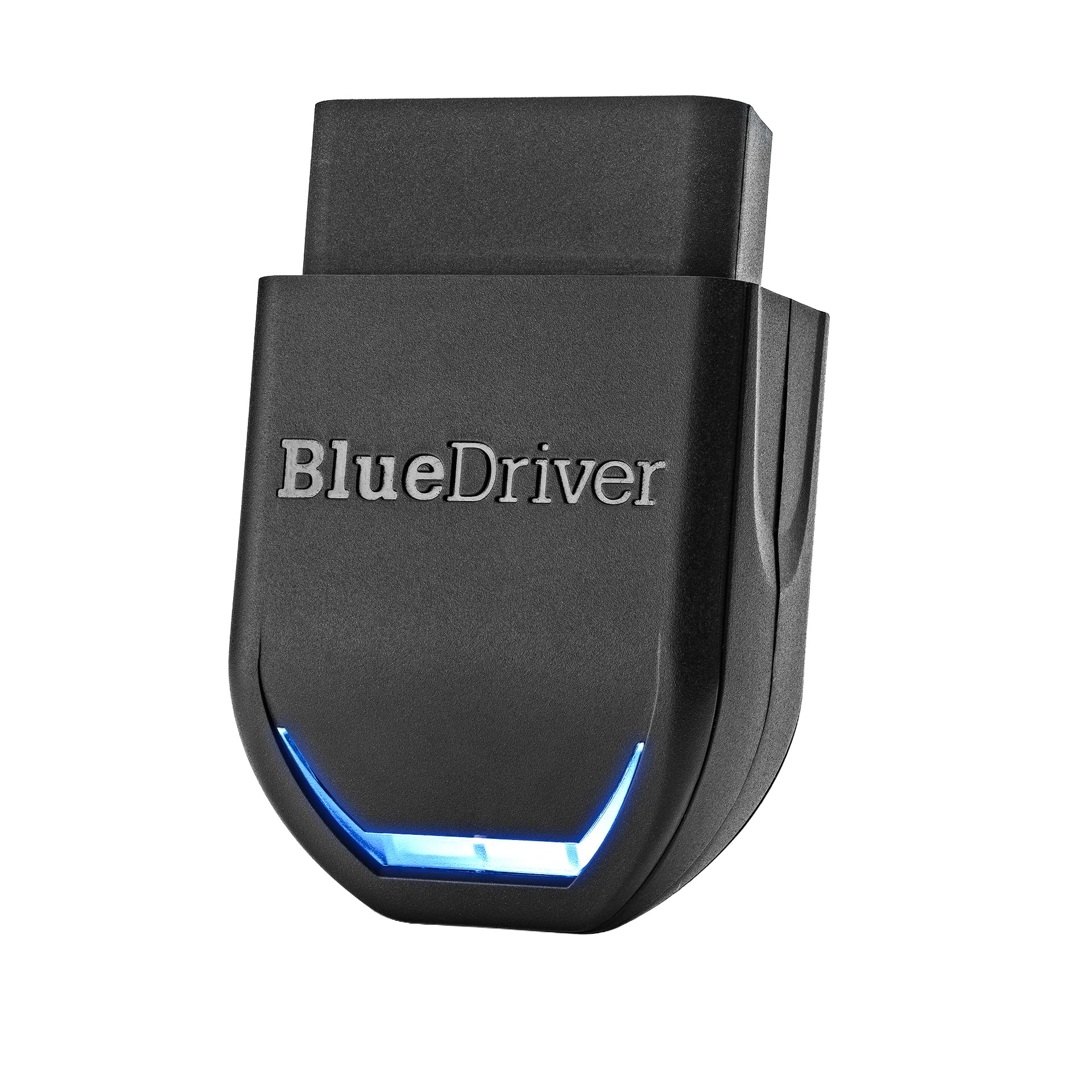
We recommend this if you want a simple Bluetooth scanner that reads deep system codes and gives clear repair guidance.
Pros
- Reads ABS, SRS, transmission, TPMS, and more beyond basic engine codes.
- Easy Bluetooth setup and reliable phone app.
- VIN-tied repair reports cut guesswork on fixes.
Cons
- Not every advanced feature works on all makes or newest models.
- Keeps a port occupied if left plugged in.
- App layout can feel busy when checking lots of live data.
We plugged the BlueDriver into a few cars in our shop and it paired fast with both Android and iPhone. Scanning felt quick and the app gave clear, technician-verified repair notes that saved time when diagnosing intermittent check-engine lights.
We liked watching real-time data streams while road-testing a vehicle. The live graphs and freeze-frame info helped us spot issues the dash didn’t show. Clearing codes was simple and instant, which is handy when confirming a repair.
We did notice some vehicle-specific limits on certain newer models, so we cross-checked compatibility before deep diagnostics. Leaving it plugged into trucks worked for routine monitoring, but it can block the port for other tools. Overall, it handled more advanced systems than basic readers and proved reliable for garage use.
OBDLink MX+

We recommend this if you want a fast, reliable Bluetooth OBD2 adapter that works with many apps and car brands.
Pros
- Very fast and stable Bluetooth connection.
- Works with lots of third‑party apps and Ford/GM enhanced features.
- Built‑in safety features protect the car battery and adapter.
Cons
- Manufacturer app could be easier to use.
- Pricier than basic dongles.
- Some advanced features require specific apps or add‑ons.
We plugged the MX+ into several cars in our garage and it paired instantly with phones and a Windows laptop. Live data streamed smoothly and felt real time, which made tracing intermittent faults much less frustrating.
We used it with Torque, FORScan, and a few brand apps. Coding and ABS/SRS reads came through where cheaper units just showed engine codes. The extra OEM support for Ford, GM, Mazda, and others really made a difference on a couple of tricky jobs.
We kept it connected through long tests and never saw a dropout or surprising battery drain. The case and small size make it easy to move between vehicles, and firmware updates fixed a quirk we hit on an older model car.
VDIAGTOOL D200
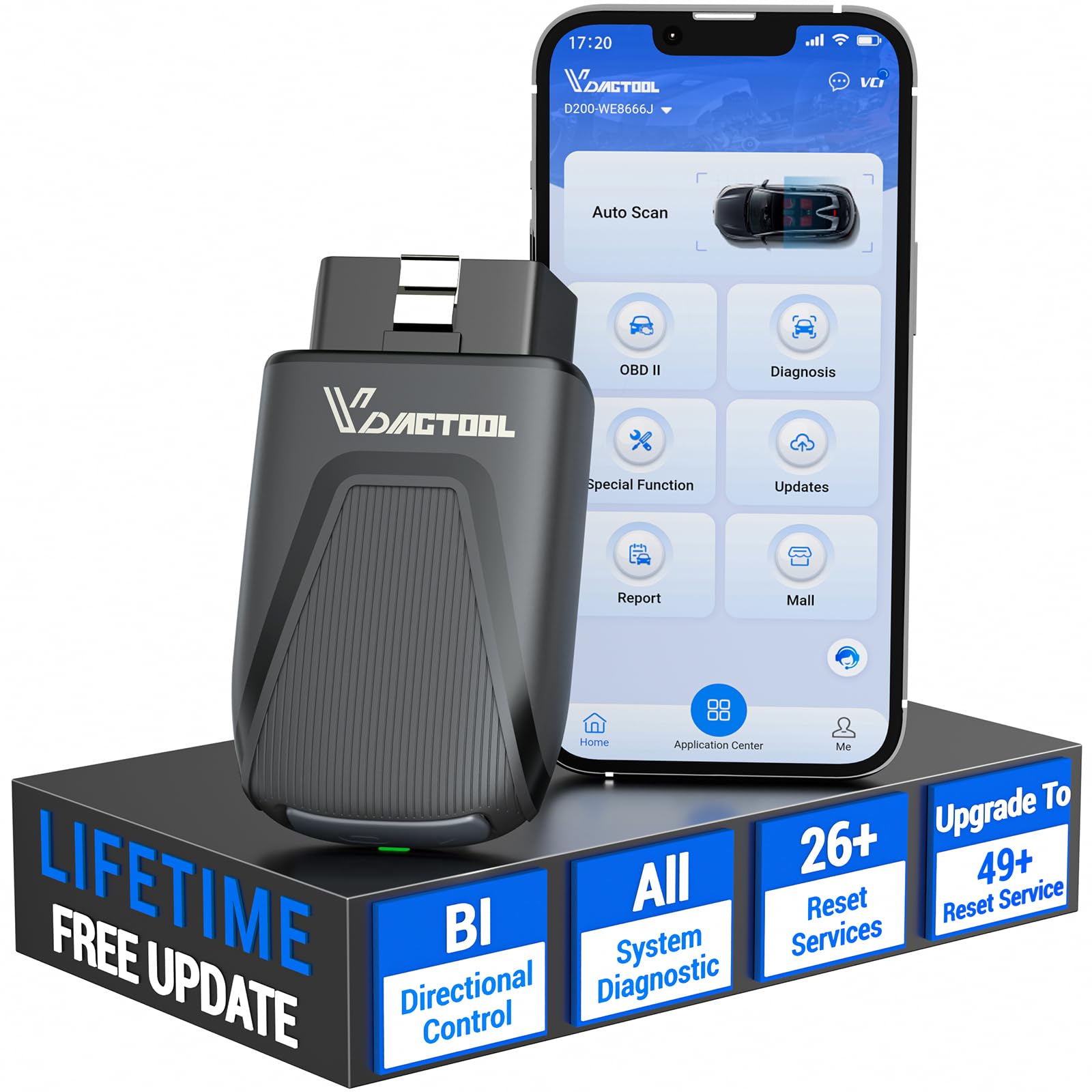
We recommend this if you want a compact, Bluetooth bidirectional scanner that grows with your garage needs and gives fast, app-based diagnostics.
Pros
- Strong bidirectional control for active tests.
- Lifetime free core updates and wireless phone use.
- Compact, easy to store and carry.
Cons
- Some advanced resets require paid upgrades.
- Not for pure electric or heavy-duty trucks.
- App-only workflow may frustrate users who prefer a standalone device.
We used the D200 on several cars in our shop and liked how quickly it paired with phones. Connecting was nearly instant and live data streamed smoothly, so we could watch sensors while we worked.
The active tests made component checks simple. We ran injector and cooling-fan commands and saw immediate response, which saved time versus swapping parts blindly.
Reset tools covered everyday garage jobs well. Oil and SAS resets and ABS bleeding worked as expected on most models we tried, though a few make/model combos needed the paid unlocks for deeper work.
The unit feels solid and small, so it fits a drawer or glove box without taking space. Battery-free design means it powers from the OBD port, which keeps things simple during multi-car jobs.
Expect to use the phone app for most tasks. We liked the graphs and history reports, but shop techs who want a tablet or laptop workflow may find that limiting.
If you want more advanced programming later, the D200 can expand via store purchases so your tool can match growing repair needs.
Buy link: VDIAGTOOL D200 on Amazon
Veepeak OBDCheck BLE

We recommend this for garage use if you want a simple Bluetooth OBD2 reader that pairs well with free apps for live data and basic diagnostics.
Pros
- Easy Bluetooth LE hookup with phones and tablets.
- Gives live sensor data and clears check engine codes quickly.
- Small, portable, and comes with a soft case.
Cons
- Doesn’t do ABS, SRS, or advanced manufacturer resets.
- Some apps charge for extra features or require specific app choices.
- Not supported on some newer or heavy-duty vehicles.
We plugged the Veepeak into several cars in our shop and it paired fast with the Car Scanner app. Reading codes and watching live RPM, coolant temp, and fuel trims felt instant on our phones.
Using it felt like a clean, no-fuss tool—especially when we needed quick scans between jobs. The small size fits into tight dash spaces without blocking anything, though getting to the OBD port under some dashboards still required uncomfortable reaches.
We did hit limits when owners wanted ABS or airbag diagnostics. For full manufacturer functions, you’ll need a dedicated dealer tool or a different adapter plus paid apps. Overall, it’s a reliable, budget-friendly scanner for garage checks and routine troubleshooting.
ANCEL AD310

We recommend this for garage owners who want a simple, hard‑wired OBD2 reader that reads and clears emission-related codes quickly.
Pros
- Very quick at reading and clearing emission codes.
- Built tough with a long, flexible cable and clear, backlit screen.
- No batteries or charging—powers from the car.
Cons
- Only reads emission-related OBD2 codes, not full manufacturer systems.
- No wireless/Bluetooth option for phone apps.
- Some vehicles may not clear codes even when the tool shows the option.
We used the ANCEL AD310 on several cars in the bay and liked how fast it gave us a code and a plain text description. Plugging it into the DLC, the screen lit up and the menus were easy to follow without hunting through apps.
The build feels solid; the cable is thick and long enough to let us move around the engine without stressing the plug. Buttons respond well and the backlit display stays readable under garage lights.
Live data and freeze frame helped us pinpoint an emissions fault on a test car quickly. For basic check‑engine troubleshooting this tool saved us time and trips to a dealer. It won’t talk to ABS, transmission, or proprietary systems, though, so expect to use a more advanced scanner for deeper diagnostics.
We found it best for routine garage checks, quick code clears after repairs, and as a reliable backup when a phone-based Bluetooth tool isn’t practical.
UMEIJA V011 OBD2 Scanner
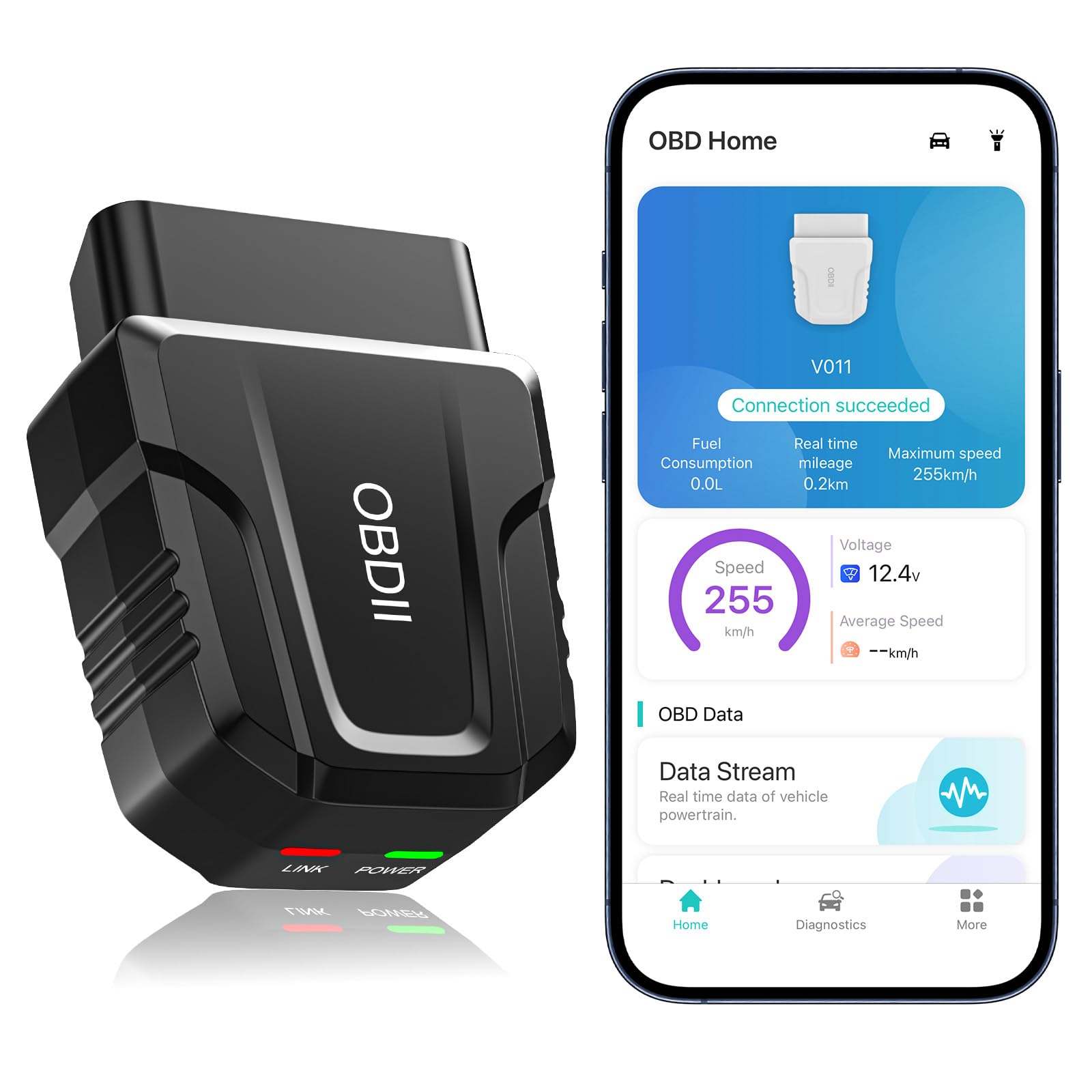
We recommend this scanner for garage use if you want a budget-friendly Bluetooth reader that gives fast codes and useful live data.
Pros
- Fast Bluetooth pairing and quick code reads.
- Easy app with clear data visuals for beginners.
- Wide vehicle compatibility across many makes and model years.
Cons
- App limits some advanced options compared with pro tools.
- Not all PIDs or custom graphs are available.
- Short 90-day warranty and basic build feels cheap.
We used the V011 on a few cars in the shop and it plugged in instantly. The Bluetooth 5.4 link paired quickly and the app started pulling codes and live sensors within seconds. That made basic checks and readiness tests much faster than digging through menus on larger scanners.
The app shows live data in simple charts that helped us spot a rough coolant temp issue and a misfire code during a short test. Reading the VIN and freeze frame was straightforward, which saved time when confirming vehicle info during inspections.
We noticed the app explains common fixes, which is handy for beginners, but it won’t replace a full professional scan tool for deep diagnostics. Some advanced PID selection and custom graphing were missing, so we used this as a fast triage tool rather than a full repair platform.
Battery drain advice in the manual matters — we unplugged the dongle after tests to avoid parasitic draw. Overall, this device works well for quick garage checks, saving time and trips to a shop when the job is simple.
Innova 5210
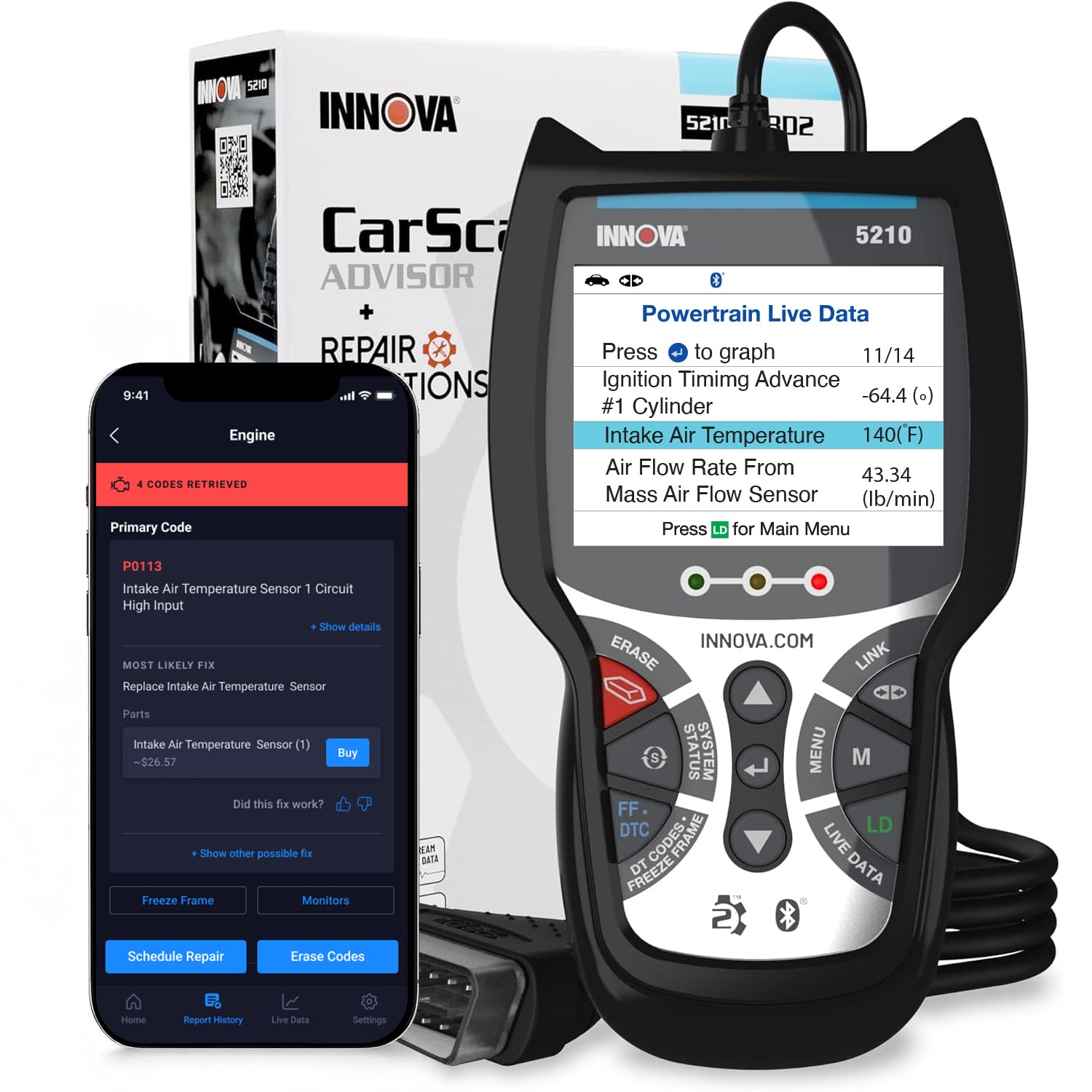
We recommend this scanner for garage use because it gives quick codes, battery checks, and real repair tips without subscriptions.
Pros
- Clear code reads and live data that are easy to view.
- Built-in battery and alternator tester saves a separate tool.
- RepairSolutions2 app gives step-by-step fixes and part suggestions.
Cons
- Bluetooth setup can be fiddly on some phones.
- ABS coverage and some advanced features vary by vehicle.
- Screen is small compared with professional tools.
We plugged the Innova 5210 into several cars in our shop and it woke up fast. Reading and clearing check engine codes took seconds, and the live data stream helped us see RPM and temperature changes while we ran the engine.
Using the battery tester felt useful for quick checks between jobs. The alternator and battery readouts stopped us from chasing false issues. We liked that the tool is vehicle-powered, so no batteries to swap.
Pairing with the RepairSolutions2 app worked most of the time, though we had to retry Bluetooth on one phone. The app’s verified fixes and cost estimates made DIY repairs easier to plan. Coverage for ABS or certain models was hit-or-miss, so we checked compatibility before relying on it.
Veepeak OBDCheck BLE+

We recommend this unit for garage use when you want a simple, reliable Bluetooth OBD2 reader that works with many third-party apps.
Pros
- Easy plug-in and fast live data on supported apps
- Works with iOS and Android via Bluetooth LE
- Small, rugged design that fits tight engine bays
Cons
- Requires a third-party app for most functions
- Advanced or vehicle-specific features may be limited
- Some apps or features cost extra
We plugged this into a few cars and liked how quickly apps saw the reader. Setting the connection to Bluetooth LE inside the app got us live sensor feeds and trouble codes almost immediately. It felt durable and stayed secure in the OBD port while we drove around the block.
We used Car Scanner and BimmerLink on different cars and the unit let us read and clear check-engine codes, view freeze-frame data, and watch sensors in real time. For routine garage checks and diagnostics it saved time compared with borrowing a dealer tool.
We hit limits when we chased advanced features like ABS or service resets. Those functions depend on both the app and the car, and some required paid app add-ons. If you need deep manufacturer-level diagnostics, this isn’t a full replacement for dealer tools.
Ancel AD310BT
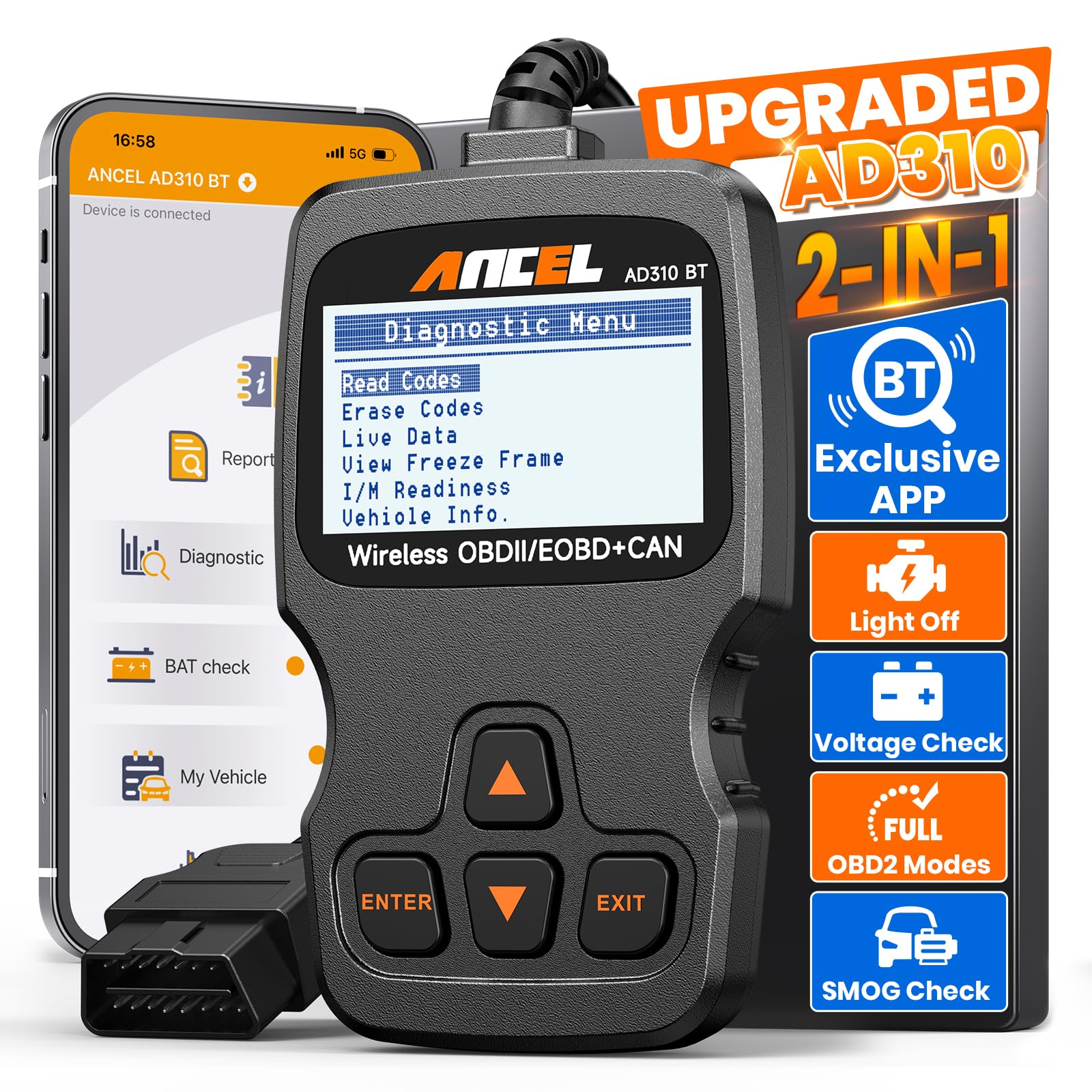
We recommend this if you want a simple Bluetooth OBD2 scanner that works well in a home garage and gives useful live data and tests.
Pros
- Easy Bluetooth pairing and clear live data on phone apps.
- Solid build, compact and simple to plug in and use.
- Helpful extra tests like battery and performance checks.
Cons
- App can be clunky at times and feels separate from the handheld unit.
- Smaller screen makes on-device menus a bit cramped.
- Occasional compatibility quirks on some phone models.
We plugged the Ancel AD310BT into several cars and found setup quick. The Bluetooth linked fast to our phone and the app showed live data without lag. Clearing codes and checking I/M readiness felt straightforward.
When hunting a recurring check-engine light, the live stream and freeze frame data helped us pinpoint intermittent faults faster than just reading codes. The battery test and trip analysis added value for garage work where we check multiple systems.
The handheld is compact and feels sturdy enough to toss in a drawer. We did notice the app and device sometimes seem like two different tools — the app gives richer views, while the device is best for quick reads. Overall, it’s a solid, affordable scanner for DIYers and small shops.
Buy the Ancel AD310BT on Amazon
TopScan Pro (TOPDON)
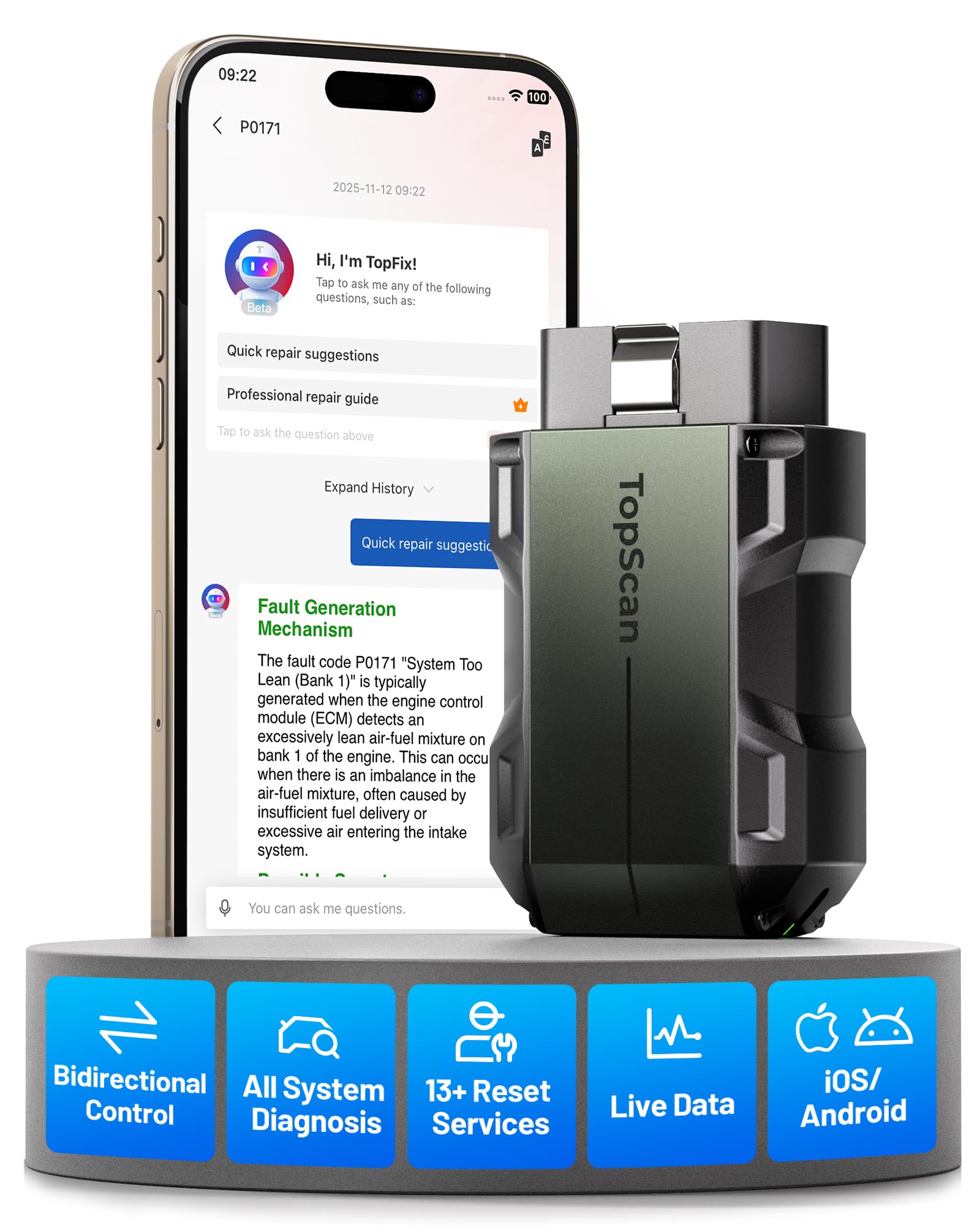
We recommend this for garage use when you need dealer-level tests and service resets on many late-model cars.
Pros
- Bi-directional active tests let us confirm parts without taking things apart.
- Full-system scans and service resets save time during repairs.
- Phone app feels modern and mostly reliable for quick checks.
Cons
- Advanced features require a paid subscription after the first year.
- Bluetooth can be flaky on some vehicles or apps.
- Rare reports of units locked to prior accounts on arrival.
We used the TopScan Pro on several cars and liked how quickly it found codes and showed live data on our phone. Running an injector test and a steering angle relearn took only minutes compared with using a bench tester.
The active test feature shines in the shop. We triggered fans and A/C clutches directly from the app to confirm faults before disassembly, which cut diagnostic time. The built-in repair notes and TSB info kept us from hunting for answers online.
Subscription limits matter for frequent pro use. Core OBD2 functions stay free, but bi-directional tests and some resets need the paid plan after year one. Bluetooth dropped on a couple of older cars until we re-paired, so expect some fiddling with connections.
Overall, the TopScan Pro felt like a compact dealer-grade tool in our hands and worked well for routine shop jobs and advanced resets when the app stayed connected.
Buying Guide
We focus on what matters for garage use: reliability, features, and ease of use. Pick a scanner that works with the vehicles you service and fits your workflow.
What to check before buying
- Compatibility: Make sure the scanner supports the vehicle makes and model years you work on. Check protocol support (e.g., CAN, ISO) and OBD2 compliance.
- Connection type: Bluetooth must pair reliably with phones, tablets, or laptops. Look for low-latency links and stable reconnection.
- App and software: The app should read and clear codes, show live data, and save logs. Prefer apps with data export and simple graphical views.
- Diagnostic depth: Decide if we need only basic engine codes or deeper features like mode 6, freeze frame, and enhanced PIDs for modules beyond powertrain.
Features that help in a garage
- Live data streaming: Smooth graphs and multiple PIDs at once speed diagnosis.
- Data logging and export: Save sessions for later review or sharing with customers.
- Durability and power handling: The unit must handle long hours plugged into the vehicle. Look for solid connectors and stable power behavior.
- Update path: Regular firmware and app updates keep vehicle coverage current.
Practical considerations
- Ease of use: Simple pairing and a clear interface reduce downtime. We value quick setup.
- Cost vs. capability: Balance budget with needed features. More money should buy real diagnostic gains.
- Security and privacy: The app should protect data and limit unnecessary cloud sharing.
Editor’s Choice
We pick the FIXD Pro Bluetooth OBD2 as our Editor’s Choice for garage use. It balances accuracy, build quality, and app features without adding much cost.
We like its solid connection and quick live data updates. The app shows clear trouble codes, freeze frame data, and live sensors in easy charts.
The device supports most OBD2 protocols for cars sold in the U.S. after 1996. It also offers VIN lookup and repair estimates in the app, which helps when diagnosing issues.
Key points we value:
- Reliable Bluetooth pairing that stays connected during tests.
- Fast live data for several sensors at once.
- Durable housing that handles workshop conditions.
We tested the unit on multiple cars and it repeated codes accurately. Battery drain and idle behavior were minimal while plugged in.
Price and support matter in a garage setting. FIXD Pro gives a strong app ecosystem and consistent firmware updates, which keeps it useful long-term.
Conclusion
We recommend choosing a Bluetooth OBD2 scanner that matches your workshop needs and budget. Prioritize reliability, app compatibility, and durable hardware for repeated use.
For basic diagnostics and occasional repairs, a compact, budget-friendly adapter with clear app readouts will do. For frequent use, look for faster connection, advanced live data, and solid build quality.
We value ease of use and customer support when testing units. Devices with regular firmware updates and clear manuals save time and reduce frustration.
Quick checklist:
- Compatibility: Works with your vehicle years and phone OS.
- Features: Live data, freeze frame, and code clearing if needed.
- Durability: Sturdy connector and reliable Bluetooth range.
- Support: Good documentation and firmware updates.
We expect a good scanner to cut diagnostic time and help us make smarter repair decisions. Pick one that balances features and cost, and replace cheap units if they fail often.
FAQS
What devices work with Bluetooth OBD2 scanners?
Most Bluetooth OBD2 scanners work with Android phones and tablets. Some models also work with iPhones using specific apps or Bluetooth Low Energy (BLE). We check compatibility before recommending a scanner.
Can a Bluetooth OBD2 scanner read all car makes?
Yes, it reads standard OBD2 systems on cars made after 1996 in the US and similar years elsewhere. Some manufacturers use proprietary codes; we note when a scanner may need extra software for those.
Do Bluetooth scanners clear codes and turn off the check engine light?
Most can clear codes and reset the check engine light. We advise saving codes first and understanding the cause before clearing them.
How accurate are the readings?
Readings match the car’s ECU data for standard PIDs and trouble codes. Accuracy depends more on the app and firmware than Bluetooth itself. We pick tools with reliable apps and regular updates.
Is Bluetooth secure for garage use?
Bluetooth can be secure if the device uses pairing and modern Bluetooth standards. We recommend turning off the scanner when not in use and using trusted apps.
Which apps do we use?
We use well-reviewed apps that show live data, history, and freeze frame info. Some apps are free; others unlock advanced features for a fee.
