
10 Best Code Reader for Audi: Top Diagnostic Tools Reviewed

Audi code readers help us understand warning lights and diagnose common vehicle problems without immediately visiting a repair shop. These handheld tools connect to the car’s diagnostic port and show stored fault codes, live data, and sometimes repair information. Audi models may also use manufacturer-specific systems, so a basic reader may not access every module.
The best code reader for Audi should support Audi-specific codes, work with your model year, and offer clear explanations of its findings. We also look for useful features such as ABS and airbag scans, service resets, live data, automatic updates, and a simple display. We compared leading options to find the Audi code readers that provide the most useful information for home diagnosis and routine maintenance.
Best Code Readers for Audi
We reviewed code readers for Audi based on diagnostic coverage, ease of use, and compatibility. Our list includes options for checking fault codes, viewing live data, and supporting basic vehicle maintenance.
ANCEL AD310 Code Reader

We recommend the ANCEL AD310 for Audi owners who need a simple tool to read and clear check-engine codes.
Pros
- Simple controls and a clear screen
- Reads live data and freeze-frame information
- Compact, sturdy design with no battery required
Cons
- Checks only emission-related engine codes
- Does not diagnose airbag, ABS, or other Audi modules
- Compatibility depends on the Audi’s OBD-II system
We plugged the AD310 into an OBD-II port and found the setup straightforward. The scanner powers on through the car, so we did not need a charger or batteries. Its buttons and menus are easy to understand, even for first-time users.
The reader quickly displayed engine trouble codes and allowed us to clear them after repairs. Live data and freeze-frame details also helped us see what the engine was doing when the fault appeared.
Audi owners should note the limits. This device does not access many manufacturer-specific systems, such as airbag or ABS modules, and it cannot diagnose older OBD-I vehicles. We would confirm compatibility before buying, especially with an imported or modified Audi.
ANCEL VD500 for Audi
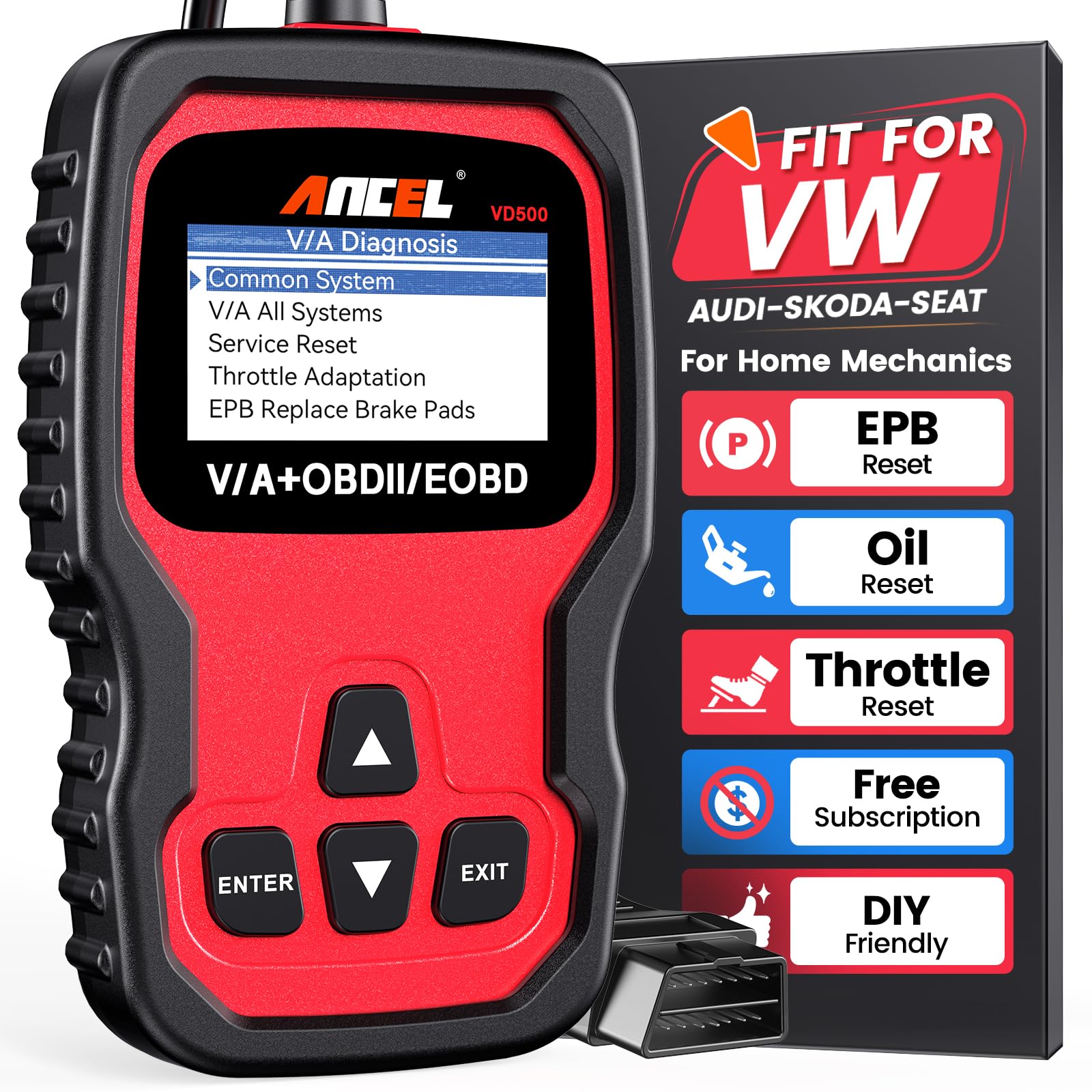
We recommend the ANCEL VD500 for Audi owners who want affordable access to engine, ABS, transmission, and selected service functions.
Pros
- Supports many Audi and other VAG systems
- Handles EPB, oil, brake pad, and throttle resets
- Needs no battery, app, or subscription
Cons
- Functions vary by Audi model and year
- Does not support coding, programming, or battery registration
- Updates require a Windows computer
We found the VD500 simple to connect and use. Its menu gives Audi owners more access than a basic engine-only reader, including selected ABS, transmission, ESP, and TPMS functions. It also helped with service reminders and electric parking brake work on supported vehicles.
The cord powers the scanner through the car, so we did not need to charge it or pair it with a phone. The screen and controls are basic, but the menus remain easy to follow for common diagnostic tasks.
Compatibility needs careful checking before purchase. Newer Audis or protected systems may limit certain functions, and the scanner cannot perform programming, bidirectional tests, full-system scans, or battery registration. We also found the printed instructions brief, so the online update process and support may be useful.
ANCEL VD700 Audi Code Reader

We recommend the ANCEL VD700 for Audi owners who want full-system scans and useful service resets without a subscription.
Pros
- Reads systems beyond the engine, including ABS, airbag, transmission, and battery modules
- Handles supported oil, EPB, steering-angle, throttle, and battery resets
- Includes lifetime software updates without added fees
Cons
- Does not support coding, programming, or ABS bleeding
- Special functions vary by Audi model, year, and equipment
- Updating requires a Windows computer; Mac is not supported
We found the VD700 easy to connect and use through its built-in screen. It can scan several Audi control systems, which gives us more information than a basic check-engine reader. The live data view also helps us watch sensor readings while the engine runs.
The tool works well for common service tasks, such as oil reminders, electronic parking brake resets, and battery registration on supported vehicles. Battery registration only supports same-spec batteries, so it will not replace full battery coding.
We also like the lack of subscription charges. However, we would check compatibility before buying because features differ across Audi models. The VD700 supports Audi and other VAG vehicles made before 2023, but it does not work with battery-electric vehicles.
FOXWELL NT301 Code Reader

We recommend the FOXWELL NT301 for Audi owners who need a simple tool for check-engine codes, live data, and emissions readiness checks.
Pros
- Reads and clears standard engine fault codes
- Shows live sensor data and readiness status
- Uses a clear screen without an app or subscription
Cons
- Does not scan Audi ABS, airbag, transmission, or climate systems
- Audi compatibility varies by year, model, and VIN
- The included instructions could explain the menus better
We found the NT301 easy to use for basic engine diagnosis. It powers on through the car’s OBD2 port, so we did not need to charge a battery or connect a phone. The color screen remained readable in daylight.
The reader can display live information such as engine speed, coolant temperature, oxygen sensor readings, and fuel trims. This helped us watch sensor changes instead of relying only on a stored code. Its readiness button also made it easier to check whether the car was prepared for an emissions test.
Audi vehicles often use brand-specific systems beyond the engine computer. The NT301 does not read or reset ABS, SRS, parking brake, air-conditioning, or other advanced modules. We would choose a more advanced Audi scan tool for those tasks.
FOXWELL includes code-clearing and basic OBD2 tests, but clearing a code does not repair the cause. The warning light may return if the underlying problem remains. Overall, this works well as an affordable first reader for standard engine faults, provided we confirm compatibility before buying.
VDIAGTOOL VD10 OBD2 Scanner
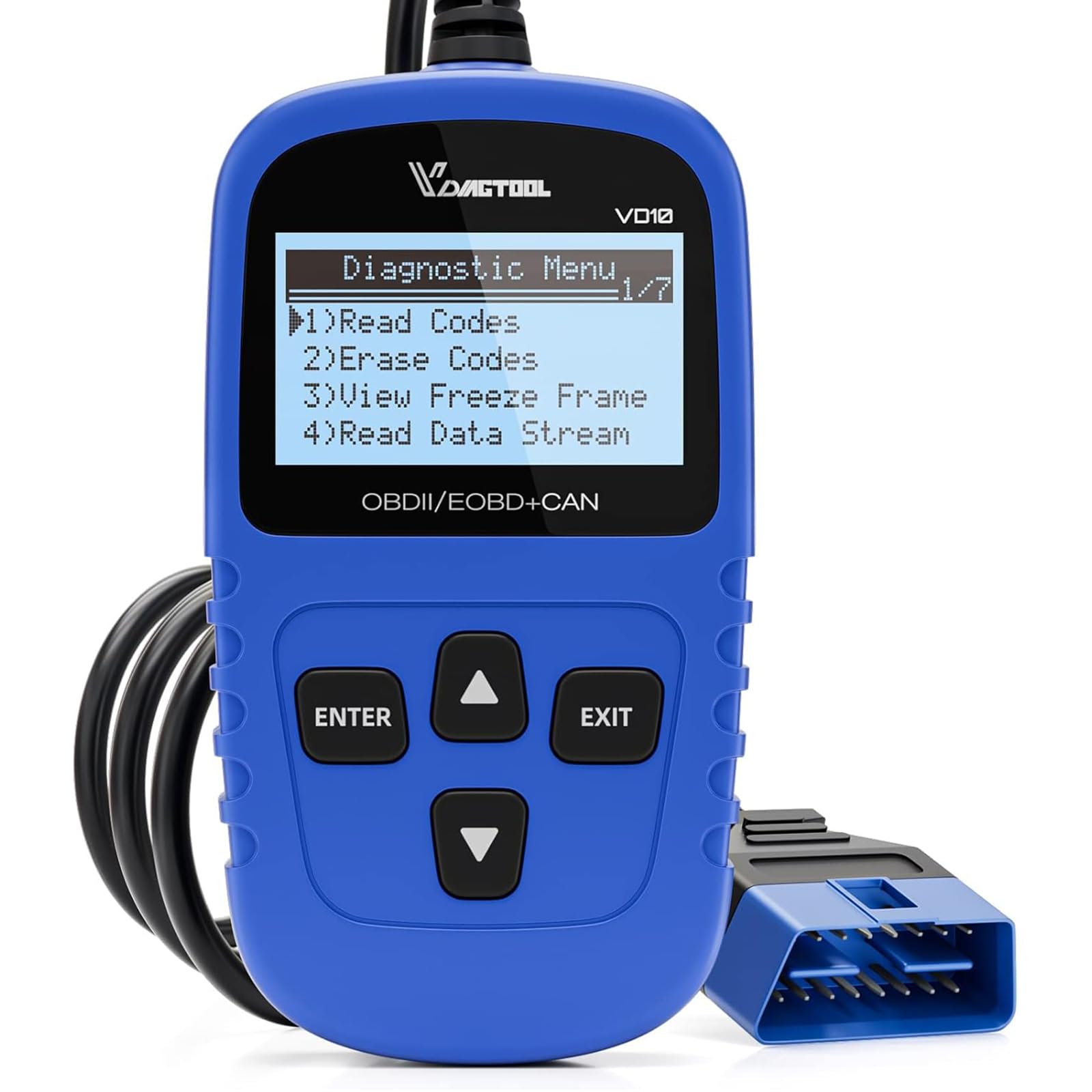
We recommend the VD10 for Audi owners who want a simple tool for reading and clearing basic engine codes without using a phone app.
Pros
- Simple plug-and-play operation
- Displays code definitions and live data
- Includes freeze-frame and readiness checks
Cons
- Limited mainly to standard OBD2 engine diagnostics
- Small screen can require close reading
- Does not replace a full Audi-specific scanner
We found the VD10 easy to use in a driveway setting. It powers through the car’s OBD2 port, so we did not need batteries, charging, or an account. The controls and display kept the basic scanning process straightforward.
The reader shows generic and some manufacturer-specific code information on its built-in screen. That saved us from looking up every code immediately, although Audi-specific systems such as airbags, ABS, and comfort modules may require a more advanced scan tool.
Live data and freeze-frame information added useful context when checking an engine warning light. We could view items such as engine speed and fuel-trim data, which helps us decide whether a problem needs quick attention.
The I/M readiness feature also helps before an emissions test. We would use the VD10 as a practical first step for engine faults, but we would not buy it as our only diagnostic tool for deeper Audi repairs.
MOTOPOWER MP69033 Code Reader

We recommend this reader for Audi owners who need a simple tool for checking and clearing engine fault codes.
Pros
- Connects quickly and draws power from the Audi’s diagnostic port
- Shows code definitions and useful live engine data
- Works with many Audi models from the OBD-II era
Cons
- Cannot read ABS, airbag, or other non-engine systems
- Some live-data labels use unclear abbreviations
- Functions may vary by Audi model
We found the MP69033 easy to use for basic engine checks. After plugging it into the OBD-II port and turning on the ignition, the reader powered up without a separate charger or battery.
The screen displayed fault codes clearly, and the built-in lookup helped explain their likely meaning. We could also clear engine codes and view data such as engine speed and coolant temperature.
Audi vehicles can use manufacturer-specific systems that a basic OBD-II reader may not access. This tool focuses on check-engine information, so we would not choose it for diagnosing airbag, ABS, or service-light problems.
Its long cable made it comfortable to hold from the driver’s seat. For routine code checks and simple troubleshooting, the MOTOPOWER MP69033 offers a practical, low-cost option.
ANCEL AD410
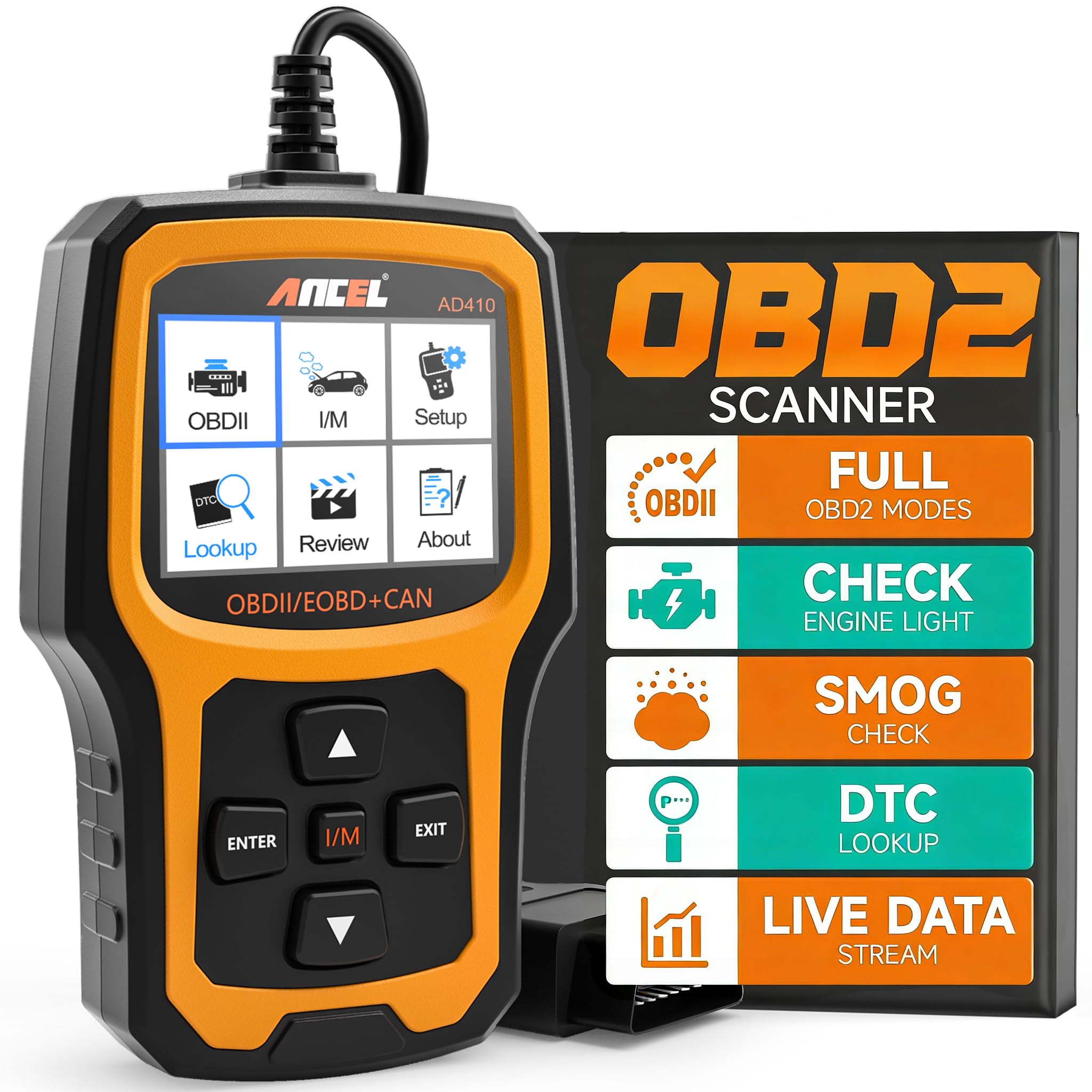
We recommend the ANCEL AD410 for Audi owners who need a simple tool for reading and clearing engine codes without using a phone app.
Pros
- Quick setup with no battery or subscription
- Clear color screen with built-in code definitions
- Useful live data and emissions readiness checks
Cons
- Reads engine and emissions codes only
- Does not diagnose ABS, airbag, or transmission systems
- Vehicle compatibility may vary by model and year
We found the AD410 easy to use. We plugged it into the Audi’s OBD2 port, turned on the ignition, and followed the on-screen menus. The scanner connected without an app or wireless pairing.
The code definitions helped us understand the warning light before deciding what to check next. We could also view live readings such as engine speed, coolant temperature, and fuel trim. These details gave us more context than the fault code alone.
The tool can clear engine codes after repairs and check whether emissions monitors are ready. That makes it useful before an inspection. However, Audi owners should note that it does not access ABS, airbag, transmission, or other manufacturer-specific systems.
The built-in cable limits portability, and the small manual may take some effort to read. Still, the straightforward controls and large code database make this a practical choice for basic Audi engine diagnostics.
AUTOPHIX 5600 Audi Code Reader

We recommend the AUTOPHIX 5600 for Audi owners who want system-level scans and common service resets without an app or subscription.
Pros
- Reads more than engine codes on supported Audi models
- Handles battery registration, oil, EPB, and TPMS resets
- Simple wired setup with free lifetime updates
Cons
- Some menus feel slow or confusing
- Functions vary by model, year, and control module
- It lacks a French manual
We plugged this scanner into a supported Audi and found the wired setup straightforward. The handheld design avoids Bluetooth pairing, and the screen made code reading and live data checks easy to follow.
Beyond basic OBD2 scans, the 5600 can access systems such as ABS, SRS, transmission, and TPMS when the vehicle supports them. We also used its maintenance tools for tasks like battery registration and rear brake service.
The main weakness came from the menus. Some functions took time to locate, and battery registration did not work for every vehicle tested by users. We would check compatibility before buying, especially for newer Audi models or less common service tasks.
It also works with standard OBD2 systems on many 1996 and newer vehicles. Lifetime software updates and the lack of subscription fees add value for owners who plan to keep their Audi for several years.
FOXWELL NT604 Elite

We recommend this reader for Audi owners who need access to engine, ABS, SRS, and transmission codes without paying for advanced repair functions.
Pros
- Reads several key control modules, not just engine codes
- Offers live data, readiness checks, and a built-in code library
- Includes a sturdy storage case and lifetime updates
Cons
- Does not support oil resets, battery registration, or ABS bleeding
- Vehicle coverage can vary by Audi model and year
- Some users report slow updates and limited live-data accuracy
We found the NT604 Elite simple to start. After connecting it to the Audi’s OBDII port, we could move through the menus without much setup. The larger screen also made code descriptions and live readings easier to view than on basic readers.
Its main advantage over a low-cost check-engine reader is system coverage. We could scan the engine, transmission, ABS, and SRS modules. That makes it useful when an Audi warning light points beyond the engine computer.
The scanner can clear eligible codes after we fix the underlying problem, but it does not repair faults. It also cannot perform common service tasks such as oil resets, battery registration, throttle relearns, or ABS bleeding.
Audi compatibility depends on the model, year, and control module. We recommend checking FOXWELL’s coverage list before buying, especially for older vehicles or advanced Audi functions.
Innova 5210 Code Reader
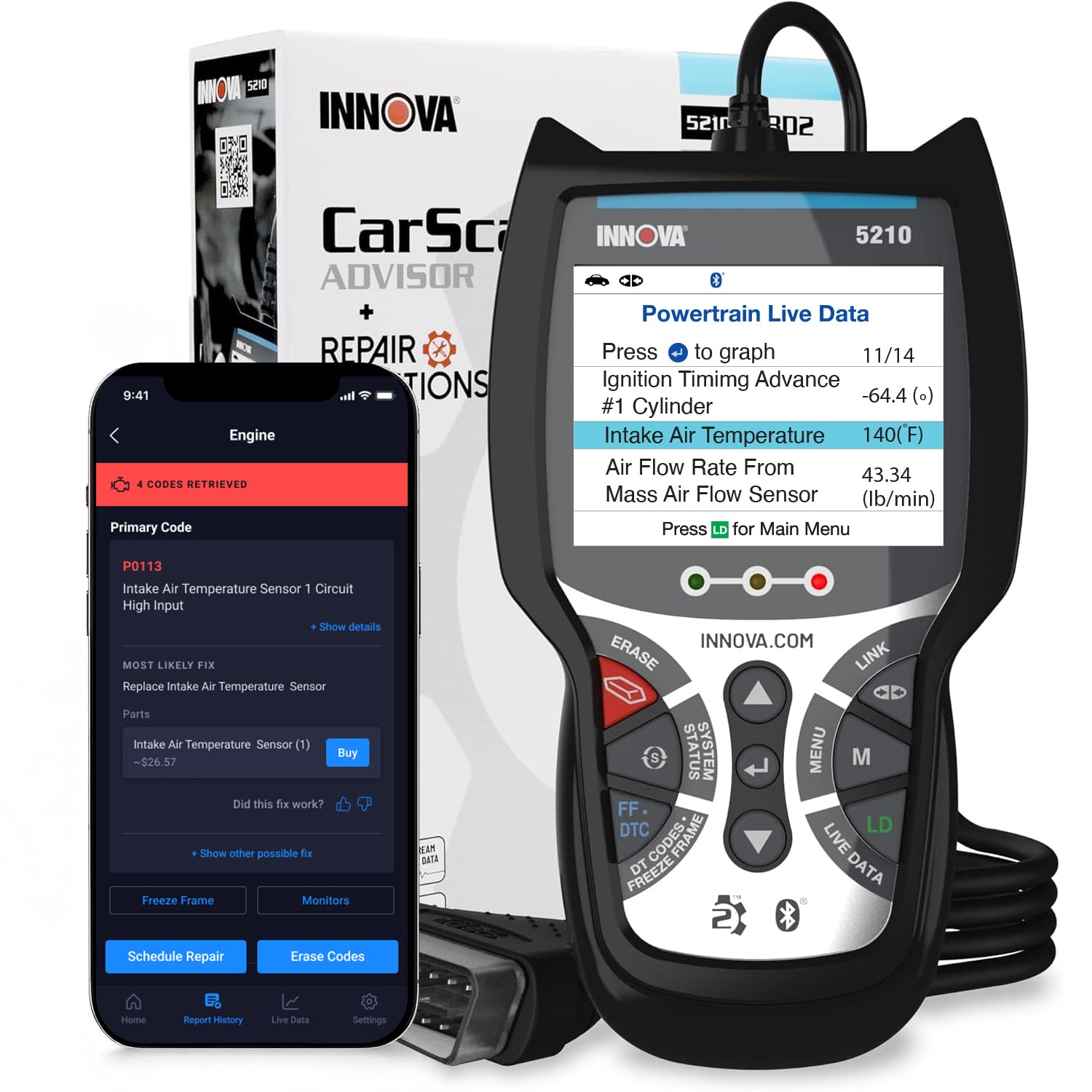
We recommend the Innova 5210 for Audi owners who want engine diagnostics, live data, and battery checks in one simple tool.
Pros
- Reads engine codes and some ABS codes
- Shows live readings and emissions readiness
- Includes battery testing and oil-light reset functions
Cons
- Audi feature coverage can vary by model and year
- It may need the RepairSolutions2 app for added repair guidance
- The attached cable limits wireless use
We found the 5210 easy to connect and operate. Its screen displays trouble codes clearly, while live data such as engine temperature and RPM helps us understand what the car is doing before visiting a repair shop.
The battery and alternator checks add useful value for routine maintenance. We also like the oil reset function, although Audi compatibility may differ across vehicles. We would check Innova’s coverage tool before buying.
The scanner does more than a basic code reader, but it will not replace a full Audi-specific diagnostic system. Some advanced Audi modules and functions may remain unavailable, so we would use this tool mainly for common engine checks, readiness testing, and basic troubleshooting.
Buying Guide
We should choose an Audi code reader based on the vehicle’s model year, engine, and diagnostic needs. A basic reader may handle engine fault codes, while advanced tools can access systems such as the transmission, airbag, ABS, and body electronics.
| Feature | What we should look for |
|---|---|
| Compatibility | Support for our Audi’s model year and engine |
| System coverage | Access to more than engine codes when needed |
| Code details | Clear descriptions, code definitions, and freeze-frame data |
| Live data | Real-time sensor readings for better diagnosis |
| Service functions | Support for tasks such as oil resets or battery registration |
| Updates | Regular software updates and a clear update policy |
| Connection | Reliable wired or wireless pairing with our device |
| Ease of use | A readable display, simple menus, and clear instructions |
We should check whether the reader can display manufacturer-specific codes, not just standard OBD-II codes. This matters when we need to diagnose Audi systems beyond the engine and emissions controls.
Live data can help us compare sensor readings while the vehicle runs. We should also look for functions that match our needs, since some tools only read and erase codes while others support testing and service procedures.
Before buying, we should confirm the tool’s update cost, return policy, and technical support. A lower purchase price may not suit us if important features require extra fees or the reader lacks coverage for our vehicle.
Editor’s Choice
We choose the [insert model name] as our top code reader for Audi owners. It should support Audi-specific systems, not just basic engine fault codes. This gives us access to useful data from the engine, transmission, ABS, and airbag modules.
| Feature | Why it matters |
|---|---|
| Audi system support | Reads more than standard OBD-II codes |
| Live data | Helps us monitor sensors while the engine runs |
| Code clearing | Removes stored faults after repairs |
| Service functions | Supports tasks such as battery registration or oil resets |
We also look for clear menus, regular software updates, and reliable vehicle coverage. A reader with guided tests can help us find the cause of a fault instead of only showing a code.
Before buying, we should confirm compatibility with our Audi’s model year and engine. Some advanced functions may require a paid update, a subscription, or a separate adapter.
Conclusion
We should choose an Audi code reader based on the systems we need to scan, not just the price. A basic reader can handle engine fault codes, while a more advanced tool can access ABS, airbag, transmission, and body systems.
For regular maintenance, we should look for a reader with:
- Audi and Volkswagen system support
- Live data and freeze-frame information
- Code clearing and full fault reports
- Oil service and battery reset functions
- Frequent software updates
A bidirectional scanner can also test certain vehicle components, such as fans, valves, and lights. This feature helps us confirm a fault before replacing parts.
Before buying, we should check compatibility with our Audi’s model year and control modules. We should also confirm whether the tool requires a subscription or extra payment for advanced functions. A reliable reader gives us clear results and helps us make informed repair decisions.
FAQS
What is the best code reader for Audi?
We recommend a reader that supports Audi’s VAG-specific systems, not only standard OBD-II codes. Tools such as the OBDeleven, VCDS, and professional Autel models can read more control modules and provide deeper fault details.
Can a basic OBD-II scanner diagnose an Audi?
A basic scanner can read and clear engine and emissions codes. However, it may not access the transmission, airbag, ABS, parking brake, or comfort systems.
Is VCDS better than OBDeleven?
We choose VCDS for detailed workshop diagnostics and coding with a Windows computer. We choose OBDeleven for phone-based use, quick scans, and a more portable design.
Will a code reader work with every Audi?
Compatibility depends on the model, year, control modules, and connector. We should check the tool’s vehicle list before buying, especially for newer Audi models.
Can these tools clear warning lights?
Most compatible readers can clear stored faults after we fix the cause. Clearing a code without repairing the problem will usually make the warning return.
Do we need a subscription?
Some advanced features, coding options, and repair data may require a paid plan. We should review the tool’s current software and subscription terms before purchase.
Can a code reader damage an Audi?
A reputable, compatible tool used as directed should not damage the vehicle. We should avoid changing coding or adaptations unless we understand the setting and keep the original values.
