
10 Best OBD2 Battery Memory Savers of 2026

Modern cars keep dozens of small settings alive in volatile memory: radio presets, seat positions, adaptive transmission behavior, TPMS calibration, and sometimes an anti-theft code for the stereo. Pull the battery to replace it and that memory can wipe clean, leaving you reprogramming stations or worse, hunting down a dealer to re-enter a security code. A memory saver bridges that gap by feeding the OBD-II port or battery cables a small trickle of backup voltage while the main battery is disconnected.
The category splits into a few distinct approaches. Simple 9V battery connectors are cheap and compact but limited in the current they can supply. 12V cable-based savers that clip to a spare battery or jump starter handle more demanding vehicles. Charger-assisted units with a built-in sealed battery skip the need for a second power source entirely, and a few newer designs add digital voltage displays so you can verify the connection before you start pulling wrenches.
The single most important factor is matching the memory saver’s power delivery and connection quality to your vehicle’s actual current draw, because an undersized or poorly seated connection can still let settings drop even while the device appears to be working. Fuse rating, polarity protection, cable length, and OBD-II pin fit all affect whether that backup power actually reaches the ECU reliably during the swap.
Best for long reach and heavy-duty wiring: VSTM OBD II ECU Memory Saver Cable
Best for shops needing a self-contained charger: EZRED MS4000 Automotive Memory Saver
Best simple connector for routine battery swaps: Clore Automotive SOLAR ESA30
Best budget option with alligator clips: Vgate OBD II Memory Saver
Best ultra-compact 9V option for quick jobs: Mem Retain 9 Volt Connector
Best for car-to-car power transfer: E-Z Red MSBD28
Best dual power flexibility for road calls: MRCARTOOL E60
Best for verified voltage before you commit: Autel MaxiBAS BTMS
Best newest-generation display and indicators: 2026 Autel MaxiBAS BTMS
Best for diagnosing battery leakage issues: MEIRIYFA OBD2 Digital Display Saver
VSTM OBD II ECU Memory Saver Cable

Buy this one if you want extra cable length to reach a spare battery sitting across the engine bay or in another vehicle.
Pros
- 10-foot cable reaches farther than most competitors
- Gold-plated pins resist corrosion better than zinc
- 8A fast-blow fuse with reverse polarity protection
Cons
- Not rated for 24V, hybrid, EV, or pre-1996 vehicles
- Some buyers wanted a slightly longer cable still
- No instructions included in the package
The 6AWG copper wire on this cable feels substantial in hand, and it holds up to the 15A surge spec it claims. For most gasoline vehicles with a standard 16-pin OBD-II port, this is a straightforward, dependable choice. The length advantage matters more than it sounds: a short cable forces awkward battery placement during the swap, and this one gives real slack to work with.
EZRED MS4000 Automotive Memory Saver

Choose this unit if you want a self-contained power source instead of relying on a jump starter or second vehicle.
Pros
- Built-in 12V 4.5Ah sealed battery, no external power needed
- Green/amber LED shows connection and battery health
- 4A circuit breaker protection
Cons
- Higher price point than cable-only savers
- Adds bulk and weight versus a simple connector
- A few buyers reported units arriving pre-charged but possibly returned stock
This is the kind of tool a shop that swaps batteries regularly appreciates, since there’s no need to scrounge a donor battery every time. The internal sealed lead-acid battery needs periodic recharging to stay ready, and the amber LED gives a heads-up when it’s dropping below 11.6V. For occasional home use, it’s more capability than most owners need.
Clore Automotive SOLAR ESA30

This connector suits drivers who want a no-frills OBD-II saver with a solid reputation for basic battery swaps.
Pros
- Well-rated across a large number of verified purchases
- Simple design with minimal failure points
- Works with jump packs, spare batteries, or portable generators
Cons
- Internal glass fuse can blow if a door or alarm draws extra current
- No digital display to confirm voltage before connecting
- Feature bullets are sparse compared to newer competitors
Reviewers note it performs reliably on modern vehicles loaded with electronics, including recent Subaru and Genesis models. Keep a spare 7.5A glass fuse on hand, since an accidental panic alarm trigger or open door can pull enough current to blow it mid-swap. Watch that the disconnected positive cable stays away from ground while this is connected; it stays hot.
Vgate OBD II Memory Saver

This is a reasonable pick for a budget-conscious DIYer doing an occasional battery swap at home.
Pros
- Competitively priced for the feature set
- 8A fuse for overload protection
- Alligator clips work with any 12V source
Cons
- No included instructions in some units
- A beeping tone during use annoys some owners
- One reported case of a blown OBD fuse on a Skoda
The alligator-clip-to-OBD design is simple and effective for most gasoline vehicles built after 1996. The audible beep confirms it’s actively drawing power, which some owners like as a status check and others find irritating with the windows up. Follow the connection order carefully (backup source first, then OBD) to avoid fuse issues.
Mem Retain 9 Volt Connector

Grab this one for quick, low-drama jobs where a full 12V setup feels like overkill.
Pros
- Compact, lightweight, easy to store in a glovebox
- Voltage-blocking diode prevents backfeed into the 9V battery
- More consistent than a cigarette-lighter-based memory saver
Cons
- Limited runtime and current capacity versus 12V cable options
- Requires a fresh lithium 9V battery for best results
- Not suited for extended repair work, only quick swaps
A 9V battery pushing through a diode into the OBD port sounds minimal, but it works for maintaining basic memory during a fast battery change, especially with a lithium 9V rather than alkaline. Reviewers who timed it got 15 to 20 minutes of hold, plenty for a straightforward swap. It’s not the tool for a repair job that stretches into an hour of terminal cleaning and diagnostics.
E-Z Red MSBD28

Pick this if you regularly need to borrow power from a second car parked nearby.
Pros
- Built-in fuse and light confirm active power
- Plugs into a cigarette lighter on the donor vehicle
- Solid build quality reported across repeat buyers
Cons
- Cord length is short for car-to-car setups
- Requires a running or accessory-powered donor vehicle
- Cigarette lighter circuits vary in reliability by vehicle
This design leans on a donor car’s 12V outlet rather than a spare battery, which is convenient when you have two vehicles in the driveway but no separate jump pack. It’s plug-and-play, and the built-in indicator light removes the guesswork about whether current is flowing. A longer cord would make positioning the two vehicles less fussy.
MRCARTOOL E60

This unit fits anyone who wants a backup power option that doesn’t depend on finding a spare 12V battery.
Pros
- Dual power input: 12V clip or 8-AA battery box
- No cigarette lighter connection required
- 24-month manufacturer warranty
Cons
- AA battery pack is meant for emergency use only, not extended jobs
- Not intended to power the ECU for a long repair session
- Battery box adds a bit of setup complexity versus a single-cable design
The AA battery box is the standout feature here: no spare car battery, no jump starter, just eight AA cells for a quick swap. MRCARTOOL states it should handle roughly ten vehicle swaps per set of batteries, which lines up with typical current draw during a short disconnect. For anything beyond a battery replacement, install the new battery promptly rather than leaning on this as a power bridge.
Autel MaxiBAS BTMS
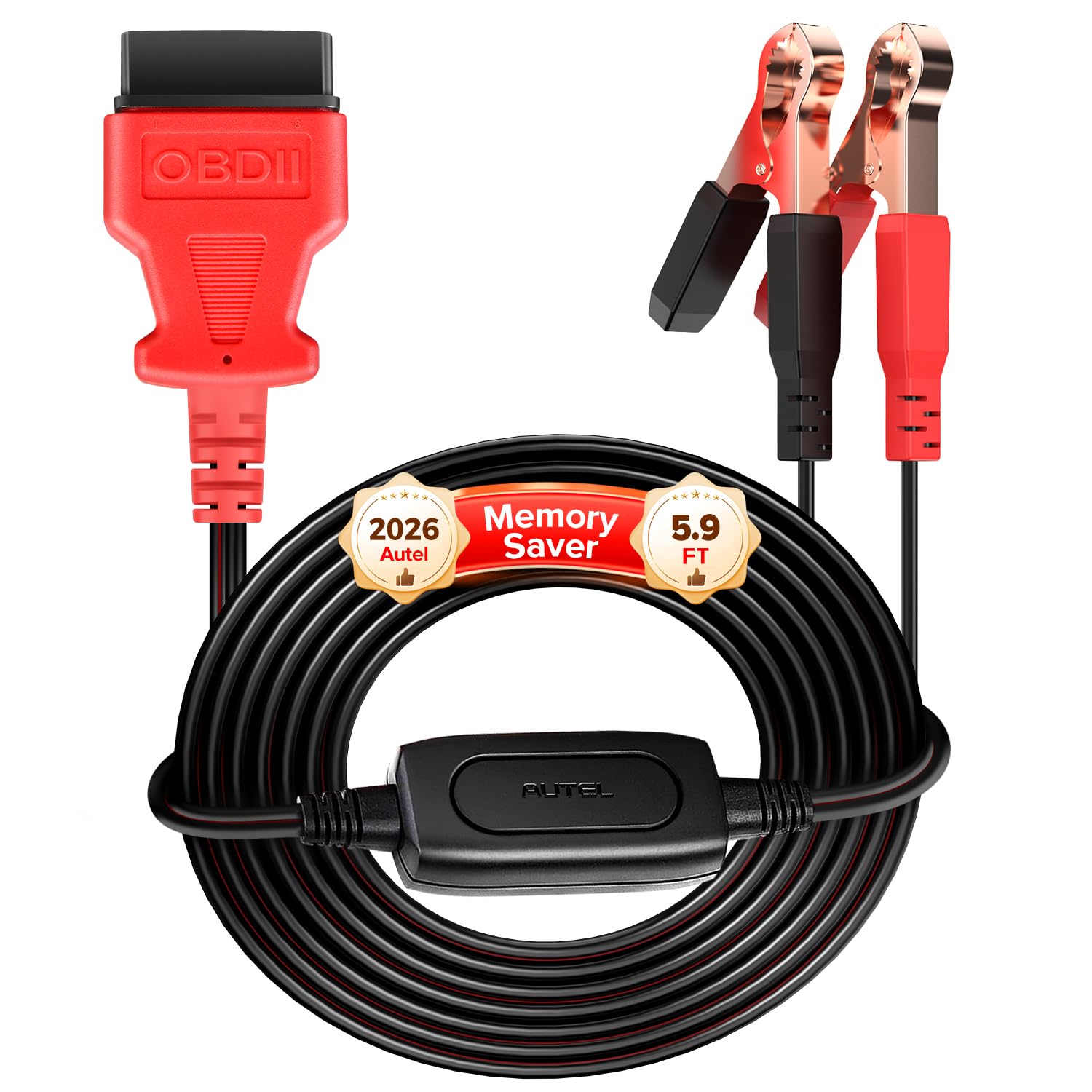
This is a strong option for anyone who wants to confirm backup battery voltage before trusting it with a modern vehicle’s electronics.
Pros
- Built-in voltmeter checks backup battery before connecting
- Reverse polarity protection halts current flow if clips are reversed
- Thickened copper wire and reinforced alligator clips
Cons
- Priced higher than basic cable connectors
- Some buyers reported units arriving without printed instructions
- Overkill for a single occasional battery swap
Reviewers with tech-heavy vehicles, including a Genesis-class sedan with extensive electronics, found this held every setting through the swap. The voltage meter is a genuine practical safeguard, since connecting a weak backup battery is one of the most common ways a memory saver fails silently. This is a sensible upgrade for anyone doing this more than once a year.
2026 Autel MaxiBAS BTMS
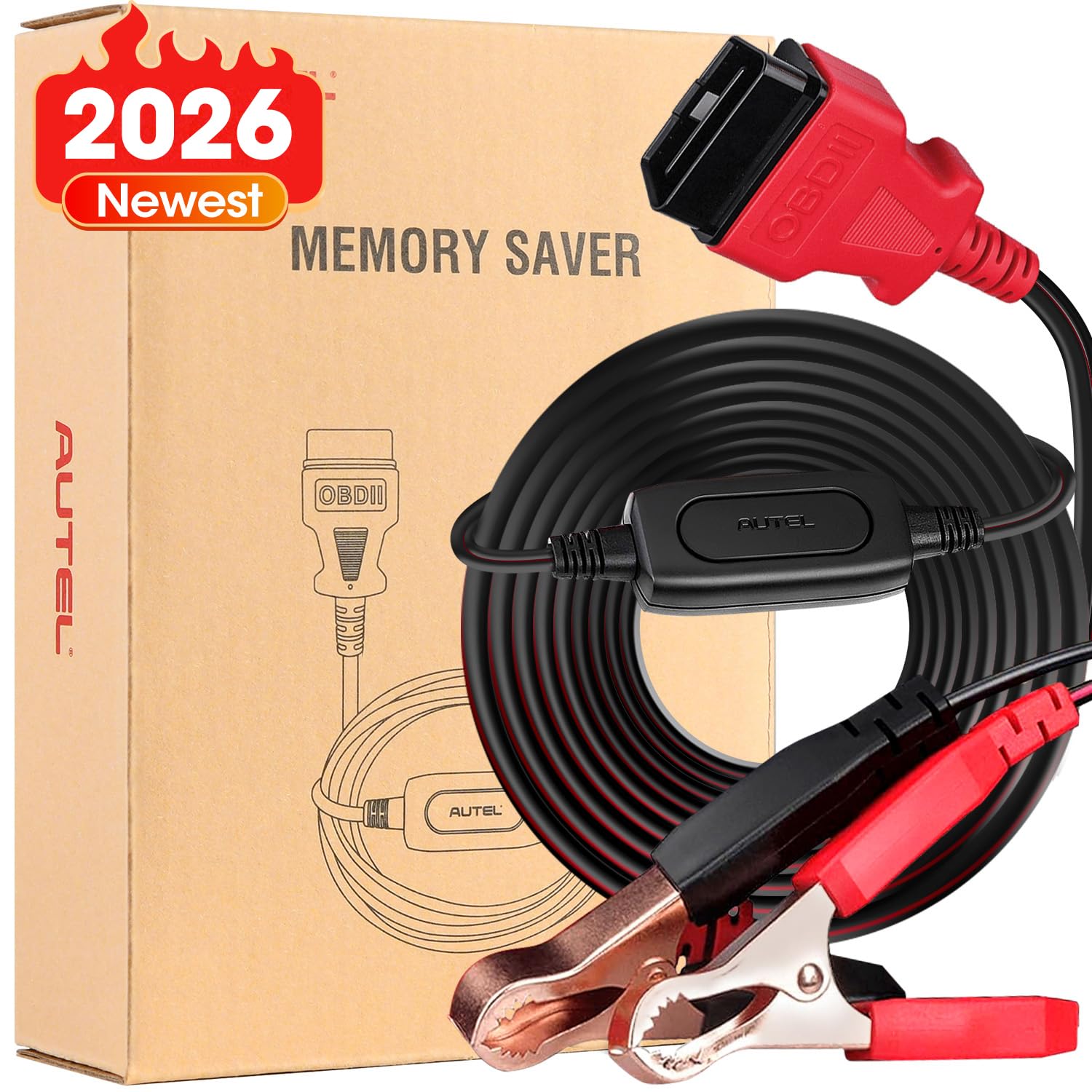
This is the pick for drivers who want clear LED confirmation at every stage of the connection process.
Pros
- Three-LED system confirms both connection and voltage level
- Reverse polarity protection built in
- Two included battery clips plus standard OBD2 interface
Cons
- Priced at the higher end of this roundup
- Overkill for a single-use home battery swap
- Setup has a few more steps than a plain cable connector
The staged LED feedback (two green for connection, three green for sufficient voltage) takes the guesswork out of whether the backup source is strong enough before you disconnect the main battery. One reviewer with a Civic called out how much time this saves versus resetting door locks, interior lights, and emissions monitors from scratch. It’s a well-built tool for anyone doing this job more than a couple of times.
MEIRIYFA OBD2 Digital Display Saver

This model works well for anyone who also wants to keep an eye on backup battery voltage and current draw in real time.
Pros
- Digital display shows both voltage and current draw
- 5A fuse for overload protection
- Transparent housing makes troubleshooting easier
Cons
- One reported unit arrived with a broken solder joint
- Display legibility depends on OBD port orientation in your vehicle
- Not positioned as a professional-grade tool
The dual-color display (red for voltage, blue for current) gives more visibility than a basic LED indicator, useful for confirming the backup source is actually delivering power rather than just connected. It has been used successfully to hold settings during dash cam installs and terminal cleaning, not just battery swaps. Check that your OBD port orientation allows a clear view of the screen before relying on it exclusively.
Buying Guide
Power Source Type
Memory savers draw backup power from a 9V battery, a spare 12V battery or jump pack, a built-in rechargeable battery, or AA cells. A 9V connector is fine for a fast battery swap under 20 minutes but strains under a vehicle with heavy electronic loads. A 12V source, whether from a spare battery or a charger-equipped unit, handles more demanding systems and longer repair windows with margin to spare.
Fuse Rating and Overload Protection
Look for a fast-blow fuse in the 4A to 8A range. This is the safeguard that keeps a wiring fault or accidental short from damaging the vehicle’s ECU. A blown fuse mid-job is inconvenient, but it’s far better than a fried control module.
| Fuse Rating | Typical Use Case |
|---|---|
| 4A | Charger-assisted units with internal battery |
| 5A | Digital display connectors |
| 8A | Standard 12V cable-based savers |
Polarity Protection
Reverse polarity protection stops current flow if the positive and negative clips get swapped. This single feature prevents the most common wiring mistake from becoming an expensive one. Don’t skip a device that lacks this safeguard, even if it saves a few dollars.
Cable Length and Connector Fit
A cable in the 5 to 10-foot range gives enough slack to position a spare battery away from the engine bay. Confirm the OBD-II connector is a genuine 16-pin fit; a loose or poorly seated connection is one of the most common reasons a memory saver appears to work but still loses settings.
Vehicle Compatibility
Every device in this category is built for 12V gasoline vehicles with a standard OBD-II port, meaning 1996 model year or newer. None of these are appropriate for 24V systems, hybrid or EV high-voltage architecture, or pre-OBD vehicles. Confirm your vehicle fits that window before assuming any memory saver will work.
Added Features: Displays and Voltmeters
A built-in voltmeter lets you verify the backup source has enough charge before disconnecting the main battery, which prevents a mid-swap failure. Digital current displays add a layer of diagnostic insight beyond a basic connection light, useful if you also want to check for parasitic draw or battery leakage issues.
Editor’s Choice
The VSTM OBD II ECU Memory Saver Cable earns the top recommendation for most DIY battery swaps. It combines a genuinely useful 10-foot cable with 6AWG copper wiring, gold-plated pins, and dual safety protections (8A fuse, reverse polarity) at a price that makes sense for occasional home use.
For anyone doing this job often enough to want voltage verification before committing, the Autel MaxiBAS BTMS models are worth the step up. The built-in voltmeter and LED staging remove the single biggest risk in this category: connecting to a backup source that looks fine but isn’t holding enough charge.
Shops or techs handling frequent battery replacements should look at the EZRED MS4000. Its self-contained charger eliminates the need to hunt down a spare battery for every job, which pays for itself in time saved across a handful of swaps.
Conclusion
A memory saver is a small investment against a real annoyance: reprogramming a stereo, resetting a clock, or recalibrating adaptive systems after a battery swap that should have taken ten minutes. The right choice depends less on brand and more on matching power source, fuse rating, and connector quality to your vehicle and how often you’ll use the tool.
For a single battery replacement on a daily driver, a basic 12V cable connector with a solid fuse rating handles the job. For anyone doing this regularly, whether as a hobbyist or a shop technician, a unit with a voltmeter or built-in charger removes the guesswork and reduces the odds of a failed swap. Check your vehicle’s OBD-II compatibility and confirm the backup power source has enough charge before disconnecting anything.
FAQS
Do I need a memory saver to replace a car battery? Older vehicles without extensive onboard electronics can usually have their battery swapped without one. Any vehicle from the mid-1990s onward with adaptive transmission control, anti-theft radio codes, or memory seats benefits from a memory saver to avoid losing those settings.
Can I use a 9V battery instead of a 12V memory saver? A 9V connector works for quick swaps under 20 minutes on vehicles with modest electronic loads. Heavier electronic systems or longer repair jobs need a proper 12V source to avoid the backup power dropping out.
What happens if the memory saver’s fuse blows during use? The circuit protecting the ECU cuts off, and the vehicle loses its backup power just like an unprotected battery swap. Carry a spare fuse of the correct rating so a blown fuse doesn’t strand the job halfway through.
Will a memory saver work on a hybrid or electric vehicle? No. These devices are built for 12V gasoline vehicle electrical systems and are not rated for high-voltage hybrid or EV architecture.
How do I know if my backup battery has enough charge? Devices with a built-in voltmeter show this directly before you disconnect anything. Without one, test the backup battery with a multimeter first and confirm it reads at least 12V.
