
10 Best OBD2 Scanners with Injector Coding in 2026

Injector coding separates a real diagnostic tool from a code reader that just clears lights. When a fuel injector gets replaced, most modern engines need the new injector’s calibration data written into the ECU, or the engine runs rough, throws misfires, or triggers a check engine light even though the repair was done correctly. A scanner that supports true injector coding saves a trip to the dealer and the labor bill that comes with it.
Not every “injector test” claim means the same thing. Some tools only run an injector buzz test, which fires the injector on command to confirm it clicks and responds. That’s useful for isolating a dead injector, but it’s not coding. Actual injector coding writes new trim values or IMA (injector mapping) codes into the ECU so the engine computer knows how to fuel each cylinder correctly after a replacement. Buyers who confuse the two often find out the hard way, after installing new injectors, that their scanner can’t finish the job.
Coverage, update costs, and bidirectional depth matter just as much as the coding function itself. A scanner that codes injectors on a handful of European makes but can’t touch FCA-gated Jeeps or CAN FD-equipped GM trucks isn’t going to earn its keep in a shop that sees a mix of vehicles. We looked at real-world injector coding support, active test depth, FCA AutoAuth and DoIP compatibility, and what each brand charges (or doesn’t) for continued updates.
Best for professional-grade injector coding at a DIY price: Autel MaxiCOM MK808S
Best budget scanner with genuine injector coding: TOPDON AD600S
Best for AI-assisted bidirectional diagnostics and coding: XTOOL D7
Best wireless bidirectional tool for the money: OTOFIX D1 Lite
Best for VAG/FCA-heavy shops needing deep ECU coding: LAUNCH X431 CRP919XBT
Best lifetime-update scanner with injector coding: TOPDON AD800BT 2
Best no-subscription injector coding scanner: ANCEL FX6100
Best for shops needing ECU coding across 140+ brands: THINKCAR THINKSCAN 689BT
Best balance of active tests and lifetime updates: ANCEL DS500BT
Best baseline code reader (no coding or active tests): ANCEL AD310
Autel MaxiCOM MK808S
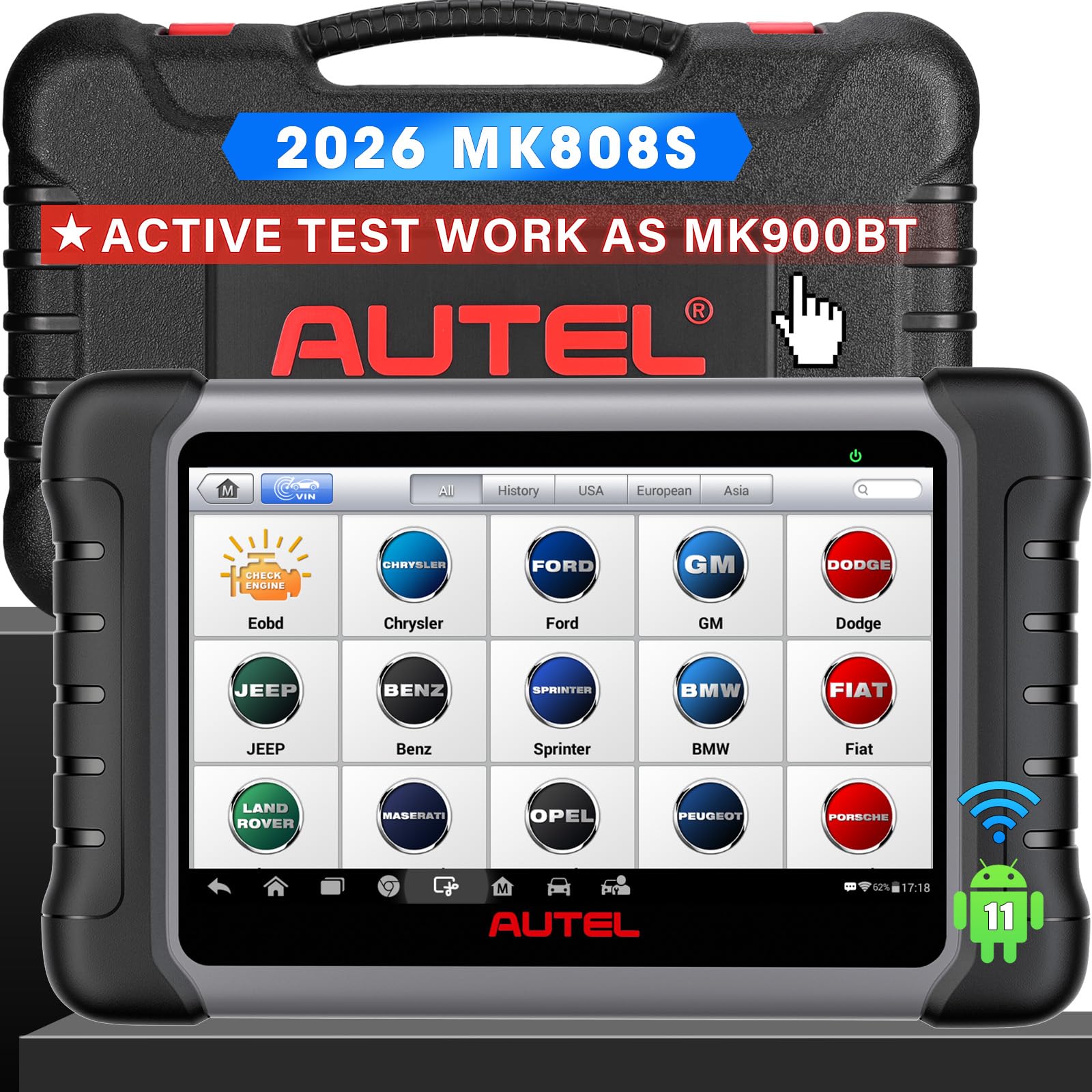 Buy this if you want the injector coding depth of Autel’s pricier MX900-series tools without paying for a Bluetooth interface you don’t need.
Pros
- Shares the same CPU and 3,000+ active test library as Autel’s higher-tier MX900/MK900BT tools
- FCA and SGW gateway access built in, useful for late-model Jeep, Ram, and Renault vehicles
- Wired connection avoids Bluetooth dropouts during sensitive coding procedures
Cons
- No wireless VCI option, so the tablet stays tethered during testing
- Annual update fee still applies for continued coverage
- 7-inch screen and RK3566 chipset trail the newest flagship tablets in raw speed
This is the tool we reach for when a customer needs a real injector coding job done and doesn’t want to gamble on a budget scanner’s follow-through. The active test library goes deep into fans, pumps, and doors, not just the major systems, which matters when tracking down an intermittent injector circuit fault. FCA SGW access alone justifies the cost for shops that see Chrysler products regularly. The wired-only design is a fair trade for the price; a dropped Bluetooth signal mid-coding-procedure is worse than a cable in the way.
TOPDON AD600S
 Buy this if injector coding is a once-a-quarter need and you don’t want to pay for bidirectional control you won’t use daily.
Pros
- Injector coding included in its 9 core reset functions, with lifetime free updates on those services
- Sharp 5-inch HD display with fast Android 11 performance for the price point
- Covers 67+ brands and over 10,000 models
Cons
- Limited to 4-system diagnostics (engine, transmission, ABS, SRS); no all-system scan
- No true bidirectional active test control beyond the reset menu
- 30-day trial of expanded reset services reverts to the original 9 afterward
The AD600S handles injector coding competently on supported models, but it stops short of the deeper active-test bidirectional control found in pricier tools. For a DIYer doing occasional injector replacements on a daily driver, that’s a fair trade against the low price. Shops juggling mixed fleets will want more system depth than this covers.
XTOOL D7
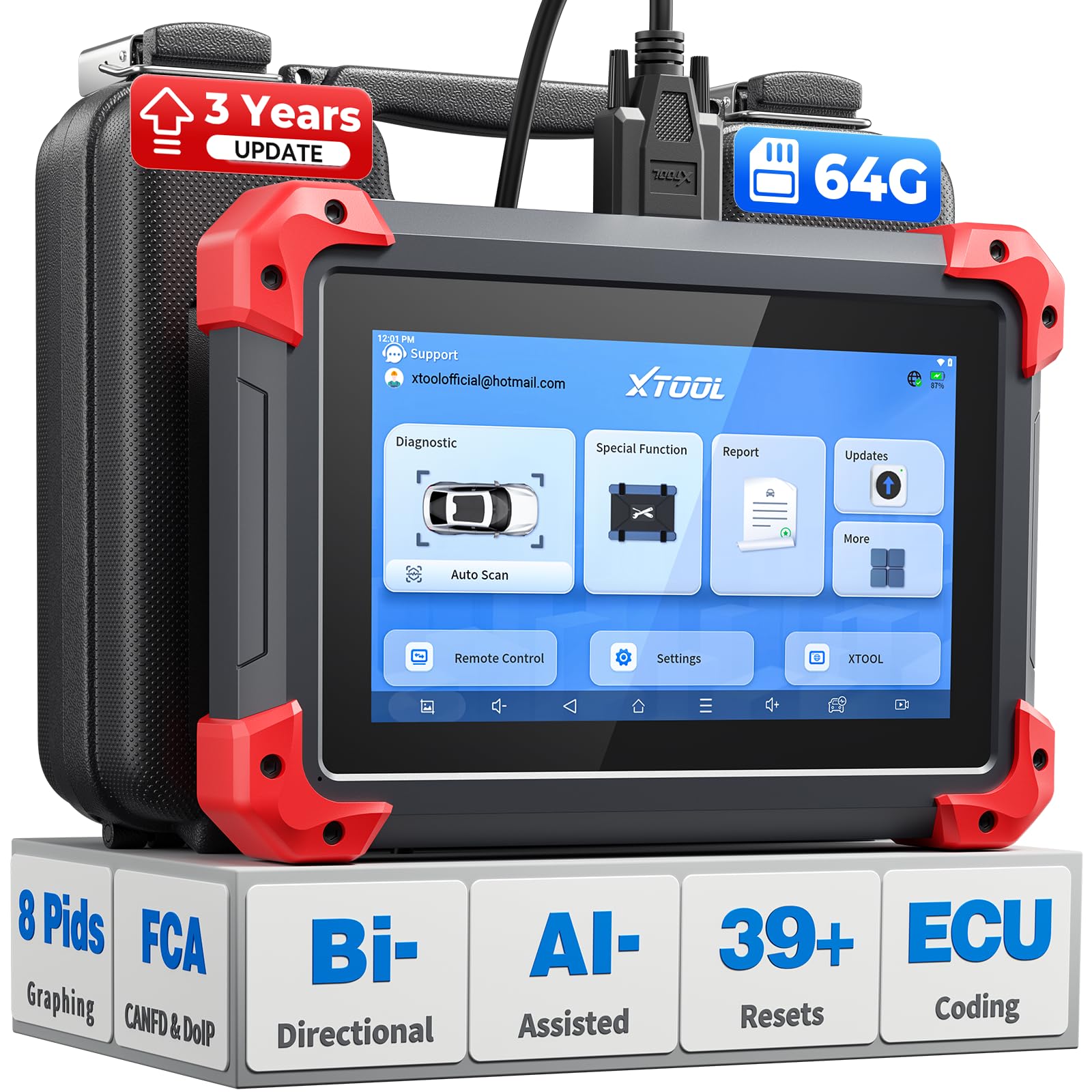 Buy this if you want the strongest bidirectional injector testing and coding combination under the professional-tier price bracket.
Pros
- True bidirectional control with 4,000+ active tests, not just passive monitoring
- Injector coding and crank sensor relearn supported alongside 39+ special functions
- FCA AutoAuth, CAN FD, and DoIP protocols covered for newer vehicle architectures
Cons
- Doesn’t support Indian-market vehicle models
- Renewal after year three runs an annual fee for continued database updates
- Larger tablet footprint than some competitors
The D7 stands out for running injector coding and bidirectional active tests on the same platform, letting a technician code a new injector and then verify it under live PID monitoring immediately after. That closed-loop workflow is what separates a real diagnostic tool from a code-and-hope scanner. Battery voltage readout before testing is a smart safeguard against running active tests on a weak battery, which can produce false negatives.
OTOFIX D1 Lite
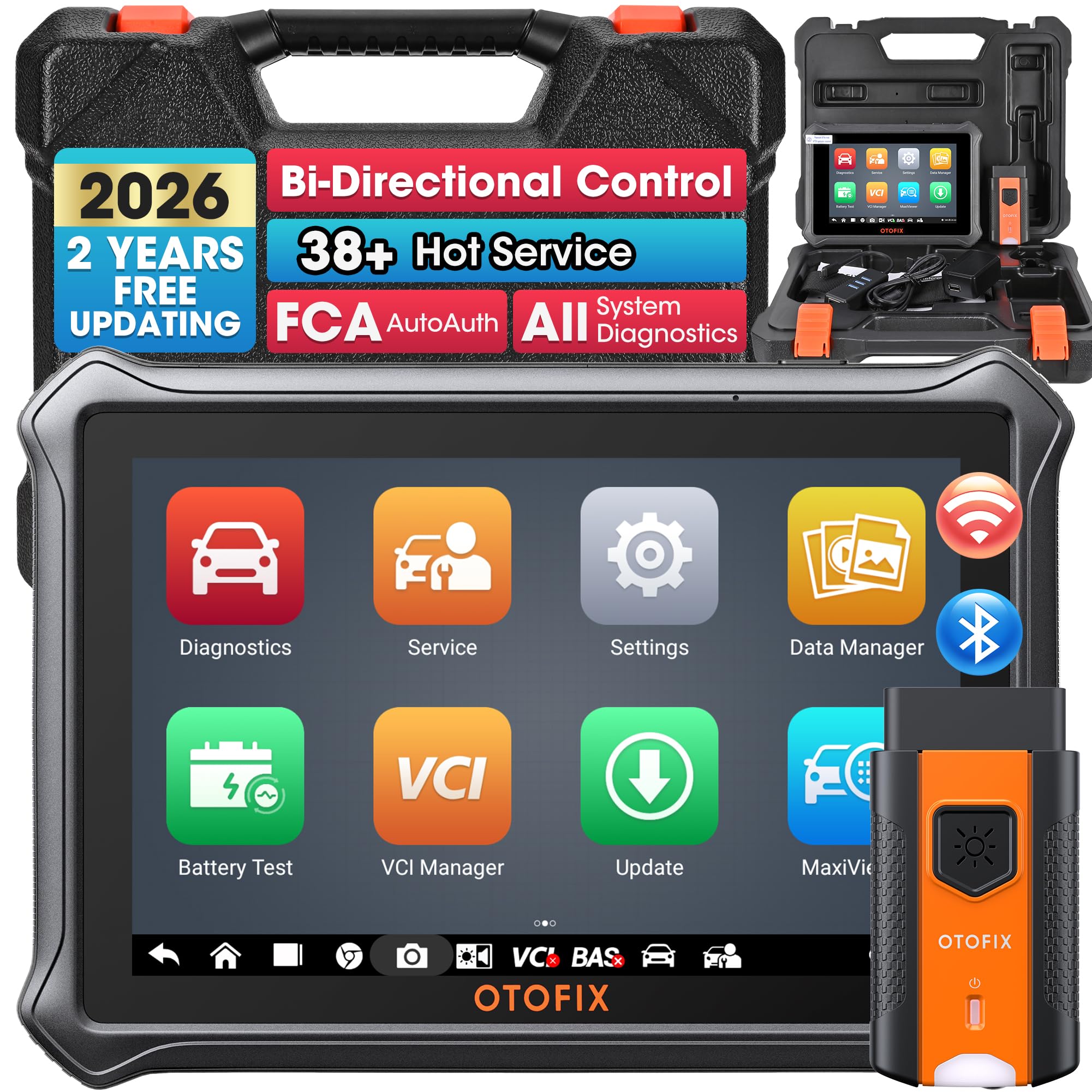 Buy this if wireless convenience and two years of free updates matter more to you than top-tier processing speed.
Pros
- Injector coding included among its 38+ reset and service functions
- Bluetooth VCI setup, so the tablet stays free while running active tests
- Two years of free updates plus a 30-day return window for peace of mind
Cons
- Some reviewers report battery reliability issues after months of use
- Android 9.0 OS and 2GB RAM feel dated next to newer competitors
- Active test claims don’t extend to every reset function; check compatibility first
The D1 Lite earns its spot by keeping the injector coding and bidirectional test menus straightforward, without burying them under confusing submenus. Reports of battery failure after extended use are a real concern worth weighing against the low upfront cost. For most DIYers doing periodic injector work, the tool holds up; heavy daily shop use is where the durability questions surface.
LAUNCH X431 CRP919XBT
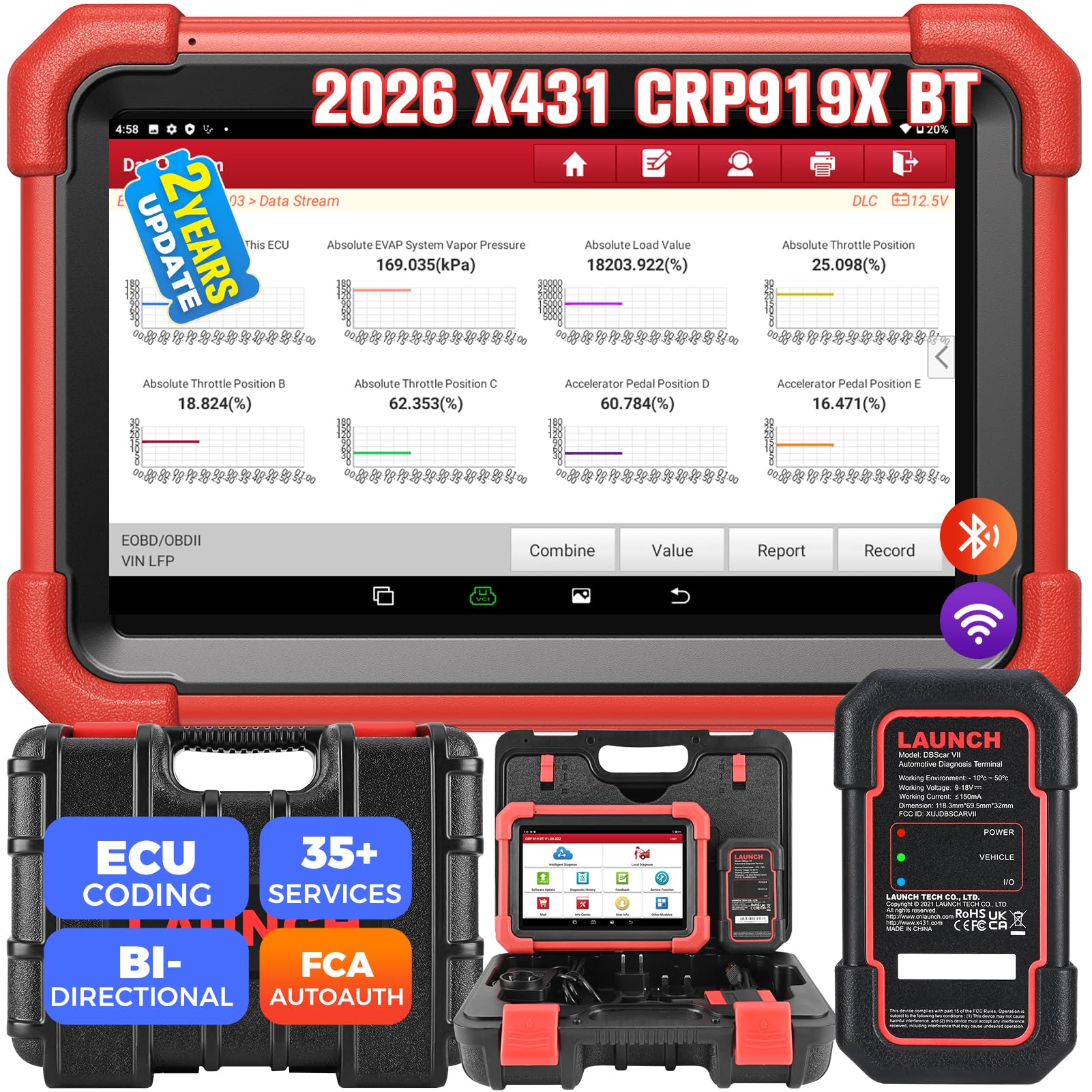 Buy this if your workload leans heavily on VAG-group vehicles or 2018+ FCA models that need SGW access without a separate adapter.
Pros
- Online ECU coding support for VW, Audi, Skoda, Ford, Lincoln, and Mazda
- Integrated FCA AutoAuth avoids the cost of a standalone bypass adapter
- CAN FD and DoIP support for newer GM, Chrysler, Volvo, and BMW F/G-chassis vehicles
Cons
- V.A.G guided access speeds up the process but doesn’t eliminate the learning curve on security-gated systems
- 7-inch tablet with 1024×600 resolution is serviceable, not sharp
- Wireless VCI adds one more component to keep charged and paired
The CRP919XBT’s V.A.G guided access is genuinely useful, walking technicians through the otherwise tedious security-code hunt for coding on Volkswagen Group vehicles. Combined with built-in FCA AutoAuth, it covers two of the more frustrating gateway situations a shop runs into. The injector coding scope depends heavily on brand; it’s strongest on the makes it specializes in and less remarkable elsewhere.
TOPDON AD800BT 2
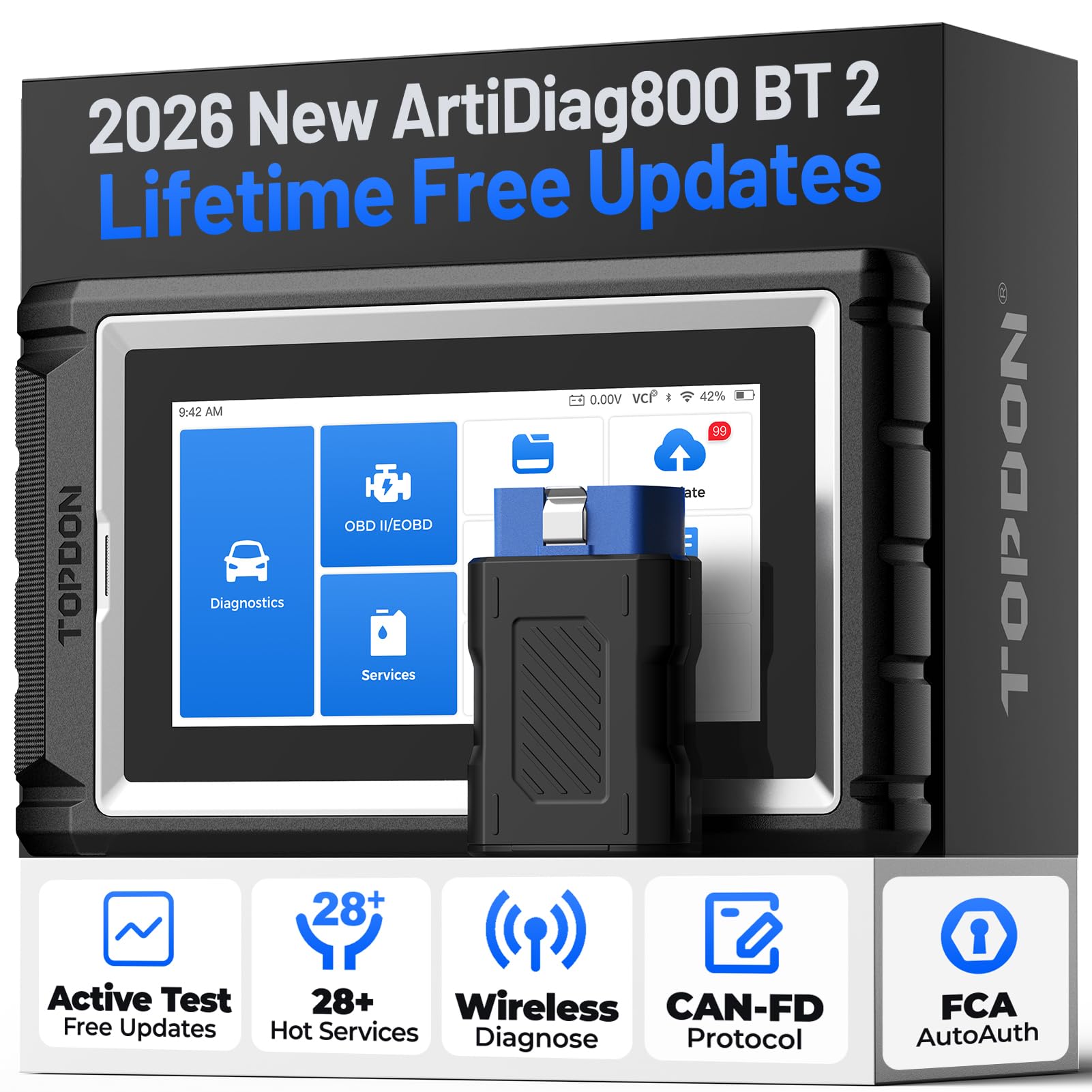 Buy this if long-term update costs concern you more than having the absolute newest hardware.
Pros
- Free lifetime updates, a rarity among bidirectional scanners in this range
- Injector coding included in its 28 reset services with bidirectional component control
- Bluetooth range up to 33 feet for hands-free operation around the vehicle
Cons
- No true bidirectional active tests on all systems, some functions limited to basic control
- AutoVIN doesn’t recognize every vehicle; manual VIN entry needed occasionally
- 6-inch screen is smaller than most competitors in this price bracket
The lifetime free update policy changes the math on total ownership cost considerably. Most competitors charge $99 to $179 a year after an initial free period; over three or four years of ownership, that adds up to more than the scanner itself cost. Injector coding and the 28-function reset menu cover the common maintenance jobs well, even if bidirectional depth doesn’t match the XTOOL D7.
ANCEL FX6100
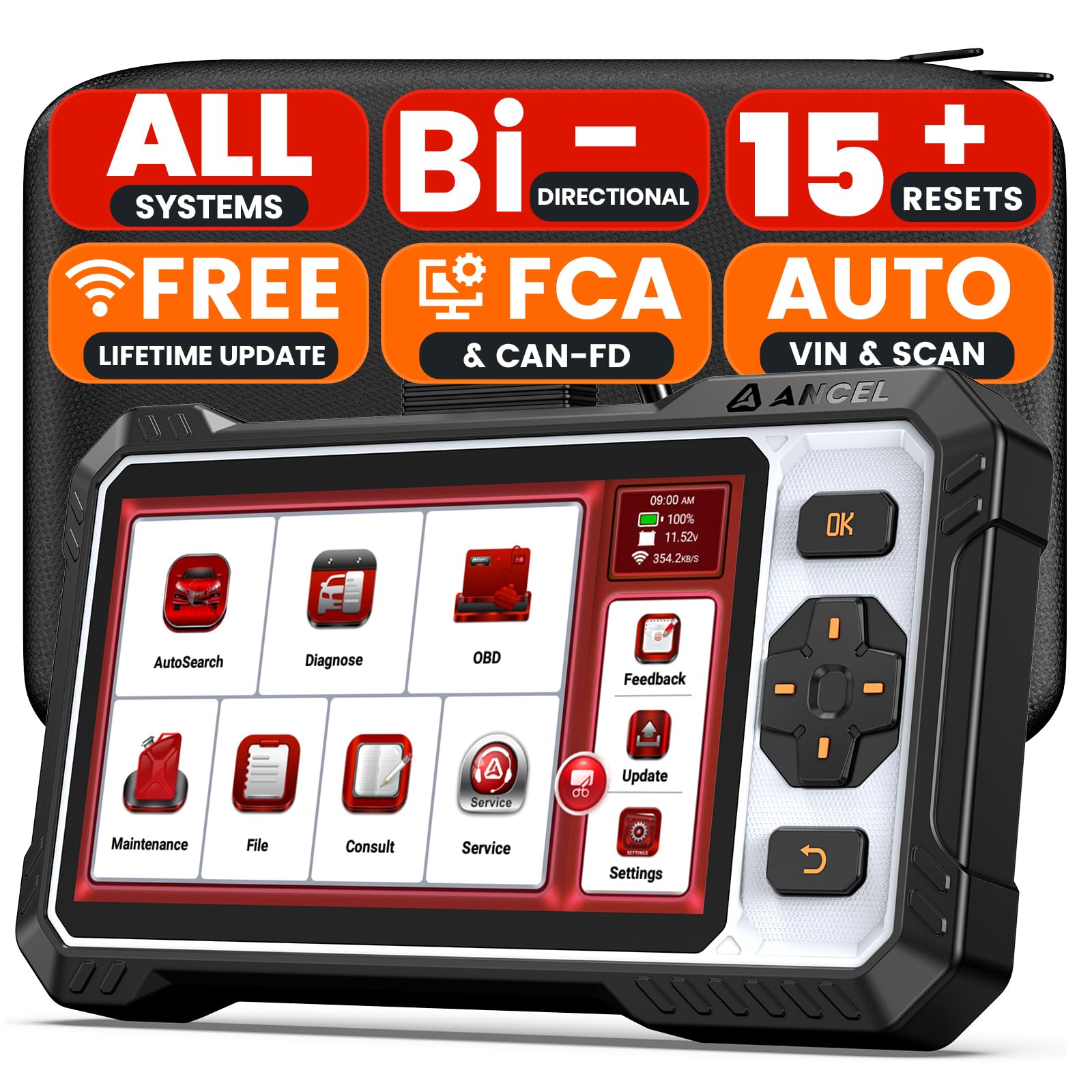 Buy this if you want injector coding and bidirectional tests with zero recurring subscription costs.
Pros
- Lifetime free updates with no yearly renewal fee structure
- 3,000+ active tests for bidirectional component commands
- Full system coverage across engine, transmission, ABS, SRS, TPMS, and more
Cons
- Reset menu tops out at 15 functions, fewer than most competitors here
- Some reviewers report durability issues after light use
- Best Sellers Rank suggests a smaller installed user base than more established brands
The no-subscription model is the FX6100’s strongest selling point, and for a DIYer who only needs injector coding a few times a year, that alone offsets the smaller reset menu. Bidirectional active tests cover the essentials: fuel pumps, cooling fans, EPB, and injectors respond to direct commands reliably on supported vehicles. Build quality complaints in a handful of reviews are worth noting before committing to daily shop use.
THINKCAR THINKSCAN 689BT
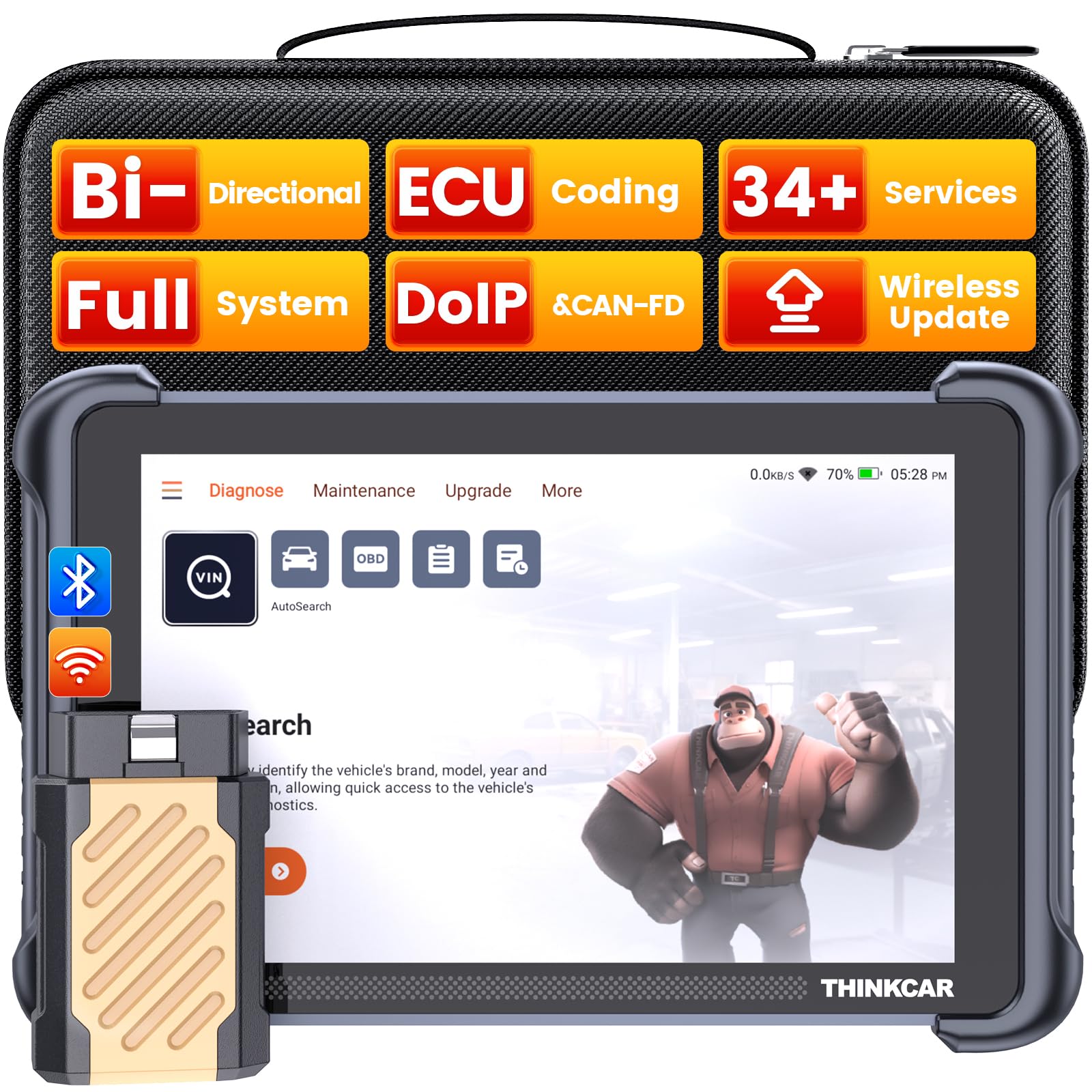 Buy this if you need ECU coding features beyond injectors, like adaptive resets and OE-setting customization, across a wide brand list.
Pros
- ECU coding covers injector calibration plus feature customization (interior lighting, auto-hold, mirror folding)
- 34+ service functions across 140+ global brands
- CAN FD and DoIP support with wireless updates and no subscription fee
Cons
- FCA AutoAuth requires a separate account registration and membership fee through Chrysler’s portal
- Some buyers report registration and support friction out of the box
- Coding functions vary significantly by model year, so compatibility checks are essential
The 689BT’s ECU coding menu goes further than injector calibration alone, letting technicians flash hidden functions and customize OE settings on supported vehicles. That versatility is attractive for shops doing more than basic injector replacements. The FCA AutoAuth setup requiring a separate paid account is a meaningful catch that buyers researching Jeep or Ram compatibility need to budget for separately.
ANCEL DS500BT
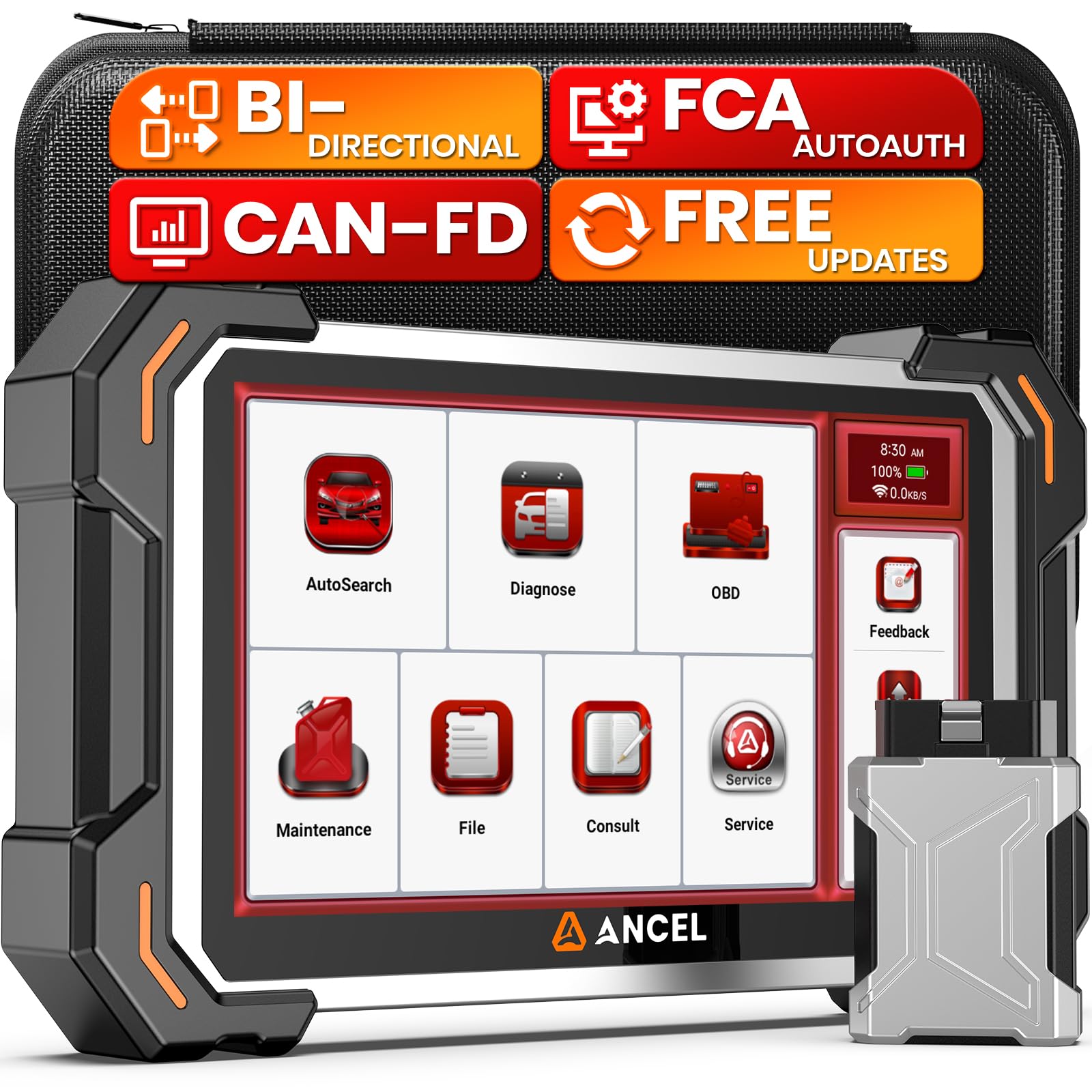 Buy this if you want a strong balance of active test volume, service functions, and long-term update costs in a wireless package.
Pros
- 3,000+ active tests with Bluetooth 5.0 wireless VCI for hands-free operation
- 28+ service functions including injector coding, gearbox relearn, and TPMS reset
- Lifetime free updates with no annual renewal required
Cons
- Some functions require sending vehicle details to the manufacturer ahead of time to confirm compatibility
- A few owners report communication issues with certain late-model vehicles
- Larger case size than competitors in the same weight class
The DS500BT lands as one of the more well-rounded options here, combining injector coding with a genuinely useful active test library and no ongoing subscription. The Bluetooth VCI setup means the tablet isn’t tethered to the OBD port during live data monitoring, which makes solo diagnostic work considerably easier. Compatibility gaps on the newest model years are worth checking before buying if the fleet includes 2025-and-newer vehicles.
ANCEL AD310
 Buy this only if you need basic code reading and clearing, with no expectation of injector coding, active tests, or service resets.
Pros
- Extremely simple to use, no setup or registration required
- Reads and clears emissions-related codes across all standard OBD2 protocols
- Compact, durable, and powered directly through the OBD port
Cons
- No injector coding, bidirectional control, or service reset functions of any kind
- Limited to emissions-related codes only; can’t diagnose ABS, SRS, or transmission issues
- Small 2.4-inch screen with no live data graphing
Including the AD310 here is a deliberate contrast. This is what a scanner looks like without injector coding, active tests, or system-wide diagnostics: a code reader, plain and simple. It tells you a check engine light is on and lets you clear it, nothing more. Anyone who has replaced an injector and then discovered their $30 code reader can’t finish the coding step understands exactly why the tools above exist. Keep this as a glovebox backup, not a primary diagnostic tool.
Buying Guide
Injector Coding vs. Injector Active Tests
These are not the same function, and the distinction determines whether a scanner earns its keep after an injector replacement.
| Function | What It Does | When You Need It |
|---|---|---|
| Injector Active Test / Buzz Test | Fires the injector on command to confirm it clicks and responds | Diagnosing a dead or stuck injector before replacement |
| Injector Coding | Writes calibration or IMA trim values into the ECU for a new injector | After physically replacing one or more injectors |
A scanner advertising “injector test” alone may not code anything. Check the specific function list for “injector coding,” “IMA coding,” or “injector trim programming” before assuming a tool covers post-replacement work.
Bidirectional Control Depth
Bidirectional control means the scanner sends commands to components instead of just reading sensor data. The number of active tests advertised matters less than which systems they cover. A tool with 3,000+ active tests spread across fans, pumps, windows, and injectors is more useful day-to-day than one with a higher number concentrated in only a couple of systems.
FCA AutoAuth, CAN FD, and DoIP Support
These three specs determine whether a scanner works on newer vehicles at all.
- FCA AutoAuth: Required for bidirectional and coding functions on 2018+ Chrysler, Jeep, Dodge, and Ram vehicles with secure gateway modules. Some tools include it; others require a separate paid subscription through the manufacturer.
- CAN FD: A faster communication protocol used on 2020+ GM and Chrysler vehicles. Without it, some newer trucks and SUVs won’t communicate at all.
- DoIP: Diagnostics over Internet Protocol, used on newer BMW, Volvo, and Land Rover/Jaguar models. Missing DoIP support means those vehicles are effectively locked out.
Update Costs and Long-Term Value
Compare the sticker price against renewal costs before buying. Some scanners include lifetime free updates; others charge $99 to $179 annually after an initial free period. Over three years, that fee can exceed the original purchase price of the tool.
Wireless vs. Wired Connection
Bluetooth VCI dongles let the tablet stay in hand while running active tests under the hood, which speeds up two-person diagnostic work. Wired connections sacrifice that mobility for a more stable link during coding procedures where a dropped connection can interrupt a write-in-progress. Neither is objectively better; the choice depends on workflow.
Editor’s Choice
The Autel MaxiCOM MK808S stands out as the strongest all-around pick for anyone serious about injector coding. It runs the same active test library and FCA/SGW gateway access as Autel’s pricier tools, and the wired connection avoids the risk of a Bluetooth dropout interrupting a coding procedure mid-write.
For buyers who want wireless flexibility without sacrificing bidirectional depth, the XTOOL D7 earns a close second. Its combination of injector coding, 4,000+ active tests, and CAN FD/DoIP support covers the newest vehicle architectures a shop is likely to encounter.
DIYers on a tighter budget who still want genuine injector coding, not just an active test, should look at the ANCEL FX6100 or TOPDON AD600S. Both include coding functions without the recurring update fees that erode long-term value on cheaper alternatives.
Conclusion
Injector coding capability separates a functional diagnostic tool from an expensive paperweight the moment a fuel injector needs replacing. The scanners covered here range from budget-friendly single-purpose tools to shop-grade platforms with full bidirectional control, FCA gateway access, and CAN FD/DoIP support for the newest vehicles on the road.
Match the tool to the vehicles actually being worked on. A DIYer with one daily driver doesn’t need the same coverage as a technician seeing a rotating mix of European, domestic, and Asian makes every week. Check specific injector coding compatibility against the vehicle’s year, make, and model before buying, since coverage varies even among tools with similar advertised specs.
The ANCEL AD310 remains useful as a glovebox code reader, but it can’t replace a coding-capable scanner for anyone doing their own injector work. For that job, prioritize the tools with confirmed bidirectional coding, transparent update policies, and gateway protocol support for the vehicles in the driveway or the bay.
FAQS
Can any OBD2 scanner code a new fuel injector? No. Basic code readers like the ANCEL AD310 only read and clear codes. Injector coding requires a bidirectional scanner with manufacturer-specific coding functions, and even then, coverage varies by vehicle make and model year.
What’s the difference between an injector buzz test and injector coding? A buzz test fires the injector to confirm it responds mechanically. Injector coding writes new calibration data into the ECU after a physical injector replacement, which most modern engines require for proper fuel trim.
Do I need FCA AutoAuth if I don’t work on Jeep or Chrysler vehicles? No. FCA AutoAuth only matters for 2018-and-newer Chrysler, Jeep, Dodge, and Ram vehicles with secure gateway modules. Skip it if those brands aren’t part of the regular workload.
Are lifetime free updates actually free forever? Manufacturers generally honor lifetime free update policies for the tool’s supported hardware lifespan, though “lifetime” refers to the product’s active support period, not a literal guarantee. Confirm the manufacturer’s specific update terms before buying.
Is a wireless Bluetooth connection reliable enough for injector coding? Reliable Bluetooth VCI dongles work well for most coding procedures, but a wired connection eliminates any risk of an interrupted signal during a critical write-to-ECU step. For high-stakes coding jobs, a stable connection matters more than convenience.
