
How to Fix P0306: Cylinder 6 Misfire Diagnosis and Repair

Quick Answer
P0306 means the engine computer detected a misfire in cylinder 6. To fix it, confirm the misfire with an OBD2 scanner, inspect the cylinder 6 spark plug and ignition coil, check the injector and wiring, look for intake leaks, and test compression if the ignition and fuel systems pass. If the check-engine light flashes, follow AAA’s check-engine light guidance and avoid continuing to drive the vehicle unnecessarily.
Quick P0306 Fixing Order
- Scan first: Save P0306, related codes, pending codes, and freeze-frame information before clearing anything.
- Find cylinder 6: Confirm its location from reliable service information for your exact engine.
- Check the plug: Look for excessive wear, deposits, damage, or an incorrect gap.
- Test the coil: On suitable coil-on-plug engines, a controlled coil swap can reveal whether the misfire follows the coil.
- Check fuel and air: Inspect injector operation, wiring, connectors, and nearby intake or vacuum leaks.
- Test mechanically: Check compression or cylinder leakage when spark and fuel tests don’t explain the misfire.
Don’t Guess
- P0306 identifies the affected cylinder, not the failed component. Test before buying parts.
An OBD2 scanner showing P0306 gives you a useful clue, but it isn’t a parts diagnosis. The code tells you to focus on cylinder 6 and then determine why that cylinder isn’t producing normal combustion.
I’ve seen drivers replace several ignition parts because they assumed every misfire meant a bad coil. A simple testing order usually saves both time and unnecessary parts.
In This Guide
What Does P0306 Mean?
P0306 means the powertrain control module has detected a misfire associated with cylinder 6. It doesn’t tell you whether the spark plug, ignition coil, injector, wiring, intake system, or engine itself caused that misfire.
Definition: An engine misfire occurs when a cylinder fails to produce the expected combustion and power contribution. P0306 narrows that problem specifically to cylinder 6.
The engine computer can recognize a misfire by monitoring changes in crankshaft speed as the cylinders fire. An abnormal contribution from cylinder 6 can eventually trigger P0306.
What do the characters in P0306 mean?
- P: The fault belongs to the powertrain system.
- 0: It is a generic OBD2 code rather than a manufacturer-specific code.
- 3: The code family concerns ignition or misfire detection.
- 06: The detected misfire is associated with cylinder 6.
As of 2026, even many basic consumer scanners can read P0306. A better scan tool may also show freeze-frame information, live data, pending codes, and misfire counters.
The AAA OBD code information resource also explains why a diagnostic trouble code should be treated as a clue rather than automatic proof that one particular part failed.
Is P0306 related to the key fob or immobilizer?
Usually, no. An immobilizer or transponder problem may prevent an engine from starting, but it normally doesn’t create a cylinder-specific P0306 combustion fault once the engine is running.
If the engine starts but shakes and P0306 is stored, focus on engine diagnosis first. A separate security warning or no-start condition should be diagnosed independently.
What Causes a P0306 Cylinder 6 Misfire?
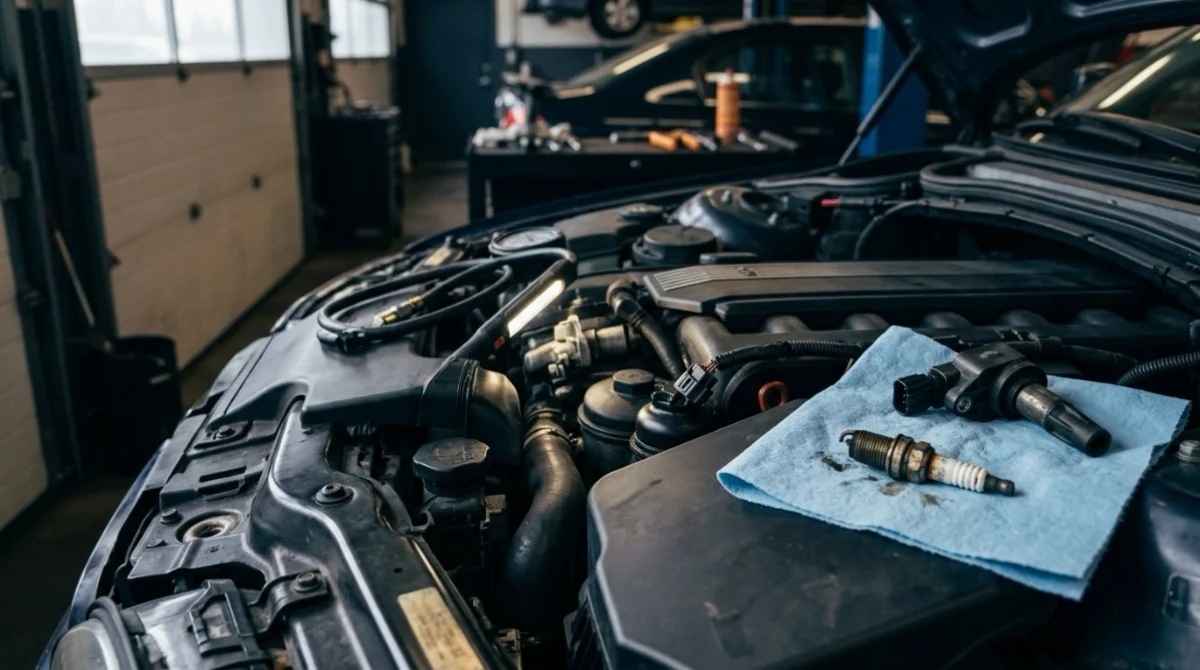
The most common P0306 causes fall into four groups: ignition, fuel delivery, air mixture, and mechanical problems. Start with the easiest checks before assuming internal engine damage.
Ignition problems
- Worn spark plug: A worn, fouled, cracked, or incorrectly gapped plug can produce weak or inconsistent ignition.
- Failed ignition coil: A weak coil may misfire constantly or only under acceleration and load.
- Damaged plug wire: Engines using traditional plug wires can develop excessive resistance or insulation damage.
- Connector trouble: Loose terminals, corrosion, heat damage, or broken wiring can interrupt coil operation.
Fuel delivery problems
- Restricted injector: Poor fuel delivery can make cylinder 6 run lean and misfire.
- Electrical injector fault: A damaged connector or control circuit may prevent normal injector operation.
- Fuel pressure problem: Low pressure often affects more than one cylinder, but it still belongs in the diagnosis when other codes or symptoms support it.
Air and mechanical problems
- Intake leak: A leak near the cylinder 6 intake runner can disturb the air-fuel mixture.
- Low compression: Valve leakage, piston damage, cylinder wear, or other mechanical trouble can reduce cylinder contribution.
- Valve-train problem: A valve that isn’t sealing or moving correctly can create a persistent misfire.
- Head-gasket issue: In some cases, coolant leakage or lost cylinder sealing can produce a misfire.
Don’t overlook vehicle-specific patterns. Some engines have known service bulletins or extended coverage for particular misfire problems.
You can search your exact year, make, model, and VIN through NHTSA’s recall and manufacturer-information resources before authorizing a major repair.
How Do You Diagnose P0306 Correctly?
Diagnose P0306 by confirming the code, locating cylinder 6 correctly, and testing spark, fuel, air, and compression in that order. Don’t clear the code before recording useful scanner information.
1. Scan every stored and pending code
Read all diagnostic codes rather than focusing only on P0306. Related lean, injector, sensor, or multiple-misfire codes can completely change the direction of the diagnosis.
- Record stored codes.
- Check pending codes.
- Save freeze-frame data when available.
- Review misfire counters if your scanner supports them.
- Note engine speed, load, and temperature when the fault appeared.
2. Confirm which cylinder is number 6
Cylinder numbering isn’t universal. Number 6 can sit in a different position depending on engine design and manufacturer.
Use the owner’s service information, a manufacturer diagram, or reliable repair data for your exact engine. Guessing the cylinder location can lead you to diagnose the wrong coil or plug.
3. Inspect the cylinder 6 spark plug
Remove and inspect the plug only when the engine design and your skill level allow safe access. Compare its condition with another cylinder whenever possible.
- Check electrode wear.
- Look for oil or fuel fouling.
- Inspect the porcelain for cracks.
- Check for unusual deposits.
- Verify the plug type and gap against manufacturer specifications.
4. Check the ignition coil
On many coil-on-plug engines, moving the cylinder 6 coil to another accessible cylinder can be a useful test. Clear or monitor the appropriate data and see whether the misfire follows that coil.
If P0306 changes to the code for the cylinder receiving the suspect coil, the coil becomes a strong suspect. If P0306 remains on cylinder 6, keep testing.
5. Check the injector and wiring
Inspect the cylinder 6 injector connector and nearby harness for damage. Injector electrical testing should follow the manufacturer’s specifications because control strategies differ between vehicles.
Fuel-system work carries fire and pressure hazards. Don’t remove an injector or open a pressurized fuel system without the correct procedure and equipment.
6. Check for intake leaks and compression
If ignition and injector checks pass, look for an air leak affecting that cylinder. A professional smoke test can help locate small intake leaks that aren’t obvious visually.
A compression or leak-down test becomes important when the misfire stays on cylinder 6 despite good spark and fuel evidence. This can reveal a valve, piston, ring, cylinder, or sealing problem.
Locksmith’s note: injector removal, fuel-pressure testing, and internal-engine tests are good points to involve a qualified automotive technician if you don’t have the proper equipment.
Section Takeaway: Follow the evidence from the scanner to spark, fuel, air, and compression. A cylinder-specific code becomes much easier to solve when you test one system at a time.
How Do You Fix P0306 Step by Step?
The correct P0306 fix is the repair that addresses the failed test, not the part most commonly associated with a misfire. Replace or repair components only after you’ve confirmed the fault.
| Finding | What It Suggests | Likely Repair Direction |
|---|---|---|
| Misfire moves after coil swap | Weak or failed ignition coil | Replace the confirmed faulty coil and inspect its connector |
| Plug is worn, fouled, or damaged | Spark plug cannot ignite the mixture reliably | Install the correct plug and address the cause of abnormal fouling |
| Injector circuit fails testing | Injector, wiring, connector, or control problem | Repair the confirmed circuit fault or injector problem |
| Smoke test reveals an intake leak | Extra unmetered air is disturbing the mixture | Repair the leaking hose, seal, gasket, or intake component |
| Cylinder 6 compression is abnormally low | Mechanical sealing or valve-train problem | Perform deeper mechanical diagnosis before replacing more ignition parts |
After completing the repair
Reconnect everything correctly and verify that no tools or loose connectors remain in the engine bay. Then clear codes only when appropriate for your vehicle and diagnostic process.
- Start the engine and check idle quality.
- Watch live misfire data when available.
- Confirm the check-engine light stays off.
- Perform a suitable road test if the vehicle is safe to drive.
- Scan again for stored or pending codes.
Don’t assume the repair succeeded because the engine feels smoother for thirty seconds. Intermittent misfires often require driving under the same load and temperature conditions that originally triggered the code.
Section Takeaway: Verify the repair with scan data and operating conditions. A successful P0306 fix should stop the cylinder 6 misfire rather than simply erase the code temporarily.
Can You Drive With a P0306 Code?
A P0306 code shouldn’t be ignored, and a flashing check-engine light deserves immediate attention. A severe active misfire can send unburned fuel into the exhaust and damage the catalytic converter.
AAA advises treating a flashing check-engine light as an urgent problem. Reduce unnecessary driving and move to a safe location if the vehicle is shaking, losing power, or behaving abnormally.
Stop driving and arrange professional help when:
- The check-engine light is flashing.
- The engine is shaking severely.
- Power drops suddenly.
- You smell raw fuel or unusual exhaust odors.
- The engine is overheating.
- The vehicle struggles to maintain safe road speed.
A steady light with a mild intermittent misfire may not create the same immediate situation. However, continued driving can worsen the underlying fault, so diagnosis should still happen promptly.
NHTSA also provides manufacturer communications and recall resources that can help owners check whether a known vehicle-specific issue has been documented.
How Much Does It Cost to Fix P0306?
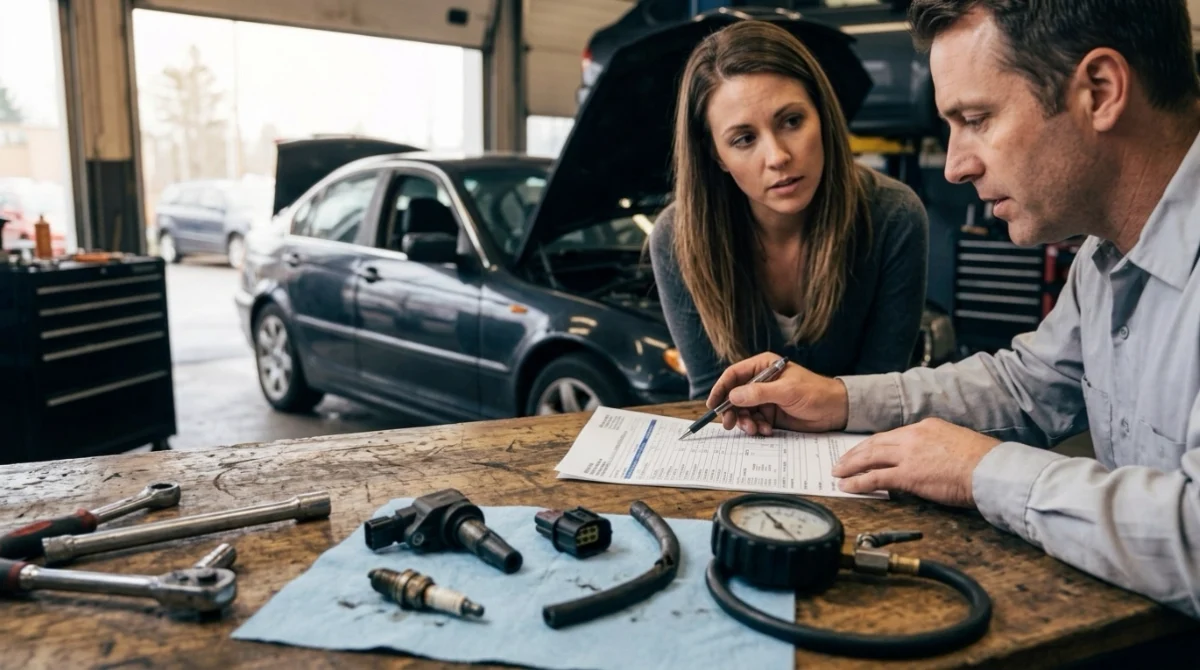
P0306 repair cost varies widely because the code doesn’t identify the failed component. A spark plug or wiring repair can be relatively modest, while injector access or internal-engine work can cost much more.
Labor rates, engine layout, vehicle brand, parts quality, and diagnostic time also affect the final price. Some engines require significant disassembly just to reach the rear spark plugs or coils.
Typical repair categories
- Diagnostic testing: Often billed as inspection or diagnostic labor before any repair is approved.
- Spark plugs: Cost depends heavily on engine access and whether the complete plug set is due for service.
- Ignition coil: Pricing varies by vehicle and whether one coil or several confirmed worn components need attention.
- Injector or wiring repair: Costs rise when intake components must be removed for access.
- Vacuum or intake leak: A simple hose can be inexpensive, while a manifold gasket requires more labor.
- Mechanical engine repair: Valve, cylinder-head, piston, or compression problems can become major repairs.
Pro tip: get the diagnosis in writing before approving an expensive repair. P0306 alone doesn’t justify replacing a coil, injector, catalytic converter, or engine component.
If a shop recommends major engine work, ask which test confirmed the mechanical fault. Compression readings, leak-down findings, or other measurable evidence should support that recommendation.
Frequently Asked Questions
Can a bad spark plug cause P0306?
Yes. A worn, fouled, cracked, or incorrectly gapped spark plug can prevent reliable combustion in cylinder 6. Inspect and test the plug before replacing other components, and investigate abnormal oil or fuel deposits instead of treating the plug as the entire problem.
Can a bad ignition coil cause P0306?
Yes. A weak cylinder 6 ignition coil is a common possible cause. On suitable coil-on-plug engines, moving the coil to another cylinder and checking whether the misfire follows it can provide stronger evidence than simply installing a new coil.
Can a fuel injector cause a cylinder 6 misfire?
Yes. A restricted injector, electrical circuit fault, damaged connector, or injector that isn’t operating correctly can cause P0306. Injector testing varies by vehicle, so follow manufacturer service information and use professional help for pressurized fuel-system work.
Will changing all the spark plugs fix P0306?
Only if a spark plug problem caused the misfire. P0306 can also come from a coil, injector, wiring fault, intake leak, low compression, or mechanical problem, so replacing plugs without inspecting and testing first can leave the code unchanged.
Can low compression cause P0306?
Yes. A leaking valve, piston or ring problem, head-gasket fault, or other loss of cylinder sealing can create a persistent cylinder 6 misfire. Compression and leak-down testing become especially useful after ignition, fuel, and intake checks appear normal.
Why does P0306 come back after I clear it?
Clearing an OBD2 code erases stored fault information but doesn’t repair the cause. If cylinder 6 continues misfiring under the conditions monitored by the engine computer, P0306 can return as a pending or confirmed code.
Can P0306 damage the catalytic converter?
A severe active misfire can allow unburned fuel to reach the exhaust, which can overheat and damage a catalytic converter. A flashing check-engine light is an important warning, so avoid unnecessary driving and have the vehicle diagnosed promptly.
Final takeaway: The smartest way to fix P0306 is to scan first and replace parts second. Confirm cylinder 6, test the ignition system, inspect fuel and air delivery, and move to compression testing only when the simpler checks don’t explain the misfire.
