
How to Fix P0730: Incorrect Gear Ratio Code

Quick Answer
P0730 means your vehicle’s computer detected a transmission gear ratio that doesn’t match the ratio it expected. Start by scanning all transmission codes, checking the fluid correctly, inspecting for leaks and wiring problems, and comparing transmission speed-sensor data before replacing parts; this transmission fluid guide from AAA explains why fluid condition and level matter.
What to Check First
- Scan every code: Related speed-sensor, solenoid, pressure, or gear-specific codes can narrow the problem quickly.
- Check transmission fluid: Low, contaminated, overheated, or incorrect fluid can affect hydraulic pressure and shifting.
- Look for leaks: Inspect the transmission, cooler lines, pan area, and nearby connections for fresh fluid.
- Review live data: Compare commanded gear with input and output speed readings using a transmission-capable scan tool.
- Check electrical components: Damaged wiring, connectors, speed sensors, and shift solenoids can create incorrect-ratio readings.
- Consider internal wear: Persistent slipping may point to clutch, valve-body, torque-converter, or other internal transmission problems.
Stop Driving If
- The transmission slips badly, loses drive, overheats, smells burned, or begins shifting violently. Arrange professional diagnosis or towing instead.
P0730 can look intimidating on an OBD2 scanner because it points toward the transmission rather than one simple component. In practice, the code is a starting point rather than a diagnosis.
As of 2026, I still approach this code the same way I approach electrical and immobilizer faults: verify the data before buying parts. This guide walks through that process in a practical order.
In This Guide
What Does the P0730 Code Mean?
P0730 means “Incorrect Gear Ratio.” The powertrain or transmission control system has calculated a gear ratio that doesn’t agree with what it expects for the operating conditions.
Definition: A gear ratio compares transmission input speed with output speed. The control module uses speed information to determine whether the transmission is transferring power through the expected gear.
Think of it as the computer asking for one result and measuring another. That difference can come from actual transmission slip or inaccurate information reaching the control module.
Why does an OBD2 scanner show P0730?
Your vehicle monitors transmission operation while you drive. When the calculated ratio repeatedly falls outside the expected range, the module can store P0730 and switch on the check-engine light.
A basic OBD2 scanner may display the code and description. A more capable scanner can often access transmission-module data such as commanded gear, turbine or input speed, output speed, temperature, and related codes.
Is P0730 the same as a specific gear code?
No. P0730 is a general incorrect-ratio code, while related codes can identify a particular gear.
- P0731: Gear 1 incorrect ratio
- P0732: Gear 2 incorrect ratio
- P0733: Gear 3 incorrect ratio
- P0734: Gear 4 incorrect ratio
- P0735: Gear 5 incorrect ratio
- P0736: Reverse incorrect ratio
If one of those appears beside P0730, don’t ignore it. The extra code may show exactly when the ratio error occurs.
Is It Safe to Drive With P0730?

Whether you should drive depends on how the transmission behaves. A P0730 code accompanied by noticeable slipping or loss of drive deserves prompt attention.
AAA describes transmission slipping as a condition where engine speed can rise without the expected increase in vehicle speed. Rough shifts, hesitation, unusual noises, and a burning smell are also reasons to investigate the transmission rather than continue normal driving.
Stop driving if you notice these symptoms
- Engine RPM suddenly rises while road speed barely changes
- The transmission repeatedly drops out of gear
- Drive or reverse takes several seconds to engage
- Shifts become unusually harsh
- A transmission-temperature warning appears
- You smell overheated or burned transmission fluid
- The vehicle loses forward movement
- Grinding or severe mechanical noises begin
Continuing to drive a slipping transmission can create more heat and wear. If engagement becomes unpredictable, towing is the safer option.
If the check-engine light is on but the vehicle shifts normally, you may have more time for diagnosis. I would still avoid heavy towing, hard acceleration, or a long road trip until the cause is known.
It’s also worth checking your VIN for open safety campaigns through the NHTSA recall lookup. A P0730 code does not automatically mean your vehicle has a recall, but checking takes little time.
Section Takeaway: P0730 becomes urgent when it appears with slipping, overheating, violent shifts, or loss of drive. Treat the vehicle’s behavior as seriously as the code itself.
What Causes a P0730 Incorrect Gear Ratio Code?
Several faults can create P0730, so replacing the transmission based on the code alone is a mistake. The best clue usually comes from related codes, fluid condition, live data, and driving symptoms.
1. Low transmission fluid
Low fluid can reduce the hydraulic pressure needed to apply clutches correctly. The transmission may then slip and produce a ratio mismatch.
Low fluid usually has a reason. Inspect for leaks rather than repeatedly topping it off.
2. Contaminated, overheated, or incorrect fluid
Transmission fluid lubricates components and supports hydraulic operation. Fluid that has degraded or been replaced with the wrong specification can contribute to poor shifting.
Never assume a universal fluid is suitable. Verify the exact specification and service procedure for your vehicle.
3. Input or output speed-sensor problems
The transmission controller needs reliable speed information to calculate gear ratio. A failing sensor, loose connector, damaged wire, or poor connection can distort that calculation.
Related speed-sensor codes make this path more likely. Live scan data can also reveal a signal that drops out or behaves unrealistically.
4. Shift-solenoid or valve-body problems
Solenoids control hydraulic circuits inside many automatic transmissions. A sticking solenoid or valve-body problem may prevent the commanded gear from applying correctly.
An electrical solenoid fault may store an additional code. Hydraulic sticking can be harder to identify without pressure testing or experienced diagnosis.
5. Internal clutch or mechanical wear
Automatic transmissions use friction components to hold or drive parts of the geartrain. If those components wear or fail, engine power can slip instead of transferring at the expected ratio.
This possibility becomes more concerning when the fluid smells burned or contains excessive debris. Persistent slipping after external causes are ruled out also raises suspicion.
6. Torque-converter or hydraulic-pressure problems
A torque-converter or pressure-control issue can affect how engine power reaches the transmission. The exact relationship to P0730 varies by transmission design.
Related trouble codes and manufacturer service information matter here. Don’t condemn a torque converter from P0730 alone.
7. Control-module calibration or vehicle-specific issues
Some shifting complaints have manufacturer-specific diagnostic procedures, software updates, or technical service information. Your VIN, model year, engine, and exact transmission determine what applies.
You can verify vehicle details using the NHTSA VIN Decoder. For transmission-specific procedures, use factory service information for that exact vehicle.
How Do You Diagnose and Fix P0730?
The correct fix comes from finding why the measured gear ratio is wrong. I use a process that starts with evidence and moves toward the expensive possibilities last.
Step 1: Scan every stored and pending code
Don’t focus only on P0730. Scan the engine and transmission modules for related codes before clearing anything.
Pay particular attention to codes involving input speed, output speed, shift solenoids, pressure control, torque-converter operation, or specific gears. Record freeze-frame information when your scanner provides it.
Freeze-frame data may show speed, load, temperature, and other conditions present when the fault set. That context can be valuable during a road test.
Step 2: Verify the transmission fluid correctly
Check the manufacturer’s procedure before touching the fluid. Some vehicles use a dipstick, while sealed transmissions may require a temperature-dependent level procedure.
- Confirm the correct transmission-fluid specification.
- Check the fluid level using the specified procedure.
- Inspect the fluid for an obvious burned smell or severe discoloration.
- Look underneath the vehicle for fresh leaks.
- Inspect transmission cooler lines and accessible seals.
Pro tip: don’t guess at the fluid level on a sealed transmission. An incorrect level can create new shifting problems and make diagnosis harder.
Step 3: Inspect wiring and connectors
Check accessible transmission harnesses and connectors for damage, corrosion, loose locking tabs, fluid contamination, or rubbed-through wiring. Pay extra attention near speed sensors and the transmission case.
A sensor problem isn’t always the sensor itself. I’ve seen plenty of automotive electrical faults where the connector or harness caused the misleading code.
Step 4: Compare live transmission data
A transmission-capable scan tool becomes especially useful here. Watch the vehicle’s commanded gear alongside the input and output speed readings.
- Does an input or output speed signal suddenly fall to zero?
- Does the reading jump unrealistically?
- Does the transmission command a shift but continue slipping?
- Does P0730 occur only during one particular shift?
- Are there temperature or pressure-related data points that change with the fault?
A cheap generic scanner may not expose these enhanced transmission parameters. In that case, professional-level scan equipment can save a lot of guesswork.
Step 5: Perform a controlled road test only if safe
If the transmission still moves normally enough for testing, reproduce the conditions recorded with the code. Avoid aggressive acceleration and stop immediately if slipping becomes severe.
Watch commanded gear and speed data during each shift. The goal is to determine whether the controller receives bad information or whether the transmission physically fails to hold the requested ratio.
Step 6: Test sensors, solenoids, and circuits
If scan data points toward an electrical fault, test the suspected circuit using the factory wiring diagram and specifications. Don’t substitute a generic resistance value from another transmission.
Solenoid diagnosis can involve electrical checks and hydraulic testing. Procedures vary significantly between makes, models, years, and transmission families.
Step 7: Investigate internal transmission problems
Internal diagnosis comes later, after fluid, wiring, sensors, commands, and related external issues have been checked. At this stage, pressure testing or transmission disassembly may be required.
AAA notes that transmission slipping can be associated with low or contaminated fluid, worn internal friction components, mechanical faults, or torque-converter problems. That range of possibilities is exactly why P0730 shouldn’t trigger automatic parts replacement.
Section Takeaway: Diagnose P0730 from the outside inward. Scan data, fluid checks, wiring inspection, and sensor testing should come before assuming major internal transmission failure.
Which Repairs Can Fix P0730?
There is no single P0730 repair because the code describes a result rather than naming a failed part. Match the repair to the evidence you find.
| Finding | What It Suggests | Verify Before Repair | Likely Repair Direction |
|---|---|---|---|
| Fluid level is low | Possible leak or incorrect previous service | Correct checking procedure and leak source | Repair leak and restore correct fluid level/specification |
| Speed signal drops out | Sensor, connector, or wiring fault | Live data plus circuit testing | Repair circuit or replace confirmed faulty sensor |
| Solenoid-related code is present | Electrical or hydraulic shift-control problem | Wiring, command data, and manufacturer test procedure | Circuit, solenoid, or valve-body repair as confirmed |
| RPM flares during a shift | Possible clutch or hydraulic slipping | Fluid, pressure, scan data, and internal condition | Hydraulic, valve-body, or internal transmission repair |
| Burned fluid and repeated slipping | Possible significant internal wear | Professional transmission inspection | Internal repair, rebuild, or replacement depending on findings |
Will changing the transmission fluid fix P0730?
It can help when fluid level or condition is genuinely responsible, but a fluid change isn’t a universal P0730 cure. Severely worn internal parts won’t repair themselves after fresh fluid is added.
Avoid performing an unplanned flush simply because the code appeared. Check the manufacturer maintenance procedure, service history, fluid condition, and diagnosis first.
If you’re experiencing slipping, AAA’s overview of common transmission slipping causes reinforces why fluid condition is only one possibility.
Does P0730 mean you need a new transmission?
No. P0730 alone does not prove that the entire transmission has failed.
I’ve seen automotive faults look expensive until proper testing uncovered something much smaller. With this code, fluid, electrical signals, hydraulic controls, and internal wear all need consideration.
Pro tip: before approving a major transmission repair, ask what test confirmed the internal failure and whether related electrical and hydraulic causes were ruled out.
How Do You Know P0730 Is Fixed?
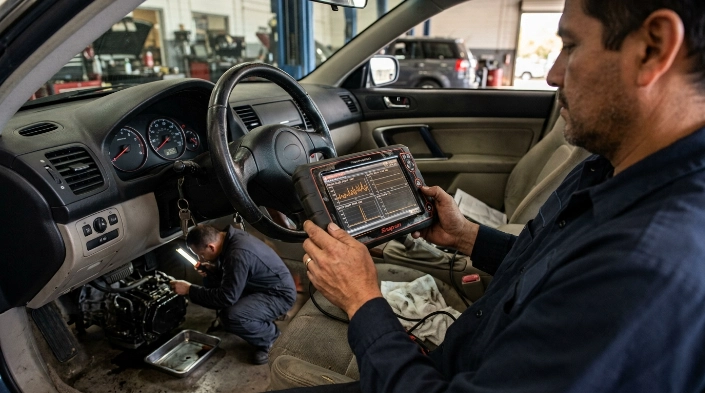
Clearing the check-engine light isn’t proof of a repair. You need to confirm that the transmission now operates correctly under the conditions that previously triggered the code.
- Complete the repair: Correct the verified fluid, electrical, hydraulic, sensor, or mechanical problem.
- Clear the diagnostic codes: Do this after recording the original information and finishing the repair.
- Follow applicable relearn procedures: Some transmissions require manufacturer-specific adaptation or relearn steps after certain repairs.
- Road test the vehicle: Recreate the relevant operating conditions without abusive driving.
- Watch live data: Confirm that speed signals remain stable and shifting behaves normally.
- Rescan the modules: Look for pending as well as confirmed codes.
- Check for leaks: Verify the fluid level again when the manufacturer procedure calls for it.
If P0730 returns immediately, don’t keep clearing it. A repeat code means the underlying condition is still present or another part of the diagnosis needs attention.
Some vehicles also need a specific drive cycle before the monitor runs again. Use the manufacturer’s service information rather than assuming one universal procedure works for every car.
P0730 FAQ
What is the most common cause of P0730?
There isn’t one universal cause across every vehicle. Low or incorrect transmission fluid, speed-sensor faults, wiring issues, solenoid or valve-body problems, and internal transmission slipping can all produce an incorrect gear ratio.
Can low transmission fluid cause code P0730?
Yes. Low fluid can reduce hydraulic pressure and allow the transmission to slip, which may create an unexpected input-to-output speed relationship.
Always find out why the level is low. Transmission fluid normally shouldn’t disappear without leakage or another problem.
Can a bad speed sensor cause P0730?
Yes, depending on the vehicle and transmission design. Incorrect input or output speed information can make the control module calculate a gear ratio that doesn’t match expectations.
Check for related sensor codes and inspect live data before replacing a sensor.
Can I erase P0730 with an OBD2 scanner?
You can usually clear the stored code with a compatible scan tool, but that doesn’t repair the cause. P0730 can return once the control module detects the incorrect ratio again.
Can an OBD2 scanner tell me exactly what part is bad?
Usually not from P0730 alone. A good scanner can provide related codes, freeze-frame information, transmission data, and speed-sensor readings that help you identify the failed system.
Will changing transmission fluid always fix P0730?
No. Fluid service may help when the level, condition, or specification is the actual problem, but it won’t fix damaged wiring, failed sensors, hydraulic faults, or worn internal components.
Does P0730 always mean the transmission needs to be rebuilt?
No. A rebuild or replacement becomes reasonable only when testing confirms substantial internal damage or wear.
Diagnose external electrical, fluid, sensor, and hydraulic causes before making that decision.
Final takeaway: P0730 tells you the transmission’s measured gear ratio isn’t matching what the control system expects. Start with a complete scan, verify the fluid correctly, inspect wiring and sensors, analyze live data, and move toward internal diagnosis only when the evidence supports it.
If the vehicle is slipping badly, overheating, or losing drive, stop driving and have the transmission professionally inspected. A careful diagnosis now can prevent unnecessary parts replacement and may keep a smaller problem from becoming more serious.
“`
