
How to Open a Frozen Car Trunk or Liftgate

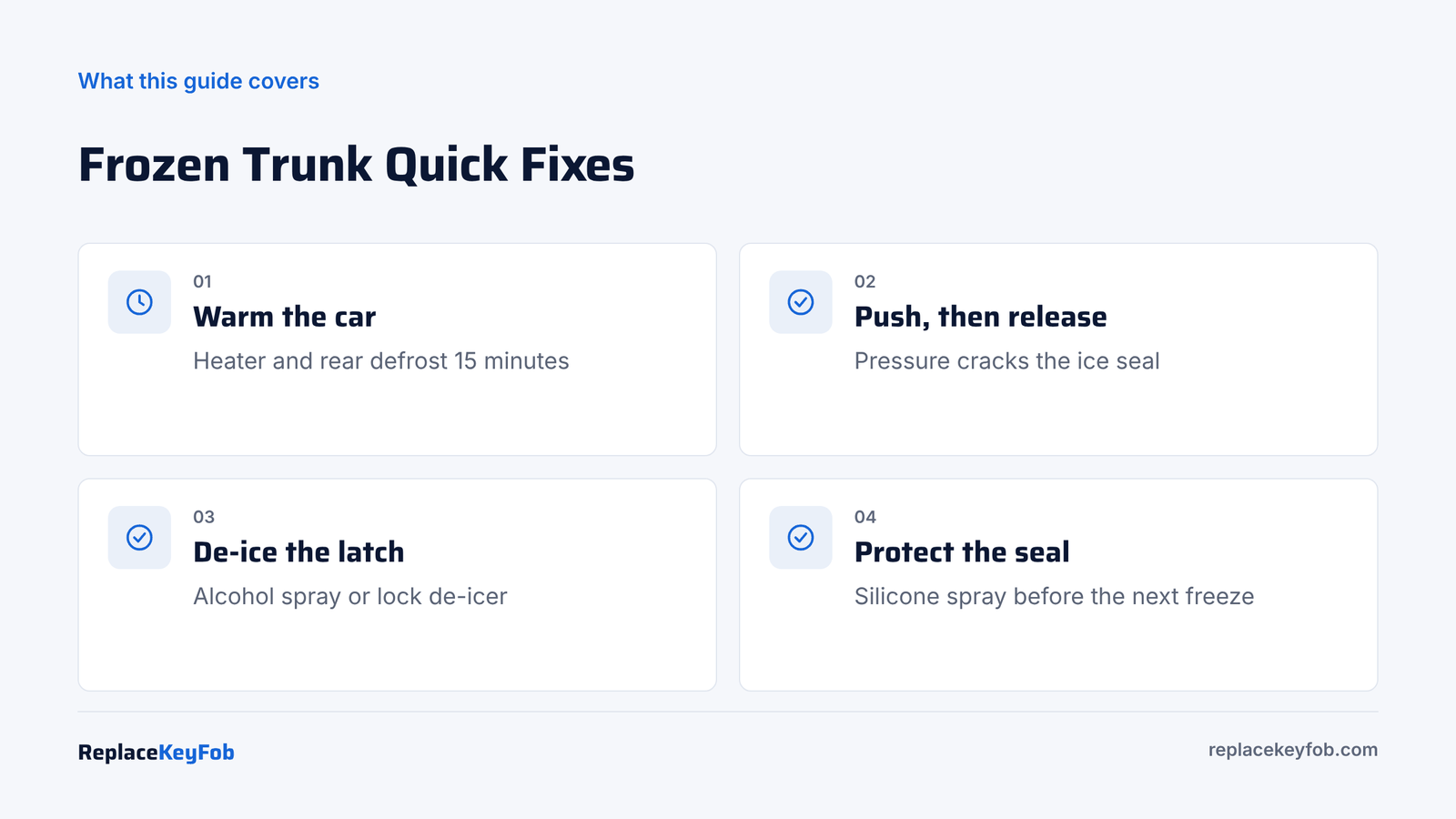
To open a frozen car trunk, start the engine and run the heater and rear defrost for 10 to 15 minutes. Clear snow from the lid edges, press down firmly on the lid to crack the ice in the seal, then press release while lifting gently. Spray lock de-icer or rubbing alcohol into a frozen latch or keyhole.
A frozen trunk usually has one of two problems. Either the rubber seal has frozen to the body, gluing the lid shut, or water inside the latch has turned to ice so the claw cannot let go. You can tell them apart by listening. If you hear the latch click but the lid does not rise, it is the seal. If you hear nothing or a weak buzz, the latch or lock is frozen.
Both are fixable without damage if you resist the urge to pull hard. Yanking a frozen lid tears weatherstrips and can snap the release handle or a power liftgate strut.
What You Need
- Ice scraper and a soft snow brush
- Commercial lock de-icer, or a spray bottle of rubbing alcohol mixed about 2 parts alcohol to 1 part water
- A plastic trim tool or a credit card
- Silicone spray for the seals afterward
- Optional: a hair dryer and an outdoor-rated extension cord
Lock De-Icer Spray
A small can of lock de-icer with lubricant thaws keyholes and latch parts in seconds. Look for one that says it lubricates and is safe on paint and rubber.
As an Amazon Associate, ReplaceKeyFob earns from qualifying purchases.
Step-by-Step: Opening a Frozen Trunk
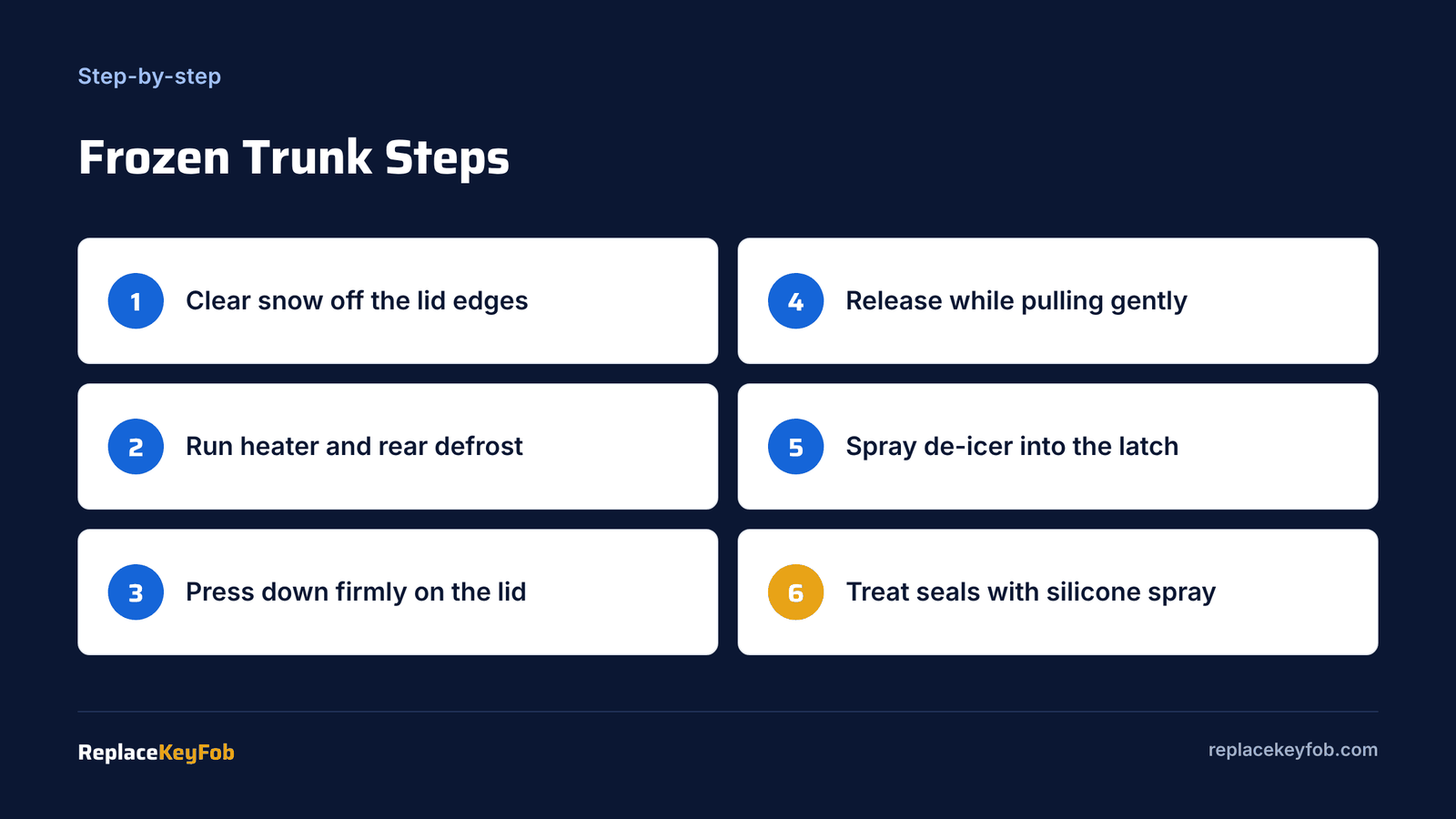
- Clear the snow. Brush snow off the trunk lid and out of the gaps around it. Packed snow in the gap refreezes into a solid wedge.
- Warm the car. Start the engine and run the heater on high with the rear defrost on for 10 to 15 minutes. Heat soaks slowly toward the back of the car, and on a liftgate with heated glass, the rear defroster warms the top of the gate directly.
- Unlock the car. Many cars ignore the trunk button while locked. Unlock with the fob or the button on the driver door.
- Crack the seal with pressure. Push down firmly on the trunk lid near the latch, or thump the edge with the flat of your hand a few times. This breaks the ice bond between seal and body. Downward pressure also takes load off the latch so it can release.
- Release and lift gently. Press the trunk button or fob while lifting the lid edge with your fingertips. If it lifts an inch, work along the edges with a plastic trim tool to free the seal.
- Thaw a frozen latch. If the latch will not release at all, spray de-icer or the alcohol mix into the gap at the latch area, wait two minutes and try again.
Using warm water safely
Lukewarm water (not hot) poured along the seal line can free a stubborn lid. Boiling water can crack cold glass, damage paint and soften plastic. Whatever water you use will refreeze quickly, so dry the seal and latch right after it opens. In very cold weather, skip water entirely.
Using a hair dryer
A hair dryer aimed at the latch area for a few minutes works well in a driveway. Keep it moving and keep the cord out of puddles. Do not use a heat gun or open flame; both damage paint and can melt plastic trim and wiring.
Frozen Keyhole or Lock Cylinder
If your car has a trunk lock cylinder and the key will not go in or turn, the lock itself is frozen.
- Spray de-icer straight into the keyhole.
- Warm the metal key blade in your hand or with a lighter for a few seconds, then insert it gently and wait. Hold a lighter only to the blade, never near the paint or the plastic head.
- Turn gently. Do not force a frozen key; a broken key in the cylinder is a much bigger problem.
The same method works on door locks. For full door guidance, see how to unfreeze car door locks and how to unfreeze a car door.
Frozen Power Liftgates and Power Trunks
Power gates need extra care because the motor or struts can strain against ice.
- Do not keep pressing the button. Repeated tries against a frozen gate can blow a fuse or trip the system into a fault mode. Press once, wait, and only retry after the area has warmed.
- Help the motor. Press the button and lift gently at the same time so the struts are not fighting the ice alone.
- Reset after thawing. If the gate stops working after a freeze, close it by hand, then open and close it fully with the button to reset the position. If it still fails, check the liftgate fuse and see power liftgate not opening with key fob.
- Hands-free kick sensors may not respond with snow packed under the bumper. Clear the sensor area.
Opening the Trunk From Inside
If the outside will not budge, go in from the cabin. Fold the rear seats and pull the interior emergency release, which is mechanical and can sometimes free a latch that the actuator cannot move. On SUVs, climb into the cargo area and look for a manual release cover in the liftgate trim. Our guide on how to open a car trunk from inside shows where these are.
Troubleshooting Table
| What happens | Cause | Fix |
|---|---|---|
| Latch clicks, lid stays down | Seal frozen to body | Push down, then lift gently; trim tool |
| No click at all | Frozen latch or actuator | De-icer, hair dryer, warm cabin |
| Key will not enter | Ice in keyhole | De-icer spray, warm key blade |
| Power gate starts then stops | Ice resistance | Help by hand, then reset gate |
| Lid opens but will not latch | Ice inside latch claw | Thaw, dry and grease the latch |
That last row matters. A latch packed with ice may let the lid open, then refuse to catch. If your trunk will not close after thawing, follow how to fix a trunk latch that won’t close.
If the Whole Car Is Frozen Shut
On an ice-storm morning the doors, trunk and fuel door can all freeze at once. Work in this order so you get heat into the car quickly:
- Pick the door on the side facing away from the wind; it usually has less ice.
- Push firmly on the door near the handle to crack the seal, then pull the handle gently.
- Once inside, start the engine and set the heater to defrost so the whole body warms up.
- Leave the trunk for last. By the time the windshield is clear, the trunk seal has usually softened too.
If no door will open, a remote start (if your car has it) warms the car without you getting inside first.
How to Stop the Trunk From Freezing Again
- Silicone spray on the seals. Wipe the weatherstrip dry, then apply silicone spray or a silicone rubber protectant. Ice cannot bond as strongly to a treated seal. Reapply every few weeks in winter.
- Grease the latch. White lithium grease displaces water. A clean, greased latch rarely freezes solid.
- Open the trunk after washing. A car wash fills the seal channels with water. Open and close the trunk and doors before the car sits in the cold.
- Park smart. A garage, a carport or even parking with the trunk facing the morning sun helps.
- Check drain holes. Many trunks have drains in the gutter channel. Blocked drains hold water that freezes into the seal.
Mistakes to Avoid
- Pulling hard on the handle or lid edge. You can tear the weatherstrip or snap a release handle.
- Boiling water. It can crack glass, and it refreezes as a thicker sheet.
- Prying with metal tools. Screwdrivers chip paint and start rust.
- Hammering the latch area. Light thumps on the lid are fine; hard blows dent it.
When to Get Help and What It Costs
If the latch stays frozen after the car has been inside a warm garage for a few hours, the latch may be damaged or full of corrosion. Typical 2026 US costs are about:
- Latch clean and lube at a shop: about $50 to $120
- Trunk latch replacement: about $150 to $350
- Power liftgate strut or motor repair: about $250 to $900
- Weatherstrip replacement: about $100 to $300
If your key fob also struggles in winter, read does cold weather affect key fobs. A weak car battery in cold weather can also make actuators too slow to release.
Frequently Asked Questions
Run the heater and rear defrost for about 15 minutes, press down on the lid to crack the ice seal, then press release while lifting gently. Spray de-icer into a frozen latch.
Use lukewarm water only, and only along the seal line. Hot or boiling water can crack glass and damage paint, and the water refreezes quickly.
Yes. A mix of about 2 parts rubbing alcohol to 1 part water in a spray bottle thaws ice in seals and latches. Commercial lock de-icer works the same way.
Ice in the seal or latch, slow struts, a weak battery or the power gate motor straining against ice. Warm the car and help the gate up by hand.
Treat the rubber seals with silicone spray, grease the latch with white lithium grease, and open and close the trunk after washing the car.