
How to Unfreeze a Car Door Without Damaging It

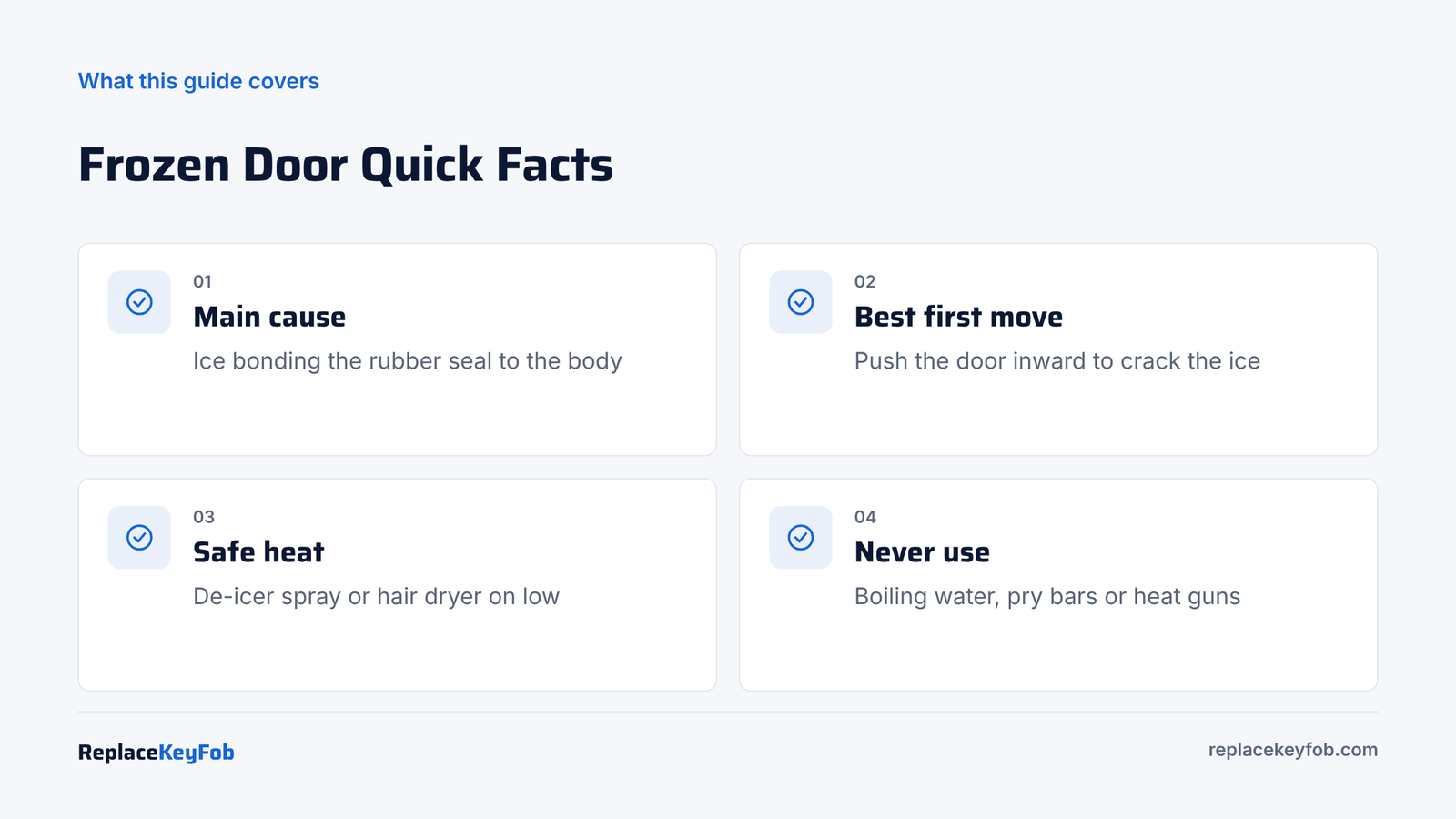
To unfreeze a car door, push firmly on the door near the handle to crack the ice in the seal, then try the other doors. If it stays stuck, spray alcohol-based de-icer into the seal gap or use a hair dryer, run the defroster, and pull the handle slowly. Never pour boiling water on it.
A door frozen shut is almost never a broken lock. In most cases water got into the gap between the rubber weatherstrip and the door frame, then froze overnight and glued the two together. The latch is free, the handle moves, but the door will not swing open because the seal is bonded to the body.
That matters because the fix is different. If the key will not turn or the handle will not move, the ice is inside the lock or handle, and you need a different approach. We cover those in separate guides on frozen locks and frozen handles. This guide is for the door itself.
Why Car Doors Freeze Shut
Three conditions usually line up:
- Water on the seal. Rain, melting snow, a car wash or even condensation from a warm cabin settles on the rubber weatherstrip.
- A hard freeze. Overnight temperatures drop below 32°F (0°C) and the water turns to ice between the seal and the painted door frame.
- Tight seals. Newer cars use soft, wide seals for noise control. They grip ice well, so a thin film can hold the door closed with surprising force.
Doors that face the wind, the side where snow drifts against the car, and doors you opened last in wet weather tend to freeze first. Frameless doors (common on some coupes, convertibles and models like the Tesla Model 3 and Model Y) add another risk: the window glass can freeze into the roof seal.
What You Need
You can free most doors with things you already own, but a winter kit saves time and protects the paint.
- Your body weight and gloved hands (the first tool to try)
- Alcohol-based de-icer spray for car locks and seals
- A plastic ice scraper (never metal)
- A hair dryer and an outdoor-rated extension cord, if you are near an outlet
- A microfiber towel to dry the seal afterward
- Silicone spray or a rubber seal conditioner for prevention
Silicone spray for rubber door seals
Choose a silicone spray or seal conditioner labeled safe for rubber and plastic, ideally with a straw or foam applicator so you can coat the seal without overspray.
As an Amazon Associate, ReplaceKeyFob earns from qualifying purchases.
How to Unfreeze a Car Door: Step by Step
Work from the gentlest method to the strongest. Most doors open at step 2 or 3.
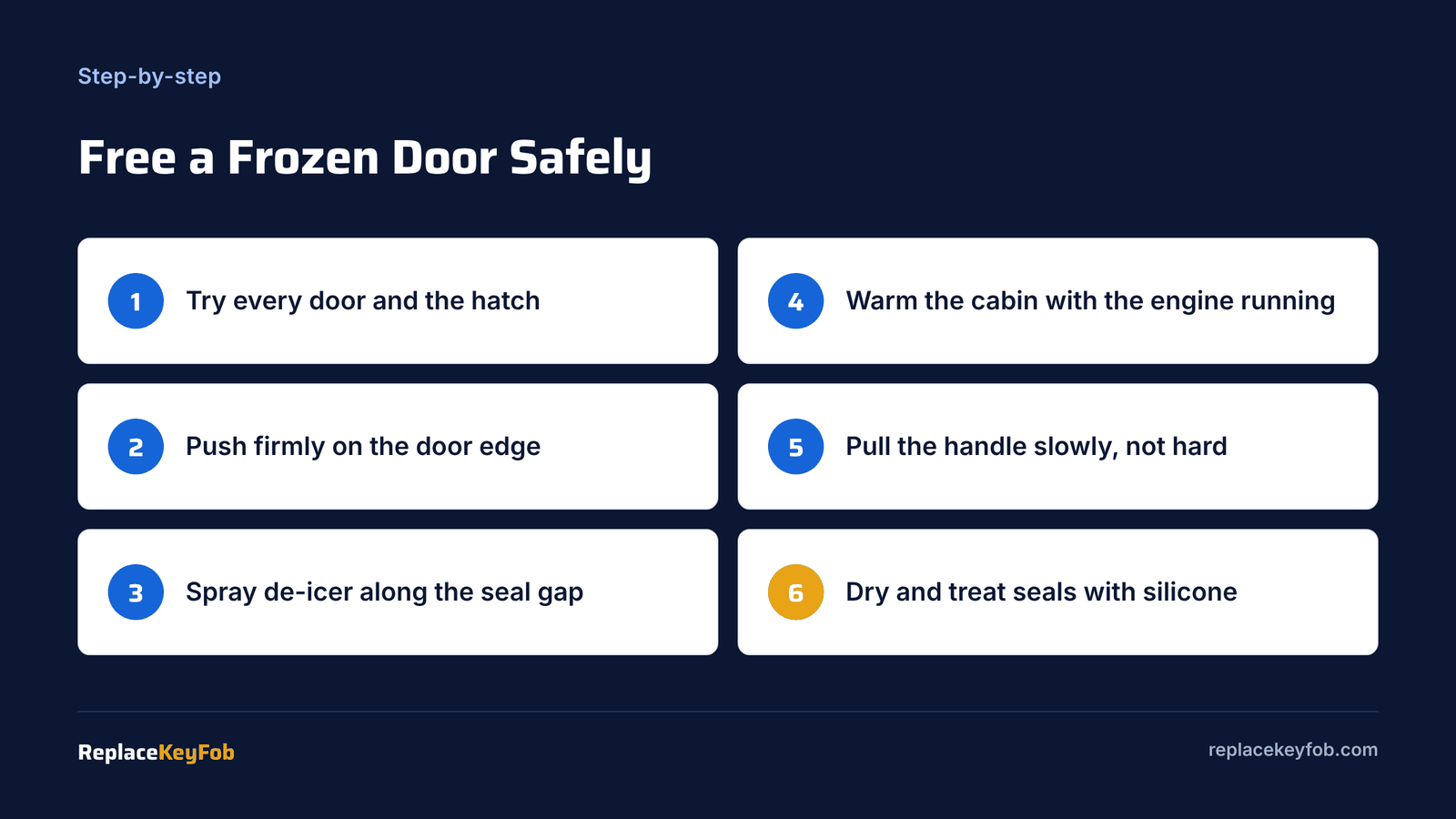
- Try every door, including the tailgate or hatch. The passenger side or rear doors often freeze less because they were not opened in the wet. If one opens, get in, start the car and let the cabin heat work on the frozen door from the inside.
- Push the door inward before you pull. Lean your palm or forearm against the door near the handle and push hard toward the car several times. Then do the same along the top edge of the frame. This compresses the rubber seal and cracks the thin ice layer holding it. It sounds backward, but it is the most effective trick and it causes no damage.
- Clear ice from the seam. Use a plastic scraper to chip ice off the gap between the door and the body, especially along the bottom and top. Do not push the scraper deep into the seam, because a sharp edge can tear the weatherstrip.
- Apply de-icer to the gap. Spray an alcohol-based de-icer along the full seam, top and sides first, then wait one to two minutes. The alcohol lowers the freezing point of the ice and softens the bond. Repeat once if needed.
- Add gentle heat. If you have power nearby, run a hair dryer on low to medium along the seam, keeping it moving and about 6 inches from the paint. Five minutes is usually enough. Do not use a heat gun; it can blister paint and melt plastic trim within seconds.
- Warm the car from the inside. If you got in through another door, start the engine and set the heater to the floor and defrost vents with the temperature high. Within 10 to 15 minutes the frame and seals warm from the inside. If your car has remote start or an app with a defrost function, use it while you work outside.
- Pull slowly and steadily. Pull the handle and hold it out, then pull the door gently. A slow pull lets the seal release. A hard yank can tear the weatherstrip, break the handle cable, or snap a plastic exterior handle that is brittle in the cold.
Lukewarm water: when it is acceptable
Lukewarm tap water (warm to the touch, not hot) poured along the top of the seam will free a door in an emergency. It has two risks. Boiling or very hot water can crack a cold windshield or side glass if it splashes, and any water you add will refreeze in the lock, handle and seal unless you dry everything right away. Use it only as a last resort, open the door immediately, and wipe the seal and jamb dry.
Variations by Vehicle Type
Frameless windows
On cars with frameless door glass, the window drops slightly when you pull the handle so the glass clears the roof seal. If the glass is frozen to the seal, forcing the door can damage the window regulator or the seal. Clear and de-ice the top edge of the glass first, and on some models let the window drop before you pull. On a Tesla, starting climate or the “Defrost Car” function in the app helps free both handles and glass on many model years; check your owner’s manual for the exact behavior.
Sliding van doors
Sliding doors on minivans freeze at the lower track and the rear latch as well as the seal. Clear ice from the bottom track with a plastic scraper, de-ice the latch area at the back edge, and pull the door straight back slowly. If it is a power sliding door, do not hold the button repeatedly while the door is frozen; you can overload the motor or cable. Unlock it, free it by hand, and let it run a full cycle once warm.
Pickup trucks and SUVs
Tall vehicles collect more water along the roof edge, which runs down into the top of the door seals. Clear snow from the roof before it melts in the sun and refreezes overnight. On trucks, the rear-cab doors on crew and extended cabs often freeze where they meet the front door, so de-ice that vertical seam.
Keyless and smart key cars
A frozen door does not stop a working smart key from unlocking the car, but extreme cold can weaken a fob battery. If the car will not unlock at all, see does cold weather affect key fobs and can a dead key fob battery lock you out before assuming the door is frozen.
If the Door Still Won’t Open
| Symptom | Likely cause | What to do |
|---|---|---|
| Handle moves, door will not budge | Seal frozen to frame | Push inward, de-ice the full seam, warm cabin |
| Handle will not move at all | Ice inside the handle or linkage | Heat the handle area, de-ice behind the handle |
| Key will not go in or turn | Ice in the lock cylinder | Use lock de-icer in the keyhole |
| Door unlocks with fob but stays latched | Latch mechanism frozen or slow | Warm the cabin for 15 minutes and retry |
| Door opens but will not close or latch | Ice inside the latch on the door edge | De-ice the latch, cycle it with a screwdriver tip |
| Nothing unlocks, no lights | Dead car battery | Use the mechanical key, then jump start the car |
If the door opens but will not stay closed afterward, the latch on the door edge is still frozen in the open position. Spray de-icer into the latch, then push the latch jaw closed and open again with a plastic tool or screwdriver tip until it clicks freely. Do not drive with a door that will not latch.
A weak battery is common in hard freezes, and it makes power locks slow. If the locks only click faintly, test the battery or plan a replacement; our cold weather battery guide explains what to look for.
Mistakes to Avoid
- Boiling water. Thermal shock can crack glass, and the water refreezes deeper in the seal and lock.
- Prying with a screwdriver or knife. You will chip paint, cut the weatherstrip and let water into the door, which makes future freezes worse.
- Yanking the handle. Cold plastic handles and the rods or cables behind them break easily. A broken handle in winter turns a 5-minute problem into a repair bill.
- Heat guns and torches. They damage paint, clear coat and plastic in seconds.
- Holding a power door button. Repeated presses on a frozen power sliding door or power liftgate can strain the motor.
- Driving off with a frozen latch. A door that has not fully latched can open on a turn.
How to Stop Your Car Doors Freezing
Prevention takes about 10 minutes and lasts several weeks.
- Dry the seals. After washing the car or driving in wet snow, wipe the door seals and jambs with a microfiber towel before parking for the night.
- Treat the rubber. Wipe or spray a silicone-based protectant onto the door seals and the matching surface of the frame. Silicone repels water so ice cannot bond as strongly. Avoid petroleum-based products, which can swell and soften rubber over time.
- Cover the car or park smart. A garage, carport or even a car cover keeps water off the seals. Parking with the driver door away from the prevailing wind helps too.
- Clear snow before it melts. Brush snow off the roof and door tops in the evening rather than letting the sun melt it and the night refreeze it.
- Reapply monthly. Repeat the seal treatment every few weeks in winter and after every car wash.
When to Call a Pro
If the door opens but the seal is torn, the handle cable has snapped, or the door will not latch after it thaws, a body shop or dealer can repair it. Typical 2026 US costs are about $100 to $350 for a door weatherstrip replacement, about $150 to $400 for an exterior handle replacement, and about $200 to $600 for a door latch replacement, depending on the model. If you are locked out entirely, a roadside service or locksmith can get you in; our lockout help guide explains your options.
Frequently Asked Questions
Lukewarm water works in an emergency, but avoid hot or boiling water. It can crack cold glass, and the water refreezes in the seal and lock unless you dry everything right away.
With the heater on high and the defrost and floor vents open, the door frames usually warm enough to release the seals in about 10 to 20 minutes, faster in mild cold.
WD-40 can displace water, but it is not the best choice for rubber seals long term. A silicone spray or rubber conditioner protects the weatherstrip better and repels water for longer.
That door usually got the most water, such as the driver door you opened in the rain, or the side facing the wind and snow. Worn seals that trap water also freeze first.
The ice itself rarely does damage. The damage comes from forcing it: torn seals, broken handles, chipped paint and strained power door motors. Slow, gentle methods avoid that.