
Key Fob Not Detected and the Car Won’t Start: A Practical Troubleshooting Guide

If your push-button start vehicle says the key fob not detected and won’t start, you’re usually dealing with one of a handful of problems: a weak fob battery, a weak vehicle battery, interference, or a fault in the car’s smart-key system. In many cases, you can narrow it down fairly quickly without special tools.
The trick is to troubleshoot in the right order. I’m Jason Carter, and after years around vehicles, I can tell you this: owners often replace the fob too early when the real issue is the car battery or a simple detection problem. Let’s walk through the checks that actually help.
What “Key Fob Not Detected” Means
That message means the car’s smart-key or immobilizer system isn’t receiving a valid signal from the fob, so it won’t authorize the start.
On a push-button start vehicle, the fob does more than unlock doors. It also proves to the car that the correct key is present. If that signal is weak, blocked, or not being read, the immobilizer/start authorization system may keep the starter disabled even though the fob is in your pocket or cup holder.
A useful clue: if the doors still unlock from the fob but the car won’t start, the fob may be sending a weak signal or the vehicle may not be reading it correctly.
Quick Diagnosis: Most Likely Causes in Order
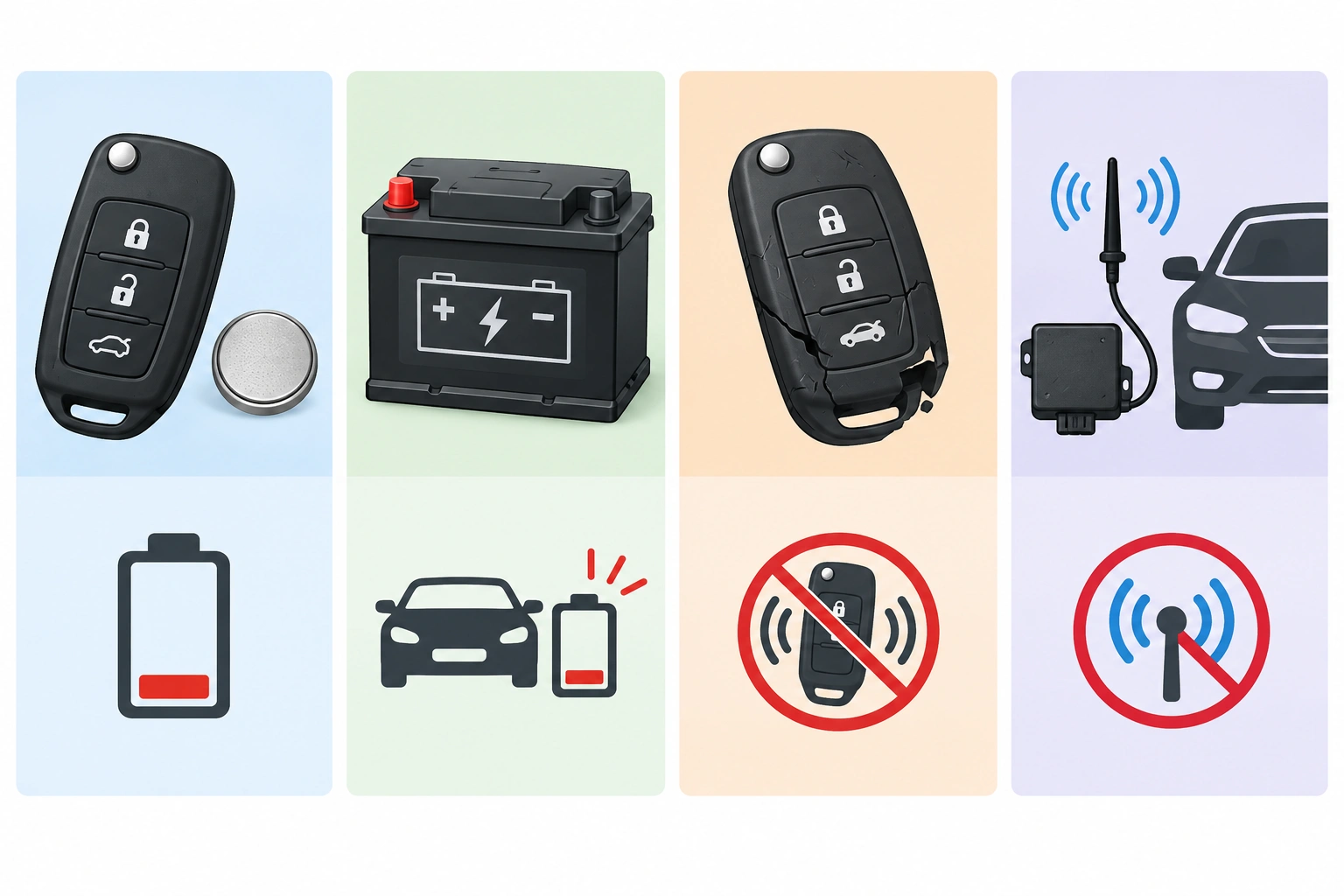
Here’s the order I’d check them in:
-
Dead or weak key fob battery
This is the most common cause of a no-detect complaint. -
Weak vehicle battery
A low car battery can keep the receiver system from powering up properly. -
Radio frequency interference
Phones, other fobs, metal objects, or certain parking structures can disrupt detection. -
Damaged key fob
Water damage, cracked housings, or worn internal contacts can make the fob unreliable. -
Receiver, antenna, or start-button issue
If the car still won’t detect the fob after the easy checks, the vehicle side may be at fault. -
Passive Entry Passive Start system fault or loss of synchronization
Some vehicles can lose sync and need a reset or re-learn procedure.
For a broader overview of smart-key behavior and battery-related symptoms, Edmunds’ car key fob guidance is a useful general reference.
First Checks Before You Try Anything Else
Before you start swapping parts, look for the clues the car is already giving you.
Check the car battery symptoms
If the interior lights are dim, the dash is weak, or accessories act sluggish, the vehicle battery may be the real problem. A weak battery can create strange electronics issues long before the engine cranks.
If the car seems completely dead, test the vehicle battery or try a jump-start before assuming the fob is the issue. A jump-start can be a useful test here. If the car recognizes the fob after a jump, that suggests the vehicle battery was a major part of the problem, though it does not rule out every other cause.
Try the spare fob
If you have a second fob, test it right away. If the spare works normally, the original fob is likely the issue. If both fail, the car becomes the stronger suspect.
Look for recent damage
A fob that was dropped in water, washed, or cracked may still work sometimes. Intermittent detection after damage usually points to a failing fob, not just a dead coin-cell battery.
Notice where the car says to place the fob
Some vehicles show a message or icon telling you where to hold the fob for emergency starting. That clue matters, because the car may still have a backup recognition method even when normal detection fails.
Step-by-Step Fixes to Try at Home
1) Remove possible interference
Take the fob out of a bag or pocket full of coins, another fob, or a phone. Then try starting again.
If you’re parked near strong electronics, move the car if possible or try the fob in a different spot inside the cabin. This is especially worth trying when the problem is intermittent.
2) Replace the key fob battery
If the fob is several years old, a new coin-cell battery is often the fastest fix. Open the fob carefully, note the battery type, and install the new one in the correct orientation.
A common mistake is using the wrong battery size or putting it in backward. That can turn a simple fix into a confusing no-start situation.
3) Test the spare fob
A working spare tells you a lot. If the spare starts the car immediately, the original fob probably needs a battery, repair, or replacement.
If neither fob works, stop focusing on the fob itself and look at the vehicle battery or receiver system.
4) Check whether the car battery is weak
Try the dome light, dash lights, or power windows. If they’re slow or dim, the vehicle battery may be too weak to support the smart-key system.
A jump-start can be a useful test here. If the car recognizes the fob after a jump, that strongly suggests the vehicle battery was a major part of the issue.
5) Use the emergency start method
Many push-button start vehicles have a backup method that can detect the fob even when its battery is dead. The exact method varies by make and model, but it often involves pressing the fob directly against the start button or a marked symbol, then pressing the brake and start button as usual.
Check your owner’s manual for the exact spot. That’s important because emergency start methods are vehicle-specific, and guessing can waste time.
For a safety-minded reminder about battery and electrical issues, NHTSA’s consumer vehicle safety information is a solid source to keep in mind when electronics are acting unpredictably.
How to Start the Car When the Fob Isn’t Detected
If the fob battery is dead, many vehicles can still start using a backup recognition method. The idea is simple: the car uses a passive induction area to read the fob’s immobilizer chip at very close range.
In practice, that usually means:
- Hold the fob directly against the start button, or against the marked symbol/spot the vehicle uses for backup detection
- If your model has a slot, pocket, or pad, place the fob there
- Press the brake and push the start button as usual
This is not universal. Some vehicles want the fob touching the start button area; others want it in a center-console pocket or near a steering-column symbol. Your owner’s manual is the final word.
If the emergency method works, you can usually drive the vehicle, but the fob battery still needs replacement soon. Also, a dead fob battery can sometimes still allow backup starting, but not always if the fob itself is damaged.
Key Fob Battery vs. Car Battery: How to Tell Which One Is Failing
Here’s the fastest way to separate the two:
| Symptom | More likely fob battery | More likely car battery |
|---|---|---|
| Doors unlock normally but car won’t start | Yes | Sometimes |
| Both fobs fail the same way | Less likely | More likely |
| Dash lights are dim or weak | Less likely | Yes |
| Emergency start method works | Yes | Sometimes |
| Car starts after a jump | Less likely | Yes |
| Fob has water damage or cracked case | Yes | No |
A weak fob battery usually causes detection problems while the rest of the vehicle still behaves normally. A weak car battery tends to show broader electrical symptoms: dim lights, slow accessories, odd warnings, or a complete power drop.
If both fobs stop working at once, the car battery or receiver system moves higher on the suspect list than the fob battery.
When a New Battery Is Enough vs. When the Fob Is Actually Damaged
A new coin-cell battery is usually enough when:
- The fob is physically intact
- The buttons still work intermittently
- The problem started gradually
- The spare fob works and the original does not
A battery swap is less likely to solve it when:
- The fob was dropped in water
- The case is cracked or loose
- Buttons feel mushy or fail inconsistently
- The new battery makes no difference at all
If the battery replacement doesn’t help and the fob looks fine, the fob may need reprogramming or replacement. In some cases, the issue is not the fob at all but the vehicle’s receiver or antenna system.
When to Consult a Locksmith
Call a locksmith, dealer, roadside assistance, or mechanic when the problem goes beyond a simple battery swap.
A locksmith is often a smart choice when:
- You need a replacement or programmed fob
- The spare fob works, but the original does not
- You suspect the fob itself is damaged
- You need help getting the vehicle started without guessing at the emergency procedure
A dealer may be necessary if your vehicle requires manufacturer-specific programming or a security reset.
A mechanic is the better call if the vehicle battery is weak, the car has electrical warnings, or the start system seems to have a receiver or antenna fault.
Roadside assistance makes sense if you’re stranded in an unsafe place or the car battery is too weak to test properly on your own.
Common Mistakes to Avoid
The biggest mistake is replacing the whole fob before checking the easy stuff. A fresh battery fixes a lot of these complaints.
Other common missteps:
- Using the wrong coin-cell battery
- Installing the battery backward
- Ignoring a weak vehicle battery
- Forgetting to test the spare fob
- Repeatedly pressing the start button when the car battery is obviously low
- Trying random fob placement without checking the owner’s manual
If you’re dealing with a weak car battery, repeated start attempts can make the electronics act even stranger. When the lights are already dim, get the battery tested or jump-started instead of chasing the fob first.
A Simple Decision Rule That Saves Time
If the spare fob works, focus on the original fob battery or damage.
If both fobs fail, look hard at the vehicle battery, receiver system, or a start-system fault.
If the emergency start method works, the fob battery is often the main issue.
If the car starts after a jump, the vehicle battery was likely a major part of the problem.
That sequence usually gets you to the right answer faster than replacing parts at random.
FAQ
Why does my car say key fob not detected?
The car isn’t getting a strong enough signal from the fob to authorize starting. That can happen because the fob battery is weak, the vehicle battery is low, there’s interference, or the car’s receiver system has a fault.
Can a dead key fob battery still let the car start?
Often, yes. Many push-button start vehicles have an emergency backup method that can read the fob at very close range. The exact placement depends on the vehicle, so check the owner’s manual.
Where should I hold the fob to get the car to recognize it?
Usually near the start button, steering column, or a marked pocket/slot in the cabin. The exact spot is model-specific, so the manual is the safest guide.
Do I need a replacement fob or just a new battery?
If the fob is intact and the issue started gradually, try a new battery first. If the fob is water-damaged, cracked, or still won’t work after a battery swap, replacement or reprogramming may be needed.
What if both key fobs stop working?
That points more toward the vehicle battery, receiver, antenna, or start system than the fobs themselves.
Should I call the dealer or a locksmith?
If you need programming help, a locksmith may be the faster route. If the vehicle needs manufacturer-specific reprogramming or the issue is tied to the immobilizer system, the dealer may be necessary.
Final Takeaway
When a key fob not detected and won’t start message shows up, resist the urge to replace parts blindly. Check the fob battery, test the spare, look for weak vehicle battery symptoms, and try the emergency start method from the owner’s manual. That order solves a lot of no-start complaints without turning a simple fix into an expensive one.
