
Why Your Key Fob Stops Working Randomly: A Practical Troubleshooting Guide

If your key fob stops working randomly, the problem usually sits in one of a few places: the fob battery, the car battery, the fob itself, or the vehicle’s receiver system. The good news is that intermittent problems are often easier to narrow down than a complete dead fob, because the pattern tells you something.
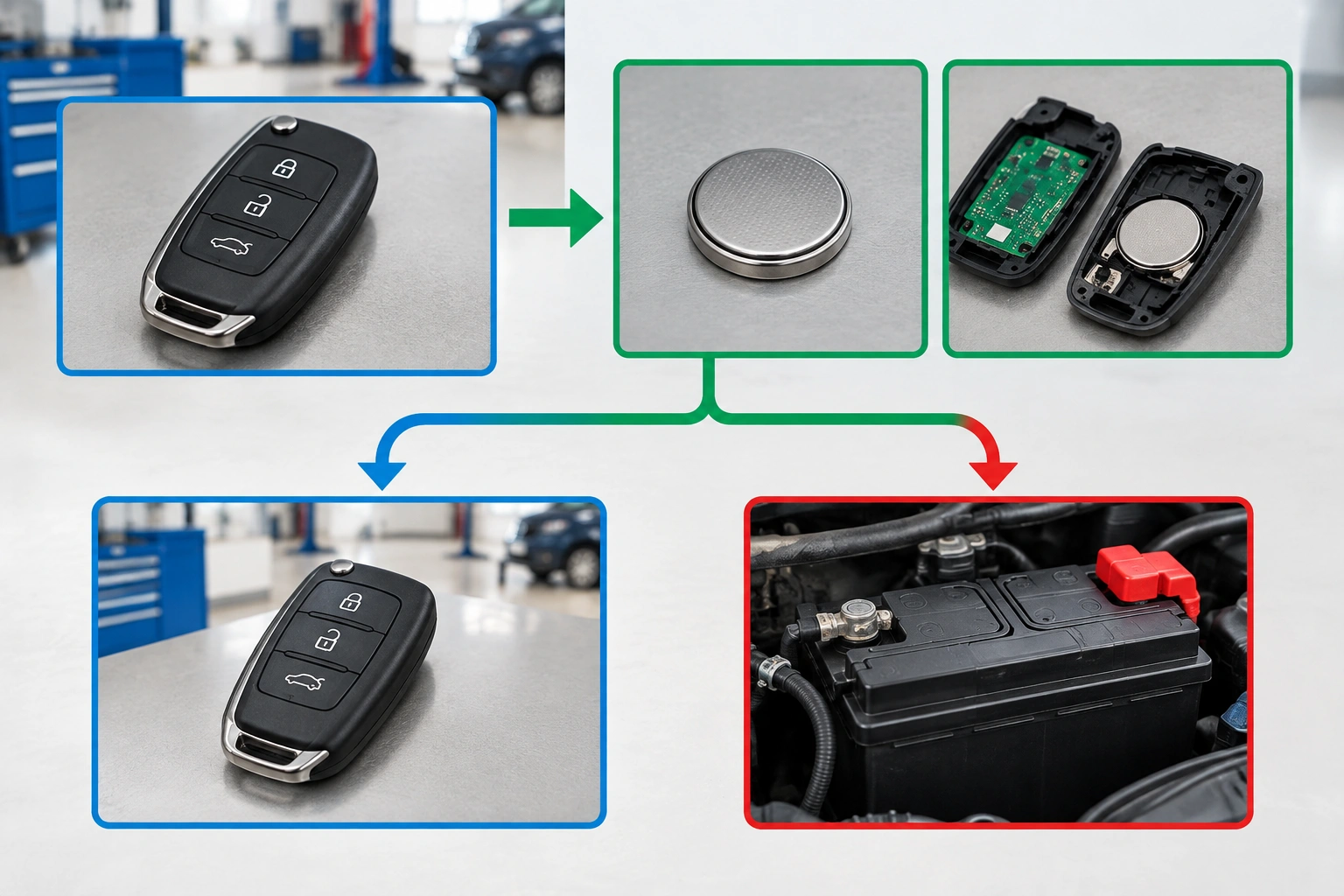
A fob that works in the morning but not later, unlocks the doors but won’t start the car, or only works when you stand right next to the vehicle is giving you clues. The trick is to read those clues in the right order so you don’t waste money replacing the wrong part.
What Random Key Fob Failure Usually Looks Like
Intermittent key fob problems don’t all look the same.
Sometimes the fob works normally for weeks, then suddenly fails once or twice. Other times it only fails in certain places, like a parking garage, near a busy office building, or in a driveway with other electronics nearby. In some cases, one function still works while another does not. For example, the unlock button may respond, but remote start or push-button start may not.
That pattern matters because it helps separate a weak signal problem from a full failure. A completely dead fob usually gives you no response at all. Random failure, on the other hand, often points to a battery, contact, interference, or vehicle-side issue that is fading in and out.
The Most Likely Causes, in the Right Order
When a key fob acts up randomly, use a cheap-first approach:
| Symptom pattern | Most likely cause | Best first check |
|---|---|---|
| Works sometimes, but not consistently | Weak key fob battery or poor battery contact | Replace battery and inspect contacts |
| Spare fob works fine, main fob is random | Main fob damage, worn buttons, or weak battery | Test the spare and compare behavior |
| Both fobs act up at the same time | Weak car battery, receiver issue, or interference | Check vehicle battery and location |
| Works only very close to the car | Weak fob battery, antenna/receiver issue, or interference | Test range in another location |
| Unlock works, but push-button start fails | Transponder/immobilizer issue or vehicle-side problem | Try the spare fob and check vehicle voltage |
A weak key fob battery often shows up as short range, delayed response, or a fob that works only inconsistently. A weak car battery looks different: the dashboard may dim, the starter may crank slowly, or the vehicle may act oddly during push-button start even if the fob buttons still seem to work. If the spare fob behaves normally while the main fob does not, that points more toward the fob itself. If both fobs act up in the same way, the car battery, receiver, or vehicle-side system becomes more likely.
Step 1: Check the Key Fob Battery and Basic Fit
This is the fastest fix to try, and it solves a lot of random failures.
Open the fob carefully and confirm the battery type matches what the fob uses. Don’t guess based on size alone; some fobs use similar-looking coin cells that are not interchangeable. Make sure the battery is installed with the correct polarity, and check that the metal contacts are clean and seated firmly.
If the battery is new but the problem remains, look for signs that the battery isn’t making consistent contact. A slightly bent contact tab or a battery that shifts inside the case can create the kind of random behavior people describe as “it works when it wants to.” That’s especially likely if the fob was dropped.
If your fob has a removable case, avoid forcing it open. A cracked circuit board or broken clip can turn a simple battery swap into a bigger repair.
Step 2: Test the Spare Key Fob
The spare fob is one of the best diagnostic tools you already own.
If the spare works normally while the main fob is random, the vehicle is probably fine and the problem is isolated to the main fob. That points to a weak battery, worn button, damaged casing, or internal electronics issue in the original fob.
If both fobs act strangely in the same way, the odds shift toward the car: low vehicle voltage, interference, a receiver antenna issue, or a system that needs re-synchronizing.
This comparison saves money because it keeps you from replacing a fob that isn’t actually the root problem.
Step 3: Rule Out a Weak Car Battery or Low Voltage
A weak car battery can create weird key fob symptoms, especially on push-button start vehicles.
If the car cranks slowly, electrical accessories seem sluggish, dashboard lights dim at startup, or the problem showed up after the vehicle sat for a while, low voltage moves higher on the list. In some vehicles, the car may not respond consistently to the fob when system voltage drops.
This is one of the most useful comparisons to make:
- Weak fob battery: the remote may work only at close range or only sometimes.
- Weak car battery: the vehicle may misread the fob, especially during start attempts or after sitting.
- Both weak: the symptoms can overlap, which is why testing the spare fob and watching for low-voltage signs matters.
If the issue appears after a jump start or after the battery has been disconnected, that can also point toward a vehicle-side sync or voltage problem. Our guide on what to do when the key fob is not detected walks through the backup start process.
For a broader safety reminder on battery-related vehicle issues, the National Highway Traffic Safety Administration is a useful reference point for general vehicle safety information.
Step 4: Check for Interference and Range Problems
If the fob works near the car but fails at a distance, think about signal strength and interference.
A fob that only works right next to the door handle may have a weak battery, but it can also be dealing with environmental interference or a vehicle receiver issue. Nearby radio equipment, dense buildings, large metal structures, or even a crowded parking area can reduce range enough to make a marginal fob seem random.
Here’s a simple test: try the same fob in a different location. If it works normally away from the problem spot, interference is likely part of the story. If it still only works when you hold it inches from the car, the fob battery or the vehicle’s antenna/receiver becomes more suspect.
That’s why range testing is so valuable. It tells you whether the problem follows the fob everywhere or only shows up in certain places.
Step 5: Look for Physical Damage, Worn Buttons, or Water Exposure
A fob doesn’t need to look destroyed to be damaged.
Worn button pads can make one function fail while others still work. A cracked shell can let moisture in. Even a brief water exposure can corrode the contacts or board enough to cause intermittent behavior. If the problem started after the fob was dropped, sat in a wet pocket, or got crushed in a bag, treat physical damage as a real possibility.
A damaged fob often behaves inconsistently in a way that battery replacement won’t fix. You may press the lock button and get nothing, then press it again and get a response. Or one button may feel mushy while another clicks normally. Those are signs the case or internal parts may be failing, not just the battery.
A trusted auto-care source also notes that a key fob may stop working for several reasons, including a depleted battery or damage that prevents it from transmitting properly. You can see that general guidance from GreatWater 360 Auto Care.
Step 6: Re-Sync or Reprogram the Key Fob
Sometimes the battery is fine, the fob looks fine, and the car still doesn’t respond correctly. In that case, the fob may need to be re-synced or reprogrammed.
This is more likely if the problem started after:
- replacing the fob battery
- disconnecting the car battery
- a jump start
- a repair that involved the vehicle’s electrical system
That said, many vehicles do not need reprogramming after a battery swap, so this should be treated as a second-line step rather than an assumed fix. If the fob works after being very close to the car but still fails in normal use, and the spare behaves differently, a reprogramming issue may be worth checking depending on the vehicle. Some vehicles are more sensitive than others, so the exact procedure depends on the make and model. That’s why it’s smart to check the owner’s manual or a model-specific guide before assuming the fob is dead.
Our article on key fob not detected after replacing the battery covers the next checks when a fresh battery doesn’t solve the problem.
If the Fob Only Works Right Next to the Car
This pattern usually narrows the problem to one of three things:
- Weak fob battery
- Poor signal transmission from the fob
- Receiver or antenna trouble on the vehicle
If the spare fob has normal range and the main one does not, the main fob is the likely culprit. If both fobs have reduced range, the car-side receiver or interference becomes more likely.
That distinction helps you avoid replacing the wrong part. A bad fob battery can be fixed cheaply. A receiver issue usually needs deeper diagnosis.
If Locking Works but Remote Start or Push-Button Start Fails
Partial failure is a useful clue.
If lock and unlock still work but remote start fails, the fob may be transmitting enough for simple remote commands but not enough for the full authorization process. If push-button start fails while the doors still unlock normally, the issue may involve the transponder, immobilizer recognition, weak vehicle voltage, or a system-specific fault.
That doesn’t automatically mean the fob is bad. It may mean one part of the system is working and another part is not. In other words, the fob can be “partly healthy” while the car still refuses to start.
Emergency Backup: How to Get In and Start the Car When the Fob Fails
If the fob quits while you’re away from home, stay calm and work the backup plan.
Most fobs contain a hidden mechanical key for the door. Use that to get inside if the remote lock function is dead. For push-button start vehicles, many models have an emergency start method that works when the fob is held in a specific spot near the start button or steering column. The exact location varies by vehicle, so check the owner’s manual or a model-specific guide.
If you’re stuck, the most practical goal is to get the car open, confirm whether the spare fob works, and determine whether the issue is battery-related or vehicle-related before calling for help.
Repair, Replace, or See a Professional?
Use this decision rule:
- Replace the fob battery first if the problem is intermittent and the battery is old or unknown.
- Try the spare fob if the main one is random but you’re not sure whether the car is involved.
- Consider reprogramming if the issue started after a battery change, jump start, or electrical work, and your vehicle’s procedure calls for it.
- Replace the fob if the shell is damaged, buttons are worn out, or the board looks compromised.
- Call a locksmith first if you need fob programming or replacement; locksmiths are usually the cheaper first call for that work.
- Go to the dealer if the issue appears to be on the vehicle side, such as the receiver antenna, immobilizer, or another module that needs diagnosis.
A locksmith is often the practical first stop for fob programming or replacement. A dealer is usually the better choice when the problem looks like a car-side receiver or immobilizer issue, because that kind of diagnosis often goes beyond the fob itself.
When the Problem Is Likely the Car, Not the Fob
After you’ve tested the battery, spare fob, and range, the vehicle becomes the likely suspect if:
- both fobs act up the same way
- the car battery is weak or recently discharged
- the problem appears after a jump start or battery disconnect
- the fob works inconsistently only on one vehicle
- the car unlocks but refuses to recognize the fob for starting
At that point, the receiver antenna, immobilizer, or electrical system may need professional diagnosis. That’s the point where DIY troubleshooting has done its job: you’ve narrowed the problem instead of guessing.
Quick Troubleshooting Order You Can Follow Today
If you want the shortest path to an answer, use this order:
- Replace the fob battery.
- Test the spare fob.
- Check the car battery and watch for low-voltage symptoms.
- Try the fob in a different location.
- Inspect for damage, moisture, or worn buttons.
- Re-sync or reprogram if the problem started after a battery change or jump start and your vehicle requires it.
- Call a locksmith or dealer if both fobs still behave unpredictably.
That sequence gives you the best chance of solving the problem without buying parts you don’t need.
FAQ
Why does my key fob work sometimes and not others?
Intermittent behavior usually points to a weak battery, poor contact, physical damage, interference, or a vehicle-side voltage issue. The pattern matters more than the single failure.
Can a weak car battery make the key fob stop working?
Yes. A weak vehicle battery can cause inconsistent response from the car, especially on push-button start systems.
Do I need to reprogram the key fob after replacing the battery?
Not always, but some vehicles need re-synchronizing after a battery change or a power loss. If the new battery didn’t fix it, reprogramming is worth checking next.
What if the fob only works near the car?
That usually points to weak signal strength, a weak fob battery, interference, or a receiver/antenna issue on the vehicle.
Should I replace the whole fob or just the battery?
Replace the battery first unless the fob is physically damaged, water-exposed, or the spare fob proves the issue is isolated to the main fob.
Who should I call if DIY checks don’t fix it?
A locksmith is often a smart first call for fob programming or replacement. If the problem seems to be the vehicle’s receiver, immobilizer, or another car-side module, a dealer is usually better for diagnosis.
