
Key Fob Not Detected: How to Diagnose the Problem and Get Your Car Started

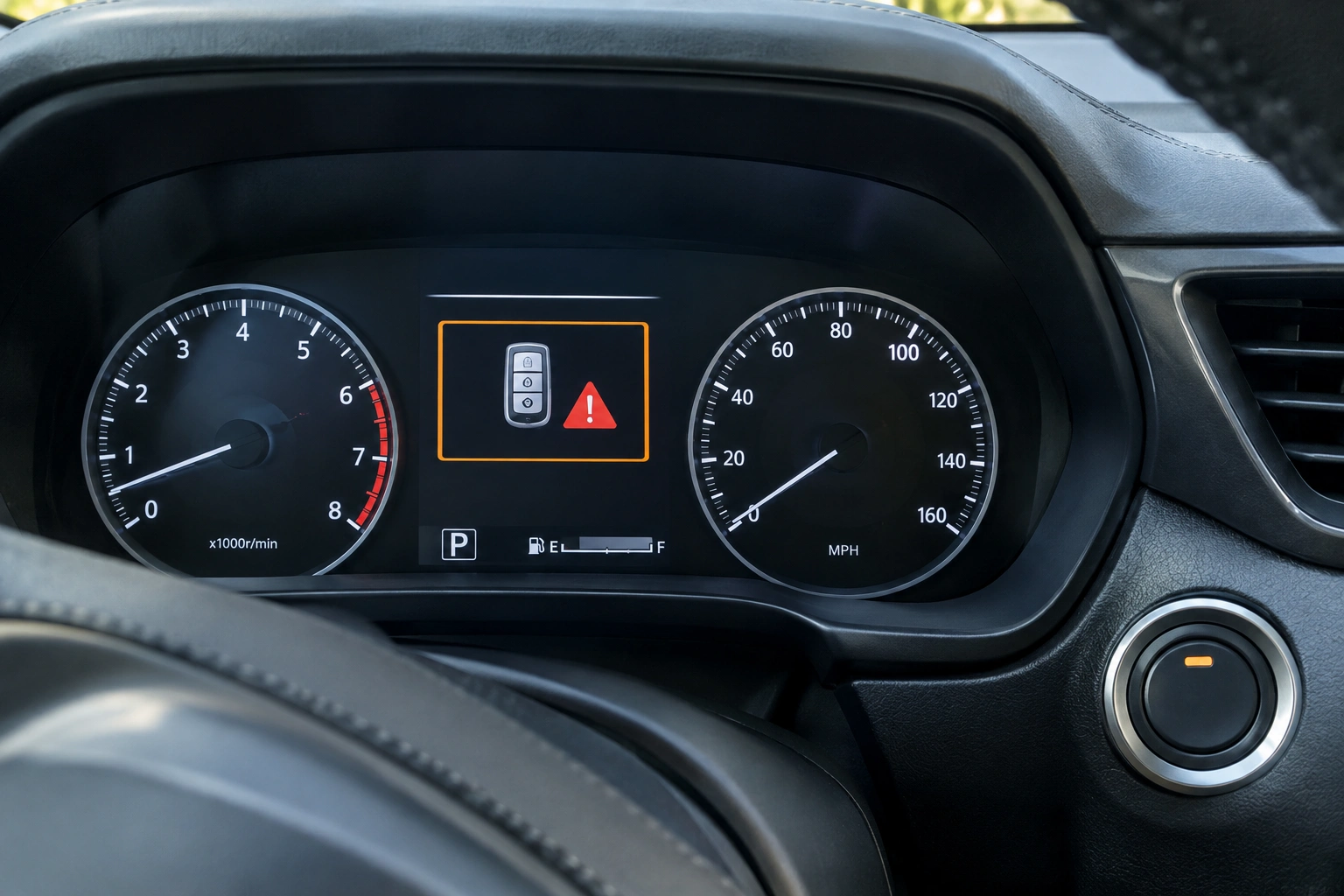
If your dash says key fob not detected, the car is telling you it cannot confirm that the smart key is nearby and valid. In plain English, the most common causes are a weak key fob battery, a weak car battery, interference, or a fob that’s too far from the sensor. That does not automatically mean the fob is dead.
In the shop, I’d treat this as a three-way question: is the problem with the key fob battery, the car battery, or the vehicle’s smart key receiver system? Most of the time, you can narrow it down with a few quick checks before you call for help.
Why Your Car Says “Key Fob Not Detected”
Push-button start systems rely on a smart key signal. The fob sends an RF signal, and the vehicle confirms it through its antennas and immobilizer system. If the signal is too weak, blocked, or interrupted, the car may refuse to start and show a no-detect warning.
That warning usually points to a communication failure in a general sense, not necessarily a broken fob. A weak coin-cell battery, signal interference, a low vehicle battery, or a damaged fob can all cause the same message. In some cases, the issue is as simple as the fob being too far from the sensor or buried under other items. Some owner manuals also note that the fob may need to be held close to the start button or backup detection area and kept away from metal objects or thick bags.
Quick Diagnosis: The Most Likely Causes in Order
Here’s the order I’d check things, because it saves time and avoids unnecessary parts swapping.
1. Weak key fob battery
If the fob works only sometimes, or only when it’s held close to the button, the coin-cell battery is the first suspect.
2. Signal interference or poor fob placement
Phones, other key fobs, metal objects, chargers, and even a crowded bag can weaken the signal enough to confuse the car. This is especially worth checking if the problem appears in one parking lot but not another.
3. Weak car battery
A low vehicle battery can make smart key systems act erratic. If the dash is dim, accessories seem sluggish, or the car sat unused for a while, don’t assume the fob is the only issue.
4. Damaged fob or loose internal contact
A dropped fob, water exposure, or worn battery contacts can cause intermittent detection. If the problem comes and goes after a bump, shake, or button press, that matters.
5. Vehicle-side receiver or immobilizer problem
If both fobs fail at once, the car side becomes more likely. That can point to an antenna, receiver, or security-system communication issue.
First Things to Check Right Now
Before you buy anything, do these simple checks in order.
Move the fob closer
Hold the fob right next to the start button or the marked backup detection area if your car has one. Some vehicles can read the fob only when it’s very close, especially when the battery is weak.
Remove interference
Take the fob out of a crowded pocket or bag. Separate it from other keys, coins, chargers, magnetic accessories, and phones. If the message disappears after that, you’ve likely found the problem.
Try the spare fob
If the spare works normally, the car is probably fine and the issue is with the original fob or its battery. If both fail, look harder at the car battery or receiver system.
Check for other electrical symptoms
If the vehicle is slow to wake up, the dash is dim, or the locks seem weak, the car battery deserves attention too.
For broader guidance on vehicle electrical warning signs, the NHTSA safety guidance on vehicle electrical issues is a useful place to start.
How to Start the Car When the Fob Is Not Detected
If you need to leave now, use the vehicle’s backup start method. The exact process varies by make and model, so the owner’s manual matters here. Many push-button start vehicles have a backup detection spot near the start button, center console, steering column, or a specific slot.
A common method is this:
- Put the transmission in Park.
- Press the brake pedal.
- Hold the fob directly against the marked backup area or the start button.
- Press the start button while keeping the fob in place.
That backup method works because the car can read the fob’s transponder chip at very close range, even if the coin-cell battery is weak. It gets you moving, but it does not fix the underlying issue.
If your owner’s manual shows a different emergency start location, follow that procedure instead. Model-specific instructions matter because the sensor location can vary by manufacturer.
Check and Replace the Key Fob Battery
A weak battery is the cheapest problem to rule out, and it’s often the first thing I’d replace.
Signs the fob battery is weak
- The car detects the fob only intermittently
- You need to stand unusually close to the vehicle
- The lock/unlock range shrinks before the no-detect warning starts
- The backup start method works, but normal detection does not
When battery replacement makes sense
If the fob is older, the symptoms are intermittent, and the car still starts with the backup method, replace the fob battery first. That’s a low-cost, low-risk step compared with reprogramming or replacing the whole fob.
When battery replacement may not be enough
If the battery is fresh and the problem continues, the issue may be internal. Loose contacts, corrosion, or a damaged circuit board can make a new battery look useless.
If you want a general battery-replacement reference before opening the fob, our key fob battery replacement guides can help you understand the process before you buy parts.
Could the Car Battery Be the Real Problem?
Yes. A weak vehicle battery can absolutely trigger smart-key problems, and some of the symptoms overlap with fob issues.
Here’s the difference I look for:
| Symptom | More likely fob battery | More likely car battery |
|---|---|---|
| Fob works only when held close | Yes | Sometimes |
| Other electrical systems seem weak | No | Yes |
| Car sat unused for days or weeks | Maybe | Yes |
| Spare fob works normally | Yes | Less likely |
| Dash lights are dim or slow to wake up | No | Yes |
| Both fobs fail at the same time | Less likely | Possible |
If the car battery is weak, you may also notice slow cranking, dim interior lights, or other odd electrical behavior. In that case, testing the vehicle battery is smarter than chasing the fob.
Edmunds has a helpful car battery and electrical system overview if you want a broader sense of how weak voltage can affect starting and electronics.
Interference, Damage, or a Failing Fob
Sometimes the problem is not battery-related at all.
Signal interference
Parking garages, crowded key rings, phone chargers, and metal containers can weaken the signal path. If the warning appears in one location and disappears in another, interference is a real possibility.
Water or impact damage
A fob that was dropped in water, run through the wash, or cracked after a fall may work intermittently. That’s a different problem from a dead battery. If the shell is damaged or buttons feel mushy, replacement may be more realistic than repeated battery swaps.
Loose internal contact
If the battery moves around inside the fob or the warning changes when you tap the case, the internal contact may be failing. That often shows up as a “works today, fails tomorrow” pattern.
Multiple fobs failing
If both keys stop working at once, I’d look at the vehicle side first. Two separate fobs failing on the same day is less likely than a shared car-side issue.
When Reprogramming or Replacing the Fob Makes Sense
This is the decision point after you’ve checked the battery and interference. Reprogramming is usually a later-step fix, not the first thing to try, because a weak battery or interference is more common and easier to rule out.
Try reprogramming when:
- The fob was recently dropped or exposed to moisture
- The battery is new, but detection is still inconsistent
- The car and fob seem out of sync after service, battery replacement, or a system reset
- The fob works in some functions but not others, and the owner’s manual or a locksmith confirms a pairing issue
Replace the fob when:
- The case is cracked or water-damaged
- Buttons are worn out and unreliable
- The fob works only intermittently even with a fresh battery
- The internal board looks corroded or damaged
Reprogramming vs. replacement
Reprogramming can fix a pairing or synchronization issue, but it won’t repair broken electronics. Replacement is the better move when the hardware itself is failing. If you’re unsure, an automotive locksmith can often tell you whether the fob is repairable before you spend money on a full replacement.
When to Consult a Locksmith
Call a locksmith, dealer, or mechanic when the problem points beyond a simple battery fix.
Call a locksmith if:
- The spare fob also fails
- You need the car started quickly and the backup method doesn’t work
- The fob needs testing, reprogramming, or replacement
- You want a faster alternative to dealer service for many key-fob issues
Call the dealer if:
- The vehicle may have an antenna, receiver, or immobilizer problem
- The manual’s emergency start procedure doesn’t work
- The car has a model-specific smart key system that needs factory-level programming
Call a mechanic if:
- The car battery seems weak
- Multiple electrical systems are acting up
- The vehicle has other starting or charging symptoms along with the no-detect warning
How to Prevent Future “Not Detected” Problems
A few habits reduce repeat headaches:
- Replace the fob battery at the first sign of shorter range, not after it fails completely.
- Keep the fob away from metal containers and crowded key rings.
- Don’t store the fob in a place where it gets crushed, soaked, or overheated.
- Test the spare fob occasionally so you know it still works.
- If the car sits unused for long stretches, keep an eye on the vehicle battery too.
The goal is simple: catch a weak battery or damaged fob before it leaves you stranded in a parking lot.
Bottom line
When your car says key fob not detected, start with the simplest checks: remove interference, move the fob close to the backup detection area, and try the spare. If that doesn’t help, replace the fob battery next. Only after those steps should you move on to the car battery, reprogramming, or a vehicle-side problem. That sequence solves a lot of cases without guesswork.
FAQ
Why does my car say key fob not detected?
Usually because the vehicle can’t read the fob signal clearly. The most common causes are a weak fob battery, interference, a weak car battery, or the fob being too far from the sensor.
Can I still start the car if the key fob is not detected?
Often yes. Many push-button start vehicles have a backup start method that works when the fob is held near a marked area or the start button. Check the owner’s manual for the exact procedure.
Does key fob not detected mean the battery is dead?
Not always. A weak battery is a common cause, but the car battery, interference, or a damaged fob can create the same warning.
When do I need to reprogram the key fob?
Reprogramming is usually only worth considering after you’ve ruled out battery and interference issues, or if the fob and car seem out of sync after service or a reset.
