
Keyless System Error Message on a Car: What It Means and How to Fix It

If your dashboard suddenly shows a keyless system error message car, the car is telling you it cannot properly communicate with your smart key or keyless entry system. That can mean something as simple as a weak key fob battery, or something more involved like a low vehicle battery, signal interference, or a fault in the receiver or immobilizer system.
The good news: in many cases, you can narrow it down quickly without tools. The bad news: if the car is already struggling to detect the key, you may be one restart away from being stranded. So it helps to treat the warning as a diagnosis clue, not just an annoying message.
What the keyless system error message actually means
A keyless entry system works by exchanging a signal between the car and the key fob. If the car does not recognize that signal, it may display a warning, refuse to unlock, or fail to start with push-button ignition.
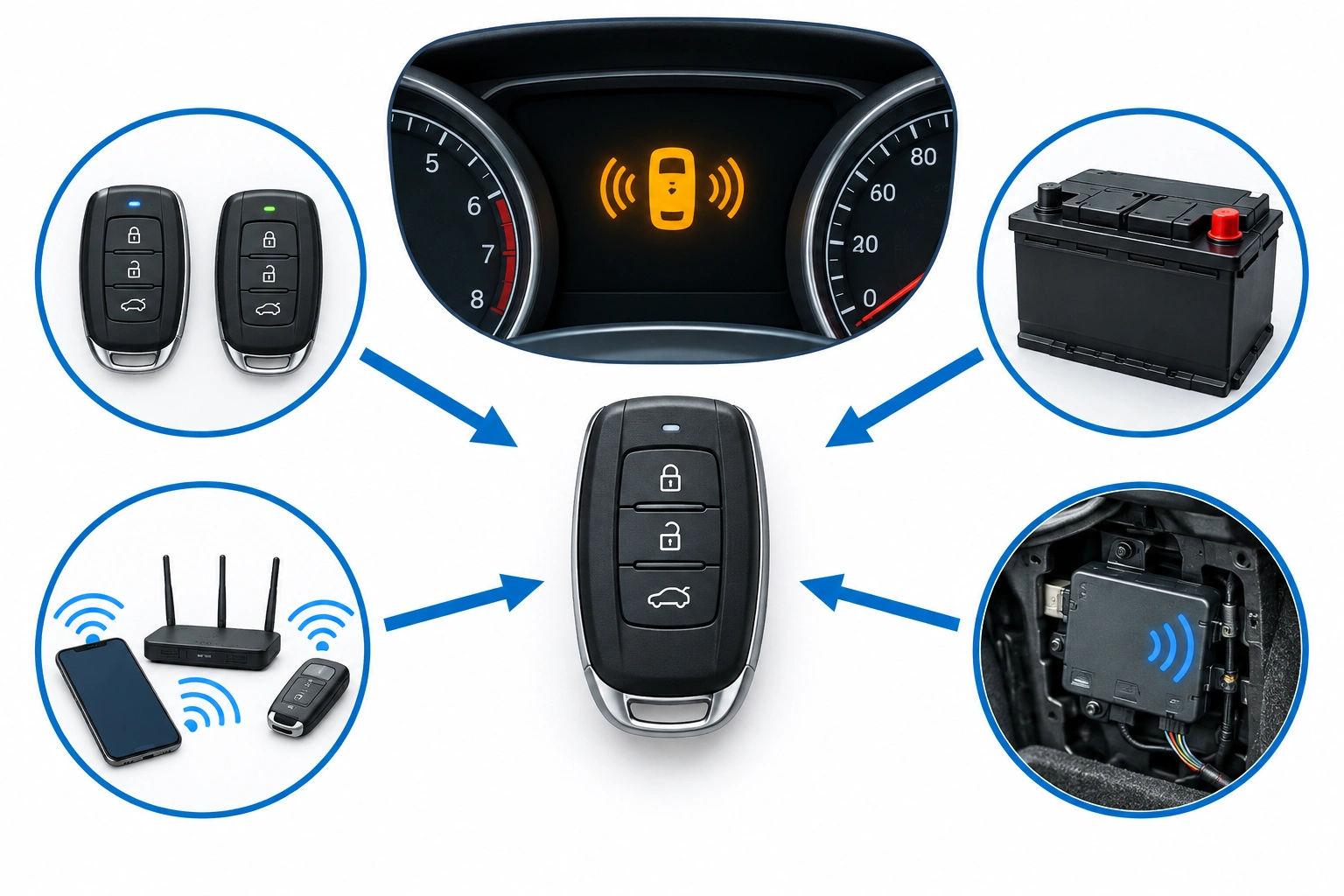
In plain language, the message usually means one of three things:
- the key fob is not sending a strong enough signal
- the vehicle is not receiving power or is not reading the signal correctly
- something is interfering with communication between the two
That matters because the fix is different depending on which side failed. Replacing the fob battery helps only if the fob is the weak link. Charging or replacing the car battery helps only if low voltage is the real issue. And if the receiver module or immobilizer is at fault, no battery swap will solve it.
Some vehicles may still start if you hold the fob against the start button or another designated backup spot, so check the owner’s manual for the exact emergency method.
For a broader look at how vehicle electronics can produce warning messages, a full-system diagnostic scanner guide can help you understand when a scan tool is useful and when the problem is likely beyond a simple battery check.
Is it safe to drive or restart the car?
Usually, if the car is already running and driving normally, the immediate danger is low. The bigger risk is not being able to restart it later.
Use this quick rule:
- If the car starts and runs normally: you can often drive it a short distance, but avoid a long trip until you know the warning is not coming from a weak 12V battery or a failing system.
- If the warning comes and goes: treat it as an early warning, not a one-time glitch.
- If the car will not detect any key: do not count on normal use. Get help before you end up stuck.
A weak vehicle battery can create unpredictable electronic behavior, and keyless systems are especially sensitive to low voltage. If you also notice dim lights, slow cranking, or other electrical oddities, that pushes the diagnosis toward the car battery rather than the fob.
Most likely causes, from common to less common
1) Weak key fob battery
This is the easiest and most common fix. A dying fob battery may still work at close range, or only work when you hold it near the start button.
A classic example: the car unlocks only when you stand right next to the door, or the push-button start works only if the fob is pressed against the button. That often points to a weak coin-cell battery in the fob.
2) Low or dead 12V car battery
A low vehicle battery can make the keyless system act up even if the fob is fine. The car may still have enough power to light the dash or even start once, but not enough stable voltage for the receiver and body electronics.
This is one of the few times where a car can seem “mostly fine” and still be failing electrically.
3) Signal interference
Nearby electronics, certain parking structures, or crowded RF environments can interrupt the fob’s signal. If the warning appears in one location and disappears somewhere else, interference becomes more likely.
4) Damaged key fob
A fob that has been dropped, water-damaged, or cracked can have intermittent problems. Buttons may still work sometimes, but the internal board or antenna path may be compromised.
5) Receiver, wiring, or immobilizer fault
If the car cannot read any fob consistently, the issue may be on the vehicle side. That can involve the receiver module, wiring, or another part of the immobilizer system. If the car battery is not the issue, the fault may be in the wiring or receiver and may require professional diagnostic services.
Quick checks you can do first
Before replacing parts, use this short triage sequence.
1) Try the spare key fob
This is the fastest way to separate a one-fob problem from a vehicle-wide problem.
- If the spare works normally, the original fob battery or fob itself is the likely culprit.
- If both fobs fail the same way, look harder at the car battery, interference, or the receiver side.
This one step can save you from replacing the wrong part.
2) Move away from possible interference
If you are near a parking garage, cell tower, radio equipment, or a lot full of electronic devices, move the car or key fob to a different location and try again.
If the warning disappears after you relocate, that points toward temporary interference rather than a broken system.
3) Check whether the warning is intermittent
Intermittent warnings usually behave differently from hard failures.
- Intermittent: works after a restart, works some days but not others, or changes with location
- Persistent: every key fails, every start is difficult, warning stays on
Intermittent issues are often battery- or signal-related. Persistent failures lean more toward a vehicle-side fault.
4) Look for low-voltage clues
If the dash looks dim, accessories act strange, or the car cranks slowly, treat the 12V battery as suspect.
A quick visual check is not a battery test, but it can tell you whether the keyless warning is part of a broader electrical problem.
How to fix a weak key fob battery
If only one fob is acting up and the spare works, replacing the fob battery is a sensible first move.
Most fobs use a small coin-cell battery. The exact battery type varies by vehicle, so match the old battery before buying a replacement. Open the fob carefully, swap the battery in the correct orientation, and reassemble the case fully so it snaps shut.
A weak fob battery is more likely to be the problem if:
- the fob works only at very close range
- the car starts when the fob is held near the start button
- lock/unlock range has noticeably dropped
- the spare fob works normally
It is less likely to help if:
- both fobs fail
- the car battery is clearly weak
- the warning appears even with a fresh battery in the fob
- the vehicle has other electronic faults at the same time
If you want a deeper understanding of how smart keys and push-button systems behave, Edmunds’ car buying and ownership resources are a useful general reference point for modern vehicle features and ownership issues.
How to check the car’s 12V battery
A weak 12V battery can cause keyless errors because the system needs stable power to recognize the fob and run the immobilizer logic.
Watch for these signs:
- slow cranking
- dim interior or exterior lights
- multiple warning messages
- electronics that reset or behave oddly
- the keyless warning appearing after the car sits overnight
A weak 12V battery is more likely when the warning appears alongside broader electrical symptoms, while a failed fob is more likely when the car behaves normally otherwise and only one key has trouble. If you have access to a battery tester, use it. If not, a jump-start can be a useful diagnostic step. If the warning disappears and the car behaves normally after a jump, the 12V battery may be weak or failing.
That said, a jump-start is not a permanent fix. It may get you moving, but it can also hide a battery that is still on the way out. If the problem returns after the car sits, the battery deserves proper testing or replacement.
For general safety guidance on vehicle issues that can affect operation, the National Highway Traffic Safety Administration is a reliable place to check recall and safety information.
How to start the car when the keyless system fails
If your push-button start car does not recognize the fob normally, the owner’s manual usually includes an emergency start method. Many vehicles can still start when the fob is placed in a specific spot near the start button, center console, or steering column.
A common real-world pattern looks like this:
- the dash says the key is not detected
- the car will not start normally
- holding the fob close to the start button allows the engine to start
That strongly suggests a weak fob battery or a weak signal, not necessarily a dead fob.
Use the manual’s emergency method rather than guessing. Different vehicles use different backup recognition points, and forcing random procedures is a good way to waste time.
When the problem is likely a receiver, immobilizer, or module fault
If all fobs fail, the warning persists after battery checks, and interference does not explain it, the problem may be on the vehicle side.
Signs that point this way include:
- both the main fob and spare fob fail
- the car intermittently recognizes no key at all
- the issue continues after a fresh fob battery
- the 12V battery tests good
- other body electronics are also acting oddly
At that point, the likely suspects include the receiver module, wiring, or immobilizer-related hardware. Those problems usually need a proper diagnostic scan and, in some cases, dealer-level or locksmith-level equipment.
When to consult a locksmith, mechanic, dealer, or roadside assistance
Call roadside assistance if:
- the car will not start
- you are stranded
- the vehicle will not recognize any key fob
- you need a safe jump-start or tow
Call a locksmith if:
- the issue seems limited to the fob
- the spare works but the original does not
- you need help with a damaged or nonresponsive fob
- emergency access is the main problem
Call a mechanic if:
- the 12V battery may be weak
- the car has multiple electrical symptoms
- the warning keeps returning after basic checks
Call a dealer if:
- all fobs fail and the vehicle-side system is suspected
- the car needs module-level diagnosis or manufacturer-specific procedures
- the issue persists after battery and interference checks
A dealer diagnosis is usually more expensive than a basic battery swap, but it is more likely to pinpoint module or programming faults that DIY checks cannot reach. A locksmith may be faster for fob-related problems, but not every locksmith can diagnose deeper vehicle electronics.
A simple decision guide you can use today
If you want the shortest path to the right fix, use this order:
- Try the spare fob
- Replace the fob battery if only one fob is affected
- Check the 12V car battery if the warning appears with other electrical symptoms
- Move away from possible interference and retest
- Seek professional diagnosis if all fobs fail or the warning persists
That sequence works because it separates the most common, cheapest fixes from the less common vehicle-side faults.
FAQ
What does a keyless system error message mean?
It means the car is having trouble communicating with the smart key or keyless entry system. The cause may be the fob, the car battery, interference, or a vehicle-side fault.
Can I still drive the car with this warning?
If the car is running normally, you may be able to drive a short distance. The real concern is whether it will restart later. If the warning is tied to a weak battery or repeated no-start behavior, avoid relying on it.
Will replacing the key fob battery fix it?
It may, especially if only one fob is affected and the spare works. If both fobs fail or the car battery is weak, a new fob battery may not solve the problem.
What if the spare key fob works but the main one does not?
That usually points to the original fob battery or the fob itself. Replace the battery first, then suspect damage if the issue continues.
Could a dead 12V battery trigger the warning?
Yes. Low vehicle voltage can make the keyless entry system malfunction or stop recognizing the fob properly.
How do I know if it is interference?
If the warning appears in one place and disappears somewhere else, or only happens near certain electronics, interference is a strong possibility.
When should I get professional help?
If all fobs fail, the warning keeps coming back, or the car will not start reliably, get help from a locksmith, mechanic, dealer, or roadside assistance depending on the symptom.
Is it safe to keep driving?
Only if the car is behaving normally and you are not seeing other electrical symptoms. If there is any chance the car will not restart, treat it as urgent and get it checked soon.
