
P0128 Symptoms: 7 Signs Your Engine Is Running Too Cool

P0128 symptoms usually include a check engine light, slow engine warmup, weak cabin heat, low temperature gauge readings, reduced fuel economy, and failed emissions readiness. The code means the engine coolant temperature stayed below the thermostat regulating temperature for too long after startup.
- Most common sign: check engine light
- Most common cause: stuck-open thermostat
- First safe check: coolant level when cold
- Do not open a hot cooling system
You scanned your car and found P0128. The car may still drive, so the code feels confusing.
Here is the simple version: P0128 does not mean the engine is overheating. It means the engine is not warming up fast enough or staying warm enough for proper operation.
This takes about 8 minutes to read. By the end, you will know which symptoms matter, which symptoms mislead people, and what to check first.
P0128 Code Meaning and Why Symptoms Feel Mild
P0128 means the powertrain control module sees engine coolant temperature staying below the expected thermostat range. The issue usually involves the thermostat, coolant level, coolant temperature sensor, intake air temperature sensor, cooling fan, or wiring.
The reason P0128 feels mild is simple. A stuck-open thermostat often keeps coolant flowing too early, so the engine runs too cool instead of too hot.
That makes this code easy to ignore. It also makes it expensive over time because the engine can burn extra fuel and fail emissions readiness.
OBD-II systems monitor vehicle components that affect emissions and turn on the warning light when a malfunction is detected. The California Air Resources Board explains this in its OBD-II system fact sheet.
Key insight: P0128 is a temperature control problem, not just a thermostat code.
P0128 Symptoms You Will Notice First
The first P0128 symptom is usually the check engine light. Many drivers notice no other obvious problem because the engine still starts, idles, and drives.
The next signs show up during warmup, highway driving, or cold weather. The car may take longer to reach normal temperature, and the heater may feel weaker than normal.
Watch for these P0128 symptoms:
- Check engine light or service engine light
- Temperature gauge stays lower than normal
- Engine takes longer to warm up
- Cabin heater blows cooler air
- Fuel economy drops
- Idle stays higher after startup
- Emissions test readiness fails
The heater symptom matters because cabin heat depends on hot coolant moving through the heater core. If coolant stays too cool, the vents cannot deliver normal warmth.
IMAGE SUGGESTION: Dashboard with check engine light and low temperature gauge visible.
ALT TEXT: P0128 symptoms dashboard check engine light and low coolant temperature gauge.
Cold Engine Symptoms Versus Overheating Symptoms
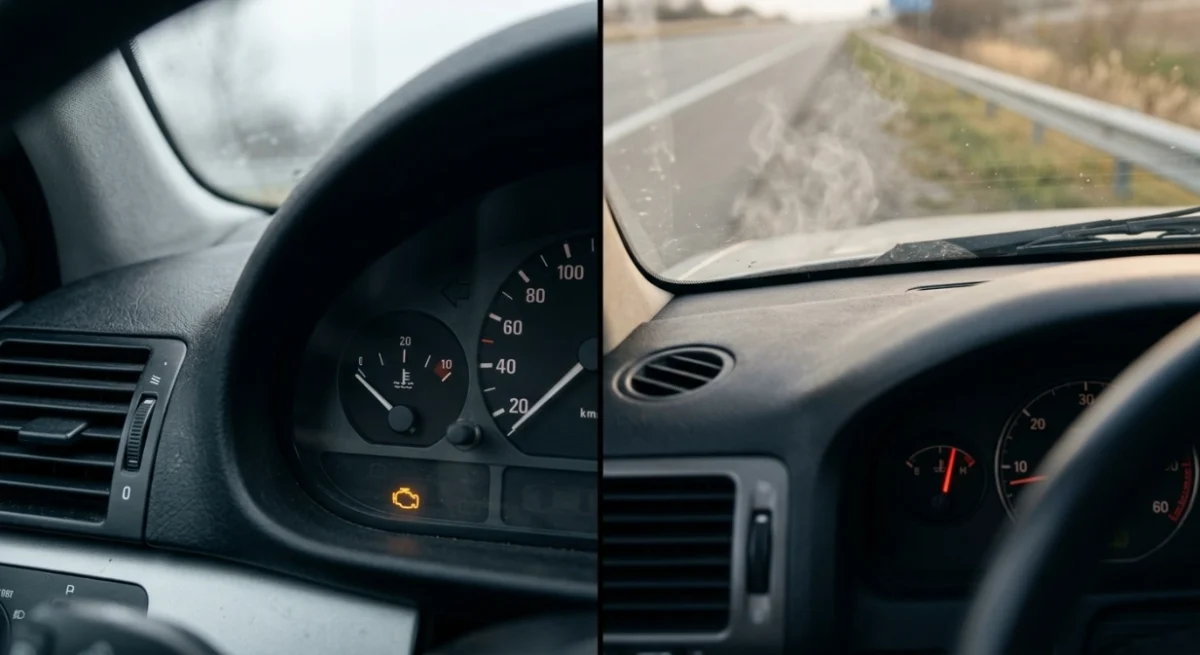
P0128 points to a cold-running engine, while overheating points to excessive coolant temperature. These problems feel similar because both involve the cooling system, but the risk pattern changes.
A cold-running engine wastes fuel and can delay emissions readiness. An overheating engine can damage the head gasket, cylinder head, hoses, and radiator.
This table shows the difference.
| Symptom | P0128 Cold-Running Pattern | Overheating Pattern |
|---|---|---|
| Temperature gauge | Stays low or rises slowly | Climbs toward hot zone |
| Cabin heat | Weak or delayed | Can turn cold if coolant is low |
| Engine risk | Fuel waste and emissions issues | Severe engine damage risk |
| Driving action | Schedule diagnosis soon | Stop safely and cool down |
The key conclusion is clear: P0128 does not mean panic, but it does mean the cooling system needs attention.
Common P0128 Causes Behind the Symptoms
The most common P0128 cause is a thermostat stuck open. The thermostat should restrict coolant flow during warmup, then open as the engine reaches its designed temperature.
When the thermostat stays open, coolant circulates through the radiator too early. The engine struggles to reach the temperature needed for efficient fuel control.
Other common causes include low coolant, air trapped in the cooling system, a faulty engine coolant temperature sensor, a faulty intake air temperature sensor, a cooling fan that runs too much, dirty coolant, or damaged wiring.
Tip: Check coolant level only when the engine is fully cold. The reservoir should sit between the minimum and maximum marks.
The Car Care Council says cooling system failure is a leading cause of vehicle breakdowns and recommends checking coolant level often. Its vehicle systems overview also connects routine engine checks with performance, fuel economy, and emissions.
Low coolant can trigger confusing symptoms. The heater may blow cold, the gauge may behave oddly, and the code can appear even when the thermostat is not the only fault.
What Most People Get Wrong About P0128 Symptoms
Many drivers think no strong symptom means no real problem. P0128 often proves the opposite because the first symptom can be only a light on the dash.
The second mistake is replacing the coolant temperature sensor first. A sensor code is not the same as a sensor diagnosis.
The third mistake is clearing the code before checking freeze-frame data. That snapshot can show coolant temperature, intake air temperature, vehicle speed, and warmup conditions when the fault set.
Warning: Never remove a radiator cap or coolant reservoir cap when the engine is hot. Pressurized coolant can cause serious burns.
What most people don’t think to ask is whether the engine reached closed-loop fuel control at the right time. A cold-running engine can stay in a richer warmup strategy longer, which raises fuel use and emissions.
That is why a mild P0128 symptom still deserves a proper check. The code affects how the engine manages fuel, not just how warm the heater feels.
How to Check P0128 Symptoms Before Replacing Parts
Start with the simplest safe checks first. A careful check prevents wasted money on sensors, thermostats, and coolant service that the car does not need.
Use this order:
- Scan the code and save freeze-frame data.
- Check coolant level with the engine cold.
- Inspect for coolant stains, smell, or wet hoses.
- Compare cold engine coolant temperature to outside temperature.
- Watch coolant temperature rise on a scan tool.
- Check whether the cooling fan runs too early.
- Confirm thermostat operation before replacing sensors.
A healthy cold-soaked engine should show coolant temperature and intake air temperature close to ambient temperature before startup. A large difference points toward sensor, wiring, or data problems.
During warmup, coolant temperature should rise steadily. If the temperature climbs slowly and the radiator hose warms too early, the thermostat can be stuck open.
IMAGE SUGGESTION: Mechanic reading live coolant temperature data on an OBD-II scan tool.
ALT TEXT: P0128 symptoms scan tool showing engine coolant temperature data.
Can You Drive With P0128 Symptoms?
You can usually drive a short distance with P0128 if the temperature gauge stays low or normal, the engine runs smoothly, and no coolant leaks appear. You should not ignore the code for weeks.
Stop driving if the temperature gauge rises quickly, steam appears, coolant smell becomes strong, or the warning light flashes. Those signs point beyond normal P0128 symptoms.
Check for open recalls if your vehicle has a known cooling-system campaign, software update, or related safety issue. NHTSA’s official vehicle recall lookup lets owners search by VIN or vehicle details.
For most drivers, the best next step is simple. Confirm coolant level cold, save the scan data, then plan a thermostat and sensor diagnosis.
P0128 Repair Direction Based on Your Situation

The right repair path depends on the symptom pattern. The same code can come from a mechanical thermostat fault, a coolant issue, or bad temperature data.
If the engine warms slowly and cabin heat is weak, check the thermostat first. That pattern matches a thermostat stuck open.
If coolant level is low, inspect for leaks before replacing the thermostat. Low coolant can create false readings and heater problems.
If the scan tool shows an impossible coolant temperature, check the coolant temperature sensor circuit. Wiring corrosion, connector damage, or sensor failure can send bad data to the powertrain control module.
If the cooling fan runs from startup, inspect the fan command and fan relay circuit. A fan that runs too often can keep coolant temperature below the expected range.
Small action first: write down the coolant temperature shown on your scan tool before the first cold start.
Then compare: the reading should be close to the outdoor temperature after the car sits overnight.
Final decision: if the reading looks normal but warmup stays slow, the thermostat becomes the main suspect.
P0128 symptoms usually mean the engine is running too cool because coolant temperature is not reaching the thermostat regulating range fast enough.
A scan tool can separate a thermostat problem from a bad sensor reading before you spend money on parts.
Before the next cold start, record the coolant temperature reading and compare it with the outdoor temperature.
Frequently Asked Questions
What is the most common symptom of P0128?
The most common symptom of P0128 is the check engine light. Many cars show no strong drivability problem at first, but the engine can warm up slowly, the heater can feel weak, and fuel economy can drop during normal driving.
Does P0128 mean my thermostat is bad?
P0128 often points to a thermostat stuck open, but it does not prove the thermostat is bad by itself. Low coolant, trapped air, a faulty coolant temperature sensor, bad wiring, or an overactive cooling fan can create the same code.
Can low coolant cause P0128 symptoms?
Yes, low coolant can cause P0128 symptoms because the coolant temperature sensor needs proper coolant contact to read correctly. Low coolant can also reduce cabin heat, create air pockets, and cause unstable temperature readings during warmup.
Will P0128 clear itself after replacing the thermostat?
P0128 can clear after the correct repair and enough drive cycles, but clearing the code with a scanner gives faster confirmation. The code will return if the engine still warms too slowly or the temperature data remains incorrect.
Is P0128 serious in cold weather?
P0128 deserves attention in cold weather because low outside temperature makes slow warmup more noticeable. Short trips, weak cabin heat, and poor fuel economy become more common when the thermostat, coolant level, or temperature sensor already has a fault.
