
P0133 Repair Cost: What You’ll Pay and What Changes the Price

P0133 repair cost usually ranges from $150 to $650 when the problem is an upstream oxygen sensor, wiring issue, or small exhaust leak. A full oxygen sensor replacement often costs $200 to $550. The smart move is diagnosis first, because P0133 does not always mean the sensor is bad.
- DIY sensor part: $20–$300
- Shop diagnosis: $80–$180
- Common repair total: $200–$650
- High-end cases: $700+
You saw code P0133, and now you want one clear answer: how much will this cost?
The frustrating part is that P0133 points to slow oxygen sensor response, not one guaranteed failed part. This takes about 8 minutes to read, and it will help you avoid paying for the wrong repair.
P0133 usually involves Bank 1 Sensor 1, the upstream oxygen sensor before the catalytic converter. That sensor helps the powertrain control module adjust air and fuel, so a slow signal can affect fuel economy, emissions, and drivability.
Key answer: If your car runs normally and only shows P0133, expect a diagnostic test first. If the upstream oxygen sensor fails live-data testing, replacement is the common repair.
P0133 Repair Cost by Repair Type
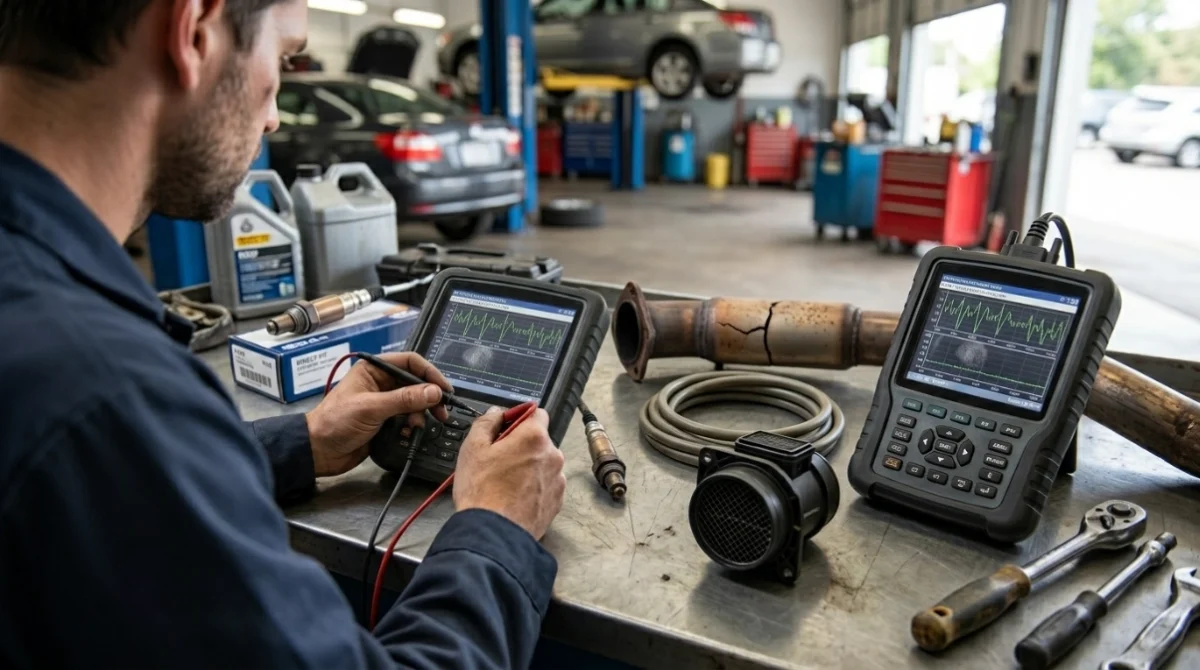
P0133 repair cost depends on what caused the oxygen sensor signal to respond slowly. The sensor is the common suspect, but wiring, exhaust leaks, and fuel-control problems can trigger the same code.
RepairPal lists oxygen sensor replacement around $434 to $537 on average, while AutoZone notes DIY sensor parts can run from $20 to $300 depending on vehicle fitment. CarAdvise lists a faulty oxygen sensor repair around $200 to $500. :contentReference[oaicite:0]{index=0}
This table shows the most common cost paths.
| Repair | Typical Cost | Why It Changes |
|---|---|---|
| Diagnostic scan and live data test | $80–$180 | Shop labor rate and test depth |
| Upstream oxygen sensor replacement | $200–$550 | OEM sensor price and access |
| Oxygen sensor wiring repair | $100–$350 | Heat damage near exhaust |
| Small exhaust leak repair | $120–$600 | Leak location and rust |
| Vacuum or intake leak repair | $80–$400 | Hose, gasket, or intake issue |
| Mass air flow sensor repair | $240–$525 | Sensor type and calibration |
The cheapest correct repair is not always the cheapest part. A $60 sensor will not fix a cracked exhaust pipe that tricks the sensor reading.
Most drivers should budget $250–$600 before diagnosis proves a smaller or larger repair.
What P0133 Means Before You Pay
P0133 means the engine computer sees a slow oxygen sensor response. The powertrain control module expects the oxygen sensor signal to change quickly as exhaust oxygen changes.
RepairPal defines P0133 as “Oxygen Sensor Circuit Slow Response,” and notes that a conventional oxygen sensor should switch voltage quickly during testing. Edmunds also describes P0133 as slow oxygen sensor response at Bank 1 Sensor 1. :contentReference[oaicite:1]{index=1}
The upstream oxygen sensor sits before the catalytic converter. It sends feedback that helps the engine computer control the air-fuel ratio.
- Bank 1 means the engine side with cylinder 1.
- Sensor 1 means the upstream sensor before the converter.
- Slow response means delayed signal movement.
- The check engine light stores the code.
The New York Vehicle Inspection Program explains that the oxygen sensor monitor checks sensor response during closed-loop operation. It also notes that proper fuel control supports the 14.7:1 air-fuel target during normal conditions.
New York Vehicle Inspection Program oxygen sensor monitor guide
So the code is not a parts order. It is a diagnostic clue.
Why the Price Changes So Much
The price changes because P0133 has sensor, wiring, exhaust, and fuel-control causes. Two cars with the same code can need different repairs.
A compact car with an easy-access upstream sensor can finish near the low end. A rusted truck, European vehicle, or tight engine bay can push labor higher.
Parts quality also changes the final bill. OEM sensors cost more, but cheap universal sensors can cause repeat codes if spliced poorly.
Warning: Do not replace every oxygen sensor because one P0133 code appeared. Test Bank 1 Sensor 1 first, then inspect wiring and exhaust leaks near that sensor.
Exhaust leaks matter because fresh air enters the exhaust stream. That extra oxygen can make the sensor signal look slow or inaccurate.
Wiring matters because the oxygen sensor lives in a hot, vibrating area. Melted insulation, loose connectors, and poor grounds can create a slow or unstable signal.
Diagnosis Cost Versus Guessing the Sensor
A proper P0133 diagnosis usually saves money when the cause is not the sensor. The technician should confirm live data, freeze-frame data, wiring condition, and exhaust leaks.
AutoZone notes that P0133 can point to a slow sensor signal, but another issue can cause that delayed response. CarAdvise also lists wiring, exhaust leaks, low fuel pressure, intake leaks, and ECM issues as possible causes. :contentReference[oaicite:2]{index=2}
A good diagnostic process checks these items in order:
- Confirm P0133 with a scan tool.
- Check for related fuel-trim codes.
- Review freeze-frame engine conditions.
- Watch upstream O2 live data.
- Inspect sensor wiring and connector pins.
- Check exhaust leaks before the sensor.
- Clear codes and complete a drive cycle.
This order prevents a common mistake. Replacing the sensor before checking exhaust leaks can waste the repair budget.
For emissions readiness rules, the California Bureau of Automotive Repair explains that OBD inspection standards use readiness monitors, malfunction indicator lamp status, and communication checks.
California BAR On-Board Diagnostic Test Reference
DIY P0133 Repair Cost
DIY P0133 repair costs less when the upstream oxygen sensor is easy to reach. The part alone can cost $20 to $300, based on vehicle fitment and sensor quality.
DIY work makes sense when you already have a scan tool, oxygen sensor socket, jack stands, and basic repair experience. It does not make sense when the sensor is seized, hidden behind engine parts, or installed near fragile exhaust threads.
Here is the realistic DIY cost breakdown:
- Oxygen sensor: $20–$300
- O2 sensor socket: $10–$30
- Penetrating oil: $5–$15
- Basic scan tool: $30–$120
- Total DIY range: $65–$465
The risk is thread damage. A seized oxygen sensor can strip the exhaust bung and turn a low-cost repair into exhaust work.
DIY is smart when the sensor is accessible, the exhaust is not rusted, and live data supports sensor failure.
Shop P0133 Repair Cost
Shop repair costs more because you pay for diagnosis, labor, warranty handling, and correct part matching. That cost can be worth it when the code has multiple possible causes.
A shop will often charge a diagnostic fee before replacing parts. Some shops credit that fee toward the repair, while others bill it separately.
Expect three common price patterns:
- Diagnosis only: $80–$180
- Diagnosis plus sensor replacement: $280–$650
- Diagnosis plus exhaust or wiring repair: $300–$900
European cars, trucks, and older rusted vehicles sit higher. Economy cars with easy access sit lower.
The best estimate will name the exact sensor location. The written quote should say Bank 1 Sensor 1, upstream oxygen sensor, or air-fuel ratio sensor.
What Most People Get Wrong About P0133 Repair Cost
Most people think P0133 means “replace the O2 sensor now.” That belief is understandable because the code name mentions the oxygen sensor.
The better reading is this: the computer detected slow response in the oxygen sensor circuit. The circuit includes the sensor, wiring, connector, heater operation, exhaust condition, and engine fuel control.
Wrong belief: the cheapest sensor saves money
A cheap universal sensor can create repeat problems if it requires splicing. Many modern vehicles respond better to direct-fit sensors with the correct connector.
Wrong belief: downstream and upstream sensors do the same job
Sensor 1 usually helps control fuel trim before the catalytic converter. Sensor 2 usually monitors catalytic converter performance after it.
Wrong belief: clearing the code fixes the repair
Clearing the code only turns the light off for now. The code returns after the oxygen sensor monitor runs again if the slow response remains.
The NHTSA recall lookup tool is worth checking before paying, because some vehicle issues connect to manufacturer recall or service information.
When P0133 Becomes More Expensive
P0133 gets expensive when the slow sensor signal comes from a condition that damages the sensor again. Oil burning, coolant contamination, rich fuel mixture, or exhaust leaks can ruin a new sensor.
What most people do not think to ask is: “What killed the sensor?” That question protects the second repair.
Look for these cost-raising signs:
- Strong fuel smell from the exhaust
- Black smoke from the tailpipe
- Rough idle with fuel-trim codes
- Visible exhaust leak noise
- Coolant or oil consumption
- Repeated P0133 after sensor replacement
These symptoms point beyond one worn oxygen sensor. They push the repair toward engine performance diagnosis.
If the car runs poorly, do not drive for weeks with P0133. Poor fuel control can increase emissions, waste fuel, and stress the catalytic converter.
Best Decision Based on Your Situation
The right repair path depends on symptoms, budget, and test results. Start with the smallest action that proves the cause.
- If the car runs fine, get a diagnostic test first.
- If live data shows slow Bank 1 Sensor 1 response, replace that sensor.
- If exhaust noise exists, inspect leaks before buying a sensor.
- If fuel trims are high, check vacuum leaks and intake issues.
- If the code returned after replacement, test wiring and fuel control.
- If an emissions test is due, confirm readiness monitors after repair.
This decision path keeps the repair focused. It also prevents replacing parts that only react to another problem.
IMAGE SUGGESTION: A simple diagram showing Bank 1 Sensor 1 before the catalytic converter and Sensor 2 after it.
ALT TEXT: P0133 repair cost diagram showing upstream oxygen sensor location before catalytic converter
How to Lower P0133 Repair Cost
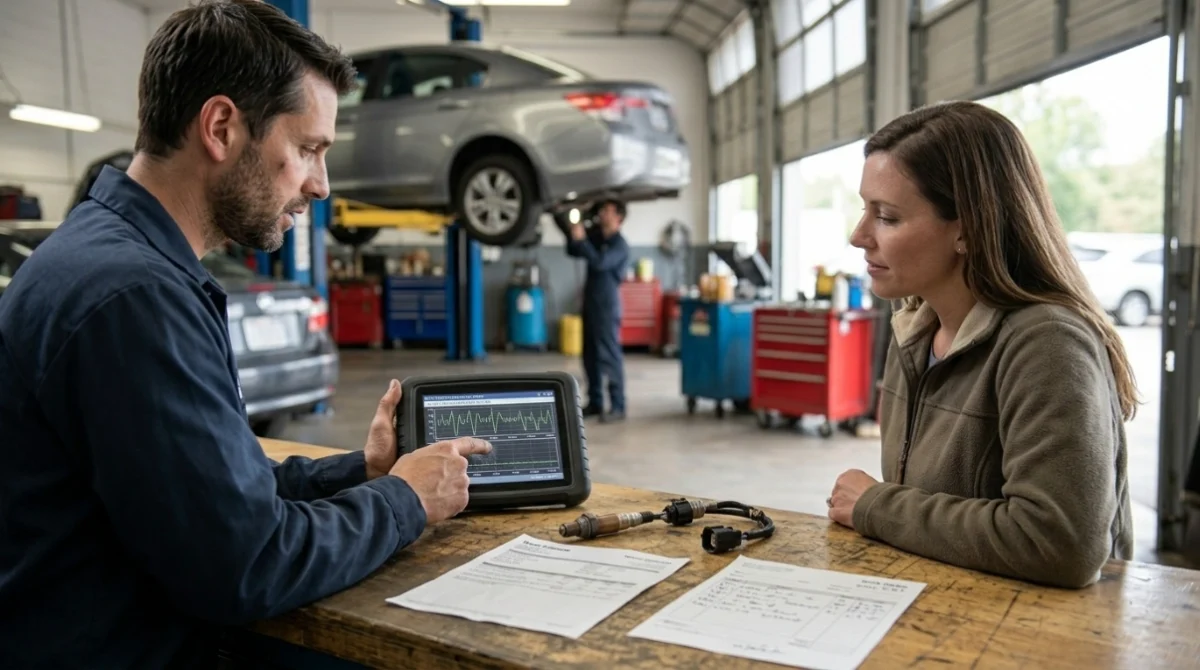
You can lower P0133 repair cost by asking for proof before approving parts. The proof should come from live data, visual inspection, and the exact sensor location.
Ask the shop these five questions:
- Which sensor failed: Bank 1 Sensor 1 or another sensor?
- Did live data confirm slow response?
- Did you inspect exhaust leaks before the sensor?
- Will the quote use direct-fit or universal parts?
- Will you confirm readiness after repair?
These questions do not challenge the technician. They make the repair order clearer.
The strongest money-saving step is simple: pay for diagnosis before parts when the cause is not obvious.
P0133 repair cost usually stays near $200–$650 when diagnosis confirms a faulty upstream oxygen sensor or small circuit issue.
The price climbs when the oxygen sensor is only reporting a deeper fuel, exhaust, or wiring problem.
Before buying parts, write down the code, vehicle model, and symptoms, then ask for Bank 1 Sensor 1 live-data confirmation.
Frequently Asked Questions
Can I drive with a P0133 code?
You can drive short distances with P0133 if the car runs normally and the check engine light is steady. Do not ignore it for weeks. Slow oxygen sensor response can reduce fuel economy, raise emissions, and hide a fuel-control problem.
Will P0133 fail an emissions test?
Yes, P0133 can fail an emissions test when the check engine light stays on or readiness monitors are incomplete. After repair, the vehicle needs a drive cycle so the oxygen sensor monitor can run again and report ready status.
Is P0133 always Bank 1 Sensor 1?
P0133 commonly refers to oxygen sensor slow response at Bank 1 Sensor 1. Always verify with vehicle-specific data before buying a part. Some scan tools and repair databases show sensor naming differences by make, engine, and calibration.
Can a bad catalytic converter cause P0133?
A catalytic converter is not the first suspect for P0133. The common checks start with the upstream oxygen sensor, wiring, exhaust leaks, and air-fuel control. Converter testing belongs later when other evidence points there.
How long does P0133 repair take?
A straightforward upstream oxygen sensor replacement can take under one hour at a shop. Diagnosis, rusted threads, tight access, wiring repair, or exhaust leak repair can stretch the job to several hours.
