
P0171 Symptoms — Lean Engine Code Signs, Causes, and Fixes

P0171 means the engine is running too lean on Bank 1, meaning too much air or too little fuel. Common symptoms include rough idle, weak acceleration, engine hesitation, and increased fuel trims. The issue often comes from vacuum leaks, dirty mass airflow sensors, or fuel delivery problems.
This guide explains real-world symptoms, root causes, and exact diagnostic steps. It helps you understand what your car is trying to tell you before damage spreads.
P0171 symptoms always point to a lean air-fuel mixture issue on Bank 1.
Most cases come from unmetered air or weak fuel delivery.
Fixing early prevents catalytic converter damage and costly repairs.
Reading time: about 9 minutes. Let’s break down what is really happening inside your engine.
P0171 symptoms explained clearly
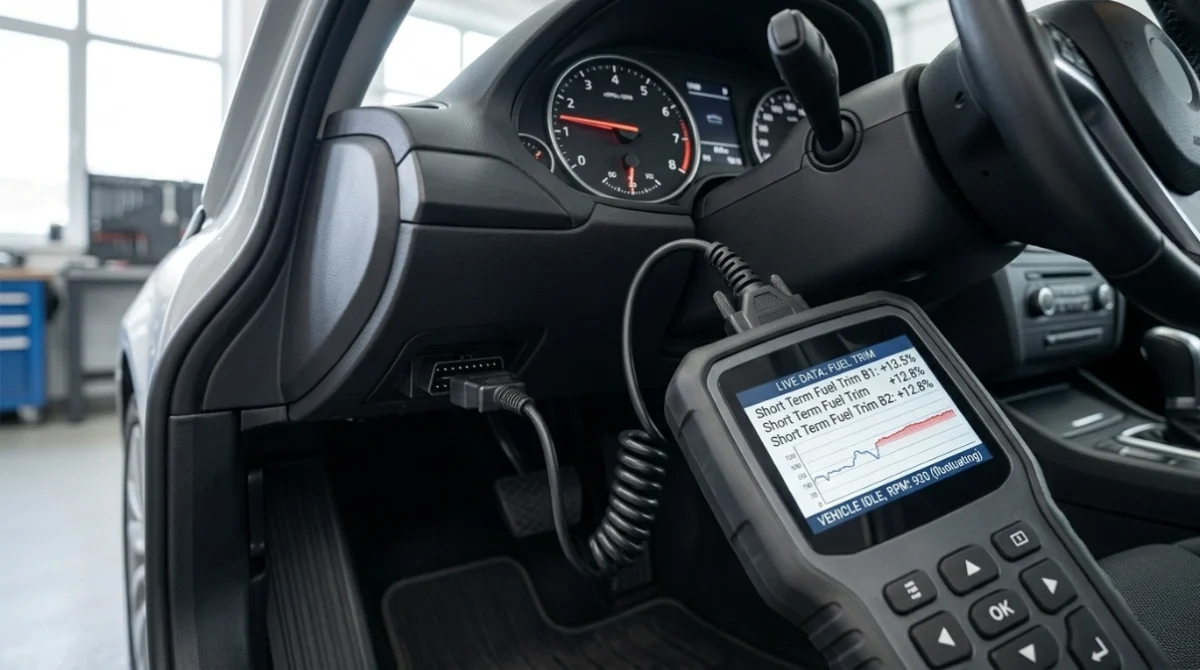
P0171 symptoms show when the engine control module detects too much air in the fuel mixture. The ECU tries to correct it by adding fuel, but limits get exceeded.
This creates unstable combustion in Bank 1. Bank 1 is the side of the engine containing cylinder 1.
According to the diagnostic reference material in the uploaded automotive fault guide :contentReference[oaicite:0]{index=0}, lean conditions usually appear gradually before triggering the check engine light.
- Rough or unstable idle
- Engine hesitation under load
- Loss of power during acceleration
- Check engine light ON
- Higher fuel consumption
Most important insight: P0171 is not a sensor failure code in most cases. It is an air-fuel imbalance signal.
Early P0171 symptoms drivers notice first
The earliest symptom is usually a slight rough idle when the engine is warm. Drivers often ignore this stage.
The ECU starts increasing fuel trim values to compensate for lean readings. Short-term fuel trims often rise above +10%.
You may also feel minor hesitation when pressing the accelerator. It feels like the engine is “thinking” before responding.
Check idle quality after cold start and warm engine.
Lean issues often worsen when engine warms up.
What most people miss is that early symptoms appear before the check engine light. This is the best time for diagnosis.
Common driving symptoms of P0171
When P0171 progresses, symptoms become more noticeable during driving. The engine struggles under load.
Acceleration becomes weak because combustion is not optimized. The air-fuel mixture lacks enough fuel energy.
Fuel economy may drop even though the engine is running lean. This confuses many drivers.
| Condition | Normal Engine | P0171 Engine |
|---|---|---|
| Acceleration | Smooth power delivery | Hesitation or delay |
| Idle | Stable RPM | Rough or fluctuating |
| Fuel Trim | ±5% | +10% to +25% |
The key takeaway is simple. The engine compensates by adding fuel, but cannot fully correct the imbalance.
P0171 causes behind the symptoms
P0171 symptoms always trace back to one of three systems: air intake, fuel delivery, or sensor readings.
Unmetered air is the most common cause. This happens when air enters after the MAF sensor.
Fuel delivery issues are the second major cause. Weak fuel pump pressure creates lean combustion.
Do not replace oxygen sensors first.
Most P0171 cases are not sensor failures.
A vacuum leak is often responsible for sudden symptom appearance. Cracked hoses or intake manifold leaks are common.
Fuel system symptoms linked to P0171
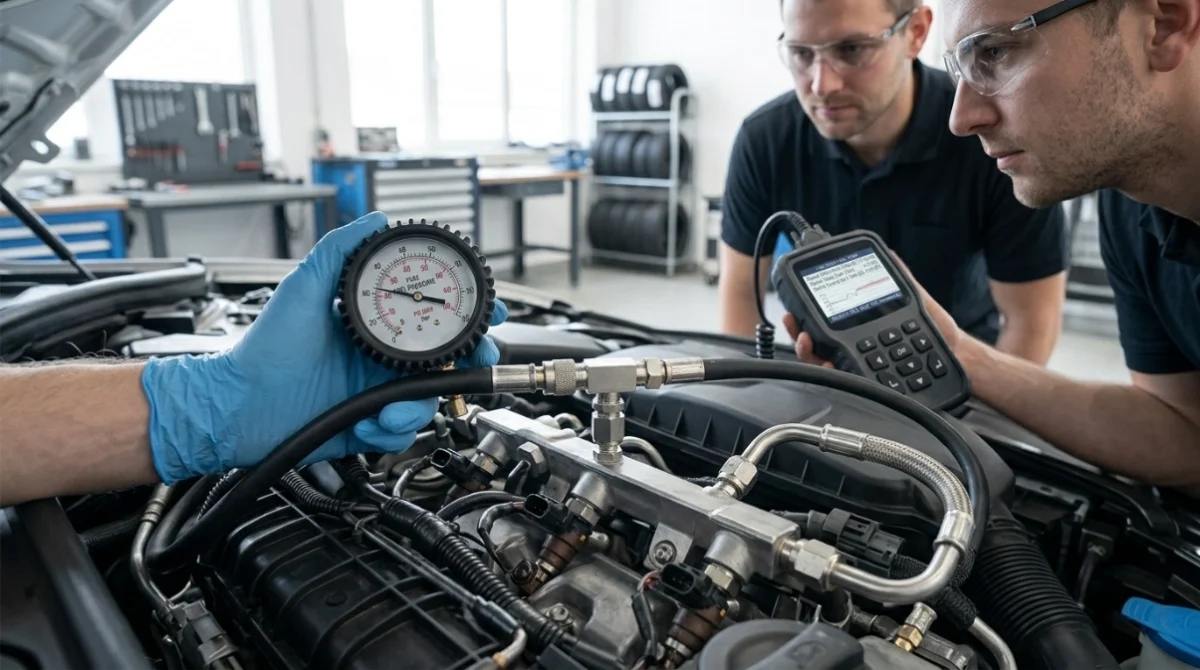
Fuel system issues create some of the strongest P0171 symptoms. The engine starves under load.
A weak fuel pump cannot maintain required pressure. Injectors deliver less fuel than commanded.
This creates lean combustion across multiple cylinders on Bank 1.
You may also notice engine misfires under acceleration. This happens because combustion becomes unstable.
If fuel trims exceed +25%, the ECU triggers a hard fault code.
Air intake and vacuum leak symptoms
Air leaks are the most frequent cause of P0171 symptoms. Extra air enters without being measured.
This confuses the ECU because oxygen levels increase unexpectedly. Fuel calculation becomes incorrect.
Common leak sources include intake hoses, PCV valves, and intake manifold gaskets.
Most people overlook small cracks in rubber hoses. These tiny leaks cause major fuel imbalance.
Use carb cleaner spray near intake joints.
RPM change indicates vacuum leak location.
A stable idle test is the fastest way to detect intake leaks.
Sensor-related symptoms in P0171
Although rare, sensor issues can contribute to P0171 symptoms. The mass airflow sensor is the most important.
A dirty MAF sensor misreads incoming air volume. This leads to incorrect fuel injection calculations.
Oxygen sensors may also report false lean conditions. However, they usually react rather than cause the issue.
MAP sensor errors can also distort load calculations in some engines.
Cleaning MAF sensors often improves symptoms immediately if contamination is the cause.
What most people get wrong about P0171
Many drivers assume P0171 means a bad oxygen sensor. This is incorrect in most cases.
The real issue is imbalance in air-fuel ratio, not sensor failure.
Another mistake is ignoring small vacuum leaks because they seem harmless.
- Wrong belief: oxygen sensor is always faulty
- Wrong belief: code clears itself permanently
- Wrong belief: only fuel system is involved
The truth is that P0171 is a system-level imbalance code affecting multiple components.
Diagnosis steps for P0171 symptoms
Proper diagnosis follows a structured process. Random part replacement increases repair cost.
Start by checking fuel trims using an OBD scanner. Then inspect air intake system for leaks.
Next, test fuel pressure and MAF sensor readings.
- Scan fuel trims and freeze frame data
- Inspect intake hoses for cracks
- Check MAF sensor cleanliness
- Test fuel pump pressure
- Confirm oxygen sensor response
Each step isolates a different system. This avoids misdiagnosis.
When P0171 becomes serious
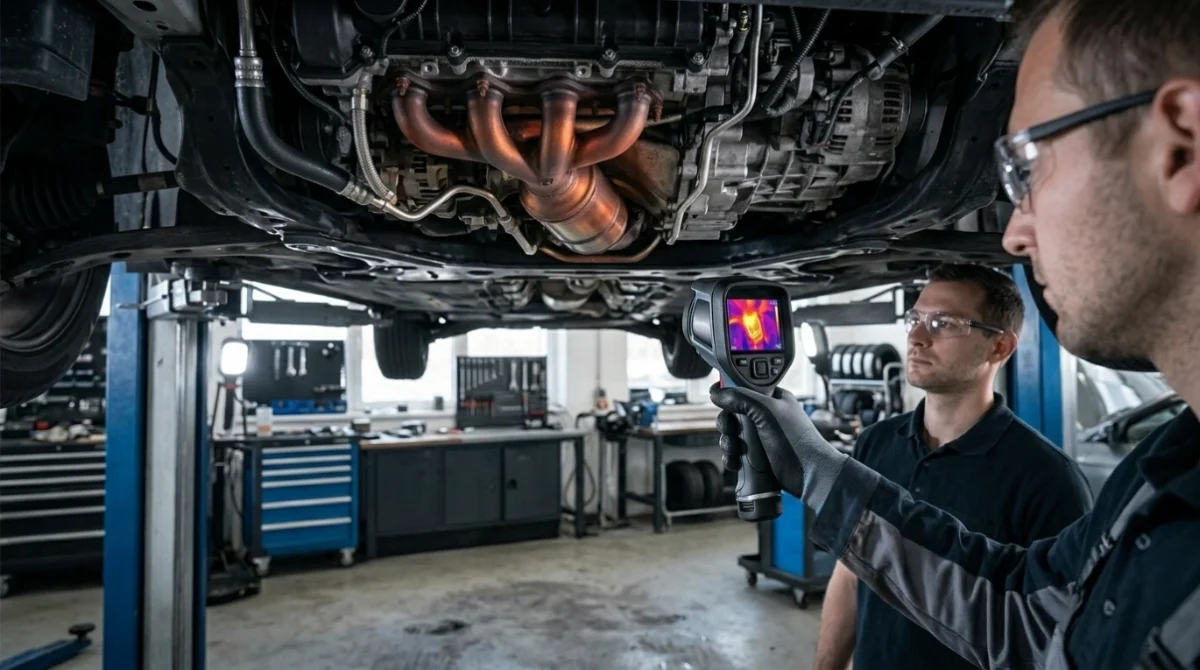
P0171 becomes serious when left untreated for long periods. Lean combustion increases engine temperature.
This can damage valves and catalytic converters over time.
Misfires may become frequent and reduce engine life.
Fuel economy drops further as ECU compensation increases.
Driving long-term with P0171 risks catalytic converter failure.
Repair cost increases significantly if ignored.
Final diagnosis insight
P0171 symptoms always point to lean fuel mixture imbalance. The cause is usually airflow or fuel delivery issues.
Most repairs are simple when diagnosed early. Vacuum leaks and dirty sensors are the most common fixes.
Quick inspection prevents expensive engine and emission system damage.
P0171 symptoms signal a lean air-fuel imbalance in Bank 1.
Most cases come from vacuum leaks or weak fuel delivery systems.
Check intake leaks and fuel pressure first to avoid costly misdiagnosis.
Frequently Asked Questions
What causes P0171 the most?
The most common cause is a vacuum leak in the intake system. This allows unmetered air into the engine, creating a lean condition. Dirty MAF sensors and weak fuel pumps are also frequent contributors.
Can I drive with P0171?
You can drive short distances, but it is not recommended long-term. Lean conditions increase engine heat and can damage the catalytic converter. Early repair prevents expensive system failure.
How do I fix P0171 quickly?
Start by checking for vacuum leaks and cleaning the MAF sensor. If the issue remains, test fuel pressure and injectors. Most cases are resolved without major part replacement.
Is P0171 always serious?
Not always, but it becomes serious if ignored. Early symptoms are mild, but prolonged lean operation can damage engine components. Timely diagnosis prevents escalation.
What is Bank 1 in P0171?
Bank 1 refers to the side of the engine containing cylinder 1. The code specifically indicates a lean condition on that side. V-type engines have multiple banks, while inline engines have one.
