
P0441 Causes: What Triggers Incorrect EVAP Purge Flow?

Quick Answer
The most common P0441 causes include a sticking purge valve, damaged EVAP hose, fuel-cap sealing problem, blocked vent system, damaged charcoal canister, or an electrical or pressure-sensor fault. P0441 means the vehicle detected incorrect EVAP purge flow, so an OBD diagnostic code should guide testing rather than automatically condemn one part.
Common P0441 Causes
- Faulty purge valve: A valve that sticks open, stays closed, or leaks can create purge flow when the computer does not expect it.
- Damaged EVAP hose: Split, disconnected, collapsed, or incorrectly routed vapor lines can change the expected airflow.
- Fuel-cap problem: A loose, damaged, or incorrect cap can interfere with some EVAP system tests.
- Vent-system fault: A stuck vent valve or blocked fresh-air path can prevent proper purge operation.
- Charcoal-canister issue: Damage, restriction, or fuel saturation can interfere with vapor storage and movement.
- Electrical or sensor fault: Wiring, connectors, control circuits, or pressure-sensing problems can produce an incorrect purge-flow result.
Best First Move
- Scan for related EVAP codes, save freeze-frame data, and inspect the cap and visible vapor lines before buying parts.
P0441 can be frustrating because your car may still drive normally. Your OBD2 scanner points toward the EVAP system, but it does not tell you which component has failed.
I use the same diagnostic rule when troubleshooting electronic key and remote problems. Start with evidence, test the system, and replace a part only after the fault makes sense.
In This Guide
What Does P0441 Mean?
P0441 means Evaporative Emission Control System Incorrect Purge Flow. The powertrain control module detected EVAP purge behavior outside the range it expected.
This is an emissions-system diagnostic trouble code. It does not mean the engine itself has an internal mechanical failure.
Definition: The EVAP system, or evaporative emission control system, captures gasoline vapor from the fuel system and later routes that vapor into the engine to be burned.
How does EVAP purge work?
Gasoline produces vapor inside the fuel tank. The EVAP system keeps that vapor from simply escaping into the atmosphere.
A typical system uses several connected components:
- Fuel tank: Contains fuel and fuel vapor.
- Charcoal canister: Stores fuel vapor using activated carbon.
- Purge valve or purge solenoid: Meters vapor toward the intake manifold.
- Vent valve: Controls fresh-air entry and helps seal the system during certain tests.
- EVAP hoses: Carry vapor between the tank, canister, valves, and engine.
- Fuel tank pressure sensor: Helps many vehicles measure pressure or vacuum changes.
- Fuel cap or capless filler: Helps maintain the intended seal at the filler opening.
When driving conditions are appropriate, the computer commands the purge valve to open. Engine vacuum can then draw stored fuel vapor from the canister toward the intake.
P0441 appears when the computer does not see the purge response its programming expects. The exact monitoring strategy varies by manufacturer, engine, model year, and operating conditions.
Does P0441 automatically mean the purge valve is bad?
No. A failed purge valve is an important possibility, but P0441 does not prove the valve itself has failed.
A restriction, vapor leak, vent fault, damaged hose, sensor problem, or electrical fault may alter the same purge test.
- P0440: Usually describes a broader EVAP system malfunction.
- P0441: Points specifically toward incorrect purge flow.
- P0442: Commonly identifies a small EVAP leak condition.
- P0455: Commonly identifies a large or gross EVAP leak.
- P0456: Commonly identifies a very small EVAP leak.
Those related codes can appear together. Always read every stored and pending code before deciding where to start.
Locksmith’s diagnostic note: A trouble code works like a clue from a smart-key system. It narrows your search, but proper testing still identifies the failed component.
Section Takeaway: P0441 identifies incorrect EVAP purge flow, not one guaranteed bad part.
What Are the Most Common P0441 Causes?
P0441 can be triggered by anything that prevents the vehicle from producing or detecting the expected EVAP purge flow. The purge valve deserves attention, but several other faults can create similar results.
1. Faulty or sticking purge valve
The purge valve controls how much stored fuel vapor enters the engine. A mechanical or electrical failure can prevent that flow from matching the computer’s command.
Common purge-valve problems include:
- Valve stuck closed
- Valve stuck open
- Valve leaking when commanded closed
- Restricted internal passage
- Failed solenoid winding
- Damaged electrical connector or wiring
A purge valve stuck partly open can sometimes affect idle or starting after refueling. A valve stuck closed may prevent the expected vapor flow during a purge test.
2. Cracked, loose, or restricted EVAP hose
EVAP hoses deal with heat, vibration, dirt, and age. Rubber sections can split while plastic vapor lines can crack or disconnect.
Do not look only for obvious holes. A collapsed, kinked, pinched, or incorrectly routed hose can restrict flow without creating an obvious external leak.
- Cracks near hose ends
- Disconnected quick-connect fittings
- Rub-through damage
- Pinched vapor lines
- Collapsed rubber sections
- Loose connections after previous repairs
3. Loose, damaged, or incorrect fuel cap
A fuel-cap sealing problem is one of the easiest things to inspect. It should not automatically be blamed for every P0441.
A missing seal, cracked gasket, damaged filler surface, or incorrect replacement cap can interfere with EVAP operation on some vehicles.
- Make sure the cap seats correctly.
- Inspect the rubber seal for cracking or distortion.
- Check the filler neck for dirt or damage.
- Confirm an aftermarket cap is correct for the vehicle.
- Inspect the filler mechanism instead on capless systems.
4. Faulty EVAP vent valve or blocked vent path
The vent side of the system provides controlled airflow. A blocked vent path can change how vacuum develops during EVAP operation.
Dirt, corrosion, damaged wiring, or a sticking vent valve can all contribute. Vehicles driven in dusty or muddy environments deserve a careful vent-system inspection.
5. Damaged or fuel-saturated charcoal canister
The charcoal canister stores gasoline vapor until the engine can purge it. Physical damage or internal restriction can interfere with vapor movement.
Repeatedly forcing extra fuel into the tank after the pump shuts off can also expose EVAP components to liquid fuel. Avoid topping off the tank beyond the normal automatic shutoff.
6. Fuel tank pressure sensor or monitoring fault
Many EVAP strategies use a fuel tank pressure sensor to evaluate system pressure or vacuum. A biased signal can make normal system behavior look incorrect to the computer.
The sensor should be evaluated with scan data and vehicle-specific specifications. Replacing it based only on P0441 is guesswork.
7. Wiring, connector, or control-circuit problem
EVAP valves and sensors rely on electrical circuits. Broken wires, corrosion, loose terminals, or poor connector contact can prevent correct operation.
- Purge-valve connector damage
- Vent-valve connector corrosion
- Harness damage near hot components
- Rodent-damaged wiring
- Loose grounds where relevant
- Control-circuit faults requiring service-information testing
The table below shows why different faults can produce the same P0441 code.
| Possible Cause | How It Can Affect Purge Flow | Useful Diagnostic Clue | Best Confirmation |
|---|---|---|---|
| Purge valve | Too much, too little, or uncontrolled vapor flow | Rough idle or hard start may appear on some vehicles | Command, vacuum, electrical, and sealing tests |
| EVAP hose | Leak or restriction changes expected airflow | Visible crack, loose fitting, or related leak code | Inspection and approved smoke testing |
| Fuel cap | May prevent proper EVAP sealing on applicable vehicles | Loose cap, damaged seal, or filler-neck problem | Seal inspection and vehicle-specific testing |
| Vent system | Restricted airflow alters system vacuum | Dirty vent area or related vent code | Valve command and airflow testing |
| Charcoal canister | Restriction or damage interferes with vapor movement | Physical damage, contamination, or fuel saturation | Manufacturer-approved EVAP testing |
| Sensor or wiring | Computer receives incorrect feedback or loses control | Implausible scan data or electrical companion codes | Scan-data and circuit testing |
Section Takeaway: The purge valve is only one possible P0441 cause. Hoses, the vent system, canister, cap, sensors, and wiring all deserve evidence-based testing.
How Can You Tell Which P0441 Cause Is Most Likely?
Your symptoms and companion codes can help prioritize testing. They still cannot confirm the failed component by themselves.
If the check engine light is the only symptom
A steady check engine light with normal drivability is common with EVAP faults. Start with the scan report and basic visual inspection.
- Record all stored codes.
- Check pending codes.
- Save freeze-frame data.
- Inspect the fuel cap or filler system.
- Inspect visible EVAP hoses and connectors.
If the engine is hard to start after refueling
A purge valve that allows vapor flow at the wrong time becomes more interesting when starting problems consistently appear after filling the tank. This pattern is a clue, not a final diagnosis.
Testing should confirm whether the valve seals and responds correctly. Do not replace it solely because the symptom matches.
If the engine idles roughly
Unwanted purge flow can disturb the air-fuel mixture at idle on some vehicles. Other engine problems can cause the same symptom.
- Check for misfire codes.
- Review fuel-trim data if your scanner supports it.
- Look for intake or vacuum leaks.
- Evaluate commanded versus actual purge behavior where supported.
If you smell fuel vapor
A persistent gasoline odor deserves prompt investigation. P0441 alone cannot tell you whether the odor comes from vapor leakage or a separate liquid-fuel problem.
If you see liquid fuel, stop treating the problem as a routine code diagnosis. Move the vehicle only when it is safe and obtain qualified help.
If other EVAP codes are present
Companion codes can change your diagnostic direction. A leak code beside P0441 may make a hose, cap, vent, or sealing fault more important.
| Code Pattern | What It Suggests You Investigate |
|---|---|
| P0441 alone | Purge operation, hoses, venting, and monitoring data |
| P0441 + P0442/P0456 | Small EVAP leak plus purge-flow testing |
| P0441 + P0455 | Large leak, disconnected hose, cap/filler issue, or major sealing fault |
| P0441 + electrical EVAP code | Valve circuit, connector, wiring, or component electrical failure |
Section Takeaway: Symptoms and companion codes tell you where to look first, but testing must confirm the actual P0441 cause.
How Do You Diagnose P0441 Before Replacing Parts?
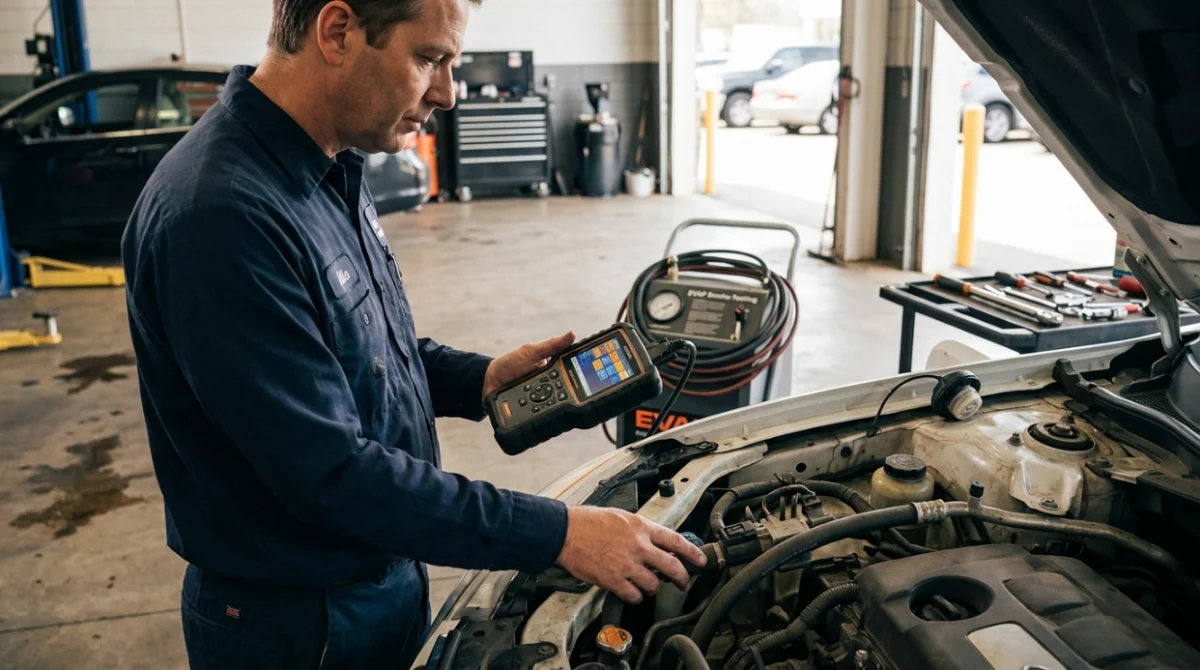
The best P0441 diagnosis moves from easy evidence toward active testing. Avoid clearing the code before recording useful information.
Step 1: Scan the vehicle completely
Read stored, pending, and permanent codes if your scanner supports them. Save freeze-frame information before clearing anything.
- Confirm P0441 is present.
- Record every companion code.
- Save freeze-frame data.
- Check whether EVAP-related live data is available.
- Note whether the malfunction indicator light is steady or flashing.
AAA also explains that diagnostic trouble codes provide clues that help identify potential causes. A code does not automatically mean one specific component needs replacement.
Step 2: Check the fuel cap and filler area
Inspect the cap before reaching for tools. Make sure it is correctly installed and physically suitable for the vehicle.
- Check the sealing gasket.
- Look for cracking or distortion.
- Inspect the filler-neck sealing surface.
- Check capless filler doors for debris or damage.
Step 3: Inspect hoses and electrical connectors
Follow accessible EVAP lines from the engine area toward the canister where practical. Look closely at bends, clips, connectors, and areas near heat sources.
Electrical connectors should be secure and free from obvious terminal damage. Do not probe sealed connectors carelessly.
Step 4: Test the purge valve
The correct procedure depends on vehicle design. Some scan tools can command the purge valve while a technician watches pressure, vacuum, engine response, or electrical data.
A bench test alone may not reproduce every failure. Follow the manufacturer’s service information when deciding whether a valve passes or fails.
Step 5: Evaluate the vent side
A purge system cannot behave correctly if airflow through the vent side is restricted. Inspect the vent valve, filter, hoses, and nearby wiring where accessible.
- Check for dirt or mud contamination.
- Look for kinked hoses.
- Verify the valve responds to commands when supported.
- Check related electrical faults.
Step 6: Use an EVAP smoke test when needed
A smoke test can help locate leaks that are too small or hidden for visual inspection. The equipment must be used according to proper EVAP diagnostic procedures.
Locksmith’s note: EVAP smoke testing is specialized work. If you lack the correct equipment or vehicle-specific service procedure, a qualified repair shop is safer than improvising around fuel-vapor components.
Step 7: Compare scan data with service information
Pressure-sensor readings and EVAP monitor logic differ across vehicles. Use specifications for the exact make, model, engine, and year.
If a pattern appears common on your particular vehicle, check manufacturer information and the NHTSA recall database using the VIN. P0441 itself does not prove that a recall applies.
Section Takeaway: Preserve scan evidence first, inspect simple faults next, then test purge, vent, leaks, sensors, and circuits using vehicle-specific procedures.
Is P0441 Serious, and Can You Keep Driving?
P0441 by itself is usually an emissions-system warning rather than an immediate engine-failure warning. You still should diagnose it instead of ignoring the check engine light.
A vehicle with only a steady light and normal operation may remain drivable for a short period. The underlying fault and any additional symptoms matter more than the code number alone.
When should you stop driving?
Do not keep driving simply because an EVAP code sounds minor. Stop and investigate when the vehicle shows signs of a more serious problem.
- Visible liquid fuel: Treat this as a potential fuel-system safety problem.
- Strong persistent fuel odor: Determine the source before continuing normal use.
- Flashing check engine light: This can indicate a more urgent fault unrelated to P0441 alone.
- Severe misfire or shaking: Do not assume EVAP is the only problem.
- Loss of power: Additional diagnosis is needed.
- Smoke or abnormal heat: Stop in a safe location and obtain help.
AAA’s guidance on the check engine light also distinguishes between a steady warning and a flashing light that can require more immediate attention.
Can P0441 cause an emissions-test failure?
An active emissions-related diagnostic fault can create inspection problems in areas that use OBD-based emissions testing. Readiness-monitor status can also matter after codes have been cleared.
Do not clear P0441 immediately before an inspection and expect the problem to disappear. The vehicle may need to complete its self-tests again after a proper repair.
Section Takeaway: P0441 often allows normal drivability, but fuel odor, visible leakage, a flashing light, misfiring, or other abnormal behavior changes the urgency.
How Do You Fix P0441?
The correct P0441 fix depends on the fault confirmed during diagnosis. There is no universal part that should be replaced every time this code appears.
Common repairs after testing
- Reseat or replace a faulty fuel cap: Do this when inspection or testing confirms a sealing problem.
- Repair a damaged EVAP hose: Replace cracked, leaking, disconnected, or restricted vapor lines with suitable parts.
- Replace a failed purge valve: Confirm that the valve does not seal, flow, or respond correctly first.
- Repair the vent system: Correct a blocked air path, failed vent valve, damaged hose, or electrical problem.
- Repair canister damage: Replace a canister only when testing confirms physical failure, restriction, or contamination.
- Repair wiring: Correct damaged wires, terminals, connectors, or grounds using proper automotive electrical practices.
- Address a sensor fault: Verify abnormal readings against vehicle-specific specifications before replacing a sensor.
Should you clear P0441 after the repair?
Once you have completed a confirmed repair, clear the code if appropriate with a suitable scanner. Then operate the vehicle normally and rescan it.
The EVAP monitor may need specific operating conditions before it runs again. Those conditions differ by manufacturer.
What if P0441 comes back?
A returning code means the vehicle detected the problem again or the original fault was not fully resolved. Recheck your diagnostic assumptions instead of replacing the next item on a list.
- Confirm the same code returned.
- Check for newly stored companion codes.
- Compare new freeze-frame data.
- Reinspect recent repairs and disconnected components.
- Verify purge-valve sealing and operation.
- Verify vent operation.
- Consider smoke testing if it was not performed previously.
- Use manufacturer-specific diagnostic information.
I see a similar pattern with remote and smart-key troubleshooting. Replacing several plausible parts usually costs more than testing the system in the right order.
Locksmith’s note: Parts and labor costs vary substantially by vehicle, component location, diagnosis time, and local labor rates. Get the failure confirmed before approving a costly valve, canister, sensor, or wiring repair.
Section Takeaway: Fix the verified failure, clear the code appropriately, and confirm that P0441 does not return after the EVAP monitor runs again.
P0441 Causes FAQ
What is the most common cause of P0441?
A sticking or leaking purge valve is a common P0441 suspect because the code concerns incorrect purge flow. However, damaged EVAP hoses, vent faults, fuel-cap issues, canister restrictions, sensor problems, and wiring faults can produce similar results, so testing should determine the actual cause.
Can a loose gas cap cause P0441?
Yes, a fuel-cap sealing problem can contribute to P0441 on some vehicles, but it is not the only possible cause. Inspect the cap, seal, filler neck, and any companion EVAP codes before assuming a replacement cap will solve the problem.
Can a bad purge valve cause P0441?
Yes. A purge valve that sticks open, remains closed, leaks, becomes restricted, or fails electrically can prevent purge flow from matching the computer’s expected behavior. Confirm the failure with vehicle-appropriate tests before replacing the valve.
Can an EVAP leak cause P0441?
Yes. Although P0441 specifically describes incorrect purge flow rather than a defined leak size, a cracked hose, poor connection, cap problem, or another leak can interfere with EVAP operation and contribute to the code.
Can a charcoal canister cause P0441?
Yes. A damaged, restricted, or contaminated charcoal canister may disrupt vapor movement through the EVAP system. Because canisters can be expensive and vehicle layouts differ, verify the fault rather than replacing the canister based on the code alone.
Will P0441 clear itself after tightening the gas cap?
The warning may eventually turn off if the cap was the only problem and the vehicle later completes enough successful self-tests. The timing varies by manufacturer, so scan the vehicle and confirm the fault is gone rather than relying only on the dashboard light.
Can I drive with a P0441 code?
A P0441 code with a steady check engine light and otherwise normal operation is often not an immediate breakdown warning. However, diagnose it promptly and stop driving if you notice visible fuel leakage, a strong fuel odor, severe rough running, power loss, smoke, or a flashing check engine light.
Final Takeaway: P0441 is best treated as a purge-flow diagnostic clue. Start with the scan data and simple inspections, then test the purge valve, hoses, vent system, canister, sensors, and wiring before spending money on replacement parts.
That approach is slower than guessing for five minutes, but it is usually faster than replacing the wrong component. Diagnose first, repair second, and verify the result with your OBD2 scanner.
