
P0507 Repair Cost: What You’ll Pay and What Causes It

Quick Answer
A P0507 repair can cost less than $100 for a simple cleaning or minor hose problem, while a failed electronic throttle body or harder-to-reach intake leak may push the bill into several hundred dollars. The code means the engine is idling faster than the computer expects, so diagnosis matters more than replacing a specific part. If the check engine light is also on, follow AAA’s check engine light guidance and pay attention to how the vehicle is running.
What Can Affect the P0507 Repair Cost?
- Throttle cleaning: Carbon around the throttle plate may only require cleaning and an appropriate relearn.
- Vacuum leak: A cracked hose can be inexpensive, while an intake gasket leak takes more labor.
- PCV problem: A stuck PCV valve or damaged hose can introduce unwanted air into the engine.
- IAC valve: Older vehicles may use an idle air control valve that sticks or fails.
- Electronic throttle: A faulty throttle body can be one of the more expensive P0507 repairs.
- Diagnostic labor: Smoke testing and scan-tool analysis may add cost before the faulty component is found.
Best First Move
- Read all stored codes and freeze-frame data before buying parts, then inspect for air leaks and throttle-related problems.
If your OBD2 scanner just pulled P0507, the price range can look confusing because P0507 describes a condition rather than one failed part. I approach this code by finding where the extra airflow or incorrect idle command comes from before discussing replacement parts.
That approach matters. A small vacuum hose and an electronic throttle body can create similar high-idle symptoms but produce very different repair bills.
In This Guide
What Does P0507 Mean?
P0507 means the engine control system has detected an idle speed higher than its expected target. It’s a generic OBD2 powertrain trouble code, but the exact diagnostic strategy can differ by vehicle.
Definition: P0507 is an OBD2 diagnostic trouble code indicating that the engine’s actual idle speed is higher than the powertrain control module expects under the current operating conditions.
The computer controls idle by managing airflow, fuel delivery, ignition timing, and electronic throttle operation. Older vehicles may also use a separate idle air control valve, usually shortened to IAC.
When extra air enters the engine or the throttle system can’t bring RPM down, the computer may eventually store P0507. That is why the code does not automatically mean the IAC valve or throttle body needs replacement.
What symptoms can come with P0507?
High idle is the defining symptom, but what you notice from the driver’s seat can vary. Some cars show only a check engine light.
- Higher-than-normal idle: Engine speed remains elevated after the engine has warmed up.
- Hanging RPM: Revs take longer than expected to fall after releasing the accelerator.
- Fast creeping: An automatic-transmission vehicle may pull forward more strongly when shifted into gear.
- Surging idle: Engine speed may rise and fall instead of remaining steady.
- Hissing noise: An intake or vacuum leak may produce an audible hiss.
- Other trouble codes: Lean-condition or airflow-related codes can appear alongside P0507.
A basic OBD2 reader confirms the stored code, while a scanner with live data can provide more context. Fuel trims, throttle position, engine temperature, and airflow readings may all help narrow the cause.
Locksmith’s diagnostic note: A trouble code is a starting point, not a parts order. Always identify the failed system before replacing components.
How Much Does P0507 Cost to Repair?
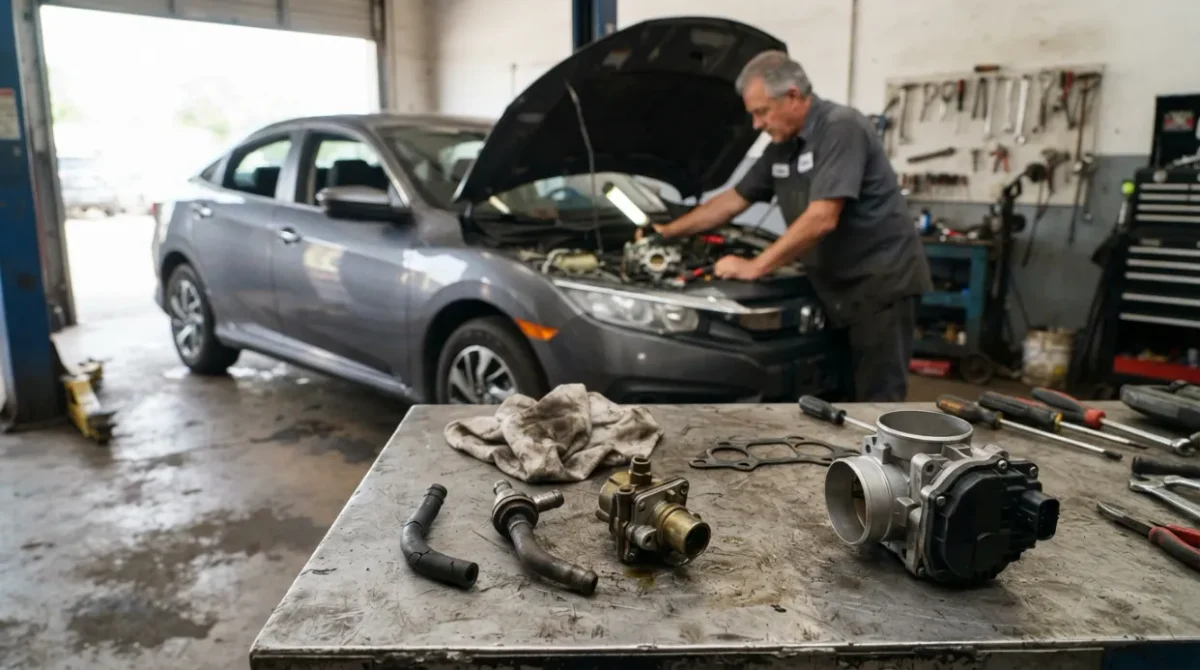
Most P0507 repairs fall anywhere from a relatively inexpensive cleaning or hose repair to several hundred dollars for a more complex component. Vehicle design, labor rates, parts quality, and the actual cause determine the final bill.
As of 2026, these ranges work best as budgeting figures rather than quotes. Your make, model, engine, region, and shop rate can move the price in either direction.
| Possible Repair | Typical 2026 Ballpark | When It May Apply |
|---|---|---|
| Throttle body cleaning | About $80–$200 at a shop | Carbon or deposits interfere with throttle movement |
| Minor vacuum hose repair | Roughly $50–$200 | A damaged hose, fitting, or accessible connection leaks air |
| PCV valve or related hose | Roughly $30–$200+ | PCV system allows excessive airflow into the intake |
| IAC valve service or replacement | About $150–$450 | Older vehicle uses a separate idle air control valve |
| Intake or larger vacuum leak repair | About $150–$900+ | Leak involves harder-to-reach hoses, seals, or intake gaskets |
| Electronic throttle body replacement | About $300–$900+ | Testing confirms an internal throttle-body fault |
Diagnostic labor may be billed separately. AAA Auto Repair explains that diagnostic work does not always fit a standard flat-rate estimate because troubleshooting time varies.
That distinction is important with P0507. Finding a hidden intake leak can take longer than replacing a small hose after the leak has been located.
Why can two P0507 repairs cost so differently?
- Vehicle layout: Some hoses and throttle components are easy to reach, while others require significant disassembly.
- Parts choice: Original-equipment and aftermarket components can have different prices and warranty terms.
- Diagnostic time: Intermittent leaks and electronic faults can require extended testing.
- Relearn requirements: Some electronic throttle systems require a manufacturer-specified adaptation or relearn after service.
- Related damage: Brittle hoses, seals, or connectors discovered during inspection can increase the final repair.
Pro tip: Get the diagnosis and estimate in writing before approving an expensive throttle-body replacement. P0507 alone does not prove the throttle body is bad.
What Causes a P0507 Code?
Unwanted airflow is one of the first things I look for when diagnosing P0507. The engine may be receiving more air than the computer can compensate for at idle.
1. Vacuum or intake air leak
A split vacuum hose, loose connection, damaged intake seal, or leaking accessory line can let unmetered air enter the engine. That extra air can raise idle speed.
A smoke test is often useful because small leaks can be difficult to see. Guessing from appearance alone can miss cracks hidden underneath hoses.
2. Dirty throttle body
Deposits can build around the throttle plate and bore over time. Depending on the throttle design, that buildup can affect the airflow available at idle.
Cleaning can help when contamination is the confirmed issue. Electronic throttle bodies require care because forcing the plate or using the wrong procedure can create new problems.
3. Sticking idle air control valve
Many older vehicles use an IAC valve to meter bypass air while the throttle is closed. If it sticks open, the engine may receive too much air at idle.
Newer drive-by-wire vehicles often control idle through the electronic throttle body instead. They may not have a separate IAC valve at all.
4. PCV system problem
The positive crankcase ventilation, or PCV, system routes crankcase vapors back into the intake. A stuck valve, torn diaphragm, or damaged hose can act like a vacuum leak.
This cause is easy to overlook because the engine may still run reasonably well. A careful intake inspection helps prevent unnecessary throttle-part replacement.
5. Throttle adaptation or electronic throttle problem
Some vehicles need an idle or throttle relearn after battery disconnection, cleaning, or related service. The exact procedure is manufacturer-specific.
For vehicle-specific instructions, use your service manual or the manufacturer’s official support resources, such as Toyota Customer Service for applicable Toyota vehicles.
6. Less common sensor or control problems
- Engine temperature input: Incorrect temperature data can affect commanded idle speed.
- Airflow measurement: A contaminated or faulty airflow sensor can confuse load calculations.
- Throttle position feedback: Incorrect position data can affect electronic throttle control.
- Wiring or connector faults: Damaged circuits may interfere with actuator or sensor operation.
- Control-module issues: Software or module faults are possible but should be considered after common mechanical causes are ruled out.
Locksmith’s note: Never jump straight to a control module because a scan tool displays P0507. Mechanical air leaks and throttle issues should be ruled out first.
How Should P0507 Be Diagnosed Before Repair?
A good P0507 diagnosis moves from inexpensive checks toward more involved testing. That approach reduces the risk of replacing a working component.
- Confirm the code. Read P0507 plus every stored, pending, and permanent code available to your scanner.
- Review freeze-frame data. Check engine temperature, RPM, load, and related data recorded when the fault appeared.
- Inspect intake hoses. Look for loose clamps, disconnected lines, cracks, damaged PCV plumbing, and obvious air leaks.
- Check the throttle body. Inspect for deposits or mechanical problems without forcing an electronic throttle plate.
- Review live data. Compare fuel trims, airflow, throttle position, and temperature readings where supported.
- Test for vacuum leaks. A professional smoke test can reveal leaks that visual inspection misses.
- Follow manufacturer testing. Use the correct service information before condemning an IAC valve, throttle body, sensor, or module.
Why live data can save money
A basic code reader tells you that P0507 exists. A capable OBD2 scanner can show what the engine computer is seeing while the engine is running.
For example, abnormal fuel trims at idle may strengthen the case for an air leak. A temperature reading that makes no sense compared with the actual engine temperature points diagnosis in another direction.
The key is comparison, not one isolated number. Manufacturer specifications should determine whether a reading is genuinely outside its expected range.
Should you clear P0507 before diagnosing it?
I prefer to save the available data before clearing a code. Freeze-frame information can disappear or become harder to reproduce after the memory is erased.
After the repair, clearing codes may be part of the verification process. The vehicle should then complete enough normal operation to confirm that the high-idle condition does not return.
Pro tip: Photograph or save the scan report before clearing codes. That record can be useful if the fault returns or you later visit a repair shop.
Can You Drive With a P0507 Code?
A vehicle with P0507 may still move normally enough for a short trip, but you should not assume every high-idle condition is harmless. The decision depends on the symptoms occurring with the code.
Higher idle speed can make an automatic vehicle engage more firmly or creep faster when shifted into gear. An unstable or surging idle also deserves prompt attention.
Stop driving if you notice serious symptoms
- Flashing check engine light
- Strong shaking or misfiring
- Unexpected acceleration or uncontrollable RPM
- Smoke or a strong burning smell
- Loss of power
- Abnormal braking feel
- Overheating or another serious warning light
AAA advises drivers to pull over when a flashing check engine light appears with abnormal vehicle behavior. Those symptoms can represent something more serious than a routine P0507 diagnosis.
You can also check NHTSA for vehicle safety information and recalls. A P0507 code by itself does not mean your vehicle has a recall.
Will P0507 affect an emissions inspection?
A stored check-engine-related diagnostic fault can matter during an OBD-based emissions inspection. Inspection requirements vary by state or jurisdiction.
Simply clearing the code shortly before an inspection may not solve the problem. OBD readiness monitors may need to run again before the vehicle is ready for testing.
Safety note: If engine speed feels difficult to control, do not keep driving simply because an OBD2 scanner labels the problem with one code.
How Can You Keep P0507 Repair Costs Down?
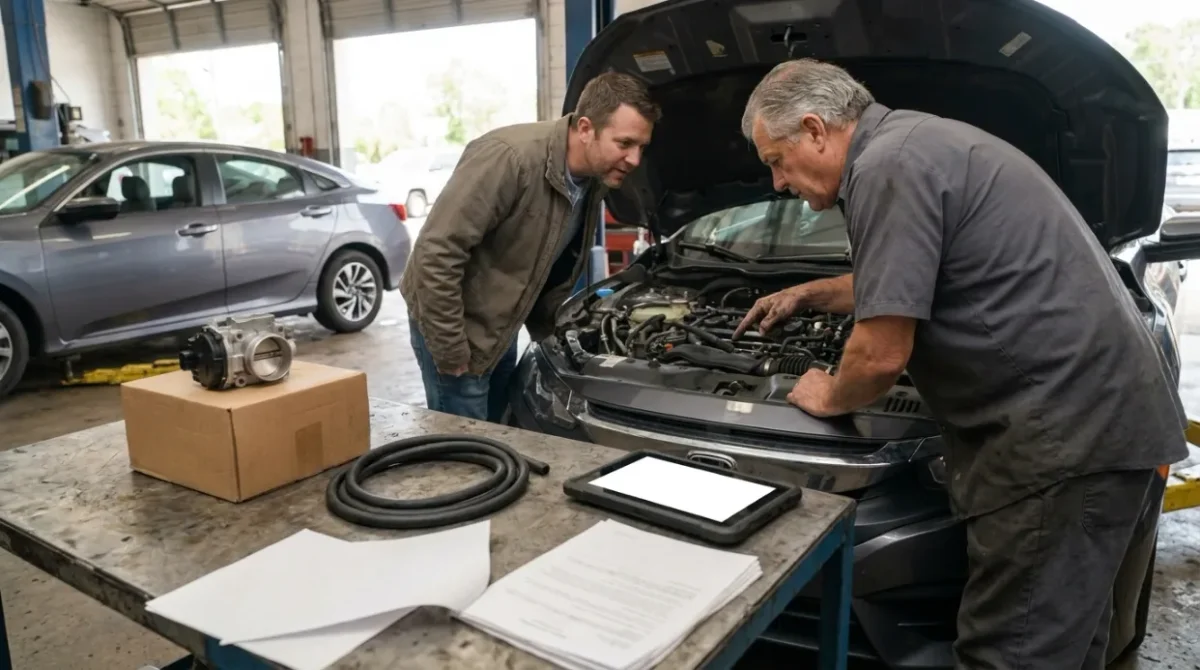
The best way to control P0507 repair cost is to pay for diagnosis before paying for expensive parts. Parts swapping can turn an inexpensive air leak into a costly guessing game.
Start with evidence, not the most expensive component
Before authorizing a throttle body, ask what test showed that it failed. A good estimate should connect the recommended repair to the diagnostic evidence.
- Ask for all codes: Related lean or airflow codes may help explain the P0507.
- Request test results: Ask whether the shop checked for vacuum leaks or used a smoke test.
- Get a written estimate: Separate diagnostic charges, parts, labor, and additional recommended work.
- Compare large repairs: A second opinion can make sense before an expensive throttle or intake repair.
- Verify compatibility: Match replacement components to the vehicle’s VIN and manufacturer information.
Can you fix P0507 yourself?
A careful DIY owner may be able to inspect disconnected hoses, read OBD2 data, or clean an appropriate throttle body. The difficulty increases quickly when smoke testing, electronic throttle diagnosis, or intake disassembly is required.
Never assume a generic online idle-relearn sequence applies to your vehicle. Procedures can change by manufacturer, engine, model year, and software version.
When should you use a professional?
Professional diagnosis makes sense when the leak is hidden, live data is unclear, or the repair involves electronic throttle components. It is also wise when the vehicle behaves unpredictably.
That diagnostic charge can save money. Paying someone to identify a $50 problem is often cheaper than replacing a $500 part that was working correctly.
Section Takeaway: P0507 repair cost depends on the cause, not the code itself. Diagnose airflow and throttle control first, then spend money on the repair the tests support.
P0507 Repair Cost FAQ
How much does it usually cost to fix P0507?
A P0507 repair may range from under $100 for a simple cleaning or minor hose problem to several hundred dollars for an intake leak, IAC valve, or electronic throttle body. Costs vary by vehicle, labor rate, region, and the confirmed cause.
Is P0507 expensive to fix?
Not always. A cracked vacuum hose, PCV issue, or dirty throttle body can be relatively inexpensive. The repair becomes more costly when diagnosis finds a hard-to-reach intake leak or a failed electronic throttle assembly.
Does P0507 mean the throttle body is bad?
No. P0507 only indicates that idle speed is higher than expected. Vacuum leaks, PCV faults, throttle deposits, IAC problems, incorrect sensor inputs, and adaptation issues can produce the same code, so the throttle body should be tested before replacement.
Can a vacuum leak cause P0507?
Yes. A vacuum or intake leak can let extra air enter the engine without passing through the normal airflow-control path. That extra air can raise idle speed and may also create lean-condition symptoms or additional diagnostic trouble codes.
Can a dirty throttle body cause P0507?
It can. Deposits around the throttle plate may interfere with airflow control at idle. Cleaning is appropriate only when inspection supports that diagnosis, and some vehicles require a manufacturer-specified throttle or idle relearn afterward.
Can I clear P0507 with an OBD2 scanner?
Most compatible OBD2 scanners can clear an engine trouble code, but clearing P0507 does not repair its cause. Save diagnostic information first, fix the underlying problem, then clear the code and verify that it does not return.
Should I keep driving with P0507?
Do not ignore it. A short drive may be possible if the vehicle is otherwise stable, but high or surging idle deserves prompt diagnosis. Stop driving if RPM becomes difficult to control, the check engine light flashes, or the vehicle develops severe shaking, smoke, overheating, or other abnormal behavior.
Final Takeaway
P0507 does not come with one fixed repair price because it does not identify one failed component. Your bill depends on whether the real cause is a simple air leak, throttle contamination, an idle-control problem, or a more expensive electronic throttle repair.
Use your OBD2 scanner to gather information, not to guess which part to buy. A proper diagnosis first is usually the cheapest path to getting the idle back under control.
