
Why a Remote Key Won’t Start Your Car: Fast Troubleshooting That Actually Helps

When a remote key won’t start car, the problem usually falls into one of four buckets: the fob battery is weak, the car battery is weak, the fob has lost sync, or the vehicle’s immobilizer/keyless system isn’t recognizing the key properly. In many cases, you can narrow it down pretty quickly without guessing.
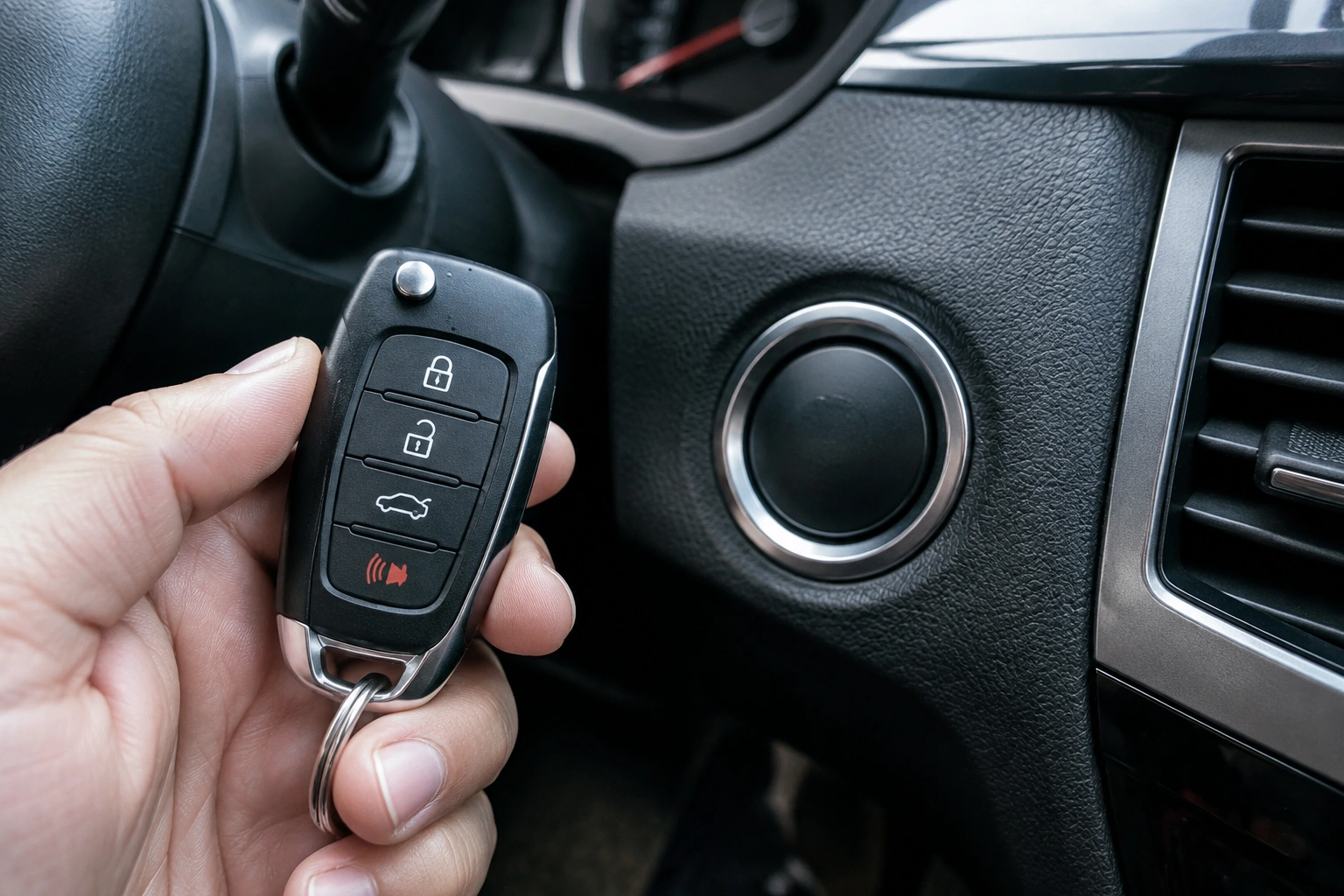
If your car has push-button start, the fob does more than unlock doors. It also has to be recognized by the car before the engine will crank or the start button will do anything useful. That’s why a failure can feel random: one day the car starts normally, and the next day you get a “key not detected” message or a dead push-button response.
A useful first clue is what still works. If the fob still locks and unlocks the doors, the battery may be weak but not dead. If the fob does nothing at all, the issue may be the fob battery, internal damage, or a signal problem. If the dashboard lights are dim or the electronics act sluggish too, the car battery may be the real problem.
Quick diagnosis: what the symptom usually means
A “key not detected” warning often points to one of three things: the fob battery is low, the car isn’t reading the fob clearly, or there’s radio-frequency interference nearby. If the car recognizes the fob sometimes but not every time, that leans toward a weak battery or a sync issue rather than a completely dead fob.
A simple way to separate the likely causes:
- Dead or weak fob battery: remote functions fade first, but a backup start method may still work
- Weak car battery: the dash may not wake normally, lights may be dim, or accessories may be sluggish
- Immobilizer/receiver fault: the dash wakes up, but the car still won’t recognize a known-good key or spare key
If the push-button start does absolutely nothing, check whether the dash wakes up normally. A dead dash, slow accessories, or clicking sounds are more consistent with a weak car battery than a bad key fob. If the dash wakes up but the engine still won’t start, the immobilizer or key recognition system moves higher on the list.
One fast clue: try the spare key if you have it. If the spare starts the car immediately, the original fob is the likely problem. If both keys fail the same way, the issue is more likely on the vehicle side.
Most likely causes, in the order I’d check them
A practical order to check is:
- Weak key fob battery
- Weak car battery or low system voltage
- Fob not being recognized by the car
- Immobilizer, antenna, or receiver issue
- Damaged fob or internal electronic failure
That order matters because it keeps you from replacing expensive parts too early. A battery swap is cheap and quick. A new fob, programming, or a dealer visit costs more and should come later in the process unless the fob is visibly damaged.
For background on how key fobs work and why they can affect starting, the RAC’s overview is a solid general reference: what a car key fob does.
Step 1: Check the key fob battery and basic fob condition
If the car still unlocks with the remote, the fob battery may be low rather than fully dead. That’s the easiest first fix because it’s cheap, fast, and often solves intermittent recognition problems.
Look closely at the fob itself:
- Are the buttons worn flat or sticky?
- Is the case cracked?
- Has the fob been dropped recently?
- Was it exposed to water, rain, or a spilled drink?
Physical damage matters. A fob can have a fresh battery and still fail if the internal board is corroded or the button contacts are damaged. If the buttons feel mushy or the case is swollen, battery replacement alone may not help.
If your fob battery is old or you’ve already seen weak-range symptoms, replace it first. That’s especially true when the car gives a low-fob warning or the fob works only when you’re standing very close to the vehicle.
Step 2: Try the backup start method for a dead or weak fob
Many push-button start vehicles have an emergency start method built into the system. The exact procedure is vehicle-specific, so the owner’s manual is the right place to confirm it. In some cars, you may need to hold the fob at a marked reader area, touch it to the start button, or place it near the steering column so the car can detect the immobilizer chip at very close range.
This works because the car may be able to read the chip even when the fob battery is too weak to transmit normally. In other words, the battery in the fob may be dead, but the transponder or chip can still be recognized at short range.
If your car says “key not detected,” this is often the next move before calling for help. The exact location and procedure matter, though, so don’t assume every car uses the same spot. Check the manual rather than copying a procedure from another vehicle.
If you want a broader explanation of dead-fob starting behavior, this guide may help: how to start a car when the fob battery is dead.
Step 3: Test the car battery and electrical system
A weak car battery can confuse keyless-start systems. The fob may be fine, but the vehicle may not have enough stable voltage to wake up the immobilizer, receiver, or push-button module correctly.
Watch for these signs:
- Dash lights look dim
- Interior lights fade or flicker
- The starter clicks but doesn’t crank
- Power accessories feel slow
- The car behaves oddly after sitting overnight
If several electrical symptoms show up at once, the car battery moves ahead of the fob battery on the suspect list. That’s especially true in cold weather or after the vehicle has been sitting unused.
A simple comparison helps:
- Dead fob battery: remote functions may fail first; the car may still start with a backup method
- Weak car battery: the whole vehicle may act sluggish; the dash and electronics often look weak too
If you’re unsure, don’t keep pressing the start button repeatedly. That can drain the battery further and make the diagnosis messier.
For general battery-related starting issues and safety guidance, the NHTSA has useful consumer information on vehicle electrical and starting concerns: NHTSA vehicle safety guidance.
Step 4: Use the spare key to isolate the problem
The spare key is one of the best diagnostic tools you have. It tells you whether the problem lives in the original fob or in the car.
Here’s the rule:
- Spare starts the car: original fob battery, damage, or programming is the likely issue
- Spare also fails: look at the car battery, immobilizer, receiver, or start system
- Spare works only sometimes: possible weak vehicle battery, interference, or a developing vehicle-side fault
If the spare key works, don’t rush to replace the whole car-side system. If both keys fail, don’t keep buying batteries for different fobs and hoping one will fix it.
Step 5: Decide whether the fob needs reprogramming or replacement
If the battery is good and the fob is physically intact, the next question is whether the car has lost sync with the fob.
Reprogramming is more likely when:
- The fob worked before but stopped after a battery change
- The fob starts the car inconsistently
- The problem began after the vehicle battery went dead or was disconnected
Replacement is more likely when:
- The fob is water-damaged
- The case is cracked and the board may be damaged
- The buttons no longer respond even with a new battery
- The fob fails every test, including the backup start method and spare-key comparison
Here’s the practical comparison:
| Problem | Typical clue | Best next step |
|---|---|---|
| Dead or weak fob battery | Remote functions fade first | Replace the fob battery |
| Weak car battery | Dim lights, slow electronics, multiple warnings | Test or charge/replace the car battery |
| Reprogramming issue | Fob worked before, then stopped after reset or battery swap | Check whether the fob needs syncing |
| Fob replacement | Water damage, cracked case, failed buttons, no response | Replace the fob and program it |
OEM fobs can be the simplest choice on some vehicles, while aftermarket replacements may cost less but can vary in compatibility and setup requirements. If you choose aftermarket, confirm compatibility before buying. For some vehicles, programming support matters as much as the hardware itself.
For a related breakdown of start issues where the fob unlocks the car but won’t start it, see: car won’t start but key fob unlocks doors.
Warning signs that point to immobilizer or vehicle-side faults
If the dash shows repeated “key not detected” messages even with a known-good spare, the issue may be beyond the fob. The vehicle could be having trouble reading the chip, receiving the signal, or communicating with the immobilizer system.
Other warning signs include:
- The car recognizes the fob only when it is held very close
- The start button lights up but nothing happens
- The system works after several tries, then fails again
- Multiple keys act the same way
That pattern usually means the problem is not just a dead battery in one fob. It may involve the car’s receiver, antenna, immobilizer, or low-voltage condition.
When to Consult a Locksmith
Call a locksmith, dealer, or mechanic when the simple checks don’t line up with a clear fob battery issue.
A locksmith is often the best first call if:
- You need the fob tested or programmed
- The spare key also fails
- You suspect the original fob needs replacement
- You want a faster option than a dealer for key-related service
A dealer may be the better route if your vehicle uses a proprietary smart-key system, needs manufacturer-specific programming tools, or requires immobilizer access that independent shops may not have. A mechanic is the right choice when the car battery, charging system, or immobilizer hardware seems to be the real issue.
If the fob is physically damaged, replacement is usually more realistic than repair. If the car battery is weak, fix that first or you may chase a key problem that isn’t really there.
How to prevent the problem from coming back
A few habits make keyless-start problems less likely:
- Replace the fob battery before it fails completely
- Keep the spare key somewhere accessible
- Don’t ignore intermittent “key not detected” warnings
- Protect the fob from water and hard impacts
- Pay attention when the car battery gets weak, because low voltage can create false key issues
If your vehicle uses a smartphone-based key or app features, remember that those systems are model-specific and sometimes subscription-based. They can be useful backups, but they are not universal replacements for a working fob.
FAQ
Can a dead key fob battery still start the car?
Sometimes, yes. Many vehicles have a backup start method that lets the car read the fob at very close range. Check your owner’s manual for the exact procedure for your model.
How do I know if it’s the car battery instead of the fob?
If the dash is dim, accessories are slow, or the car shows multiple electrical symptoms, the car battery is a strong suspect. If only the fob-related functions fail, the problem is more likely on the key side.
Do I need to reprogram the key fob after changing the battery?
Not always. If the fob stops working right after a battery swap, reprogramming may be needed on some vehicles, but many fobs work normally after the battery is replaced.
Is an aftermarket replacement key fob okay?
It can be, but compatibility and programming are the key issues. OEM fobs are often the simpler choice, but the best option depends on the vehicle.
Why does my car say “key not detected” if the battery is new?
A new battery doesn’t rule out a sync issue, physical damage, low car battery voltage, or radio interference. If the spare key works, that helps narrow it down quickly.
What if both keys won’t start the car?
That points away from the fob and toward the vehicle’s battery, immobilizer, receiver, or start system. At that point, a locksmith, mechanic, or dealer is the smarter next step.
Can a weak car battery affect keyless start?
Yes. Low voltage can cause the car to misread the fob or fail to wake the start system properly, even when the fob battery is fine.
Where should I look in the owner’s manual?
Look for sections on emergency starting, smart key operation, or “key not detected” warnings. That’s where the manufacturer usually explains the backup method for your exact vehicle.
