
Where Is the Immobilizer Located in a Car? Parts Explained

The immobilizer is not one box. Its parts are spread out: a transponder chip inside the key head, an antenna ring around the ignition cylinder (or antennas near the start button on push-button cars), and control logic in the engine computer, body control module, instrument cluster or a separate module under the dash.
People usually ask where the immobilizer is because the car will not start, a repair manual mentions it, or they want to understand what a locksmith or mechanic is about to work on. The answer depends on the brand and year, but the layout follows the same pattern on almost every car.
This guide shows where each part usually sits, gives examples by brand, and explains what that means when something goes wrong. For how the system works, read what an engine immobilizer is and how it works.
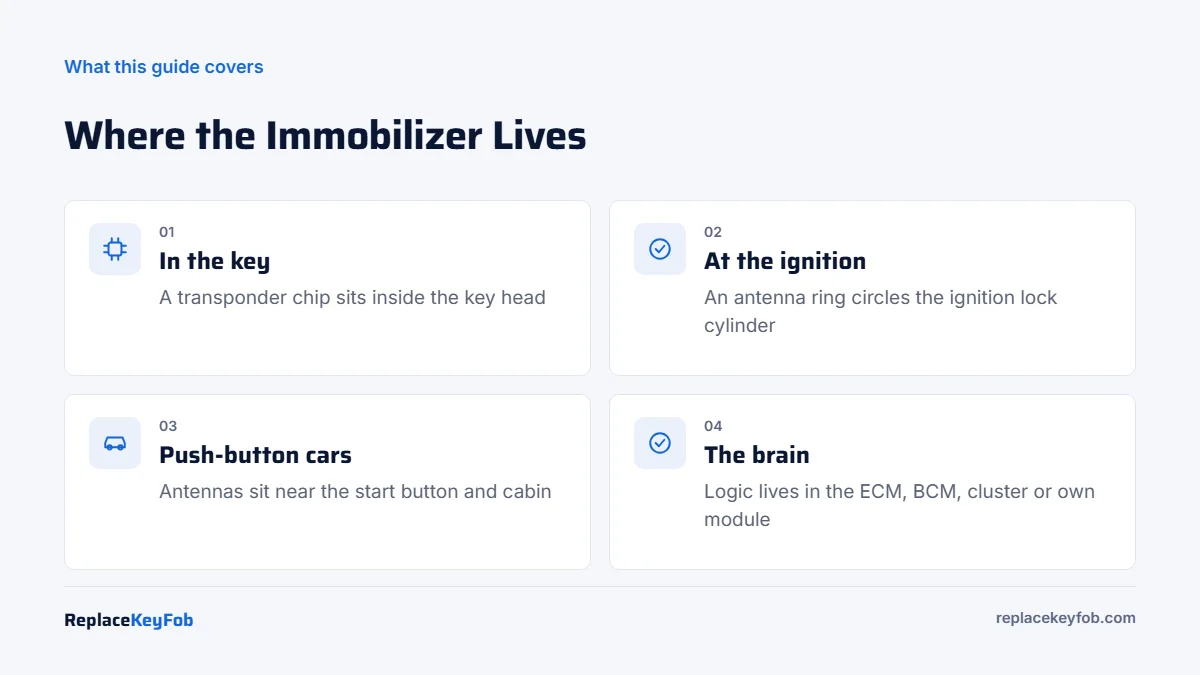
The three places an immobilizer lives
1. In the key
The transponder chip sits inside the plastic head of a transponder key, remote head key or smart fob. On some older keys it is a small glass or carbon capsule you can see if the head is opened. It needs no battery for the immobilizer check, which is why a fob with a dead battery can still start many cars when held in the right place.
2. At the ignition or start button
On turn-key cars, an antenna coil (often called the antenna ring or transceiver) is mounted around the ignition lock cylinder, behind the plastic trim on the steering column. On push-button cars, there is usually an antenna near the start button or a backup slot, plus several antennas in the doors, cabin and rear bumper that find the smart key.
3. In a control module
The logic that stores authorized key IDs and approves the start is in a module. Depending on the vehicle, that can be:
- The engine control module (ECM or PCM), under the hood or behind the dash.
- The body control module (BCM), usually under the dash on the driver or passenger side.
- The instrument cluster, behind the gauges.
- A dedicated immobilizer or keyless module, often under the dash near the steering column, behind the glove box or under a seat or console.
On many modern cars, several modules share the immobilizer data, so replacing one means matching it to the others.
Immobilizer location by brand
These are common layouts. Exact locations vary by model and year, so confirm with a service manual or a dealer for your VIN.
| Brand | Antenna | Control logic (typical) |
|---|---|---|
| Ford, Lincoln (PATS) | Transceiver ring around the ignition cylinder; near the start button or backup slot on push-button models | PCM or instrument cluster on many models, varies by platform |
| GM (Passlock, Passkey III, later systems) | Passlock sensor in the ignition cylinder housing on older models; antenna at the column or start button on later ones | Body control module on many models |
| Chrysler, Dodge, Jeep, Ram | SKIM or SKREEM module at the steering column on older models | Later models use a wireless ignition node or RF hub module |
| Toyota, Lexus | Coil around the ignition cylinder or near the start button | Transponder key ECU on older models; smart key or certification ECU on newer ones |
| Nissan, Infiniti | NATS antenna at the ignition | BCM or Intelligent Key unit on many models |
| Honda, Acura | Antenna at the ignition cylinder | Immobilizer unit or engine computer, depending on year |
| Volkswagen, Audi | Coil at the ignition | Often the instrument cluster on older generations, shared with the engine computer |
| BMW | Ring antenna at the ignition on older models | EWS module under the dash, later CAS or FEM/BDC modules |
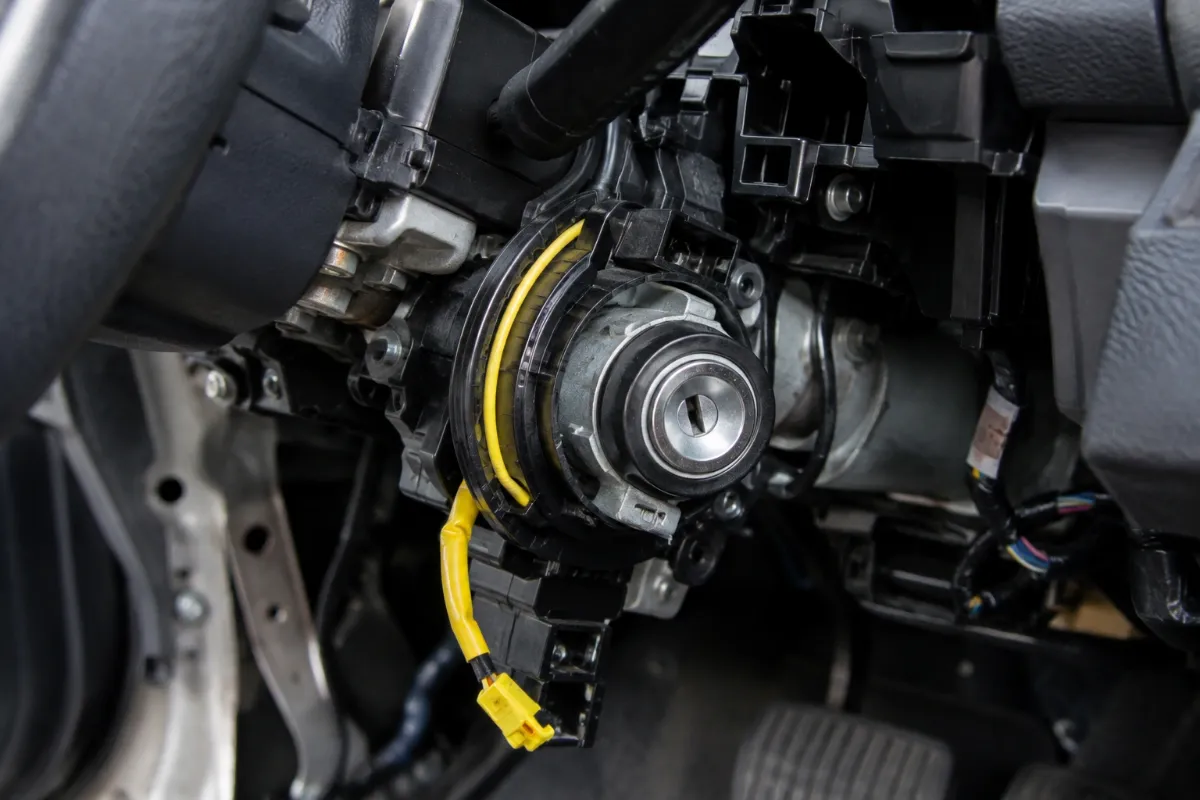
How to find the immobilizer on your car
- Look at the steering column. On a turn-key car, the antenna ring sits right behind the ignition key slot. Removing the lower column cover usually exposes it.
- Check the owner’s manual for the smart key backup location. That spot marks where the backup antenna is.
- Use a service manual or repair database for module locations. Search for the system name (PATS, SKIM, NATS and so on) plus your model.
- Scan the modules. An OBD2 scanner that lists every module can show which ones report immobilizer codes. Our guide to where the OBD2 port is located helps you get connected.
Avoid unplugging modules with the battery connected, and never swap in a used module without planning for programming. A module from another car will not know your keys.
If you are only trying to reach the antenna ring, disconnect the battery first and handle the connector gently, since the wires are thin and easy to break.
OBD2 Key Programmer With Immobilizer Functions
A tool that reaches the immobilizer and body modules can read related codes and add keys. Confirm your exact vehicle is on the coverage list before buying.
As an Amazon Associate, ReplaceKeyFob earns from qualifying purchases.
Which part has failed? Clues by location
| Clue | Most likely location of the fault |
|---|---|
| Spare key works, main key does not | The key: chip damaged, cracked head or weak fob battery |
| No key works, worse in heat or cold, comes and goes | The antenna ring or its connector at the ignition |
| Push-button car starts only with the fob held to the button | The fob battery or the cabin antennas |
| Fault started after a module, cluster or ECU replacement | The new module is not matched to the immobilizer |
| Several warning lights and communication codes at once | Wiring, power or ground to the modules, or a low 12V battery |
Working through these clues in order, from the key outward, avoids paying for a module when a battery or antenna was the real problem.
What it means for you
- Car will not recognize the key: the problem can be in any of the three places. Start with the key itself, then the antenna, then the modules. See how to fix an immobilizer problem.
- “Hold key near start button” message: the car is asking you to use the backup antenna, usually because the fob battery is weak. See car says hold key near start button.
- After an ignition cylinder or column repair: a damaged or unplugged antenna ring is a common cause of a new immobilizer fault.
- After a module replacement: the new module must be programmed to the immobilizer and keys. That is dealer or locksmith work.
- Want more protection: an aftermarket system adds a second, hidden barrier. Compare options in best aftermarket vehicle immobilizers.
Need a new key? Our guide to programming a key fob yourself explains the options, and how to reset the immobilizer system covers the quick fixes.
Frequently Asked Questions
It is spread across three places: a chip in the key, an antenna around the ignition cylinder or near the start button, and control logic in the engine computer, body control module, instrument cluster or a separate module under the dash.
Inside the plastic head of the key or inside the smart fob housing. On some older keys it is a small capsule that can fall out if the head cracks.
Removing or bypassing a factory immobilizer reduces theft protection, can affect insurance and is not recommended. Fix the faulty part or program a working key instead.
On some vehicles the immobilizer logic is in the engine computer, and on others it is in the body control module, the instrument cluster or a separate module. In most cars the engine computer at least takes part in the check.
Typical signs are that no key works, the fault is intermittent, and the security light flashes. A scan tool may show an antenna or transponder communication code.