
Best Aftermarket Vehicle Immobilizers: Options Compared

The best vehicle immobilizer system depends on the threat. Best overall: a professionally installed alarm with a starter-kill relay. Best value: a well-hidden kill switch. Best against keyless relay and OBD key-programming theft: a CAN bus immobilizer that requires a PIN, paired with an OBD port lock. Layering two of these works better than any single device.
A factory immobilizer stops a car from starting without a programmed key. That stopped casual theft for years, but thieves adapted: relay attacks on keyless entry cars, programming new keys through the OBD2 port, and targeting models that shipped without immobilizers at all. An aftermarket immobilizer adds a second check that the thief does not expect.
This guide compares the main types of aftermarket vehicle immobilizer systems, who each one suits, and what to check before you buy or book an installer. For the basics of the factory system, see what an engine immobilizer is and how it works.
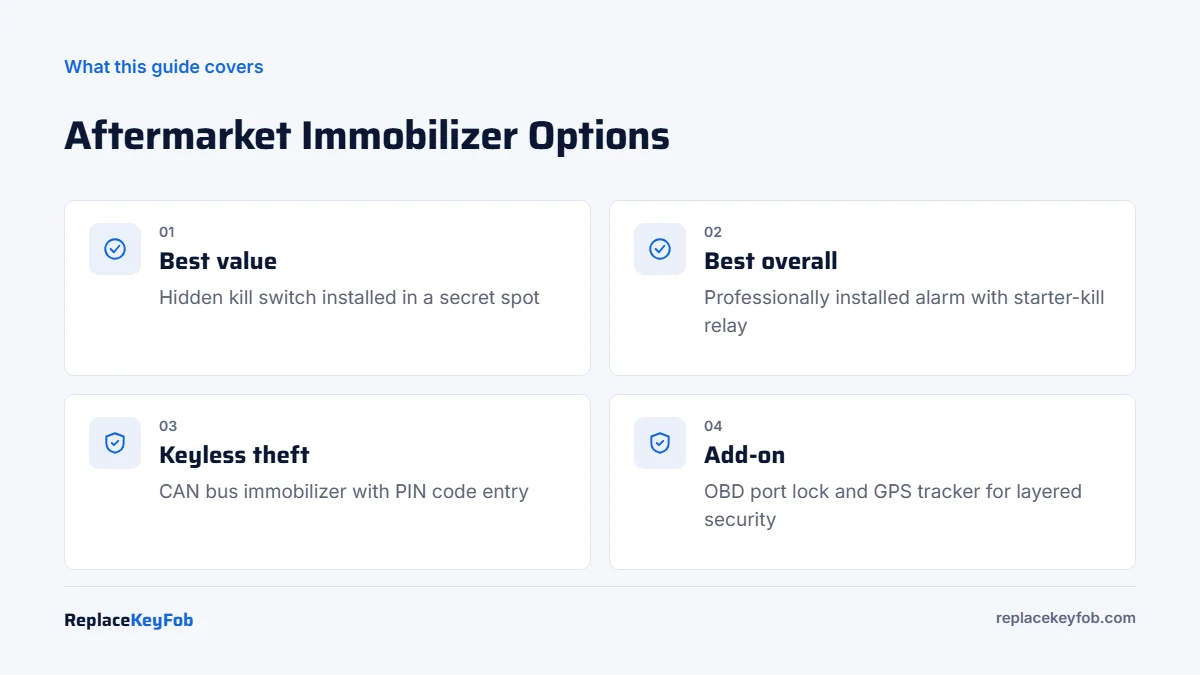
Aftermarket immobilizers compared
| Type | How it stops the car | Best against | Install |
|---|---|---|---|
| Hidden kill switch | Interrupts the starter or fuel pump circuit until a hidden switch is set | Joyriders and hot-wiring, older cars | DIY for experienced owners, or an installer |
| Alarm with starter-kill relay | Blocks the starter while armed; adds siren and sensors | Break-ins and opportunistic theft | Professional |
| CAN bus immobilizer | Blocks starting through the car’s data network until a PIN or tag is presented | Relay attacks, cloned keys, OBD key programming | Professional, model-specific |
| GPS tracker with starter disable | Lets you block restarting remotely on supported units; tracks location | Recovery after theft | Installer or plug-in |
| OBD port lock | Physically blocks access to the diagnostic port | Thieves programming new keys through OBD2 | DIY |
| Steering wheel or pedal lock | Visible mechanical lock, not an electronic immobilizer | Deterrence | None |
What is a vehicle immobilizer system?
A vehicle immobilizer system prevents the engine from starting or running unless an authorized key, tag or code is present. Factory systems check a chip in your key. Aftermarket systems add a separate check, such as a hidden switch, a PIN entered on the car’s own buttons, or a tag you carry. Because thieves plan around the factory system, a second, unknown barrier is what makes aftermarket units effective.
Hidden kill switch: best value
Pros: very low cost, no subscription, and effective against thieves who expect a normal car. Nothing is visible from outside.
Cons: you must remember to set it every time. A poorly installed switch on a starter or fuel pump circuit can cause reliability problems, and on modern cars a fuel pump interrupt can set fault codes. It does not stop the car being towed.
Who it suits: older vehicles, project cars and owners comfortable with wiring, or anyone who wants an installer to add a cheap extra layer.
Alarm with starter-kill: best overall
Pros: brands such as Viper, Python and Compustar offer systems that combine an alarm, shock and door sensors, remote start options and a starter-kill relay. The relay blocks cranking while the system is armed. Professional installation keeps the factory warranty concerns and wiring quality in check.
Cons: the installer’s skill matters a lot. Cheap installs cause electrical faults. Some systems add a remote you need to carry or connect to the factory fob.
Who it suits: most daily drivers, especially if you also want remote start. Ask whether the starter-kill is included, since it is sometimes an add-on.
CAN bus immobilizer: best for keyless cars
Pros: devices such as the Autowatch Ghost and IGLA connect to the car’s data network and block starting until you enter a PIN using existing buttons (steering wheel, window switches) or carry a tag or phone. Since there is no extra visible wiring or fob, a thief with a relayed or newly programmed key still cannot drive away.
Cons: higher cost, model-specific compatibility, and availability in the US is more limited than in the UK and Europe. Use a certified installer.
Who it suits: owners of high-theft keyless models, such as popular trucks, SUVs and performance cars, where relay and OBD attacks are common.
GPS tracker and OBD port lock: best add-ons
A GPS tracker does not stop the theft, but it greatly improves recovery, and some units let you disable restarting once the car is parked. An OBD port lock is a cheap physical cover that stops thieves plugging in a key programmer. Both pair well with any of the systems above.
Protect the key itself
Relay attacks work by picking up the signal from a smart key inside your home and passing it to the car. Two free or cheap habits make them much harder:
- Store keys away from doors and windows, so the signal is weaker from outside.
- Use a signal-blocking pouch or box at home. Test it by walking up to the car with the key inside; the doors should not unlock. Our article on whether a metal key fob case blocks the signal explains how to check.
- Turn off keyless entry if your car or key allows it. Some fobs have a sleep mode activated by a button sequence; the owner’s manual will say.
None of these replace an immobilizer, but they remove the easiest attack. If an aftermarket system or a theft attempt leaves the car refusing to start, our guide to resetting the immobilizer system covers the first checks.
How to choose and save
- Identify how cars like yours are stolen. Keyless relay, OBD key programming and missing factory immobilizers all point to different solutions.
- Check compatibility by year, model and trim. CAN bus devices in particular are vehicle-specific.
- Use a reputable installer and ask for written details of what was wired and where.
- Ask your insurer whether an approved immobilizer or tracker earns a discount.
- Owners of affected Hyundai and Kia models should ask a dealer about the free anti-theft software update before buying anything.
Car Anti-Theft Kill Switch
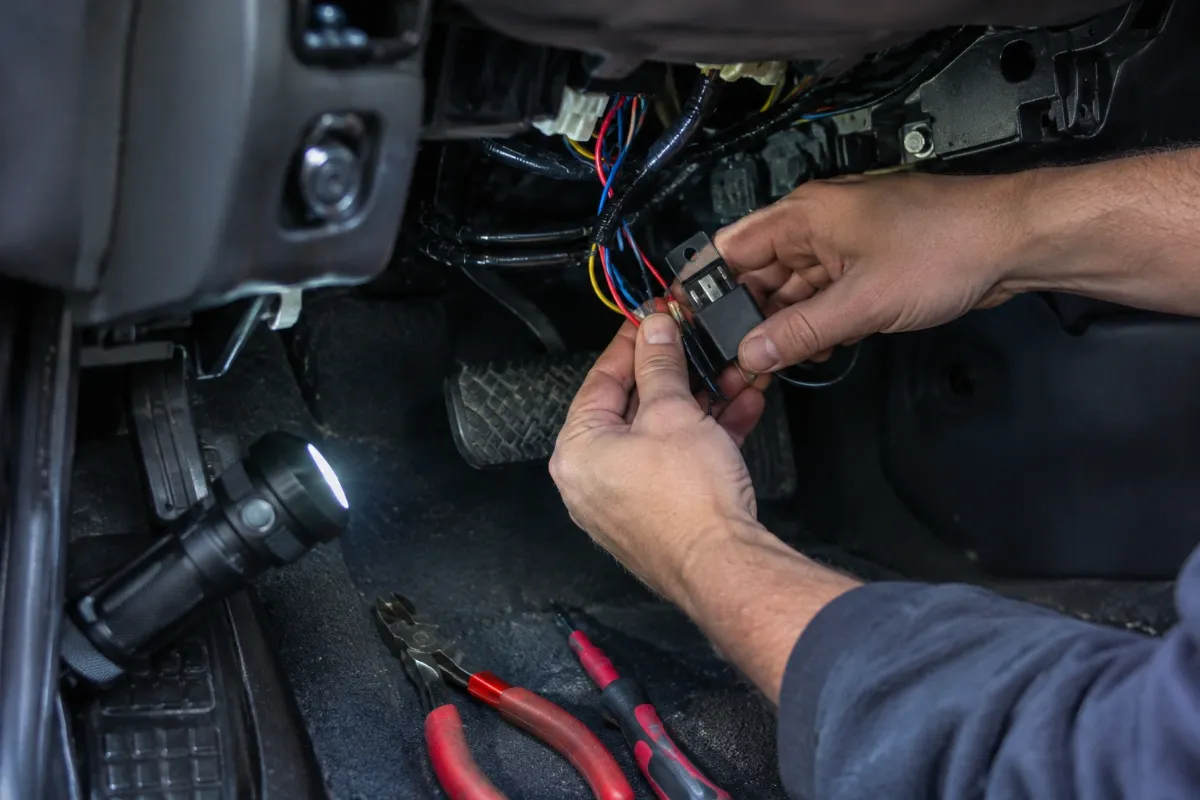
Check the relay’s current rating against the circuit you plan to interrupt, and have it installed by someone comfortable with automotive wiring.
As an Amazon Associate, ReplaceKeyFob earns from qualifying purchases.
Checklist before you buy
- The device is listed as compatible with your exact vehicle.
- You know whether it needs a fob, a PIN, a tag or a phone, and what happens if you lose it.
- There is an emergency override procedure, kept somewhere safe.
- The installer is certified for the product and will document the install.
- It does not interfere with your factory key. If start problems appear after an install, see how to fix an immobilizer problem.
- You still carry a working spare key. Our key fob programming guide explains adding one.
If a key is lost or stolen, have it removed from the car’s memory as well. See can you deactivate a lost car key.
Frequently Asked Questions
For most drivers, a professionally installed alarm with a starter-kill relay. For keyless cars targeted by relay or OBD attacks, a CAN bus immobilizer with a PIN is stronger. A hidden kill switch is the best low-cost option.
Often, yes, on high-theft models. Thieves have tools for factory systems, so a second, unexpected barrier adds real protection.
Adding a part does not automatically void a warranty, but damage caused by a poor install may not be covered. Use a reputable installer and keep the paperwork.
It can, because a relayed or cloned key will not close the hidden circuit. You must remember to set it every time you park.
A simple kill switch or OBD lock is DIY for experienced owners. Alarms and CAN bus immobilizers are best installed by a certified professional.