
How to Dispose of and Recycle a Key Fob Battery Safely

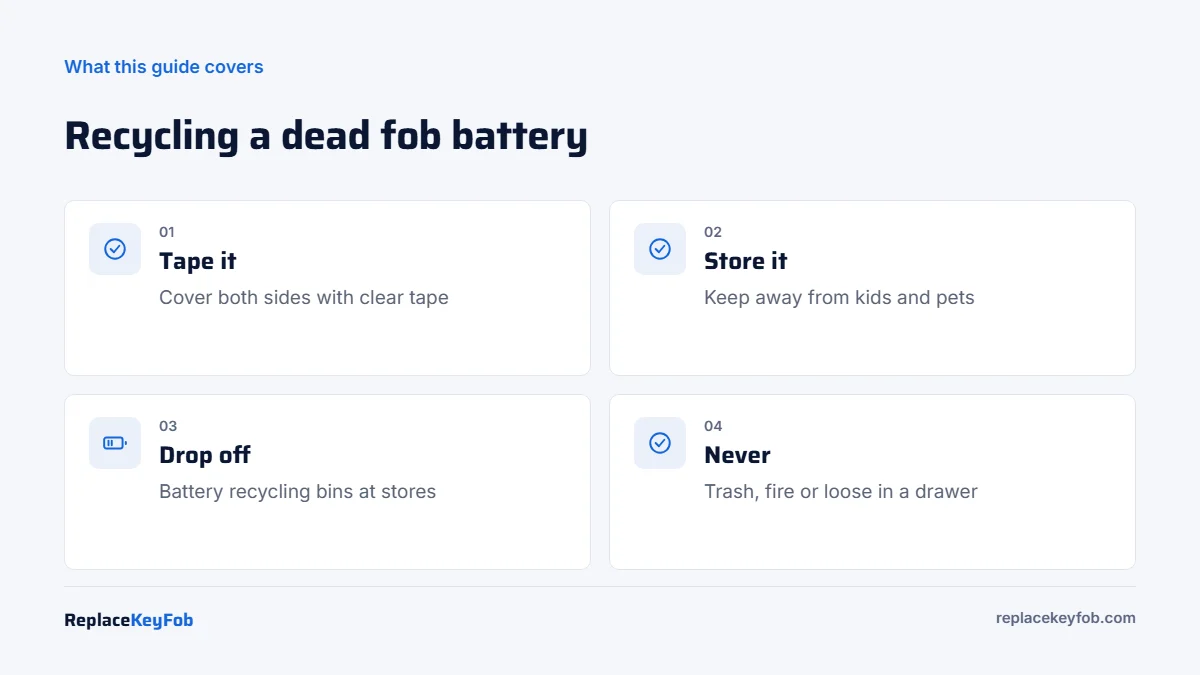
Wrap the battery terminals in clear tape to prevent short circuits before taking them to a designated electronics recycling drop-off site. Never discard these batteries in your standard household trash to avoid fire hazards and environmental contamination.
When your key fob stops responding, the immediate focus is usually on getting back into your vehicle. However, once you successfully perform a replace battery task, you are left with a small, spent lithium coin cell. Proper disposal of these batteries is a critical part of vehicle maintenance that is often overlooked.
- Identify correctly: Check your owner’s manual for the specific battery type required for your fob.
- Prevent shorts: Always tape the battery terminals to stop potential fires during transport and storage.
- Use kiosks: Utilize local electronics retail stores for convenient and safe battery recycling drop-offs.
- Seek help: Contact a professional locksmith if you encounter security lockouts or complex programming issues.
The Environmental Impact of Key Fob Batteries: Why Proper Disposal Matters
Key fob batteries, typically lithium coin cells, contain heavy metals and chemicals that can be hazardous if they end up in a landfill. When these batteries corrode in standard waste streams, they risk leaking toxic substances into the soil and water supply. Because these batteries are small, many users mistakenly assume they are harmless to toss in the trash, but their cumulative environmental footprint is significant.
Responsible disposal ensures that the valuable metals inside the battery are recovered and that harmful components are neutralized. By following a proper key fob battery disposal guide, you are contributing to a circular economy that prioritizes safety and environmental stewardship.
Identifying Your Key Fob Battery Type: CR Series and Beyond
Before you can recycle your battery, you must identify it. Most modern vehicles utilize lithium coin cells from the CR series, such as the CR2032 or CR2025. You can often find the specific type printed directly on the face of the battery or inside the fob shell.
Matching Your Battery to Your Vehicle’s Make, Model, and Year
Battery requirements vary significantly by manufacturer. For instance, a Toyota battery might require a different voltage or thickness compared to a Honda battery. Always consult your owner’s manual or a reliable battery chart to verify which cell your specific vehicle uses.
Understanding FCC ID and Internal Battery Specifications
The FCC ID on your fob helps identify the remote’s hardware, which can sometimes provide clues about the battery compartment design. While the FCC ID won’t tell you the battery type directly, it helps when researching specific maintenance requirements for your unique keyless entry system.
Step-by-Step Guide: Safely Removing Your Dead Key Fob Battery
Removing a battery requires patience to avoid damaging the delicate internal circuit board.
Find a clean, flat surface with good lighting to ensure no small components are lost during the process.
Use a plastic pry tool to gently pop the seams of the fob. Avoid using metal screwdrivers that can scratch or crack the plastic housing.
Tools Required and Opening the Fob Shell Without Damage
The most important tool is a non-marring pry tool. If your fob has a small screw holding the case together, keep a precision screwdriver set handy. For those interested in learning more about the process, our replace battery myself resource provides deeper insights into handling these delicate components.
Handling Lithium Coin Cells: Safety Protocols and Leak Prevention
Lithium batteries can be dangerous if punctured or short-circuited. Always handle them by the edges rather than the flat sides. If you notice any signs of corrosion or leakage, wear gloves to prevent skin irritation and place the battery in a sealed plastic bag immediately.
Where to Recycle Key Fob Batteries: Local and National Resources
Never place these batteries in your regular curbside recycling bin, as they can cause fires in collection trucks or processing centers.
Drop-off Locations: Retailers, Community Centers, and Hazardous Waste Sites
Many large electronics retailers and home improvement stores offer specialized kiosks for battery recycling. Check your local municipal website for “household hazardous waste” drop-off events, which are specifically designed to handle electronics and batteries.
Mail-in Recycling Programs for Automotive Electronic Components
If you live in a remote area, consider mail-in programs. Programs such as Call2Recycle in the US and Canada list drop-off points and offer mail-in options for batteries. This is a convenient way to ensure your spent cells are processed by certified facilities.
Common Mistakes to Avoid When Disposing of Key Fob Electronics
The most common mistake is assuming that “dead” batteries are inert. Even if a fob no longer unlocks the car, the battery may still hold enough charge to create a spark.
Why You Should Never Throw Fob Batteries in Household Trash
Household trash is compressed and transported in ways that can rupture lithium cells. This creates a significant fire hazard for sanitation workers and waste management facilities.
Preventing Fire Hazards: Taping Terminals and Safe Storage Practices
Before recycling, cover both flat sides of the coin cell with clear tape. On a coin cell the positive side wraps around the edge, so taping both faces is the safe way to insulate it. This prevents the metal contacts from touching other batteries or conductive surfaces during storage and transport, significantly reducing the risk of a short circuit.
Coin cells like the CR2032 are a serious swallowing hazard for young children, and even a “dead” cell can cause internal burns. Keep used fob batteries in a closed container out of reach until you recycle them. If you think a child swallowed one, get emergency medical help right away.
When to Seek Professional Help: Locksmiths, Dealers, and Battery Replacement
If you are struggling to open your fob or if the battery appears to be leaking, stop immediately. Attempting to force a damaged fob apart can lead to costly repairs.
Troubleshooting Persistent Power Issues After Battery Changes
If your fob still fails to work after a fresh battery installation, there may be internal damage or a synchronization issue. You might be experiencing battery working after displacement issues, or the fob may simply need to be reprogrammed to the vehicle.
Programming Limits and Security Considerations During Fob Maintenance
If you have lost all keys, or if your vehicle’s anti-theft system has locked you out, a simple battery change won’t suffice. In these cases, you must contact a qualified automotive locksmith or your dealership to handle the security-sensitive programming required to pair the fob to the car’s immobilizer system.
Choosing Sustainable Power: Comparing Battery Longevity and Disposal Ease
Not all batteries are created equal. High-quality, name-brand lithium cells often last longer, meaning fewer replacements and less waste over the life of your vehicle. When you where batteries are purchased, prioritize reputable brands to ensure a consistent power supply.
Final Recap: Your Role in Responsible Automotive Electronics Management
Properly disposing of your key fob battery is a small but meaningful step toward protecting our environment. By identifying the correct battery, using safe handling practices, and utilizing certified recycling centers, you ensure that your vehicle maintenance is as sustainable as it is effective. Keep your signs battery awareness high, and always prioritize safety during every step of your automotive care.
Frequently Asked Questions
No, you should never throw lithium coin batteries in the regular trash. They can cause fires in garbage trucks or processing facilities and contain materials that should be recycled properly.
Place a piece of clear tape over the positive terminal to prevent short-circuiting. Store them in a cool, dry place inside a plastic bag until you can drop them off at a recycling center.
Check your owner’s manual or look at the markings on the old battery itself. You can also search for your vehicle’s make and model on our site to find the specific battery size.
The battery might be installed with the wrong polarity, or the fob may need to be reprogrammed. If the issue persists, the fob might have internal damage or a synchronization error.
Most key fob battery replacements are simple DIY tasks. However, if your fob is sealed or requires specialized programming, you should contact a qualified locksmith or your dealership.
If you have lost all keys, you must contact a professional automotive locksmith or your dealership. They have the equipment to access the vehicle’s security system and program new keys.