
How to Fix P0133 Without Replacing the Wrong Part

To fix P0133, scan the vehicle, confirm Bank 1 Sensor 1, inspect the oxygen sensor wiring, check for exhaust or vacuum leaks, review live O2 sensor data, then replace the upstream oxygen sensor only after testing proves it responds slowly.
- Start with freeze-frame data.
- Inspect wiring before parts.
- Check exhaust leaks first.
- Test sensor response warm.
- Clear codes and drive.
A P0133 code feels simple because the scan tool points at an oxygen sensor.
The trap is replacing that sensor before checking what made the signal slow. A leak, bad ground, dirty mass airflow sensor, weak fuel pressure, or damaged connector can create the same slow-response pattern.
This takes about 8 minutes to read. By the end, you’ll know the right order to test, fix, and confirm the repair.
Key insight: P0133 does not always mean the oxygen sensor is dead. It means the engine computer sees the upstream oxygen sensor signal changing too slowly.
P0133 Code Meaning and What Bank 1 Sensor 1 Means
P0133 means the upstream oxygen sensor on Bank 1 is responding too slowly for the powertrain control module.
Bank 1 is the side of the engine that contains cylinder number 1. Sensor 1 is the oxygen sensor before the catalytic converter, close to the exhaust manifold.
This upstream sensor helps the powertrain control module adjust the air-fuel ratio. When the sensor signal lags, the computer cannot correct fuel delivery fast enough.
That lag can increase fuel use, raise emissions, and cause hesitation. The EPA explains that OBD systems monitor emission-related components and readiness status, which is why an oxygen sensor fault can affect inspection results through the EPA OBD monitor readiness guidance.
The practical meaning: fix the cause of the slow signal, not just the code name.
Quick P0133 Fix Order That Avoids Guesswork
The best fix order is scan, inspect, test, repair, clear, and confirm.
Do not start with the oxygen sensor box at the parts counter. Start with proof.
- Read all stored and pending codes.
- Save freeze-frame data.
- Confirm Bank 1 Sensor 1 location.
- Inspect the connector and wiring.
- Check exhaust leaks before the sensor.
- Review live O2 sensor switching.
- Replace the sensor only after failed testing.
This order works because P0133 is a response problem. A response problem can come from the sensor, circuit, exhaust stream, intake air, or fuel control.
Tip: Take a phone photo of freeze-frame data before clearing the code. That data shows engine load, speed, temperature, and fuel trim when P0133 set.
Check These Causes Before Replacing the O2 Sensor
The oxygen sensor is the common failure point, but it is not the only cause.
A slow upstream oxygen sensor signal can come from contamination, wiring resistance, exhaust leaks, intake leaks, poor fuel pressure, or a dirty mass airflow sensor.
| Cause | Why It Triggers P0133 | Best Check |
|---|---|---|
| Aged upstream O2 sensor | The sensor element reacts slowly to exhaust oxygen changes. | Live data or scope response test. |
| Exhaust leak before sensor | Outside air changes oxygen readings before the sensor reports. | Listen cold and inspect manifold joints. |
| Damaged wiring or connector | Signal delay or voltage drop reaches the PCM. | Wiggle test and voltage check. |
| Vacuum or intake leak | Unmetered air creates false lean readings. | Smoke test or fuel trim review. |
| Dirty MAF sensor | Wrong airflow data leads to wrong fuel correction. | Check grams per second and trims. |
The table shows why the repair must follow the signal path. Sensor replacement works when the sensor is slow, not when the engine data feeding it is wrong.
How to Diagnose P0133 Step by Step
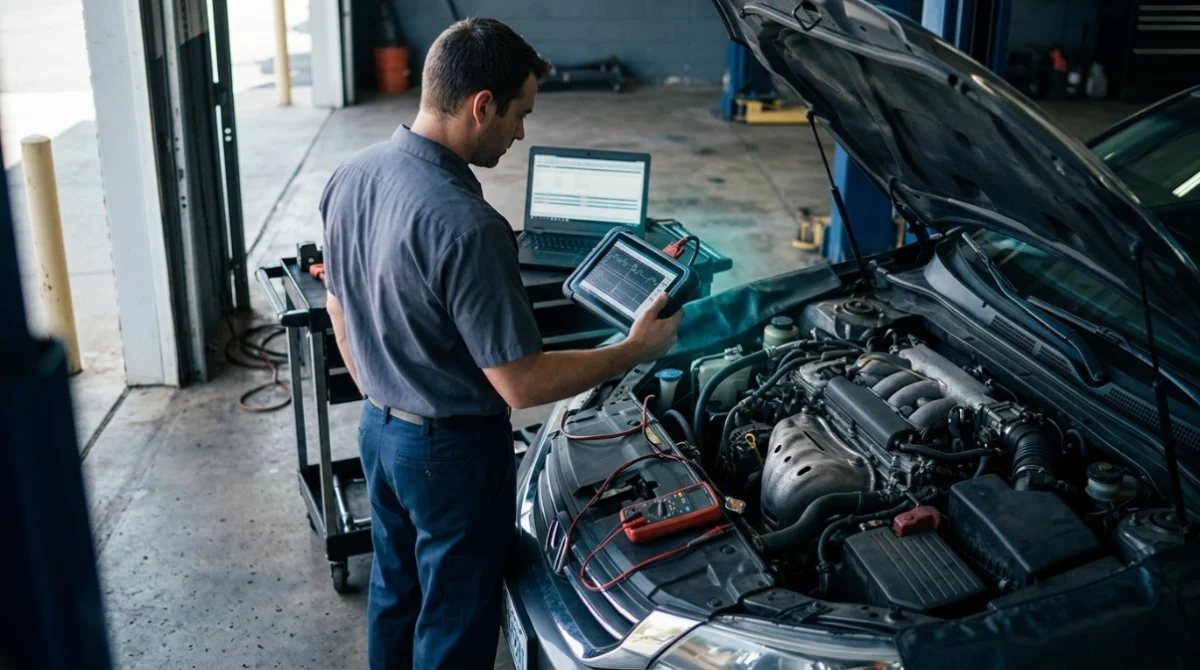
Diagnose P0133 with the engine fully warm and in closed loop.
A cold engine does not give a fair oxygen sensor test. The upstream oxygen sensor must reach operating temperature before the PCM uses its signal for fuel control.
Step 1: Scan Codes and Freeze-Frame Data
Read every code before clearing anything.
A P0133 code with lean codes, misfire codes, heater circuit codes, or MAF codes changes the repair path. Freeze-frame data shows the conditions that caused the slow response.
Look for coolant temperature, RPM, load, short-term fuel trim, and long-term fuel trim. High positive fuel trim points toward unmetered air or low fuel delivery.
Step 2: Inspect Bank 1 Sensor 1 Wiring
Inspect the upstream oxygen sensor harness before touching the sensor.
Heat from the exhaust can harden insulation, melt loom, loosen terminals, and create weak signal paths. Oil contamination inside the connector can also slow or distort voltage changes.
Move the harness gently while watching live data. A jumping signal during movement points toward a wiring or connector fault.
Step 3: Check Exhaust and Vacuum Leaks
Check exhaust leaks before the upstream sensor and intake leaks after the mass airflow sensor.
An exhaust leak can pull outside air into the pipe. An intake leak can add unmetered air after the airflow sensor.
Both faults confuse the air-fuel calculation. That confusion makes a healthy oxygen sensor look slow.
Warning: Do not remove a hot oxygen sensor without proper tools. Exhaust threads strip faster when the sensor binds in the bung.
Step 4: Test Live O2 Sensor Response
A good narrowband upstream oxygen sensor switches lean-rich after the engine warms up.
On many vehicles, the signal moves between low voltage and high voltage as the PCM adjusts fuel. A lazy sensor moves slowly, hangs high, hangs low, or fails to respond when throttle changes.
Use a scan tool with live data. A lab scope gives the cleanest answer because it shows response speed, not just a delayed scan-tool refresh.
IMAGE SUGGESTION: Show an OBD scanner displaying Bank 1 Sensor 1 voltage and fuel trim values beside an oxygen sensor on a workbench.
ALT TEXT: how to fix P0133 using live oxygen sensor data on a scan tool
When Replacing the Oxygen Sensor Fixes P0133
Replace Bank 1 Sensor 1 when the sensor fails response testing or shows contamination.
Common signs include slow voltage switching, a signal stuck rich or lean, physical damage, white chalky deposits, black soot buildup, or oil contamination on the sensor tip.
Use the correct upstream sensor for the vehicle. Some vehicles use a narrowband oxygen sensor, while others use a wideband air-fuel ratio sensor.
Do not install a universal sensor when the vehicle requires an exact-fit sensor. Spliced wires add failure points near heat, moisture, and vibration.
Best repair choice: use an OEM-quality exact-fit upstream sensor and inspect the connector before installation.
What Most People Get Wrong About P0133
Most people treat P0133 as a parts code.
That belief wastes money because the code describes a slow signal, not a confirmed dead sensor.
- Wrong belief 1: Clearing the code fixes the problem. The light returns when the PCM sees the same slow response again.
- Wrong belief 2: Downstream oxygen sensors cause P0133. P0133 usually points to Bank 1 Sensor 1, the upstream sensor.
- Wrong belief 3: A new sensor always solves it. Exhaust leaks, wiring faults, and fuel issues can trigger the same code.
What most people don’t think to ask is whether the sensor is slow or the engine is feeding it bad information. That question separates a real diagnosis from a parts swap.
Can You Drive With P0133?
You can drive a short distance with P0133 if the engine runs smoothly and no warning lights flash.
Do not ignore the code for weeks. Poor fuel control can reduce fuel economy, raise emissions, and stress the catalytic converter if the engine runs rich for too long.
Stop driving and diagnose sooner if you notice rough idle, misfires, sulfur smell, black exhaust smoke, poor acceleration, or a flashing check engine light.
Before paying for a repair, check whether your vehicle has an open recall or manufacturer campaign. The NHTSA VIN recall lookup shows recall status by VIN.
Tip: If an emissions test is due soon, repair P0133 before inspection. The oxygen sensor monitor must run again after codes are cleared.
P0133 Repair Decision Guide
Your next move depends on what testing shows.
If the oxygen sensor signal is slow after the engine warms up, replace Bank 1 Sensor 1 with the correct upstream sensor.
If fuel trims are high and the sensor responds normally, check for intake leaks, exhaust leaks, MAF errors, and low fuel pressure.
If moving the harness changes the signal, repair wiring or connector terminals before replacing the sensor.
If the code returns after sensor replacement, review freeze-frame data again. The first repair did not address the root cause.
Simple rule: sensor failure gets a sensor. System failure gets diagnosis.
How to Confirm the P0133 Repair Worked
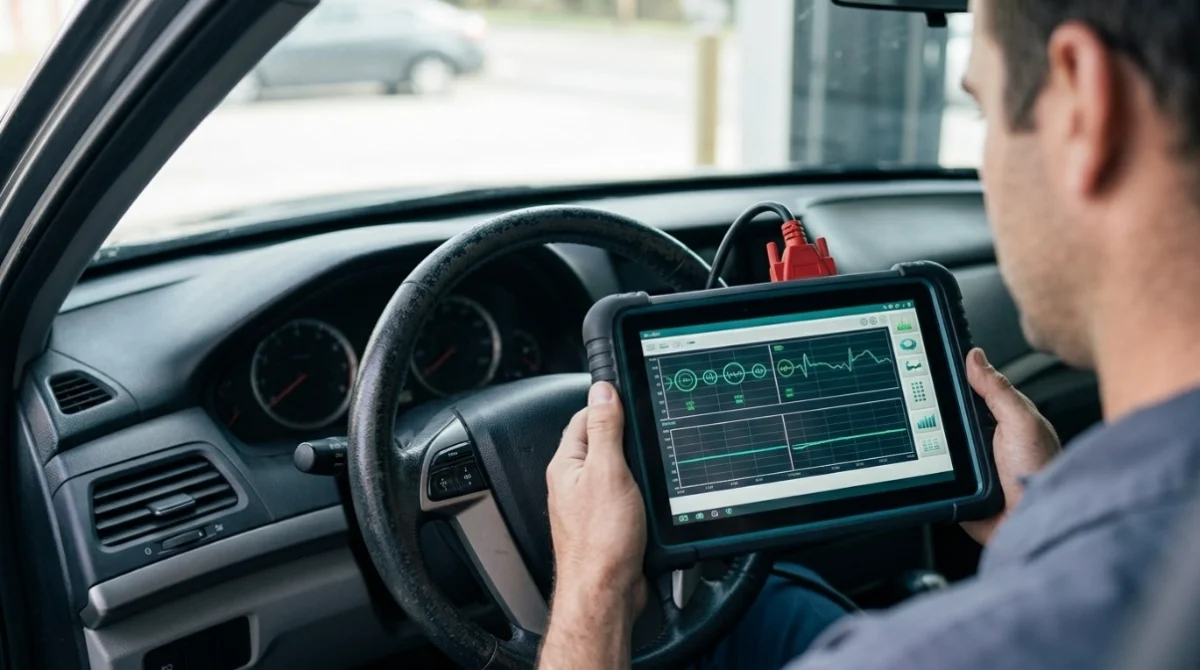
Confirm the fix by clearing codes and completing a proper drive cycle.
Start the engine cold, let it reach operating temperature, drive at steady speed, include light acceleration, then recheck codes and readiness monitors.
The check engine light staying off for one short trip is not enough. The PCM must rerun the oxygen sensor monitor under the right conditions.
Check three things after the drive: no pending P0133, normal fuel trims, and oxygen sensor monitor complete. That final check proves the repair, not just the reset.
IMAGE SUGGESTION: Show a technician checking completed OBD readiness monitors after a P0133 repair.
ALT TEXT: how to fix P0133 and confirm oxygen sensor monitor readiness after repair
P0133 is fixed by proving why Bank 1 Sensor 1 responds slowly, then repairing that exact cause.
Modern scan tools make this easier because fuel trim, live oxygen sensor data, and readiness monitors show the whole fuel-control story.
Take 2 minutes now to scan all codes and save freeze-frame data before clearing anything.
Frequently Asked Questions
Will P0133 clear itself after replacing the oxygen sensor?
P0133 can clear after the correct repair and a completed drive cycle. The PCM must test the oxygen sensor again under proper temperature, speed, and load conditions before the monitor passes.
Is P0133 always Bank 1 Sensor 1?
P0133 usually refers to Bank 1 Sensor 1 on most OBD-II vehicles. Always confirm with vehicle-specific service data because engine layout and scan-tool descriptions can vary by manufacturer.
Can a dirty air filter cause P0133?
A dirty air filter alone does not usually trigger P0133. A dirty MAF sensor, intake leak, or airflow measurement problem can affect fuel control and make the upstream oxygen sensor response look wrong.
Can bad spark plugs trigger P0133?
Bad spark plugs can contribute to P0133 when misfires disturb exhaust oxygen levels. If misfire codes appear with P0133, repair the misfire first before judging the oxygen sensor.
Do I need a mechanic to fix P0133?
You can handle basic checks with an OBD-II scanner, visual inspection, and simple hand tools. A mechanic is the better choice when live data, wiring checks, exhaust leaks, or fuel pressure testing are needed.
