
P0155 Causes — Why the Oxygen Sensor Heater Circuit Fails in 2026

P0155 means the oxygen sensor heater circuit for Bank 2 Sensor 1 is not working properly. The main causes include a failed oxygen sensor heater, damaged wiring, blown fuse, or ECU power issue. This fault leads to poor fuel economy, rough engine performance, and higher emissions if ignored.
This guide takes about 8 minutes to read.
Quick Answer: What Causes P0155 Code
P0155 is triggered when the oxygen sensor heater circuit on Bank 2 Sensor 1 fails. The most common causes are:
- Faulty upstream oxygen sensor heater
- Blown heater fuse or relay
- Damaged wiring or loose connector
- Corrosion in sensor terminals
- ECU power supply issues
Fixing P0155 usually requires testing the heater circuit and replacing the oxygen sensor if needed.
Introduction to P0155 Oxygen Sensor Issue
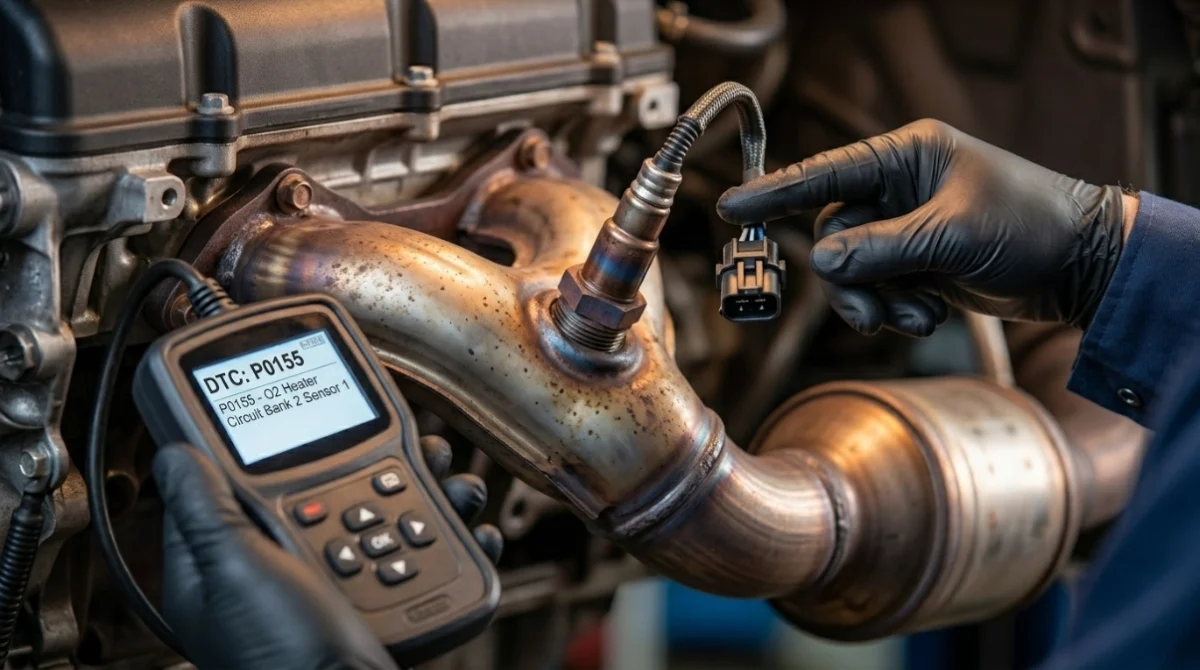
The P0155 trouble code appears when your engine control system detects a failure in the oxygen sensor heater circuit. This sensor helps the engine quickly reach optimal operating temperature.
Without it, the engine runs in inefficient “cold mode” longer than normal. That increases fuel use and emissions immediately.
Most drivers notice poor fuel economy first. Some also feel unstable idle or slow acceleration.
Let’s break down exactly why this happens and what it means for your vehicle.
1. Faulty Oxygen Sensor Heater Failure
The most common cause of P0155 is a failed heater inside the oxygen sensor itself. This heater warms the sensor so it works correctly during cold starts.
When the heater burns out, the ECU detects no resistance or abnormal voltage. That triggers the fault code instantly.
For example, many Toyota and Honda models show this issue after 80,000–120,000 km of driving. Heat cycles slowly degrade internal wiring.
You might notice increased fuel consumption and a persistent check engine light.
Most mechanics replace the entire oxygen sensor because heater elements are not repairable.
2. Blown Fuse or Relay in Heater Circuit
A blown fuse or faulty relay can cut power to the oxygen sensor heater. This is often overlooked during quick diagnostics.
The heater circuit depends on stable 12V power supply. If the fuse is damaged, the heater never activates.
This usually happens due to short circuits or electrical overloads in older wiring systems.
In many cases, replacing a $2 fuse resolves the issue completely.
If the fuse blows again, there is likely a deeper short circuit.
3. Damaged Wiring or Loose Connector
Wiring damage is another major cause of P0155. The oxygen sensor sits near the exhaust, where heat and vibration are extreme.
Over time, insulation melts or cracks. This exposes wires and creates open circuits.
Loose connectors also interrupt the heater signal. Even slight corrosion increases resistance.
For example, vehicles driven in wet climates often show connector corrosion within 3–5 years.
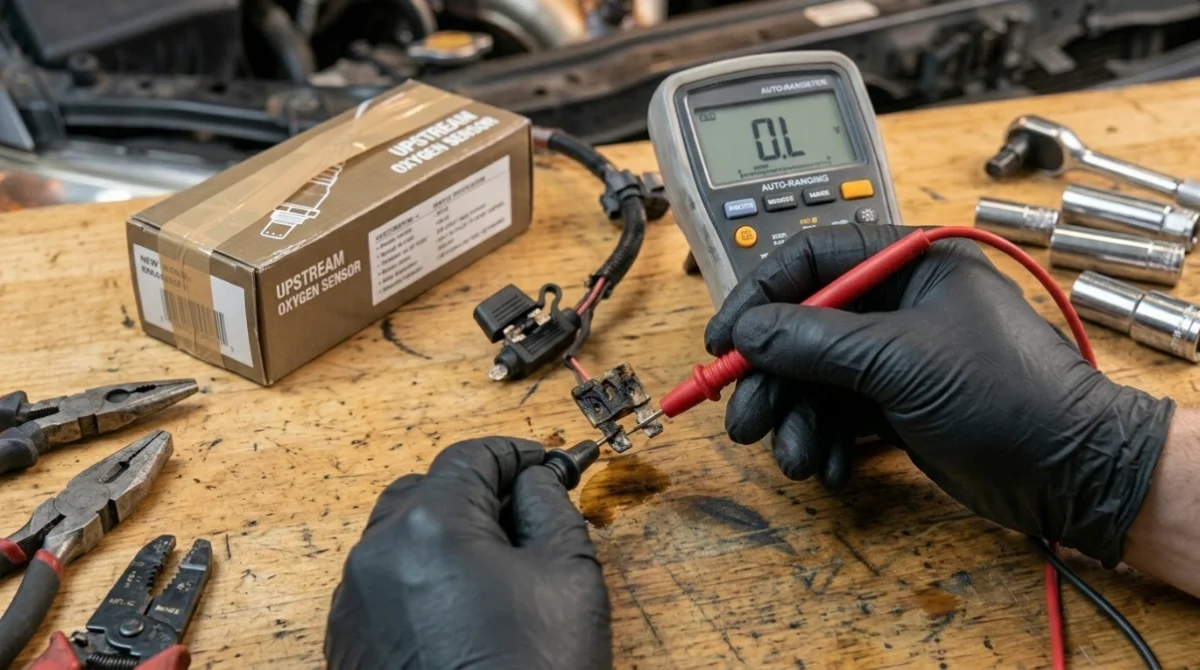
This issue can be tested using a multimeter for continuity.
4. Corroded Oxygen Sensor Terminals
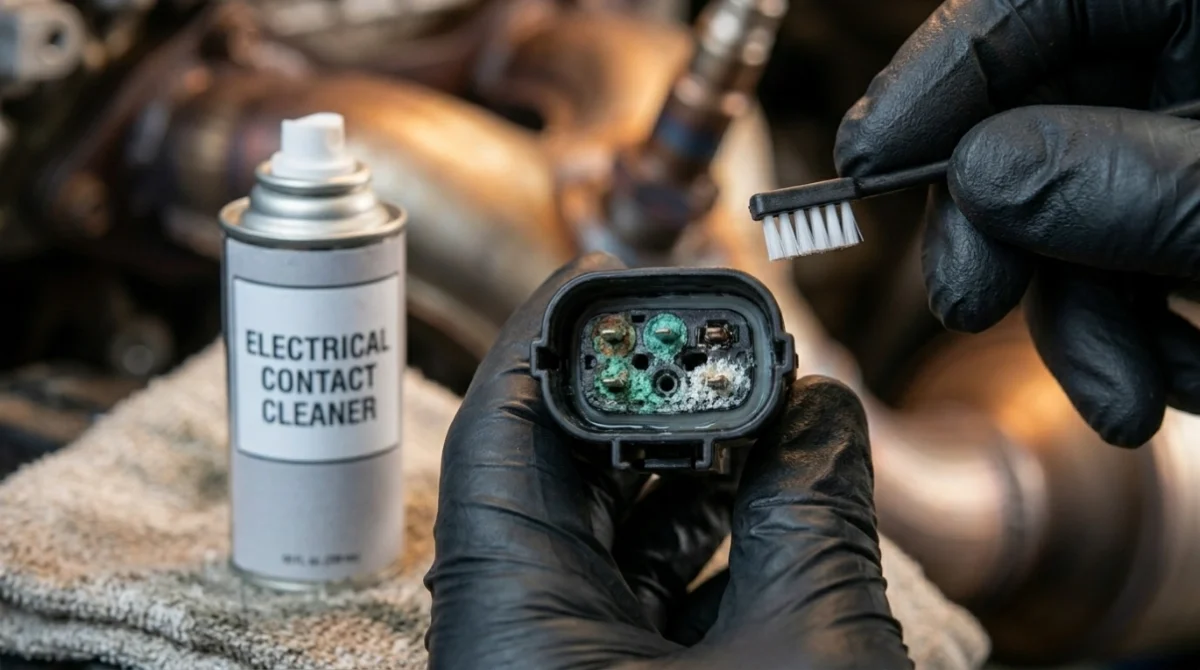
Corrosion inside the sensor plug is a hidden but frequent problem. Moisture enters the connector and slowly damages metal contacts.
This creates unstable voltage signals in the heater circuit.
Even if the sensor itself is fine, poor contact can trigger P0155.
Cleaning with electrical contact cleaner may temporarily help, but replacement is often needed.
What most people don’t think to ask is why corrosion forms so quickly. Heat expansion pulls moisture into tiny gaps during cooling cycles.
5. ECU or Power Supply Issues
In rare cases, the engine control unit (ECU) or power supply system causes P0155.
The ECU controls heater activation by grounding the circuit. If internal drivers fail, the heater never receives signal.
This is uncommon but more likely in older vehicles or after electrical modifications.
Battery voltage instability can also confuse heater circuit diagnostics.
Diagnosing ECU issues requires professional scan tools and live data monitoring.
Common Symptoms of P0155 Code
P0155 does not always cause drivability issues immediately, but symptoms appear over time.
- Check engine light stays on
- Higher fuel consumption
- Rough cold starts
- Increased exhaust emissions
- Slow engine warm-up
The main issue is fuel inefficiency during cold operation.
How Mechanics Diagnose P0155
Diagnosis starts with scanning live data and checking heater resistance.
Technicians then test voltage supply, fuse condition, and continuity of wiring.
If all external systems pass, the oxygen sensor is replaced.
| Test Step | What It Checks | Result Meaning |
|---|---|---|
| Scan tool | Fault confirmation | Code present |
| Voltage test | Power supply | 12V expected |
| Resistance test | Heater condition | Open = failure |
| Wiring inspection | Continuity | Break = fault |
The key takeaway is simple: isolate electrical vs sensor failure first.
Misconceptions About P0155
Many drivers misunderstand what this code means and replace parts unnecessarily.
Misconception 1: Oxygen sensor always fails. In reality, wiring or fuse issues are common.
Misconception 2: Code affects engine immediately. Actually, performance loss is gradual.
Misconception 3: Clearing code fixes it permanently. The fault returns unless root cause is fixed.
Repair Solutions for P0155 Code
Repair depends on the root cause identified during diagnosis.
- Replace blown fuse or relay if needed
- Repair or replace damaged wiring
- Clean corroded connectors
- Replace oxygen sensor if heater fails
- Reset ECU after repair
Sensor replacement is the most common final solution.
Always inspect wiring before replacing the oxygen sensor. Many unnecessary replacements happen due to skipped diagnostics.
When You Should Act Immediately
If fuel consumption increases significantly, act quickly.
Driving with a faulty heater circuit increases emissions and long-term fuel costs.
It also delays proper engine warm-up, affecting catalytic converter efficiency.
Short trips worsen the issue because the engine stays in cold mode longer.
Frequently Asked Questions
Is P0155 serious?
P0155 is not an immediate engine failure risk, but it reduces fuel efficiency. Long-term driving with this issue increases emissions and fuel costs. Fixing it early prevents further sensor or catalytic converter strain.
Can I drive with P0155 code?
Yes, the vehicle will still run normally. However, fuel economy drops and emissions increase. Extended driving without repair is not recommended due to long-term damage risks.
How much does P0155 repair cost?
Costs range from $20 for a fuse to $250–$400 for oxygen sensor replacement. Wiring repairs vary depending on damage severity and labor time.
What happens if I ignore P0155?
Fuel consumption increases and emissions rise. Over time, catalytic converter efficiency may reduce, leading to more expensive repairs.
Can bad battery cause P0155?
Yes, low voltage or unstable power supply can trigger heater circuit errors. However, this is less common than sensor or wiring failure.
P0155 is primarily caused by oxygen sensor heater failure or electrical issues in its circuit. Early diagnosis prevents unnecessary part replacement and improves fuel efficiency quickly.
Modern diagnostic tools now detect heater faults faster than ever, reducing repair time significantly in 2026.
Check fuse, wiring, and sensor condition first before replacing parts to save cost and time.
Frequently Asked Questions
What is the fastest way to fix P0155?
The fastest fix is checking the fuse and replacing a faulty oxygen sensor if needed. Simple electrical checks often resolve the issue quickly.
Can cleaning fix P0155?
Cleaning connectors may help if corrosion is present. However, it will not fix a burned-out heater inside the sensor.
Does P0155 affect emissions test?
Yes, it usually causes emissions test failure because the oxygen sensor cannot regulate air-fuel mixture properly during warm-up.
Where is Bank 2 Sensor 1 located?
It is located before the catalytic converter on the side of the engine without cylinder 1. Exact location varies by vehicle model.
Can weather affect P0155?
Extreme cold or moisture can worsen existing wiring or connector issues, making heater failure more likely in winter conditions.
