
P0161 O2 Sensor Heater Circuit Fault — How to Fix It Fast

Quick Answer: P0161 is an OBD-II trouble code that indicates a failure in the oxygen sensor heater circuit for Bank 2 Sensor 2. It usually happens due to a damaged O2 sensor, blown fuse, wiring issues, or PCM malfunction. The fastest fix is to inspect the heater fuse, test sensor resistance, and replace the faulty oxygen sensor if readings are out of range.
This code affects emissions control and fuel efficiency. It will not usually stop the car from running, but it will trigger the check engine light and may increase fuel consumption.
What P0161 Actually Means in Your Vehicle
P0161 refers to a malfunction in the heater circuit of the oxygen sensor located after the catalytic converter on Bank 2. The heater is responsible for bringing the sensor to operating temperature quickly.
When this system fails, the engine control module cannot properly monitor exhaust gases. That leads to poor emissions regulation and delayed fuel correction.
Most drivers first notice the issue when the check engine light stays on. It may also come with slightly reduced fuel economy.
Key insight: The problem is not the oxygen reading itself, but the heater circuit that enables fast sensor operation.
Common Symptoms of P0161 Code
P0161 symptoms are usually subtle at first. The car still drives normally in most cases.
The most common sign is a persistent check engine light. This happens because the ECU detects slow or no heater response.
You may also notice slightly increased fuel consumption. The engine runs in a more conservative fuel map.
- Check engine light stays on
- Reduced fuel efficiency
- Failed emissions test
- Slow engine warm-up feedback
What most drivers miss: there are often no drivability issues until the sensor completely fails.
Main Causes Behind P0161 Code
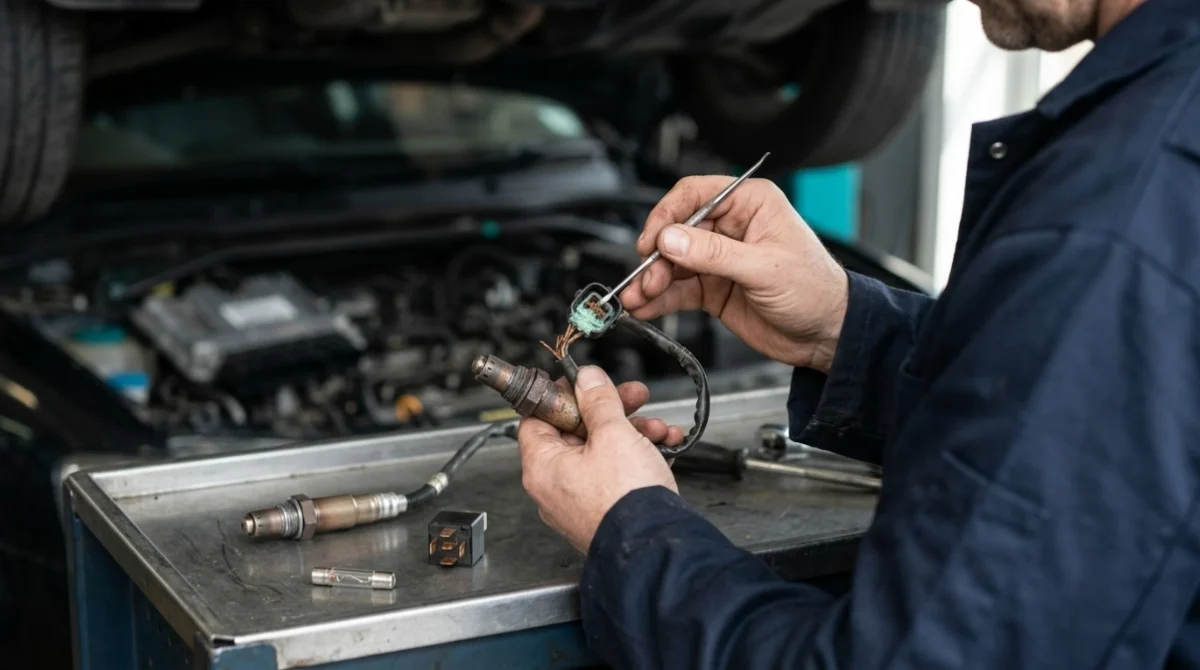
The root cause of P0161 is almost always electrical. The heater circuit needs proper voltage and ground to function.
A failed oxygen sensor heater is the most common reason. Over time, the internal heating element burns out.
Wiring damage near the exhaust system is also common. Heat and vibration can break insulation and connectors.
- Faulty oxygen sensor heater element
- Blown fuse or relay failure
- Damaged wiring or connector corrosion
- ECU driver circuit failure (rare)
Important reality: In more than half of cases, replacing the O2 sensor solves the issue.
Step-by-Step Diagnosis Process
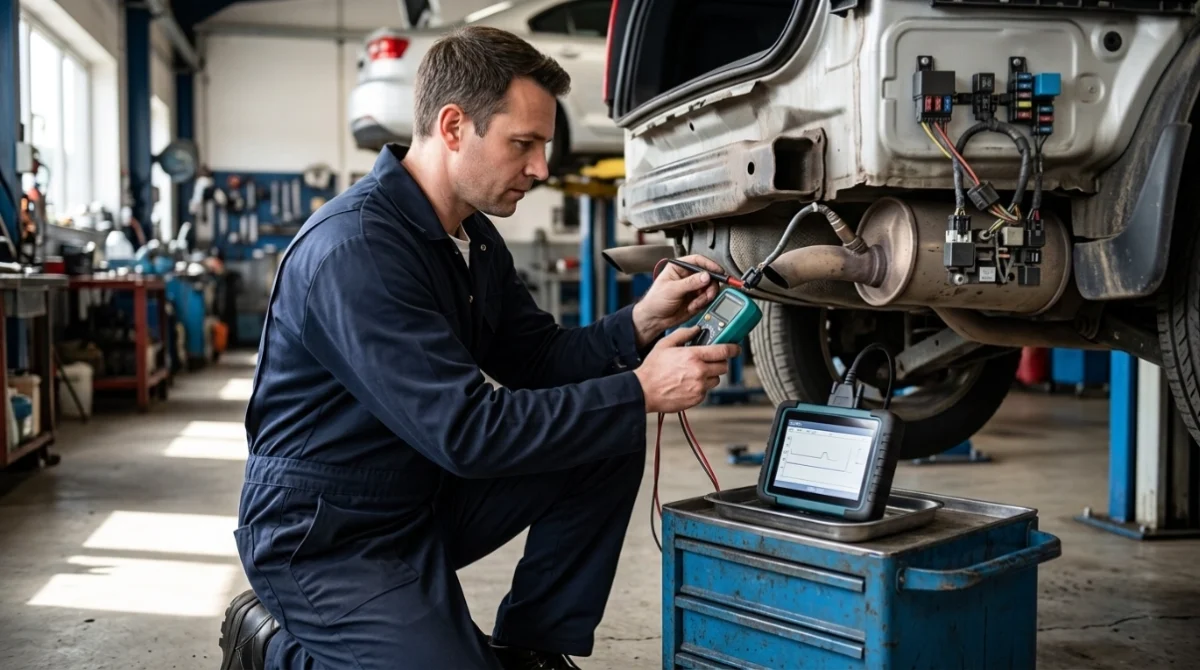
Proper diagnosis prevents unnecessary parts replacement. You should always test before replacing anything.
Start by scanning the vehicle with an OBD-II scanner. Confirm the code and check for related codes.
Next, inspect the heater fuse. A blown fuse often indicates a short circuit in the wiring or sensor.
- Scan and confirm P0161 code
- Check heater fuse and relay
- Inspect wiring near exhaust system
- Test O2 sensor heater resistance
Pro tip: A healthy heater circuit usually shows low resistance within manufacturer range.
How to Fix P0161 Code Effectively
The most effective fix depends on what failed during diagnosis. There is no single universal repair.
If the oxygen sensor heater is faulty, replacement is required. This is the most common solution.
If wiring is damaged, repair or replacement of harness sections is necessary. Heat shielding may also be needed.
- Replace oxygen sensor if heater is dead
- Replace blown fuse or faulty relay
- Repair damaged wiring or connectors
- Reprogram or inspect ECU if needed
Key takeaway: Replacing parts without testing leads to repeat failures.
How Much Does P0161 Repair Cost
Repair cost depends on whether you replace a sensor or fix wiring issues. Labor rates also vary by location.
A new oxygen sensor typically costs between $80 and $250. Labor adds another $50 to $150.
Wiring repairs are usually cheaper unless the harness is heavily damaged.
| Repair Type | Estimated Cost |
|---|---|
| O2 Sensor Replacement | $130 – $400 |
| Wiring Repair | $50 – $200 |
| Fuse/Relay Fix | $20 – $80 |
Reality check: Most drivers end up paying for sensor replacement only.
Can You Drive With P0161 Code
You can usually drive with P0161 without immediate engine damage. However, it is not ideal for long-term use.
The engine runs in a safer fuel mode, which increases fuel consumption and emissions output.
Over time, this may reduce catalytic converter efficiency if ignored for too long.
Simple rule: Drive short-term only, fix as soon as possible.
What Most People Get Wrong About P0161
Many drivers assume P0161 means the oxygen sensor is completely dead. That is not always true.
Some believe clearing the code fixes the issue. In reality, the code returns until the root cause is repaired.
- Wrong belief: sensor always fully failed
- Wrong belief: ECU reset fixes problem
- Wrong belief: fuel cap causes this code
Surprising fact: In many cases, the sensor still reads oxygen correctly but heater fails independently.
How to Prevent P0161 in the Future
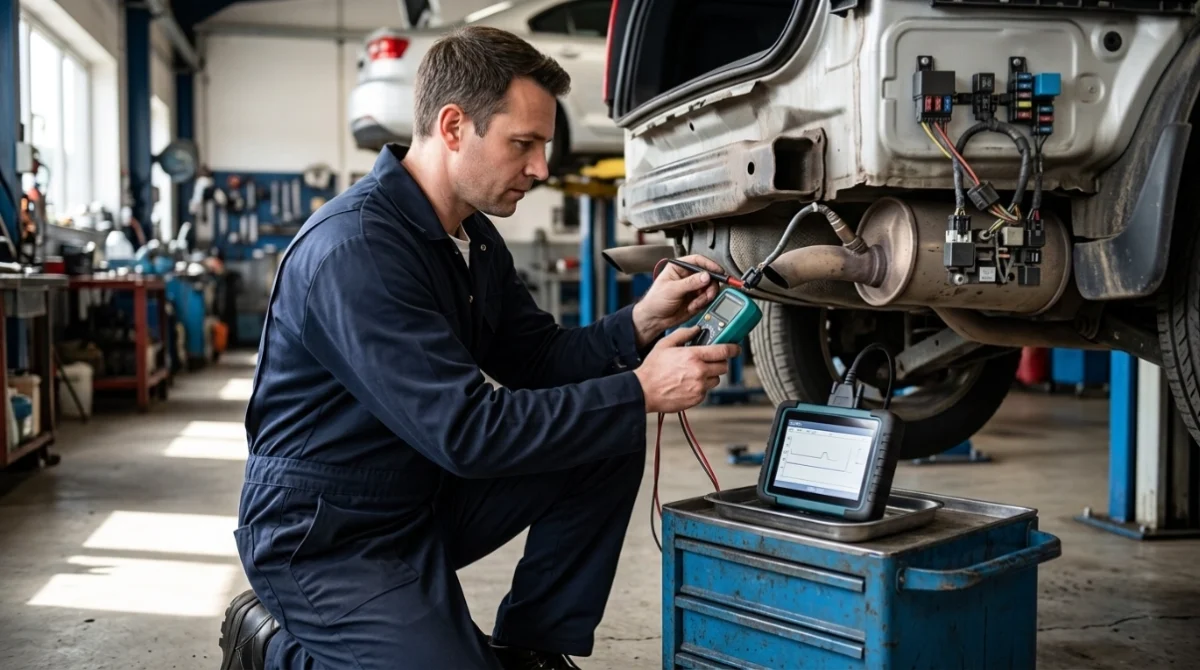
Preventing P0161 involves protecting wiring and maintaining exhaust system health.
Regular inspection of exhaust wiring helps avoid heat damage issues. Loose connectors should be repaired early.
Using high-quality fuel can also reduce sensor stress over time.
- Inspect wiring during oil changes
- Avoid aftermarket low-quality sensors
- Keep exhaust leaks repaired early
- Protect harness from heat exposure
Long-term benefit: Preventive maintenance extends O2 sensor life significantly.
P0161 is almost always a heater circuit failure in the rear oxygen sensor. The fastest solution is proper diagnosis followed by sensor or wiring replacement. Fixing it early prevents fuel waste and emissions issues.
A quick inspection of fuse, wiring, and sensor resistance often reveals the exact cause. Replace only what fails testing.
Check your O2 sensor system today and resolve small faults before they grow.
Frequently Asked Questions
Is P0161 serious?
P0161 is not immediately dangerous but affects emissions and fuel economy. Long-term neglect can stress the catalytic converter and increase fuel consumption significantly.
Can a bad battery cause P0161?
A weak battery can sometimes trigger voltage-related sensor codes, but it is not a direct cause. The issue is usually within the heater circuit itself.
How long does it take to fix P0161?
Most repairs take 30 minutes to 2 hours. Sensor replacement is quick, while wiring diagnostics may take longer depending on damage.
Will P0161 clear itself?
The code will not clear permanently unless the underlying fault is repaired. Temporary clearing is possible but the code will return.
What happens if I ignore P0161?
Ignoring it leads to higher fuel consumption and potential emissions test failure. Over time, it may also affect catalytic converter performance.
What is the most common fix for P0161?
Replacing the oxygen sensor is the most common fix. However, proper diagnosis is necessary to confirm whether wiring or fuse is the actual issue.
