
How to Fix P0155 O2 Sensor Heater Circuit Malfunction

Quick Answer: P0155 means the oxygen sensor heater circuit (Bank 2 Sensor 1) is not working. Fix it by checking the oxygen sensor fuse, wiring harness, and heater resistance, then replacing the faulty upstream O2 sensor if needed. In many cases, the sensor itself fails due to heat or age.
The P0155 code is part of the :contentReference[oaicite:0]{index=0} system and points to a heater circuit failure in the upstream oxygen sensor on Bank 2. This sensor is critical for fuel control and emissions performance.
What P0155 Code Really Means in Your Engine
P0155 indicates that the oxygen sensor heater in Bank 2 Sensor 1 is not reaching operating temperature fast enough. The engine control module (ECM) detects this failure during cold start testing.
Modern oxygen sensors rely on internal heaters to function quickly. Without proper heating, the engine runs in inefficient open-loop mode longer than normal. This increases fuel consumption and emissions.
Bank 2 refers to the side of the engine without cylinder 1. Sensor 1 means the upstream sensor before the catalytic converter.
Key Insight: This is usually an electrical or sensor failure, not a fuel system problem.
Common Symptoms of P0155 Code
The symptoms of P0155 are often subtle at first. Many drivers only notice performance or fuel changes after several days of driving.
Engine performance remains mostly normal, but efficiency drops. The ECM struggles to adjust air-fuel ratios without accurate oxygen readings.
Here are the most common symptoms:
- Check engine light stays ON
- Higher fuel consumption
- Rough cold starts
- Slow engine warm-up behavior
- Failed emissions test
Fuel economy loss is often the first noticeable issue. The heater failure delays sensor feedback, forcing the engine to run rich longer than needed.
Main Causes Behind P0155 O2 Heater Failure
The root cause of P0155 is usually electrical failure inside the oxygen sensor heater circuit. However, external wiring issues can also trigger the code.
In short, the ECM is not receiving expected heater current from the sensor circuit.
Here are the most common causes:
- Faulty upstream oxygen sensor (most common)
- Blown O2 sensor fuse
- Damaged wiring harness
- Corroded connector pins
- ECM driver circuit failure (rare)
Most cases are caused by a worn-out sensor. Oxygen sensors degrade after 80,000–120,000 km due to heat exposure.
Important insight: Heater circuits fail faster in cold climates due to repeated thermal stress.
How to Diagnose P0155 Step by Step
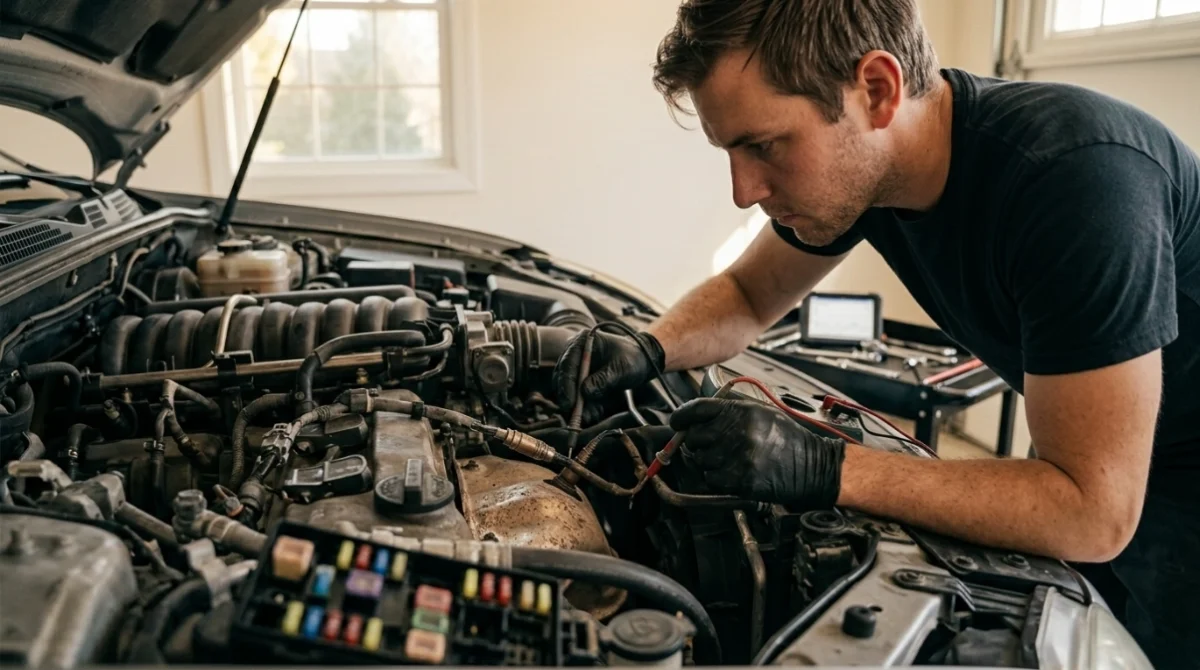
Proper diagnosis avoids unnecessary part replacement. Start with the simplest electrical checks before replacing the sensor.
The heater circuit is easy to test with a multimeter and basic inspection tools.
Step 1: Check O2 Sensor Fuse
Locate the oxygen sensor or ECM fuse in the fuse box. A blown fuse immediately disables heater operation.
If the fuse is blown, replace it and inspect for short circuits before restarting the engine.
Step 2: Inspect Wiring and Connector
Check for melted, broken, or corroded wires near the exhaust manifold. Heat damage is extremely common in this area.
Loose or oxidized connectors can interrupt heater current flow.
Step 3: Test Heater Resistance
Disconnect the oxygen sensor and measure resistance across heater terminals. A healthy sensor typically shows 3–14 ohms.
If resistance is infinite or zero, the heater element is damaged.
Step 4: Check Voltage Supply
With ignition ON, check if 12V is reaching the heater circuit. No voltage indicates wiring or relay issues.
If voltage is present but heater does not activate, the sensor is faulty.
Best Ways to Fix P0155 Code Permanently
Fixing P0155 depends on the root cause found during diagnosis. Most repairs involve replacing the oxygen sensor.
Always confirm wiring integrity before installing a new sensor to avoid repeat failure.
Primary fix options:
- Replace Bank 2 Sensor 1 oxygen sensor
- Repair damaged wiring harness
- Replace blown fuse or relay
- Clean corroded connectors
In most real-world cases, installing a new OEM-quality oxygen sensor resolves the issue permanently.
After repair, clear the code and perform a full drive cycle to confirm system reset.
Can You Drive With P0155 Code?
Yes, you can drive with P0155, but it is not ideal for long-term use. The engine will still operate, but efficiency and emissions control will suffer.
The vehicle runs in a fallback mode without accurate oxygen feedback during warm-up.
What most people miss is that long-term driving with this code can damage the catalytic converter due to improper fuel mixture.
Risk Summary: Short-term driving is safe. Long-term driving increases repair cost risk.
How Much Does It Cost to Fix P0155?
Repair cost depends on whether the issue is electrical or sensor-related. Oxygen sensors are the most expensive component in this repair.
Labor costs vary depending on accessibility and vehicle type.
| Repair Type | Estimated Cost | Difficulty |
|---|---|---|
| Oxygen sensor replacement | $120–$300 | Medium |
| Wiring repair | $50–$150 | Low–Medium |
| Fuse/relay replacement | $10–$40 | Easy |
| ECM repair (rare) | $300–$900 | High |
The oxygen sensor itself accounts for most repair costs. Labor increases if the sensor is rusted or hard to access.
What Most People Get Wrong About P0155
Many drivers assume P0155 is a fuel injector or engine misfire problem. This misunderstanding leads to unnecessary repairs.
Another common mistake is replacing both oxygen sensors at once without diagnosis.
The real issue is almost always limited to the heater circuit of a single upstream sensor.
Expert Insight: Over 70% of P0155 cases are solved by replacing only one sensor.
Preventing Future Oxygen Sensor Failures
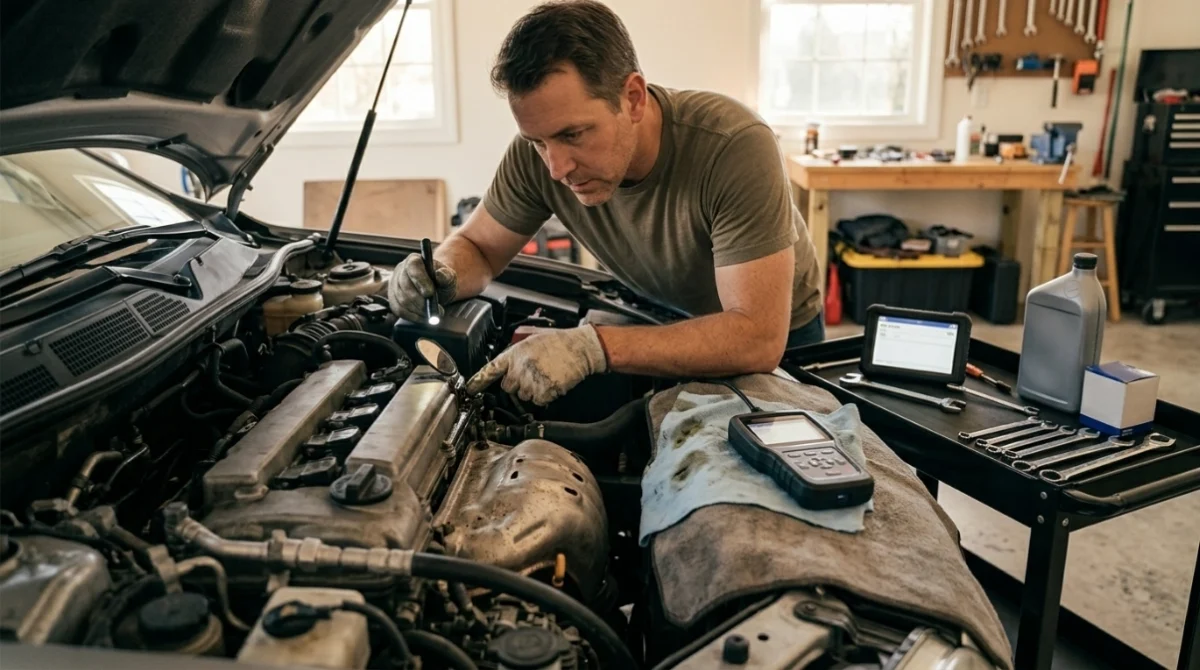
Oxygen sensors are exposed to extreme heat and exhaust gases. Preventing failure requires proper engine maintenance habits.
Small improvements in engine condition can significantly extend sensor life.
- Fix oil leaks quickly
- Maintain proper air-fuel mixture
- Use quality fuel
- Avoid prolonged short trips
Short trips prevent full sensor heating cycles, which increases moisture buildup and wear.
When You Should Replace the Sensor Immediately
If diagnosis confirms no voltage or infinite resistance, replacement is required immediately. No cleaning or reset will fix a burnt heater element.
Delayed replacement can cause catalytic converter damage over time.
Rule of thumb: If the heater circuit fails electrically, replacement is the only solution.
P0155 is almost always caused by a failed oxygen sensor heater or damaged wiring in Bank 2 Sensor 1. Early diagnosis prevents unnecessary part replacement and protects fuel efficiency and emissions systems.
A quick sensor and wiring check usually resolves the issue in under one hour of work.
Start by inspecting the fuse and sensor connector before replacing parts.
Frequently Asked Questions
Is P0155 serious?
P0155 is not immediately dangerous but affects emissions and fuel economy. Long-term driving may damage the catalytic converter due to incorrect fuel mixture control.
Can a bad battery cause P0155?
A weak battery can sometimes trigger voltage issues, but it rarely causes P0155 directly. The problem is usually isolated to the oxygen sensor heater circuit.
How long does it take to fix P0155?
Most repairs take 30–90 minutes if the oxygen sensor is accessible. Wiring repairs may take longer depending on damage location.
Can I clean the oxygen sensor instead of replacing it?
No, cleaning does not repair heater circuit failure. The internal heating element is sealed and cannot be restored once damaged.
Will P0155 clear itself?
The code may temporarily clear if the issue is intermittent, but it will return if the heater circuit remains faulty. Permanent repair is required.
