
P0171 Causes — System Too Lean Bank 1 Explained Clearly

Quick Answer: P0171 means the engine is running too lean on Bank 1, meaning too much air or not enough fuel. The most common causes include vacuum leaks, dirty mass airflow sensors, weak fuel pumps, clogged fuel filters, or failing oxygen sensors. Fixing it quickly prevents engine damage, poor fuel economy, and rough driving.
This guide is built from real diagnostic patterns seen in OBD-II systems like those used in Toyota, Ford, BMW, and Honda vehicles. This takes about 10–12 minutes to understand fully and diagnose correctly.
What P0171 Really Means in Simple Terms
P0171 means the engine control module (ECM) detects a “lean condition” on Bank 1. This means there is too much air and not enough fuel in the combustion mix.
The ECM constantly adjusts fuel based on oxygen sensor feedback. When it cannot correct the imbalance, it triggers the P0171 code.
Bank 1 refers to the side of the engine with cylinder 1. Inline engines only have one bank, but V-type engines have two.
Key takeaway: P0171 is not a sensor failure by default — it is a mixture imbalance warning.
Top 7 P0171 Causes You Must Check First
P0171 is triggered when fuel trims hit their limit trying to correct a lean condition. Most causes are airflow or fuel delivery related.
- Vacuum leaks in hoses or intake manifold
- Dirty or faulty MAF (Mass Air Flow) sensor
- Weak fuel pump pressure
- Clogged fuel filter
- Leaking intake gaskets
- Faulty oxygen sensor (upstream)
- PCV valve stuck open
Vacuum leaks are the most common cause in real-world diagnostics, especially in older vehicles.
Fuel delivery issues usually show up under load, not idle.
What most people miss: Small air leaks often cause bigger fuel corrections than sensor failures.
Vacuum Leaks — The #1 Hidden Cause

Vacuum leaks are the leading cause of P0171 in over half of diagnosed cases. Even a small crack in a hose can disturb air-fuel balance.
When unmetered air enters the intake system, the engine runs lean because that air is not measured by the MAF sensor.
Common leak points include intake manifold gaskets, brake booster lines, and PCV hoses.
Spraying carb cleaner near suspected areas can help detect RPM changes, confirming leaks.
Why it matters: Even a 1mm crack can trigger fuel trim corrections of +20% or more.
Mass Air Flow Sensor Problems
The MAF sensor measures incoming air. If it becomes dirty or faulty, it underreports airflow, causing lean fuel mixture.
Oil contamination from aftermarket air filters is a major cause of MAF issues.
A failing MAF often causes hesitation, rough idle, and poor acceleration along with P0171.
Cleaning the sensor with proper MAF cleaner often restores function if no internal damage exists.
Important insight: A bad MAF does not always throw its own code immediately.
Fuel Delivery Issues That Trigger P0171
If fuel pressure drops, the engine cannot maintain proper combustion ratios. This leads to lean conditions under load.
Weak fuel pumps, clogged fuel filters, or failing fuel pressure regulators are common causes.
Fuel starvation is more noticeable during acceleration or uphill driving.
Mechanics often test fuel pressure using a gauge to confirm system health.
| Component | Failure Effect | Symptom |
|---|---|---|
| Fuel Pump | Low pressure | Loss of power under load |
| Fuel Filter | Restricted flow | Engine hesitation |
| Fuel Regulator | Pressure imbalance | Rough idle |
Fuel system issues become worse over time and should not be ignored.
Oxygen Sensor Misreadings
Upstream oxygen sensors help control fuel trims. If they misread exhaust gases, the ECM adjusts incorrectly.
A slow or biased O2 sensor can cause continuous lean correction signals.
However, oxygen sensors rarely cause P0171 alone — they are usually secondary symptoms.
Technicians confirm sensor health using live data graphs rather than guessing.
Unasked question: Why does replacing O2 sensors sometimes fail to fix P0171? Because the real issue is usually airflow or fuel supply.
PCV System Failure and Lean Conditions
The Positive Crankcase Ventilation (PCV) system controls engine vapors. If the valve sticks open, it creates a vacuum leak.
This introduces unmetered air into the intake system, causing lean fuel conditions.
PCV failure is often overlooked because it mimics multiple other issues.
Replacing a cheap PCV valve can sometimes fix P0171 instantly.
Key insight: A $10 PCV valve can trigger a $500 diagnostic chase.
Diagnostic Steps Mechanics Actually Follow
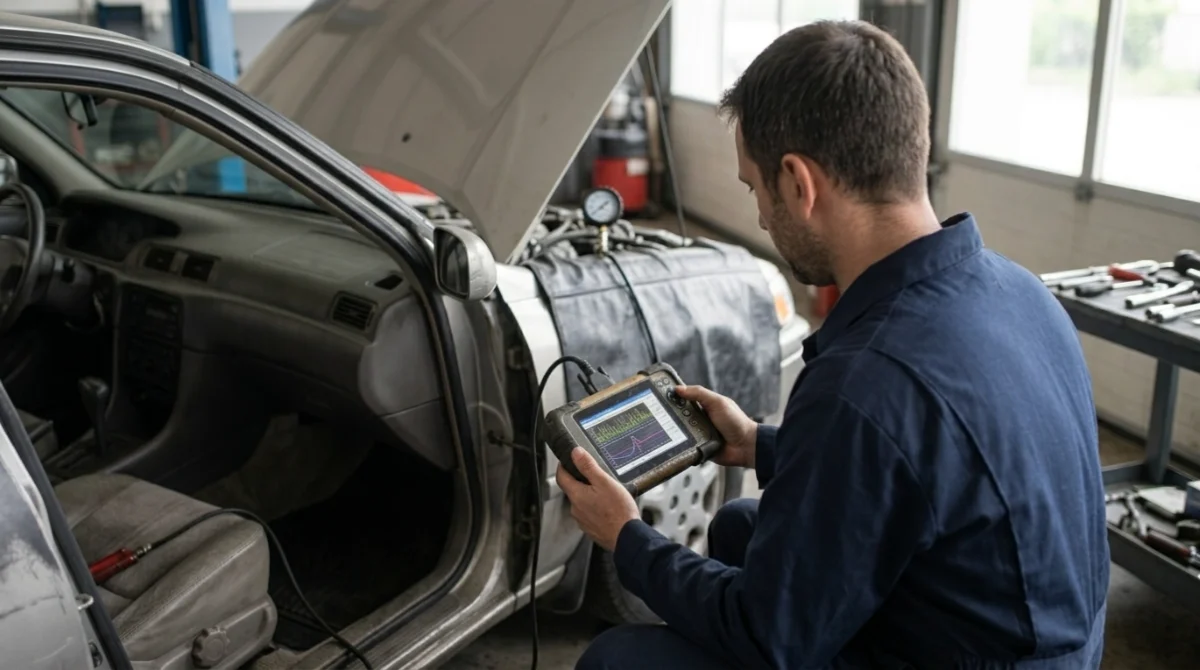
Professional diagnostics follow a structured pattern rather than guessing parts.
- Check fuel trims using OBD scanner
- Inspect vacuum lines visually and physically
- Test MAF sensor readings
- Measure fuel pressure
- Check O2 sensor data
Fuel trims above +10% usually confirm a lean condition.
Short-term and long-term fuel trim data helps isolate root cause quickly.
Why this works: Data-driven diagnosis reduces unnecessary part replacement.
Common Mistakes When Fixing P0171
Many drivers replace sensors without identifying root cause. This leads to repeated failure codes.
Another mistake is ignoring small vacuum leaks that appear insignificant.
Fuel system cleaning without pressure testing is also ineffective.
What most people get wrong: They assume P0171 is always a sensor problem.
In reality, airflow and fuel imbalance cause the majority of cases.
Can You Drive With P0171?
You can drive with P0171 temporarily, but it is not recommended long-term.
Lean conditions increase combustion temperature, which can damage valves and pistons.
Fuel economy also drops significantly, and drivability becomes unstable.
Risk insight: Extended lean running can lead to engine overheating and misfires.
How to Fix P0171 Effectively
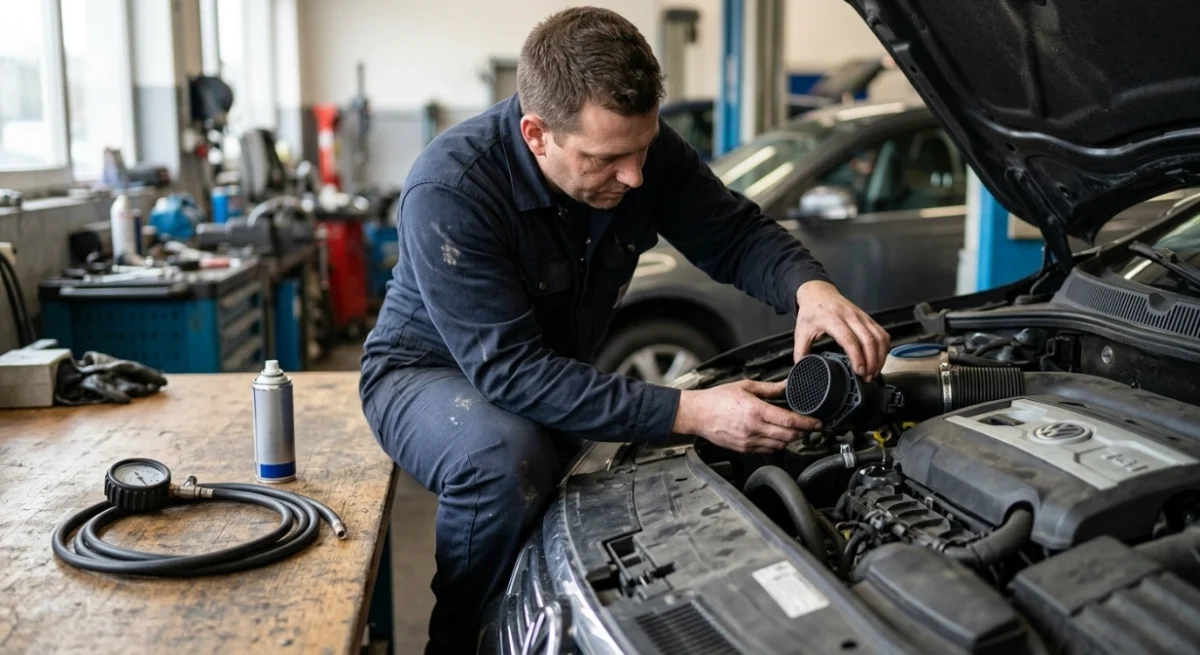
The best fix depends on the root cause, not the code itself.
Start with air leaks, then check airflow sensors, then fuel system.
Simple fixes like tightening hoses or cleaning MAF sensors often resolve early-stage issues.
More advanced cases require fuel pump or gasket replacement.
Step-by-step logic saves time and money.
Preventing P0171 in the Future
Regular maintenance reduces the chance of lean condition codes significantly.
Replacing air filters, cleaning MAF sensors, and checking vacuum lines annually helps prevent issues.
Using quality fuel also improves injector performance and combustion stability.
Preventive rule: Small maintenance now prevents expensive repairs later.
Key Takeaway
P0171 is primarily caused by air-fuel imbalance, not random sensor failure. Vacuum leaks and fuel delivery issues are the most common root problems. Early diagnosis using fuel trim data prevents expensive engine damage and unnecessary part replacement.
Future diagnostics will rely even more on live sensor data analysis. Check vacuum hoses and MAF condition first to save time.
Inspect intake hoses and clean the MAF sensor within 2 minutes today.
Frequently Asked Questions
What causes P0171 the most?
Vacuum leaks are the most common cause of P0171. They allow unmetered air into the engine, creating a lean condition that the ECM cannot correct effectively.
Can a dirty air filter cause P0171?
A severely clogged air filter can contribute to airflow imbalance, but it is rarely the direct cause. It usually works alongside other issues like MAF sensor errors.
Is P0171 expensive to fix?
Repair costs range from $20 for simple vacuum hose fixes to $500+ for fuel pump or gasket replacements, depending on the root cause.
Will P0171 clear itself?
P0171 may temporarily disappear if conditions improve, but it will return if the underlying issue is not fixed, such as leaks or fuel delivery problems.
What happens if I ignore P0171?
Ignoring P0171 can lead to engine overheating, poor fuel economy, misfires, and long-term damage to valves and pistons due to lean combustion.
