
P0171 Repair Cost: What You’ll Pay by Cause

P0171 repair cost usually ranges from $100 to $1,500, based on the real cause. A small vacuum leak or dirty MAF sensor sits near the low end. A weak fuel pump, clogged injector, or hard-to-reach intake leak pushes the bill higher.
- Lowest-cost fix: vacuum hose or MAF cleaning
- Common repair: MAF sensor replacement
- High-cost repair: fuel pump replacement
- Best first move: diagnose before replacing parts
Your scan tool says P0171, and now you want one answer: how much will this cost to fix?
The frustrating part is that P0171 does not name a failed part. It reports a lean air-fuel condition on Bank 1. KBB explains that the powertrain control module sets P0171 when it detects too much air or not enough fuel in the combustion chamber. :contentReference[oaicite:0]{index=0}
This takes about 8 minutes to read. Start with the price ranges, then use the diagnosis order to avoid paying for the wrong repair.
P0171 repair cost is not about the code itself. The cost comes from the failed system behind the lean condition.
P0171 Repair Cost by Common Cause
P0171 repair cost changes because the code can come from air leaks, sensor errors, or fuel delivery problems.
A cracked vacuum hose can cost far less than a fuel pump. A dirty mass airflow sensor can mimic a major fuel problem. That is why a good shop tests fuel trims, intake leaks, and sensor readings before quoting parts.
| Cause | Typical Repair | Estimated Cost | Cost Risk |
|---|---|---|---|
| Vacuum leak | Hose, PCV line, intake gasket, smoke test | $100–$1,000 | Low to high |
| Dirty MAF sensor | Clean sensor and reset fuel trims | $20–$150 | Low |
| Bad MAF sensor | Replace mass airflow sensor | $263–$408 | Medium |
| Oxygen sensor issue | Test and replace failed sensor | $434–$537 | Medium |
| Weak fuel pump | Fuel pressure test and pump replacement | $1,247–$1,506 | High |
RepairPal lists mass airflow sensor replacement at $263–$408, oxygen sensor replacement at $434–$537, and fuel pump replacement at $1,247–$1,506. :contentReference[oaicite:1]{index=1}
Why P0171 Does Not Give One Fixed Price
P0171 points to a lean condition, not a single broken component.
Your engine computer reads oxygen sensor feedback, compares it with expected air-fuel data, then adds fuel through fuel trim correction. When the computer runs out of correction room, it stores P0171.
That means the vehicle can have one of three problems:
- Too much unmetered air enters the intake.
- Too little fuel reaches the engine.
- A sensor reports incorrect air or oxygen data.
EPA guidance on onboard diagnostics says OBD systems alert drivers when emission-related systems deteriorate or fail, and early repair can prevent higher costs. EPA onboard diagnostics consumer guidance also notes that OBD data helps technicians diagnose faults more efficiently. :contentReference[oaicite:2]{index=2}
Ask the shop for fuel trim readings before approving parts. Long-term fuel trim above normal points to a real mixture problem.
Cheapest P0171 Fixes to Check First
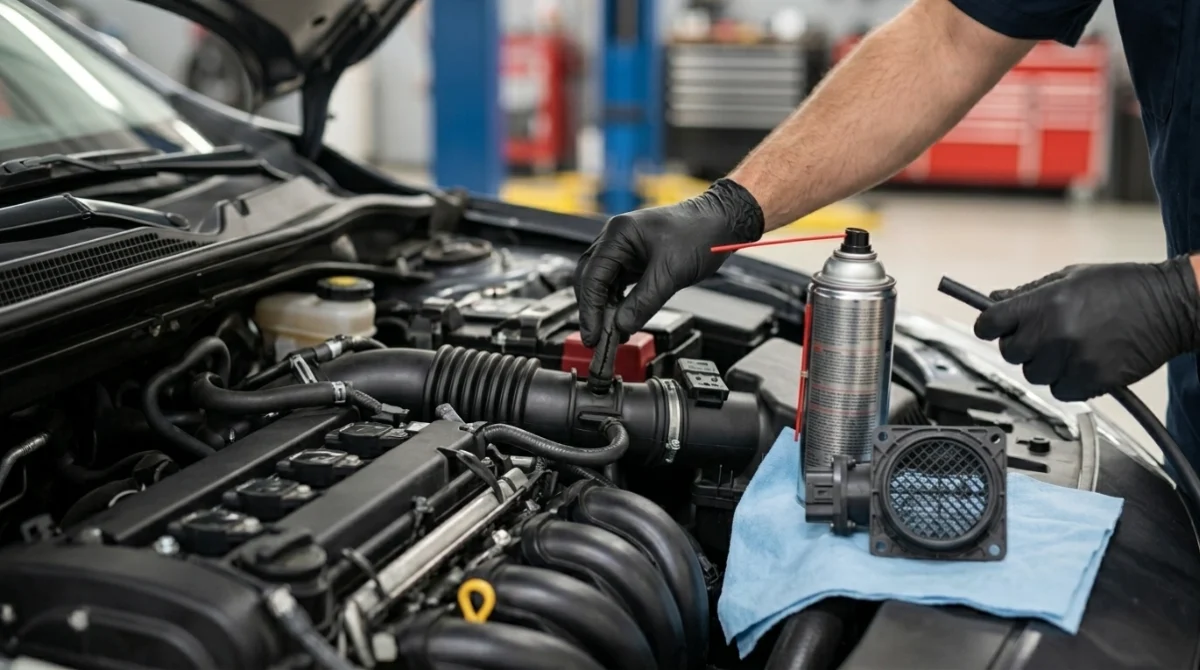
The cheapest P0171 fixes usually involve air leaks or MAF sensor contamination.
A vacuum leak lets air enter after the mass airflow sensor. The engine computer never measured that extra air, so the oxygen sensor sees a lean exhaust result. That mismatch creates positive fuel trim.
Common low-cost checks include:
- Cracked vacuum hoses
- Loose intake boot clamps
- Split PCV hoses
- Dirty MAF sensor wires
- Loose oil cap or dipstick seal
- Brake booster vacuum leaks
J.D. Power reports vacuum leak repair can range from $150 to $1,000, with intake gasket labor often driving the bill. :contentReference[oaicite:3]{index=3}
You might think a low-cost hose means a low-cost diagnosis. Here is where people lose money: hidden leaks need a smoke test, and the test labor can exceed the part price.
When P0171 Repair Cost Gets Expensive
P0171 gets expensive when the lean condition comes from fuel delivery.
A weak fuel pump cannot keep pressure high enough under load. A restricted fuel filter or clogged injector can create the same lean result. The engine then lacks fuel even when the computer commands more.
Fuel system repairs cost more because testing takes time and parts sit deeper in the vehicle. In-tank fuel pumps need tank access, electrical checks, pressure testing, and safe fuel handling.
Do not replace the oxygen sensor first unless testing proves it failed. A lean code often reflects what the oxygen sensor sees, not what caused the problem.
For a deeper reference, compare the KBB P0171 fuel trim explanation with a shop’s diagnostic notes before approving fuel system work.
What Most People Get Wrong About P0171
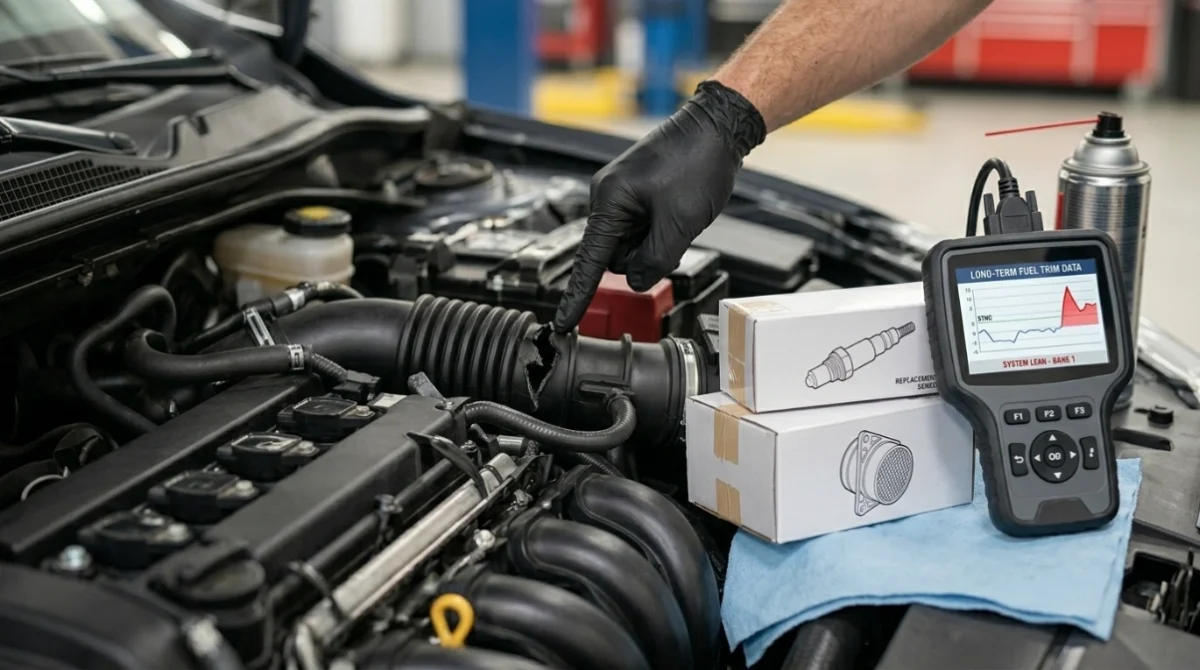
Most people treat P0171 as a parts code. That mistake turns a $150 repair into a $700 guessing game.
P0171 does not mean the oxygen sensor is bad
The oxygen sensor reports lean exhaust oxygen. It does not always cause the lean condition.
Replacing the oxygen sensor without testing vacuum leaks, MAF readings, and fuel pressure can leave the same code active after the repair.
Cleaning the MAF sensor does not fix every lean code
MAF cleaning helps when dirt or oil film changes the air reading.
It will not repair a cracked intake boot, weak fuel pump, stuck injector, or exhaust leak near the upstream oxygen sensor.
Driving with P0171 is not a free risk
The vehicle can still run with P0171, but lean combustion raises stress under load.
Long-term lean operation can create poor fuel economy, hesitation, rough idle, misfires, and catalytic converter stress.
How a Mechanic Should Diagnose P0171
A correct P0171 diagnosis starts with data, not parts replacement.
The shop should confirm the code, review freeze-frame data, inspect intake leaks, read fuel trims, check MAF readings, and test fuel pressure. That sequence separates cheap air problems from expensive fuel problems.
- Scan codes and freeze-frame data.
- Check short-term and long-term fuel trim.
- Inspect intake boots, hoses, and PCV lines.
- Smoke test the intake system.
- Check MAF sensor readings.
- Test fuel pressure under load.
- Verify the repair with a road test.
The RepairPal MAF replacement cost guide notes that technicians compare current conditions with sensor readings before testing suspected components. :contentReference[oaicite:4]{index=4}
Should You Drive Before Fixing P0171?
You can drive a short distance with P0171 if the engine runs smoothly.
Do not keep driving if the engine shakes, stalls, lacks power, smells like fuel, or flashes the check engine light. Those symptoms point to a risk that extends beyond a simple lean code.
Use this decision guide:
- If idle is smooth, schedule diagnosis soon.
- If power drops, avoid highway driving.
- If the light flashes, stop driving.
- If fuel economy drops fast, test fuel trims.
- If the car stalls, tow it to a shop.
The safe move is not panic. The safe move is quick diagnosis before a lean condition damages costlier parts.
Best Way to Lower P0171 Repair Cost
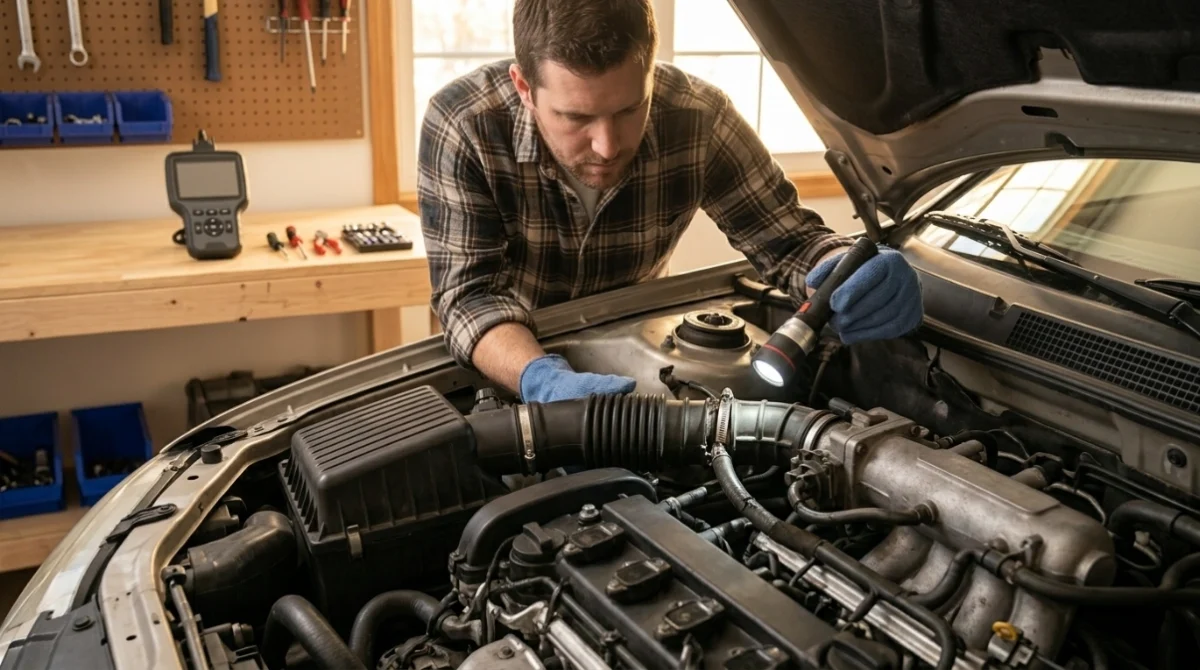
The best way to lower P0171 repair cost is to pay for diagnosis before parts.
Start with one small check: open the hood and inspect the intake tube between the air filter box and throttle body. Look for cracks, loose clamps, disconnected hoses, or a damaged PCV line.
Then compare the shop quote with the likely cause. A quote for an oxygen sensor should include proof from scan data. A quote for a fuel pump should include pressure readings.
P0171 repair cost stays low when you diagnose the lean condition before replacing parts.
As repair prices rise in 2026, scan data and smoke testing will matter more than guesswork.
Take 2 minutes now to inspect the intake boot and vacuum hoses before calling a shop.
Frequently Asked Questions
How much does it cost to diagnose P0171?
P0171 diagnosis usually costs one hour of labor, often around $100–$180 at many repair shops. The price rises when the shop needs smoke testing, fuel pressure testing, or extended road testing to catch an intermittent lean condition.
Can a dirty air filter cause P0171?
A dirty air filter alone rarely causes P0171 because it restricts air rather than adding unmetered air. It can affect MAF readings in some cases, but vacuum leaks, MAF sensor issues, and fuel delivery faults are more common causes.
Will P0171 clear itself after repair?
P0171 can clear after enough successful drive cycles if the repair fixed the lean condition. Most shops clear the code after repair, then road test the vehicle and confirm fuel trims return to normal.
Is P0171 the same as P0174?
P0171 and P0174 both indicate lean conditions, but they refer to different banks. P0171 applies to Bank 1. P0174 applies to Bank 2, which usually appears on V6, V8, or V10 engines.
Can bad gas cause P0171?
Bad gas can contribute to poor combustion, but it is not the usual cause of P0171. A lean code more often comes from unmetered air, low fuel pressure, dirty MAF readings, or an intake-side leak.
