
10 Best OBD2 Scanner With Live Data for ABS Diagnostics: Top Picks and Buying Guide

OBD2 scanners help drivers and technicians find problems that trigger a vehicle’s warning lights. Basic models read and clear engine codes, but they often cannot access the anti-lock braking system (ABS). A scanner with live data can show sensor readings while the vehicle runs, helping us spot faults that a stored code alone may not explain.
For ABS diagnostics, we should choose a scanner that supports ABS access, displays useful live data, and works with our vehicle’s make and model. We should also check data refresh speed, screen clarity, ease of use, update support, and whether the tool can perform active tests or service functions. We tested and compared leading options to find the OBD2 scanners that make ABS diagnosis clearer and more practical.
Best OBD2 Scanners With Live Data for ABS Diagnostics
We reviewed OBD2 scanners that provide live data and support ABS diagnostics. Our list focuses on scan coverage, data display, ease of use, and value.
FOXWELL NT604 Elite OBD2 Scanner

We recommend the FOXWELL NT604 Elite for drivers who want affordable ABS diagnostics with live data, but not advanced repair functions.
Pros
- Reads ABS, SRS, engine, and transmission codes
- Displays and records live data
- Includes a sturdy protective case and lifetime updates
Cons
- Does not support ABS bleeding or relearn functions
- No bidirectional testing
- Vehicle support varies by make, model, and year
We found the scanner simple to start using. It arrived with its software ready, so we could connect the cable, choose the vehicle, and begin scanning without a long setup process. Its 4.3-inch screen showed fault codes and sensor readings clearly.
The ABS menu helped us check warning-light problems and view live data from supported vehicles. We could also save, review, and print scan results. This makes the NT604 Elite useful when we want more information than a basic engine-code reader provides.
The scanner can clear some ABS and SRS codes after we repair the cause. It cannot remove crash data or fix a physical fault. We also found that it lacks service features such as ABS bleeding, battery registration, oil reset, and throttle relearn.
The included case protects the tool during storage, and the lifetime updates add value. However, updates may take time, and we should confirm vehicle compatibility before buying, especially for older or less common models.
BlueDriver Pro Next-Gen
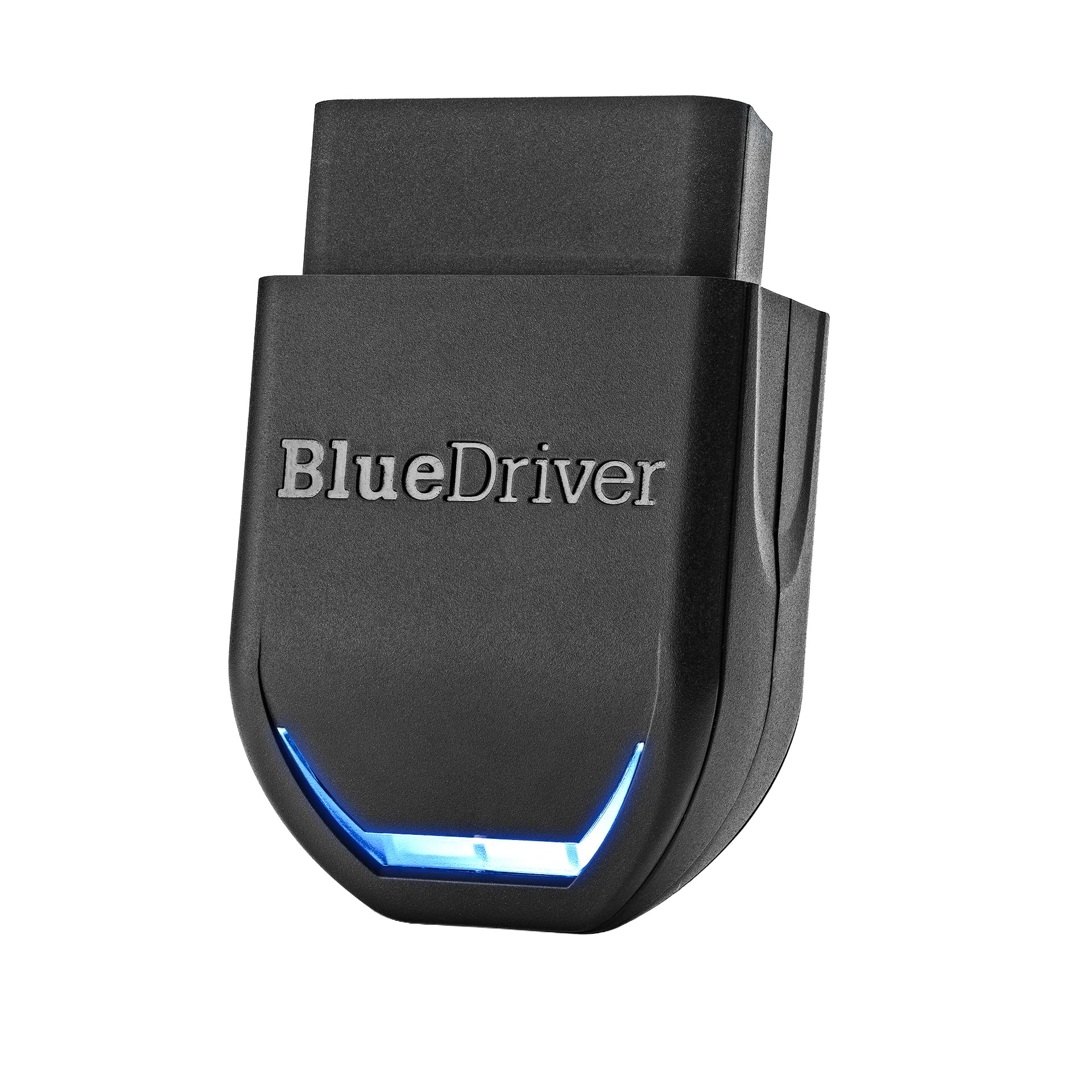
We recommend the BlueDriver Pro Next-Gen for DIY users who want phone-based ABS diagnostics, live data, and repair guidance without paying a subscription.
Pros
- Reads ABS and other enhanced codes on supported vehicles
- Shows live data, freeze frames, and Mode 6 results
- Includes repair reports and wireless phone access
Cons
- Vehicle coverage varies by make, model, and year
- Bluetooth pairing may be unreliable for some users
- The app can offer several possible fixes instead of one clear answer
We plugged the scanner into the OBDII port and paired it with a phone through the BlueDriver app. Setup was quick in our testing, and the app made it easy to scan systems beyond the basic check-engine functions.
For ABS work, the main benefit is access to enhanced codes on supported vehicles. We could view live readings while checking a fault, then clear codes after making a repair. Coverage depends on the vehicle, so we would check BlueDriver’s compatibility list before buying.
The repair reports add useful context, including code definitions, likely causes, and verified fixes. They can help us plan the next test, but they do not replace a wiring check, sensor test, or service manual.
Connection quality appears mixed. Many users report simple setup, while others mention dropped Bluetooth links, slow pairing, or failed firmware updates. We would keep the phone close to the scanner during updates and scans.
BlueDriver works with iOS and Android and does not require a subscription. Its 180-day money-back guarantee also reduces the risk for buyers who need to confirm ABS support on a specific vehicle.
Autel AutoLink AL549
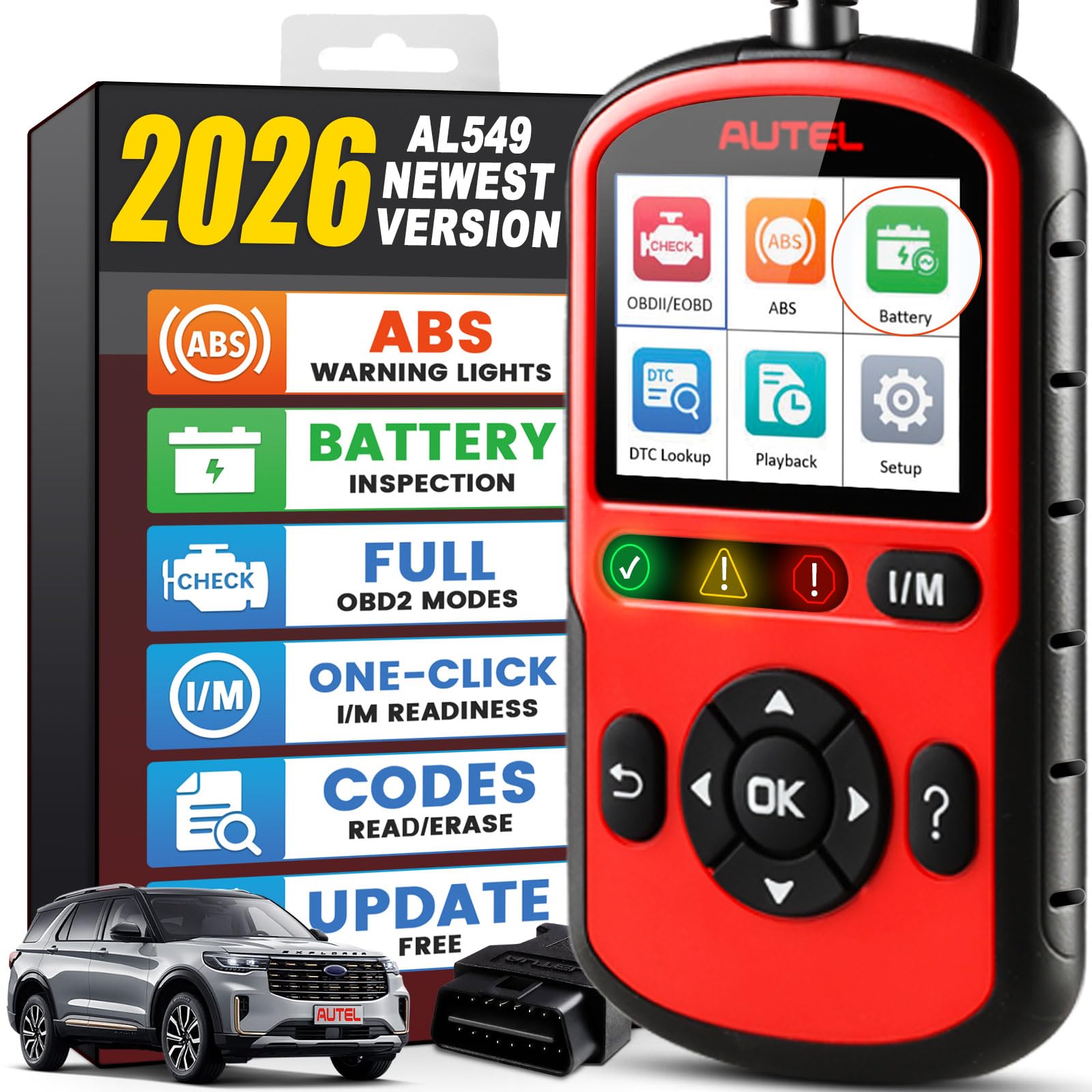
We recommend the AL549 for buyers who want live engine data plus basic ABS scanning in one affordable handheld tool.
Pros
- Shows live data and records readings for later review
- Reads and clears engine and ABS codes on supported vehicles
- Includes battery, alternator, and emissions readiness tests
Cons
- ABS coverage ends with many vehicles made after 2020
- ABS code clearing may not work on every supported vehicle
- A USB-C cable is needed for updates and printing
We found the plug-and-play design easy to use. The 2.8-inch screen, labeled buttons, and simple menus make common tasks quick, even for users with limited scanner experience.
Live data gives us a useful view of engine readings while the vehicle runs. We can also save live or freeze-frame information, which helps when a fault does not stay active.
The AL549 adds ABS coverage for more than 20 brands, but buyers should check compatibility before purchasing. Some vehicles may show ABS codes without allowing the scanner to erase them, and newer models may have limited ABS support.
Its battery and alternator tests add value for basic home checks. The emissions readiness button also gives a fast red, yellow, or green result before an inspection.
Software updates require registration, a computer, and a separate USB-C cable. Overall, the AL549 suits owners who need more than engine-code reading but do not need advanced coverage for newer vehicles or many other control modules.
OBDMATE OM970 ABS Diagnostic Scanner
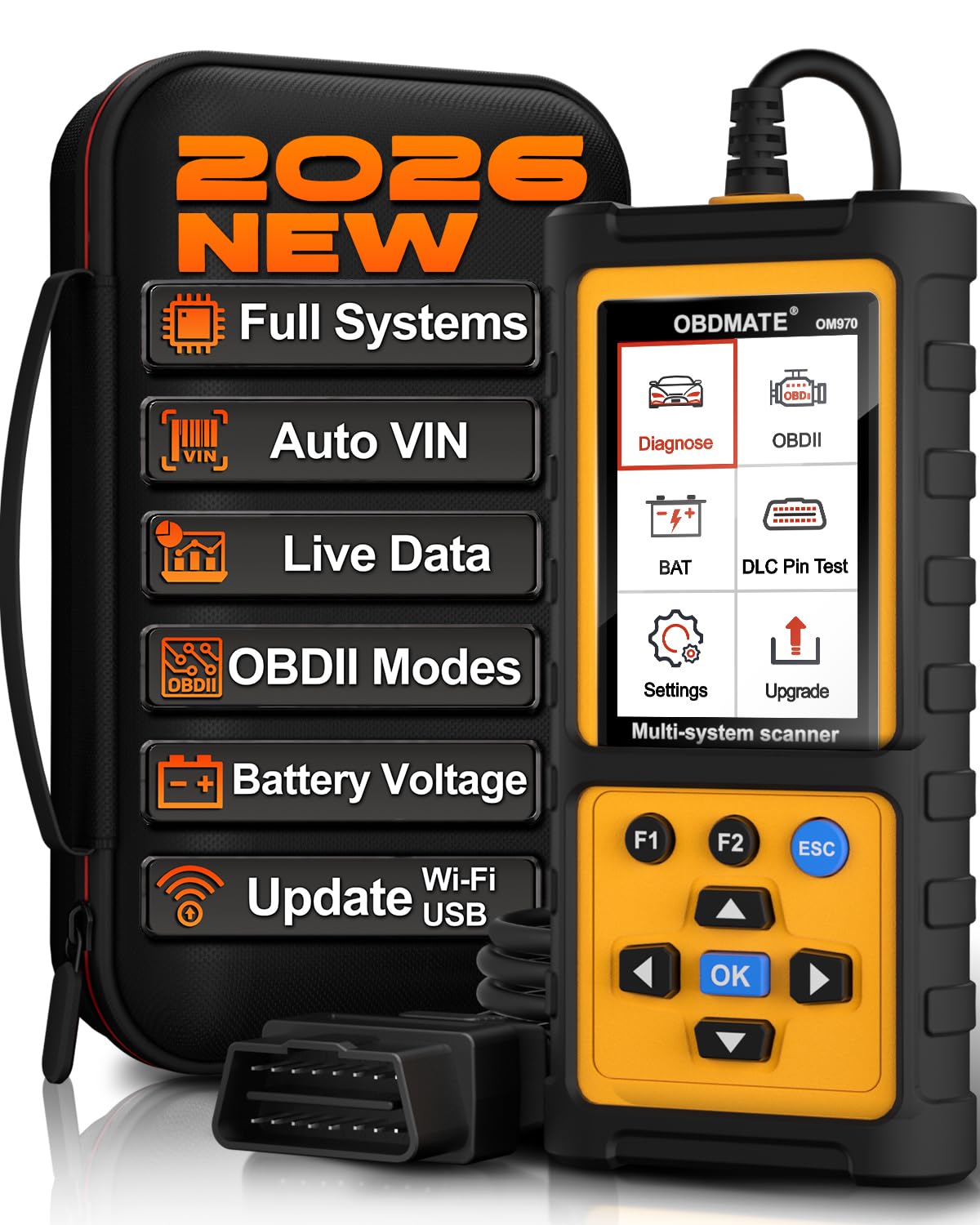
We recommend the OBDMATE OM970 for DIY users who want live ABS data and full-system diagnostics without a subscription.
Pros
- Reads live wheel-speed data and other sensor values
- Scans ABS, SRS, transmission, and other vehicle systems
- Includes free software updates and a protective case
Cons
- The wired design limits movement around the vehicle
- Vehicle coverage can vary by make, model, and year
- Some advanced functions may require extra research
We found the OM970 useful for checking ABS problems before replacing parts. Its live-data view can show wheel speed, battery voltage, and other readings, while the four-way graph helps us compare sensor signals during testing.
The scanner also reaches systems that basic code readers often miss, including ABS, airbags, and transmission modules. It can read and clear codes, turn off warning lights, and identify the vehicle through Auto-VIN when supported.
Its 3.5-inch screen keeps the menus readable, and the buttons make basic tasks easy to find. The hard case adds useful protection for garage storage or trips to the vehicle.
Because it uses a cable, we do not need Bluetooth pairing, an app, or a monthly plan. We should still confirm coverage for a specific vehicle before buying, since some functions depend on the manufacturer and model year.
Innova 5210 ABS Live Data Scanner
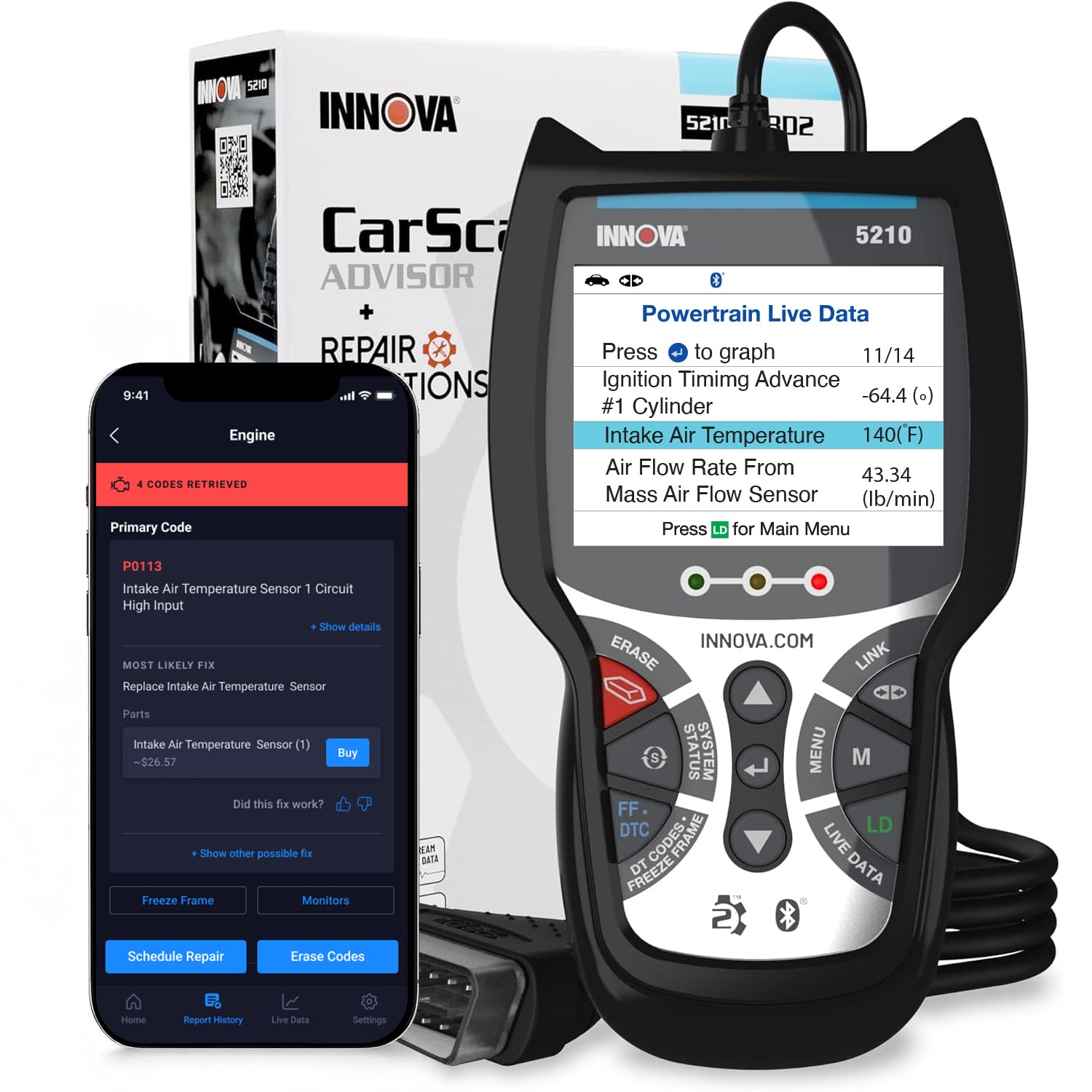
We recommend the Innova 5210 for drivers who want live engine data, battery checks, and ABS code access in one simple tool.
Pros
- Shows useful live data, including RPM, engine temperature, and fuel trims
- Combines code reading with battery and alternator testing
- Includes oil reset and emissions readiness checks
Cons
- ABS coverage varies by vehicle
- The suggested parts may not match the exact vehicle
- Bluetooth setup may not work smoothly for every user
We found the 2.8-inch screen easy to read while checking codes and viewing real-time readings. The attached cable also keeps setup simple, since we only need to connect it to the vehicle’s diagnostic port and turn the ignition on.
For ABS work, the 5210 can read and clear ABS codes on supported vehicles. We would check Innova’s coverage tool before buying because the available systems and functions can differ by make, model, and year.
The battery test adds useful value for basic charging-system checks. We can also reset an oil light, check emissions readiness, and use the free RepairSolutions2 app for repair information without a required subscription.
We should not treat the app’s repair suggestions as a guaranteed parts match. The scanner identifies codes and provides guidance, but we still need to confirm the diagnosis and part fit before making repairs.
BLCKTEC 460T OBD2 Scanner

We recommend the BLCKTEC 460T for DIY users who need ABS live data, brake service tools, and broad system scanning in one device.
Pros
- Reads ABS, SRS, engine, and transmission codes
- Displays, graphs, records, and replays live data
- Includes ABS bleeding and more than 12 reset functions
Cons
- Supported functions vary by vehicle
- App support is limited to the USA and Canada
- Some vehicles may not support EPB service functions
We found the 460T useful for more than basic check-engine scans. It can access ABS data, show fault details, and display live readings from several vehicle systems. The graphing tools help us compare up to four data streams while tracking a problem.
Its ABS bleeding function adds value after brake work, while EPB, SAS, battery, TPMS, and oil reset tools cover common maintenance tasks. However, we would check BLCKTEC’s vehicle compatibility list first because these functions do not work on every make and model.
AutoVIN and AutoScan reduce setup time, and AutoReLink can rescan systems without repeated button presses. The included RepairSolutions2 app adds repair information, recalls, service schedules, and saved scan reports without a subscription.
The 4.3-inch screen is practical, and the storage case makes the tool easy to keep with other garage equipment. We also like the free lifetime updates, but the two-year warranty and vehicle-specific limits remain important considerations.
FOXWELL NT301 OBD2 Scanner

We recommend the FOXWELL NT301 for basic engine diagnostics and live data, but not for ABS fault scanning.
Pros
- Shows live sensor data in graphs
- Reads and clears engine codes quickly
- Simple plug-and-play design
Cons
- Does not scan ABS, SRS, or airbag systems
- Limited to basic OBD2 functions
- Updates require a Windows computer
We plugged the NT301 into an OBD2-equipped vehicle and found it easy to start. The scanner draws power from the car, so we did not need batteries or a phone app. Its 2.8-inch color screen remained readable in daylight.
Live data helped us watch engine speed, coolant temperature, oxygen sensor readings, and fuel trims. The graph view made changes easier to follow than a list of numbers. We could also check emissions readiness before a testing appointment.
The controls felt straightforward, and the dedicated readiness button saved time. We read and cleared engine trouble codes without a subscription. However, clearing a code does not repair the underlying problem, so the code may return.
For ABS diagnostics, this model falls short. FOXWELL states that the NT301 does not support ABS, SRS, electronic parking brake, air conditioning, battery systems, or advanced resets. We would choose a higher-level scan tool if those systems matter.
Compatibility also depends on the vehicle’s year, make, model, and VIN. The NT301 works with many U.S. vehicles from 1996 onward and many European and Asian vehicles from 2000 onward, but we would confirm coverage before buying.
OBDMATE OM901 ABS Diagnostic Scanner
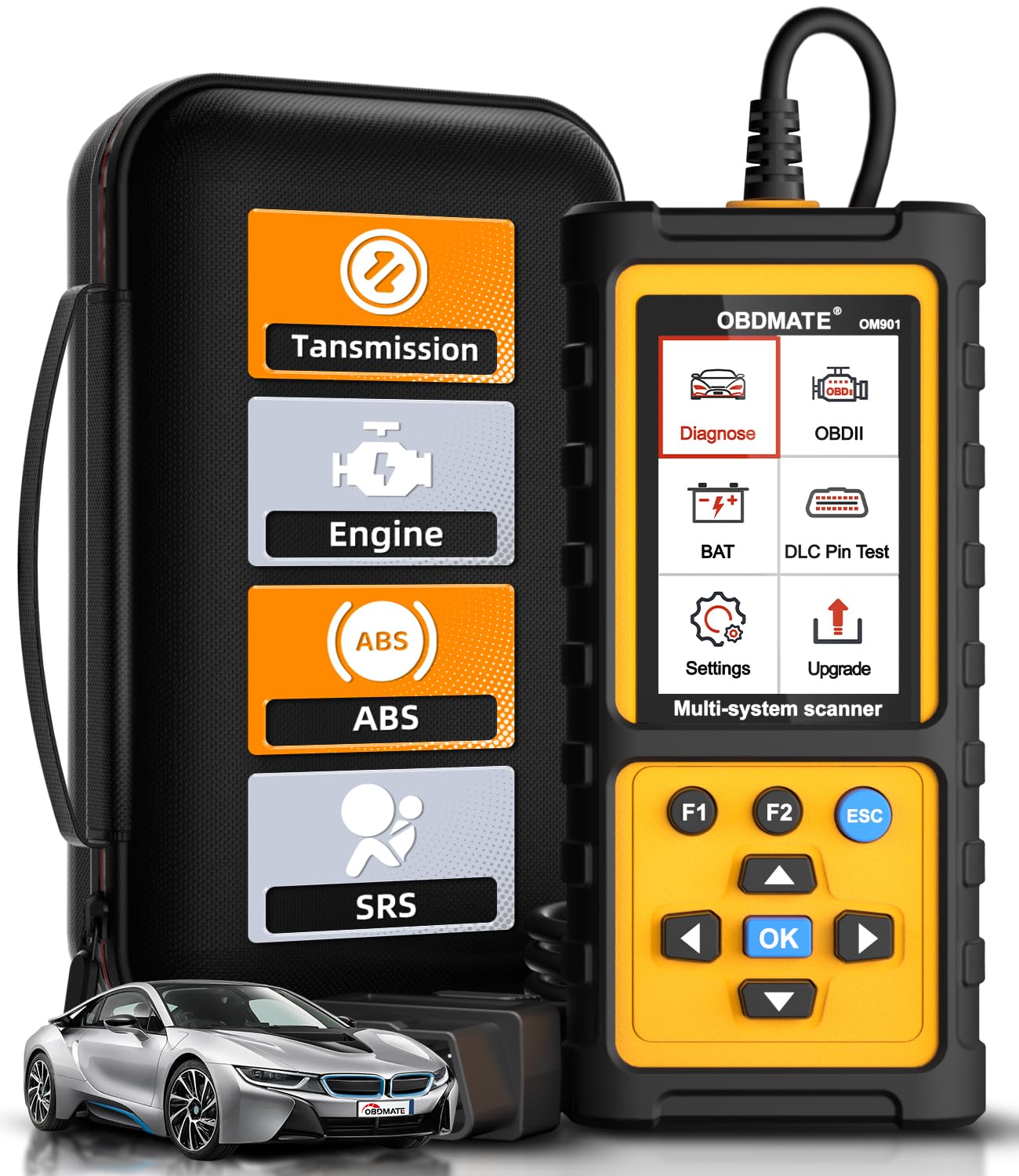
We recommend the OBDMATE OM901 for DIY users who want ABS, SRS, engine, and transmission diagnostics in one affordable handheld scanner.
Pros
- Reads and clears ABS and SRS codes
- Shows live data with graph views
- Includes a protective case and free updates
Cons
- ABS coverage may vary by vehicle
- The user guide offers limited detail
- Updates require a computer
We found the OM901 easy to start using. It powered on through the OBD2 port, and the 3.5-inch screen made menus and sensor readings easy to see. Its corded design means we did not need to charge or replace batteries.
The scanner gave us access to more than basic engine codes. We could check ABS, airbag, transmission, and engine systems, then view live data and clear stored faults. The graph display helped us watch sensor changes instead of relying only on code numbers.
Its case adds useful protection for garage or roadside use. We also liked the battery voltage check and DLC pin test for basic electrical checks.
Vehicle coverage remains the main concern. Some owners reported that the scanner did not access ABS on certain models, including a 2013 Hyundai Santa Fe. We recommend checking OBDMATE’s compatibility information before buying, especially for older or less common vehicles.
BLCKTEC 440 OBD2 Scanner

We recommend the BLCKTEC 440 for basic ABS-related code checks and live data monitoring, but buyers should confirm that it supports ABS scanning on their specific vehicle.
Pros
- Clear 2.8-inch color screen with live data graphs
- Simple plug-in design with no battery charging
- Free lifetime updates and support
Cons
- ABS coverage may vary by vehicle
- Limited reset functions for some systems
- The one-year warranty is shorter than some rivals
We found the BLCKTEC 440 easy to set up because it powers through the vehicle’s OBD2 port. Its color-coded I/M readiness lights also made emissions checks quick, while the screen kept basic readings easy to follow.
Live data graphs help us watch sensor values as the vehicle runs. For ABS work, this can help when the scanner supports wheel-speed or related data on the vehicle. However, the product details do not promise full ABS diagnostics for every make and model, so we would check compatibility before buying.
The tool reads and clears many engine codes, tests battery and charging systems, and supports OBD2 vehicles from 1996 onward. We also like its compact size and support for English, French, and Spanish. Still, some users may need a more advanced scanner for brake-system resets, steering-angle calibration, or deeper module access.
With a 4.4-star rating from more than 1,100 customer ratings, the BLCKTEC 440 offers a practical mix of simple controls and useful live data. We would choose it for home diagnostics and basic ABS troubleshooting, not as a replacement for a professional all-system scan tool.
FOXWELL NT630 Plus ABS Scanner
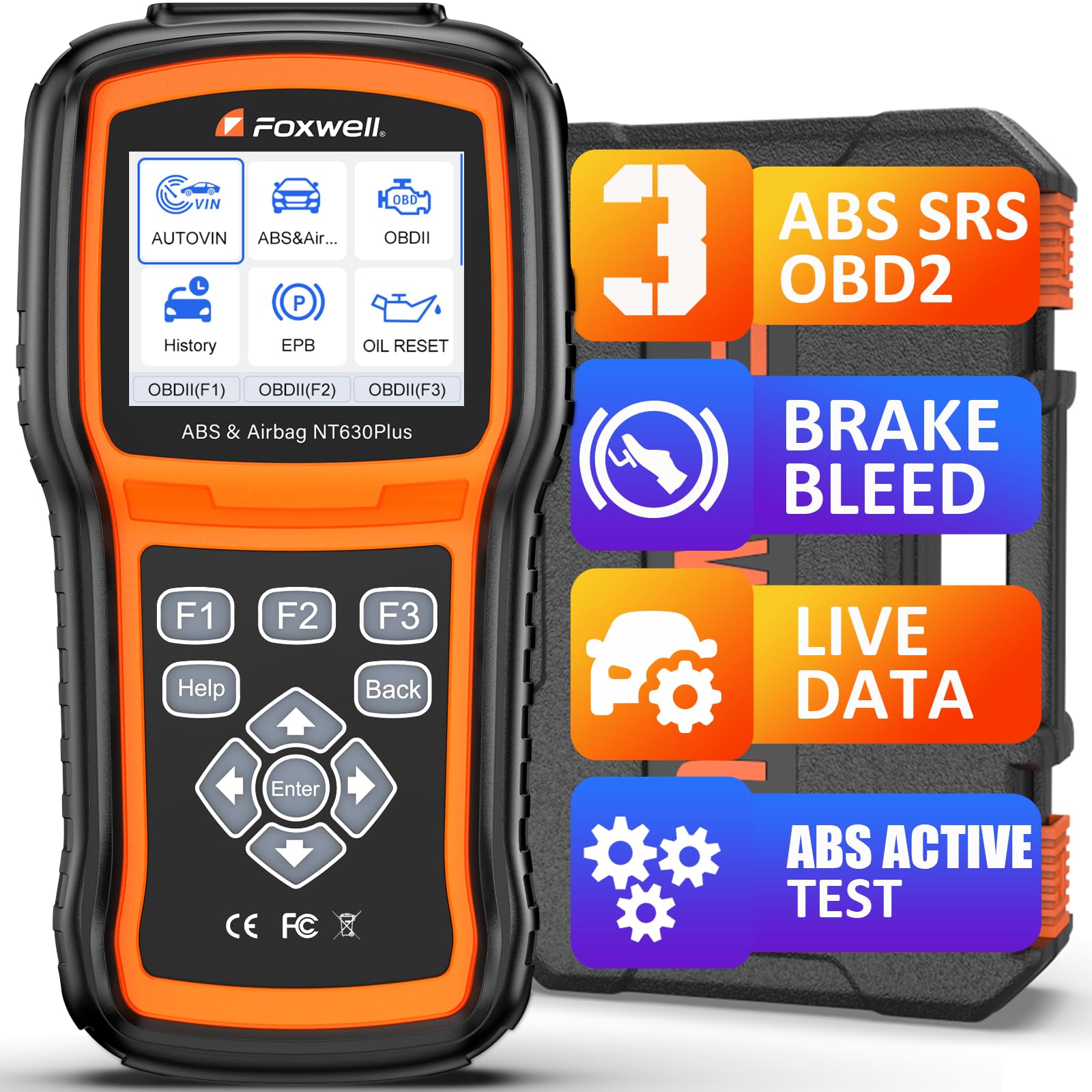
We recommend this scanner for DIY users who need ABS live data, supported active tests, and ABS auto bleed without a subscription.
Pros
- Reads ABS and SRS codes with live data
- Supports ABS auto bleed on compatible vehicles
- Includes Wi-Fi updates and a storage case
Cons
- Coverage varies by vehicle
- Does not support coding or programming
- Menus can take time to learn
We found the NT630 Plus useful for tracking ABS faults beyond a basic code read. Its live-data graphs can help us compare wheel-speed sensor readings and look for signs of a sensor, wiring, or module problem.
The bidirectional controls add value during testing. On supported vehicles, we can activate ABS components and run the auto-bleed routine after brake work. This feature does not work on every vehicle, so we would confirm coverage with FOXWELL before buying.
The scanner also handles selected resets, such as ABS, steering angle, and oil service functions. It reads standard engine codes and shows plain-English definitions, but it does not provide advanced engine diagnostics.
We like the plug-and-play design, sturdy case, and Wi-Fi updates. The 2.8-inch screen is small, and the menu system may feel slow at first. We would choose this tool for compatible 12-volt vehicles when ABS testing matters more than broad system coverage.
Buying Guide
We should choose an OBD2 scanner that supports ABS diagnostics, not only basic engine code reading. Confirm that the tool can access the ABS control module, read and clear trouble codes, and display live sensor data.
| Feature | What to check |
|---|---|
| Vehicle coverage | Support for our vehicle’s year, make, and model |
| ABS access | Dedicated ABS scanning and code clearing |
| Live data | Wheel speed, brake pressure, and related sensor values |
| Data display | Graphs, readable readings, and freeze-frame details |
| Test functions | Bi-directional controls when required for our vehicle |
| Updates | Regular software updates and clear update terms |
| Connection | Wired or wireless operation that suits our workspace |
We should check whether the scanner shows data from each wheel-speed sensor. Graphing and side-by-side readings can help us spot a weak or inconsistent signal during a road test, when safe and legal.
Vehicle coverage matters because ABS systems differ by model and year. We should use the manufacturer’s coverage list and confirm support for special functions before buying.
A clear screen, quick menu system, and strong cable or wireless connection can make diagnosis easier. We should also look for saved reports, data recording, and support for standard OBD2 protocols.
We need to distinguish between code reading and advanced testing. A scanner may display ABS codes without supporting actuator tests, relearns, steering-angle calibration, or other service functions. The required features depend on the repair tasks we plan to perform.
Editor’s Choice
We recommend the Autel MaxiAP AP200 for drivers who need live ABS data without buying a full workshop scanner. It connects to a phone through Bluetooth and supports ABS diagnostics on many vehicle brands, though coverage depends on the vehicle and the selected software package.
The app can read and clear ABS fault codes, display live sensor data, and show system information. We can use readings such as wheel speed, brake pressure, and sensor status to help identify problems before replacing parts.
| Feature | Details |
|---|---|
| ABS diagnostics | Supported on many vehicles |
| Live data | Wheel speed and other system readings |
| Connection | Bluetooth with a mobile app |
| Best for | Home users and basic diagnostics |
| Limitation | Brand coverage may require paid software |
We should confirm compatibility before purchase. The scanner may not access every ABS module, and some advanced functions, such as actuator tests or steering-angle calibration, may vary by vehicle. We also need a stable phone connection and a charged vehicle battery during testing.
Conclusion
We should choose an OBD2 scanner based on the ABS functions we need, not only its price or engine-code support. A suitable model should read and clear ABS codes, show live wheel-speed data, and work with the vehicle makes we service.
Live data helps us compare sensor readings while driving or turning the wheels by hand. This can reveal a weak sensor, damaged wiring, or an uneven signal that a basic code reader may miss.
Before buying, we should check the scanner’s vehicle coverage, update policy, display quality, and data-recording features. A tool with graphing and fast data refresh can make diagnosis easier, especially when a fault appears only during motion.
| Feature | Why it matters |
|---|---|
| ABS code access | Finds faults outside the engine system |
| Live wheel-speed data | Helps compare sensor signals |
| Vehicle coverage | Confirms compatibility with our cars |
| Updates | Keeps functions and coverage current |
The best scanner for our needs will provide reliable ABS access, clear live data, and practical testing features. We should also use a wiring diagram and basic electrical tests to confirm the fault before replacing parts.
FAQs
Can any OBD2 scanner diagnose ABS problems?
No. Basic scanners often read only engine codes. We need a scanner that supports ABS and other chassis systems for brake fault codes and live data.
What live data should we check for ABS diagnostics?
We should monitor wheel-speed sensors, brake-pedal status, steering angle, yaw rate, and hydraulic pressure when supported. Compare the readings from each wheel while driving or turning the wheel.
Can an ABS scanner find a bad wheel-speed sensor?
It can help identify one. If one wheel shows no speed or a reading that differs from the others, we should inspect the sensor, wiring, tone ring, and wheel bearing before replacing parts.
Do we need a bidirectional scanner?
Not always. Bidirectional controls can help us activate ABS valves, pumps, or other components during testing. This feature may require extra steps and should follow the vehicle service manual.
Will an ABS scanner work on every vehicle?
No scanner supports every model or function. We should check the tool’s coverage list, model year range, and required software before buying.
Can we clear an ABS warning light with a scanner?
We can clear the code after fixing the cause, if the scanner supports ABS reset functions. The light may return if the fault remains or the system detects a new problem.
Is a road test required?
Some faults appear only when the vehicle moves. We should use a safe road, follow local laws, and avoid testing while operating the scanner.
