
10 Best OBD2 Scanner for Chevy: Top Diagnostic Tools Compared

Most modern Chevy vehicles use an OBD2 port to store fault codes and data about the engine, transmission, emissions system, and other controls. An OBD2 scanner connects to this port and helps us find the source of a warning light without relying only on guesswork or a repair shop.
The best OBD2 scanner for a Chevy depends on the vehicle’s year, model, and the level of testing we need. Basic scanners can read and clear engine codes, while advanced models may access systems such as ABS and airbags, show live data, run tests, or support battery registration.
We should pay closest attention to Chevy system coverage, code-reading depth, ease of use, update costs, and compatibility before buying an OBD2 scanner. We compared scanners across these factors to identify the models that make diagnosing Chevy vehicles more practical and accurate.
Best OBD2 Scanners for Chevy
We reviewed OBD2 scanners for compatibility, ease of use, diagnostic features, and value. Our list includes reliable options for checking engine codes and monitoring vehicle performance in Chevy cars and trucks.
ANCEL AD310 OBD2 Scanner

We recommend the ANCEL AD310 for Chevy owners who need a simple, affordable way to read and clear check-engine codes.
Pros
- Quick setup with no batteries or charger
- Clear screen and straightforward controls
- Compact, sturdy design with a long cable
Cons
- Checks engine and emissions systems only
- Does not support OBD-I vehicles
- Cannot print scan results
We plugged the AD310 into a compatible Chevy and had it running within seconds. The scanner draws power from the vehicle, so we did not need to charge it or manage another battery.
The controls feel simple enough for occasional home use. We could read trouble codes, view freeze-frame details, check live data, and review emissions readiness. Clearing a code worked quickly after addressing the underlying issue.
Its thick cable and compact body made it easy to handle around the driver’s seat. The screen remained readable, and the labeled buttons helped us move through the menus without much trial and error.
This scanner works with many 1996 and newer Chevy vehicles that use standard OBD2. It focuses on engine and emissions faults, so it will not replace a professional scan tool for airbag, transmission, ABS, or other vehicle systems. We should also confirm compatibility before buying, especially for an unusual model or a vehicle outside the listed OBD2 range.
ANCEL AD410 OBD2 Scanner
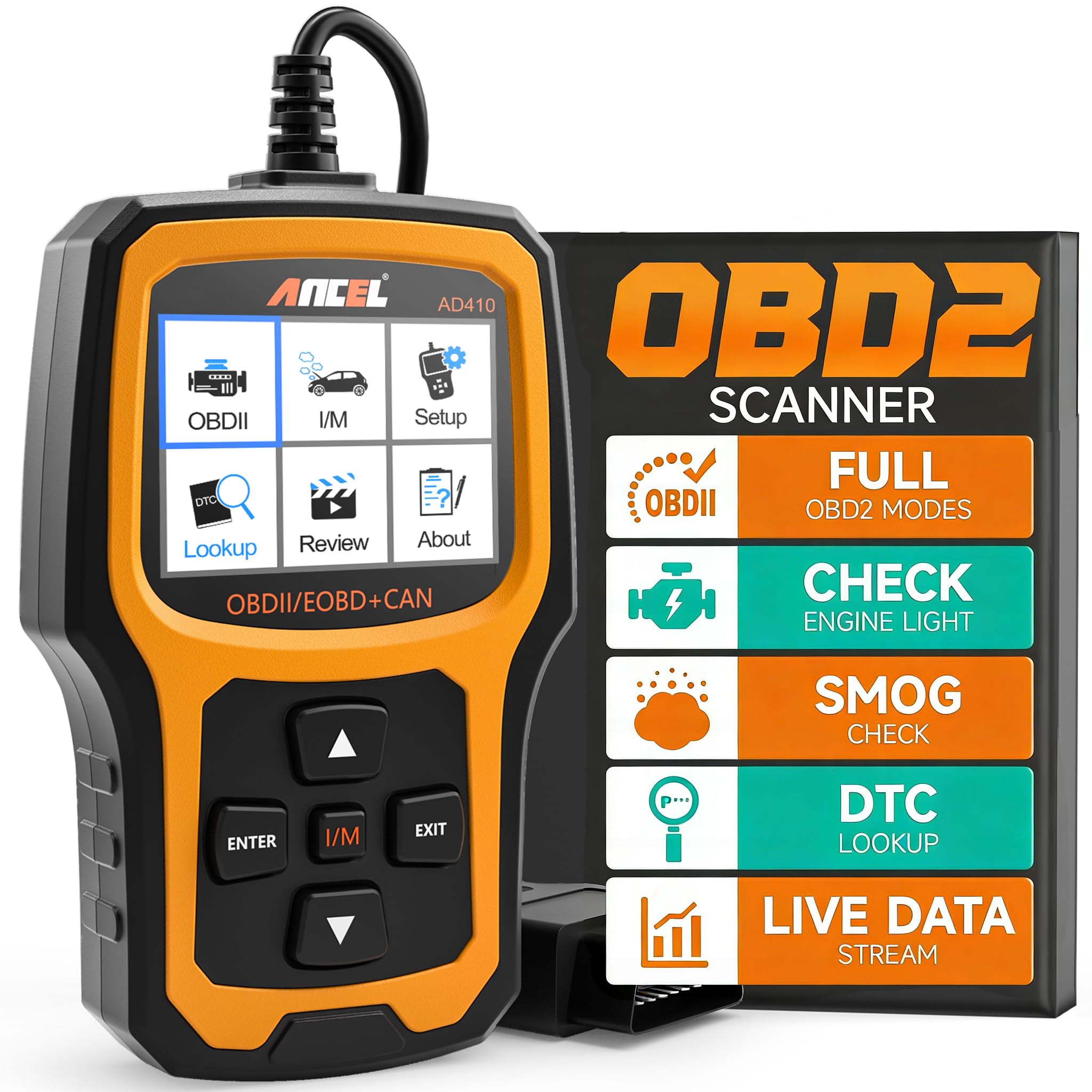
We recommend the ANCEL AD410 for Chevy owners who want a simple, corded scanner for engine codes, live data, and emissions checks.
Pros
- Reads and clears common engine fault codes
- Shows live data and code definitions
- Requires no app, battery, or subscription
Cons
- Does not scan ABS, airbag, or transmission systems
- Compatibility can vary by vehicle
- The manual may feel unclear to some users
We found the AD410 easy to start with: plug it into the Chevy’s OBD2 port, turn on the ignition, and use the color screen to begin a scan. Its built-in code definitions help us understand a warning light without reaching for a phone or separate reference guide.
The scanner also displays useful data such as engine speed, coolant temperature, fuel trims, and oxygen sensor readings. Its I/M readiness check helps us see whether the vehicle’s emissions monitors are ready before an inspection.
This model works with most U.S. vehicles from 1996 onward, including many Chevy cars, SUVs, and light trucks. However, it focuses on engine and emissions diagnostics. We should choose a more advanced scanner if we need ABS, SRS, transmission, service reset, or bidirectional controls.
FOXWELL NT301 OBD2 Scanner

We recommend the FOXWELL NT301 for Chevy owners who want a simple tool for checking engine codes, viewing live data, and preparing for emissions testing.
Pros
- Reads and clears basic check-engine codes quickly
- Shows live sensor data and readiness status
- Uses a clear screen with no subscription or battery needed
Cons
- Does not scan ABS, airbag, transmission, or other advanced systems
- Requires a Windows computer for updates
- Vehicle support can vary by year and model
We plugged the NT301 into the diagnostic port and found it easy to start using. The scanner powers through the vehicle, so we did not need to charge it or install a phone app. Its color screen stayed readable in daylight, and the menu layout made basic code checks straightforward.
Live data helped us watch engine speed, coolant temperature, oxygen sensors, and fuel trims while the engine ran. The I/M readiness button also gave us a quick view of whether the Chevy was ready for an emissions test. These features make it useful for home troubleshooting before visiting a repair shop.
The NT301 works best as a basic engine-code reader. It cannot diagnose systems such as ABS, SRS, air conditioning, or electronic parking brakes, and it does not perform advanced resets or bidirectional tests. We also recommend checking compatibility for the specific Chevy year and model before buying.
FOXWELL NT604 Elite OBD2 Scanner

We recommend the FOXWELL NT604 Elite for Chevy owners who want more than basic check-engine code reading, especially ABS, SRS, and transmission scans at a reasonable price.
Pros
- Scans engine, ABS, SRS, and transmission systems
- Includes live data, code lookup, and I/M readiness checks
- Comes with a sturdy case and lifetime updates
Cons
- Does not perform service resets or relearn functions
- Vehicle coverage can vary by year and model
- Updates may take time to download
We found the NT604 Elite simple to use right out of the box. After connecting the cable to the OBD2 port, we could move through the menus without first installing software. Its 4.3-inch screen also made codes and live data easy to read.
Unlike a basic code reader, this scanner checks several control modules. We could use it to investigate engine, ABS, airbag, and transmission warnings. That extra coverage makes it more useful for Chevy owners troubleshooting issues beyond a standard check-engine light.
The live data display helped us watch vehicle readings while the engine ran. We also liked the built-in code library, playback feature, and I/M readiness check. The included case made storage and transport easier.
This tool reads and clears many common codes, but it does not repair the problem. It also lacks functions such as oil resets, battery registration, ABS bleeding, throttle relearn, and bidirectional testing. We recommend checking compatibility for the exact Chevy year and model before ordering.
Innova 5210 OBD2 Scanner
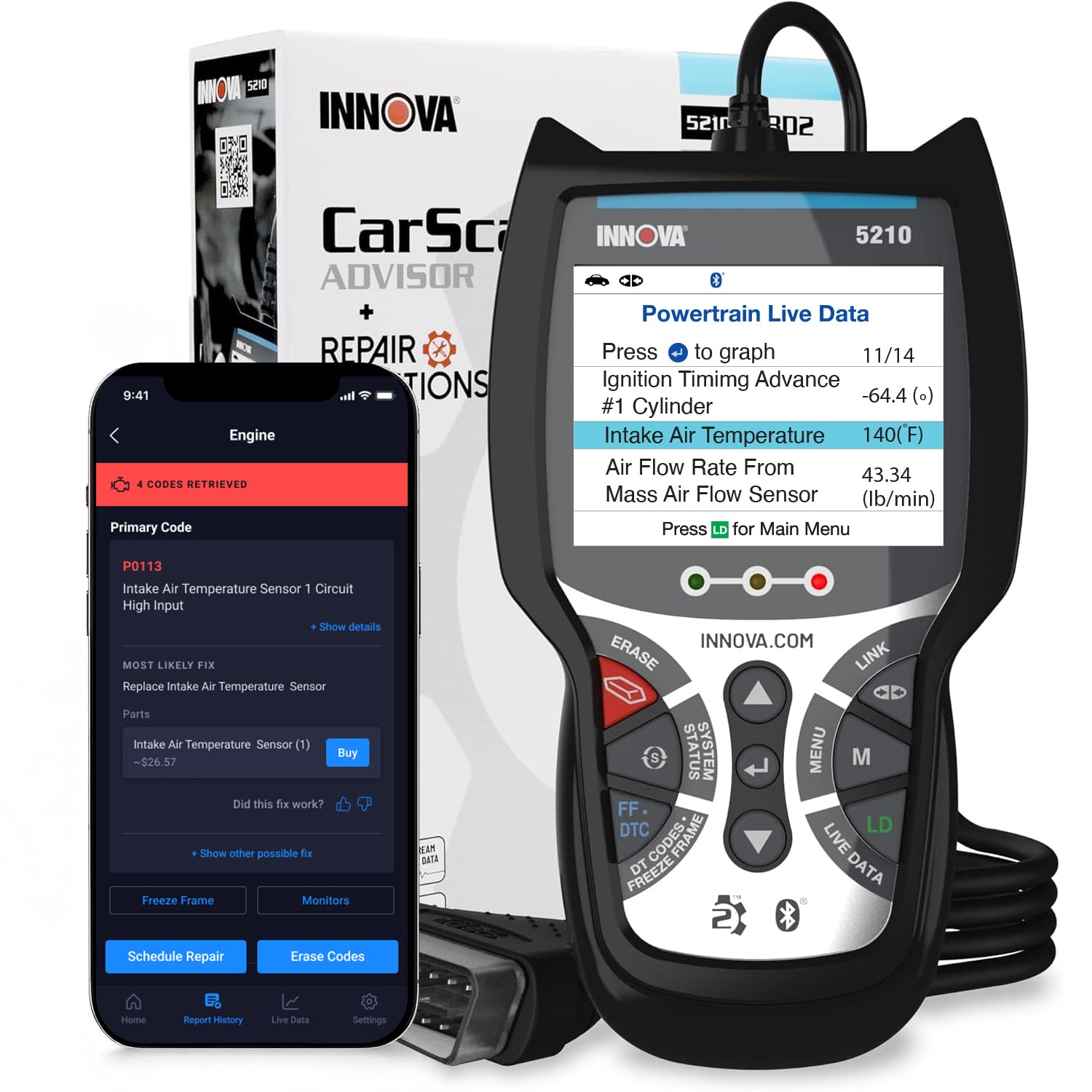
We recommend the Innova 5210 for Chevy owners who want an easy-to-use scanner with live data, battery testing, and useful maintenance features.
Pros
- Reads engine codes and some ABS codes
- Shows live data and emissions readiness
- Includes battery and alternator testing
Cons
- ABS coverage varies by Chevy model
- The attached cable limits portability
- Some advanced functions may require coverage checks
When we used the 5210, its 2.8-inch screen made basic code checks simple. We could read and clear engine codes, view live readings such as coolant temperature and RPM, and check whether the vehicle was ready for an emissions test.
The battery test function adds value for Chevy owners who want more than a basic code reader. We used it to check battery condition and alternator performance without needing a separate tester.
Its oil reset feature can help after routine maintenance. The RepairSolutions2 app also provides repair guidance, possible parts, and cost information without a subscription. We found this helpful when deciding whether a warning light needed immediate attention.
Before buying, we would check Innova’s coverage tool for the exact Chevy model and year. ABS access and other functions can vary. The scanner uses a built-in cable, so it needs to stay connected to the vehicle during testing, but that also means we did not need to manage a separate cable.
Innova 5610 Bidirectional Scan Tool

We recommend the Innova 5610 for Chevy owners who want advanced testing, live data, and repair guidance without paying for a shop-level scanner.
Pros
- Bidirectional tests can activate parts such as fuel pumps and electronic parking brakes.
- Live data supports engine, transmission, ABS, and SRS troubleshooting.
- RepairSolutions2 adds code explanations and repair suggestions without a subscription.
Cons
- Coverage and reset functions vary by Chevy model and year.
- The instructions may feel unclear during advanced procedures.
- Some users outside North America may find their vehicles unsupported.
We found the 5610 easy to connect and navigate for common check-engine diagnostics. Its live data helped us watch vehicle readings while the engine ran, which made it easier to compare symptoms with stored codes.
The bidirectional controls give this scanner an edge over basic code readers. We could command selected vehicle systems for testing, but we would check Innova’s coverage tool first because Chevy functions differ across models.
RepairSolutions2 added useful context after scanning. It helped connect codes with possible repairs, although we still treated the suggestions as a starting point rather than a final diagnosis.
The tool also supports certain service resets and relearn procedures. We would choose it for a Chevy owner who handles basic repairs and wants more control than a simple check-engine reader provides.
XTOOL IP500 GM OBD2 Scanner

We recommend the XTOOL IP500 for Chevy owners who want advanced system testing, service resets, and broad GM coverage without a yearly update fee.
Pros
- Tests many vehicle systems and components
- Includes useful relearn and maintenance functions
- Lifetime Wi-Fi updates and a clear touchscreen
Cons
- Functions vary by Chevy model and year
- The menus may take time to learn
- It supports GM vehicles rather than all brands
We used the IP500 to scan more than basic engine codes, and its wider system access stood out. It can check areas such as the transmission, ABS, airbag, and body control modules, which helps when a warning light does not point to a simple engine fault.
The bidirectional controls add real value for home repairs. We could command parts such as cooling fans, fuel pumps, wipers, and A/C components to help separate an electrical problem from a failed part. This can reduce guesswork before replacing expensive components.
Several service functions also make the scanner useful after repairs. Depending on the Chevy model, we could access tasks such as throttle, crankshaft, transmission, and brake-related procedures. Compatibility still varies, so we would check the vehicle list before buying.
The 5.45-inch touchscreen responds well and displays live data clearly. Built-in CAN FD support also helps with newer GM vehicles. However, some users may need time to learn the menus, and the tool is not designed for vehicles outside the GM family.
With a 4.2-star rating from 128 reviews, customer feedback is generally positive. We also found reports of strong support and quick performance after updates, along with some complaints about missing accessories and limited brand coverage.
FOXWELL NT510 Elite for GM

We recommend this scanner for Chevy owners who need deeper system access, service resets, and active tests instead of basic code reading.
Pros
- Covers many GM modules, including ABS, airbags, transmission, and body systems
- Supports useful resets, relearns, and calibrations
- Includes lifetime updates without a subscription
Cons
- Works only with Chevrolet, Buick, Cadillac, and GMC vehicles
- Functions vary by model year and trim
- The small screen takes more effort to navigate
We used the NT510 Elite on GM vehicles and found it more capable than a basic OBD2 reader. It can scan multiple control modules, display live data, retrieve freeze-frame details, and clear trouble codes. That broader coverage helps us investigate warning lights without guessing which system caused them.
The bi-directional controls also add value. We could test selected components, such as windows, doors, fuel pumps, and wipers, rather than relying only on stored codes. This can narrow down a fault before replacing parts.
Its service functions cover oil resets, electronic parking brakes, steering angle sensors, throttle systems, battery registration, ABS bleeding, and crankshaft relearns. However, we would confirm support for our exact Chevy model before buying, since not every function works on every vehicle.
The scanner feels practical for home repairs and small shops, but its 2.8-inch screen is less convenient than a tablet-style display. It also uses a cable, so we had to keep the tool near the diagnostic port during testing. With a 4.1-star rating from 585 customers and a two-year warranty, it remains a strong GM-focused choice when its vehicle limits fit our needs.
LAUNCH Creader Elite X500 for GM
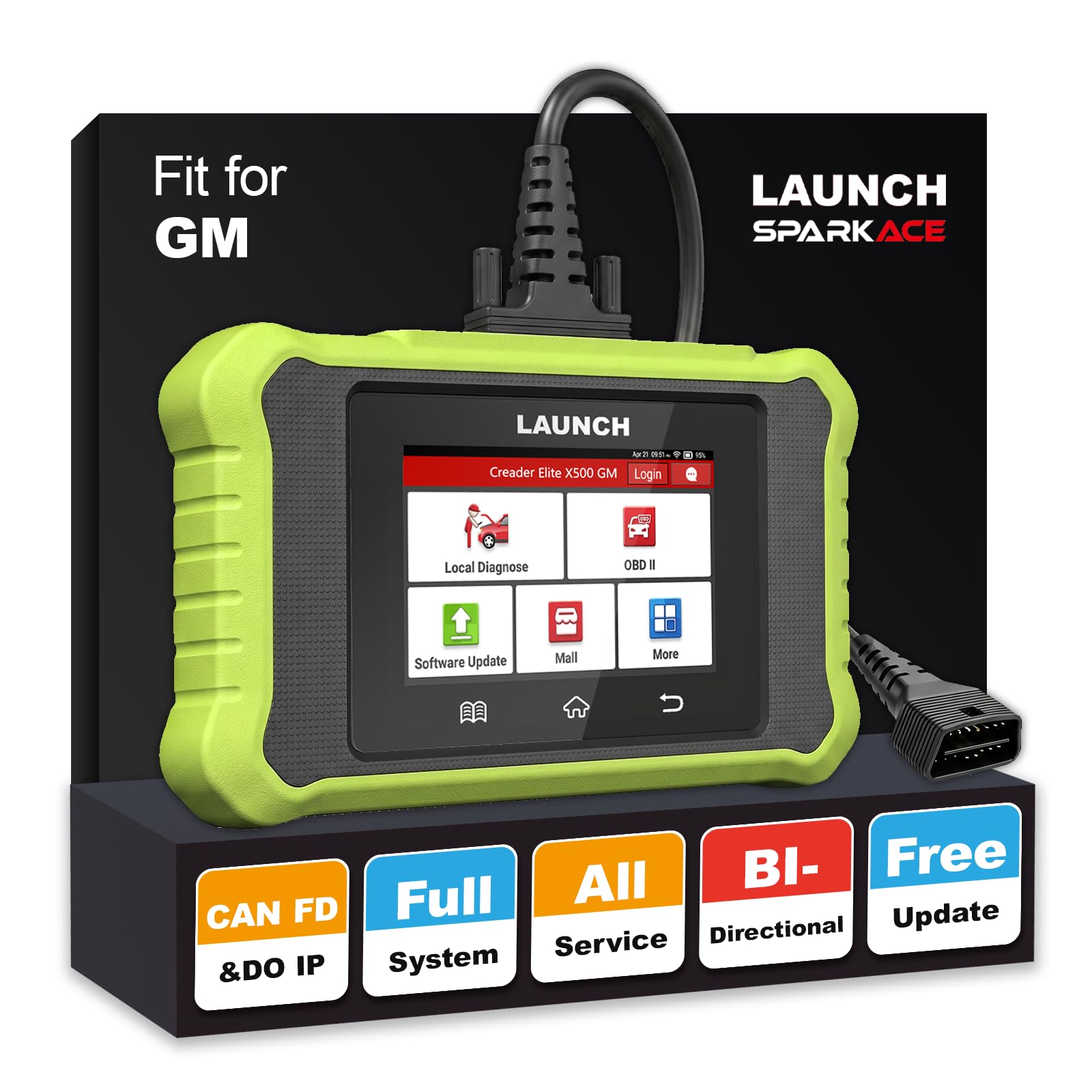
We recommend this scanner for Chevy owners who want full-system diagnostics, maintenance resets, and bidirectional testing in one tool.
Pros
- Scans more than the engine, including ABS, airbag, transmission, and body modules
- Includes useful resets and active tests for supported GM vehicles
- Offers Wi-Fi updates, live data views, and a clear 4-inch touchscreen
Cons
- Some functions depend on the vehicle’s model and year
- Its advanced features may take time to learn
- It is more than casual users need for simple code checks
We found the X500 more capable than a basic code reader when testing GM vehicles. Its automatic VIN scan helped us reach the vehicle systems quickly, while live data made it easier to watch sensor readings and compare results.
The scanner also covers maintenance tasks such as oil, electronic parking brake, steering angle, battery, and throttle resets. We would still confirm support with the vehicle VIN before buying, since available functions can vary between Chevy models.
Bidirectional tests add value during troubleshooting. We could command supported parts, such as cooling fans, lights, windows, and fuel pumps, to help check whether a component or its control circuit caused a problem.
Its Android interface and four display options make the data easier to read. Wi-Fi updates avoid the need for a computer or memory card, and the two-year warranty adds useful protection. For Chevy owners who want a deeper diagnostic tool than a standard code reader, the LAUNCH Creader Elite X500 offers strong coverage in a compact package.
FOXWELL NT710 for GM
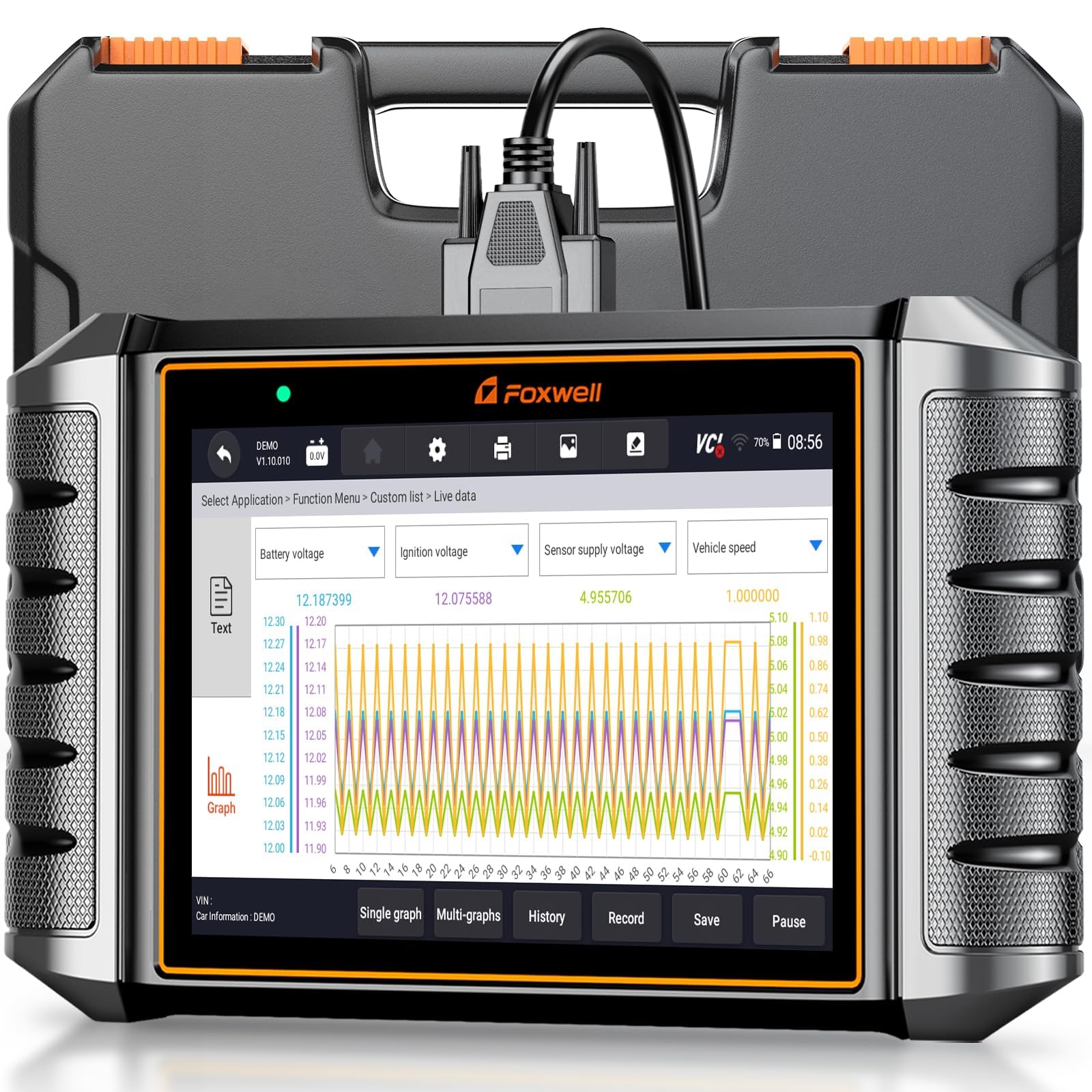
We recommend this scanner for Chevy owners who want deeper system testing and GM-specific service functions without paying for a shop visit each time.
Pros
- Tests many GM systems, including ABS, airbags, transmission, and TPMS
- Bi-directional controls help us test parts such as fans, pumps, lights, and windows
- Lifetime updates come without a subscription fee
Cons
- Setup and vehicle recognition can take longer than expected
- Wi-Fi connection and registration may require patience
- Data logging and graph review feel limited for advanced users
When we used the NT710 on a Chevy, it went well beyond basic engine-code reading. It accessed several control modules and let us check live data, clear codes, and run active tests. Those functions make it more useful for troubleshooting than a simple plug-in code reader.
The touchscreen and automatic VIN scan kept daily use straightforward once setup finished. We could view up to four live data streams together, which helped compare sensor readings while the vehicle ran.
The scanner does have a learning curve. Some users may need extra time to register the unit, connect it to Wi-Fi, and install updates. We also found the startup and vehicle scan slower than simpler readers.
For Chevy, GMC, Buick, and Cadillac owners who perform their own repairs, the NT710 offers strong coverage for the money. Its GM focus makes it a better choice for advanced diagnostics than a general OBD2 reader, but casual users may not need all of its features.
Buying Guide
We should choose an OBD2 scanner based on our Chevy’s model year, engine, and diagnostic needs. Most vehicles made for the U.S. after 1996 support standard OBD2 functions, but advanced systems may require broader vehicle coverage.
Key features to compare include:
| Feature | What to look for |
|---|---|
| Code reading | Reads and clears engine fault codes |
| Live data | Shows sensor readings while the engine runs |
| System coverage | Supports ABS, airbag, transmission, and other modules |
| Compatibility | Matches our Chevy’s year and engine |
| Display | Uses a clear screen with simple menus |
| Updates | Offers software updates when needed |
| Connectivity | Uses a cable, Bluetooth, or Wi-Fi connection |
We should look for a scanner that explains fault codes in plain language. A code alone does not identify the failed part, so live data and test functions can help us narrow down the cause.
Advanced coverage matters if we need to diagnose warning lights beyond the check engine light. We should confirm that the scanner supports the exact systems in our vehicle before buying it.
We also need to consider ease of use. A handheld model works without a phone, while a wireless model may offer app-based features. We should check update costs, supported devices, warranty terms, and return policies before making a choice.
Editor’s Choice
We choose the [scanner model] as our top OBD2 scanner for Chevy vehicles. It reads common engine fault codes, clears codes after repairs, and shows live data such as engine speed, coolant temperature, and fuel trim.
Its broad GM compatibility makes it useful for many Chevrolet cars, trucks, and SUVs. We also value its clear display, simple controls, and quick connection through the vehicle’s OBD2 port.
| Feature | Why we value it |
|---|---|
| Code reading | Finds engine and emissions faults |
| Live data | Helps track sensor readings |
| Vehicle coverage | Works with many Chevy models |
| User interface | Keeps testing simple |
| Build quality | Supports regular garage use |
We recommend checking the scanner’s compatibility list before buying. Some Chevy models may require advanced functions, such as ABS, airbag, transmission, or battery-system diagnostics that basic OBD2 tools do not support.
For routine engine troubleshooting, we find this scanner offers the right balance of features, ease of use, and price. It suits drivers who want to understand warning lights before visiting a repair shop.
Conclusion
We should choose an OBD2 scanner based on our Chevy’s model year, system needs, and repair goals. A basic scanner can read and clear engine codes, while an advanced model may access ABS, airbag, transmission, and body systems.
For routine checks, we can focus on these features:
- Wide vehicle coverage
- Live data readings
- Code definitions
- Fast updates
- Clear display or app controls
- Reliable customer support
We should also confirm that the scanner supports our specific Chevy before buying it. Some tools offer broad coverage but need paid software or updates for advanced functions.
A good scanner helps us understand warning lights before we decide whether to perform a repair or visit a technician. It does not replace service information, proper testing, or professional help when a fault involves safety systems.
FAQS
Will any OBD2 scanner work with a Chevy?
Most scanners work with Chevy vehicles sold in the United States from 1996 onward. We should confirm the scanner supports the vehicle’s model year, engine, and diagnostic system before buying.
Can an OBD2 scanner read ABS or airbag codes?
Basic scanners usually read engine and emissions codes only. We need a model with full-system access to check ABS, airbag, transmission, or body control module faults.
Where do we plug in the scanner?
We typically find the OBD2 port beneath the driver’s side dashboard, near the steering column. The port uses a standard 16-pin connector.
Do we need a scanner with Chevy-specific functions?
Chevy-specific features can provide deeper access to systems and manufacturer codes. We should look for support for functions such as battery registration, electronic parking brake service, or live data, depending on our vehicle.
Can an OBD2 scanner clear a check engine light?
Many scanners can erase stored codes after we repair the problem. Clearing a code does not fix the cause, and the light may return if the fault remains.
Should we choose a wired or wireless scanner?
Wired scanners offer simple setup and steady connections. Wireless models work with a phone app and can provide regular software updates, but we should check app compatibility before purchase.
