
P0455 Repair Cost: What You’ll Pay to Fix an EVAP Large Leak

Quick Answer
P0455 repair cost can range from almost nothing for a loose gas cap to several hundred dollars for an EVAP valve or charcoal canister. In 2026, professional check-engine-light diagnosis often costs about $120–$230 before repairs, while major fuel-tank work can exceed $1,500. Because P0455 identifies an EVAP leak rather than one failed part, I recommend checking the cap and getting the leak diagnosed before buying anything. AAA also recommends checking simple causes such as the fuel cap when a check engine light appears.
Typical P0455 Costs
- Loose gas cap: Often free if the cap simply needs to be tightened correctly.
- Diagnostic testing: Expect roughly $120–$230 at many U.S. repair facilities.
- Purge valve: A common replacement can land near the $200–$250 range.
- Charcoal canister: Several hundred dollars is common, with large differences between vehicles.
- Fuel tank problem: This is one of the expensive possibilities and can exceed $1,500.
Before You Pay
- Confirm the code with an OBD2 scanner, inspect the gas cap, and diagnose the leak before replacing expensive EVAP parts.
I understand why P0455 repair cost is confusing. The same trouble code can come from a cap that was left loose after filling up or a damaged component near the fuel tank.
When I approach a P0455 diagnosis, I start with the cheapest checks and work deeper only when the evidence points there. That order can save a surprising amount of money.
In This Guide
How Much Does It Cost to Fix P0455 in 2026?
A realistic P0455 repair cost can run from a free gas-cap adjustment to more than $1,500 for major fuel-system work. Most drivers will fall somewhere between those two extremes.
The trouble code does not tell you which part failed. It only tells you the vehicle detected a large leak in the evaporative emission control system.
2026 P0455 Cost Breakdown
| Service or Repair | Typical Cost Range | What to Know |
|---|---|---|
| Tighten existing gas cap | $0 | Always check this before buying parts. |
| Replacement gas cap | About $15–$150+ | DIY parts can be cheap; professional replacement costs more. |
| Check-engine diagnosis | About $120–$230 | May include scan data and additional testing. |
| Purge valve replacement | About $200–$250 | Access and vehicle design can change labor cost. |
| Vent valve or EVAP hose repair | Often low to mid hundreds | Location and corrosion can add labor. |
| Charcoal canister replacement | About $350–$900+ | Part prices vary greatly by vehicle. |
| Fuel tank replacement | About $1,100–$3,500+ | This is not the first repair I would suspect from P0455 alone. |
These are broad U.S. budgeting ranges, not quotes for a specific vehicle. Make, model, year, labor rate, location, and the actual failure can move the price substantially.
I pay special attention to the diagnostic charge. Paying for good diagnosis can be cheaper than replacing three parts based on guesses.
Technician’s note: Never approve an expensive charcoal canister or fuel-tank replacement simply because an OBD2 scanner displayed P0455. The leak location should be confirmed first.
Section Takeaway: P0455 itself does not have one repair price. Find the failed seal, hose, valve, or component before judging whether the estimate is fair.
What Does P0455 Mean?
P0455 means the vehicle detected a large leak in its evaporative emission control system, usually called the EVAP system. It is a generic OBD-II diagnostic trouble code.
Definition: The EVAP system captures gasoline vapors from the fuel tank and prevents those vapors from simply escaping into the atmosphere.
The system normally includes several connected parts:
- Fuel cap: Seals the filler opening on vehicles that use a removable cap.
- EVAP hoses: Carry fuel vapor through the system.
- Charcoal canister: Stores fuel vapor until the engine can process it.
- Purge valve: Controls when stored vapors enter the engine.
- Vent valve: Helps control airflow and seal the system during testing.
- Fuel tank pressure sensor: Helps the computer monitor pressure or vacuum changes.
The engine computer runs EVAP self-tests under certain operating conditions. P0455 can appear when the system cannot build or hold the expected pressure or vacuum.
Does P0455 Tell You Which Part Is Bad?
No. This is one of the most important things to understand before spending money.
An OBD2 scanner reads the diagnostic trouble code stored by the vehicle. It does not automatically prove that a gas cap, purge valve, vent valve, or canister has failed.
I treat the code as a starting point. The next job is finding the reason the system failed its leak test.
Section Takeaway: P0455 identifies an EVAP system problem, not a guaranteed failed component.
What Usually Causes P0455?
A loose or damaged gas cap is one of the first things worth checking, but it is not the only cause. Split hoses and valves that cannot seal are also common possibilities.
I work through the inexpensive and visible causes first. That keeps the diagnosis organized and reduces unnecessary parts swapping.
1. Loose, Missing, or Damaged Gas Cap
A cap that is not seated correctly can leave a large opening in the EVAP system. A damaged seal can create the same problem.
Remove the cap and inspect its seal. Also check the filler-neck sealing surface for dirt, rust, damage, or anything that prevents a clean seal.
2. Cracked or Disconnected EVAP Hose
EVAP hoses can crack with age or become disconnected during other repairs. Damage near the fuel tank can be difficult to see without lifting the vehicle safely.
Rodent damage and abrasion can also create leaks. I never assume a hose is good just because the visible section looks clean.
3. Purge Valve That Does Not Seal
The purge valve manages vapor flow between the EVAP system and engine. A valve that sticks open can prevent the system from behaving correctly during its self-test.
Replacement cost varies by accessibility. Current general repair estimates place many professional purge-valve repairs near the low-$200 range.
Technician’s note: Testing the valve is better than replacing it because P0455 appeared on a scanner.
4. EVAP Vent Valve Problem
The vent valve must operate correctly when the computer tests the system. Dirt, corrosion, electrical failure, or a mechanical problem can stop it from sealing.
Some vent valves sit near the rear of the vehicle. Exposure to road debris and moisture can make diagnosis or removal harder.
5. Damaged Charcoal Canister
The charcoal canister stores fuel vapors. Cracks, impact damage, internal failure, or liquid fuel contamination can create EVAP problems.
Canisters are expensive enough that I want solid evidence before replacing one. Depending on the vehicle, the total repair can range from several hundred dollars to substantially more.
6. Filler Neck, Seal, or Fuel Tank Leak
A damaged filler neck or seal can leak even when the cap itself is new. Corrosion is another concern on older vehicles in harsh climates.
Fuel-tank damage is possible but much more expensive to address. It should be confirmed through proper inspection and leak testing.
Safety note: A strong gasoline smell, visible fuel, or wet area around the tank deserves immediate professional attention. Avoid flames, sparks, smoking, and unsafe electrical work around fuel.
Section Takeaway: Check the cap and obvious hoses first, but let testing guide expensive repairs such as valves, canisters, filler components, or the fuel tank.
How Is P0455 Diagnosed?
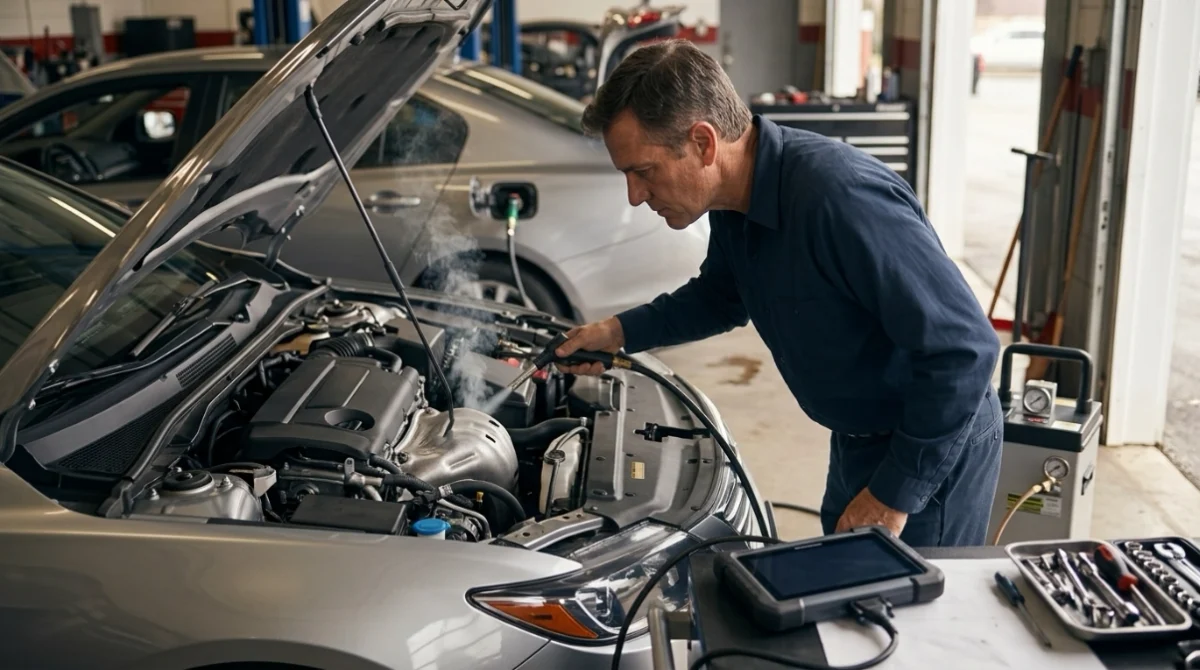
A proper P0455 diagnosis should move from simple inspections to controlled testing. I would not start by clearing the code and randomly replacing parts.
A basic OBD2 scanner is useful, but the code itself is only one piece of information.
Step 1: Confirm the Stored Codes
- Connect an OBD2 scanner and confirm P0455.
- Record any related EVAP trouble codes.
- Check available freeze-frame information.
- Avoid clearing everything before recording what the computer stored.
Related codes can change the direction of the diagnosis. For example, an electrical circuit code may make valve or wiring checks more important.
Step 2: Inspect the Gas Cap and Filler Area
- Confirm the cap is present and correctly installed.
- Look for a cracked, flattened, or hardened seal.
- Inspect the filler opening for corrosion or debris.
- Verify that a replacement cap is correct for the vehicle.
This inspection costs almost nothing. It is one reason I dislike seeing an expensive repair quote before anyone checks the filler area.
Step 3: Inspect Accessible EVAP Lines
Look for split hoses, disconnected fittings, broken plastic lines, and obvious damage. Do not crawl under an unsupported vehicle.
If components are hidden above the tank or behind shields, professional access may be safer.
Step 4: Test the Purge and Vent Valves
A technician may use scan-tool commands, electrical checks, vacuum testing, or other manufacturer-approved procedures. The exact test method depends on vehicle design.
I would not rely on one universal voltage value or button sequence. Vehicle specifications vary by make, model, engine, and year.
Step 5: Perform an EVAP Smoke Test
A smoke test introduces controlled low-pressure smoke into the EVAP system. Escaping smoke can reveal leaks that are hard to see during a visual inspection.
This is especially useful after simple causes have been ruled out. It can prevent replacing an expensive canister when the real problem is a cracked line.
Technician’s note: Fuel-vapor systems require proper equipment and procedures. Do not pressurize the EVAP system with unregulated shop air or improvise around gasoline vapors.
Step 6: Repair, Clear, and Verify
- Repair the confirmed fault.
- Clear the trouble code when appropriate.
- Drive the vehicle normally.
- Allow the EVAP monitor to run again.
- Re-scan if the check engine light returns.
The light may not disappear immediately just because a loose cap was tightened. EVAP monitors only run when their required operating conditions are met.
Section Takeaway: An OBD2 code identifies the system. Inspection, valve testing, and sometimes a smoke test identify the repair you should pay for.
Can You Drive With P0455?
Many vehicles with P0455 continue to start and drive normally. The check engine light may be the only obvious symptom.
That does not mean the code should be ignored. The EVAP system exists to control fuel-vapor emissions.
When I Would Stop Driving
I would treat the situation more urgently if the vehicle shows signs beyond a normal steady check-engine light.
- Strong gasoline smell: A significant vapor or liquid-fuel leak may be present.
- Visible fuel leak: Stop and address the safety problem.
- Engine runs poorly: Another fault may be present alongside P0455.
- Flashing check engine light: This can signal a more urgent engine problem unrelated to the EVAP leak itself.
AAA advises drivers to pay attention to abnormal symptoms such as loss of power, shaking, or unusual odors when the check engine light appears.
A stored P0455 can also create emissions-inspection problems where onboard diagnostic readiness and warning lights are checked.
Section Takeaway: P0455 alone often does not change how the vehicle drives, but fuel smells, visible leaks, or other serious symptoms deserve prompt attention.
How Can You Avoid Overpaying for P0455 Repair?
The easiest way to overpay is to treat P0455 as a parts-replacement instruction. It is not one.
The better approach is to pay for evidence. Ask what test showed that the quoted component is leaking or failing.
Ask for the Diagnosis Before the Repair
A professional scan and diagnosis often costs money even before parts are installed. That charge can be worthwhile if it stops unnecessary repairs.
For context, current U.S. check-engine diagnostic estimates are around $122–$233. Prices still vary by shop and location.
Compare the Quote With the Failed Part
- Gas cap: Ask whether the old seal is damaged or simply loose.
- Purge valve: Ask how the valve failed its test.
- Vent valve: Ask whether the fault is mechanical, electrical, or caused by damaged wiring.
- Charcoal canister: Ask where the leak or failure was confirmed.
- Fuel tank: Ask to see the evidence before approving a major repair.
If you want another professional opinion, AAA provides an Approved Auto Repair locator and repair resources. Comparing written estimates can help when the proposed repair is expensive.
Check for Recalls or Manufacturer Communications
Before paying for an unusual or expensive failure, I also like checking whether the vehicle has relevant manufacturer information. This is especially useful when the same component has caused problems across many vehicles.
You can enter the VIN on the NHTSA recall lookup to check open safety recalls. A recall is different from an ordinary repair, so do not assume P0455 means your vehicle qualifies.
Technician’s note: Always identify the vehicle by VIN when confirming replacement components or manufacturer procedures. Similar models can use different emissions hardware.
Do Not Keep Buying Parts Until the Light Goes Away
This is the mistake I would avoid most. A cap, purge valve, vent valve, and canister can all be replaced while the original cracked hose remains untouched.
After one or two guesses, diagnostic testing usually becomes the cheaper path.
Section Takeaway: A fair P0455 repair quote should connect the price to a confirmed failed component, not just the trouble-code description.
P0455 Repair Cost FAQ
How much does P0455 cost to fix?
P0455 can cost nothing if the gas cap only needs tightening, while common professional repairs can cost a few hundred dollars. Charcoal canister or fuel-tank problems can cost considerably more, so the vehicle must be diagnosed before an accurate estimate is possible.
Can a loose gas cap cause P0455?
Yes. A loose, missing, incorrectly fitted, or damaged gas cap can stop the EVAP system from sealing and trigger a large-leak code. Check the cap and filler sealing surface before replacing expensive components.
How much does it cost to diagnose P0455?
As of 2026, general U.S. check-engine-light diagnosis estimates are roughly $120–$230. The actual price varies by region, shop labor rate, vehicle, and whether specialized EVAP testing is required.
How much does an EVAP purge valve cost to replace?
Current general repair estimates place many professional purge-valve replacements near $200–$250. Some vehicles cost more because the part is expensive or difficult to reach.
Does P0455 always mean the charcoal canister is bad?
No. A charcoal canister is only one possible cause. A gas cap, hose, vent valve, purge valve, filler neck, tank seal, or another EVAP fault can produce the same code.
Will P0455 clear after tightening the gas cap?
It may, but not immediately. The vehicle’s EVAP monitor must run again and confirm that the system passes its test. That can require several normal driving cycles depending on the vehicle.
Can I diagnose P0455 with a cheap OBD2 scanner?
A basic scanner can confirm the code and may show related codes or freeze-frame data. It usually cannot locate the leak by itself, so further inspection or a professional smoke test may still be necessary.
Section Takeaway: Start with the gas cap, confirm the diagnosis, and spend money only after you know what failed.
If my scanner showed P0455 today, I would not order a charcoal canister first. I would record the codes, inspect the cap and visible lines, then use proper EVAP testing if the easy checks did not reveal the leak.
That sequence gives you the best chance of keeping the P0455 repair cost reasonable while still fixing the real problem.
