
How to Fix P0455: Diagnose and Repair a Large EVAP Leak

Quick Answer
To fix P0455, start by checking the fuel cap, filler neck, and visible EVAP hoses for a loose connection, crack, or damage. If those checks do not find the leak, use an OBD2 scanner and an EVAP smoke test to inspect the purge valve, vent valve, charcoal canister, and vapor lines. A check engine light can have several causes, so P0455 should guide your diagnosis rather than tell you which part to replace.
Start With These Checks
- Check the cap: Tighten the fuel cap and inspect its seal for cracks, dirt, or flattening.
- Scan all codes: Look for related EVAP codes that can narrow the problem.
- Inspect hoses: Look for disconnected, split, crushed, or brittle vapor lines.
- Check the valves: A purge or vent valve that cannot seal may trigger a large-leak code.
- Smoke test it: Use an approved EVAP smoke machine when the leak is not visible.
Before Clearing the Code
- Repair the confirmed fault first, then clear the code and let the vehicle complete its EVAP monitor again.
I often see P0455 turn a simple check-engine light into an expensive guessing game. An OBD2 scanner helps point you toward the EVAP system, but it does not prove that one specific part has failed.
The good news is that P0455 often has a logical diagnostic path. I start with simple sealing problems before testing valves or reaching for a smoke machine.
In This Guide
What Does the P0455 Code Mean?
P0455 is a generic powertrain diagnostic trouble code related to the evaporative emissions system. It normally means the vehicle detected a large or gross EVAP leak.
The EVAP system keeps gasoline vapors from escaping freely into the atmosphere. It stores those vapors and sends them into the engine to be burned under the right conditions.
- Fuel tank: Holds the fuel and produces fuel vapor.
- Fuel cap or filler seal: Helps keep the system closed.
- Charcoal canister: Stores fuel vapors until the engine can use them.
- Purge valve: Controls vapor flow toward the engine.
- Vent valve: Helps the EVAP system vent and seal when needed.
- Vapor hoses: Connect the major EVAP components.
- Pressure sensor: Helps some vehicles monitor pressure or vacuum changes.
The engine computer periodically checks whether the EVAP system can hold the expected pressure or vacuum. P0455 appears when the test indicates a leak large enough to exceed the system’s permitted threshold.
That does not tell you where the opening is. A missing fuel cap and a broken vapor hose can both create a similar diagnostic result.
Is P0455 the same as a bad gas cap?
No. A loose, missing, damaged, or incorrectly fitted fuel cap is only one possible cause.
I always inspect it first because it takes less than a minute. I do not replace it automatically unless I find damaged threads, a failed seal, or another clear problem.
Locksmith’s note: A trouble code is evidence from the vehicle’s computer, not a parts-replacement instruction. Confirm the fault before spending money.
You can also use an OBD diagnostic code reference when reviewing the codes stored by the vehicle.
How Do You Fix P0455 Step by Step?
The best way to fix P0455 is to work from the easiest leak points toward components that require testing. Replacing EVAP parts at random can get expensive fast.
- Scan the vehicle for all trouble codes. Record P0455 and any related codes before clearing anything.
- Inspect the fuel cap. Make sure it fits correctly, tightens normally, and has an undamaged sealing surface.
- Inspect the filler neck. Look for rust, dents, dirt, or damage where the cap makes contact.
- Check accessible EVAP hoses. Look for loose fittings, broken plastic lines, cracks, rubbing, and disconnected hoses.
- Inspect the charcoal canister. Check for physical damage, broken ports, or hoses pulled away from it.
- Test the purge valve. Make sure it can close when the vehicle expects the EVAP system to seal.
- Test the vent valve. A vent valve stuck open can prevent the system from holding vacuum during a leak test.
- Perform an EVAP smoke test. Use smoke to locate leaks that cannot be seen during a visual inspection.
- Repair the confirmed problem. Replace or reconnect only the component that testing shows is faulty.
- Clear and verify. Clear the code and let the EVAP monitor run again before calling the repair complete.
Start with the fuel cap
I begin here even when the cap looks normal. A slightly damaged seal can be easy to miss during a quick glance.
- Remove the cap and inspect its rubber sealing surface.
- Clean dirt from the cap and filler-neck sealing area.
- Check for cracks or hardened rubber.
- Make sure the cap locks or tightens as designed.
- Confirm you have the correct cap for the vehicle.
Do not expect the check-engine light to disappear immediately after tightening the cap. The vehicle may need another successful EVAP self-test before the computer confirms the leak is gone.
Look carefully at the hoses
EVAP lines can run from the engine compartment to the fuel tank area. Some sections may be difficult to see without safely raising the vehicle.
I pay close attention near connectors and bends. Plastic vapor lines can become brittle, while rubber sections can split near clamps or fittings.
- Loose quick-connect fittings
- Split rubber elbows
- Cracked plastic vapor lines
- Hoses damaged during previous repairs
- Connections near the charcoal canister
Safety note: Never use an open flame to search for a fuel-vapor leak. Fuel vapors can ignite and cause serious injury or fire.
Section Takeaway: Fix P0455 by proving where the EVAP system is leaking. Start with the cap and hoses, then test the valves and use smoke when visual checks do not reveal the fault.
What Causes a P0455 Code?
The most common P0455 causes involve an EVAP system that cannot seal during its self-test. The opening may be external, or a valve may be allowing airflow when it should be closed.
| Possible Cause | Typical Clue | Best First Check |
|---|---|---|
| Loose or missing fuel cap | Code appeared after refueling | Fit and tighten cap correctly |
| Damaged fuel-cap seal | Seal is cracked, hard, or flattened | Inspect cap and filler surface |
| Disconnected EVAP hose | Recent engine, tank, or body repair | Visual hose inspection |
| Cracked vapor line | No obvious cap problem | Visual inspection and smoke test |
| Purge valve not sealing | EVAP cannot hold vacuum | Valve sealing test |
| Vent valve stuck open | System will not seal during testing | Command and sealing test |
| Damaged charcoal canister | Cracked housing or damaged connections | Physical inspection and smoke test |
Can a purge valve cause P0455?
Yes. A purge valve that remains open when the system should be sealed can act like a leak.
I would test it rather than assume it failed. Electrical operation and the valve’s ability to seal are separate questions.
Can a vent valve cause P0455?
Yes. The EVAP vent valve must close during certain leak checks on many vehicles.
If it stays open because of an electrical fault, mechanical failure, contamination, or damaged plumbing, the system may fail its test.
Can overfilling the fuel tank cause EVAP problems?
Repeatedly adding fuel after the pump clicks off can create EVAP problems on some vehicles. Liquid fuel should not be forced into vapor-management components designed mainly for fuel vapor.
I stop filling when the pump shuts off normally. That habit also removes one unnecessary variable during EVAP troubleshooting.
Section Takeaway: P0455 can come from an open hose, faulty seal, purge problem, vent problem, or damaged canister. The code identifies the system and leak size category, not the failed component.
How Do You Diagnose P0455 With an OBD2 Scanner?
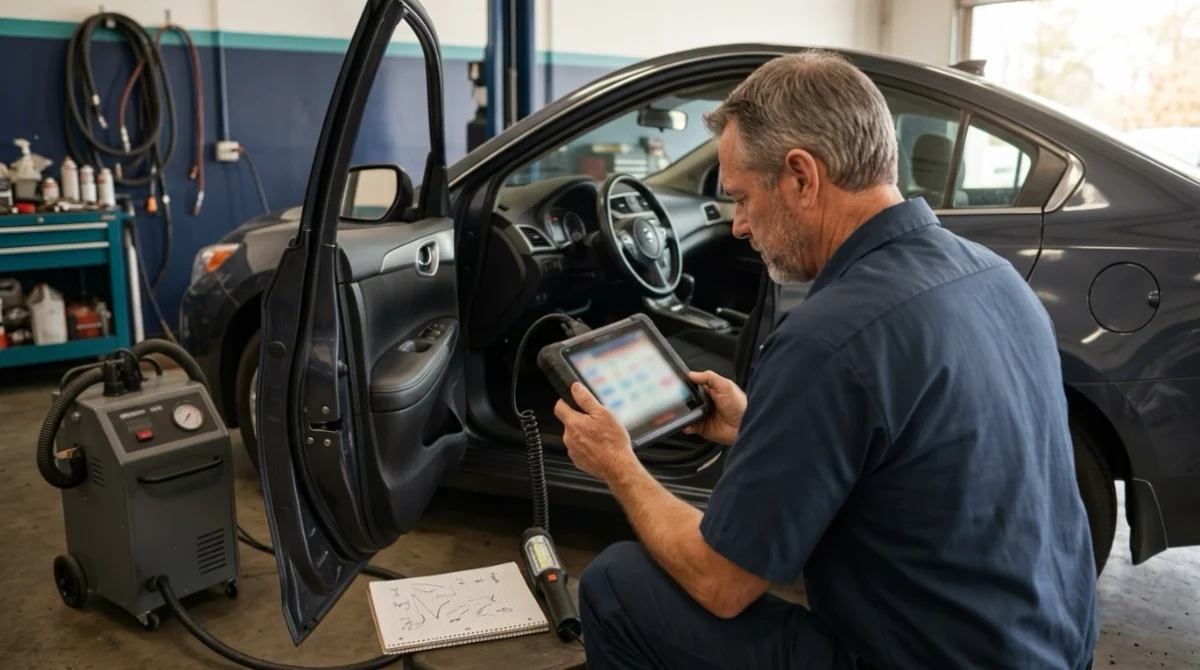
An OBD2 scanner is most useful when you use it as a diagnostic tool instead of a code-clearing device. Start by reading every stored, pending, and permanent code your scanner supports.
Related EVAP codes can change the direction of the diagnosis. Save the information before disconnecting the battery or clearing codes.
Check freeze-frame data
Freeze-frame data records operating conditions from around the time a fault was detected. Scanner support and available information vary by vehicle.
- Fuel level
- Engine temperature
- Vehicle speed
- Engine load
- Other stored codes
Fuel level matters because many vehicles run EVAP checks only under certain conditions. A monitor that has not rerun cannot confirm whether your repair worked.
Use bidirectional controls when available
A more capable scan tool may command EVAP components on supported vehicles. For example, a technician may command a vent valve while observing system pressure data.
Do not copy a procedure from another make or model. EVAP test routines, valve strategies, and pressure readings vary between vehicles.
Pro tip: Use the factory service information for your exact year, make, model, and engine before applying voltage, vacuum, or scan-tool commands to EVAP components.
When should you use a smoke test?
A smoke test is usually my next move when the fuel cap and visible plumbing look good. It introduces controlled smoke into the system so escaping smoke can reveal an opening.
- Cracked vapor hoses
- Broken canister fittings
- Leaking seals
- Loose connections
- Hard-to-see plumbing damage
Use equipment specifically intended for automotive EVAP testing. Follow the smoke-machine instructions and the vehicle manufacturer’s service procedure.
If the same code keeps returning after a repair, check for open recalls or manufacturer communications that may affect your specific vehicle. You can search by VIN through the NHTSA recall lookup.
Owners should also check factory information for their specific model. For example, Toyota provides official owner manuals and vehicle support resources.
Section Takeaway: Your scanner should help you gather evidence, not just erase P0455. When visual inspection cannot find the leak, a proper EVAP smoke test is often the fastest next diagnostic step.
Can You Drive With a P0455 Code?
A P0455 code by itself often does not cause immediate drivability problems. However, you should diagnose it rather than ignore the check-engine light.
Fuel vapor may be escaping somewhere in the EVAP system. A stored emissions code may also prevent the vehicle from passing an OBD-based emissions inspection where those tests are required.
- Steady check-engine light: Arrange diagnosis soon, especially if the vehicle otherwise runs normally.
- Strong fuel smell: Stop treating the issue as a routine code and have the vehicle inspected promptly.
- Visible fuel leak: Do not continue driving normally; move away from ignition sources and seek professional help.
- Flashing check-engine light: Treat this as a separate, more urgent engine warning rather than assuming P0455 caused it.
How much does P0455 cost to fix?
The cost depends entirely on the failed component, vehicle design, labor time, and local shop rates. A cap or simple hose repair can cost far less than replacing a difficult-to-access canister or valve assembly.
| Repair Type | General Cost Level | Why It Varies |
|---|---|---|
| Fuel cap | Usually low | Cap design and OEM versus aftermarket part |
| Simple hose repair | Low to moderate | Hose location and whether an assembly is required |
| Purge or vent valve | Moderate | Part design and access time |
| Charcoal canister | Moderate to higher | Vehicle-specific canister design and installation |
| Smoke-test diagnosis | Diagnostic charge | Local labor rate and diagnostic time |
I prefer paying for diagnosis before replacing several possible parts. One accurate smoke test can cost less than guessing wrong twice.
Repair note: Ask for a diagnosis and estimate based on your VIN and exact vehicle configuration. Parts locations and labor times can differ even within the same model line.
P0455 FAQ
Will tightening the gas cap clear P0455?
It can fix the cause if a loose cap created the EVAP leak. The light may remain on until the computer completes another EVAP monitor or until the code is properly cleared after the repair.
Can I clear P0455 with an OBD2 scanner?
Yes, most scanners can clear a stored P0455 code. Clearing it does not repair the leak, and the code will usually return if the EVAP system still fails its self-test.
Can a bad gas cap cause P0455?
Yes. A missing, loose, incorrectly fitted, or damaged cap can create an opening large enough to trigger an EVAP leak code on vehicles that use a conventional sealed fuel cap.
Why does P0455 keep coming back?
The leak may still be present, or the original diagnosis may have identified the wrong component. Recheck the cap, hoses, purge valve, vent valve, canister, and other vehicle-specific sealing points.
Does P0455 affect fuel economy?
P0455 primarily indicates an EVAP system sealing problem, so a noticeable fuel-economy change is not guaranteed. Other simultaneous engine or emissions faults may affect fuel consumption, which is why you should scan for every stored code.
Can P0455 cause a fuel smell?
It can. A large EVAP opening may allow fuel vapor to escape, although a strong gasoline smell should also make you check for a liquid fuel leak or another problem requiring prompt inspection.
Do I need a smoke test for P0455?
Not always. Start with the fuel cap and visible hoses, but a smoke test becomes useful when the leak cannot be located visually or when P0455 returns after simple checks.
What Should You Do Next?
If you are trying to fix P0455 yourself, resist the urge to order a purge valve, vent valve, and gas cap at the same time. Start with the cap, scan all codes, inspect the plumbing, and test the system logically.
- Confirm the fuel cap seals correctly.
- Record all OBD2 codes and available freeze-frame data.
- Inspect EVAP hoses and connections.
- Test the purge and vent valves when appropriate.
- Use an approved EVAP smoke test if the leak remains hidden.
- Repair the confirmed fault.
- Clear the code and verify the EVAP monitor completes successfully.
As of 2026, scan tools make the first part of P0455 diagnosis easier than ever. The scanner still cannot replace a careful visual inspection, proper component testing, and a smoke test when the leak is hidden.
The key is simple: diagnose the leak before replacing parts. That approach saves time, reduces unnecessary repairs, and gives you a much better chance of keeping P0455 from coming back.
