
Key Fob Stopped Working After a Car Battery Replacement? Here’s How to Fix It

If your key fob stopped working after car battery replacement, the timing is a big clue. In many cases, the car battery change didn’t “erase” the fob. More often, it exposed a weak fob battery, a loose contact inside the remote, a blown fuse, or a vehicle that needs a quick resync.
The good news: this problem is often fixable without replacing the whole fob. The trick is to troubleshoot in the right order so you don’t waste money on parts you didn’t need.
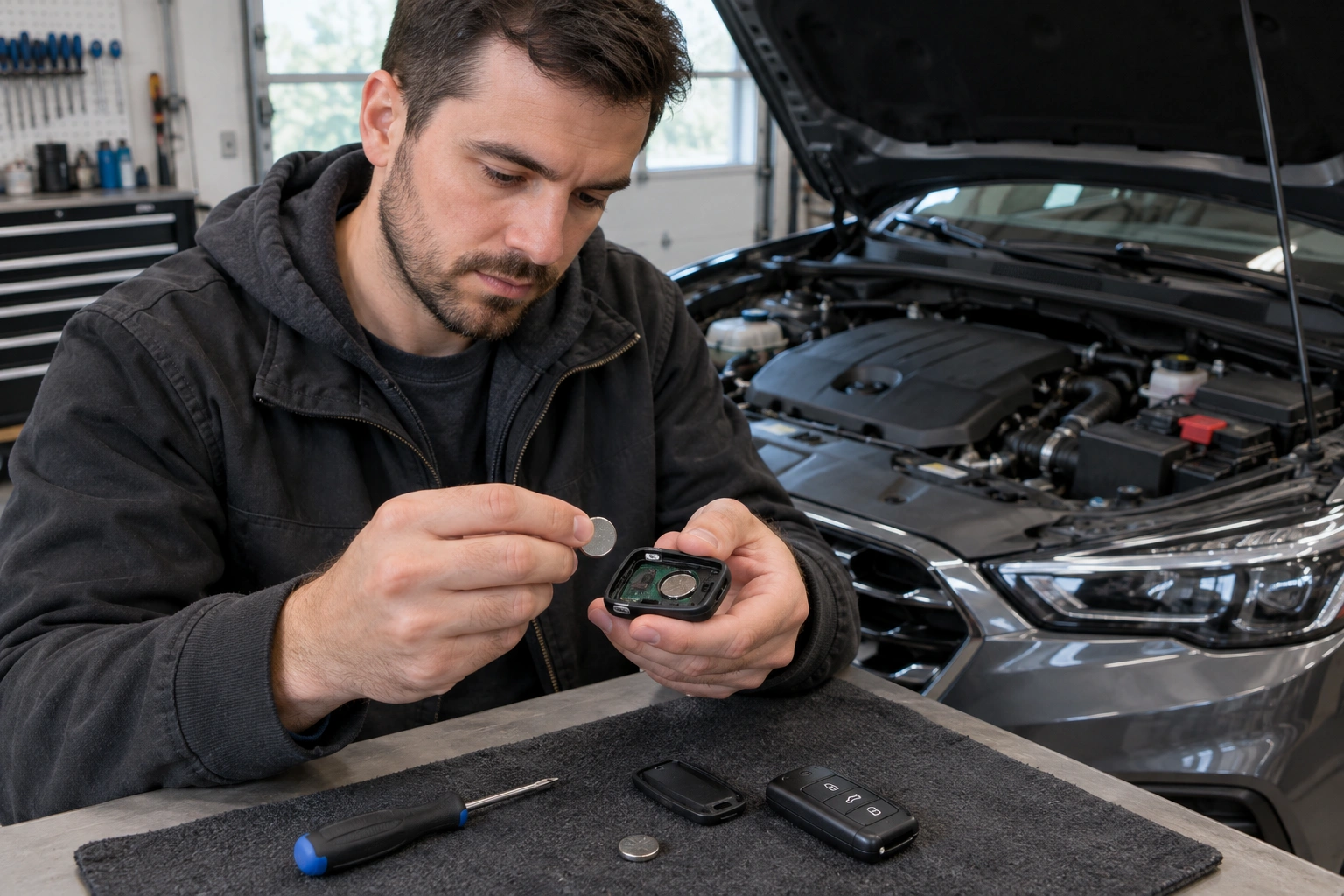
Did Disconnecting the Car Battery Erase the Key Fob Memory?
Usually, no. On many vehicles, disconnecting or replacing the car battery does not erase the key fob’s stored memory in the fob itself. What it can do is interrupt vehicle modules long enough to cause a temporary sync issue, especially on models that are sensitive to voltage changes.
That said, the outcome is model-dependent. Some vehicles recover after a simple reset or relearn, while others may need model-specific programming after a battery disconnect. Smart keys and transponder-based systems are more likely to require a defined procedure if the vehicle no longer recognizes them.
So if the fob stopped working right after the battery change, think of it as a possible communication problem first, not proof that the fob was “wiped.”
What the Timing Usually Means
A car battery replacement can interrupt the vehicle’s electronics for a moment. On some vehicles, that interruption may be enough to upset the remote keyless entry system, especially if the battery was disconnected, installed with poor contact, or the vehicle is sensitive to voltage changes.
That does not automatically mean the key fob itself is dead. In some cases, the remote buttons still work once the fob is back in range, the battery is seated correctly, or the vehicle completes a relearn cycle. In other cases, the replacement uncovered a separate issue that was already there, such as a weak fob battery or a failing receiver.
A useful way to think about it:
– If the buttons worked before and stopped right after the car battery swap, suspect a sync, fuse, or installation issue first.
– If the fob had weak range before the swap, the fob battery may be the real problem.
– If the car starts but the remote buttons do nothing, the immobilizer may still recognize the key while the remote section does not.
For a broader look at key fob range changes after battery work, see our guide on key fob range problems after battery replacement.
Quick Comparison: Key Fob Battery, Car Battery, or Sync Problem?
Here’s the fastest way to narrow it down.
| Symptom | Most likely cause | Best first fix |
|---|---|---|
| Buttons work only when you stand very close to the car | Weak key fob battery | Replace the fob battery and check the contacts |
| Car battery was replaced and the fob stopped working immediately | Lost sync, reset needed, or fuse issue | Try a vehicle-specific resync/reset procedure from the owner’s manual |
| Car starts, but lock/unlock buttons do nothing | Remote side of the fob or vehicle receiver issue | Test the spare fob and check fuses |
| Fob works intermittently after battery replacement | Loose battery, dirty contacts, or weak battery connection | Reopen the fob and inspect the battery seating |
| Nothing works, including a spare fob | Vehicle-side issue | Check the fuse, receiver, or seek professional diagnosis |
One important detail: a dead key fob battery and a lost sync can feel very similar from the driver’s seat. The difference is that a battery issue usually shows up as weak range or inconsistent response, while a sync issue often appears right after the car battery change.
Step-by-Step Troubleshooting Order
1) Confirm the fob battery is installed correctly
Open the fob and check the battery orientation first. A coin-cell battery installed backward will often make the remote look completely dead.
Also check for:
– bent battery contacts
– dirt or corrosion on the contact points
– a battery that is not seated flat
– the wrong battery type for that fob model
Even a battery with good voltage can fail to make contact if the metal tabs are not pressing firmly enough. That’s why a fob can look “newly dead” right after a battery change.
2) Try the fob at the car, not from across the driveway
RAC notes that being too far away can make it seem like the fob is failing when it is really just out of range. Stand next to the driver’s door and test lock, unlock, and panic functions one by one.
If it works only up close, that points more toward a weak fob battery or a range problem than a total programming failure. If it does not work even right next to the car, move on to the next steps.
3) Test the spare key fob if you have one
This is one of the best diagnostic shortcuts. If the spare works and the main fob does not, the problem is in the fob itself. If neither works, the vehicle side is more suspicious.
That distinction saves time. It also keeps you from buying a replacement battery, then a new fob, when the real issue is the car’s receiver or fuse.
4) Try a vehicle-specific reset or relearn
Some vehicles recover after a lock/unlock cycle, a short drive, or a restart following the battery replacement. Others need a specific sequence from the owner’s manual.
Do not rely on random button pressing. The exact relearn steps vary by make and model, and some vehicles will not resync unless you follow a defined ignition or button sequence. If your manual lists a procedure for remote entry or keyless entry after battery disconnect, follow that sequence exactly.
If the manual does not include a DIY reset, that usually means you may be dealing with model-specific programming rather than a simple resync.
5) Check whether the car starts normally
If the engine starts but the remote buttons do not work, the transponder or immobilizer may still be fine. That means the problem may be limited to the remote functions rather than the whole key.
That matters because it narrows the fault. A car that starts normally but won’t lock or unlock from the fob often points to the remote circuit, receiver, fuse, or a battery-contact problem inside the fob.
How to Resync or Reset the Key Fob
A resync is a lighter fix than full programming. Think of it as getting the fob and vehicle talking again after the power interruption.
Some vehicles automatically resync after a few minutes. Others require a manual procedure such as:
– inserting the key in a specific sequence
– pressing lock/unlock buttons in a set order
– turning the ignition on and off
– locking the doors and waiting for a confirmation signal
Because procedures vary, the owner’s manual is the safest source. If your manual describes a reset after battery disconnect, use that before assuming the fob has failed.
A practical example: a driver replaces the car battery, then finds the fob no longer locks the doors. After following the manual’s lock/unlock relearn sequence, the remote starts working again. In that case, the fob was not broken; it just needed to be recognized again.
When the Vehicle Needs Model-Specific Reprogramming
A resync is not the same as full reprogramming.
- Resync/reset: usually restores communication after a power interruption.
- Reprogramming: usually needed when the vehicle no longer recognizes the key’s code or the system requires a formal registration procedure.
If the car says “key not detected” or the fob still will not communicate after basic troubleshooting, the vehicle may need a model-specific programming step. That is especially true on vehicles with more complex immobilizer or smart-key systems.
This is where the official manual matters. Some vehicles allow owner-level relearn steps; others require a dealer or locksmith tool. If the manual does not list a DIY procedure, don’t force one.
For general vehicle ownership guidance and safety resources, the NHTSA is a reliable place to start when you want official information on vehicle systems and owner responsibilities.
Check for Fuse, Receiver, or Installation Issues
If the fob stopped working right after the car battery was replaced, don’t ignore the vehicle side.
Start with the simplest checks first:
1. Confirm the battery installation was clean and secure. A loose connection can create temporary electrical glitches.
2. Check the relevant fuse. A blown fuse in the remote keyless entry circuit can stop the system from receiving the fob signal.
3. Test the spare fob. If both fobs fail, the issue is more likely in the car than in the remote.
4. Consider the receiver or related modules. In some cases, the receiver is the issue rather than the fob.
5. Look for other electrical symptoms. A bad battery installation can sometimes affect related components like body control modules or door lock modules, not just the RKE fuse or receiver.
Clues that point this direction:
– the spare fob also fails
– the car battery replacement was followed by other odd electrical behavior
– the remote worked until the battery was disconnected
– the fob battery is new, seated correctly, and still no response
If you’re comfortable checking fuses, use the fuse diagram in the owner’s manual or fuse box cover. If you find a blown fuse, replace it with the correct rating only. If it blows again, stop there and have the system diagnosed.
A helpful example from real-world troubleshooting: after a battery swap, the remote entry stops working and the fix turns out to be a blown fuse in the RKE circuit. That is exactly why it pays to check the car side before buying a new fob.
When to Consult a Locksmith
A locksmith is often the best next step when:
– the spare fob does not work either
– the manual does not offer a DIY relearn
– the vehicle needs a programming tool
– you have already checked the battery, contacts, and fuses
Compared with a dealer, a locksmith may be able to handle the issue sooner in some cases, especially if the problem is a standard remote programming or receiver diagnosis. A dealer is still the better choice for some vehicles, but a locksmith can be a practical middle ground when you want to avoid unnecessary parts swapping.
If the car has multiple electrical symptoms after the battery change, or if the immobilizer warning lights stay on, professional diagnosis is the safer move.
Common Mistakes to Avoid
The most common mistake is replacing the wrong battery first. If the fob stopped working immediately after the car battery replacement, a dead fob battery is possible, but not the only explanation.
Other mistakes that waste time:
– skipping the owner’s manual and guessing at a reset
– assuming the fob is permanently broken after one failed test
– overlooking battery orientation inside the fob
– ignoring a spare fob test
– forgetting to check the fuse after a battery installation problem
The quickest path is usually the simplest one: verify the fob battery and contacts, test the spare, then move to reset, fuse, or programming checks.
Quick Reference: Symptom-to-Fix Guide
- Buttons weak or short-range: replace the key fob battery and inspect the contacts.
- Stopped working right after car battery replacement: try the manual’s resync or reset procedure.
- Spare fob works, main one doesn’t: the main fob likely has a battery, contact, or internal issue.
- Neither fob works: check the fuse, receiver, or vehicle-side electrical issue.
- Car starts but remote buttons fail: the immobilizer may still be fine; focus on the remote system.
- Still not working after basic checks: contact a locksmith or dealer for model-specific programming.
If you want a related symptom guide, our post on why a key fob won’t lock the car after a battery change can help narrow down whether the issue is the lock function specifically or the whole remote system.
FAQ
Can disconnecting the car battery erase key fob memory?
Usually not. In many vehicles, the fob itself keeps its memory. The battery disconnect may instead interrupt vehicle modules and cause a temporary sync issue or relearn need.
Why did my key fob stop working right after the battery was replaced?
Common causes include a weak fob battery, poor battery contact inside the remote, a blown fuse, or a lost sync after the vehicle lost power.
Will a simple reset fix every key fob problem?
No. Some vehicles resync with a DIY procedure, but others require model-specific programming, especially smart keys and transponder systems.
Should I call a dealer or a locksmith first?
If your manual offers a reset, try that first. If both fobs fail, the vehicle needs programming, or you already checked the fuse and battery contacts, a locksmith or dealer can help diagnose the car-side issue.
Final Takeaway
When a key fob stops working after a car battery replacement, the most likely causes are usually practical, not catastrophic: a fob battery issue, a loose battery contact, a lost sync, or a fuse/receiver problem. Work through the easy checks first, use the owner’s manual for any relearn steps, and stop guessing once the evidence points to the vehicle side. That approach saves time, avoids unnecessary parts, and gets you to the real fix faster.
