
Why Your Car Won’t Start After Changing the Key Fob Battery

You changed the battery, expected the car to recognize the key again, and instead got a no-start message, a “key not detected” warning, or nothing at all. That’s frustrating, but in most cases the fob did not lose its programming just because you swapped the battery. The issue is usually something physical: the battery is upside down, not seated correctly, the contacts are bent, or the replacement cell is weak or the wrong size.
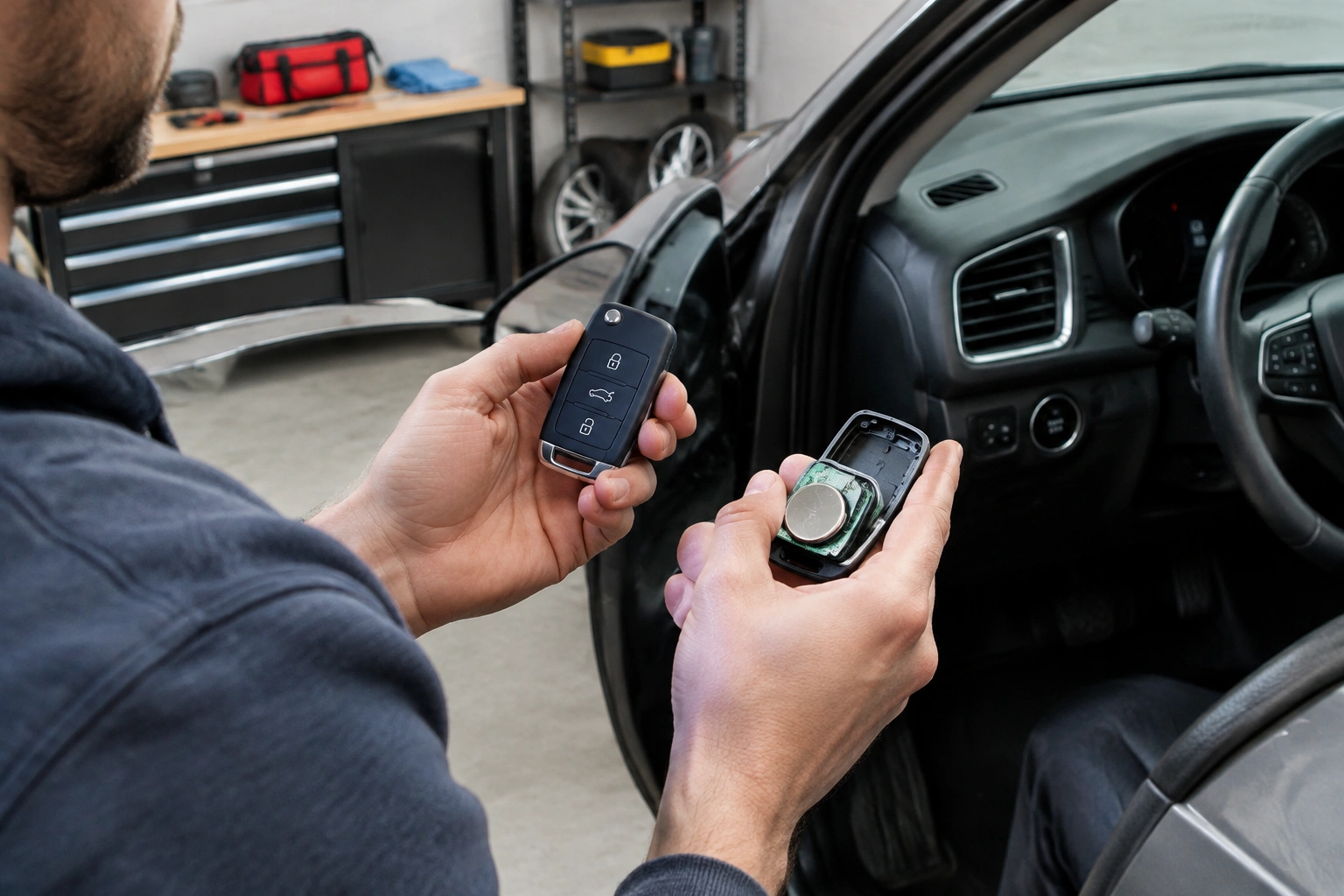
The fastest way forward is to separate a fob problem from a car problem. If the fob battery change was the only thing you touched, that’s where the first checks should focus. If the car battery is weak, though, the symptoms can look almost identical on a push-button start vehicle.
First, Match the Symptom to the Likely Fault
A no-start after a battery change usually falls into one of three buckets:
- Key not detected / no key message: the car isn’t reading the fob signal.
- Intermittent start: the car sees the key sometimes, but not consistently.
- No crank / no power behavior: the issue may be the car battery or a separate electrical fault, not the fob itself.
The fastest diagnostic order is simple:
- Check the fob battery polarity and fit.
- Try the backup start method your vehicle uses for emergency recognition.
- Test the car battery or try a jump start if the vehicle seems weak.
- Then consider resyncing, reprogramming, or replacing the fob if the first three checks don’t solve it.
That distinction matters. If the doors unlock but the car won’t start, the fob may still be sending enough signal for remote locking but not enough for the immobilizer system to authorize starting. If the dash lights are dim or electronics act sluggish, the car battery may be the real culprit.
A useful clue: if your car has push-button start and the message appeared immediately after the battery swap, a simple installation issue is more likely than a programming problem.
Check the Battery Installation Before Anything Else
This is the step that fixes the most obvious mistakes. Open the fob back up and inspect it carefully.
Confirm the battery type
Use the exact battery size the fob calls for, usually printed on the old cell or inside the cover. A battery that “almost fits” is not a fit. Even if it powers the remote briefly, the voltage or thickness can be off enough to cause detection problems. A wrong-size or poor-quality replacement battery can also fail even if it is brand new.
Check polarity
The positive and negative sides must face the right way. Many coin-cell batteries have a visible “+” side, and the fob housing usually shows the orientation. If the battery is reversed, the fob may appear dead or behave erratically.
Make sure it sits flat
The battery should rest evenly in the cradle. If it is tilted, the cover may pinch it or the contacts may only touch intermittently. A battery can be technically the correct one and still fail to work if it is not fully seated.
Inspect the contacts
Look for bent metal tabs, corrosion, or a contact that got pushed out of place while opening the case. A slightly bent contact can break power delivery even with a fresh battery.
Reassemble the case fully
A case that is not snapped together all the way can leave the battery loose or misaligned. If the shell doesn’t close cleanly, don’t force it; check for a displaced battery or internal piece first.
If you want a deeper walkthrough on the lock/unlock side of the same problem, see our guide on why a key fob won’t unlock the car after a battery change.
Try the Backup Start Method
Many push-button systems are designed to start even when the fob battery is dead or the car isn’t reading it normally. The exact method varies by vehicle, so check the owner’s manual, but the common idea is the same: place the fob very close to the start sensor or designated backup reader.
Typical examples include:
- Holding the fob directly against the start button
- Placing the fob in a marked emergency slot
- Holding it near the steering column or center console area where the car can read the transponder
Some vehicles require the fob to be placed in a specific emergency start slot or against a marked area, and the exact location varies by model.
If the car starts only when the fob is in that backup position, the key itself is usually still recognized by the immobilizer system. That points back to a weak fob battery, poor contact inside the fob, or a case issue rather than a lost key.
For a broader walkthrough of emergency start methods, our guide on what to do when the key fob battery is dead may help.
Rule Out a Weak Car Battery
A weak car battery can mimic a key fob problem, especially on newer vehicles with push-button start. The car may light up the dash, but not have enough stable power to complete the start authorization process.
Here’s the quick comparison:
| Symptom | More Likely Fob Issue | More Likely Car Battery Issue |
|---|---|---|
| “Key not detected” appears right after battery change | Yes | Sometimes |
| Doors unlock normally, but start fails | Yes | Maybe |
| Dash lights are dim or flicker | Unlikely | Yes |
| Clicking, slow cranking, or dead accessories | Unlikely | Yes |
| Backup start method works | Yes | Less likely |
| Car behaves normally with spare key | Yes | Less likely |
A weak car battery often shows itself through dim headlights, slow interior lights, or the radio resetting. If the vehicle has been sitting for a while, or the battery is old, don’t assume the fob is the only thing to inspect. If needed, try a jump start or note whether the vehicle powers up normally before focusing on the fob.
For general vehicle battery guidance, it’s better to rely on your owner’s manual or a vehicle-specific battery guide than on broad electrical-system advice.
When the Fob Needs Reprogramming or Resyncing
Most of the time, changing the battery does not erase the key’s programming. The vehicle stores the key’s unique code in nonvolatile memory, so a battery swap alone should not wipe it out. In other words, if the car stopped recognizing the fob right after battery replacement, a physical issue is usually more likely than a software loss.
That said, some vehicles may still need a resync or relearn step after the battery is disconnected, the fob is opened, or the system behaves strangely. The owner’s manual is the best source for your specific model.
Signs that point toward a resync need include:
- The fob works inconsistently after the battery swap
- The car recognizes the fob only after repeated attempts
- The spare fob works normally, but the freshly serviced one does not
- The fob buttons work at close range, but starting is unreliable
If your model has a documented relearn procedure, follow that exact sequence. Don’t rely on generic button-press tricks unless they’re confirmed for your vehicle. Some cars will accept a simple sync, while others won’t need any reset at all.
If the battery is installed correctly, the backup start method still fails, and a jump start doesn’t change anything, then the issue may be a true immobilizer, transponder, or programming problem rather than a simple battery-contact problem.
When the Key Fob Is Damaged
If the battery checks out and the backup start method still fails, the fob itself may be damaged. Opening the case can expose weak points that were already worn.
Common signs of fob damage include:
- Water intrusion or corrosion inside the shell
- A cracked circuit board
- Loose internal components after the case was opened
- Worn buttons that no longer make reliable contact
- A battery compartment that no longer holds tension
A battery change will not fix a broken board or failed microchip. If the fob was dropped, got wet, or has been repaired before, the problem may be more than a dead cell. In that case, replacement or professional repair is usually the practical path.
DIY Fix or Professional Help?
Here’s the decision rule I use: if you’ve confirmed the correct battery, correct polarity, solid contact pressure, and a working backup start method still doesn’t get the car going, it’s time to stop guessing.
A locksmith is often the best next call when:
- The fob is physically damaged
- The battery compartment is loose or corroded
- You need the fob checked, repaired, or replaced
- You need a fast diagnosis for a key that may be failing intermittently
A dealer is the better option when:
- Your vehicle needs a model-specific immobilizer or relearn procedure
- The fob must be programmed with factory-level tools
- The car recognizes the key only after a dealer-specific reset or replacement
A mechanic makes more sense when:
- The car battery seems weak or the vehicle won’t power up normally
- A blown vehicle-side fuse may be preventing key detection
- The keyless-entry receiver or another vehicle-side electrical component may have failed
That matters because the problem may not be the fob at all. Faulty receivers, blown fuses, or other electrical issues can stop the signal from reaching the vehicle.
If you’re comparing repair paths, our guide on why a key fob won’t lock the car after a battery change covers several of the same physical checks from the remote-function side.
How to Prevent the Same Problem Next Time
A few small habits can save you from repeating this headache:
- Use the exact battery size the fob calls for.
- Prefer a quality name-brand or OEM-style cell over the cheapest option on the shelf.
- Handle the battery contacts gently when opening the case.
- Test the fob before snapping the shell fully closed.
- Keep an eye out for corrosion or looseness in the battery holder.
The goal is not perfection; it’s reducing the chance that a simple battery swap turns into a no-start situation. If the fob starts acting up again soon after a battery change, that’s a sign to inspect the contacts and case fit before assuming the car has a bigger problem.
Bottom Line
If your car won’t start after changing the key fob battery, the most likely causes are still basic ones: the wrong battery, reversed polarity, poor contact, a weak car battery, or a fob that was already damaged. The fastest fix is to work through those checks in order, then use the backup start method to see whether the car can still recognize the key at close range. If it can’t, the fob may need repair, resyncing, or replacement.
FAQs
Can a key fob battery change erase the programming?
Usually no. The key’s code is stored in the vehicle’s nonvolatile memory, so replacing the battery should not wipe it out.
Why does my car say “key not detected” after I changed the battery?
That usually points to a physical issue inside the fob: wrong battery type, reversed polarity, poor contact, or a loose battery compartment.
Can I still start the car if the fob battery is dead?
Often yes, if your vehicle has a backup start method. Many push-button cars can read the fob when it is held near the start button or placed in an emergency reader.
How do I know if it’s the car battery instead?
Dim lights, slow cranking, clicking, or weak electrical behavior are stronger signs of a car battery problem than a fob issue.
Do I need to reprogram the fob after replacing the battery?
Not usually. Some vehicles may need a resync or relearn procedure, but that depends on the model and should be confirmed in the owner’s manual.
