
Why Your Key Fob Has to Be Close to Start the Car: Troubleshooting the Real Cause

If your car only starts when the key fob is pressed against the start button or held right next to the steering column, the system is usually telling you one thing: it’s having trouble detecting the fob at normal range.
That does not automatically mean the whole push-to-start system is failing. In many cases, the problem is as simple as a weak key fob battery. In other cases, the car battery, interference, damage to the fob, or a vehicle-side issue is cutting the signal down to almost nothing.
The good news is that this symptom is often diagnosable at home in a few minutes. You can usually narrow it down by testing the fob battery, checking the car battery, and looking for outside interference before you pay for programming or replacement.
What it means when the key fob only works up close
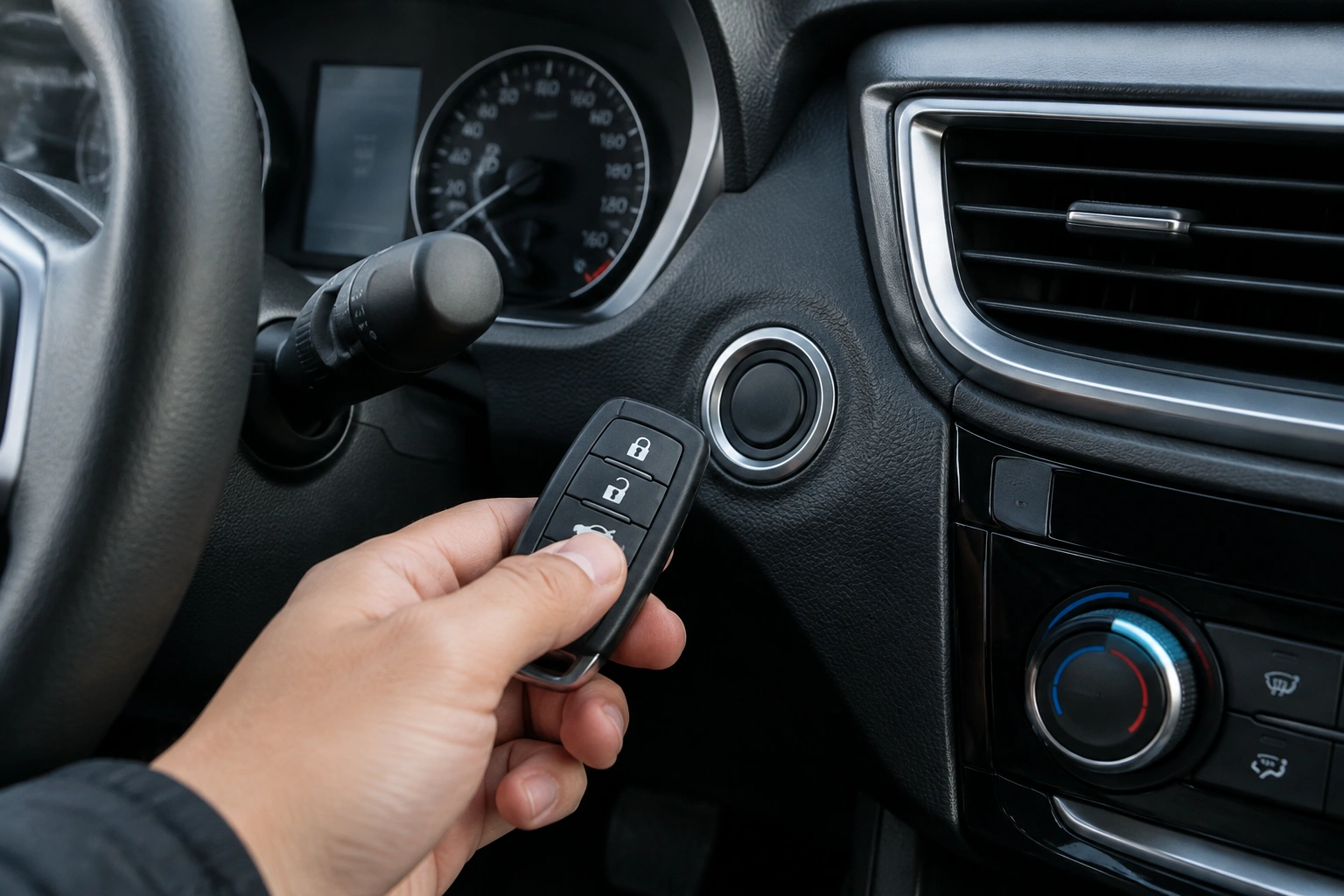
Modern smart keys and passive keyless entry systems don’t “turn the car on” in the old-fashioned sense. They communicate with the vehicle through short-range radio signals and an immobilizer system. If the car only recognizes the fob when it is very close, the signal is weak, the receiver is struggling, or something in the system is interfering with detection.
That symptom usually points to one of these situations:
- The key fob battery is weak
- The car battery is weak
- There is electronic interference nearby
- The fob is physically damaged
- The fob or vehicle needs reprogramming
- A vehicle-side electrical fault is reducing detection range
A useful rule: if the problem appeared gradually, a battery issue is often worth checking first. If it started right after the fob was dropped, exposed to water, or the battery was replaced, damage or reprogramming moves higher on the list.
The most likely causes, in the order I’d check them
Starting with the simplest causes first usually saves time and avoids replacing parts that were never the problem.
1. Weak key fob battery
This is the most common cause of short range. A weak battery can still power the fob enough to work, but only when the fob is very close to the car.
Typical signs include:
- You have to stand much closer than usual to unlock the doors
- The car only detects the fob if you press it near the start button
- The range gets worse over time instead of failing all at once
- The fob works intermittently
2. Weak car battery
A weak vehicle battery can cause strange low-voltage behavior. The car may still have enough power to light up the dash, but not enough to reliably wake the keyless entry system or immobilizer.
This is more likely if you also notice:
- Slow cranking
- Dim interior lights
- Electrical glitches
- Warning lights unrelated to the fob
- The car has been sitting for a while
3. Interference
Radio interference can make a healthy fob act weak. Parking garages, dense buildings, nearby electronic devices, and even other key fobs can reduce range.
4. Physical damage to the fob
A cracked shell, worn buttons, loose battery contacts, or water damage can cause weak or inconsistent signal transmission.
5. Reprogramming or vehicle-side fault
If the battery checks out and the fob is not damaged, the issue may be programming or a problem in the car’s receiver, antenna, or immobilizer system.
Quick checks you can do in minutes
Before buying anything, try these simple tests.
Try the spare fob
If you have a second fob, use it in the same location.
- If the spare works normally, the first fob is the likely problem.
- If both fobs act the same way, look at the car battery, interference, or the vehicle system.
Move away from possible interference
Try starting the car in a different spot.
Good test locations:
- An open driveway
- A parking lot away from other vehicles
- Far from large metal structures, chargers, and electronic equipment
If the fob suddenly works better, interference was probably the issue.
Check for warning messages
Look for messages like “Key not detected,” “No key detected,” or similar dashboard alerts. Those messages help confirm that the car is seeing a signal problem rather than a normal no-start issue.
Try the fob in your hand, not in a bag
Metal objects, thick cases, and stacked items can weaken the signal. If the fob works better when held alone, something around it may be blocking the signal.
How to tell if the key fob battery is the problem
A weak fob battery usually causes a gradual loss of range. The car may still unlock if you stand near it, but you lose the normal distance you used to have.
A few practical clues:
- The issue affects both locking/unlocking and starting
- The fob may work after being held close for a few seconds
- The problem is worse in cold weather
- The fob battery is old or has never been replaced
If the fob casing is intact and the problem is mostly range-related, replacing the battery is usually the first fix worth trying. It’s low-risk and often solves the issue.
For many vehicles, the owner’s manual also explains where to place the fob if the battery is low or dead. Capital One’s explanation notes that the ignition should still work even if the fob battery is dead, and that the fob should be brought as close to the receiver as possible.
How to tell if the car battery is the real issue
A weak car battery can look a lot like a weak fob battery, but there are differences. Before using a multimeter, a few no-tool checks can help you sort them out.
Quick no-tool checklist
- Do the dash lights, dome lights, or headlights seem dim? That leans toward the car battery.
- Does the starter sound slow or strained? That also points more toward the car battery.
- Does the car start normally once the fob is very close? That leans toward the fob battery or signal detection.
- Does a spare fob work better in the same spot? That suggests the original fob may be weak.
- Are there other electrical glitches, not just keyless entry problems? That makes the car battery or vehicle-side electrical system more likely.
- Did the car sit unused for a while? That can make a weak car battery more noticeable.
More likely a car battery problem if:
- The car has trouble powering up
- The starter sounds slow or strained
- Lights dim when you try to start it
- Multiple electrical systems act odd
- The problem appears after the car sat unused
More likely a fob battery problem if:
- The car starts normally once the fob is close enough
- Only the keyless entry range is affected
- The rest of the vehicle electronics seem normal
- A spare fob works better than the original
If you have a multimeter, you can test the car battery at home. If not, many auto parts stores and repair shops can test it quickly. The point is to see whether the battery can support the vehicle under load, not just whether it has any charge.
If the battery is weak, repeated failed start attempts can make things worse by draining it further.
Interference and environmental factors that shorten range
A perfectly good fob can seem “dead” in the wrong environment.
Common interference sources include:
- Parking garages and concrete structures
- Large metal doors or walls
- Nearby phones, tablets, chargers, or other electronics
- Other vehicles with keyless systems
- Areas with heavy radio noise
A simple test is to walk the car to a different spot and try again. If the problem disappears, you may not have a bad fob at all.
I’ve also seen range issues caused by the fob being stored with other electronics or in a bag with metal items. That doesn’t always kill the signal, but it can weaken it enough to matter.
What to do if the key fob is damaged
Physical damage changes the diagnosis.
Look closely for:
- Cracked housing
- Loose or missing battery cover
- Buttons that stick or feel mushy
- Water stains or corrosion
- A fob that only works if twisted, tapped, or held a certain way
Those are signs the problem may be internal, not just battery-related. A damaged circuit board or poor battery contact can cause intermittent detection and very short range.
If the fob was dropped, soaked, or crushed, replacing the battery may not be enough. In that case, repair or replacement is usually more practical than trying to nurse along a failing unit.
How to start the car when the fob is not detected
If the car won’t recognize the fob, use the emergency method described in the owner’s manual. The exact procedure varies by make and model, but the most common backup methods are:
- Holding the fob directly against the start button
- Placing the fob in a marked sensor area or slot
- Using a backup key slot near the steering column or center console
The key point is that the car often has a built-in fallback for a dead or weak fob battery. The exact location and method depend on the vehicle, so the manual matters here.
If you need model-specific help, check your owner’s manual before forcing the fob into any opening or prying at trim pieces. That can turn a simple no-detect problem into a broken housing or damaged receiver area.
For a more detailed walk-through, see our guide on how to start a car when the key fob is not detected and our emergency guide for starting the car when the key fob is not detected.
Reprogramming vs. replacing the fob
This is where a lot of people waste money.
Reprogramming makes sense when:
- The fob battery is good
- The fob is not physically damaged
- The car suddenly stopped recognizing a previously working fob
- A battery swap caused the fob to lose sync on that vehicle
Replacement makes more sense when:
- The case is cracked or broken
- The buttons are worn out
- The fob has water damage or corrosion
- The problem comes and goes with no clear pattern
- The internal electronics are likely failing
Reprogramming can restore function, but it won’t fix a failing circuit board or damaged shell. If the fob is already in rough shape, replacement is often the better long-term value.
If you’re not sure whether your car needs programming after a battery change, check the owner’s manual or a model-specific support page. Some vehicles keep their programming after a battery swap; others are less forgiving.
When to consult a locksmith
A locksmith is often the fastest option when the fob itself is the problem and you need a practical fix without dealership delays.
Call a locksmith if:
- The spare fob works but the main one does not
- The fob needs testing, replacement, or programming
- You need emergency access and the car’s backup method is unclear
- The issue appears to be the key side of the system, not the vehicle’s electrical system
A dealer may still be the better choice for some vehicles with strict programming requirements or proprietary systems. A mechanic is the better call when the symptoms point to the car battery, receiver, antenna, or other vehicle-side electrical trouble.
For a broader troubleshooting path, our guide on key fob not detected and the car won’t start can help you compare symptoms before you decide who to call.
A simple decision guide
If you want the shortest path to a fix, use this order:
- Try the spare fob.
- Replace the fob battery.
- Move the car to a different location and retest.
- Check the car battery if other electrical symptoms are present.
- Inspect the fob for damage.
- Use the emergency start method if the car still won’t detect the fob.
- Seek reprogramming or professional diagnosis if the problem remains.
That sequence catches most weak-range problems without guesswork.
FAQ
Why does my key fob only work when it is right next to the car?
Most often, the fob battery is weak. Less commonly, the car battery, interference, damage, or programming issues are reducing the signal.
Can a dead key fob battery still start the car?
Often, yes. Many vehicles have a backup detection method that works when the fob is held very close to the receiver or start button area, but the exact procedure depends on the vehicle.
How do I know if it’s the car battery instead of the fob?
If the car has dim lights, slow cranking, or other electrical problems, the car battery moves higher on the list. If only the fob range is poor and the car otherwise powers up normally, the fob battery is more likely.
Should I replace the fob battery first?
Yes, if the fob is intact and the problem is mainly reduced range. It’s the simplest and cheapest first step.
Do I need reprogramming after changing the fob battery?
Sometimes, but not always. It depends on the vehicle. Check the owner’s manual or manufacturer support information for your specific model.
What if both my fobs have the same problem?
That usually points away from the fobs themselves and toward the car battery, interference, or a vehicle-side detection issue.
The key takeaway is simple: when a key fob has to be close to start the car, the problem is usually a weak signal, not a dead-end repair. Check the battery, test for interference, inspect the fob, and use the backup start method if needed. That approach solves a lot of cases before they turn into bigger expenses.
