
Does a Key Fob Need to Be Reprogrammed After a Battery Change? What to Check Before You Panic

If your key fob stopped working right after a battery swap, the first thing to know is this: most key fobs do not need to be reprogrammed after a battery change. In many cases, the fix is much simpler — the battery is the wrong type, installed backward, not seated correctly, or the fob contacts are dirty or damaged.
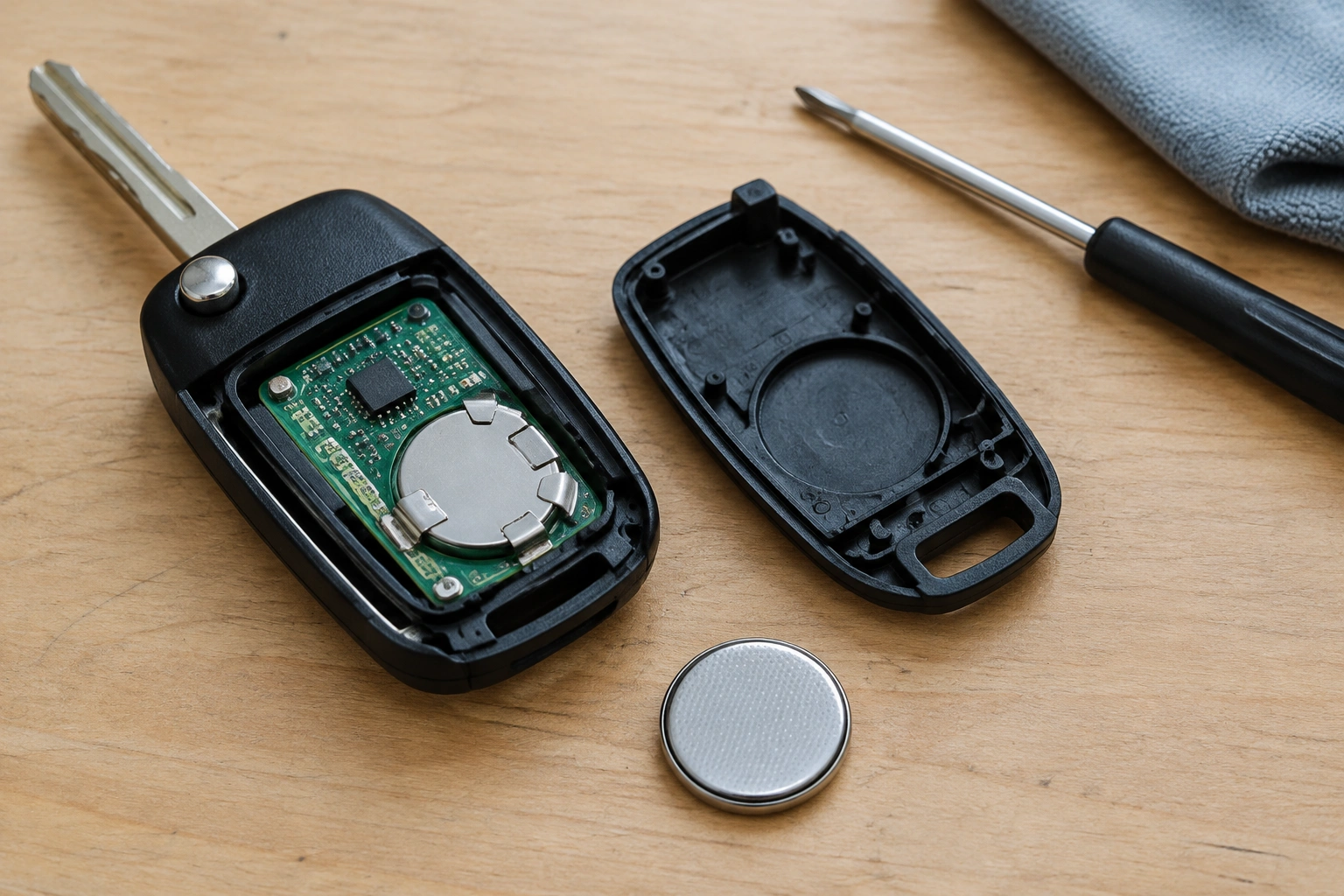
That said, some vehicles do lose sync or need a relearn step after power loss, and some symptoms point to a different problem entirely. My job as a locksmith is usually to separate those cases quickly so you don’t spend money on programming when the real issue is a battery installation mistake or a weak vehicle battery.
Quick answer: does a key fob need reprogramming after a battery change?
Usually, no.
If the fob worked before the battery died and the new battery is the correct one, the remote should typically work again without dealer programming. That’s the normal outcome on many vehicles. A battery change restores power to the fob; it does not usually erase the fob’s code.
The important exception is that some vehicles are more sensitive than others. Certain models may need a resync or relearn after the battery is removed, especially if the battery was out for a while or the system lost communication. In other cases, the battery change simply reveals an existing issue that was already there, such as worn contacts or a failing circuit board.
A useful rule: if the fob died immediately after a battery change, suspect installation or contact issues first; if it still fails after correct installation and a basic reset, then look at resync or programming.
What the symptoms are telling you
Before you touch the fob again, match the symptom to the failure pattern. That saves time.
1) The fob is completely dead
If nothing happens at all — no lock, unlock, panic, or LED response if your fob has one — the most likely causes are:
- the battery is inserted backward
- the battery is the wrong size
- the battery is dead out of the package
- the battery is not making contact with the terminals
- the fob case is not fully closed and the contacts are misaligned
2) The fob works sometimes, but not consistently
Intermittent operation usually points to:
- weak battery contact
- a loose battery holder
- corrosion or dirt on the terminals
- a cracked circuit board
- a worn button pad
That pattern is less like a programming issue and more like a hardware problem.
3) The fob unlocks the doors, but won’t start the car
This is a common point of confusion. Remote unlock and engine start are not always the same system. A fob can sometimes still talk to the door locks while the vehicle refuses to recognize it for push-to-start.
That often means the battery is weak, the fob is not being detected near the start button, or the vehicle’s immobilizer/start recognition system needs a different troubleshooting step.
4) Both key fobs stopped working
When both fobs fail at once, the odds shift away from the fob batteries themselves. That points more toward the vehicle battery, receiver, or a system-wide issue.
If the car battery is weak, some vehicles can get flaky with remote entry and push-to-start features before they show obvious starting problems.
The most likely causes, in order
Here’s the order I work through in the field.
Wrong battery type
This is more common than people think. Even a battery that “looks close” may not be the right size, thickness, or voltage profile for the fob.
Using the wrong battery can create weak contact, intermittent operation, or a fob that seems dead even though you just replaced the battery.
Battery installed backward
A reversed battery will usually make the fob appear dead. The fix is simple, but it’s easy to miss when the battery holder is small and the markings are hard to read.
Poor contact or mis-seated battery
If the battery is in the right way but not firmly seated, the fob may work only when pressed in a certain spot or not at all.
Dirty or bent terminals
A thin layer of oxidation or a slightly bent contact can interrupt power. That’s especially common if the old battery leaked or the fob has been opened multiple times.
Weak vehicle battery
A weak car battery can cause strange keyless-entry behavior, especially on push-to-start vehicles. The fob may be fine, but the car’s receiver or control module may not be operating normally.
Actual fob damage
If the fob was dropped, exposed to moisture, or opened roughly, the battery change may simply expose a pre-existing issue. Broken solder joints and worn buttons can mimic a programming problem.
Vehicle-side receiver or sync issue
If the fob is healthy but the car still won’t acknowledge it, the issue may be on the vehicle side. That’s when resyncing, diagnosis, or professional programming becomes more likely.
What to do before you think about reprogramming
Work through these checks in order. They solve a lot of “dead fob after battery change” complaints.
Step 1: Verify the battery type
Check the old battery, the fob label, or the owner’s manual for the correct battery code. Don’t assume a battery that fits physically is the right one.
If you bought a replacement from a store shelf, compare the code carefully. A small mismatch can create a big headache.
Step 2: Reinstall the battery and confirm polarity
Open the fob again and look for the + and – markings. Make sure the battery is seated flat and the contacts are touching it firmly.
If the battery shifts when you close the case, the fob may work only intermittently or not at all.
Step 3: Inspect the contacts
Look for bent metal tabs, corrosion, or debris. If the contacts are dirty, a gentle cleaning with a dry, lint-free cloth is safer than aggressive scraping.
If a terminal is bent away from the battery, the fob can lose power even though the battery is new.
Step 4: Reassemble the case completely
A fob case that is not fully snapped together can leave the battery loose or misaligned. That’s common after DIY battery swaps.
Step 5: Test the spare fob
This is one of the fastest decision points you have.
- If the spare works, the problem is likely with the first fob.
- If both fail, focus on the vehicle battery, receiver, or a system issue.
Step 6: Try the vehicle’s backup start method if you have push-to-start
Many push-to-start vehicles have a backup recognition method when the fob battery is weak. Your owner’s manual should show the correct procedure for your vehicle.
This is useful because it tells you whether the fob is still being detected at close range, even if normal operation is failing.
When reprogramming is actually needed
Reprogramming is not the first assumption, but it is sometimes the right answer.
It helps to separate three different fixes:
- Reset or resync: a short procedure that gets the fob and vehicle talking again after a temporary communication loss
- Relearn: a model-specific setup step that may be needed after power loss or a battery disconnect
- Reprogramming: a deeper pairing or coding process, often done with scan tools or manufacturer-specific equipment, especially if the vehicle no longer recognizes the fob at all
In other words, a battery change may lead to a simple resync on some vehicles, while other models need true programming only if the system has lost pairing or the security module has been affected.
You should consider that deeper step when:
- the battery is confirmed correct and installed properly
- the contacts look good
- the spare fob works, but the original still does not
- the vehicle lost power or the fob was out of battery for a long time
- the system behaves like the fob and vehicle are no longer paired
Some vehicles can be resynced by following a manufacturer-specific sequence. Others require a scan tool or programming equipment. That’s why I’m careful not to promise that every owner can reprogram every fob at home. Behavior varies by make, model, and security system.
For reference, Interstate All Battery Center says it offers car key replacement and remote programming services at its locations, which is a good reminder that professional programming is a normal service path when DIY checks do not solve the issue. You can see that on Interstate All Battery Center’s service page.
Why the fob unlocks the doors but won’t start the car
This is where a lot of owners get stuck.
A remote keyless entry function and a push-to-start or immobilizer function are related, but they are not always identical. The door-lock signal can work while the car still refuses to authorize the engine start.
That usually means one of three things:
- the fob battery is weak enough to limit range or recognition
- the vehicle is not reading the fob properly at the start point
- the start authorization system needs a relearn or diagnosis
If the car unlocks normally but won’t start, I would not jump straight to “bad fob.” I’d first check battery strength, then try the backup start method, then compare behavior with the spare fob.
When the problem is the car, not the fob
A lot of people replace the fob battery and blame the remote when the vehicle is the real problem.
Signs the car may be at fault:
- both fobs fail at the same time
- the car battery is weak or recently disconnected
- the vehicle shows a “key not detected” message with multiple fobs
- the locks and start system behave erratically, not just the fob
- the fob works close to the car but not from normal range
If the vehicle battery is weak, the car may not power the receiver or control modules consistently. That can look exactly like a bad fob.
If you suspect the car battery, don’t keep cycling the key fob endlessly. Test the vehicle battery and look for other electrical symptoms too, like slow cranking, dim lights, or reset electronics.
Battery replacement versus reprogramming: which fix comes first?
Use this simple decision rule:
- If the problem started immediately after a battery swap, fix the battery installation first.
- If the fob worked for a while and then failed later, suspect battery wear, contacts, or hardware.
- If multiple fobs fail, look at the vehicle before the fobs.
- If the car recognizes the fob inconsistently even after a correct battery install, reprogramming or resyncing becomes more likely.
That order saves money because programming is only useful when the fob and vehicle have actually lost sync. It will not fix a dead battery, a backwards battery, or a damaged circuit board.
When to call an automotive locksmith
Call a professional when the problem stays unresolved after the basic checks, or when the vehicle uses a more complex security system.
An automotive locksmith is a good next step if:
- the fob still fails after a correct battery install
- the spare fob works but the original does not
- the vehicle needs specialized programming equipment
- the fob case or circuit board is damaged
- you need diagnosis for both the fob and the vehicle receiver
A dealer can also help, but a locksmith is often the faster route for key fob diagnosis, replacement, and programming on many vehicles. A dealer is usually the better choice when the vehicle uses proprietary security systems, encrypted or brand-specific programming, or when you suspect the issue is on the vehicle side — for example, the receiver, immobilizer, body control module, or another control unit may not be reading the fob correctly. The best choice comes down to the vehicle’s system and how quickly you need the car back in service.
If you’re already comparing whether to repair or replace, our guide on why a key fob may need reprogramming after a battery change and this follow-up on key fob not recognized after battery change can help you narrow down the next step.
How to prevent repeat key fob problems
A few habits make a big difference:
- use the correct battery type, not just one that fits
- handle the battery contacts gently
- replace the battery before the fob dies completely
- keep the spare fob tested and working
- avoid forcing the case shut if the battery is not seated correctly
- replace a damaged shell before it starts affecting the contacts
If a fob has already been opened several times, the case clips and battery holder may be worn. At that point, repeated battery swaps can cause more trouble than they solve.
FAQ
Does a key fob need to be reprogrammed after a battery change?
Usually not. In most cases, a correct battery replacement restores normal operation without reprogramming.
What’s the difference between a reset, a resync, and reprogramming?
A reset or resync is usually a simpler fix that restores communication after a temporary loss. Reprogramming is a deeper pairing or coding step and is more likely when the fob and vehicle have truly lost their stored relationship.
Why did my key fob stop working right after I changed the battery?
The most common causes are wrong battery type, reversed polarity, poor contact, or a case that is not fully closed.
Can I reprogram the key fob myself?
Sometimes, but not always. Some vehicles allow a simple resync procedure, while others require special tools or a dealer/locksmith programming process.
Why does my key fob unlock the doors but not start the car?
That usually means the remote-entry function is still working, but the push-to-start or immobilizer recognition side is not.
What if both of my key fobs stopped working?
When both fail, suspect the vehicle battery, receiver, or a system-wide issue before assuming both fobs died at once.
Should I replace the fob if a new battery does not fix it?
Not immediately. Check battery type, contact alignment, and the spare fob first. Replace the fob if the electronics are damaged or the unit remains unreliable after troubleshooting.
When should I go to a dealer instead of a locksmith?
A dealer is often the better option for proprietary security systems, brand-specific programming, or when the vehicle-side receiver or control module may be the real problem. A locksmith is often a strong first call for standard key fob diagnosis and programming.
