
Car Key Remote Stopped Working Suddenly? Here’s How to Diagnose It Fast

When a car key remote stopped working suddenly, the problem usually falls into one of a few buckets: the fob battery, the fob itself, the car’s receiver, or a vehicle battery issue. The trick is not to guess. A quick symptom check can usually point you in the right direction before you spend money on the wrong fix.
What to Check First When the Remote Goes Dead
Before you assume the fob is broken, follow this order:
- Test the spare fob
- Replace the battery in the main fob
- Check for interference or range problems
- Inspect the fob for damage or moisture
- Then consider the vehicle battery or reprogramming
If the spare works, the car is probably fine and the original fob is the likely problem. If the spare also fails, shift your attention to the vehicle battery, the car’s receiver, or the keyless entry system.
Then look at the fob itself. Cracks, worn buttons, a loose battery cover, or signs of moisture matter. A remote that was dropped in water and later starts acting strangely may have internal corrosion, even if the outside looks okay.
Quick Symptom Check: Is It the Fob, the Car, or the Battery?
Use the table below to narrow down the most likely cause.
| Symptom | Most likely cause | What to do next |
|---|---|---|
| Remote works only sometimes | Weak fob battery, interference, or loose internal contact | Replace the battery first, then retest |
| Remote works only very close to the car | Weak battery or signal interference | Move away from buildings or electronics and test again |
| One button works, others do not | Worn buttons or internal damage | Inspect the fob and consider repair or replacement |
| Both the main fob and spare fail | Vehicle battery or car-side receiver issue | Check the vehicle battery and try the car’s backup procedures |
| Push-to-start says “key not detected” | Fob battery, sync issue, or vehicle detection problem | Try the spare fob and the manufacturer backup start method |
| Fob stopped working after battery change | Battery installed incorrectly or fob needs reprogramming | Recheck battery orientation and retry the pairing process if needed |
A single symptom does not prove the cause, but patterns help. For example, if the lock button works and the unlock button does not, that is more consistent with a worn button or damaged circuit than with a dead battery. If nothing works at all, battery or sync issues move higher on the list.
If only one button works, that usually points to a worn button pad, dirty contacts, or damage on part of the circuit board rather than a fully dead fob battery. In other words, the remote may still be powered, but one part of the internal switch system is failing.
Most Likely Causes, in Order
1. Weak or dead key fob battery
This is the first thing to check because it is the easiest simple failure to rule out. A weak battery often shows up as reduced range before total failure. You may need to stand right beside the door, or press the button several times before the car responds. Sometimes the fob seems to “wake up” after a few minutes, which can make the problem feel random.
2. Signal interference or range problems
If the remote works in the driveway but not from farther away, interference may be part of the issue. Nearby electronics, parking structures, thick walls, or other obstructions can block the signal.
This is one reason a remote that “stopped working” may not actually be broken. It may be working, just not well enough to reach the car.
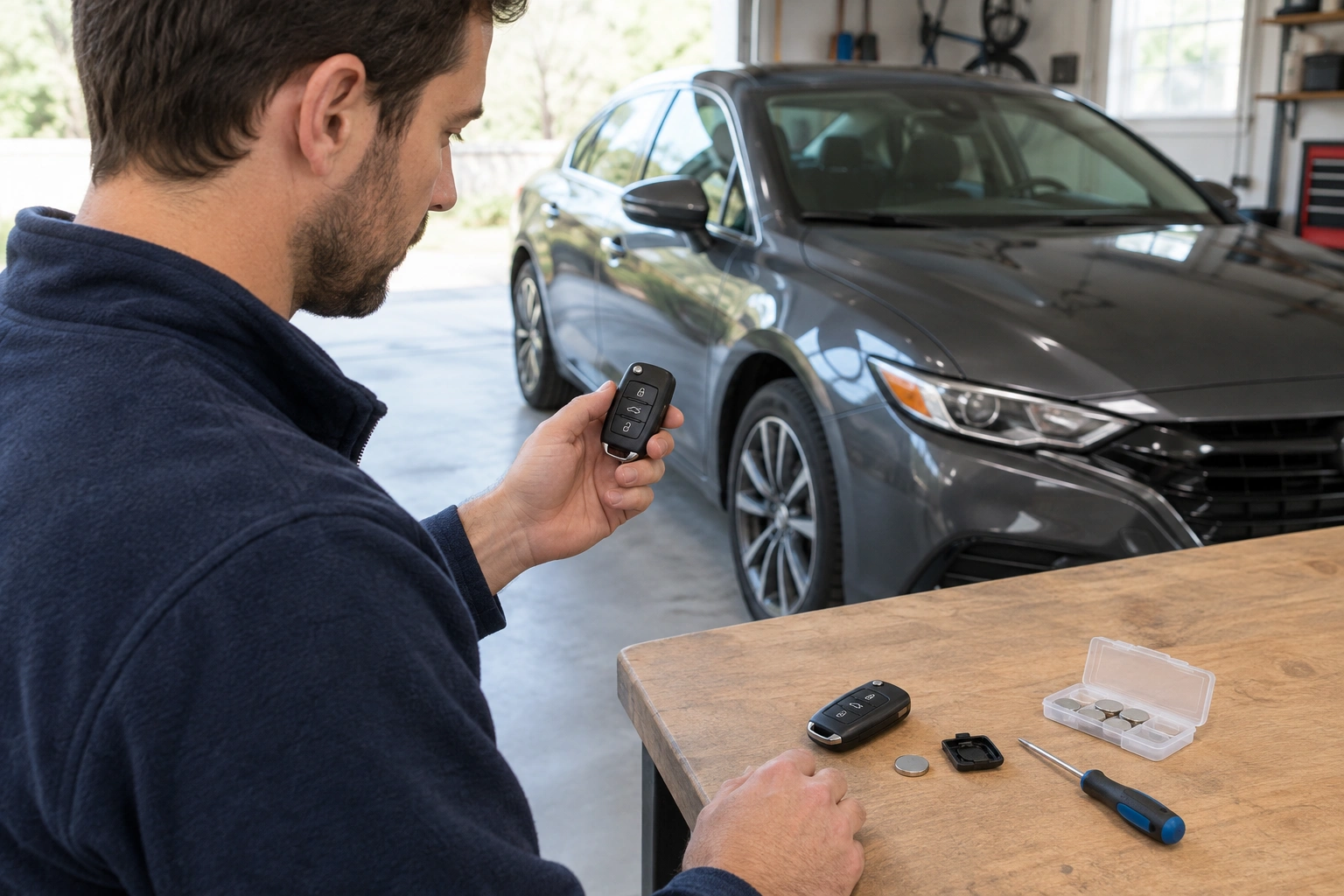
3. Physical damage or water damage
A dropped fob can crack the casing, shift the battery, or damage the circuit board. Water exposure is worse. Even if the buttons still click, moisture can corrode contacts and cause intermittent failures later.
If the fob was washed, rained on, or submerged, do not keep opening and closing it repeatedly. That can make corrosion worse or damage the battery contacts.
4. Vehicle battery or car-side electrical issue
If both fobs fail, the problem may be with the car instead of the remote. A weak vehicle battery can affect locking, unlocking, and keyless entry detection. It can also cause push-to-start systems to stop recognizing the fob.
Concrete clues that point more toward the vehicle than the fob include:
– the dashboard lights dimming or flickering,
– the cabin electronics acting oddly,
– the car taking longer to crank than usual,
– the remote failing at the same time as other electrical problems,
– or the car unlocking manually but not responding normally to the fob.
If the vehicle battery is the issue, you may notice more than just keyless-entry trouble. A fob problem usually affects the remote itself; a weak car battery often shows up across several systems at once.
5. Lost synchronization or reprogramming need
Sometimes the fob battery is fine, but the car and remote are no longer communicating properly. That can happen after a battery change, a power issue, or a random sync problem. In that case, the fob may need reprogramming or repair rather than a simple battery swap.
Step-by-Step Fixes You Can Try at Home
1. Replace the fob battery first
If the battery is old, weak, or unknown, replace it before buying a new remote. That is still the best first move because it solves a lot of cases quickly.
Be careful when opening the fob. Use the correct slot or seam and avoid forcing the casing apart. If you pry too hard, you can damage the circuit board or battery contacts.
After the new battery goes in, test the remote from normal standing distance, not just inches from the car.
2. Try the spare fob
If the spare works, you have a useful comparison. That usually means the car is responding normally and the original fob is the problem.
If the spare also fails, stop focusing on the remote and look at the vehicle battery, receiver, or the car’s keyless entry system.
3. Move away from possible interference
Try the remote in a different spot: outside the garage, away from large metal doors, away from the house, and away from other electronics. If the fob suddenly works, the issue may be environmental rather than mechanical.
That matters because a “broken” remote may actually be fine in the right location.
4. Inspect the fob closely
Open the battery cover and look for greenish corrosion, moisture, cracked plastic, or a battery that sits loosely in the holder. If the battery terminals look dirty or bent, the remote may lose contact even with a fresh battery.
If only one button fails, look for wear around that button area. A single failed button often points to internal damage rather than a dead battery.
5. Test the backup unlock or start method
Most vehicles still provide a manual way to get in or start the car. Use the physical key blade if your fob has one. If your car has push-to-start, check the owner’s manual for the emergency start procedure, since many vehicles can still detect the fob at a specific location even when the battery is weak.
You can also review your vehicle manual or manufacturer support page for the exact backup method. For general vehicle safety information, NHTSA is a reliable starting point.
How to Tell If the Fob Needs Reprogramming or Replacement
A battery change should restore normal function if the problem was only power-related. If the fob still does nothing after a fresh battery, the next question is whether it lost sync or suffered internal damage.
Try reprogramming or syncing when:
– the fob stopped working right after a battery change,
– the car detects the fob inconsistently,
– or the remote functions are partially working but unreliable.
Stop troubleshooting and lean toward replacement when:
– the casing is cracked and the board may be damaged,
– the fob has water damage or corrosion,
– or the buttons are physically worn out and no longer make reliable contact.
A useful rule: if the fob was fine before, then failed after a battery swap, and the battery is installed correctly, sync or programming is more likely than a completely dead remote. If the fob has visible damage, repeated battery swaps and pairing attempts usually will not fix the underlying problem.
When the Problem Is Actually the Vehicle
If both the main fob and the spare stop working at the same time, the vehicle deserves attention first.
Check whether the car battery is weak. Signs can include dim lights, slow cranking, warning lights that appear together, the radio or infotainment system resetting, or other electrical oddities. A weak vehicle battery can interfere with the car’s ability to recognize the fob or respond to lock commands.
Also consider whether the issue is limited to keyless entry. If the manual key blade unlocks the door but the push-button start will not detect the fob, the car-side detection system may be involved. That is different from a completely dead remote.
For general car ownership guidance and maintenance articles, Edmunds is a solid reference point.
How to Unlock and Start the Car While the Remote Isn’t Working
If you are stranded, use the backup methods built into the vehicle.
The manual key blade is the first fallback for unlocking the door. Many fobs hide a physical key inside the shell, and that key usually works even if the electronics fail.
For push-to-start vehicles, the owner’s manual often explains an emergency detection spot or procedure. In some cars, the fob must be held near a specific area for the vehicle to read the transponder chip. That lets you start the car even when the battery in the remote is weak.
Do not keep hammering the start button if the car battery itself is weak. Repeated attempts can leave you with a bigger problem than the original fob issue.
Common Mistakes to Avoid
The biggest mistake is replacing the whole fob before checking the battery. That is expensive compared with a simple battery swap.
Another common mistake is skipping the spare fob test. Without that comparison, it is easy to blame the wrong part.
Also avoid forcing open a damaged remote. If the shell is cracked or swollen, rough handling can worsen the damage.
Finally, do not ignore vehicle-side clues. If both fobs fail, or the car says the key is not detected, the problem may not be the remote at all.
When to Consult a Locksmith
Call a locksmith, dealer, or mechanic when the troubleshooting stops making progress.
That usually means:
– the fob still does nothing after a fresh battery,
– the car will not detect the fob and the spare fails too,
– there is visible water damage or corrosion,
– or the vehicle battery and backup methods do not solve the issue.
A dealer is usually the better fit when the problem involves manufacturer-specific programming, security features tied closely to the vehicle, or a replacement fob that must be paired through dealer-level tools. An automotive locksmith is often the more practical choice for lost sync, basic reprogramming, replacement shells, key cutting, or diagnosis when the problem appears to be fob-related rather than a broader electrical fault.
If you want a deeper look at intermittent failures, see our guide to why a car remote works sometimes and our breakdown of why a key fob stops working randomly. If the issue started after a battery swap, this related guide on car key not detected after battery change can help narrow it down.
FAQ
Why did my car key remote stop working all of a sudden?
The most common simple cause is a weak or dead fob battery, but sudden failure can also come from interference, water damage, lost sync, or a vehicle battery issue.
Can a car battery cause the key fob to stop working?
Yes. If the vehicle battery is weak, the car may not respond properly to the fob or may fail to detect it in push-to-start systems.
Why does my remote work sometimes but not always?
Intermittent behavior often points to a weak battery, loose internal contact, signal interference, or early damage to the fob.
If I replace the battery and it still does not work, what next?
Check the spare fob, inspect the remote for damage or corrosion, and consider reprogramming or professional diagnosis.
What does it mean if only one button works?
That usually points to worn button contacts, dirt or damage inside the fob, or a failing circuit board rather than a simple dead battery.
Can I still get into the car if the remote fails?
Usually yes, if your fob includes a manual key blade. Check the owner’s manual for the exact unlock and backup start procedure.
Should I go to a dealer or locksmith?
If the issue is likely programming, a locksmith may be able to help. If your vehicle uses a more model-specific security setup, the dealer may be the better fit.
