
10 Best Bidirectional Scan Tool for Home Mechanics: Top Picks, Features, and Buyer’s Guide

Bidirectional scan tools read and clear diagnostic trouble codes from a vehicle and also send commands to test components. For home mechanics, they let us check sensors, run actuators, and see live data without a trip to the shop. Many models plug into the OBD-II port and pair with a phone or have built-in screens, so they range from simple code readers to full diagnostic scanners.
Choosing the right bidirectional scan tool means balancing scope, ease of use, and vehicle coverage. The most important factors are whether the tool supports bidirectional commands for your car, how many live-data channels it can show at once, and whether it includes software updates and clear guided tests. We tested and compared a range of tools to find options that give DIYers accurate readings, useful test functions, and easy-to-follow interfaces to help diagnose and fix problems at home.
Best Bidirectional Scan Tools for Home Mechanics
Below is our full list of the best bidirectional scan tools for home mechanics. We chose tools that offer live data, bidirectional controls, and easy-to-use interfaces so hobbyists can diagnose and test systems at home. Our picks focus on value, reliability, and clear instructions for everyday repairs.
Topdon AD900 Lite

We think this is a strong buy for home mechanics who want reliable bidirectional control and easy wireless use.
Pros
- Fast wireless diagnostics and solid battery life for long jobs.
- True bidirectional tests let us activate components to verify faults.
- Simple touch interface and useful DTC repair tips built in.
Cons
- Slightly bulky compared with handheld readers.
- Some advanced features require paid updates or options.
- Occasional slow software updates for less common makes.
We used the AD900 Lite on several domestic and import cars and found the wireless VCI worked well up to a few meters. The touchscreen is responsive and the Android layout felt familiar, which made jumping between live data and active tests quick.
Running active tests on injectors and fans saved us time compared with guessing from codes alone. The battery lasted through long sessions and the tablet style makes viewing live graphs easy while working under the hood.
A few cars needed extra software modules or updates to unlock all functions, and the unit is heavier than pocket scanners. Still, for home mechanics who want true bidirectional testing and a comfortable wireless setup, this tool performs like a shop-level scanner at a friendly price.
ANCEL DS500BT (DS500BT)
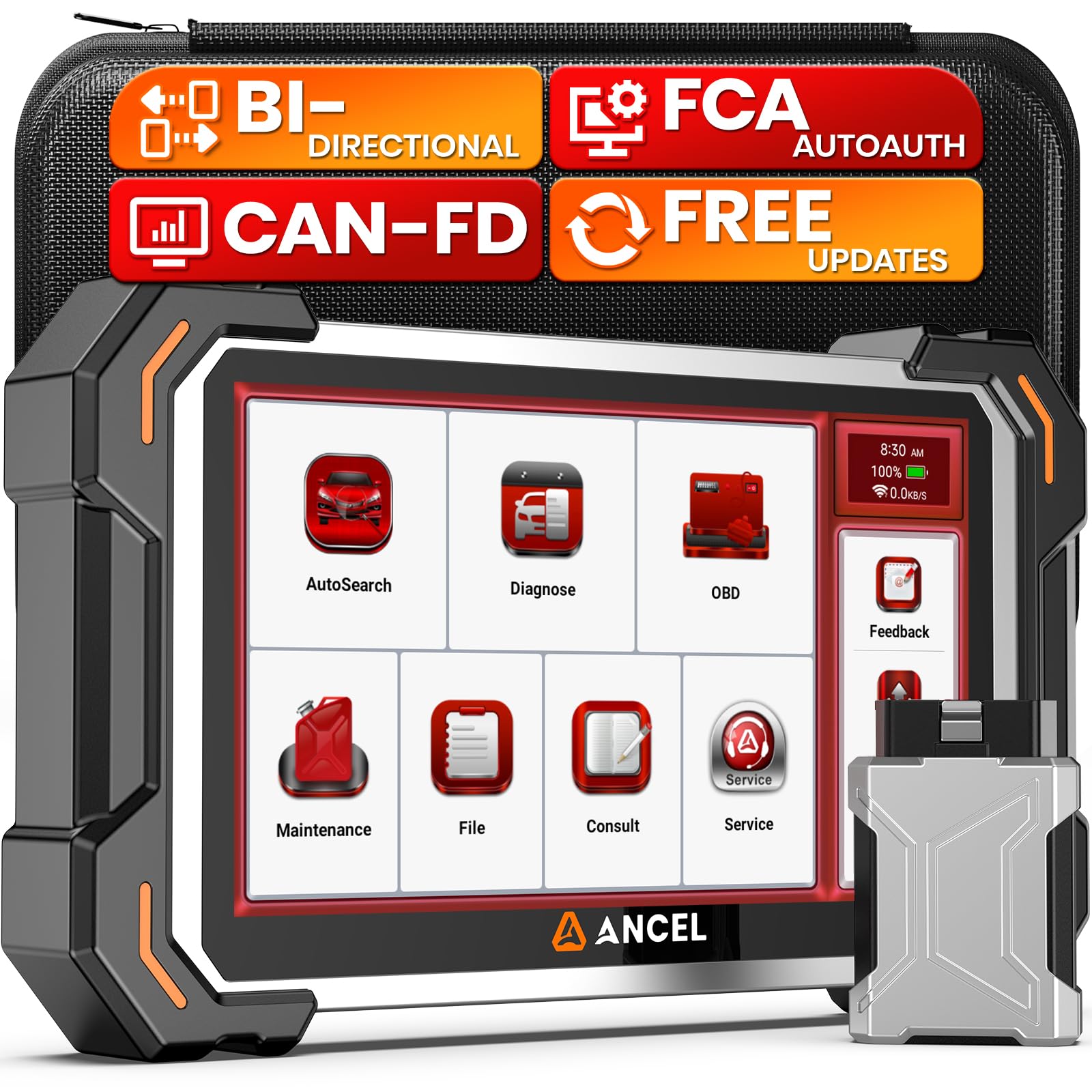
We recommend this if you want a wireless bidirectional tool that handles most DIY repairs and saves money on guesswork.
Pros
- Clear active tests let us command parts to verify fixes.
- Covers many vehicle systems and useful service jobs.
- Lifetime free updates reduce long-term costs.
Cons
- Some advanced functions depend on vehicle make and model.
- Tablet can feel bulky after long use.
- One-year warranty is short for heavy users.
We used the DS500BT on several home projects and liked how easy it was to run active tests. Hooking up the tablet via Bluetooth let us move around the car and watch live data while toggling components. That made it simple to confirm whether an injector, fan, or pump actually responded.
Accessing multiple systems felt closer to shop-level tools than a basic code reader. Reading and clearing codes across ABS, SRS, transmission, and more saved us time troubleshooting. The service functions—like oil reset and throttle relearn—worked for routine jobs we handle in the driveway.
Battery life and the tablet size stood out during longer sessions. The screen is helpful, but the unit is larger than small handheld scanners, so it’s heavier to hold for long periods. Also, some vehicle-specific bidirectional features didn’t show up on older or uncommon models we tested.
Overall, the DS500BT gives DIY mechanics strong diagnostic power without subscription fees. Lifetime updates and Bluetooth freedom make it a practical pick for a home garage that wants more than a basic reader.
XTOOL D7
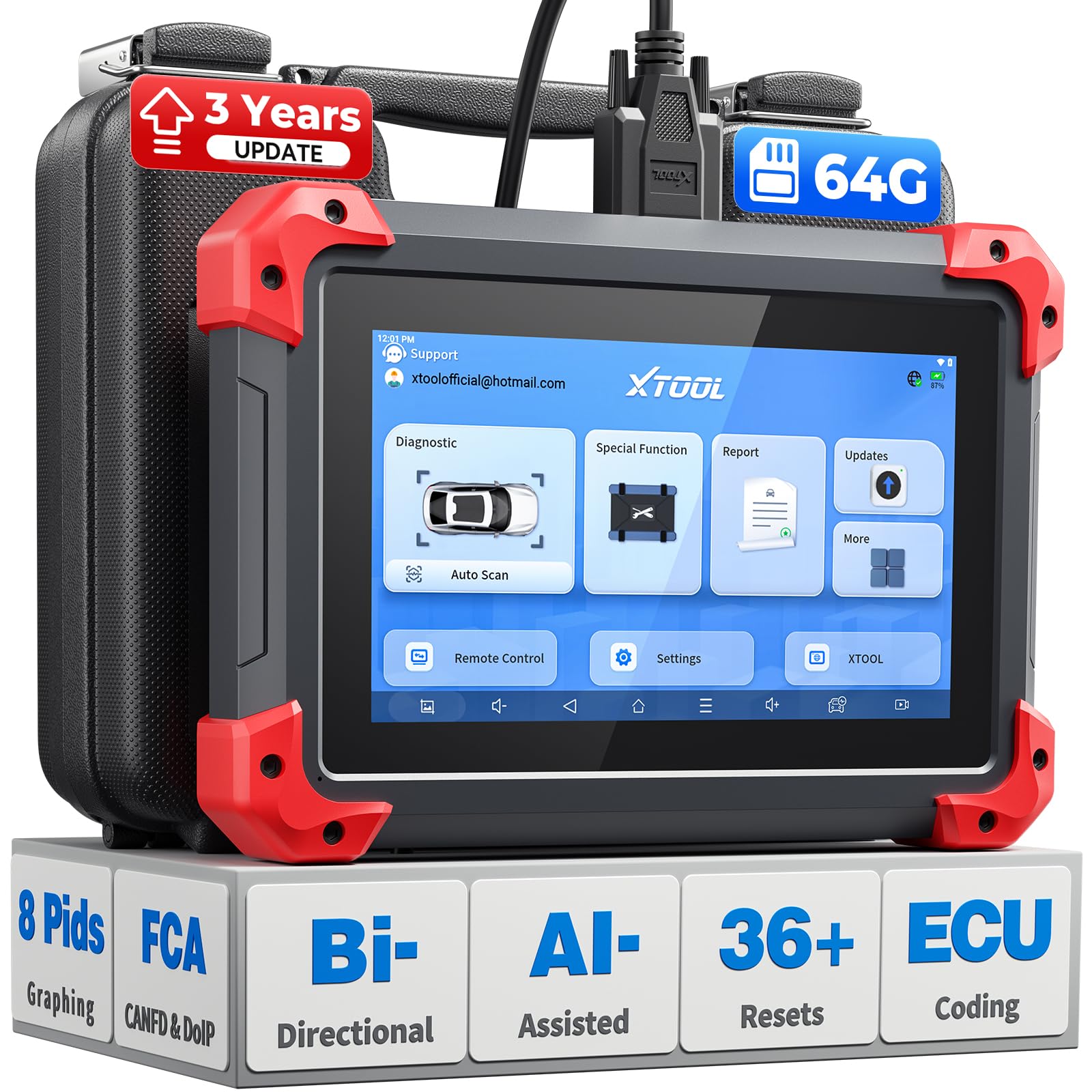
We recommend this tool for home mechanics who want near-professional bidirectional tests without paying shop prices.
Pros
- Powerful bidirectional control for active tests.
- Wide vehicle coverage and useful special functions.
- Large battery and smoother performance with increased storage.
Cons
- Learning curve for advanced functions.
- Occasional slow updates for some car makes.
- Bulkier than simple plug-and-play readers.
We used the D7 on several cars and liked how quickly it ran full-system scans. Sending commands to relays and watching live data confirmed fixes fast. The screen and responsiveness held up through long sessions.
We leaned on the special functions for brake bleeding and throttle relearns at home. Those features saved time and trips to the shop. Some advanced menus felt dense at first, so plan a short read of the manual before diving in.
Battery life let us work all day on a couple of vehicles without always being tethered. The unit is heavier than smaller code readers but that weight feels built for rugged use. Updates and support were helpful when we hit a compatibility question.
Innova 5610

We recommend this tool if you want dealership-level bidirectional controls and live data for most home mechanic repairs.
Pros
- Strong bidirectional commands for testing actuators.
- Clear live data for ABS, SRS, transmission, and engine.
- Good app support and US-based customer service.
Cons
- Not fully universal—check vehicle coverage first.
- Has a learning curve for advanced functions.
- Some features require the app and a phone connection.
We used the Innova 5610 on a few late-model cars and trucks. The unit felt solid and the screen is easy to read while leaning into the engine bay. Connecting took only a minute once we paired the app.
Sending commands like fuel pump on/off and retracting the EPB worked reliably on supported vehicles. Watching live ABS and transmission data in real time helped us narrow down faults faster than with a simple code reader.
We hit limits on a couple of models where OEM functions weren’t available, so coverage matters. The RepairSolutions2 app adds useful repair info, but we found some advanced relearns required patience and a bit of learning.
Overall, this is a practical bidirectional tool for serious DIYers who want more than basic codes without paying dealer prices. If your car is on Innova’s coverage list, this will save time and give us more confidence in our repairs.
TOPDON ONE
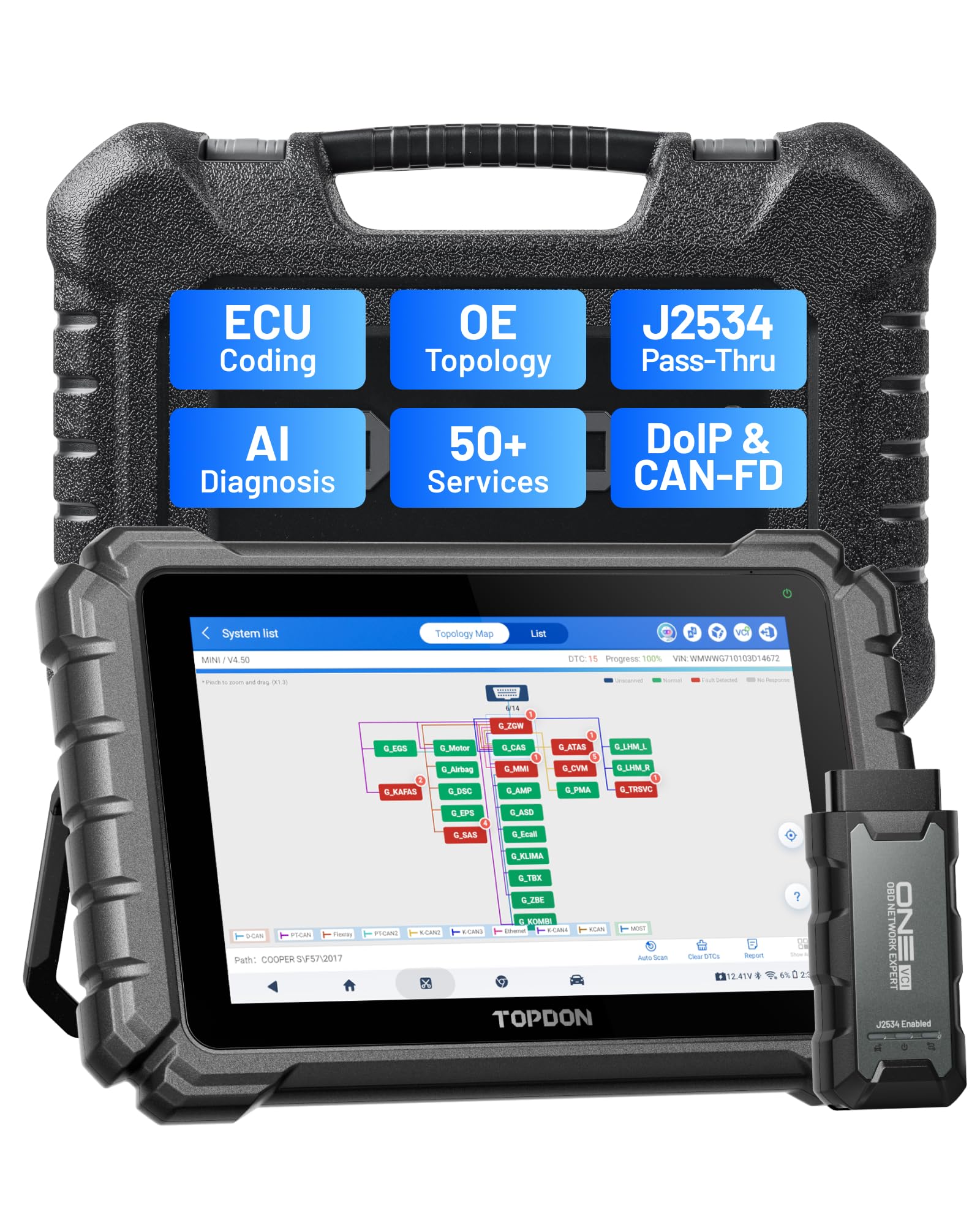
We recommend the TOPDON ONE if you want near-dealer functions and easy bi-directional controls without buying factory tools.
Pros
- Strong dealer-level features like J2534 pass-thru and ECU coding.
- Large, responsive 10.1″ touchscreen and fast Wi‑Fi make navigation quick.
- Helpful Topfix AI and topology mapping speed up diagnostics.
Cons
- Subscription needed for the newest vehicle coverage and warranty.
- Some advanced functions vary by vehicle and can be inconsistent.
- Device is heavier and bulkier than simple handheld scanners.
We connected the ONE to a few late-model cars and it felt like using pro gear. The touchscreen reacts instantly and the Wi‑Fi link cut down wait time compared with Bluetooth. Topology maps gave a clear view of module comms and helped us target the right ECU faster.
We pushed the unit through coding and guided service tasks. J2534 pass-thru let us run OEM software on one test car, and the guided VAG procedures were especially useful on VW/Audi work. Topfix AI matched codes to likely causes and wiring diagrams that saved us time on first-pass fixes.
We noticed the trade-offs after a day in the garage. Some vehicle-specific features required subscriptions to access the latest protocols, and a few advanced functions flagged as vehicle-limited. Physically, it’s heavier than handheld readers, so it lived on the workbench rather than being carried around.
Overall, the TOPDON ONE gives small shops and home mechanics powerful tools that feel professional, as long as you accept the subscription model for long-term coverage and updates.
Autel MK808S
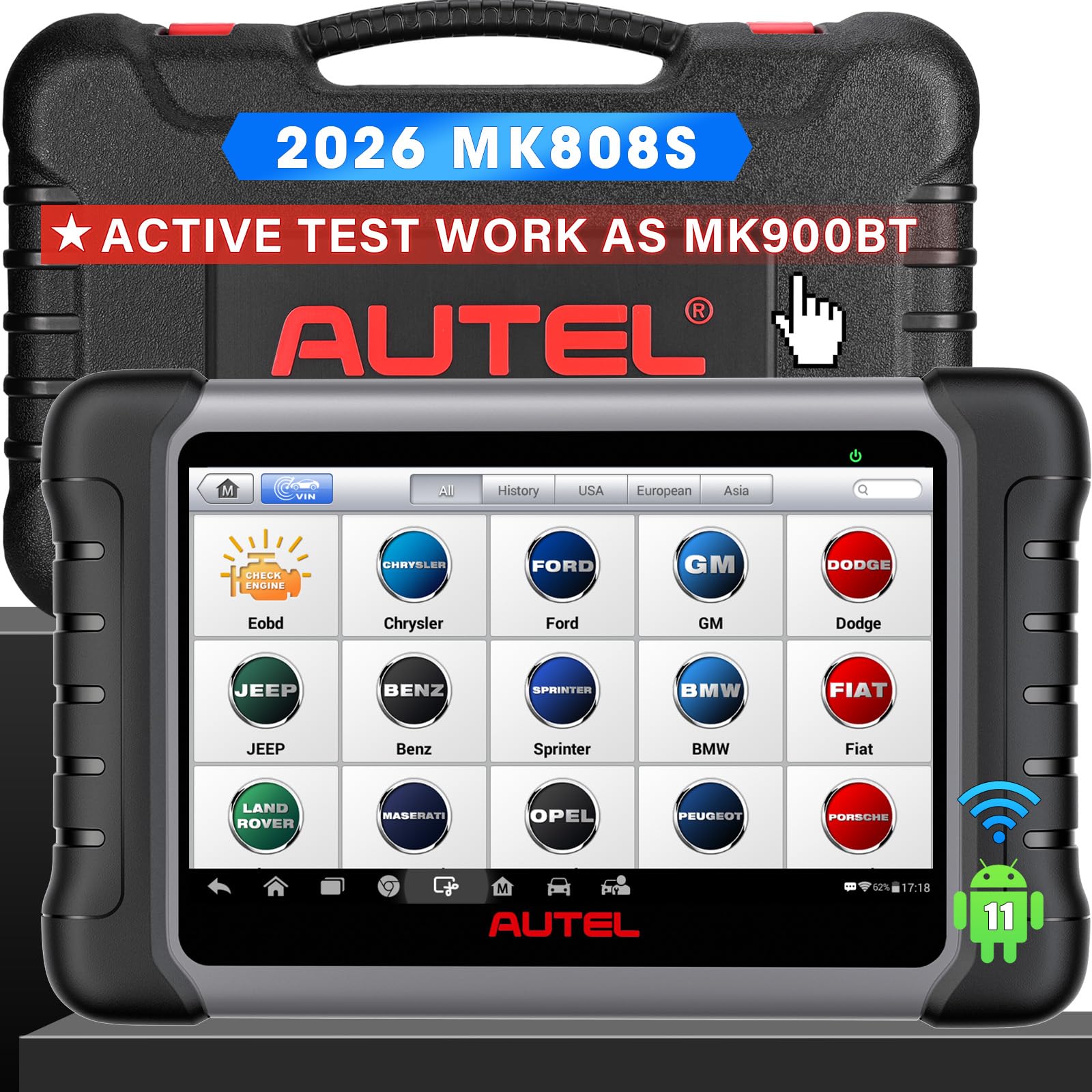
We recommend this if you want a fast, full-system bidirectional tool that grows with your home garage skills.
Pros
- Covers most vehicle systems and has many active tests.
- Feels fast and responsive during scans and active commands.
- Includes useful resets and service functions for DIY maintenance.
Cons
- Some advanced functions vary by vehicle and need updates.
- Tablet is bulky compared with handheld readers.
- Learning curve for the many menus and tests.
We used the MK808S on several weekend projects and found it handled routine diagnostics and system commands without fuss. The interface felt snappy when commanding actuators and reading live data, so we moved from guesswork to targeted repairs faster.
We ran the unit on older and newer cars. It performed well on engine, ABS, and TPMS tasks, and the reset services saved us a trip to a shop. Occasionally a function was grayed out until we updated the software, so keep the device current.
The tablet’s screen and build make long sessions easier than tiny OBD2 dongles. Still, the unit is larger than basic scanners, and it took a few tries to find some specific tests. For a serious home mechanic who wants bidirectional control and many service options, this feels like a solid, long-term tool.
XTOOL A30D
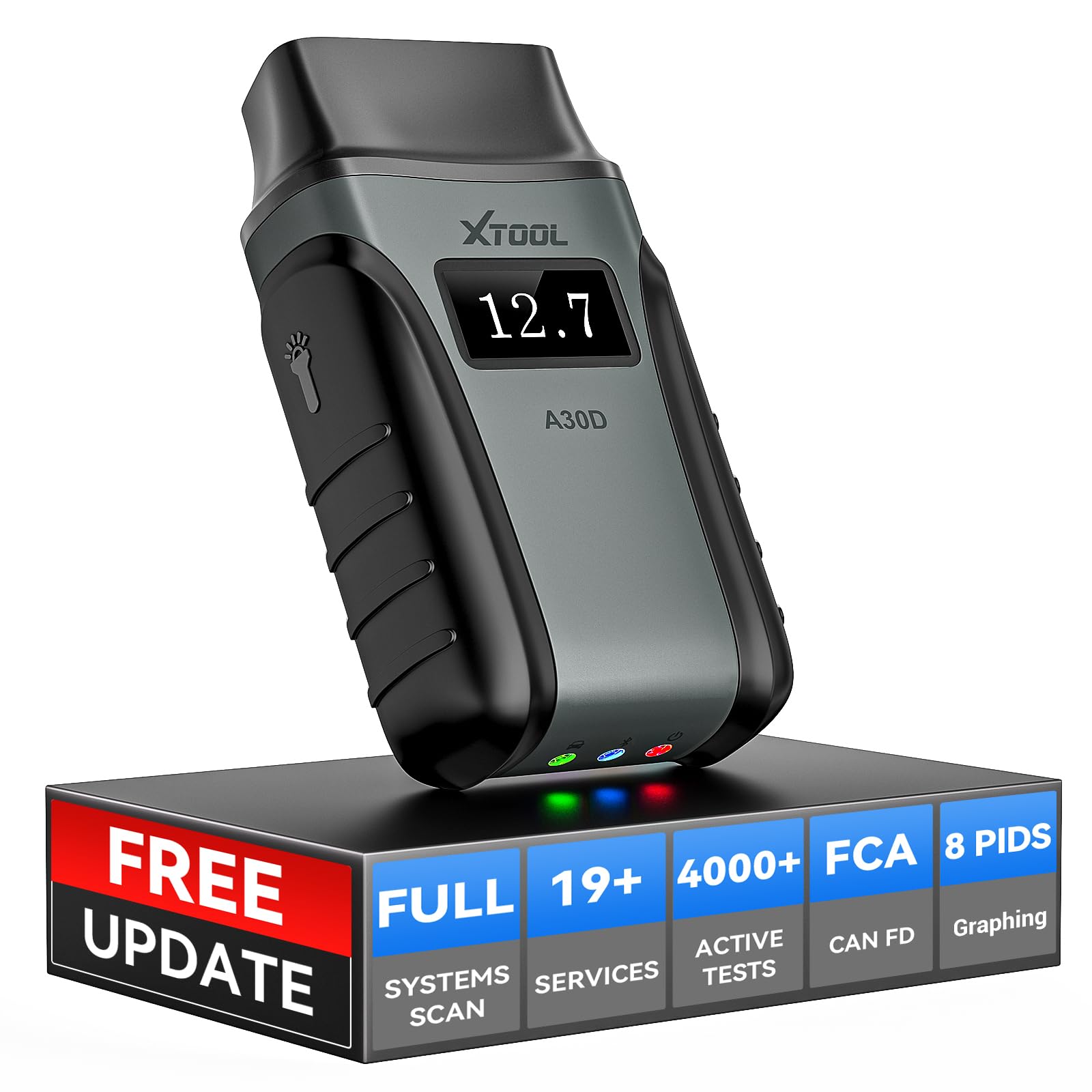
We recommend this if you want a true bi-directional scanner that saves shop trips and gives real-time control of components.
Pros
- Sends commands to parts so we can test components without taking them apart.
- Lifetime updates with no extra subscription cost.
- Many relearn/reset functions that handle common maintenance tasks.
Cons
- Some advanced features need VIN info or confirmation for compatibility.
- FCA AutoAuth requires separate account and may need a subscription.
- App setup can be fiddly the first time we pair the device.
We plugged the A30D into the OBD-II port and paired it with a phone in minutes. The Bluetooth stayed solid while we walked around the car, and live data graphs showed eight PIDs at once. That made spotting sensor changes during tests quick and clear.
We used the bi-directional controls to run a few component tests. Activating the fuel pump, toggling wipers, and rolling windows from the app worked as expected. Those two-way tests saved us time and kept us from replacing parts that were actually fine.
The 19 reset and relearn functions handled routine jobs like TPMS and brake caliper service smoothly on the cars we tried. A couple of vehicle-specific relearns needed advance confirmation, so we double-checked compatibility before relying on them for a complex repair.
Overall, the A30D feels built for home mechanics who want pro-level tools without a shop bill. It isn’t flawless, but the stable BT link, lifetime updates, and real bidirectional control make it a strong choice for DIY diagnostics.
Autel MK808S
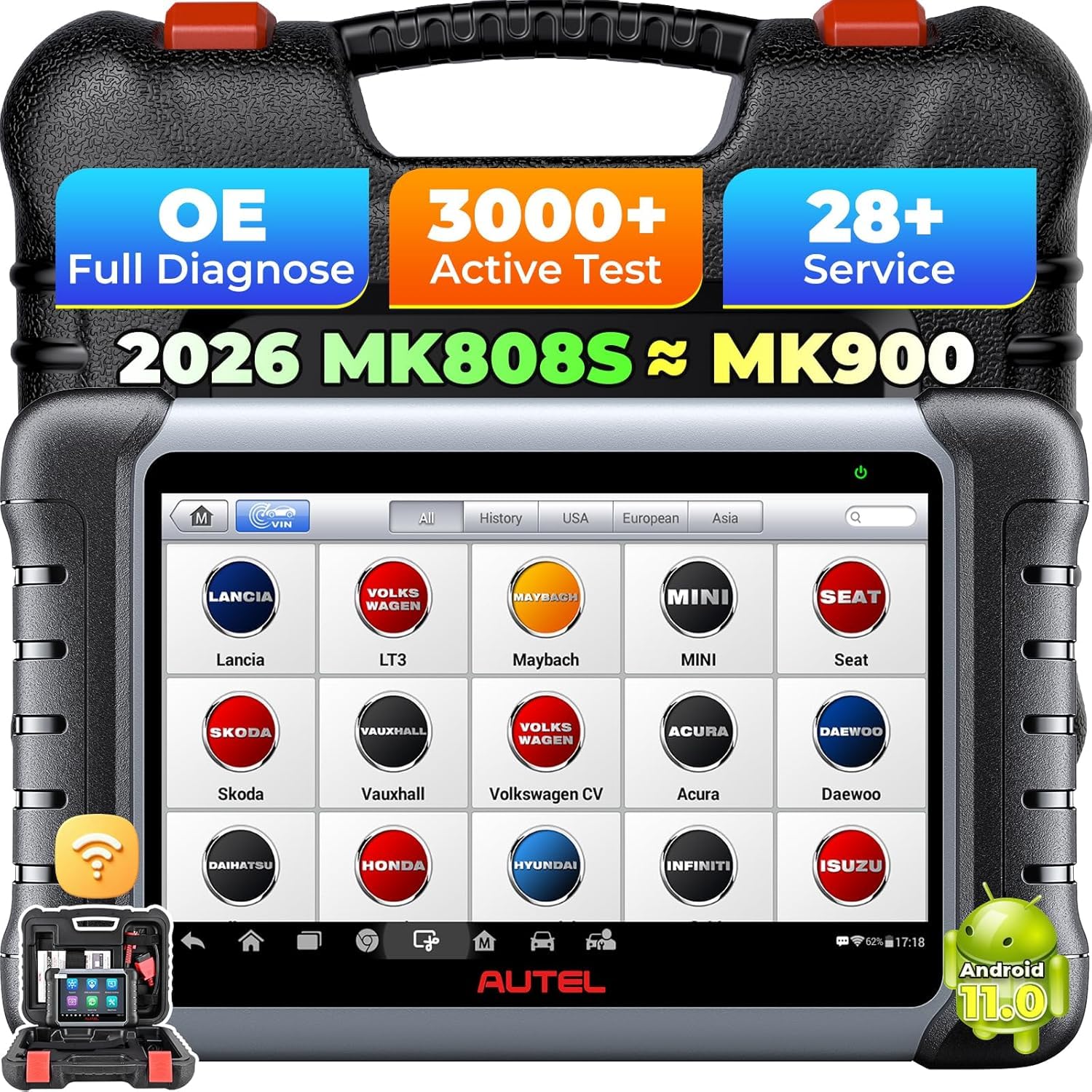
We recommend this if you want a fast, full-featured bidirectional scanner for home garage work because it balances professional functions with easy use.
Pros
- Fast, responsive interface that cuts wait time.
- Wide system access and many active tests for DIY repairs.
- Works on most cars and has useful guided reset services.
Cons
- Large tablet can feel bulky when working in tight spaces.
- Advanced features can be confusing at first without practice.
- Occasional software updates may take time to download.
We used the MK808S on several cars and appreciated how quickly it booted and scanned. The AutoVIN and full vehicle scan saved us time compared with simpler code readers.
The live data screens and active tests let us run injector buzzes and ABS bleeding without guessing. Graphing made intermittent faults easier to spot, and the reset services handled common jobs like oil and battery registration.
Setup took a few minutes and some updates ran after first use. We found the touchscreen intuitive, but some menus required digging to find advanced options. Overall, it felt like a shop-grade tool adapted for home mechanics.
MUCAR 632 Elite
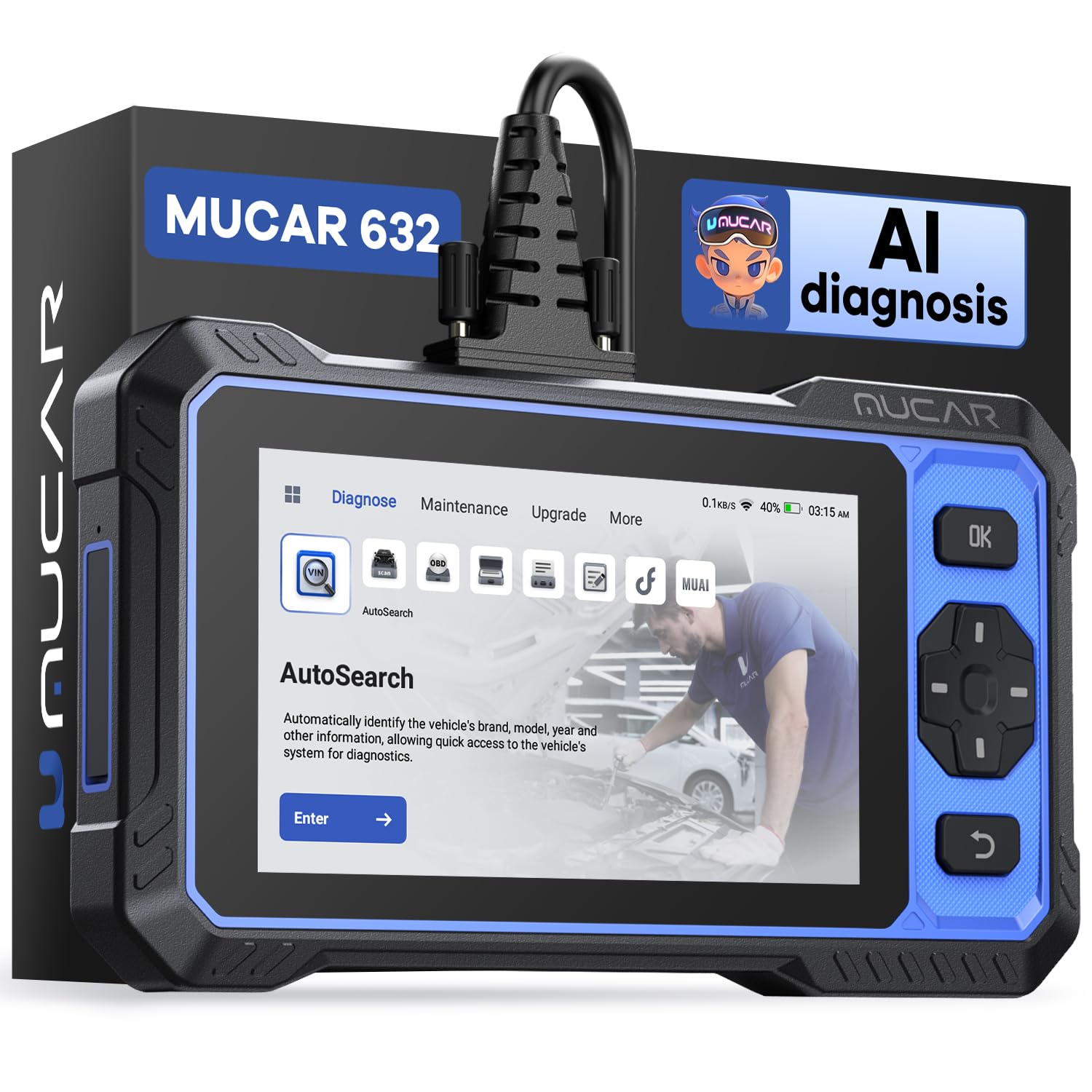
We recommend this if you want an affordable bidirectional tool with lots of reset services and lifetime updates.
Pros
- Strong bidirectional controls let us cycle actuators and run active tests.
- Lifetime free software updates avoid surprise subscription fees.
- AI-assisted code help speeds up diagnosis on unfamiliar DTCs.
Cons
- Interface can feel a bit slow compared with modern tablets.
- Some advanced features need internet or manufacturer accounts.
- Occasional learning curve to find the right menu for certain cars.
We used the MUCAR 632 on a few late-model cars and were impressed by how many functions it handled. Running active tests felt solid — we moved mirrors, cycled relays, and triggered actuators without fuss. The AutoVIN scan saved time on setup.
The AI code explanations helped when an unfamiliar fault popped up. It gave clear repair suggestions that matched what we found in service manuals. Updates installed over Wi‑Fi with no extra fees, which kept the unit current without subscriptions.
Hardware feels robust for the price, though the Android 8.1 interface lagged sometimes during heavy tasks. Setup required an FCA AutoAuth account for some functions, which added steps. Still, for home mechanics who want OE-style control and many reset services, this tool delivers good value.
FOXWELL NT301

We recommend this if you want a simple, reliable code reader to diagnose check-engine lights and monitor live data without paying for pro-level features.
Pros
- Easy to use right out of the box; plug in and read codes fast.
- Clear live-data graphs that help spot trends while we drive or idle.
- Small, rugged unit with a bright screen that works in daylight.
Cons
- No bidirectional controls or advanced resets; it stays a basic code reader.
- Won’t scan ABS, SRS, or other body systems we sometimes need.
- Windows-only updates; Mac and mobile users get no support.
We used the NT301 on a few older cars and a modern commuter. Plugging it in felt simple and its small size made it easy to tuck into the dash while we watched live readings. Reading and clearing the CEL took seconds when the ignition was on.
Live data graphs helped us spot a coolant temp that climbed too slowly and a fluctuating fuel trim that hinted at a vacuum leak. The graphing makes trends obvious, which saved time compared with raw numbers alone.
When we needed advanced functions like ABS checks, active tests, or module resets, the NT301 couldn’t help. That limitation is clear from the start, so this works best for DIYers focused on engine codes, emissions readiness, and basic sensor checks.
If you want a straightforward, dependable OBD2 reader for check-engine diagnostics and live-data watching, this gets the job done without extra complexity.
Buying Guide
We look for tools that save time and reduce guesswork. A good bidirectional scan tool should read and clear codes, command systems, and show live data. It must be easy to use for hobbyists.
Key Features to Check
- Bidirectional control: We need the tool to send tests and activate components. This helps verify repairs.
- Protocol coverage: Ensure it supports OBD-II modes and newer vehicle protocols. More coverage means fewer compatibility issues.
- Live data and graphing: Real-time values and graphs help diagnose intermittent problems. Higher data refresh rates give clearer results.
- Bi-directional commands list: A clear list of available commands per module speeds testing. We prefer tools with labeled, accessible commands.
- Updates and support: Regular software updates add vehicles and fix bugs. Good tech support saves time when we run into issues.
- User interface: Look for simple menus and clear screens. Touchscreens and large displays improve usability in the shop.
Practical Considerations
- Compatibility: Check vehicle year, make, and model before buying. Confirm the tool lists these on its spec sheet.
- Connectivity: Decide between OBD-II cable and Bluetooth/Wi‑Fi. Cables can be more stable; wireless gives mobility.
- Battery and power: Some tools draw power from the car, others have internal batteries. We prefer tools that won’t die mid-test.
- Durability and warranty: A rugged case and solid warranty matter for garage use. Replaceable parts lower long-term cost.
We weigh features against budget and typical jobs we do. Prioritize the functions we use most often to get the best value.
Editor’s Choice
We pick the Autel MaxiCOM MK808 as our Editor’s Choice for home mechanics. It balances deep bidirectional control with ease of use, so hobbyists get pro-level functions without a steep learning curve.
The MK808 runs full bi-directional commands on most engine, ABS, transmission, and body systems. It reads and clears codes, runs active tests, and cycles relays. Updates are frequent and simple to install.
We value its 7-inch touchscreen and intuitive menus. The screen is bright and responsive, which speeds troubleshooting. Battery life and tablet durability also suit garage use.
Key specs:
- Bi-directional support: Engines, ABS, AT, SAS, few others
- Display: 7″ touch, 1024×600
- Updates: Wi‑Fi OTA updates
- Extras: Service reset, oil/service light, DPF, TPMS
We recommend this tool if you want strong bidirectional functions without a laptop. It fits weekend mechanics who work on many makes and models. Prices sit in the mid-range for advanced scan tools, which we find fair for the capabilities provided.
Conclusion
We picked tools that balance features, ease of use, and price for home mechanics. Each option offers bidirectional control, common diagnostic functions, and useful live data for repairs.
We recommend prioritizing the vehicles you work on and the functions you need. If you mostly handle basic maintenance, a simpler model gives the best value. For deeper diagnostics, a sturdier pro-level tool saves time and reduces trips to a shop.
We value reliability and software support. Tools with regular updates and good company backing stay useful longer. That matters for newer models and changing protocols.
We also weigh usability. Clear screens, simple menus, and solid connectors make daily work faster. Battery life and Bluetooth range affect how easily we move around the car.
We suggest starting with one versatile unit and adding specialty tools as needed. This approach keeps costs down while letting us grow our capability. Keep receipts and check return policies before buying.
Key takeaways:
- Match the tool to your car and needs.
- Favor regular software updates.
- Look for easy-to-use interfaces and solid build.
- Invest in a unit that will scale with our skill level.
We stand by these points as practical guidance for choosing a bidirectional scan tool for home mechanics.
FAQS
What is a bidirectional scan tool?
We use it to read trouble codes and send commands back to the car. It can test actuators, run relearns, and perform bi-directional control for diagnostics.
Do we need one for basic home repairs?
No, not always. For oil changes and simple repairs a basic OBD-II reader works. But a bidirectional tool saves time on complex issues and drivability problems.
Which cars will it work on?
Most tools support OBD-II cars from 1996 onward. Some manufacturers need dealer-level support. We check compatibility before buying.
Is it hard to use?
No, many tools have simple menus and guided tests. We still recommend reading the manual and watching a couple of tutorial videos first.
How much should we expect to pay?
Prices vary. Basic bidirectional models start in the low hundreds. More advanced models cost significantly more.
Can it cause problems if we use it wrong?
Yes. Sending wrong commands can change settings or start systems unintentionally. We suggest practicing on non-critical systems and avoiding commands if unsure.
What features matter most?
We value bi-directional control, live data, component tests, and software updates. Good build quality and a clear display help too.
Where do we get updates and support?
Buy from reputable brands with regular software updates. Check online forums and official support for help and firmware updates.
