
10 Best Bidirectional Scan Tool for Used Car Buyers: Confident Guide to Top-Rated, Affordable Models

Buying a used car means more unknowns than buying new. A bidirectional scan tool reads vehicle data and can also send commands to the car’s systems, so it helps us spot hidden issues and verify repairs before we buy. These tools work on many cars and display live data, trouble codes, and safety-system status, which gives us facts instead of guesses when assessing a vehicle.
When choosing a bidirectional scan tool, the most important factors are vehicle coverage, bidirectional capability, and ease of use. Coverage determines which makes and models the tool can test; true bidirectional control lets us activate components like fuel pumps or windows; and a clear app or screen saves time during an inspection. Price, update policy, and build quality also matter, but those three factors most affect whether the tool will help us spot real problems quickly. We tested multiple bidirectional scan tools to find the ones that give used-car buyers reliable, actionable data without wasting time or money.
Best Bidirectional Scan Tools for Used Car Buyers
We tested top bidirectional scan tools to help used car buyers check vehicles more deeply before purchase. Our list focuses on tools that read codes, run active tests, and offer clear data so buyers can spot hidden problems.
Innova 5610

We recommend this tool if you want dealer-level tests and live data for used cars, but check vehicle coverage before buying.
Pros
- Sends commands to test parts like fuel pump and EPB.
- Shows live ABS, SRS, transmission, and engine data.
- Works with an app and has US-based support.
Cons
- Not compatible with every make or model.
- App pairing can be tricky at first.
- Some features require checking Innova’s coverage tool.
We used the 5610 on a handful of trade-ins and it cut diagnostic time. The bidirectional control felt solid when we commanded actuators and watched live responses. That hands-on feedback helped confirm fixes instead of guessing.
The live data stream made intermittent issues easier to chase. We could watch ABS and transmission values change in real time while someone drove the car slowly. That saved us trips back to the shop and reduced uncertain repairs.
Pairing to the RepairSolutions2 app gave clear repair suggestions, but the initial Bluetooth setup needed patience. When the app connected, it produced useful reports and saved vehicle sessions for later review. We leaned on Innova support once, and they answered in English quickly.
Coverage limits matter to used-car buyers. We tried several older and newer models and found most worked, though a few foreign-market cars didn’t show full functions. Always run the coverage checker for the specific VIN before you commit.
Overall, the 5610 felt like a pro-level unit we could use on the lot to verify repairs and clear codes. It won’t replace dealer-only tools for every car, but for many used vehicles it gives us the control and data we need.
TOPDON ArtiDiag900 Lite

We recommend this if you want a wireless bidirectional tool that handles deep diagnostics without costing a shop-level price.
Pros
- Strong wireless range and responsive touchscreen that made testing easier.
- Real bidirectional controls let us activate parts to confirm faults.
- Long battery life and a rugged feel for field use.
Cons
- Software updates can be long and sometimes interrupt work.
- Some manufacturer features vary by make and need extra purchases.
- Warranty and support may route you through different regional teams.
We used the ArtiDiag900 Lite on several late-model cars and it felt like a serious step up from basic code readers. The screen is big and clear, and running active tests from a distance saved time when we needed to watch moving parts.
Connecting via the Bluetooth VCI worked well most of the time, and the bidirectional commands actually moved components so we could confirm failures instead of guessing. Live data scrolling stayed smooth, which helped when we chased intermittent issues.
Updates added new car coverage but also took a while on a slow connection, so plan for downtime. Support helped when we hit a strange authorization barrier, though you might deal with a different team depending on where you bought it.
Autel MX808S
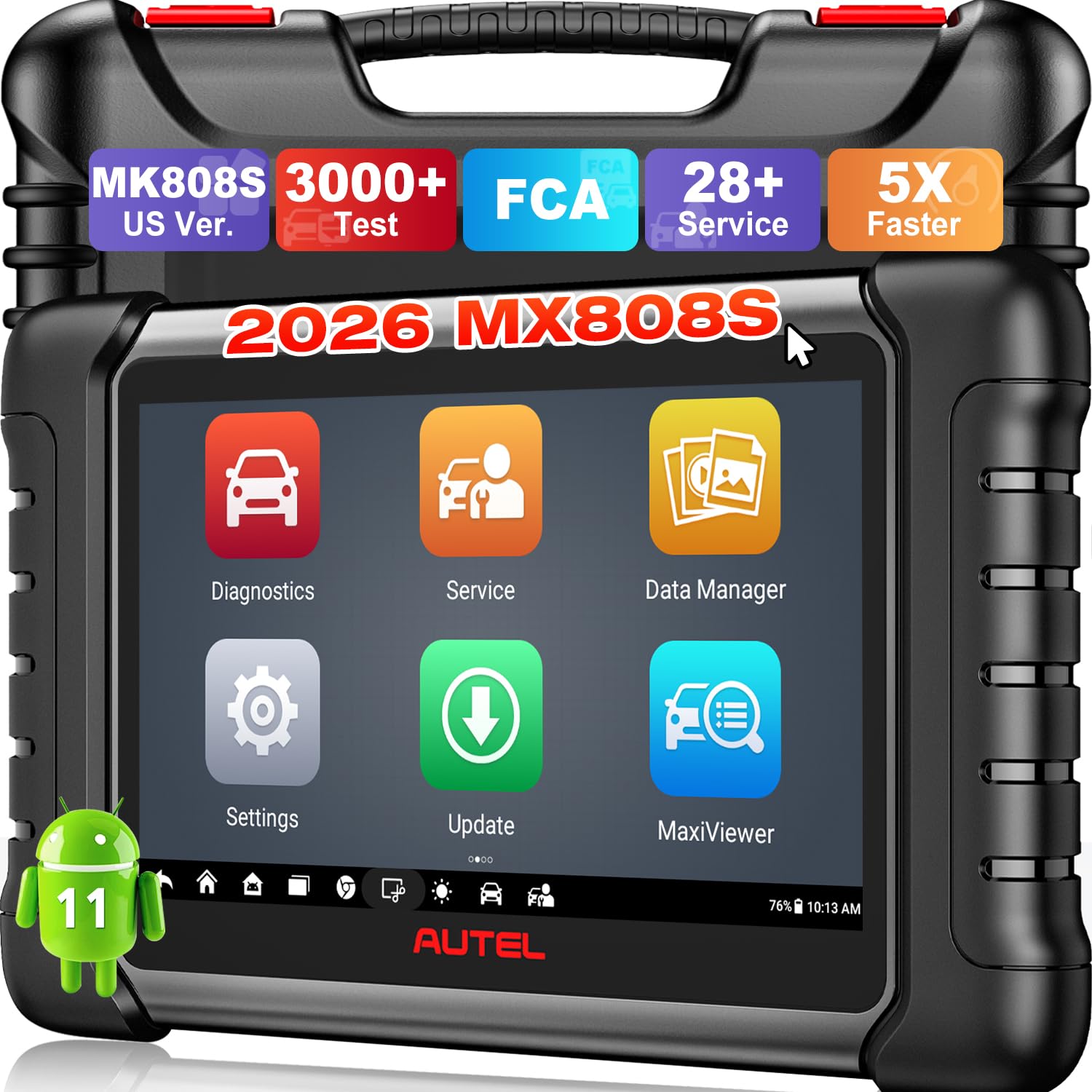
We recommend this if you want near-professional bidirectional tests and service functions at a mid-range price.
Pros
- Fast, responsive interface that cuts diagnostic time.
- Many active tests let us confirm parts before buying replacements.
- Covers lots of makes and has useful service resets.
Cons
- Some advanced features depend on vehicle compatibility.
- Software menus can feel a bit clunky at first.
- Not every car supports VIN auto-detect.
We hooked the MX808S up to several used cars and liked how quickly it boots and scans. The touchscreen responds the way a modern tablet does, so we moved through menus faster than older scanners.
Running active tests felt practical. We activated the fuel pump, buzzed injectors, and cycled fans to confirm issues before swapping parts—those checks saved time and money on a few cars.
Service functions proved handy for pre-purchase checks. We did oil reset and ABS bleed simulations to verify repairs and looked at live data in graphs to spot intermittent faults.
Some vehicles required manual VIN input or a compatibility check first. We ran into one model where a feature listed in marketing didn’t work, but Autel support helped sort it after we reached out.
If you want a balanced tool for inspecting used cars, this gives us most bidirectional features without the dealer price, though you should verify your target vehicle’s compatibility before buying.
ANCEL DS500BT
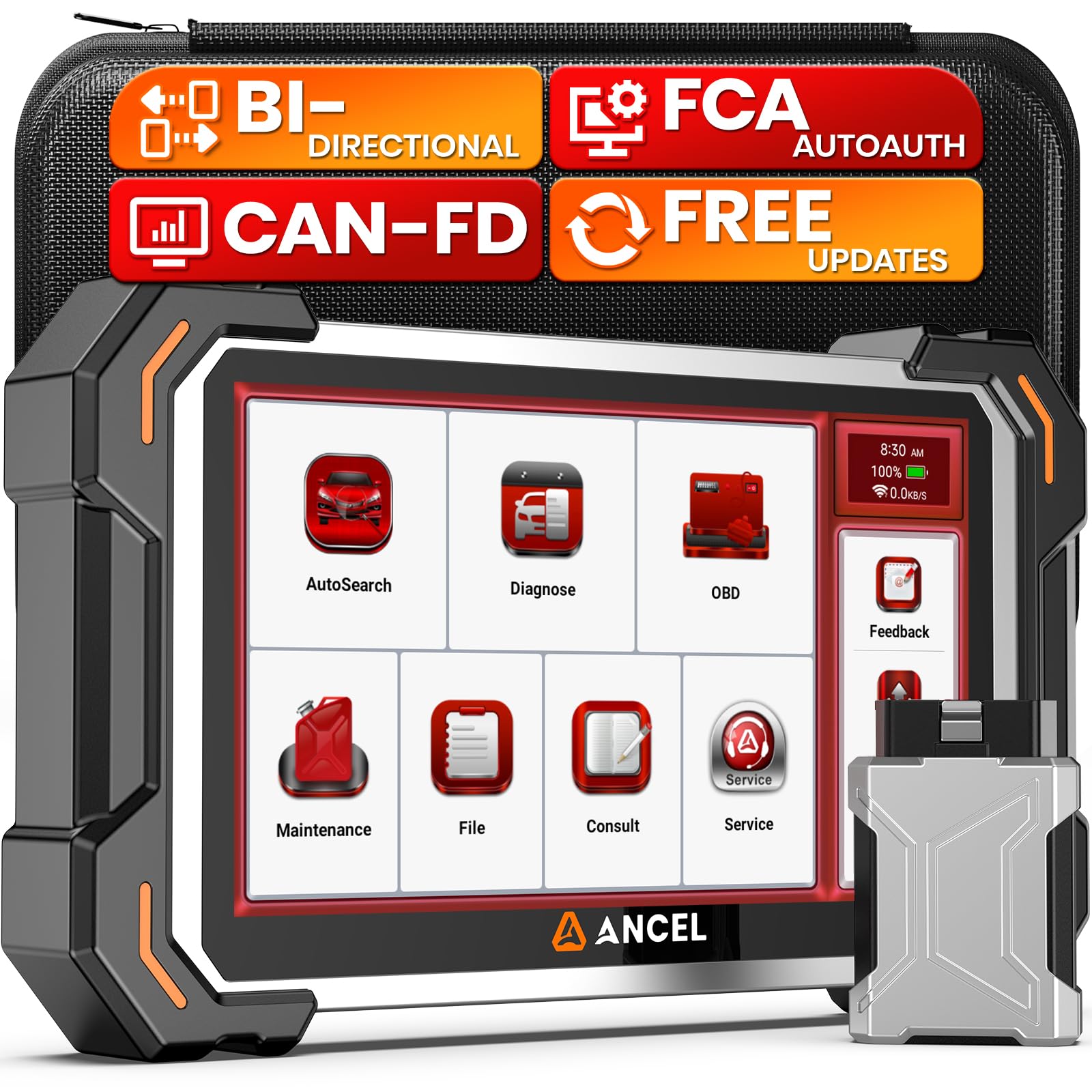
We recommend this scanner if you want a powerful bidirectional tool that lets us test parts before replacing them and covers many vehicle systems.
Pros
- Runs active tests so we can verify components before buying parts
- Wireless tablet lets us move around the car during checks
- Lifetime updates keep it current without extra fees
Cons
- Menus feel cluttered at first and take time to learn
- Some advanced functions vary by vehicle and may not be available
- The tablet is nice but a bit bulky to handle for long sessions
We plugged the DS500BT into several cars and used the Bluetooth tablet to run full-system scans. The active tests stood out — we could command fuel pumps, fans, and injectors and see real responses. That saved us from replacing parts that were still working.
We ran service routines like oil reset, EPB, and TPMS on multiple models. Most procedures completed smoothly, though one or two functions weren’t present on certain vehicles. The AutoVIN feature helped identify supported cars quickly, which sped up our workflow.
We liked the wireless freedom; moving around the vehicle while watching live data made troubleshooting faster. The tablet’s Android interface is full-featured but not always intuitive, so expect a learning curve. For buyers who want a serious DIY or small-shop tool, this felt like a capable, long-term choice.
TOPDON ONE
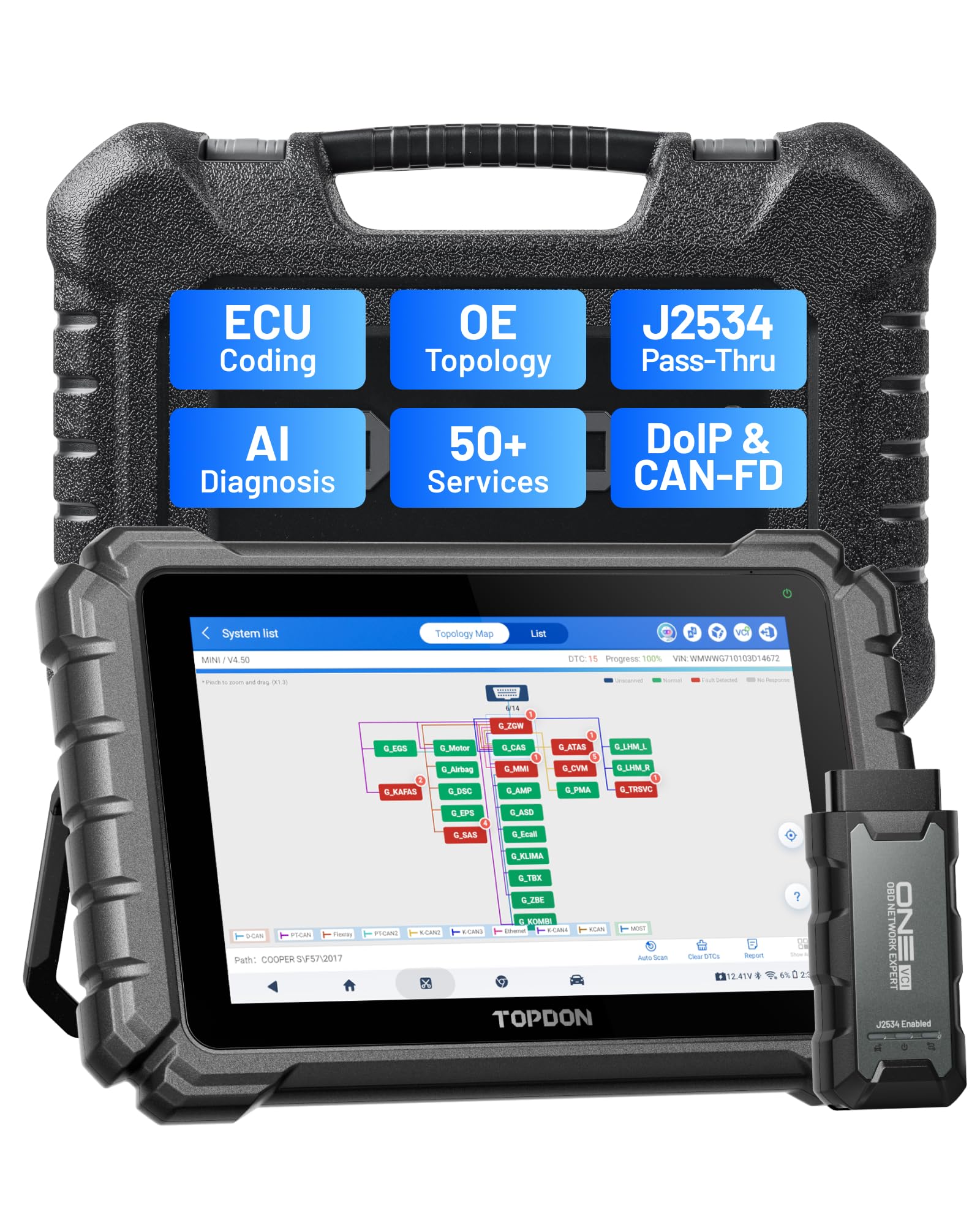
We recommend this tool if you want dealer-level diagnostics and coding without paying dealer prices.
Pros
- Fast, large touchscreen and stable Wi‑Fi that feels smooth in use.
- Real pass‑thru and ECU coding let us do dealer tasks on many cars.
- Topology mapping and AI help us find issues faster.
Cons
- Subscription needed for the newest cars and continued warranty.
- Heavy unit and tablet battery can drain with long shop days.
- Some advanced brand coverage still needs updates for the latest models.
We used the ONE on several recent vehicles and liked how the 10.1″ screen made menus and wiring diagrams easy to read. Scans popped up quickly and navigating modules felt natural compared with smaller handheld units.
The J2534 pass‑thru worked when we paired it with OEM software on a test car, and the ECU coding flows were straightforward for common brands. Topology mapping actually helped us trace module communication rather than guessing where a fault lived.
Topfix AI gave clear causes and likely fixes for fault codes, which saved us time on jobs where we didn’t have full shop history. On the flip side, heavy daily use showed the unit’s weight and battery limits, and some very new models still required a subscription update to unlock full functions.
Overall, we found the TOPDON ONE to be a professional‑grade tool that brings many dealer features into a single package at a reasonable price for serious DIYers and small shops.
XTOOL A30M V2.0

We recommend this scanner for buyers who want strong bidirectional control and useful service resets without paying pro-level prices.
Pros
- Real bidirectional tests let us actuate parts and confirm fixes.
- Lifetime free updates keep the app current with no subscription.
- Portable Bluetooth setup means we can test from inside the garage.
Cons
- Some advanced functions vary by vehicle, so compatibility checks are needed.
- FCA AutoAuth and some OEM access require separate registration or fees.
- App setup can be slightly fussy on first use with activation codes.
We used the A30M on several older and newer cars and found the bidirectional commands especially handy. Running active tests on windows and relays saved us time versus guessing from codes alone.
Connecting over Bluetooth worked well most of the time, and the live-data graphs helped us spot trends quickly. A few cars needed extra steps to unlock certain systems, which felt like an extra hurdle when we just wanted a fast check.
The reset and relearn options came in handy after basic repairs. We used oil and throttle relearn functions and the tool handled them smoothly, though a couple of vehicles reported limited support.
Overall, this unit balances capability and price for used-car buyers who want more than code reads but don’t need a dealer-level tablet. If you want a compact tool that actually lets you command components and do common service jobs, this is worth trying.
ThinkScan 662
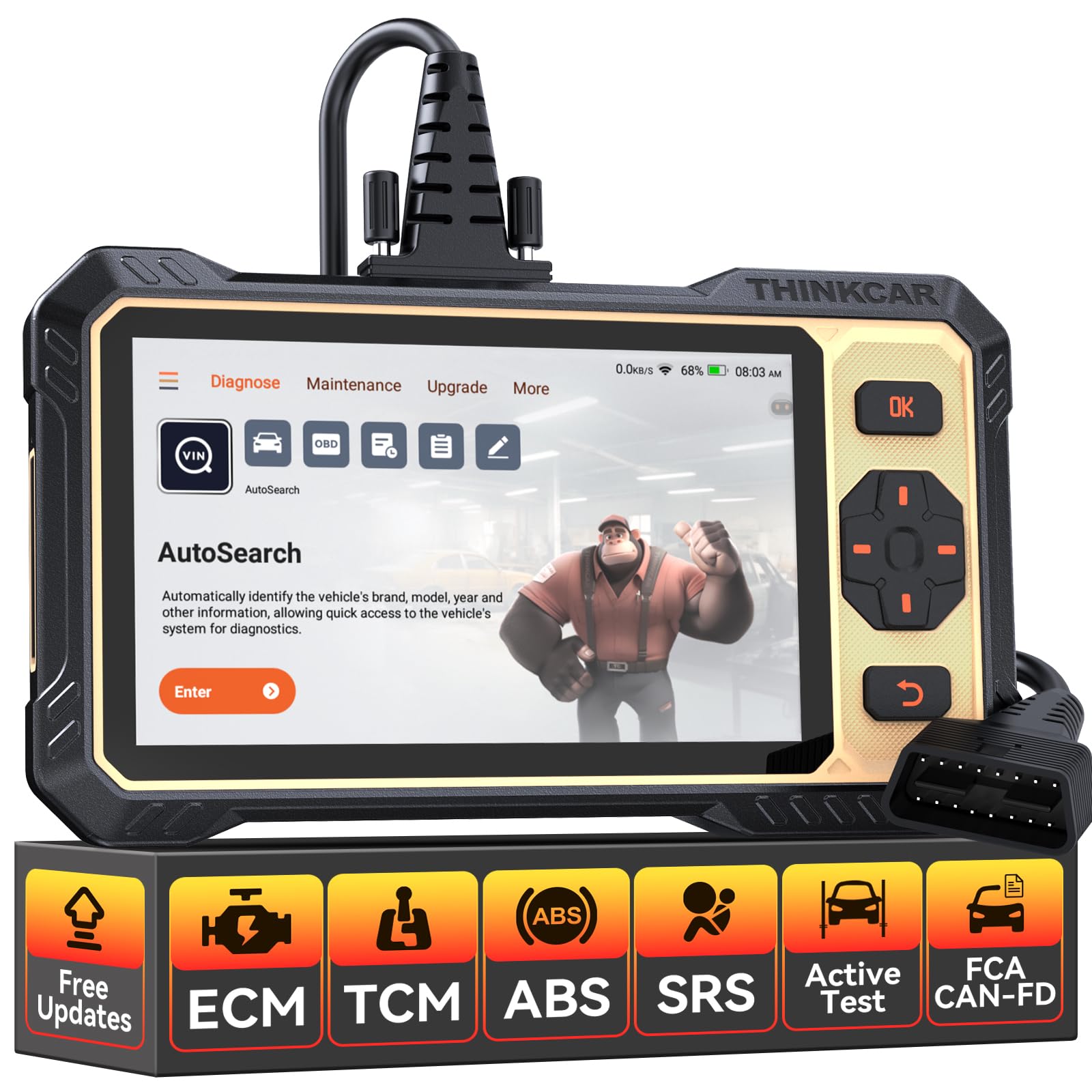
We recommend this tool if you want pro-level bidirectional testing and reset functions without paying dealer prices.
Pros
- Strong active tests that let us command components and confirm fixes.
- Easy touchscreen plus physical buttons make it fast to use in the garage.
- Lifetime updates and good coverage for many car brands.
Cons
- Pricier than basic code readers for simple needs.
- FCA AutoAuth features require separate registration and fees.
- Bulkier than tiny handheld scanners for carrying in a glovebox.
We used the ThinkScan 662 on several used cars and liked how quickly it ran active tests. We could trigger fans, injectors, and throttle actions to verify parts under command, which helped us find real faults faster than checking codes alone.
The interface felt familiar and simple, like a tablet with physical shortcuts. Scans returned live data and waveform views, and saving reports to email made sharing results with buyers or mechanics painless.
Battery life and rugged build held up during long checks in the driveway. Still, the unit is larger than tiny OBD2 dongles, and some buyers might prefer a cheaper scanner if they only want basic code reads.
Overall, we found it a solid middle ground for used car buyers who want deeper diagnostics and active tests without stepping up to full-shop equipment.
Autel MK900BT
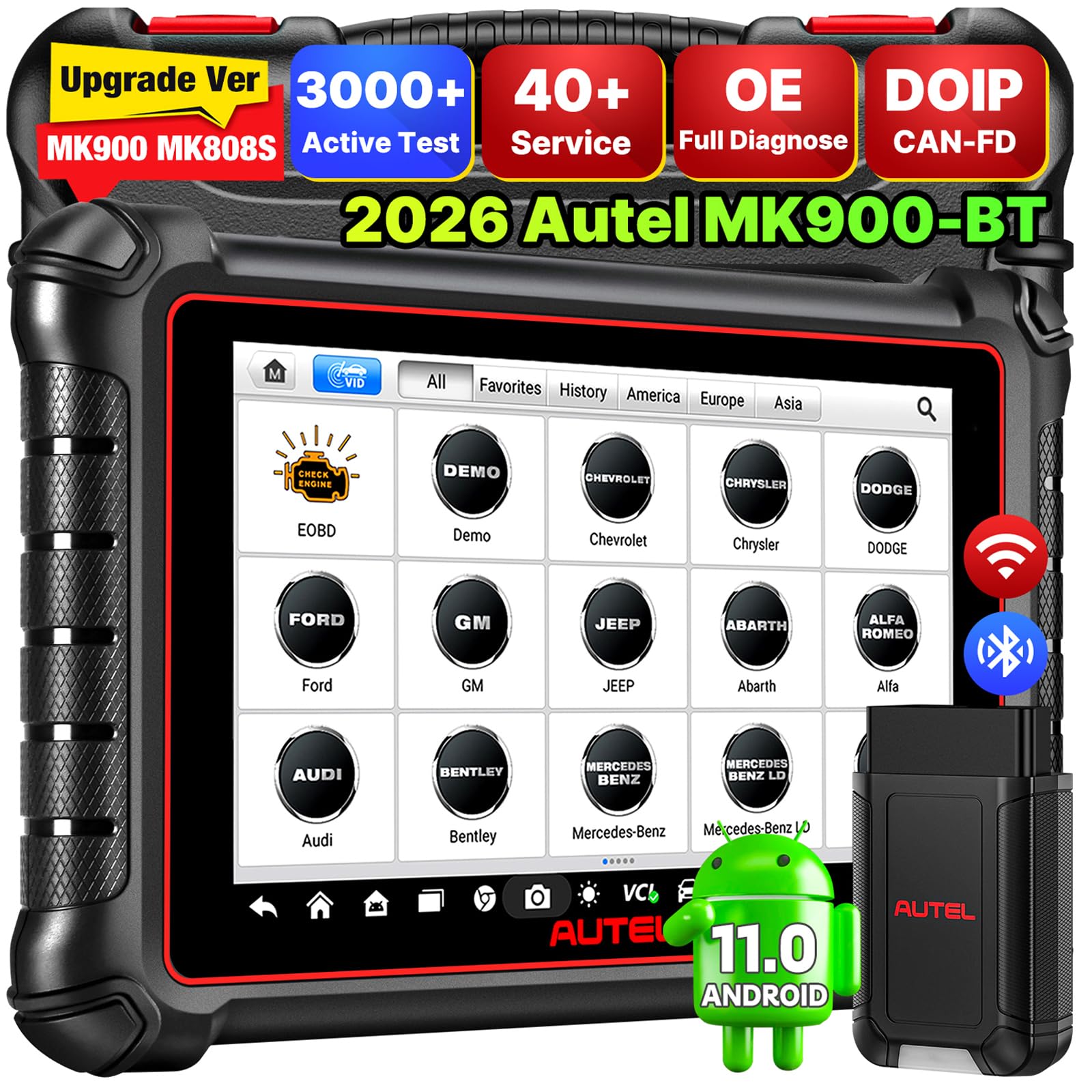
We recommend this tool if you need deep bidirectional tests and broad vehicle coverage for inspecting used cars.
Pros
- Sends active commands to actuators to verify fixes.
- Wide coverage and modern protocols like CAN FD and DOIP.
- Big screen, wireless range, and fast software make testing easier.
Cons
- Some advanced functions need extra purchases or subscriptions.
- A learning curve for full bidirectional testing and reports.
- Occasional compatibility limits on certain makes and years.
We used the MK900BT on several trade-in and private-sale cars and liked how quickly it found which modules responded. The live data and actuator controls let us confirm parts like fans and injectors actually move, not just report codes.
Pairing the V150 wireless VCI felt solid; roaming around the car without cables saved time when checking doors and roofs. Printing pre/post reports over Wi‑Fi helped document issues for buyers, though setting up some branded services took extra steps.
We hit a few snags with functions locked behind paid updates or vendor authorization for certain makes. Still, for a serious used-car buyer who wants to test systems beyond basic OBD2 codes, this tool gave us the depth and speed we needed.
MUCAR 632 Elite
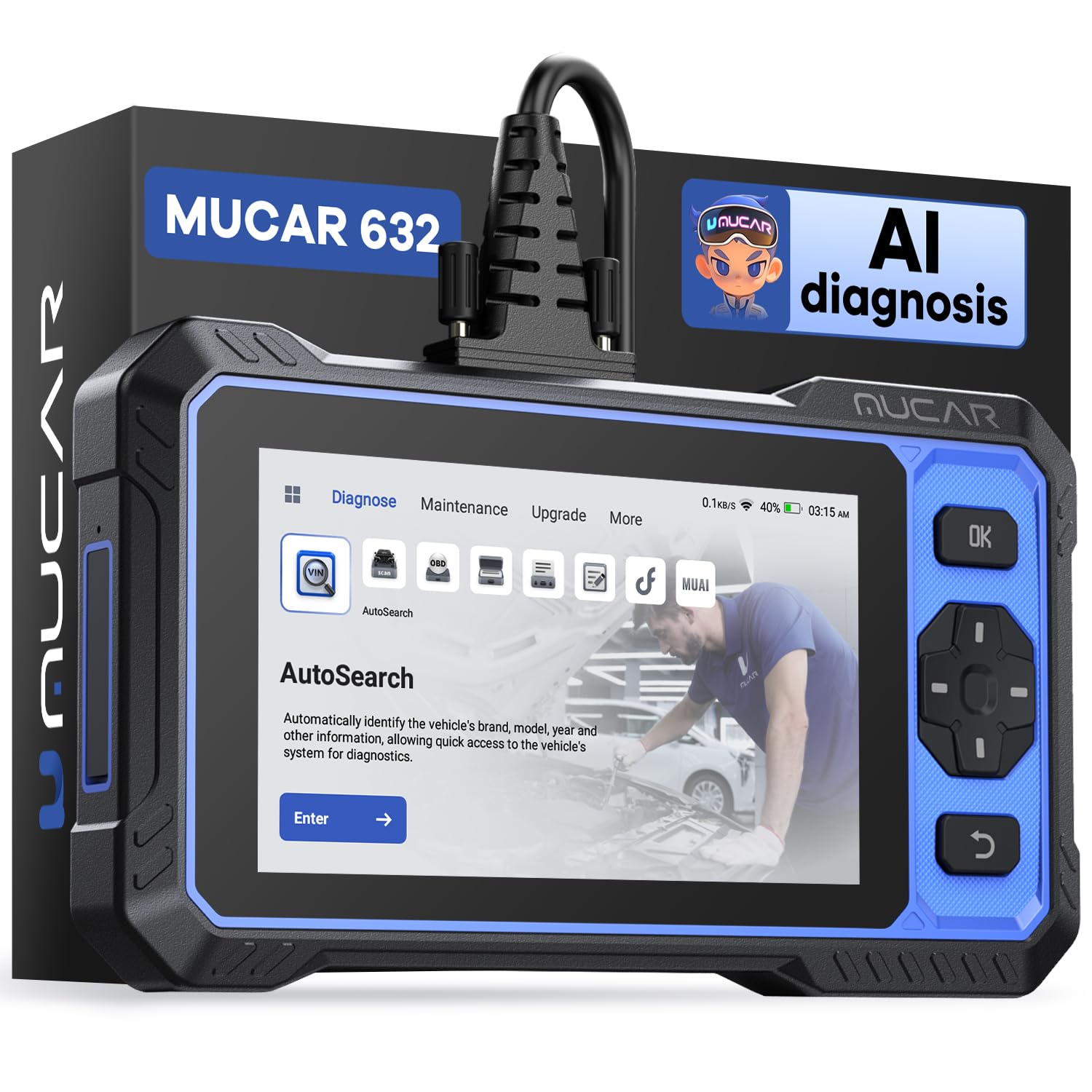
We recommend this tool if you want strong bidirectional control, lots of reset services, and lifetime updates at a mid-range price.
Pros
- Real bidirectional tests let us activate components and confirm repairs quickly.
- Lifetime free software updates avoid surprise annual fees.
- AI-assisted code help made troubleshooting faster for tricky DTCs.
Cons
- The screen may arrive covered by a protective film that looks like a scratch until peeled off.
- Software can prompt frequent updates during a session, which interrupts workflow.
- User interface has small annoyances that slowed us down compared with pro tools.
We used the MUCAR 632 for several checks on older and newer cars. The AutoVIN scan found vehicle info fast and saved us time. Running active tests felt solid and allowed us to move actuators and watch live data at the same time.
The AI code analysis gave clear repair hints that helped when codes were vague. It won’t replace a mechanic, but it cut our guesswork on multiple issues. Reset services like oil, TPMS, and brake calibration worked reliably on the cars we tried.
Hardware feels sturdy and the touch screen is responsive after removing the protective film. Battery life and Wi‑Fi updates were convenient, though updating mid-scan can be annoying. For used car buyers who want deeper checks than a basic reader, this unit strikes a good balance of features and price.
FOXWELL NT726
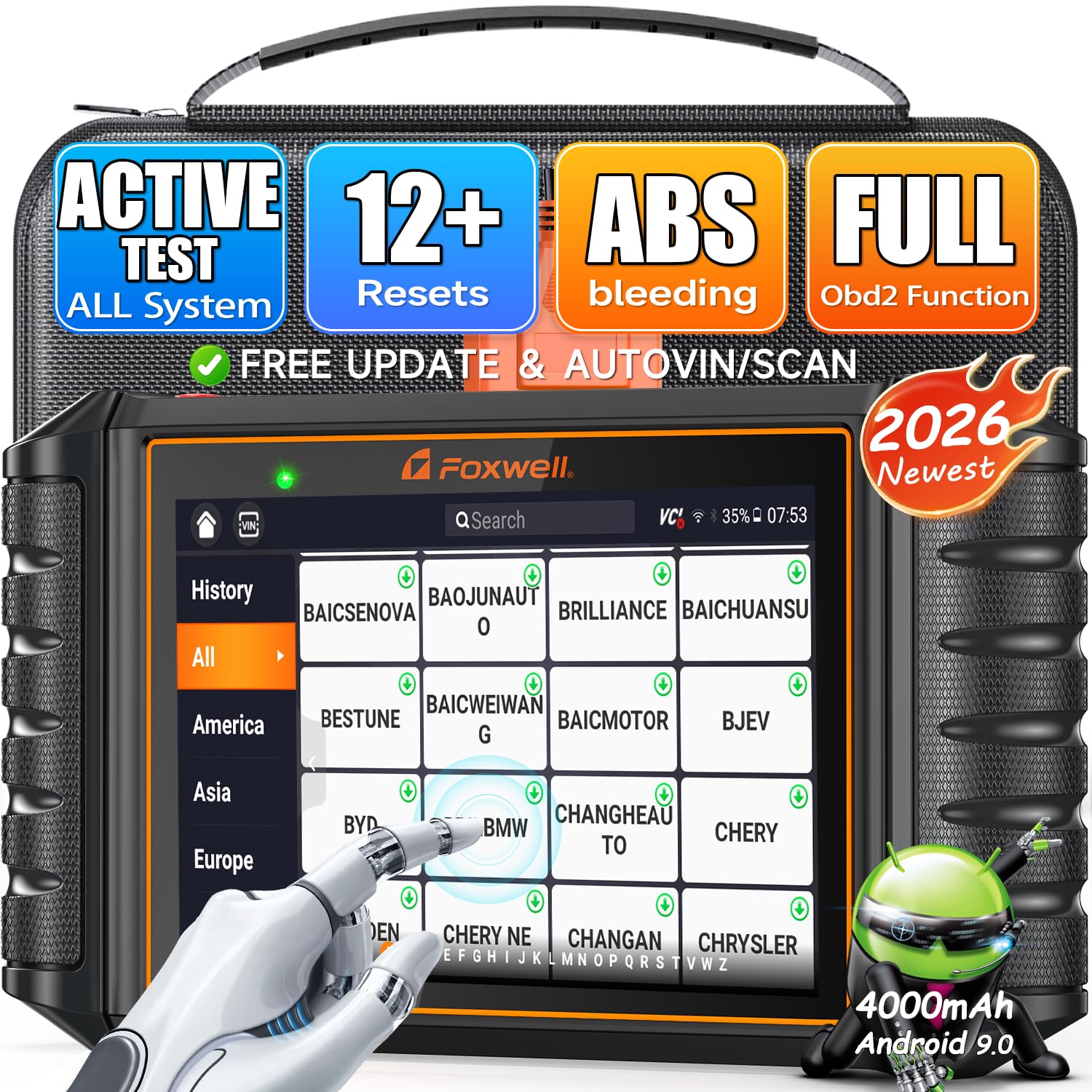
We recommend this tool if you want a sturdy, pro‑level bidirectional scanner that handles most used cars and many advanced tests.
Pros
- Feels solid and built for shop use.
- Bidirectional controls let us activate pumps, windows, and injectors.
- Quick PDF reports and live data make checks faster.
Cons
- Some advanced functions depend on the vehicle and may not work on every model.
- A bit heavy for casual pocket use.
- Learning the menus takes time if you only do quick checks.
We used the NT726 on several late‑model and older cars. The touchscreen and rugged case stood up to being moved between vehicles. Running a full system scan gave clear DTC explanations and live data streams that helped us confirm fixes.
Activating components felt reliable. We ran ABS pump tests and window actuations to verify repairs. That bidirectional control saved us time compared with tools that only read codes.
Setting up custom reports and exporting a PDF over Wi‑Fi worked the first time. Battery life and the glove‑friendly screen proved useful during outdoor checks, though the unit is heavier than small handheld readers.
Overall, this is a good pick for buyers who plan to inspect many used cars or perform deeper checks before purchase. It covers plenty of functions we use in real diagnostics, but expect a learning curve and check vehicle compatibility for specific actuation tests.
Buying Guide
We focus on features that matter most when choosing a bidirectional scan tool for used car buying. We want tools that give reliable data, help confirm repairs, and avoid surprises after purchase.
We check compatibility first. Make sure the tool supports the car’s year, make, and model. Also confirm it can read both generic and manufacturer-specific codes.
We look for bidirectional control ability. This lets us activate components and test systems live. It helps verify reported issues and confirm fixes without long workshops.
We value user interface and ease of use. A clear screen, simple menus, and responsive controls save time. Good documentation and on-screen prompts reduce mistakes during testing.
We pay attention to update policy and connectivity. Regular software updates add vehicle coverage and fix bugs. Bluetooth, Wi‑Fi, or wired connections should be stable and secure.
We consider diagnostic functions and data access. Live data streaming, freeze-frame capture, and graphing help us spot intermittent faults. Advanced functions like bi‑directional tests, adaptations, and service resets are useful for deeper checks.
We weigh build quality and warranty. A rugged case and reliable connectors matter for field use. Warranty terms and support options give peace of mind if the tool fails.
We compare price against long‑term value. Higher cost can be worth it for broader coverage and advanced tests. Balance budget with the features we will actually use.
Editor’s Choice
We pick the Autel MaxiCOM MK808BT as our top bidirectional scan tool for used car buyers. It balances ease of use, coverage, and bidirectional controls without costing as much as dealer-level gear.
The unit supports ABS, SRS, engine, transmission, and many manufacturer-specific systems. Its bidirectional mode lets us actuate components and run active tests to verify repairs before purchase.
We like the large touchscreen and clear menus. Setup is simple, and Bluetooth lets us move around the vehicle while testing.
For value, the MK808BT offers frequent software updates and wide vehicle coverage. That matters when we inspect cars from different makers and model years.
Key features we used:
- Full bidirectional control for common systems
- Live data graphs and freeze-frame capture
- Guided codes and repair tips for quick diagnosis
We recommend this tool if we want strong testing power without pro-level complexity. It gives the hands-on checks that help us make smarter used-car decisions.
Conclusion
We recommend choosing a bidirectional scan tool that fits your budget, experience, and the kinds of cars you inspect. A reliable device should read live data, perform active tests, and give clear freeze-frame and trouble code details.
For most used car buyers, we favor tools that balance ease of use with solid diagnostic power. Mid-range models often cover common car brands and give enough functions to spot hidden problems without needing a shop-level scanner.
We advise checking compatibility with the vehicle’s model year and protocols before buying. Confirm updates and support options so the tool stays useful as diagnostic standards change.
We suggest these quick checks when evaluating a tool:
- Does it read and clear codes and run active tests?
- Can it show live sensor data and record sessions?
- Is the interface clear and easy to use on the road?
We believe a good bidirectional scanner can save time and money when inspecting used cars. It helps us verify repairs, test actuators, and make better buying decisions. Choose a tool that matches your needs, and use it alongside a visual inspection and a test drive.
FAQS
What is a bidirectional scan tool and why do we need one?
A bidirectional scan tool can send commands to a car’s systems and read data. We use it to test parts, confirm repairs, and check live system responses before buying a used car.
Will a bidirectional tool work on every car?
Not always. Compatibility depends on the tool model and the car make, year, and protocols. We should check the tool’s vehicle coverage before relying on it.
Do we need special training to use one?
Basic functions are simple, but advanced features need practice. We recommend reading the manual and watching demos before testing critical systems.
How much should we expect to pay?
Prices range from affordable consumer models to expensive professional units. We can find reliable tools in mid-price ranges that cover most common cars.
Can a bidirectional scan tool cause damage?
If used incorrectly, it can trigger components or change settings. We advise using read-only modes first and avoiding commands unless we understand the effect.
What extra features help when buying a used car?
Live data, actuation tests, fault code history, and freeze-frame details are most useful. These features help us confirm the car’s condition and spot hidden issues.
Should we use a mechanic with the tool?
Yes. A trained mechanic can interpret results and safely run tests. We often prefer a pro’s help for complex or risky diagnostics.
