
Best Key Fob Battery Replacement Tools for Safe DIY Swaps

Use dedicated plastic pry tools and precision screwdrivers to open your key fob without causing internal or external damage. Always verify the specific coin cell battery type and polarity before reassembling the remote.
Modern key fobs are sophisticated pieces of automotive technology designed to keep your vehicle secure, but they aren’t immune to power loss. When your remote stops responding, the solution is often a simple battery swap. However, using the wrong equipment can turn a five-minute fix into a costly repair. Whether you are performing a Toyota battery replacement or troubleshooting a more complex system, having the right tools is the first step toward a successful DIY repair.
- Use proper tools: Plastic pry tools prevent unsightly scuffs on your key fob housing.
- Select precision drivers: Use high-quality precision screwdrivers to avoid stripping tiny screws inside the remote.
- Verify battery specs: Always match the CR battery number and voltage to ensure full functionality.
- Handle with care: Avoid touching circuit board contacts to prevent potential corrosion or static damage.
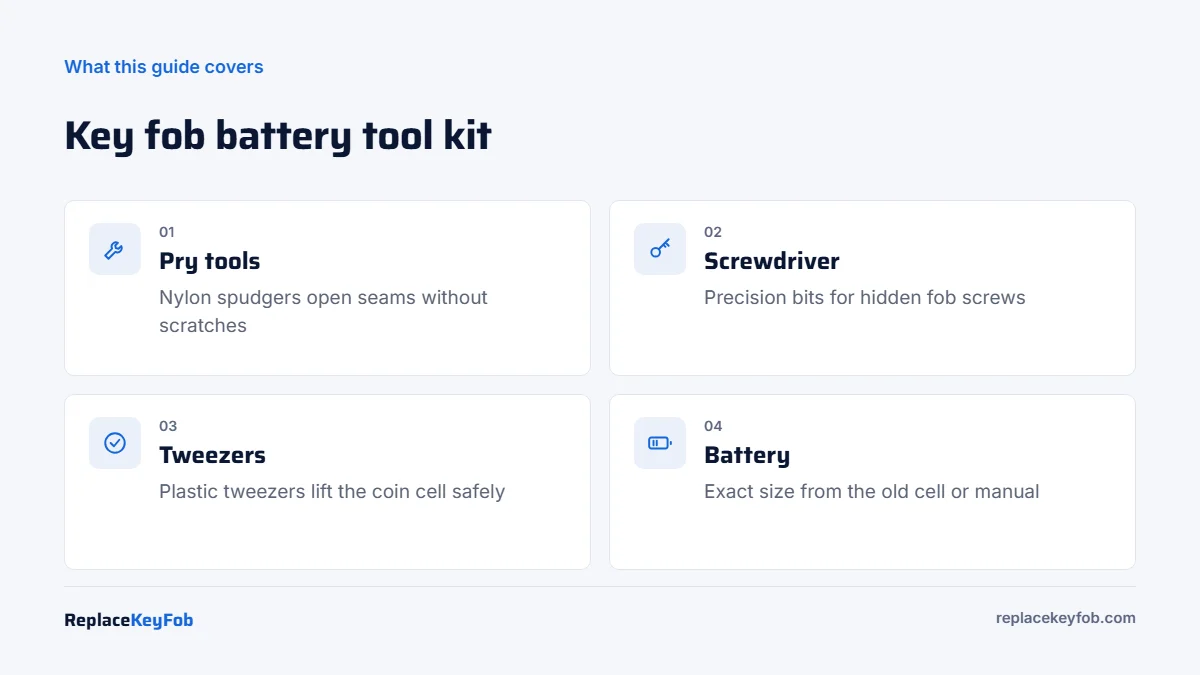
The Essential Toolkit: Why Professional Gear Matters for Key Fob Repairs
Understanding the Mechanics of Modern Key Fobs
Today’s key fobs are tightly sealed, weather-resistant plastic shells housing sensitive microchips and circuit boards. Unlike the simple mechanical keys of the past, these devices rely on precise electrical connections to communicate with your vehicle’s immobilizer system. Understanding that these are delicate electronic components is vital before you even attempt to pry them open.
Why “Makeshift” Tools Damage Your Remote
It is tempting to grab a butter knife or a flat-head screwdriver from the kitchen junk drawer to pop open a stubborn fob. This is a common mistake that often leads to cracked plastic housings, scratched buttons, or, worse, internal damage to the circuit board. Professional tools are designed to provide leverage without applying excessive force to the wrong areas, ensuring the structural integrity of your remote remains intact.
Always inspect your key fob for a designated pry slot before forcing an opening. Many manufacturers include a small notch specifically for a flat-head tool.
Plastic Pry Tool Kit (Nylon Spudgers and Opening Picks)
Nylon pry tools open the fob seam without scratching the case or bending the battery clip. A small kit with a few widths covers most remotes and smart keys.
As an Amazon Associate, ReplaceKeyFob earns from qualifying purchases.
Must-Have Tools for Every DIY Key Fob Battery Swap
Precision Screwdriver Sets: Choosing the Right Bits
Many modern remotes are held together by tiny Phillips or Torx screws. Standard screwdrivers are usually too bulky to fit these heads and will strip them instantly. A precision screwdriver set with high-quality, hardened steel bits is essential. Look for sets that include PH00 or PH000 sizes, as these are the most common for automotive keyless entry remotes.
Plastic Pry Tools: The Secret to Scuff-Free Openings
If your fob doesn’t have screws, it is likely held together by internal plastic clips. Using metal tools on these clips often leaves unsightly gouges and permanent scuffs. A dedicated plastic pry tool—often called a “spudger”—is the gold standard. These tools are firm enough to release the tension on the clips but soft enough to prevent damage to the aesthetic finish of your key.
Identifying Your Fob: FCC IDs, Battery Types, and Compatibility
Deciphering the FCC ID and Part Numbers
Before you commit to a remote battery replacement, you must ensure you have the correct information. The FCC ID is a unique identifier printed on the back of your fob. Matching this ID is the only way to guarantee that a replacement component is compatible with your vehicle’s specific frequency and security protocol.
Matching the Correct Coin Cell Battery (CR2032, CR2025, CR1632)
Not all coin cell batteries are created equal. While they look similar, their thicknesses and capacities vary significantly. Using the wrong battery can result in a loose fit or poor signal strength. Always check your owner’s manual or the markings on the old battery itself to ensure you are buying the exact replacement.
Always verify the voltage (usually 3V) and the diameter of the coin cell battery before installation. A mismatch can lead to a battery not working after replacement scenario.
Step-by-Step Guide: Safely Opening Your Remote Without Damage
Preparing Your Workspace and Protecting Internal Circuitry
Clear a clean, well-lit area to work. Because key fobs contain static-sensitive electronics, avoid working on carpeted surfaces where static electricity can build up. If possible, touch a grounded metal object before handling the internal circuit board to discharge any static from your body.
The Proper Technique for Prying Sealed Fob Shells
For snap-together fobs, insert your plastic pry tool into the seam, usually starting near the emergency key slot. Gently twist the tool—do not pry outward aggressively—to pop the clips one by one. Work your way around the perimeter until the shell separates naturally without resistance.
Always slide out the metal emergency key blade first, as it often covers a screw or a release latch.
Use your plastic pry tool to work along the casing seam, applying even pressure to avoid snapping internal plastic tabs.
Common DIY Mistakes That Lead to Expensive Repairs
Avoiding Static Discharge and Battery Terminal Corrosion
Never touch the gold contacts on the circuit board with your bare fingers, as oils from your skin can cause corrosion over time. If you notice white or green residue inside the battery compartment, clean it gently with a cotton swab dipped in a tiny amount of isopropyl alcohol before inserting the new battery.
Preventing Button Pad Misalignment During Reassembly
The rubber button pad often shifts while you are fiddling with the battery. Before snapping the two halves of the shell back together, double-check that the silicone buttons are seated perfectly in their tracks. If they are misaligned, your buttons will feel “mushy” or fail to register when pressed.
When DIY Isn’t Enough: Recognizing Limits and Professional Intervention
Programming Limitations and Remote Syncing Issues
Sometimes, a new battery doesn’t fix the issue because the remote has lost its “handshake” with the car. Some vehicles require specific button-press sequences to resync the remote, while others require an OBD2 diagnostic tool. If you are unsure, can I replace a key fob battery myself safely, or is this a programming issue? If the car still refuses to start, it is time to stop and seek help.
When to Call a Locksmith vs. Visiting the Dealership
If you have lost all keys or the immobilizer system is locked, you will likely need a professional. An automotive locksmith can often provide battery replacement and programming services at a lower cost than a dealership, but ensure they are licensed and equipped to handle your specific vehicle make and model.
Never attempt to force a programming sequence if the vehicle is in an anti-theft lockout mode, as this could permanently disable the ignition system.
Cost-Benefit Analysis: The Value of Investing in a Quality Tool Kit
DIY vs. Dealer Service: Time and Money Breakdown
A dealer visit for a simple battery change can take hours and cost a premium in labor fees. By investing in a $10–$15 precision tool kit and a quality battery, you can perform the task in minutes. The kit pays for itself after the very first successful repair.
Longevity and Versatility of Automotive Maintenance Kits
Quality precision drivers and plastic pry tools are not just for key fobs. They are invaluable for small electronic repairs, eyeglasses, and other household items. A well-maintained toolkit is a staple for any vehicle owner who wants to handle basic maintenance without unnecessary trips to the shop.
Final Recap: Mastering Your Key Fob Maintenance
Taking care of your key fob is a simple way to maintain vehicle convenience. By using the right tools—specifically plastic pry tools and precision drivers—you can avoid the common pitfalls of DIY maintenance. Remember to verify your battery size, keep your workspace clean, and know when the problem requires a professional touch. With the right approach, your key fob will continue to provide reliable access to your vehicle for years to come.
Frequently Asked Questions
It is highly recommended to use a plastic pry tool instead of metal. Metal screwdrivers can easily scratch the casing, damage the plastic housing, or accidentally short out the internal circuit board.
The battery type is usually printed on the back of the old battery itself. You can also consult your owner’s manual or check the specific part number associated with your vehicle’s FCC ID.
First, ensure the battery is seated with the correct polarity. If that is correct, the fob may need to be resynced to the vehicle or there may be an underlying issue with the circuit board.
Some vehicles allow for simple DIY resyncing, but many modern cars require specialized diagnostic equipment to program a new fob or re-pair an existing one to the vehicle’s immobilizer.
If the fob has intermittent range, a ‘low battery’ warning on the dash, or the LED light is dim, it is likely the battery. Complete failure usually suggests a dead battery or a faulty internal component.
Visit a dealership if you have a complex immobilizer issue, require a factory-authorized key replacement, or if your vehicle is under specific warranty terms. Otherwise, a qualified locksmith is often more affordable and convenient.