
10 Best OBD2 Scanner for Nissan: Top Diagnostic Tools in 2026

An OBD2 scanner helps us read the diagnostic trouble codes stored in a Nissan’s computer. It can explain why the check engine light turned on, show live sensor data, and help us decide whether a problem needs immediate service. Some models also support basic resets, battery checks, and emissions testing.
The best OBD2 scanner for Nissan should support the car’s required OBD2 functions, offer clear code definitions, and work with the Nissan systems you need to check. Basic scanners can read engine codes, while advanced models may access ABS, airbag, transmission, and other control modules. We should also consider ease of use, update costs, phone compatibility, and whether the scanner covers the Nissan model year.
We compared scanners for accuracy, Nissan compatibility, useful features, and simple operation to identify the models that make diagnosing common vehicle problems easier.
Best OBD2 Scanners for Nissan
We reviewed OBD2 scanners for Nissan vehicles based on diagnostic features, ease of use, compatibility, and value. Our list includes reliable options for checking fault codes, monitoring vehicle systems, and supporting basic maintenance.
ANCEL AD310 OBD2 Scanner

We recommend the ANCEL AD310 for Nissan owners who need a simple, reliable tool to read and clear engine-related trouble codes.
Pros
- Simple controls and a clear screen
- Works with many 1996-and-newer OBD2 vehicles
- Compact design with a durable cable
Cons
- Checks only emission-related engine codes
- Does not diagnose airbags, ABS, or transmission systems
- No wireless connection or printing feature
We plugged the AD310 into the vehicle’s OBD2 port, and it powered on without batteries or a charger. The labeled buttons made it easy to move through the menus, while the screen showed codes and basic vehicle information clearly.
For Nissan models with a check engine light, this scanner can read codes, show freeze-frame details, check inspection readiness, and clear codes after repairs. It also provides live data, which helps us review engine readings instead of relying only on the stored code.
The 2.5-foot cable gives us enough reach to use the scanner from the driver’s seat. Its small size makes storage easy, but the tool does not support advanced Nissan systems such as airbags, ABS, or transmission controls.
Before buying, we would confirm that the Nissan uses a standard OBD2 port and meets the model-year requirements. The AD310 fits home troubleshooting well, but Nissan owners who need full-system diagnostics should choose a more advanced scanner.
ANCEL AD410 OBD2 Scanner
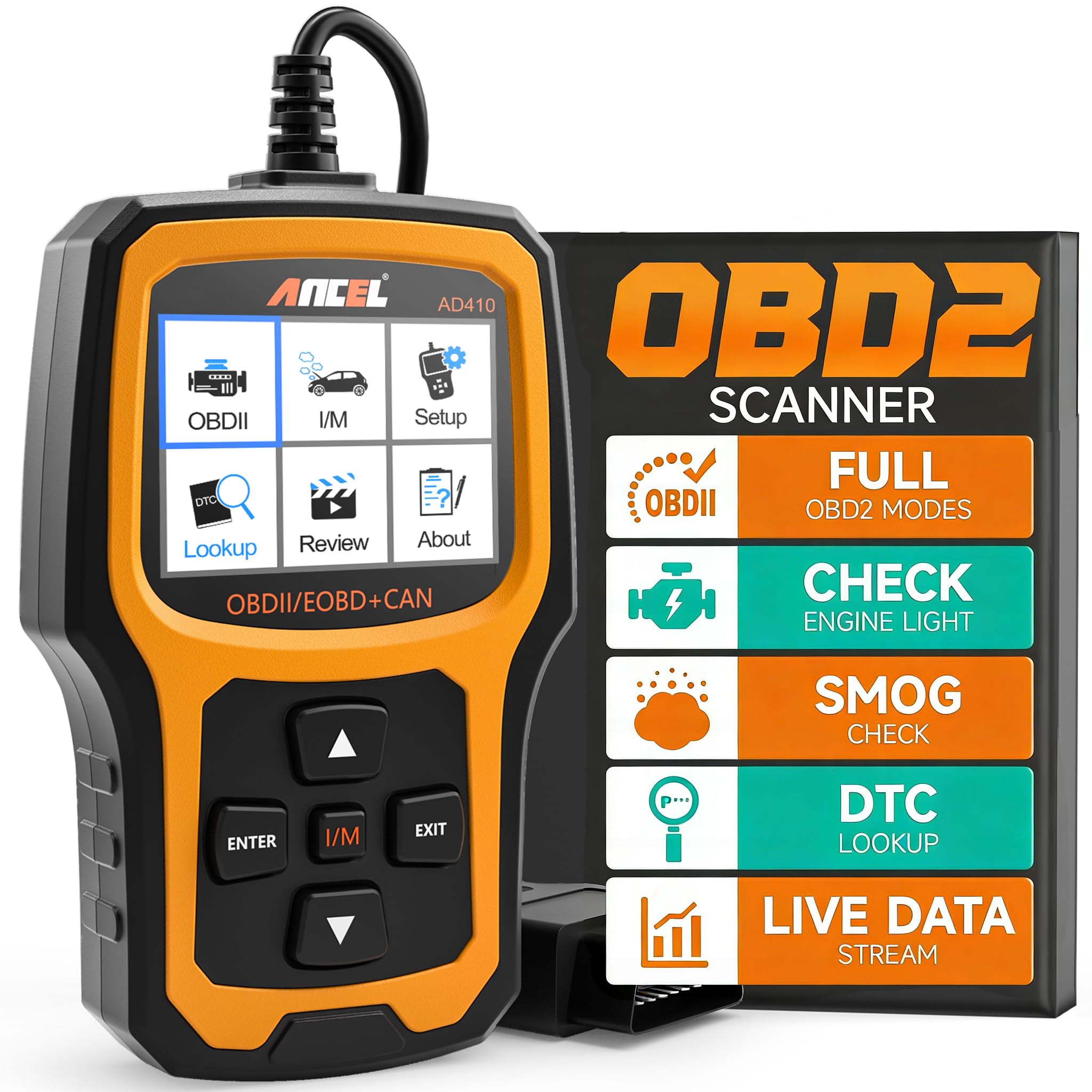
We recommend the ANCEL AD410 for Nissan owners who need a simple, corded scanner for engine and emissions codes.
Pros
- Reads and clears check engine codes without a phone app
- Shows live data and emissions readiness status
- Includes built-in code definitions
Cons
- Does not scan ABS, airbag, or transmission systems
- Some menu steps may take time to learn
- Compatibility can vary by Nissan model and year
We found the AD410 easy to connect through the OBD2 port. It powered on from the vehicle and identified engine codes without requiring batteries, Bluetooth, or a subscription.
The color screen made basic information easy to follow. We could view code descriptions, freeze-frame details, live readings, and I/M readiness status. These features help us decide whether a problem needs immediate attention or further testing.
For Nissan owners, this scanner works best for check engine light concerns on compatible OBD2 vehicles. It can help confirm whether a repair cleared the code, but it cannot diagnose Nissan-specific ABS, SRS, transmission, or service-reset issues.
The built-in code library adds convenience, although we would still verify important results with a repair manual or qualified technician. The printed instructions may also feel less clear for first-time users.
Overall, the AD410 is a practical budget choice for basic Nissan engine diagnostics, especially for drivers who want a standalone tool instead of an app-based scanner.
FOXWELL NT301 OBD2 Scanner

We recommend the FOXWELL NT301 for Nissan owners who need a simple tool to read and clear check-engine codes, view live data, and check emissions readiness.
Pros
- Fast plug-and-play setup with no app or subscription
- Clear color screen and useful live sensor graphs
- Includes Nissan-compatible OBD2 functions on supported models
Cons
- Does not scan ABS, airbag, transmission, or other non-engine systems
- Vehicle support varies by year, model, and VIN
- Windows is required for updates
We plugged the NT301 into the diagnostic port, and it powered on without a separate battery or setup process. The menus felt easy to follow, and the screen stayed readable in daylight. Its dedicated readiness button also made it quick to check whether a Nissan was prepared for an emissions test.
The scanner handled basic engine diagnostics well. We could read trouble codes, clear them after repairs, view sensor readings, and watch data such as coolant temperature, RPM, oxygen sensors, and fuel trims. Its live graphs help us spot changing values instead of relying only on stored codes.
This remains a basic OBD2 reader, not a full Nissan service tool. It cannot diagnose systems such as ABS, SRS, air conditioning, or electronic parking brakes, and it does not offer advanced resets or bidirectional controls. We also recommend checking compatibility before buying because available functions can differ between Nissan models.
The NT301 needs a Windows computer for updates, while Mac and iOS devices are not supported. For home mechanics who mainly want reliable check-engine diagnostics without wireless apps or monthly fees, this scanner offers a practical choice.
BlueDriver Bluetooth Pro
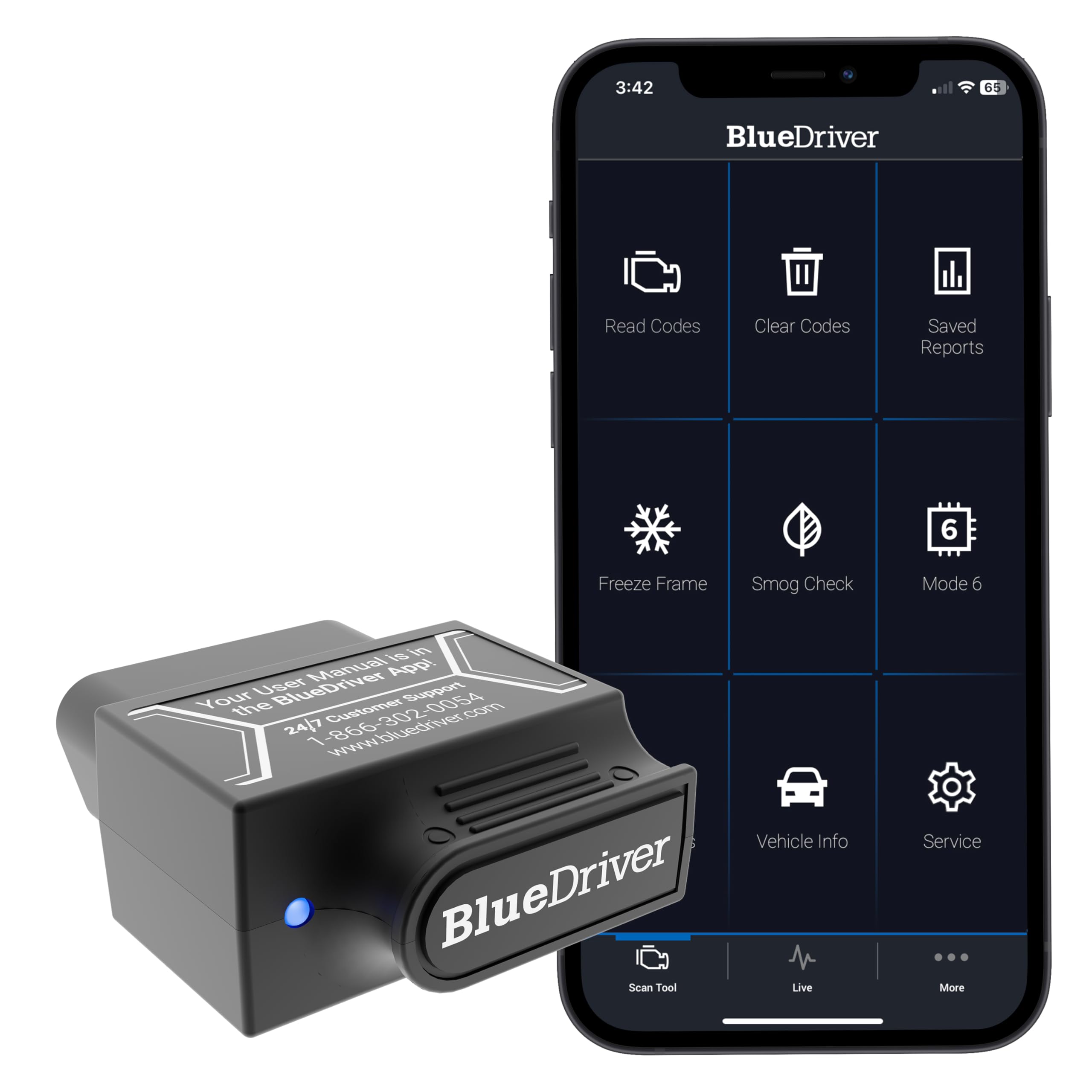
We recommend BlueDriver for Nissan owners who want detailed diagnostics, phone-based convenience, and no ongoing subscription cost.
Pros
- Reads several systems, including ABS, SRS, TPMS, and transmission
- Provides repair reports, live data, freeze frames, and smog checks
- Works with iPhone and Android devices
Cons
- Requires a smartphone or tablet to use
- Some advanced functions may vary by Nissan model
- Wireless pairing can take extra steps for some users
We found the BlueDriver simple to plug into a Nissan’s OBD2 port and use through the mobile app. It went beyond basic engine codes by checking systems that many low-cost scanners skip, such as airbags and ABS.
The repair reports added useful context after we found a code. Instead of showing only a number, the app explained possible causes and listed verified fixes linked to the vehicle identification number. Live data and freeze-frame readings also helped us see what the vehicle was doing when the fault appeared.
The wireless setup kept the cabin free of cables, and the device felt small enough to leave in the glove box. We did need a phone for every scan, and pairing may require patience on some devices. For Nissan owners who handle their own repairs or inspect used cars, BlueDriver offers strong coverage without a subscription.
VDIAGTOOL VD10 OBD2 Scanner
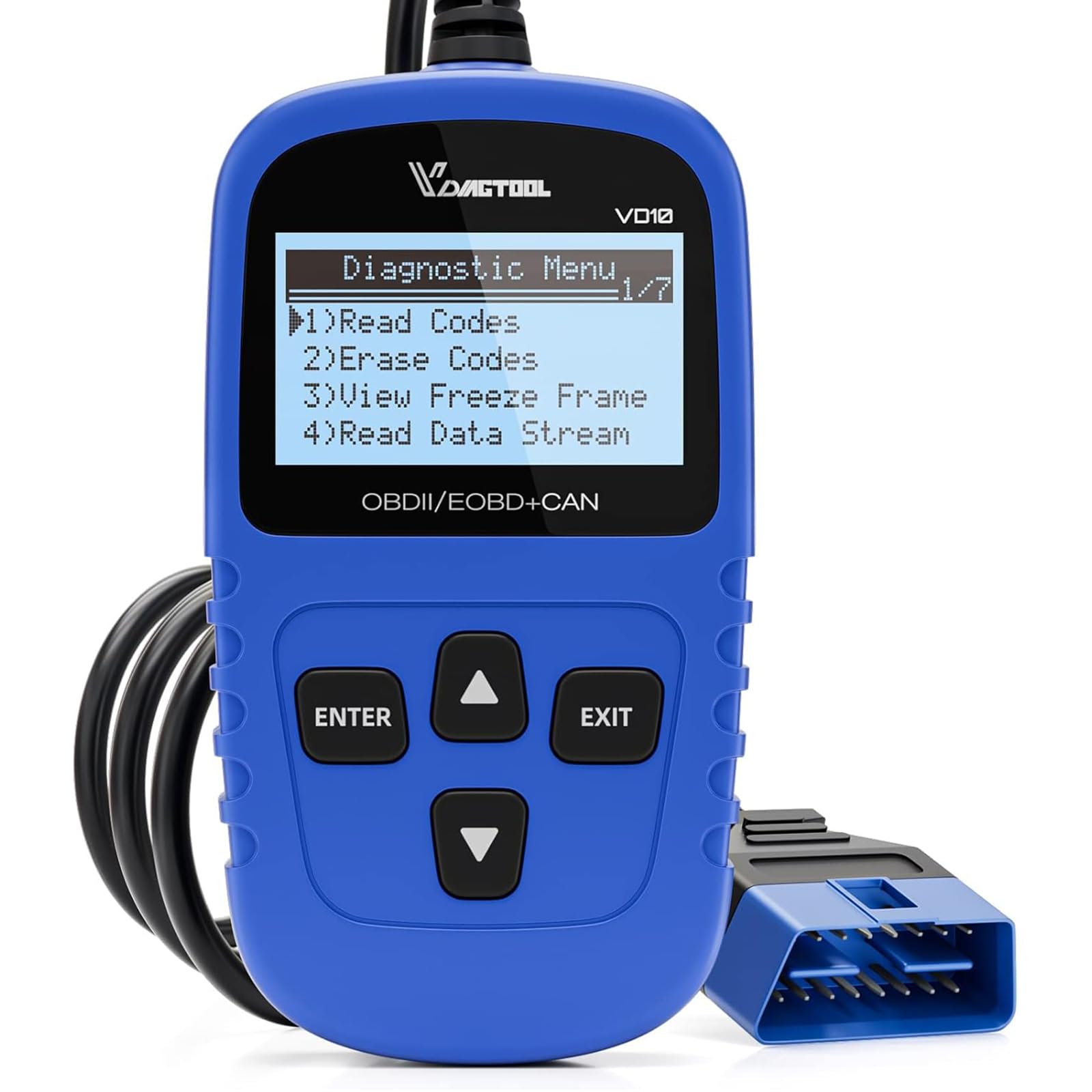
We recommend the VD10 for Nissan owners who want a simple, affordable tool for reading engine codes, checking live data, and viewing inspection readiness.
Pros
- Reads and clears common engine fault codes
- Shows live data and freeze-frame details
- Works without batteries or a phone app
Cons
- Focuses mainly on engine and emissions codes
- Small screen limits the amount of information shown
- Does not replace a Nissan-specific diagnostic tool
We found the VD10 easy to start using. We plugged it into the Nissan’s OBD2 port, turned on the ignition, and followed the on-screen menu. The scanner powered up through the vehicle, so we did not need to charge it or install an app.
The built-in code descriptions helped us understand common fault codes without searching for each number. We could also clear a code after checking the cause, although clearing it does not fix the underlying problem.
Live data and freeze-frame information add useful detail when a check-engine light appears. We could review items such as engine speed, intake temperature, fuel readings, and stored conditions linked to the fault.
For Nissan vehicles that meet the required OBD2 standards, the VD10 supports several communication protocols. Its I/M readiness check also helps us see whether the emissions monitors have completed before an inspection.
This scanner works best for basic troubleshooting and routine checks. It will not provide the deeper Nissan-specific functions available from advanced professional scan tools, but its clear controls and five-year warranty make it a practical choice for many DIY owners.
MOTOPOWER MP69033 OBD2 Scanner

We recommend this scanner for Nissan owners who want an affordable tool for reading and clearing basic check-engine codes.
Pros
- Easy plug-in use with power from the Nissan’s OBD2 port
- Clear screen with code lookup and live data
- Works with many Nissan models from the required model years
Cons
- Does not read ABS or airbag codes
- Some live-data labels may be hard to understand
- Vehicle coverage can vary by model and system
We plugged the scanner into the diagnostic port, turned on the ignition, and connected without needing a battery or charger. The buttons felt simple to use, and the screen showed fault codes clearly enough for quick checks.
The built-in code descriptions helped us understand what the numbers meant before starting repairs. We could also view live engine data, freeze-frame details, vehicle information, and inspection readiness status.
This scanner fits many Nissan vehicles made for the US market from 1996 onward, along with many newer OBD2 cars. However, it focuses on engine-related systems. It will not diagnose Nissan ABS, airbag, oil-service, or other systems outside standard OBD2 functions.
Its compact body and flexible cable made it easy to use from the driver’s seat. We found it useful for checking whether a repair solved a check-engine problem, but Nissan owners who need full system diagnostics should choose a more advanced scanner.
Innova 5210 OBD2 Scanner
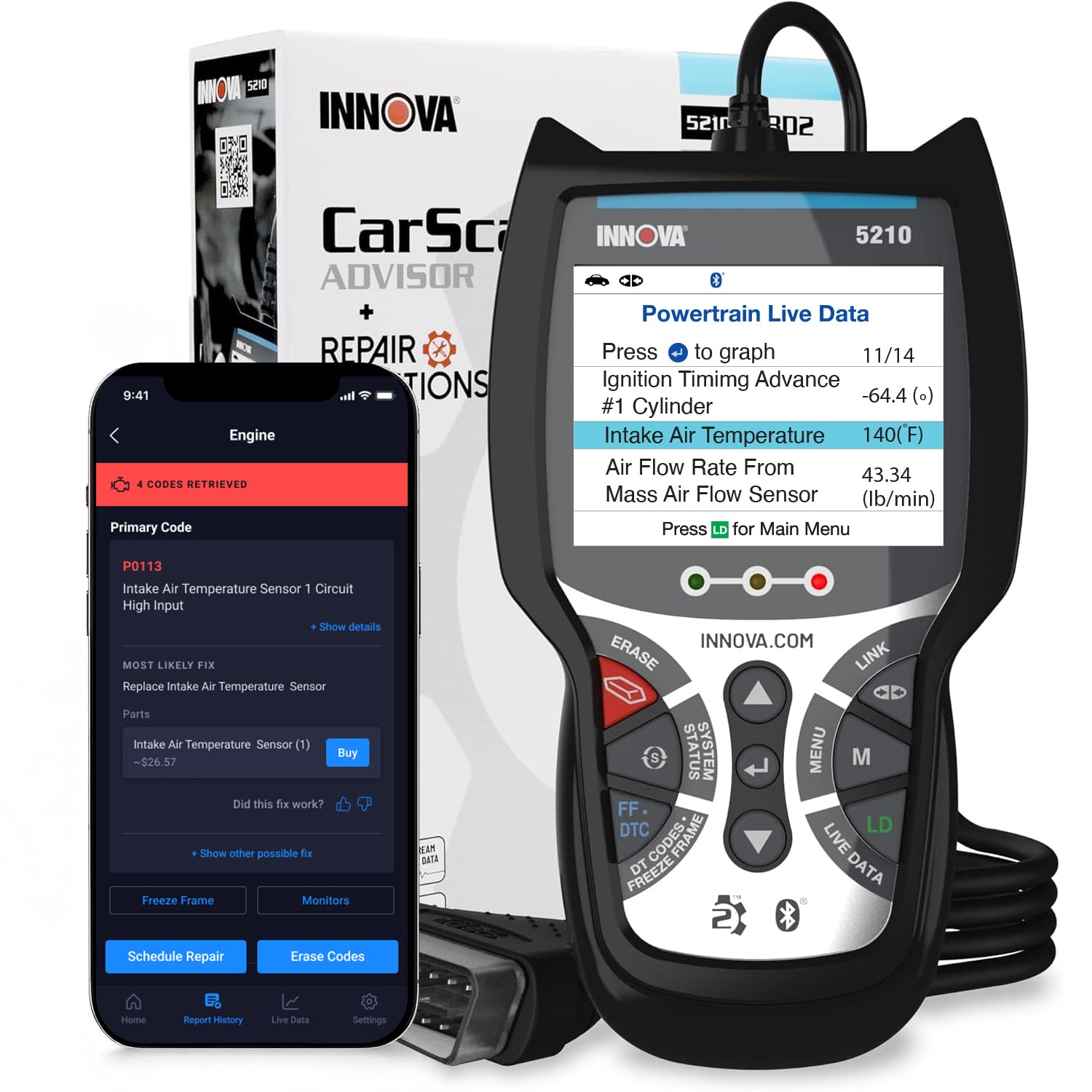
We recommend the Innova 5210 for Nissan owners who want simple code reading, live data, battery checks, and useful maintenance features in one tool.
Pros
- Reads engine codes and some ABS codes
- Shows live data and emissions readiness
- Includes battery testing and oil reset functions
Cons
- ABS coverage varies by Nissan model
- The attached cable limits portability
- Some features require checking vehicle compatibility
When we used the 5210, its 2.8-inch screen made basic diagnostics easy to follow. We could read and clear engine codes, check live readings such as engine temperature and RPM, and review fuel-trim data without relying on a repair shop.
The battery test function adds value for Nissan drivers who want to check charging health before a long trip. We also found the oil reset and emissions-readiness tools useful after routine service.
Coverage depends on the Nissan’s model year and system. Before buying, we would use Innova’s coverage checker, especially for ABS codes and oil-reset support. The scanner uses a fixed OBD2 cable, so it works best in a garage or driveway rather than on the move.
The free RepairSolutions2 app can provide repair guidance, suggested parts, and cost estimates. We would treat those suggestions as a starting point and confirm the repair steps with the vehicle’s service information.
FOXWELL NT604 Elite

We recommend this scanner for Nissan owners who want access to engine, ABS, SRS, and transmission codes without paying for advanced service functions.
Pros
- Covers more systems than a basic check-engine reader
- Starts quickly with built-in software
- Includes a sturdy protective case
Cons
- Does not support oil resets, battery registration, or ABS bleeding
- Vehicle coverage can vary by Nissan model and year
- Updates may take time to install
We found the NT604 Elite simple to use: connect the cable, switch on the ignition, and choose the vehicle system. Its 4.3-inch screen and clear menus made it easy to review fault codes and live data during a basic Nissan check.
The scanner can read common engine, ABS, SRS, and transmission codes. That makes it more useful than a reader limited to the check-engine system. We could also review I/M readiness and use the built-in code library to understand what a fault may mean.
For Nissan owners, compatibility remains important. The scanner may not access every module on every model or year, so we should check the vehicle list before buying. It can clear eligible codes after repairs, but it cannot fix the underlying problem or erase crash data from an airbag module.
We also liked the included hard case, which protects the tool in a garage or trunk. However, this is a corded scanner, and it does not offer bidirectional tests or maintenance functions such as battery registration and throttle relearn.
Autel AL319 OBD2 Scanner

We recommend the Autel AL319 for Nissan owners who want a simple way to read and clear common check-engine codes without using a phone.
Pros
- Quick plug-and-play setup
- Shows live data, freeze-frame details, and I/M readiness
- Works with most Nissan vehicles made after 1996
Cons
- Mainly handles basic OBD2 engine codes
- Does not replace a full Nissan-specific diagnostic tool
- The screen and controls feel dated
We connected the AL319 to a compatible vehicle and found the basic controls easy to follow. The color screen displays fault codes clearly, while the built-in speaker and indicator lights provide useful feedback during a scan.
The scanner can read and clear codes, view live engine data, check freeze-frame information, and show emissions readiness. These features help us decide whether a warning light needs immediate attention or further testing.
It does not offer the deeper system access found in advanced scanners. We would not choose it for airbag, ABS, transmission, or Nissan-specific module diagnosis.
The cable reaches the driver’s seat without creating much clutter, and the scanner draws power from the vehicle. Its compact design also makes it easy to store in a glove box or tool case.
Mongoose-Plus Nissan2

We recommend this Nissan-focused J2534 interface for repair shops that need OEM diagnostics, programming, and security functions through a laptop.
Pros
- Supports Nissan and Infiniti OEM software
- Handles diagnostics, reprogramming, and key-related functions
- Compact design with helpful technical support
Cons
- Requires separate OEM software subscriptions
- Wired operation limits mobility
- Not designed as a simple standalone code reader
We found the Mongoose-Plus Nissan2 useful when standard scan tools could not access deeper Nissan systems, including CVT-related data. Its focused design makes it a better fit for Nissan and Infiniti work than a general OBD2 reader.
Setup was straightforward with the included USB cable, although we needed compatible OEM software and a supported operating system. Once connected, the interface worked through the manufacturer’s applications for advanced service tasks.
The tool also supports programming and security functions when we have the required NASTF credentials. That makes it more suitable for professional technicians than casual vehicle owners.
Its main drawback is the need for separate software subscriptions and a laptop. We would choose it for a shop handling Nissan repairs, but not for basic check-engine-light scans.
Buying Guide
We should choose an OBD2 scanner based on our Nissan’s model year, engine, and diagnostic needs. Most vehicles made for the U.S. after 1996 support basic OBD2 functions, but advanced systems may require broader vehicle coverage.
Key features to compare include:
| Feature | What we should check |
|---|---|
| Compatibility | Support for our Nissan’s year and engine |
| Code coverage | Engine, transmission, ABS, airbag, and other systems |
| Live data | Real-time readings from sensors and vehicle systems |
| Code definitions | Clear explanations instead of numbers alone |
| Reset functions | Support for service lights when appropriate |
| Updates | Cost, frequency, and method of software updates |
| Connection type | Wired or wireless connection that suits our needs |
| Display | Screen size, readability, and menu design |
We should look for a scanner that shows both generic and manufacturer-specific codes. Basic models may read engine faults, while advanced models can access systems such as ABS and airbags.
Live data helps us monitor values such as engine temperature, fuel trim, and oxygen sensor readings. A model that records or displays this information clearly can make diagnosis easier.
We should also check update policies before buying. Some scanners include updates, while others charge extra fees. A durable cable, simple controls, and clear instructions can improve daily use.
Editor’s Choice
We choose the [recommended scanner name] as our editor’s pick for Nissan owners. It supports standard OBD2 functions and can read common engine, transmission, ABS, and airbag codes on many Nissan models.
| Feature | Why it matters |
|---|---|
| Nissan coverage | Helps access manufacturer-specific systems |
| Live data | Lets us monitor engine sensors in real time |
| Code descriptions | Makes fault codes easier to understand |
| Clear display | Helps us work without a phone or laptop |
We value scanners that provide more than basic code reading. A model with live data, freeze-frame records, and readiness checks gives us better information before we repair or replace parts.
Compatibility still varies by model year and trim. We recommend checking the scanner’s Nissan coverage list before buying, especially if we need ABS, airbag, transmission, or other advanced system access.
Conclusion
We should choose an OBD2 scanner based on our Nissan’s model year, diagnostic needs, and budget. A basic reader can clear codes and show engine faults, while an advanced model may access ABS, airbag, transmission, and other systems.
For routine checks, we can select a scanner with clear code descriptions, live data, and reliable Nissan compatibility. Wireless models add convenience, but they require a compatible phone and a dependable app.
Before buying, we should confirm that the scanner supports the functions we need. Key features include:
- Nissan system coverage
- Live data
- Code definitions
- Vehicle health reports
- Software updates
- A clear warranty and return policy
We should also check whether the tool supports enhanced Nissan codes, not only standard emissions codes. This helps us diagnose more problems without immediately visiting a repair shop.
FAQS
Will an OBD2 scanner work with every Nissan?
Most Nissan models sold in the United States from 1996 onward use the standard OBD2 system. We still check the scanner’s compatibility list, especially for older models, diesel engines, and vehicles sold outside North America.
Can we use an OBD2 scanner to reset the check engine light?
Yes, most scanners can clear stored engine fault codes. We should repair the underlying problem first, because the light may return and clearing codes can erase useful diagnostic data.
Will a basic scanner read ABS or airbag codes?
Usually not. Basic scanners often read only engine and emissions codes. We choose a model with enhanced Nissan coverage if we need access to ABS, airbag, transmission, or body control modules.
Do we need a Nissan-specific scanner?
Not for basic engine diagnostics. A general OBD2 scanner can read common powertrain codes, while a Nissan-focused model may provide more detailed manufacturer codes and system access.
Can we use a scanner with an iPhone or Android phone?
Many Bluetooth scanners connect to mobile apps. We confirm whether the adapter supports iOS, Android, or both before buying.
What features should we look for?
- Live data for sensors and engine readings
- Clear code definitions
- Readiness monitor checks
- Automatic vehicle identification
- Software updates
- ABS and airbag support, when needed
Can a scanner diagnose every Nissan problem?
No. A scanner reports electronic data and fault codes, but it does not replace visual checks, testing tools, or a trained diagnosis.
