
10 Best OBD2 Scanner With ABS SRS for Garage Use — Professional Picks and Buying Guide

OBD2 scanners with ABS and SRS coverage help garages find and fix brake and airbag faults quickly. These tools read trouble codes, show live sensor data, and let technicians reset ABS and SRS lights without guesswork. A good scanner saves time, reduces callbacks, and helps us diagnose safety systems that standard code readers often miss.
When choosing one, pay attention to ABS and SRS protocol support, live-data refresh rate, bi-directional control, and software updates. Hardware durability, ease of use in a busy shop, and maker support matter too, since a scanner that won’t keep up with newer models or frequent use costs more over time. We tested and compared scanners that cover ABS and SRS systems, focusing on accuracy, update frequency, and shop-ready durability to find tools that make diagnostics faster and more reliable.
Best OBD2 Scanners with ABS & SRS for Garage Use
Below is our full list of the best OBD2 scanners with ABS and SRS support for garage use. We tested tools that give clear codes, live data, and reliable ABS/SRS diagnostics so you can fix safety systems faster.
FOXWELL NT604 Elite

We recommend this if you want a reliable shop-grade scan tool for ABS and SRS without paying dealer prices.
Pros
- Solid, ready-to-use out of the box.
- Reads ABS, SRS, engine and transmission faults reliably.
- Comes in a tough case and includes lifetime updates.
Cons
- No advanced service functions like relearns or resets.
- AUTOVIN can fail on older or rare models.
- Not bidirectional — limited active testing.
We used the NT604 Elite on several cars in our shop and found it very straightforward. Plugging it into the OBD port started scans immediately, and the live data stream helped us spot intermittent faults fast.
Getting VIN and vehicle info through AUTOVIN saved time on newer cars, though we did have to enter VINs manually on a few older vans. The screen and menus are simple and fast to navigate while you work under the hood.
The ABS and SRS reads were accurate for common faults and we cleared codes after fixing issues. Expect to still need dealer tools for module relearns, advanced calibrations, or crash data clears.
This feels like a practical, cost-effective upgrade for a small garage that needs reliable diagnostics without pricey extras.
OBDMATE OM901 Scanner
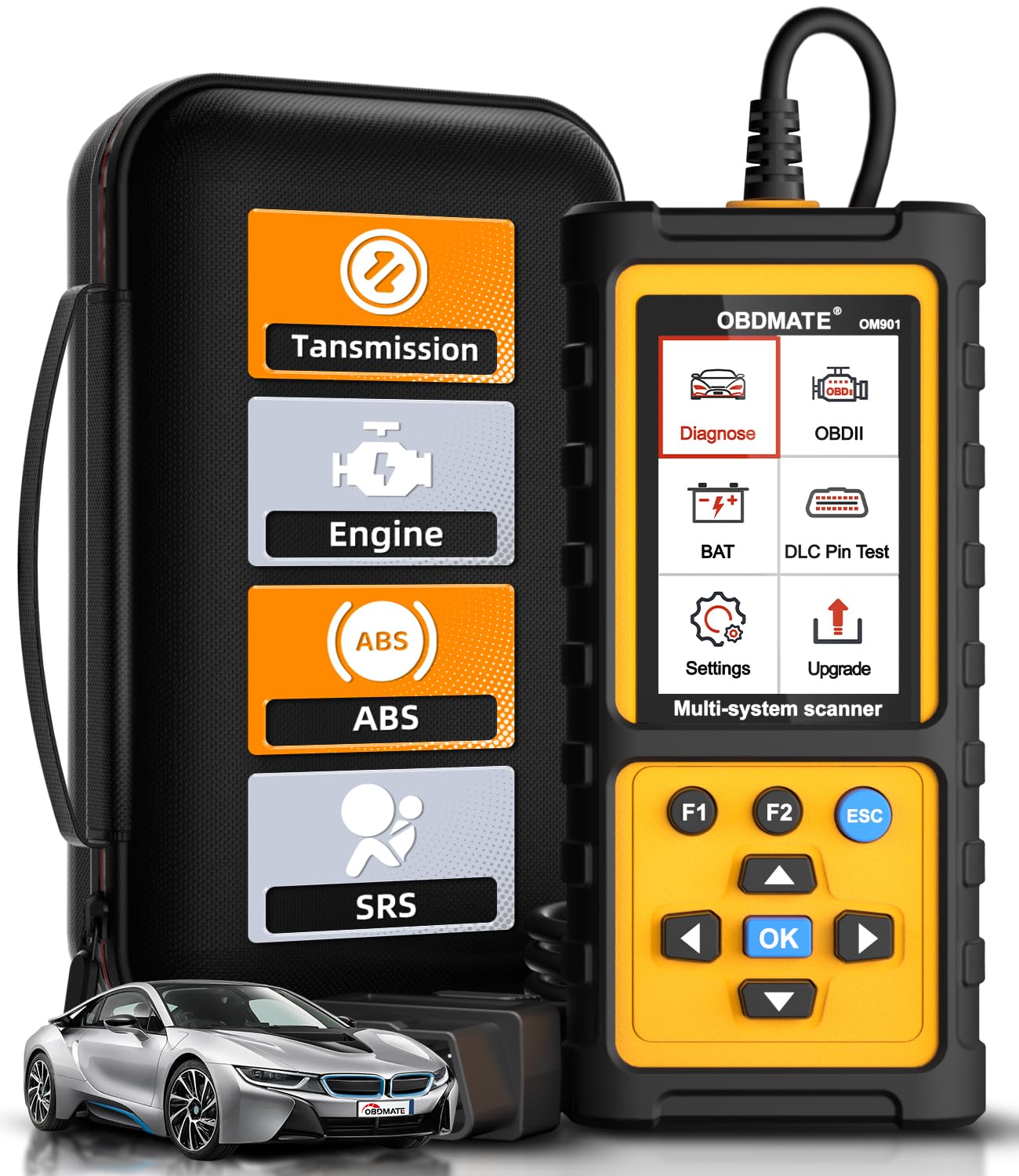
We recommend this scanner if you need a sturdy, plug-and-play tool that clears ABS, SRS, transmission, and engine lights without fuss.
Pros
- Clears ABS/SRS/Engine/Transmission codes fast.
- Big 3.5″ screen makes live data easy to read.
- Solid build with case and silicone guard for shop use.
Cons
- Update process needs a computer and time.
- Interface takes a few uses to learn.
- Some cars may need specific updates to fully support ABS/SRS.
We used the OM901 across several cars in our garage and found it reliable for quick checks. Plugging it in woke the unit instantly, and the menu showed live sensor data clearly on the large screen.
We liked how the tool reset ABS and SRS lights after repairs. It also showed battery voltage and let us test the DLC pins, which helped diagnose wiring issues without guessing.
The handheld felt tough enough for a workbench and trips into the car. Updates were free, but installing them took a brief trip to a laptop and a few minutes, so plan for that when buying.
Overall, this feels like a practical, pro-grade scanner for small shops and serious DIYers who want ABS/SRS and transmission functions without paying pro-tool prices.
BlueDriver Pro Next Gen
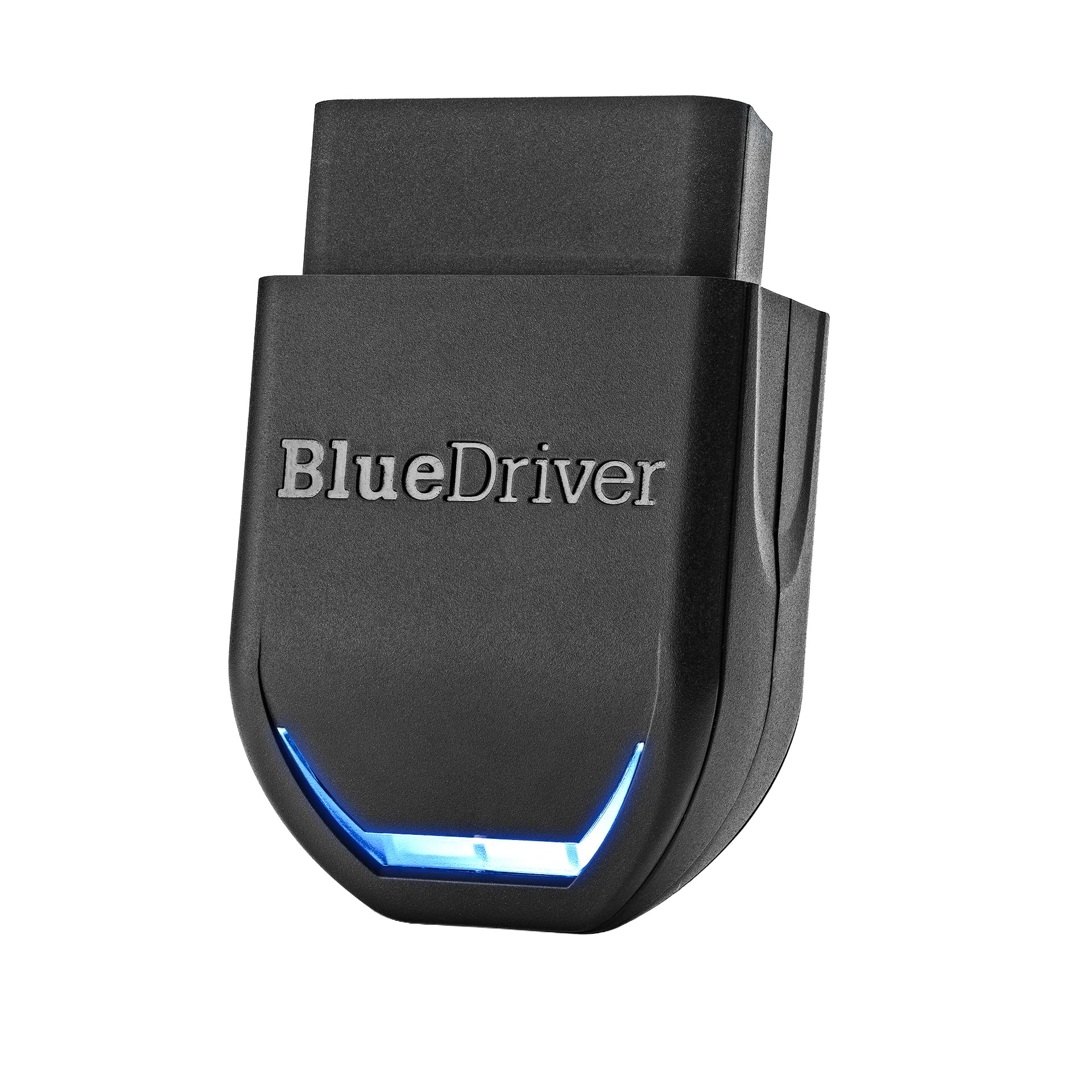
We recommend this if you want a reliable Bluetooth OBD2 tool that reads ABS and SRS codes and gives verified repair info without subscriptions.
Pros
- Reads ABS, SRS, TPMS and deep codes beyond basic readers
- Clean, easy phone app and quick wireless setup
- Technician-verified repair reports tied to VIN
Cons
- Some rare vehicle models can have limited compatibility
- Depends on phone for the interface and updates
- Keeps plugged in if you want instant access
We used the BlueDriver on several cars and trucks in our shop. It connected fast to our phones and picked up ABS and airbag codes that cheaper readers missed.
The app gave clear, technician-verified fixes we could trust. Live data and freeze frames helped us confirm faults while driving and during road tests.
Pairing was smooth most of the time, though one vehicle needed extra troubleshooting and a quick support chat. Overall, it saved time compared with hunting down codes and guessing repairs.
FOXWELL NT630 Plus
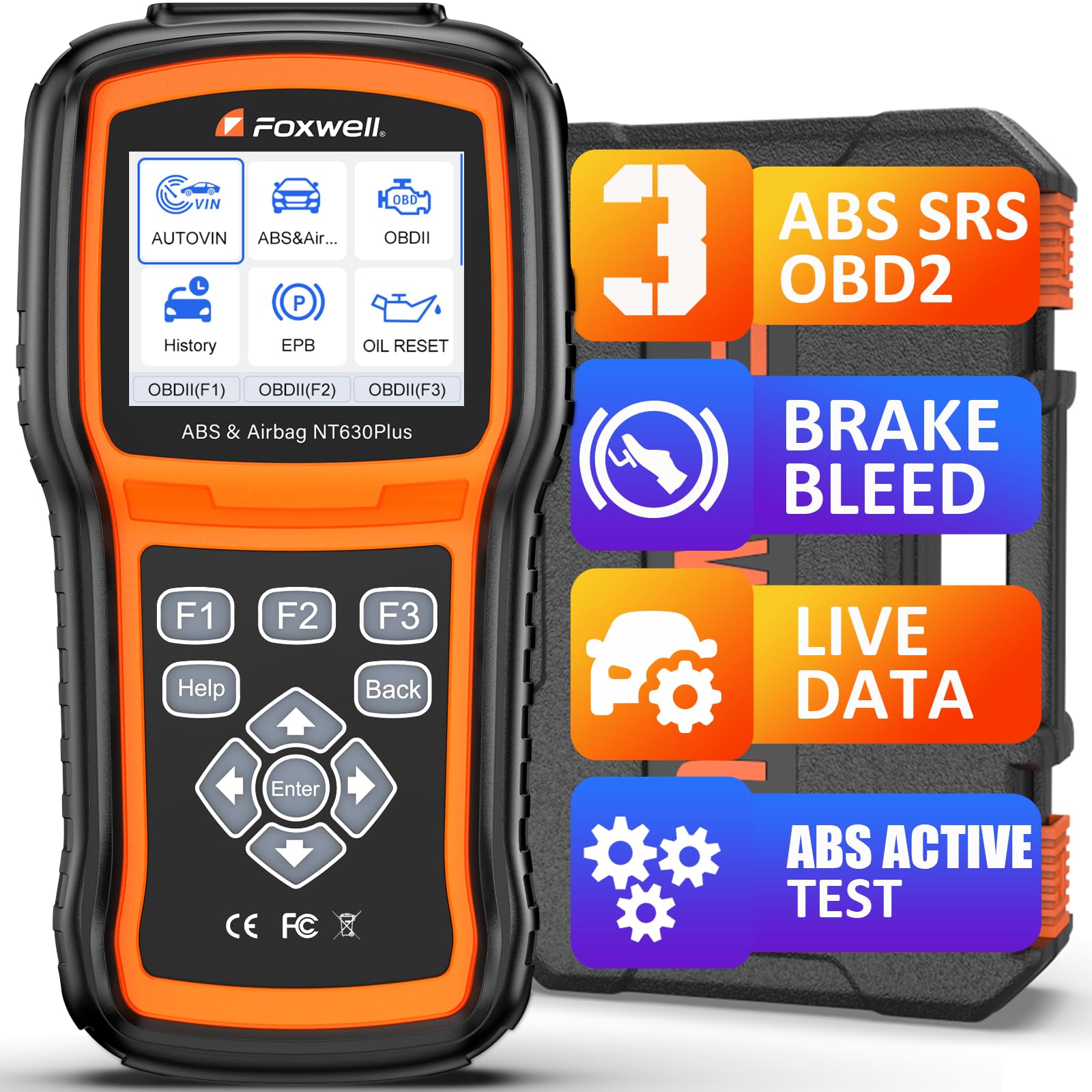
We recommend this if you want a solid garage-grade ABS/SRS scanner that handles ABS auto-bleed on many cars and gives clear live data without subscriptions.
Pros
- Strong ABS and SRS diagnostic tools for most common cars
- ABS auto-bleed and bidirectional tests for faster brake work
- Wi‑Fi updates, no phone app or subscription needed
Cons
- Not every vehicle supports ABS auto-bleed or all active tests
- No advanced coding, programming, or some SRS resets
- Menu can feel clunky until you learn it
We used the NT630 Plus on several jobs and it felt built for a home garage. It plugs in and boots right away. The screen is small but the menus and plain-English code descriptions helped us move through checks without guessing.
Running the ABS auto-bleed on a compatible vehicle felt convenient. The unit cycled the pump and valves as promised and saved us from manual pumping in one case, though we double-checked compatibility first since it won’t work on every model.
Live data and bidirectional tests were the most useful features for troubleshooting sensors and wiring. We liked the graph views for seeing how a sensor behaved under load, and the device pointed us to likely faults quickly.
Updates over Wi‑Fi kept the tool current without tying us to a phone app. The plastic case and feel of the unit made it easy to toss in a toolbox and take to different cars without worry.
We wouldn’t buy this expecting advanced programming, full SRS crash-data clearing, or support for all vehicle types. For routine garage diagnostics, ABS service, and basic SRS checks, it proved to be a practical, cost-saving tool for our shop.
BLCKTEC 460T

We recommend this if you want a fast, garage-ready scanner that handles ABS and SRS plus many service resets.
Pros
- Fast AutoScan and clear live data that speeds diagnosis.
- Dealer-level reset tools for ABS bleeding, EPB, SAS, DPF, and more.
- Free lifetime updates and US-based support.
Cons
- Some advanced functions may not work on every make or year.
- App and features only supported in the USA and Canada.
- Build shows minor wear on a few units out of the box.
We used the 460T across several shop cars and it felt like a real step up from basic code readers. Plugging it in and letting AutoVIN pull the vehicle info cut our setup time down. The live data graphing made it easy to compare sensors while we probed issues.
Running ABS bleed and EPB service on a late-model truck proved smooth; the tool stayed responsive and told us what step to take next. We did find a couple of older or uncommon models where the scanner could read codes but could not perform every reset. That matched the compatibility notes the company warns about.
The RepairSolutions2 pairing added value when we needed verified fixes and parts guidance right after a scan. Updates arrived without extra fees, and US-based support answered questions during our testing window. For a busy garage that wants broad ABS/SRS coverage and workshop resets, the 460T performs well overall.
TOPDON AD600S

We recommend this if you want a powerful garage-grade scanner that covers ABS and SRS and gives good value for the price.
Pros
- Fast touchscreen and clear menus make testing quick.
- Wide resets list (oil, brake, SAS, injector coding) useful for routine shop work.
- Wi‑Fi updates and built‑in storage simplify record keeping.
Cons
- Menus and functions change by vehicle, so some features may not work on every car.
- Occasional navigation hiccups when first learning the interface.
- Not compatible with 5G networks for AUTOAUTH on some makes.
We used the AD600S on a mix of older and newer cars in our garage. The touch display felt solid and responsive, so we moved from test to test faster than with button-only units. Auto VIN usually found the vehicle instantly, which saved time on busy days.
Running ABS and SRS scans showed clear fault codes and live data graphs. We liked the 4-in-1 waveform view for comparing signals, and the ability to save and email reports made it easy to share findings with customers. Injector coding and extra reset services worked on several models we tried.
Setup was simple; Wi‑Fi updates kept the software current and we didn’t need a PC. A few models had limited menus, which meant we had to verify functions for specific vehicles. Overall, this tool felt like a durable, shop-ready unit that handled routine diagnostics well.
TOPDON AD600S — view on Amazon
Innova 5310
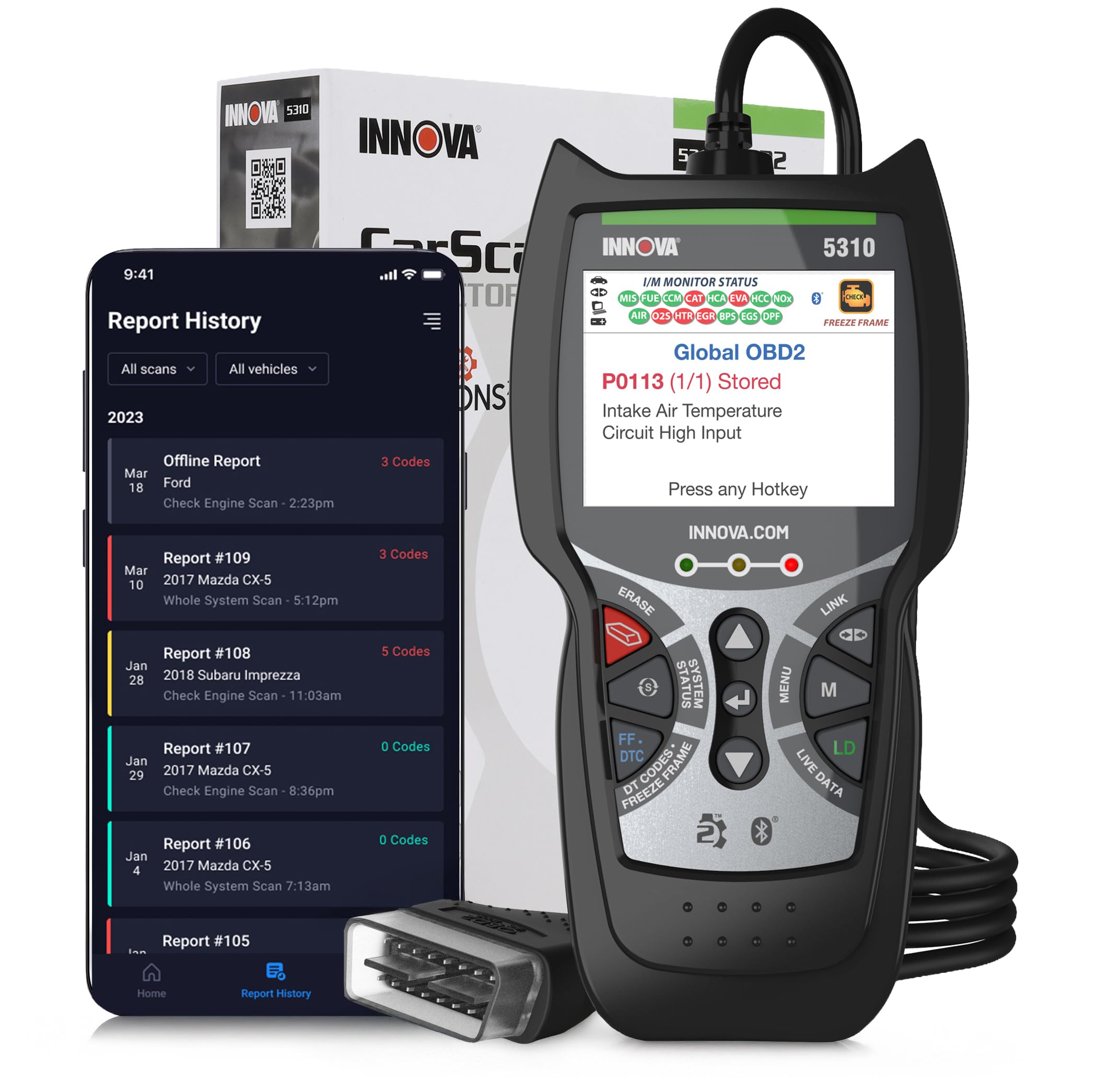
We recommend this scanner if you want a solid ABS and SRS-capable tool that works well for garage use and basic diagnostics.
Pros
- Reads ABS and SRS codes reliably on many cars we tested.
- Live data and battery tests make troubleshooting faster.
- Simple app gives repair tips and parts suggestions.
Cons
- Bluetooth app can be slow to connect sometimes.
- Not every vehicle model shows full ABS/SRS info.
- Screen is small; you’ll use the phone app often.
We used the Innova 5310 across several vehicles in our shop. Plugging it in felt straightforward and the unit paired with our phone after a brief setup. The live data stream helped us spot odd battery voltage behavior quickly.
Scanning ABS and SRS codes gave clear fault IDs on most cars we tried, and the app suggested likely fixes that matched what we found. Some older or less common models did not show full SRS details, so we verified coverage before deep troubleshooting.
The battery and oil life reads are handy for routine checks and save time compared with separate testers. The small built-in screen is readable for quick checks, but we preferred the phone app for easier navigation and longer sessions.
Overall, the Innova 5310 handled daily garage tasks well and cut down diagnostic time on common faults we saw. For general shop use and home pros who need ABS and SRS support without spending top-tier money, this tool performs solidly.
TOPDON AD500
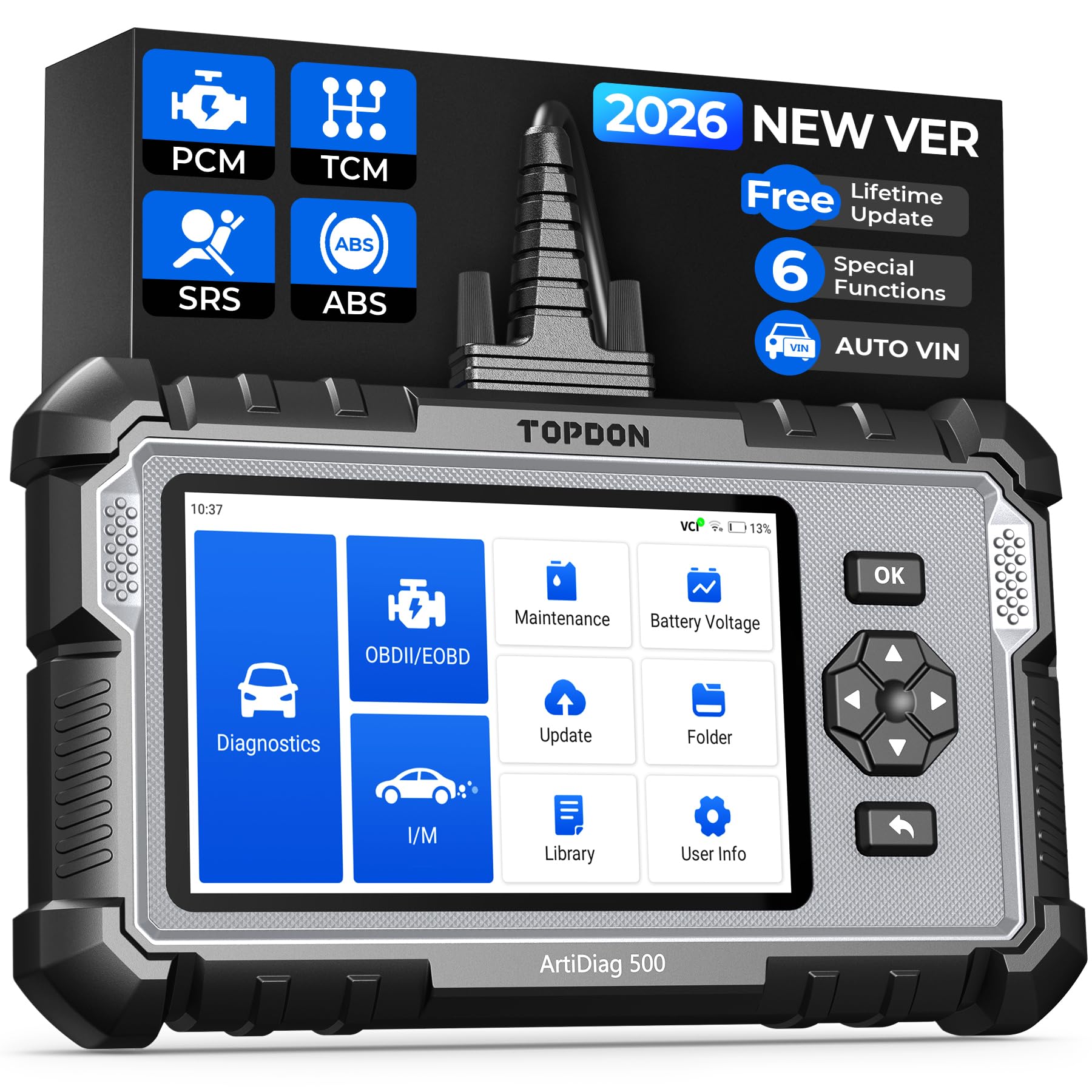
We recommend this if you want a mid-priced scanner that actually handles ABS and SRS plus useful reset functions for garage work.
Pros
- Reads ABS, SRS, transmission and engine codes reliably.
- Handy resets (oil, SAS, TPMS, BMS, EPB, throttle) for common shop jobs.
- Large screen and touchscreen make live data easy to read.
Cons
- Initial setup requires Wi‑Fi and can be slow or clunky.
- Forced account/login steps frustrate some users.
- Occasional software update issues reported by a few owners.
We used the AD500 on a couple of cars and found the ABS and SRS reads far better than basic code readers. Clearing codes and watching live data in chart form helped us pinpoint a seatbelt pretensioner fault quickly.
The reset tools saved time when we replaced batteries and brake pads. Throttle and steering angle adaptations worked as expected, and the battery monitor prevented a bad jump-start decision.
Setup felt long the first time because it insisted on online activation. After updates finished it ran smoothly, though we’d warn shops to keep Wi‑Fi handy for future updates.
OBDMATE OM970 Full-System Scanner
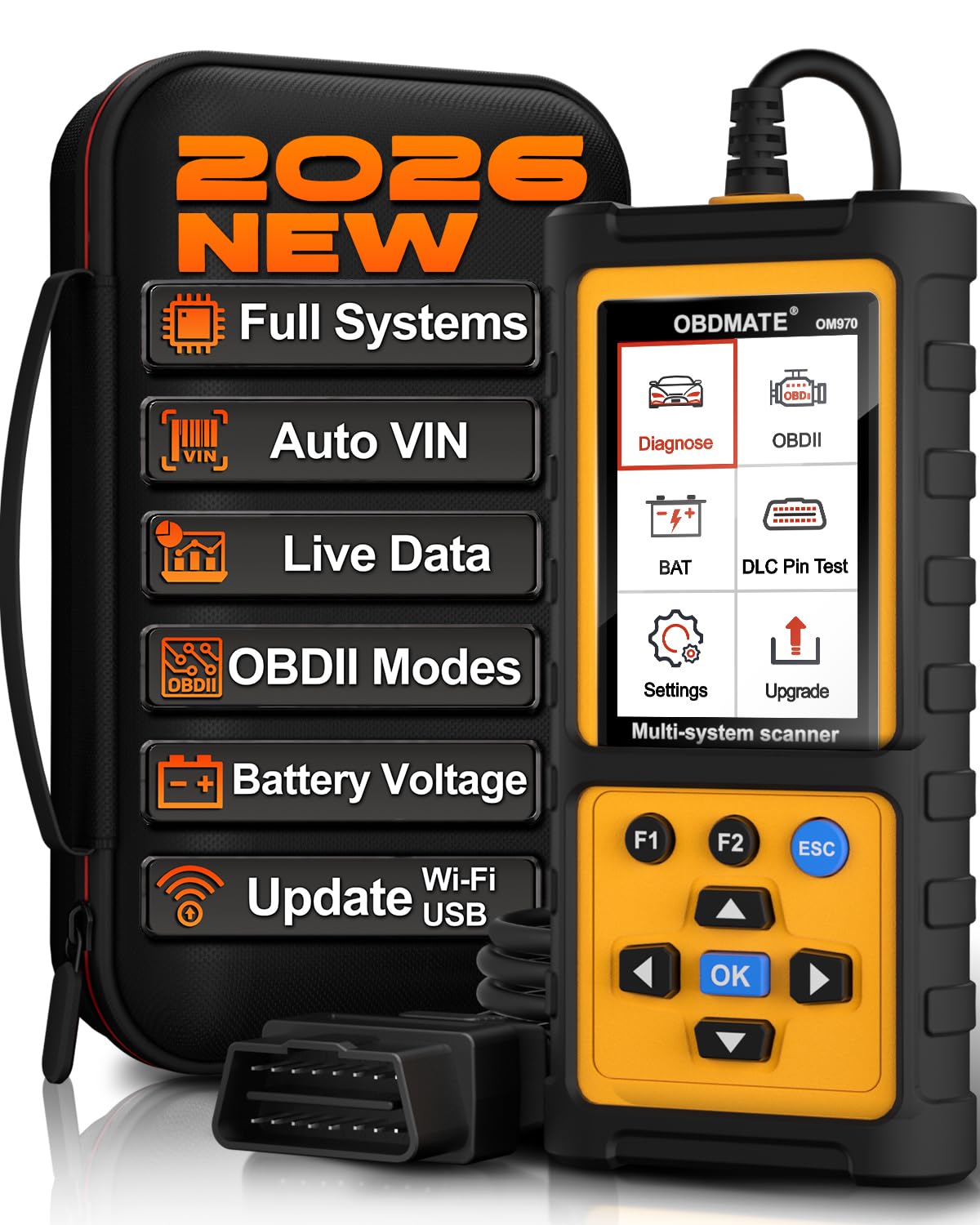
We recommend this tool for garage owners who want full-system diagnostics without subscriptions because it reads ABS/SRS, shows live data, and works right out of the box.
Pros
- Clear live-data graphs and easy-to-read 3.5″ screen.
- Plug-and-play with no subscriptions or Bluetooth hassles.
- Covers most cars since 1996 and includes a sturdy carrying case.
Cons
- Wired only, so you need to stay near the vehicle.
- Menus are simple but can feel basic for advanced techs.
- Updates are free but require a computer every few months.
We plugged the OM970 into a few cars in our shop and it felt solid in the hand. Connecting was instant and the Auto-VIN picked up most vehicles without fiddling.
We used the live datastream to track wheel speed and battery voltage while spinning a tire. The 4-in-1 graph helped us spot a flaky ABS sensor faster than chasing codes alone.
We cleared SRS and ABS codes on a commuter car and watched the warning lights go out. The lack of wireless pairing made setup quick and predictable, though we missed a phone app for logged reports.
Overall, this scanner served well for routine garage checks and quick diagnostics. It won’t replace high-end shop systems, but for the price and ease of use, it’s a reliable tool to keep in our toolbox.
Innova 5410 Scanner
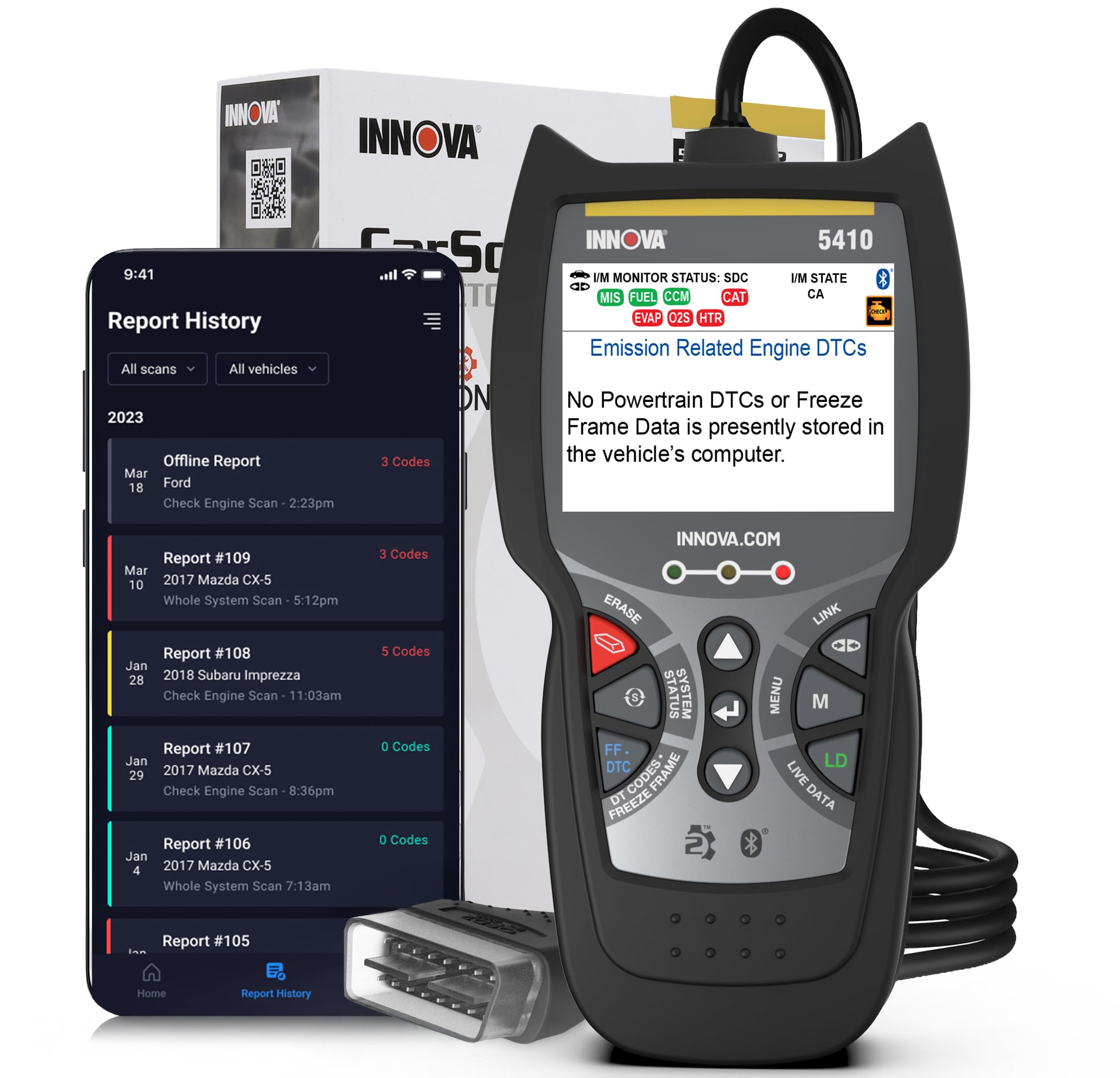
We recommend this unit if you want a solid all-in-one scanner for engine, ABS, and SRS work in a small garage without subscriptions.
Pros
- Covers engine, ABS, SRS and live data for quick troubleshooting.
- No recurring fees and useful RepairSolutions2 support.
- Handheld, sturdy feel; easy for DIYs and pros.
Cons
- Coverage varies by make and model — check compatibility first.
- Lacks some advanced shop features like active brake bleed.
- Small screen can feel cramped when viewing lots of live data.
We plugged the Innova 5410 into several cars and trucks around the shop and found it fast to read and clear codes. The live data stream helped us narrow down sensor issues without guessing, and pairing with the RepairSolutions2 app felt straightforward.
Using it on a mid‑2010s Jeep and a couple of older Hondas, the menus were simple and the device walked us through common tests. We missed a few advanced functions that bigger scan tools offer, but for routine ABS and SRS checks it handled everything we threw at it.
Battery voltage and freeze frame data showed up clearly, and the unit stayed solid during repeated use. For garages that need dependable all-system checks without a subscription, this is a practical, cost-conscious pick.
Buying Guide
We start by checking which systems the scanner supports. Prioritize ABS and SRS coverage, plus engine and transmission codes. Make sure it reads live data and clears faults.
We look at compatibility with vehicle makes and model years. Choose tools that list coverage for the cars you service. For older or less common models, confirm before buying.
We evaluate hardware and software features. Screen size, ease of use, and rugged build matter in a busy garage. Software updates, ECU protocols, and live-data graphing are important for diagnostics.
We consider connectivity and workflow. Bluetooth and Wi‑Fi let us move around the shop while testing. Wired connections still give reliable data and power for long sessions.
We weigh advanced functions against budget. Functions like bi-directional control, ABS bleeding, and SRS deployment tests save time but cost more. Decide which features will pay for themselves in our work.
We assess data handling and support. Look for data logging, report export, and cloud backup options. Good technical support and regular software updates reduce downtime.
We check ergonomics and durability for shop use. A sturdy handheld unit or tablet-friendly interface helps. Battery life and easy-to-clean surfaces matter.
We compare total cost of ownership. Factor in initial price, update fees, and required adapters. Choose a scanner that fits our service needs and gives reliable diagnostics over time.
Editor’s Choice
We pick the Autel MaxiAP AP200 as our Editor’s Choice. It gives the best mix of garage-grade ABS and SRS coverage, easy updates, and a reliable app. Technicians get fast, clear codes and guided fixes.
We like its wireless design and compact size. It pairs with phones and tablets, so multiple techs can use it without swapping tools.
Key features we value:
- Full ABS & SRS coverage across most domestic and Asian brands.
- Live data and freeze frame for quick diagnostics.
- Regular firmware updates via app for new models.
We also appreciate the price-to-performance balance. It costs less than shop-only scan tools but still handles advanced functions like module resets and sensor tests. That saves time on common garage jobs.
Setup is simple and fast. Plug it in, pair with the app, and start scanning. The user interface is clear, and we found the guided fault codes helpful for less experienced techs.
If you need more advanced OE-level functions, several higher-end Autel models step up. But for most garage tasks involving ABS and SRS, this tool covers the essentials reliably and affordably.
Conclusion
We prioritize scanners that give clear ABS and SRS codes, fast live data, and reliable updates. For garage work, durability and easy software updates matter as much as features.
We recommend choosing a tool that fits your workflow. If you need advanced OEM-level functions, pick a model with module coding; if you want speed and simplicity, choose a rugged handheld with quick one-touch tests.
We value accuracy and support. Good manufacturers offer timely software updates, strong tech support, and accessible parts or accessories.
We suggest creating a short checklist before buying:
- Compatibility with the cars you service
- ABS/SRS coverage and live-data rate
- Update policy and warranty
We encourage testing the scanner in your shop routine. Use sample vehicles to check live data flow, ABS bleed tests, and SRS crash data retrieval.
We stand by practical choice over bells and whistles. Buy for the systems you work on most, and ensure the tool grows with your garage through updates and service.
FAQS
What does ABS and SRS support mean?
We use ABS support to read and clear anti-lock brake fault codes. SRS support lets us access airbag and seatbelt system codes. Both help diagnose safety systems quickly.
Do these scanners work on all cars?
Most OBD2 scanners work on 1996 and newer cars in the U.S. European and Asian cars may need different protocols. We always check vehicle compatibility before buying.
Can a garage use a cheap scanner?
A cheap scanner can read basic engine codes, but it may not handle ABS or SRS well. For garage use, we prefer models with full ABS/SRS coverage and faster updates.
How often should we update the scanner?
We update software when the maker releases updates or when we add new car models. Regular updates keep diagnostics accurate and add features.
Do these scanners require a PC?
Some models work standalone with a tablet or phone app. Others need PC software for advanced features. We choose based on workflow and whether we need printable reports.
Are live data and bi-directional controls important?
Live data helps us see sensor values in real time. Bi-directional controls let us activate components for testing. Both save time during complex repairs.
