
10 Best OBD2 Scanner With Live Data for Used Car Buyers: Top Picks for 2026

An OBD2 scanner can help us spot problems before buying a used car. These small devices read diagnostic trouble codes from the car’s computer and can show information about systems such as the engine, emissions, and transmission. They can also help confirm whether recent repairs cleared a warning light.
For used-car shoppers, live data matters more than a basic code reader. It shows current readings, such as engine temperature, oxygen-sensor activity, fuel-trim levels, and vehicle speed, which can reveal problems that a simple scan may miss. The best OBD2 scanner for a used car should provide clear live data, broad vehicle coverage, reliable readings, and an easy-to-use display or app.
We compared scanners based on these features, along with setup, data clarity, and value, to find the models that can help us make a more informed used-car purchase.
Best OBD2 Scanners With Live Data
We selected the best OBD2 scanners with live data for used car buyers. Our picks help us check trouble codes, monitor key engine readings, and spot possible issues before we buy.
FOXWELL NT301 OBD2 Scanner

We recommend the FOXWELL NT301 for used-car buyers who want simple code checks and useful live data without app fees or a subscription.
Pros
- Clear live graphs for key engine readings
- Quick plug-and-play setup
- Helpful emissions readiness checks
Cons
- Does not scan ABS or airbag systems
- Requires a Windows computer for updates
- Vehicle support varies by model and year
We plugged the NT301 into a compatible vehicle and found it easy to start. The scanner draws power through the diagnostic port, so we did not need to charge it or connect a phone. Its color screen stayed readable in daylight, and the menus felt simple enough for first-time users.
Live data gives us more than a stored trouble code. We could watch engine speed, coolant temperature, oxygen sensor readings, and fuel trims while the engine ran. This can help us spot unusual readings during a used-car inspection, although we still need service information to judge whether a value falls outside the correct range.
The scanner also checks emissions readiness and displays the result with a clear indicator. That feature helps us see whether the seller recently cleared a check-engine light. A vehicle may show no active code while its monitors remain incomplete, which can signal recent repairs or a disconnected battery.
The NT301 reads and clears basic engine codes, but it does not cover ABS, SRS, climate control, or other advanced systems. We would choose a different tool if a used car shows warning lights outside the check-engine system. Updates also require a compatible Windows computer, while Mac and iOS devices are not supported.
For basic engine diagnostics, this scanner offers a practical balance of price and features. We would use it before buying a used car, but we would pair its results with a mechanic’s inspection and a road test.
FOXWELL NT604 Elite Scanner

We recommend this scanner for used-car buyers who want live data and access to engine, ABS, SRS, and transmission codes without paying for advanced service functions.
Pros
- Covers several key vehicle systems
- Shows live data and I/M readiness status
- Includes a sturdy storage case and lifetime updates
Cons
- Does not support resets, relearns, or bidirectional tests
- Vehicle coverage depends on the make, model, and year
- Updates may take time to download
When we used the NT604 Elite, the plug-and-play setup made the first scan simple. The 4.3-inch screen showed fault codes and live readings without requiring a phone app or extra software subscription.
Its broader system coverage helps during a used-car inspection. We could check more than the check-engine system, including ABS, airbags, and transmission modules. The live data can also reveal problems that a basic code reader may miss, such as unusual sensor readings.
The built-in I/M readiness menu gives us another useful check before buying a car. If the monitors show as incomplete, the seller may have recently cleared codes or disconnected the battery. That does not prove a problem, but it gives us a reason to ask more questions and arrange a deeper inspection.
We should not expect professional-level testing from this tool. It cannot perform oil resets, battery registration, ABS bleeding, throttle relearns, or bidirectional tests. SRS crash data also remains outside its clearing ability.
The scanner supports many American, Asian, and European brands, but compatibility varies. We would check the exact vehicle before purchase, especially with older cars. Overall, it offers useful inspection data for buyers who want more coverage than a basic OBD2 reader.
Innova 5210 OBD2 Scanner
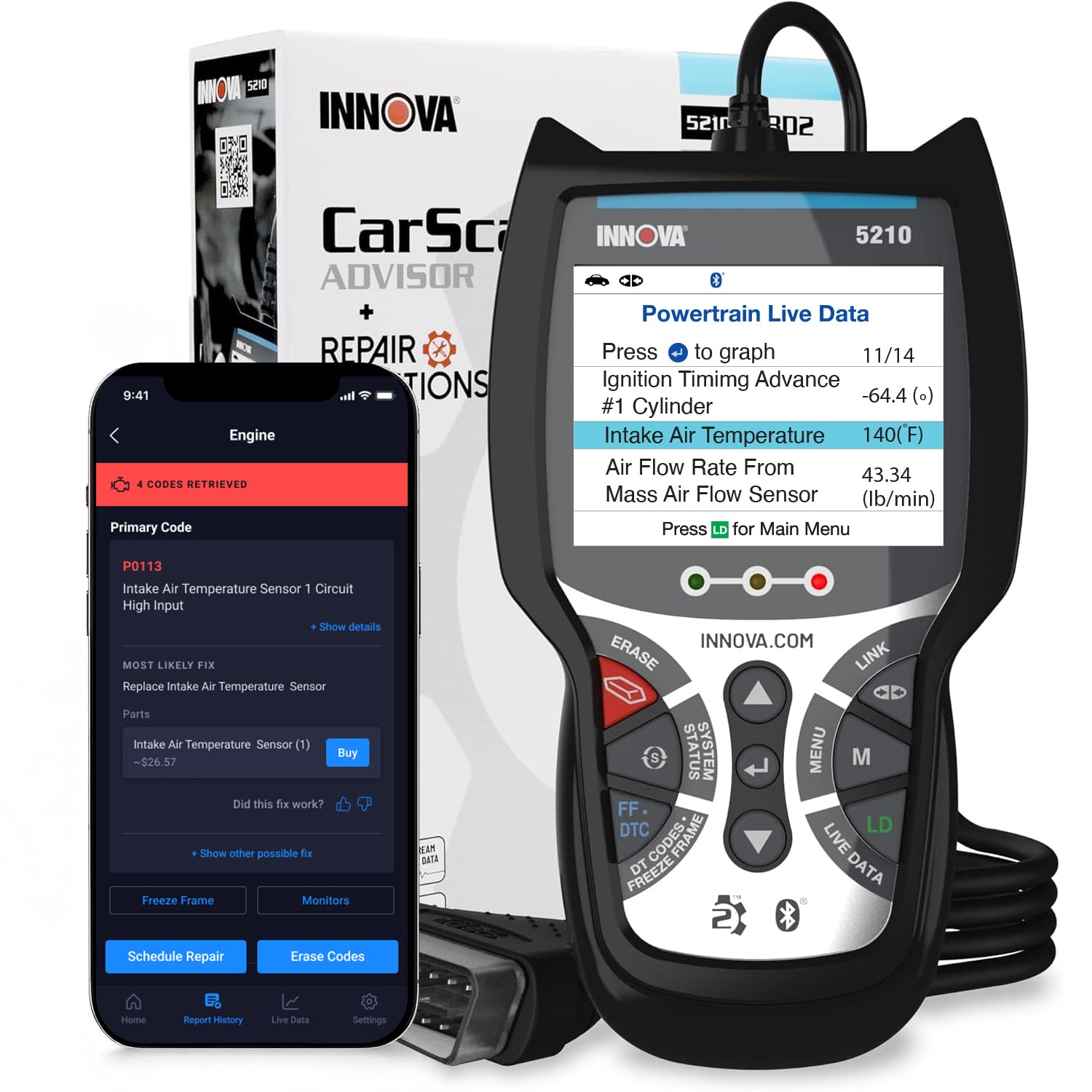
We recommend the Innova 5210 for used-car buyers who want live engine data, battery checks, and basic service tools in one handheld scanner.
Pros
- Live readings include RPM, temperature, fuel trims, and oxygen sensor data.
- Battery and alternator tests add useful checks during a car inspection.
- The free app provides repair guidance without a subscription.
Cons
- ABS and service features vary by vehicle.
- Some suggested parts may not match the exact vehicle.
- The attached cable limits convenience compared with wireless scanners.
We found the 2.8-inch screen easy to read while checking a vehicle. The scanner pulled engine codes quickly and displayed live information that helped us watch coolant temperature, RPM, and fuel-trim changes.
The battery test adds value when we inspect a used car. We can check basic battery and alternator health without carrying a second tool. The readiness monitor screen also helps us see whether the seller recently cleared trouble codes.
The RepairSolutions2 app gives code explanations, possible fixes, parts suggestions, and cost estimates. We still verify any result with a mechanic because the suggested part may not fit every vehicle exactly.
Coverage remains the main limitation. Some vehicles support only engine codes, while ABS, oil reset, and other functions depend on the make, model, and year. We check Innova’s coverage tool before buying, especially for European vehicles or less common models.
BLCKTEC 440 OBD2 Scanner

We recommend the BLCKTEC 440 for used-car buyers who want clear live data, basic code checks, and emissions testing support without a complex setup.
Pros
- Live data graphs make engine readings easier to follow.
- Color-coded readiness lights help with smog-test checks.
- The compact design starts quickly through the vehicle’s diagnostic port.
Cons
- Advanced reset functions may not cover every vehicle.
- We still need another source to explain unfamiliar codes.
- The small screen limits how much data we can view at once.
When we use the BLCKTEC 440 during a used-car inspection, it gives us a quick view of trouble codes and current vehicle readings. The live data graphs help us watch values change while the engine idles or runs, which can reveal issues that a simple code scan may miss.
The built-in I/M readiness feature also helps us check whether the vehicle recently cleared its codes. That matters when a seller claims the car has no problems, because incomplete monitors may show that the system has not completed its normal checks.
Setup is simple. We plug the scanner into the vehicle’s 16-pin port, and it draws power from the car. The 2.8-inch color screen is easy to read, while the included updates and support add value for buyers who plan to keep using the tool.
We would not treat the BLCKTEC 440 as a replacement for a full mechanical inspection. It may identify a problem area, but we still need to research the code and inspect the vehicle before making a purchase.
ANCEL AD310 OBD2 Scanner

We recommend the ANCEL AD310 for used-car buyers who want an affordable way to check engine codes and view basic live data before making a purchase.
Pros
- Simple controls and a clear screen
- Reads and clears engine codes quickly
- Compact design with a sturdy cable
Cons
- Only checks emission-related engine systems
- Does not scan ABS, airbag, or transmission modules
- Requires a wired connection to the car
When we used the AD310, it powered on through the car’s OBD2 port without batteries or a charger. The buttons felt easy to understand, and the display showed codes and basic live readings without much setup.
Its live-data feature helps us check readings such as engine speed and sensor activity while the engine runs. That information can reveal problems that a stored code alone may not show. We still need to interpret the results carefully because the scanner does not diagnose every possible fault.
For a used-car inspection, the freeze-frame and readiness-monitor functions add useful checks. We can see the conditions linked to a stored code and determine whether the seller recently cleared the warning light. A car with incomplete monitors may need more testing before we buy it.
The AD310 supports many OBD2 vehicles from 1996 onward, but it only covers the standard engine and emission system. It will not read airbag, ABS, or transmission codes. We would choose a more advanced scanner if the vehicle has warning lights outside the check-engine system.
BluSon YM319 OBD2 Scanner
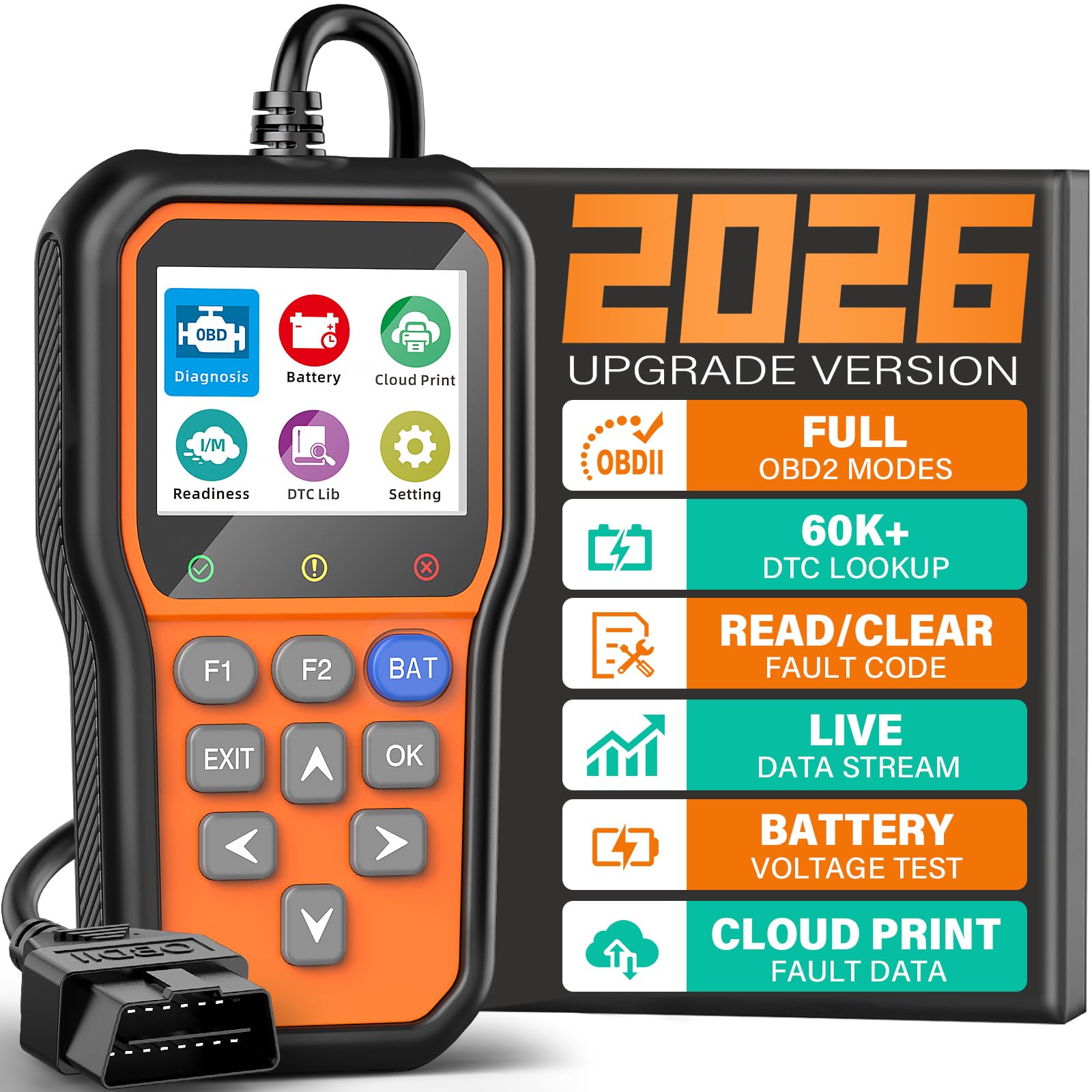
We recommend the BluSon YM319 for used-car buyers who want live engine data, battery checks, and simple code reading at a low cost.
Pros
- Clear live-data graphs help us spot changing or intermittent readings.
- The built-in battery test adds useful pre-purchase information.
- Its color screen and shortcut keys make basic scans quick.
Cons
- It only checks engine-related systems, not ABS, airbags, or transmission faults.
- The compact build may not withstand rough handling.
- Cloud printing may require extra setup and an internet connection.
When we plugged in the YM319, it powered up through the car’s diagnostic port without needing batteries. The 2.4-inch color screen showed fault codes, freeze-frame details, emissions readiness, and live readings in a fairly easy-to-follow layout.
The live-data graphs can help us watch values change while the engine runs. That matters during a used-car inspection because a stored code may not show the full picture. We can also use the battery test to check voltage and look for signs of a weak battery before buying.
The scanner reads and clears engine codes, checks oxygen sensors, and supports EVAP testing on compatible vehicles. Its fault-code database can explain many codes without requiring a separate lookup. Cloud printing may help us save or share a report with a seller or mechanic.
We should keep its limits in mind. The YM319 does not scan ABS, airbag, or transmission systems, so it cannot provide a complete vehicle health report. It supports most 1996 and newer US vehicles and many newer European and Asian models, but we would still confirm compatibility before purchase.
BLCKTEC 460T OBD2 Scanner

We recommend the BLCKTEC 460T for used-car buyers who want detailed live data, full-system scans, and useful service functions in one tool.
Pros
- Shows and records live data from several vehicle systems
- Scans engine, transmission, ABS, and SRS modules
- Includes many reset and maintenance functions
Cons
- Some functions depend on the vehicle’s make and model
- The tool and app work only in the United States and Canada
- Its advanced features may feel complex to casual users
When we used the 460T during a used-car inspection, its live-data graphs helped us look beyond a simple check-engine scan. We could watch several readings at once, record them, and review freeze-frame data connected to a fault code. That made it easier to spot issues that might not appear during a short test drive.
The scanner also checks more than the engine computer. We could scan the transmission, ABS, and SRS systems, which matters when a seller says warning lights recently turned off. AutoVIN and AutoScan reduced setup time, while the included RepairSolutions2 app added repair information, recalls, and maintenance details.
Its service tools give the 460T more value than a basic code reader. We found functions for battery registration, electronic parking brake service, steering-angle calibration, oil resets, and ABS bleeding. However, we would check BLCKTEC’s compatibility list before buying because not every function works on every vehicle.
The 4.3-inch screen felt practical, and the included case made storage simple. Lifetime updates also help keep the scanner useful, but buyers should remember that it needs the vehicle for power and that advanced diagnostics require some repair knowledge.
ANCEL AD410 Scanner
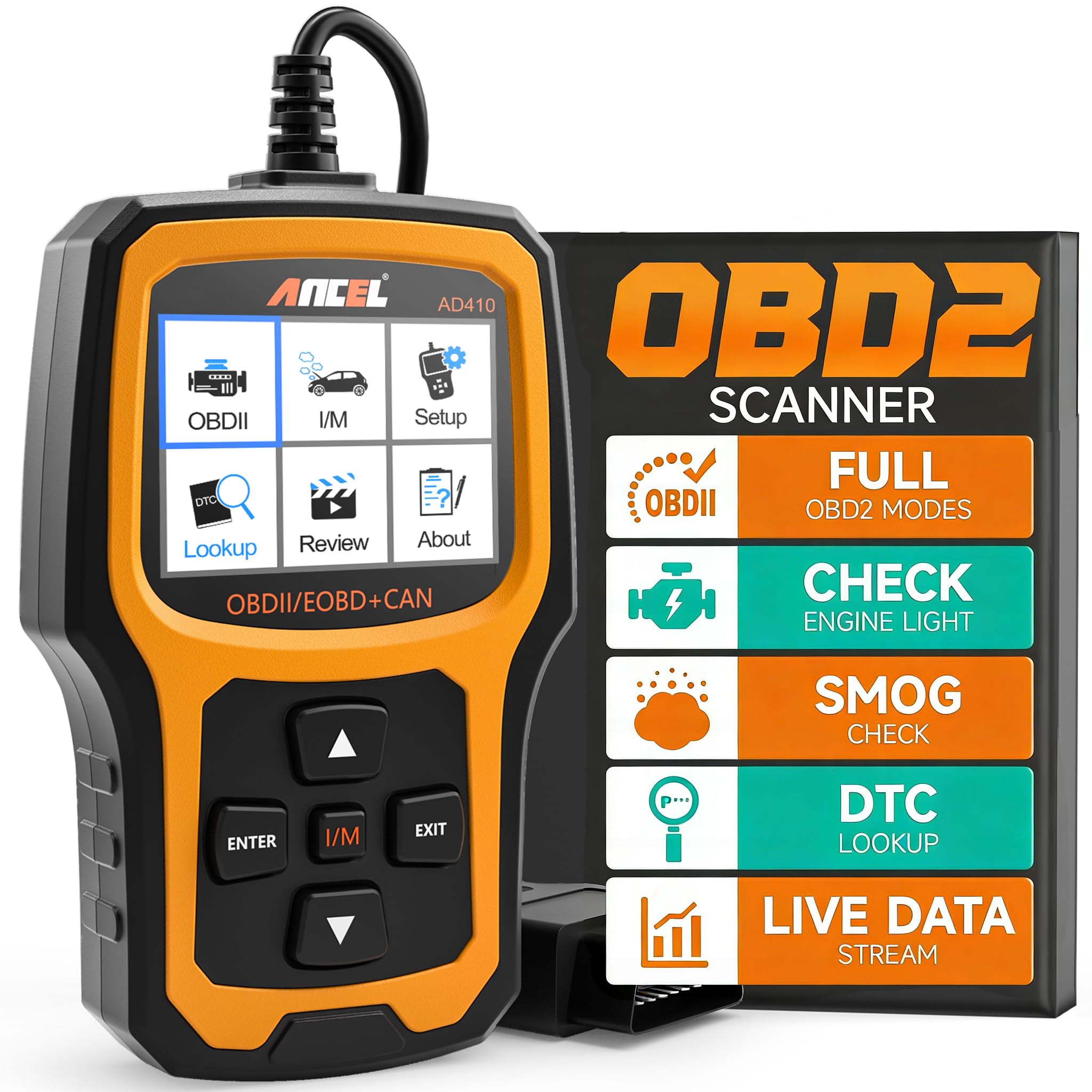
We recommend the ANCEL AD410 for used-car buyers who want affordable live data and basic engine diagnostics without a phone app.
Pros
- Shows live readings such as RPM, coolant temperature, and fuel trim
- Displays code definitions on its built-in screen
- Checks emissions readiness before a smog test
Cons
- Does not scan ABS, airbag, or transmission systems
- The small screen limits how much data we can view at once
- The manual could explain the controls more clearly
We plugged the AD410 into a vehicle’s OBD2 port, turned on the ignition, and started scanning without pairing a phone or charging a battery. The menus felt simple, and the color screen made basic fault codes easy to read.
Live data gives us more than a check-engine code alone. We can watch engine speed, coolant temperature, oxygen sensor readings, and fuel trims while the engine runs. That information can reveal signs of poor fueling or unusual engine behavior during a used-car inspection.
The scanner also checks freeze-frame data and I/M readiness. We can use these features to see the conditions present when a fault appeared and check whether the vehicle’s emissions monitors are ready. A seller may clear a warning light before a test drive, so readiness results provide another useful clue.
The AD410 covers engine and emissions codes on most OBD2 vehicles. However, it cannot check airbags, ABS, transmissions, or service systems. We would pair it with a broader scanner if a used car shows warning lights outside the engine system.
FOXWELL NT301 Plus
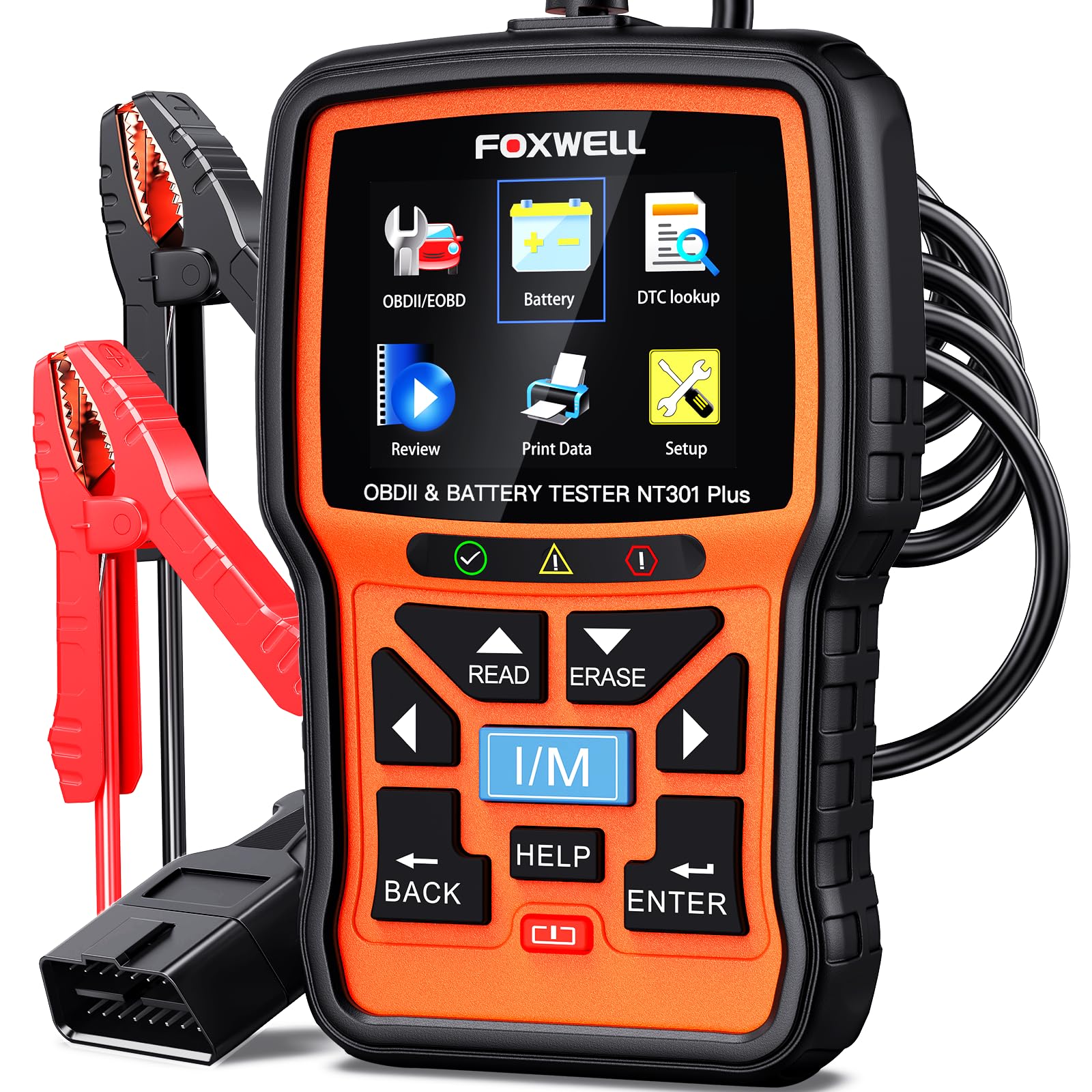
We recommend this scanner for used car buyers who want live engine data, code checks, and basic 12V battery testing in one affordable tool.
Pros
- Shows live readings such as RPM, coolant temperature, and fuel trim
- Checks battery, starting, and charging system health
- Includes I/M readiness and EVAP testing
Cons
- Does not read ABS, airbag, or transmission codes
- Supports 12V batteries only
- Windows is required for software updates
We found the NT301 Plus easy to use during a pre-purchase check. Its color screen displayed engine codes and live readings clearly, while the built-in code lookup gave us a useful plain-language starting point. We could also record and replay data when a problem appeared only at certain times.
The I/M readiness test helped us see whether a seller had recently cleared the check-engine light. That matters because a car may show no active warning but still fail an emissions inspection. The EVAP test also helped us check for possible fuel-system leaks, such as a loose gas cap or damaged hose.
Its battery function adds value during a used-car inspection. We used the included clamp cable to check battery health and the starting and charging systems. This feature works with 12V lead-acid batteries, including AGM, EFB, flooded, and GEL types.
However, this remains an engine and battery scanner. It cannot diagnose ABS, SRS, transmission, tire sensors, key systems, or battery registration. We also found the vehicle coverage broad but not universal, so buyers should confirm compatibility, especially with some European and older vehicles.
ANCEL AD410 PRO OBD2 Scanner
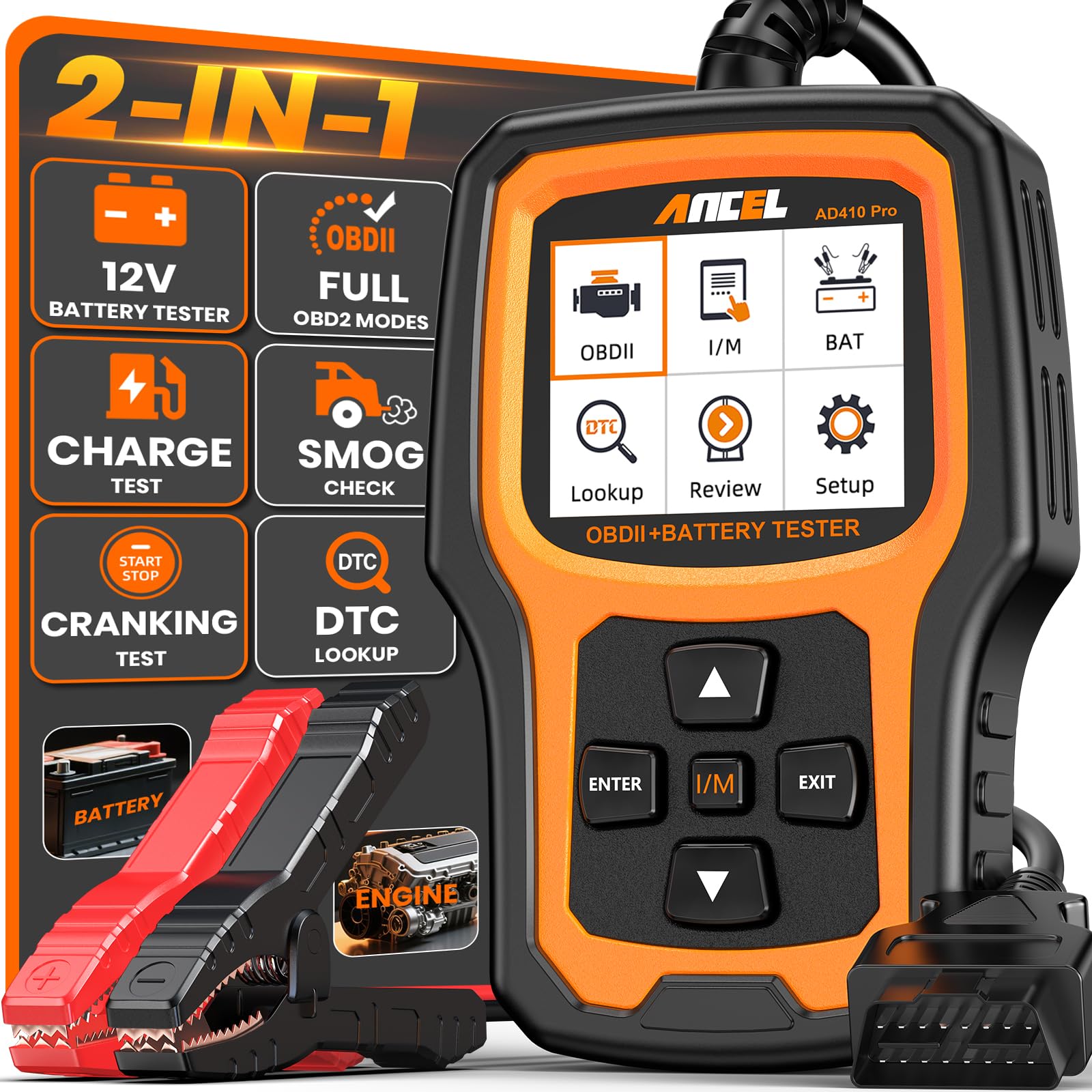
We recommend the ANCEL AD410 PRO for used-car buyers who want live engine data and battery testing in one simple, corded tool.
Pros
- Shows more than 50 live engine readings with graphs
- Tests battery health, cranking, and charging systems
- Clear screen, simple controls, and lifetime updates
Cons
- Does not scan ABS, airbag, or transmission systems
- Requires a separate cable connection
- Live data may take time to interpret
We found the 2.4-inch screen easy to read while checking a vehicle in daylight. The tool starts when plugged into the OBD2 port, so we did not need an app, phone, or account.
During a used-car inspection, live readings can reveal problems that a basic code scan may miss. We could watch engine temperature, fuel-air readings, and sensor activity while the engine ran. Freeze-frame data also helped show the conditions present when a fault appeared.
The battery functions add useful value. Using the included clamp cable, we could check battery condition, starting performance, and alternator charging. That helps us separate a weak battery from a larger starting or charging issue.
The scanner can read and clear engine codes and check emissions readiness. However, it does not access ABS, SRS, or transmission modules. We would use it as a strong first inspection tool, not a complete vehicle diagnostic system.
Buying Guide
We should choose an OBD2 scanner that shows more than stored fault codes. Live data lets us view sensor readings while the engine runs, which can reveal problems that a basic code reader may miss.
We should check these features before buying:
- Vehicle coverage: Confirm support for the car’s model year and engine. Some scanners work only with standard engine codes, while others access systems such as ABS, airbags, or transmission control.
- Live-data quality: Look for clear readings, graphs, data recording, and the ability to view several sensors at once.
- Code functions: We should look for code reading, code clearing, pending-code checks, and readiness-monitor status. Clearing codes alone does not repair a fault.
- Connection type: Wired scanners offer a direct connection. Wireless models work with a phone or tablet but may require an app.
- Ease of use: A readable screen, simple menus, and plain-language code descriptions can help us inspect a car quickly.
- Power and updates: We should check whether the scanner receives software updates and whether updates cost extra.
- Safety features: Choose a device with secure connections and clear warnings before using service or reset functions.
| Feature | Why it matters |
|---|---|
| Live graphs | Help us spot unstable readings |
| Readiness monitors | Show whether emissions tests can run |
| Freeze-frame data | Records conditions when a fault appeared |
| Data export | Lets us save or review test results |
We should compare the scanner’s supported functions with the inspection we plan to perform. A model with wider system coverage may offer more value when we inspect several used cars.
Editor’s Choice
We recommend the TOPDON AD600S for used car buyers who want clear live data without paying for a professional shop tool. It displays sensor readings such as engine temperature, fuel trims, oxygen sensor data, and engine speed in real time.
The scanner uses a color touchscreen and shows data in graphs, which helps us spot readings that change under load or at idle. Its code definitions and test functions also make it easier to check a vehicle before purchase.
| Feature | Why it helps used car buyers |
|---|---|
| Live data graphs | Shows sensor changes in real time |
| Full-system scans | Checks more than the engine computer |
| Code reading and clearing | Identifies stored and pending faults |
| Touchscreen controls | Makes menu navigation simple |
| Report sharing | Helps us save or share scan results |
We should connect the scanner before starting the engine, then scan for stored and pending codes. We can also review live data while the engine is cold, at idle, and during a short test drive.
The AD600S does not replace a mechanical inspection. We still need to check fluid leaks, tire wear, service records, and signs of accident damage before buying the car.
Conclusion
We should choose an OBD2 scanner that shows live data clearly and works with the vehicles we plan to inspect. Key readings such as coolant temperature, fuel trims, oxygen sensor data, and misfire counts can reveal issues that may not trigger a warning light.
Before buying a used car, we should:
- Scan for stored, pending, and permanent trouble codes.
- Check whether the monitors are ready.
- Review live data with the engine cold and warm.
- Compare sensor readings for signs of unusual behavior.
- Take a test drive while watching important data.
A basic scanner may work for occasional checks, while a model with graphing, wider vehicle coverage, and stronger data recording can help us inspect cars more closely. We should also confirm that the scanner supports the car’s make, model, and year.
Live data cannot replace a mechanic’s inspection. We still need to check the vehicle’s service records, body, tires, fluids, and undercarriage before making an offer.
FAQs
What should we look for in an OBD2 scanner for a used car?
We should choose a scanner that shows live data, reads engine and transmission codes, and checks emissions readiness. A model with graphing, freeze-frame data, and a clear display makes testing easier.
Can an OBD2 scanner find every problem?
No. Most scanners focus on systems linked to the car’s OBD2 port. They may not detect faults in the body, airbags, anti-lock brakes, or other systems unless they support those modules.
Which live data readings matter most?
We should check coolant temperature, engine load, fuel trims, oxygen sensor readings, and vehicle speed. Unusual values or readings that change sharply can point to an engine or sensor problem.
Can sellers hide warning lights from a scanner?
They can clear trouble codes before a sale. We should check the emissions readiness monitors and ask when the codes were cleared. If several monitors show “not ready,” the car may need more testing.
Will an OBD2 scanner work with every car?
Most scanners work with cars sold in the United States from the 1996 model year onward. However, advanced features and supported modules vary by make, model, and scanner.
Should we buy a basic or advanced scanner?
A basic scanner may suit simple code checks. We should choose an advanced model if we want live graphs, enhanced manufacturer codes, or access to systems beyond the engine.
