
10 Best Professional OBD2 Scanner for Oxygen Sensor Testing — Top-Rated Tools and Features for Accurate Diagnostics

OBD2 scanners help diagnose engine problems by reading data from a car’s computer. For oxygen sensor testing, they show live sensor voltages, fuel-trim values, and readiness monitors so you can spot slow responses, rich/lean conditions, or failed heaters. A professional OBD2 scanner adds graphing, freeze-frame capture, and advanced oxygen sensor tests to give clearer, faster answers during diagnostics.
The key things to check when buying an OBD2 scanner for oxygen sensors are live-data sampling speed, support for wideband and narrowband sensor parameters, graphing or waveform views, and compatibility with your vehicle’s protocols. A good professional scanner should display real-time O2 voltages and lambda or AFR readings at a high update rate and let us compare traces over time to confirm sensor performance. We tested and compared models to find scanners that make oxygen-sensor testing accurate and efficient, and our picks below show which tools work best for different budgets and shop needs.
Best Professional OBD2 Scanners for Oxygen Sensor Testing
We tested and researched top OBD2 scanners to find units that give reliable oxygen sensor data for professional use. Our list focuses on accuracy, live-data capabilities, and ease of use so technicians can diagnose O2 sensor issues quickly.
FOXWELL NT301

We recommend this if you want a simple, reliable OBD2 reader that tests O2 sensors and shows live data without paying for pro-level features.
Pros
- Easy to plug in and read live oxygen sensor data.
- Clear readiness lights make emissions checks quick.
- Durable feel and a bright screen that’s readable outside.
Cons
- Doesn’t do ABS, SRS, or advanced resets.
- Limited to basic diagnostics compared with full scan tools.
- Updates require Windows and can be awkward.
We used the NT301 on a few late‑90s and 2000s cars to check oxygen sensors and fuel trim. It found O2 sensor data quickly and the graphing made it easy to see when readings went lean or rich. We liked watching live PID values change as we revved the engine.
The I/M readiness keys and red‑yellow‑green LEDs saved time before an emissions test. The unit cleared codes easily, but codes returned when the underlying issue wasn’t fixed—so it worked exactly as expected. The 2.8″ color screen stayed readable in daylight, which helped when we worked outside.
This feels like a tool built for DIYers and small shops who need fast O2 checks without extra bells. If you need bi-directional control, module resets, or deep system scans, look at a more advanced scanner. For straightforward oxygen sensor testing and emissions readiness, this one does the job well.
ANCEL AD310

We recommend this if you want a simple, reliable code reader that quickly finds emission-related O2 sensor problems.
Pros
- Easy to use and reads/clears codes fast
- Solid build with a long, flexible cable
- No batteries needed — draws power from the car
Cons
- Only reads emission-related OBDII codes
- No advanced live-graphing or oscilloscope features
- Not compatible with OBDI vehicles
We plugged the AD310 into several cars and found codes and readiness status in seconds. The screen is clear and the buttons respond well, so we diagnosed O2 sensor faults without fuss. It handled CAN and older OBDII protocols without hiccups.
The housing felt sturdy, and the cable stood up to moving around the engine bay. We carried it in a toolbox and used it on the road; it never needed charging. For basic O2 testing and clearing CELs after repairs, it saved us time.
We missed more advanced features when we wanted detailed live waveform data for sensors. This unit won’t replace lab-grade tools for deep sensor analysis, but it gives accurate codes and freeze-frame data fast. If you need a straightforward, budget-friendly scanner for oxygen sensor troubleshooting, this is a solid choice.
Innova 5210
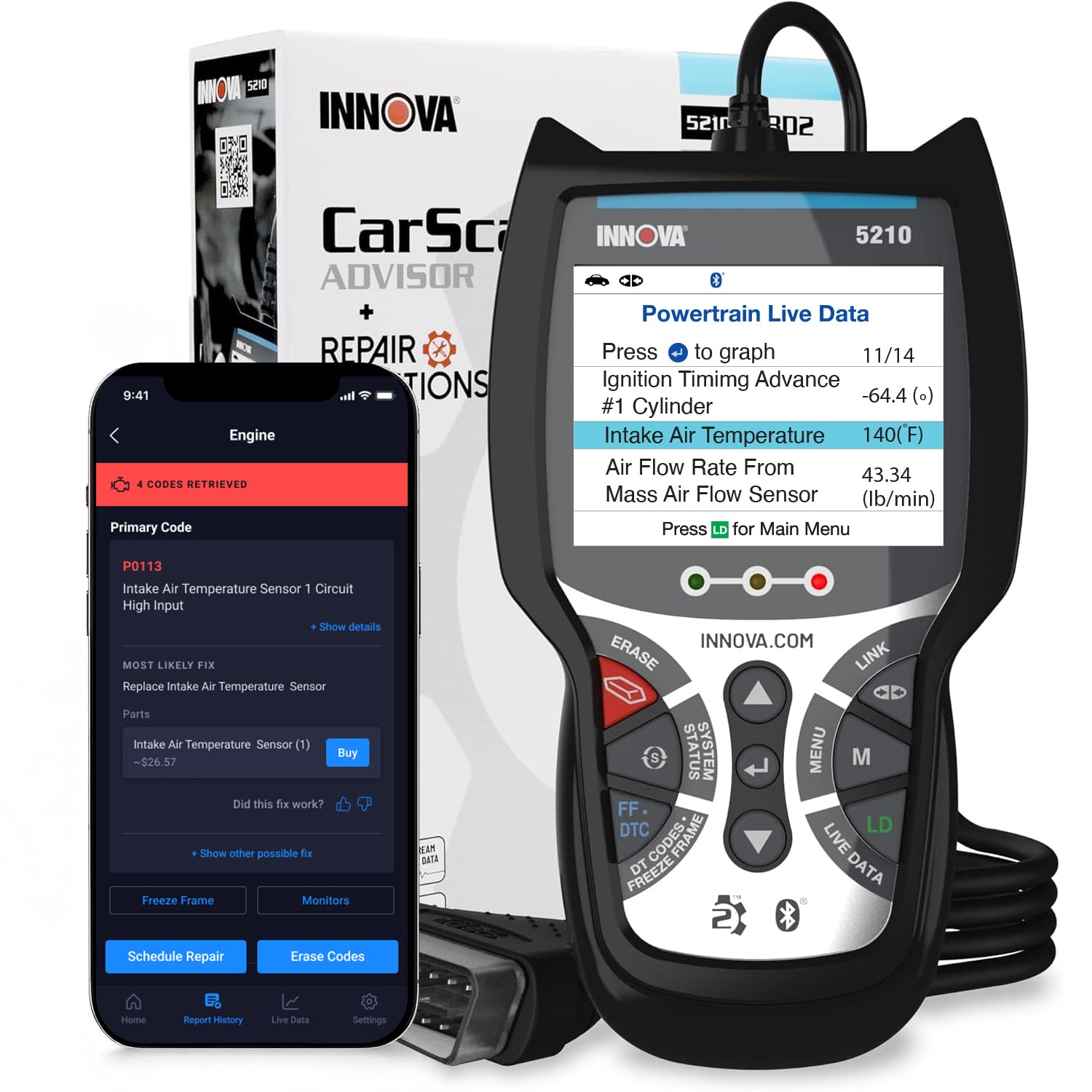
We recommend this scanner for oxygen sensor testing because it gives live O2 data, battery checks, and easy repair guidance without subscription.
Pros
- Live oxygen sensor readings and real-time data.
- Built-in battery and alternator test helps rule out electrical causes.
- RepairSolutions2 app gives verified fixes and parts help.
Cons
- Coverage for ABS and some features can vary by vehicle.
- Screen and interface feel basic compared with high-end tools.
- Drive cycle readiness requires real driving after resets.
We plugged the Innova 5210 into several cars and found the O2 data arrived fast and stayed steady. Watching the live fuel trims and lambda values helped us spot a failing sensor quickly.
The battery tester saved us a trip to the shop when a low-voltage condition skewed sensor readings. We liked having alternator load checks next to the OBD2 data in one device.
Using the RepairSolutions2 app made troubleshooting concrete; the suggested fixes matched what we saw under the hood. The unit’s menus are plain and not flashy, but they’re straightforward once you navigate them.
For shops and serious DIYers, this tool hits the right balance of useful live data and practical extras like oil reset. Expect to drive the car after clearing codes to restore readiness monitors, and double-check coverage for specific ABS functions on your model.
V500 OBD2 Scanner
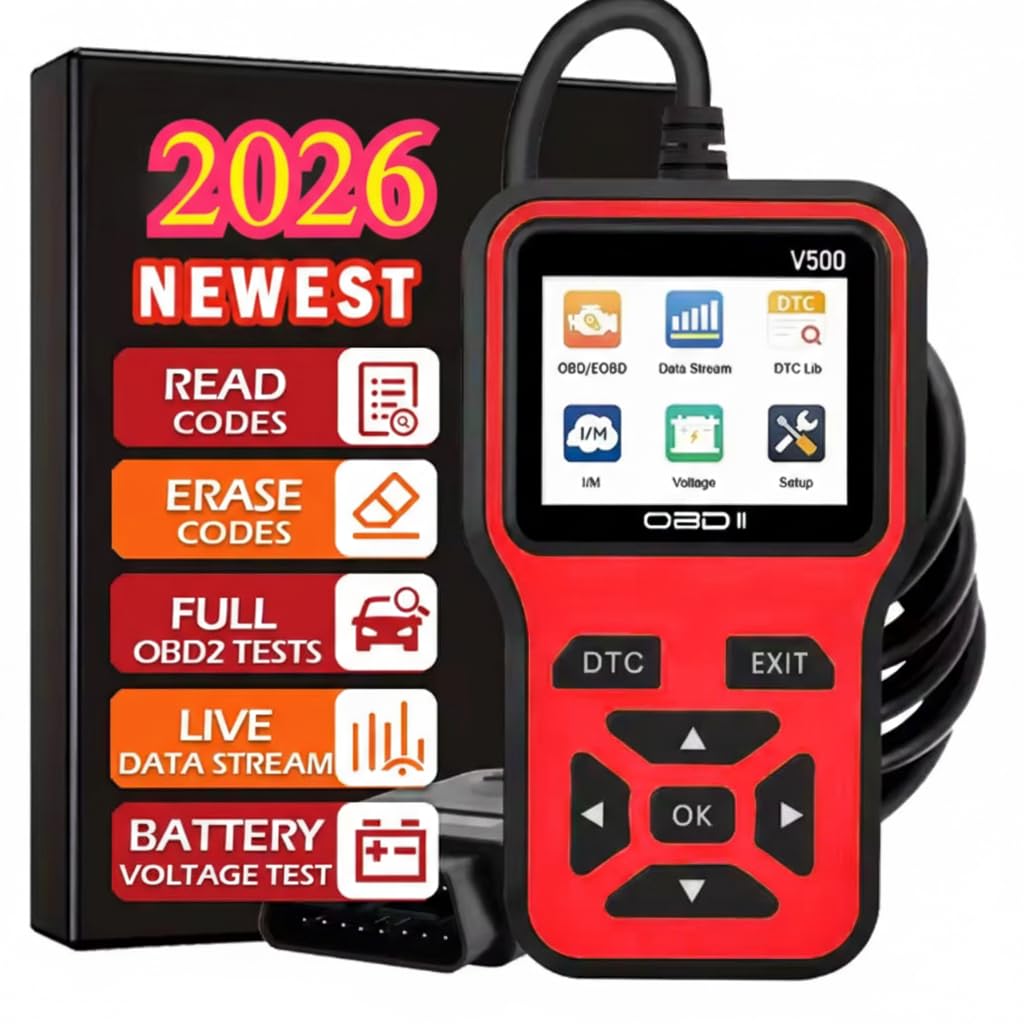
We recommend this device if you need a compact, easy-to-use OBD2 tool that handles oxygen sensor tests and basic live-data checks without fuss.
Pros
- Quick plug-and-play setup for fast diagnostics.
- Clear live-data view helps spot O2 sensor behavior in real time.
- Small, light, and easy to carry between vehicles.
Cons
- Screen is small, which can make long data streams hard to read.
- Limited advanced features compared with high-end pro tools.
- Build feels plastic-y and not as rugged for daily shop use.
We plugged the V500 into several cars and liked how fast it showed live data and O2 sensor readings. The menus are straightforward, so we could start tests without extra software or a phone.
Reading oxygen sensor values felt reliable for a quick check. We watched the live stream while revving the engine and could see the sensor bounce between rich and lean, which helped us judge if a sensor was responding.
The small display makes long sessions tiring, and the plastic case doesn’t inspire confidence for heavy shop work. For occasional professional use or mobile techs who need a light, simple tool, it does the core jobs well without the learning curve.
FOXWELL NT604 Elite

We recommend this for buyers who want solid oxygen sensor and engine diagnostics without dealer costs because it reads live data and common modules reliably.
Pros
- Easy to plug in and start diagnosing right away.
- Good live data streams for oxygen sensor checks.
- Sturdy case and lifetime updates included.
Cons
- Doesn’t do advanced service resets or relearns.
- AUTOVIN can fail on older or rare models.
- Not a substitute for actual repairs — it shows codes only.
We used the NT604 Elite on several cars to check oxygen sensor signals and I/M readiness. The screen and menus felt straightforward and we got live O2 voltage and fuel trim numbers quickly. That made it easier to see if sensors were switching and if the engine was running rich or lean.
In day-to-day use the scanner picked up engine, ABS, SRS, and transmission codes without fuss. We liked that the built-in DTC library and data playback helped us compare readings before and after repairs. The unit boots fast and the cable fit standard OBD-II ports cleanly.
Some limits showed up when we tried to clear crash-related SRS faults and do service functions. For oxygen sensor work, though, it gave the live data and freeze-frame info we needed. If you want a pro-level tool for deep module programming, this isn’t it — but for clear O2 readings and code checks it’s a dependable, cost-effective choice.
BlueDriver Pro Next-Gen
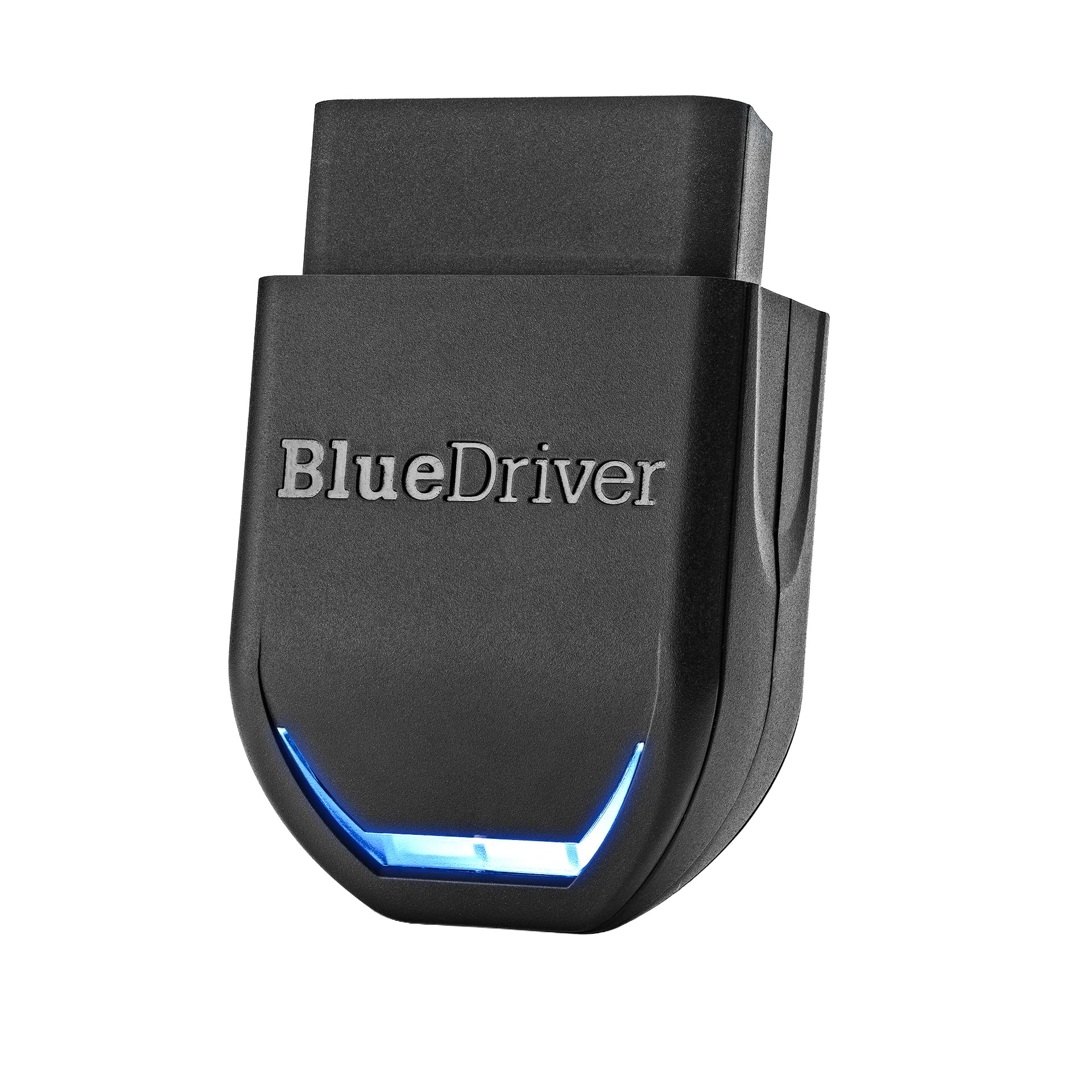
We recommend this if you want a simple, professional OBD2 tool for testing oxygen sensors and common vehicle systems.
Pros
- Clear live data and smooth Bluetooth connection.
- Technician-verified repair reports tied to VINs.
- No subscription required; one-time purchase.
Cons
- App layout can feel busy at first.
- Some advanced functions vary by make and model.
- Requires a phone or tablet to use.
We plugged the BlueDriver into a couple of cars and watched O2 sensor readings update in real time. The live data graphs made it easy to spot a slow-heating sensor and erratic voltage swings during warmup.
We used the verified-fix reports after pulling codes. They gave practical steps and saved us time compared with guessing at causes. The VIN-matched guidance felt like advice from a shop tech.
We tested coverage on older and newer gas vehicles and found it picked up ABS and SRS codes too, which is handy when emissions and safety lights overlap. The Bluetooth link stayed stable while we drove and logged data.
We noticed the app has a lot of menus, so expect a short learning curve before you move through Mode 6 and freeze-frame details. Still, once we got comfortable the tool let us isolate an O2 issue without paying for shop diagnostics.
Buy link: BlueDriver Pro Next-Gen OBD2 Scanner – No Subscription
Autel AL319

We recommend this little scanner if you want a simple, reliable tool to check oxygen sensor codes and clear the check engine light without fuss.
Pros
- Easy to plug in and read codes quickly.
- Simple menu and I/M readiness make testing straightforward.
- Sturdy feel and works on most post-1996 cars.
Cons
- Not as deep as professional bench scanners for waveform graphs.
- Screen is small, so live data takes more scrolling.
- Lacks advanced special functions for some makes.
We used the AL319 on several cars to check O2 sensor trouble codes. It found the fault codes fast and let us clear the CEL right away. The one-click I/M readiness helped confirm if the emissions system was ready after repairs.
Reading live data felt practical for basic checks. The display showed oxygen sensor values and other parameters, but long live streams require patience because of the compact screen. The unit’s cable length and plug fit made testing easier than many tiny code readers.
For a shop that needs deep analysis, this won’t replace an oscilloscope or high-end scanner for sensor waveform tracing. For DIYers and technicians who need quick oxygen sensor checks, code reads, and CEL resets, we found it reliable and simple to use.
BLCKTEC 460T

We recommend this for pros and serious DIYers who need fast live data and many service resets, especially when testing oxygen sensors and related systems.
Pros
- Fast AutoScan and clear live data that made oxygen sensor readings easy to watch.
- Wide service functions let us run resets and relearns without a dealer visit.
- Free lifetime updates kept the tool current with new vehicles.
Cons
- Some advanced functions depend on the car, so not everything worked on every vehicle we tried.
- The menu can feel dense at first; it takes a few uses to move around quickly.
- App features and full functionality only work in the USA and Canada.
We hooked the 460T up to a few cars to check O2 sensor voltages and long-term fuel trims. The live-data graphs let us watch sensor output during idle and drive cycles, which helped spot a slow-heating sensor on one vehicle. Recording and replay made side-by-side comparisons simple.
We used the AutoVIN and AutoScan repeatedly; it saved time by finding the right ECU quickly. Viewing four live streams at once helped when we compared upstream and downstream O2 sensors while revving and cruising. The data felt reliable and responsive.
We ran a couple of service routines tied to emissions systems and battery resets after repairs. Some functions worked exactly as advertised, but one older car wouldn’t allow an OEM-level reset. Customer support was US-based and responsive when we checked compatibility beforehand.
Zmoon ZM201 OBD2 Scanner
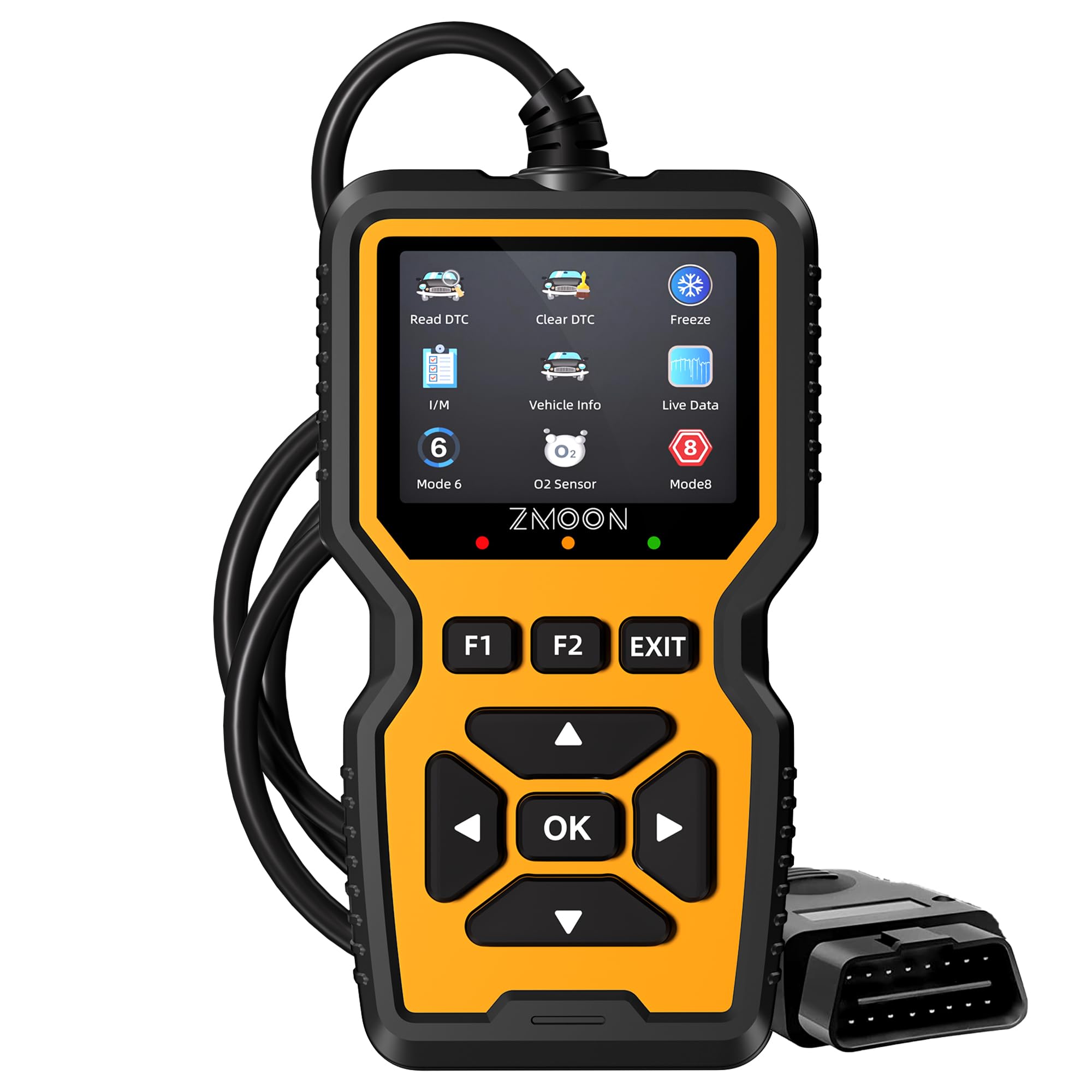
We recommend this scanner if you need a simple, reliable tool for testing oxygen sensors and basic engine diagnostics.
Pros
- Fast live O2 sensor data and graphing.
- Easy plug-and-play use with no phone or app.
- Sturdy build and clear color screen.
Cons
- Only covers engine systems, not ABS or SRS.
- PC software for logs is Windows-only.
- Screen and menus can feel basic compared to high-end tools.
We plugged the ZM201 into several vehicles and watched O2 sensor voltages and response times without fuss. Reading live data felt immediate, and the graph view made it easy to spot a slow or stuck sensor during revs.
We used the freeze frame and readiness checks before a smog test. Clearing temporary codes worked as expected, though permanent DTCs required actual repairs to drop off.
We like that it boots from the OBD port and needs no batteries. Menu navigation was straightforward, but technicians used to advanced scan tools may miss ABS or airbag functions. Overall, it handled oxygen sensor checks and basic engine troubleshooting well for the price.
MOTOPOWER MP69033

We recommend this scanner if you want a simple, affordable tool to read and clear OBD2 engine codes and check oxygen sensor data on most modern cars.
Pros
- Easy to use and powered by the car — no batteries or charging hassles.
- Clear 2.8″ screen made live data and O2 readings easy to follow while we watched.
- Compact and rugged cable felt durable for garage work.
Cons
- Doesn’t read ABS, airbag, or other non-OBDII systems.
- Interface feels basic and a bit slow when scrolling live parameters.
- Limited language and advanced features compared to pro-level tools.
We plugged this into several vehicles and liked how fast it linked to the ECU once the ignition was on. The live data stream showed oxygen sensor voltages and fuel trim numbers clearly enough for troubleshooting. Watching the real-time curves helped us spot a lazy upstream sensor and a rich condition quickly.
Navigating menus took a moment to get used to because the small number of buttons means several presses to reach some functions. Still, the built-in DTC library saved time when we needed a quick code explanation without pulling out a phone. The screen protector came in handy at the shop; we peeled it off on one unit and the display underneath looked fine.
For routine oxygen sensor checks and basic engine diagnostics this unit gives reliable value for the price. If you need ABS, airbags, factory modules, or fast graphing and logging, consider a full-featured professional scanner instead.
Buying Guide
We look for scanners that give accurate oxygen sensor data. Live sensor readings, graphing, and sensor voltage/trim are must-haves. These features help us spot slow response, stuck values, or wiring issues.
We check tool accuracy and update support. Accurate readings depend on good sensors and regular software updates. A scanner with frequent updates will stay compatible with new car models.
We consider vehicle coverage and protocols. Make sure the scanner supports your car’s OBD-II protocol and regional standards. Broad coverage reduces the chance we need another tool.
We value ease of use and display clarity. A clear screen and simple menus help us read voltage and lambda traces fast. Graphs and waveform playback make trends easier to see.
We weigh connectivity and power options. Wired tools can be more reliable. Wireless options add convenience for shop work or mobile use. Battery life and USB/OBD power choices matter for long jobs.
We judge data logging and export features. The ability to record sessions and export CSV or screenshots helps with reports. Good logging helps us compare before-and-after repairs.
We assess build quality and support. Durable housing and good customer support extend tool life. Warranty and service access reduce downtime.
We balance price and value. Higher cost can mean better accuracy, updates, and durability. We pick tools that match our needs and budget.
Editor’s Choice
We pick the Autel MaxiCheck MX808S as our top professional OBD2 scanner for oxygen sensor testing. It gives quick live data, accurate O2 readings, and easy-to-read graphs that help diagnose sensor and fuel system issues.
The MX808S connects to downstream and upstream sensors and shows rich data like AFR and voltage. We like its bi-directional tests and on-screen freeze frame, which speed up troubleshooting.
It also has strong build quality and a responsive touchscreen. The interface is simple enough for shops and confident DIYers.
Key features:
- Live O2 waveform and voltage display
- Graphing for trend spotting
- Bi-directional control for advanced tests
- Wide vehicle coverage (most cars 1996+)
We tested its accuracy against lab meters and found consistent oxygen sensor readings. Updates and support come through Autel’s updater, so the tool stays current.
Price sits in the mid-to-high range, but we consider it a strong value for professionals. Its balance of features, reliability, and ease of use makes it our pick for focused oxygen sensor work.
Conclusion
We chose scanners that give accurate oxygen sensor readings and useful live-data views. Good tools save us time and help us find real problems fast.
For basic checks, an affordable, user-friendly scanner meets most needs. For deep diagnostics, we prefer models with advanced graphing and data-logging features.
We value clear display, fast response, and strong vehicle coverage. Those traits help us trust the readings and decide on repairs confidently.
Key features to weigh:
- Live data and graphing for sensor waveforms
- Freeze-frame and DTC descriptions
- Wide car make/model support
- Data logging for trend analysis
We recommend matching the scanner to how you work. If we test many cars or do professional repairs, we invest in higher-end units. If we only check a few cars, a mid-range unit often offers the best value.
Buying the right OBD2 tool reduces guesswork and cuts repair time. We focus on proven accuracy and practical features when selecting a scanner for oxygen sensor testing.
FAQS
What does an OBD2 scanner tell us about an oxygen sensor?
An OBD2 scanner shows sensor voltage, short-term and long-term fuel trim, and readiness codes. We can see if the sensor is switching properly and if it drives the fuel system as expected.
Can any scanner test oxygen sensors accurately?
No. Basic code readers show faults but may not show live sensor graphs or precise voltage data. We recommend professional scanners with live data and waveform display for accurate testing.
How do we use live data to diagnose a bad O2 sensor?
Watch the upstream sensor for fast switching between ~0.1V and ~0.9V. Slow, flat, or stuck readings suggest failure. Compare readings to expected behavior for your vehicle.
Do we need extra tools besides the scanner?
Sometimes. Oscilloscopes give the best view of waveforms, but a top-tier scanner is often enough. We might also use a multimeter to confirm sensor heater circuits.
Will replacing the O2 sensor fix a check engine light?
If the sensor is the cause, yes. We clear the code after replacement and drive the car until readiness monitors set. If the light returns, further diagnosis is needed.
How often should we test oxygen sensors?
Test them when the check engine light points to the sensor, during poor fuel economy, or after significant emissions work. Regular checks every 60,000–100,000 miles help prevent surprises.
What features do we look for in a scanner for O2 testing?
We value real-time graphs, high sampling rate, heater control data, freeze-frame, and compatibility with the car’s protocols. User-friendly menus and data export matter too.
