
Can Radio Interference Stop a Key Fob from Working? Here’s How to Tell

Yes — radio interference can stop a key fob from working, but it’s not the only explanation. In real life, the problem is often one of three things:
- True radio interference from a nearby electronic source
- Signal blockage or shielding from a building, structure, or location
- A weak battery or failing fob that only looks like interference
That distinction matters because the fix is different. If the problem only happens in one parking garage, near one gate, or beside one building, interference or signal blocking is a strong suspect. If the fob acts up everywhere, the battery, the fob itself, or the vehicle’s receiver is more likely.
A key fob is just a small radio transmitter. Your car is listening for that signal. If something drowns it out, weakens it, or blocks it, the car may not lock, unlock, or detect the fob for push-button start.
If you want a deeper walkthrough of the “not detected” message, this guide on how to fix a key fob not detected warning is a useful companion.
How a Key Fob Communicates With the Car
Most modern keyless systems rely on radio-frequency communication between the fob and the vehicle receiver. When you press a button, the fob sends a signal. The car’s antenna or receiver checks that signal and responds by unlocking the doors, locking them, or allowing the engine to start.
That system can fail in two different ways:
- The signal never reaches the car
- The signal reaches the car, but the car doesn’t recognize it correctly
Radio interference usually affects the first part. A weak battery, damaged fob, or vehicle-side issue can affect either part.
Some vehicles also use a two-step detection process: a low-frequency wake-up signal near the car, followed by a higher-frequency button transmission from the fob. That helps explain why a fob may work only when it’s very close to the door handle or start button. If the car is struggling to wake or detect the fob, proximity matters.
Mighty Auto Parts notes that some backup-start procedures involve placing the fob near the Start/Stop button or pressing the button with the fob itself. That’s a useful troubleshooting clue because it shows how close-range detection can overcome a weak signal path. Their article also mentions that vehicle accessories can sometimes contribute to radio-frequency problems, which is a reminder that interference does not always come from something dramatic or far away. See the reference at Mighty Auto Parts’ radio interference diagnosis guide.
How to Tell If Interference Is the Likely Cause
The strongest clue is location-specific failure.
If the fob works fine at home but suddenly stops in a particular garage, near a security booth, or beside a metal building, interference or signal blocking is a strong suspect. If it works again after you move the car a short distance, that’s another clue.
Here’s the pattern I’d watch for:
- The fob works in some places and not others
- It works better outside than inside a structure
- It works when held closer to the car
- It fails for locking/unlocking, but the spare works normally elsewhere
- It starts working again after leaving the area
That pattern points away from a dead fob battery and toward the environment.
By contrast, a failing battery or worn-out fob usually behaves badly everywhere, not just in one spot. The range may shrink, but the problem won’t usually vanish when you leave a parking garage.
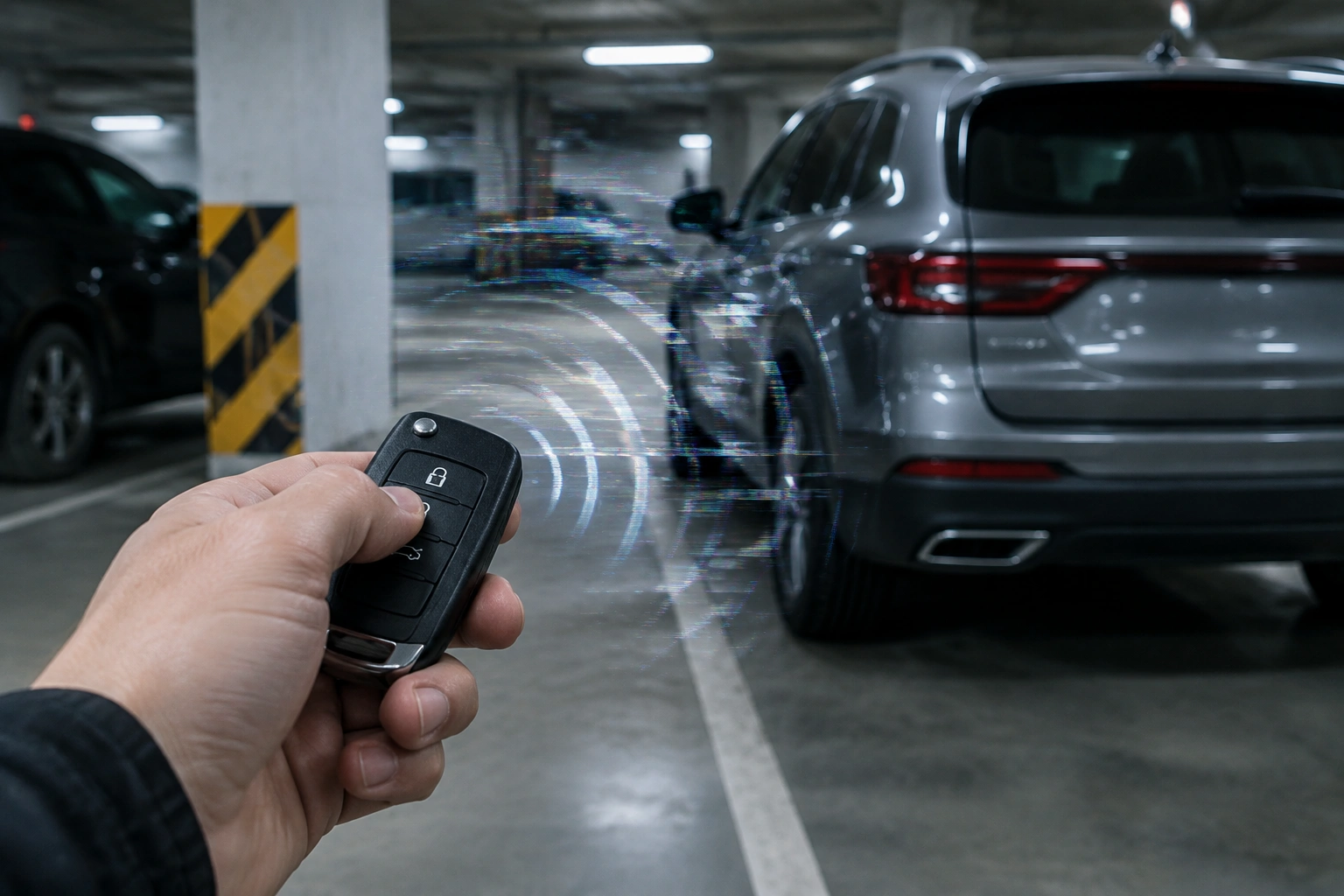
If both the primary and spare fob fail in the same location, interference or a vehicle-side issue becomes more likely. If only one fob fails, the fob itself is the first thing to check.
Common Sources of Key Fob Interference
The most common culprits are not exotic. In practice, the trouble often comes from nearby electronics, dense structures, or places where signals get reflected, absorbed, or crowded.
1. Parking garages and concrete structures
Concrete, steel, and underground layouts can weaken the signal or create dead spots. A fob that works in the open lot may fail inside a garage simply because the signal can’t travel cleanly.
2. Electronic gates and security systems
Apartment gates, commercial access systems, and guarded entrances can create a messy RF environment. If the fob fails right at the entrance but works after you move away, that’s a strong clue.
3. Nearby vehicles and electronics
Vehicles, especially those with aftermarket electronics, can add noise to the area. A nearby car with a dash cam, alarm, remote start system, or other accessories may contribute to a poor signal environment.
4. Cell boosters, RFID readers, and industrial equipment
Common real-world sources can include nearby cell signal boosters, RFID access systems, industrial controls, warehouse equipment, and other active electronics. These don’t have to be huge to matter if they’re close to the car or fob.
5. Overhead power infrastructure
Power lines, transformers, and other overhead electrical infrastructure can sometimes create a noisy environment or contribute to signal problems, especially when combined with a poor location or shielding from buildings and metal structures.
6. Small household or commercial devices
Low-powered devices can also cause trouble, but they’re usually worth treating as possibilities rather than proof. A discussion on RadioReference mentioned possibilities such as a remote thermometer from a home weather station or a garage door opener in the area, but that was an informal forum suggestion rather than a formal diagnostic standard. You can read the discussion here.
7. Aftermarket lighting and accessories
As noted earlier, an aftermarket LED dome light has been reported to interfere with additional fob button presses. That’s a good example of why “interference” doesn’t always mean a distant transmitter. It can be something installed in the vehicle itself.
Weather is usually not the direct cause, but wet, icy, or very cold conditions can make a problem more noticeable if moisture gets into the fob, the vehicle receiver area, or an access system nearby.
Quick Tests to Confirm or Rule Out Interference
You don’t need tools for this. You just need a little patience and a second test location.
Step 1: Try the fob in the same spot more than once
Press lock or unlock several times. If it fails once and works the next time without any change, the problem is intermittent, which fits interference or a weak battery.
Step 2: Walk or drive a short distance away and try again
If the fob starts working after you move a short distance, you’ve learned something useful. That points toward location-based interference or signal blockage.
Step 3: Test outside the building or garage
If the fob fails in a structure but works outside, the structure itself may be the problem. Concrete, steel, and underground layouts are common offenders.
Step 4: Compare the primary fob to the spare
If the spare works normally in the same location, the vehicle is probably fine and the original fob is more suspect. If both fail in the same place, look harder at the environment or the car’s receiver.
Step 5: Try the car’s emergency detection area
For push-button start vehicles, many manufacturers provide a backup method where the fob must be placed against the start button or in a specific pocket/slot. If that works, the car is at least seeing the fob when it’s very close, which helps narrow the issue to signal strength, battery condition, or interference.
That test is useful because it separates “no signal at all” from “signal too weak or too disrupted to work normally.”
If It Still Fails: Battery, Fob, or Vehicle Problem?
Here’s the comparison I use when troubleshooting in the field.
| Symptom pattern | Most likely cause | First thing to try |
|---|---|---|
| Works in one location, fails in another | Interference or signal blockage | Move the car or fob and retest |
| Works only when held very close to the car | Weak fob battery, damaged fob, or vehicle receiver issue | Replace the fob battery first |
| One fob fails, spare works normally | Bad battery or damaged fob | Test the battery or use the spare |
| Both fobs fail in the same place | Interference or vehicle-side issue | Retest in a different location |
| Fails everywhere, not just one spot | Weak battery, worn fob, or receiver problem | Replace battery, then reassess |
| Unlocks but won’t start | Detection/start issue, weak battery, or immobilizer-related problem | Try the emergency start method |
If unlocking works but starting does not, that usually points more toward the vehicle’s wake-up/start detection path than the basic button transmission. If starting works but unlocking does not, the fob battery or the door-unlock side of the system becomes more likely. That difference can help narrow the fault quickly.
Weak battery
A weak battery is the easiest thing to rule out, and it can look a lot like interference. The fob may still work, but only at close range or only some of the time.
Damaged or worn-out fob
If the buttons feel mushy, the case is cracked, or the fob has been dropped or exposed to moisture, internal damage is possible. That kind of fault usually follows the fob everywhere.
Vehicle receiver or antenna problem
If multiple fobs behave badly in the same car, in multiple locations, the vehicle-side receiver or antenna becomes a real possibility. That’s when a locksmith or dealer diagnosis makes sense.
For a related symptom where the car detects the fob inconsistently, see why a key fob is not detected intermittently.
What to Do If the Fob Works Only Very Close to the Car
This is one of the most useful clues you can get.
If the fob only works when you’re standing right next to the door handle or pressing it against the start button, I would not jump straight to “interference.” That symptom often points to a weak battery or a fob/receiver problem.
Try this order:
- Replace the fob battery
- Retest in an open area
- Try the spare fob
- Use the backup start procedure if needed
If the range improves after a battery change, you likely found the issue. If nothing changes, the fob may be damaged or the vehicle receiver may be weak.
Backup Entry and Start Options While Troubleshooting
If the fob is acting up and you need to get moving, use the car’s backup methods instead of fighting the problem.
Use the hidden manual key
Many fobs contain a hidden mechanical key. That key can usually unlock the driver’s door even if the remote function has failed.
Try the spare key fob
This is the fastest comparison test available. If the spare works normally, you’ve narrowed the problem to the original fob or its battery.
Use the emergency push-button start procedure
Many vehicles will start if the fob is placed in a specific spot near the start button or in a designated slot. Your owner’s manual should show the exact method for your model. If you don’t know the procedure, learn it before you need it in a parking lot.
That matters because a keyless system can leave you stranded in an inconvenient place even when the car itself is fine.
When to Replace the Battery, Reprogram the Fob, or Get Professional Help
A battery replacement is the right first move when:
- The fob range has shrunk
- The problem happens everywhere, not just one location
- The fob works only when very close to the car
- The battery is old or unknown
Reprogramming is usually worth considering later, after you’ve already ruled out battery problems and location-based interference. It makes more sense when the battery is new, the fob still fails in normal conditions, and the issue looks like a pairing or recognition problem rather than an environmental one.
When to consult a locksmith
Call a locksmith or dealer when:
- Both the primary and spare fob fail in multiple locations
- A new battery does not change the symptoms
- The car says “key not detected” even with the spare
- The emergency start method does not help
- You suspect the receiver, antenna, or immobilizer system
At that point, the issue may be on the vehicle side, and guessing gets expensive fast.
For general owner guidance on what to do when the car won’t recognize the fob, the National Highway Traffic Safety Administration has helpful consumer safety resources at NHTSA. For broader vehicle ownership and troubleshooting context, Edmunds and Car and Driver also have useful owner-focused information.
The Bottom Line
Yes, radio interference can stop a key fob from working — but the real clue is usually where it happens. If the problem shows up in one spot and disappears in another, interference or signal blockage is likely. If it happens everywhere, look first at the battery, then the fob, then the vehicle receiver.
The fastest way to avoid guessing is simple: test the fob in a different location, compare it with the spare, and try the backup start method. That sequence usually tells you whether you’re dealing with the environment, the fob, or the car.
FAQ
Can weather stop a key fob from working?
Usually not directly. But moisture, ice, or extreme cold can affect the fob, the battery, or the vehicle receiver area and make an existing problem worse.
Why does my key fob work in one place but not another?
That often points to interference or signal blockage from the location itself, such as a garage, gate, metal structure, or nearby electronic equipment.
If my car unlocks but won’t start, what does that mean?
It can mean the fob is still sending enough signal for unlocking, but not enough for the vehicle’s wake-up/start detection system. A weak battery is a common possibility.
Should I reprogram the fob before replacing the battery?
Usually no. Battery and location tests come first. Reprogramming is more useful later, when the battery is known good and the symptoms suggest a pairing or recognition issue.
